
UNDERSTANDING HEALTH WELLNESS Chapter 1 Essential Questions In

- Slides: 28
UNDERSTANDING HEALTH &WELLNESS Chapter 1
Essential Questions: In your Journal MONDAY: • What are some everyday decisions that teens face that can affect their health? • What are some ways that people can take charge of their health? TUESDAY: • How do health-related choices you make today impact your future? • What does it mean to be physically healthy? WEDNESDAY: • What are some characteristics of a person who has good mental health? • How does your attitude affect your Health? THURSDAY: • What are some behaviors that put health at risk? • Why is it important to know what behaviors put your health at risk? • What are some situations in which you would speak up to help a friend avoid a risk behavior? Wednesday August 19 th • What does it mean to be Health Literate? • What are some things you do each day to promote good health?
Group Assignment: Step 1 Write down TEN words/ideas that relate the following terms: • Physical Health • Social Health • Mental/Emotional Health
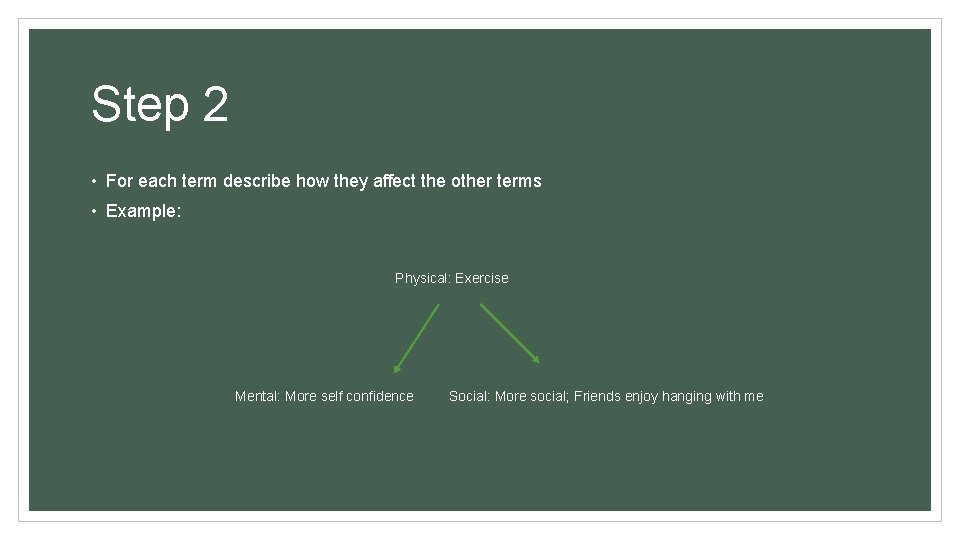
Step 2 • For each term describe how they affect the other terms • Example: Physical: Exercise Mental: More self confidence Social: More social; Friends enjoy hanging with me
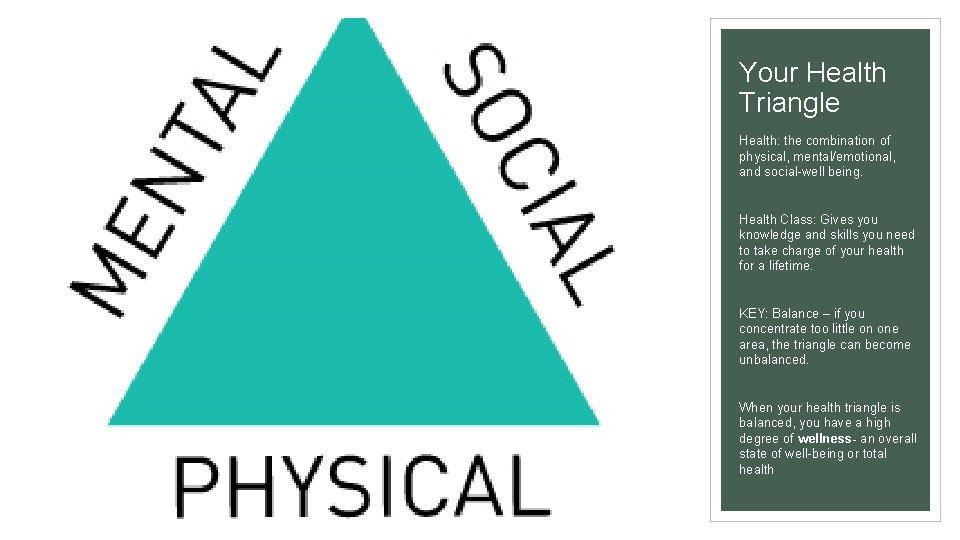
Your Health Triangle Health: the combination of physical, mental/emotional, and social-well being. Health Class: Gives you knowledge and skills you need to take charge of your health for a lifetime. KEY: Balance – if you concentrate too little on one area, the triangle can become unbalanced. When your health triangle is balanced, you have a high degree of wellness- an overall state of well-being or total health
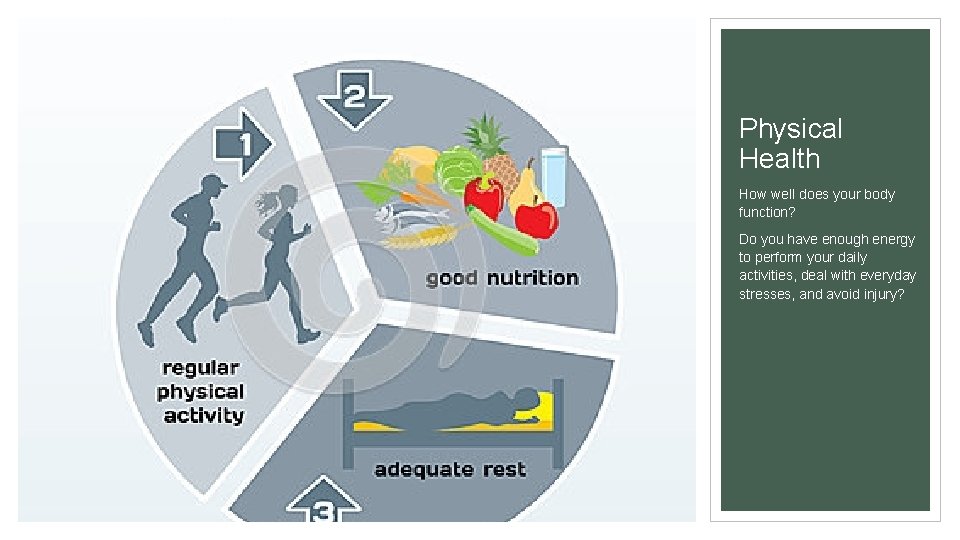
Physical Health How well does your body function? Do you have enough energy to perform your daily activities, deal with everyday stresses, and avoid injury?
What does it take to keep a healthy body? • eight to ten hours of sleep each night • Eat nutritious meals and drink eight cups of water each day • Engage in 30 -60 minutes of physical activity every day • Avoid the use of tobacco, alcohol, and other drugs • Bathe daily, and floss and brush your teeth every day
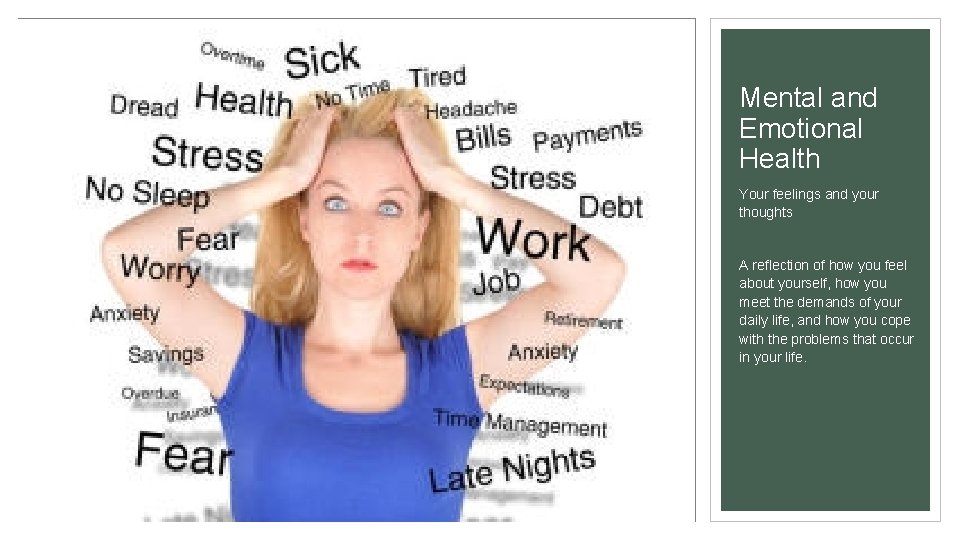
Mental and Emotional Health Your feelings and your thoughts A reflection of how you feel about yourself, how you meet the demands of your daily life, and how you cope with the problems that occur in your life.
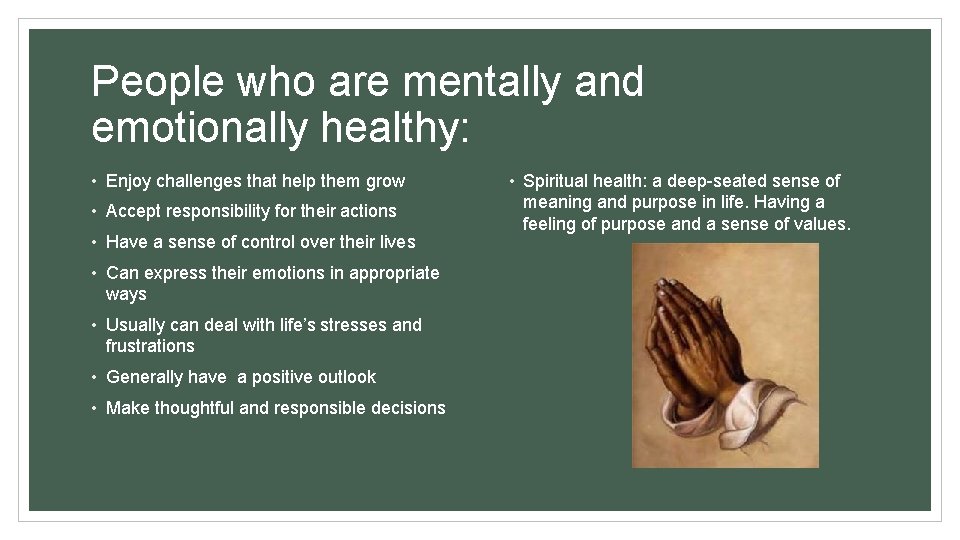
People who are mentally and emotionally healthy: • Enjoy challenges that help them grow • Accept responsibility for their actions • Have a sense of control over their lives • Can express their emotions in appropriate ways • Usually can deal with life’s stresses and frustrations • Generally have a positive outlook • Make thoughtful and responsible decisions • Spiritual health: a deep-seated sense of meaning and purpose in life. Having a feeling of purpose and a sense of values.
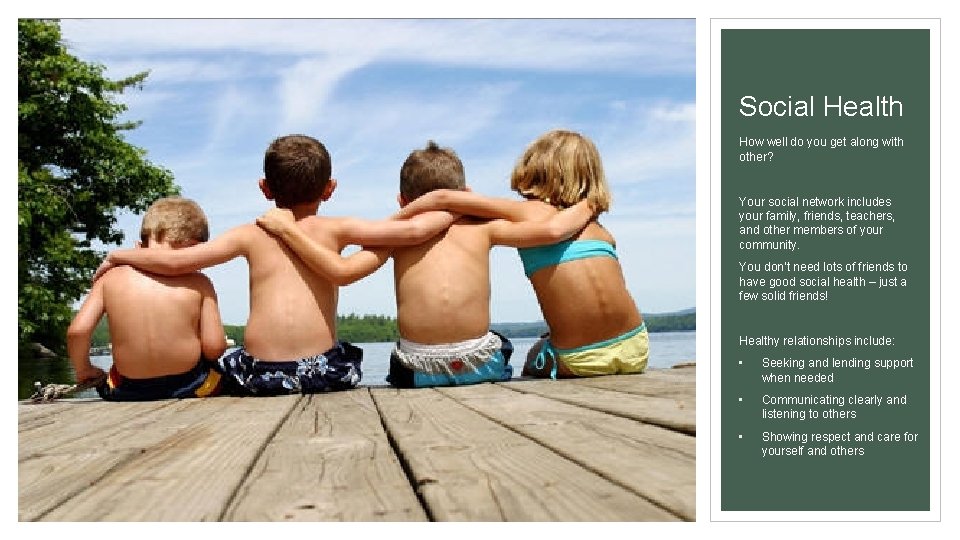
Social Health How well do you get along with other? Your social network includes your family, friends, teachers, and other members of your community. You don’t need lots of friends to have good social health – just a few solid friends! Healthy relationships include: • Seeking and lending support when needed • Communicating clearly and listening to others • Showing respect and care for yourself and others
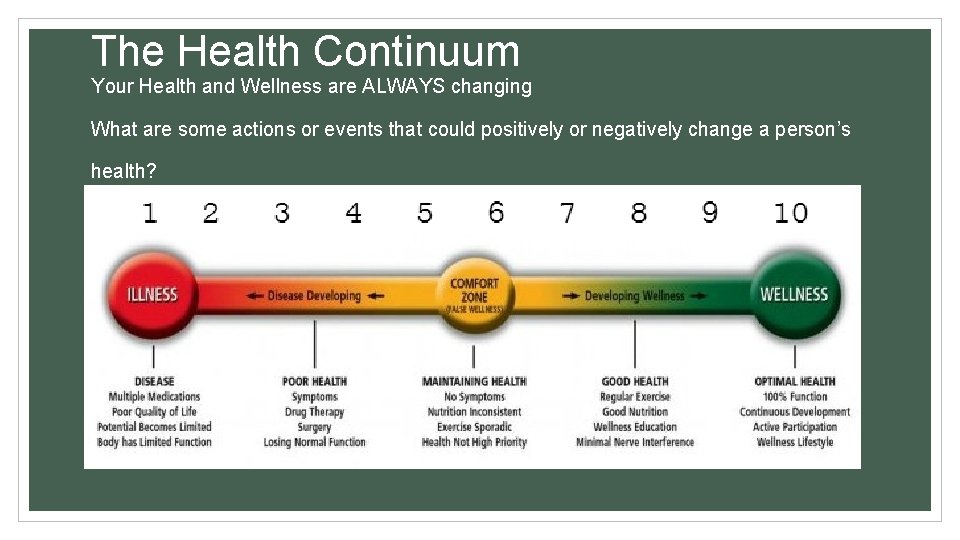
The Health Continuum Your Health and Wellness are ALWAYS changing What are some actions or events that could positively or negatively change a person’s health?
WHAT AFFECTS YOUR HEALTH? Lesson 2
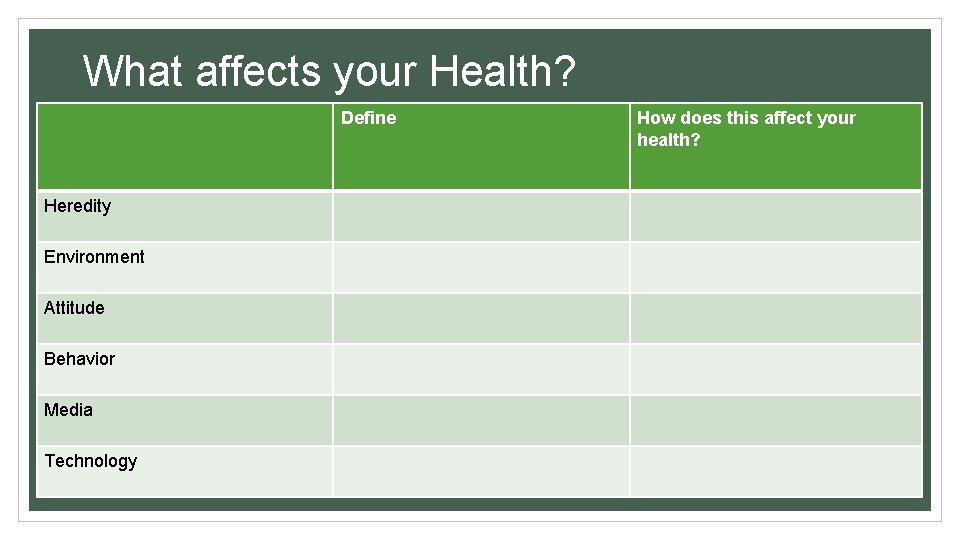
What affects your Health? Define Heredity Environment Attitude Behavior Media Technology How does this affect your health?
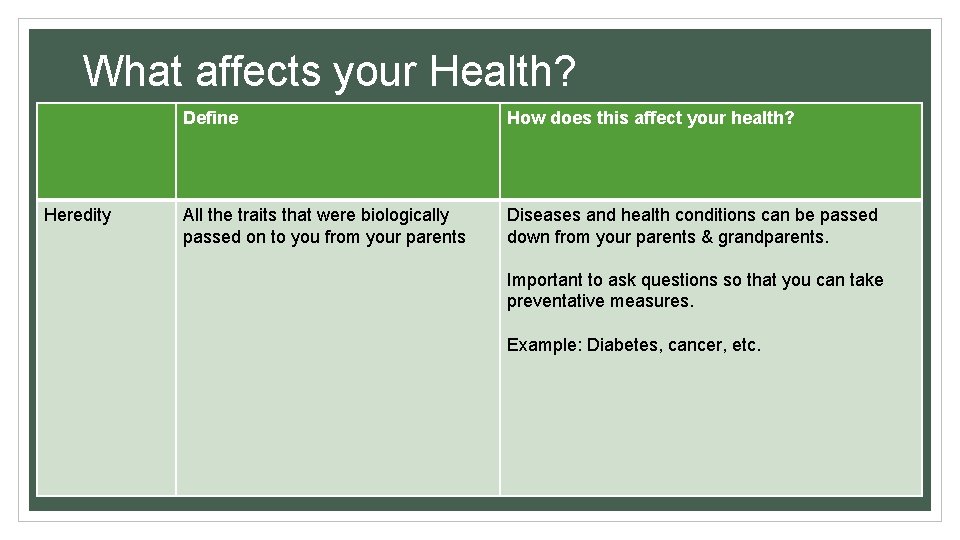
What affects your Health? Heredity Define How does this affect your health? All the traits that were biologically passed on to you from your parents Diseases and health conditions can be passed down from your parents & grandparents. Important to ask questions so that you can take preventative measures. Example: Diabetes, cancer, etc.
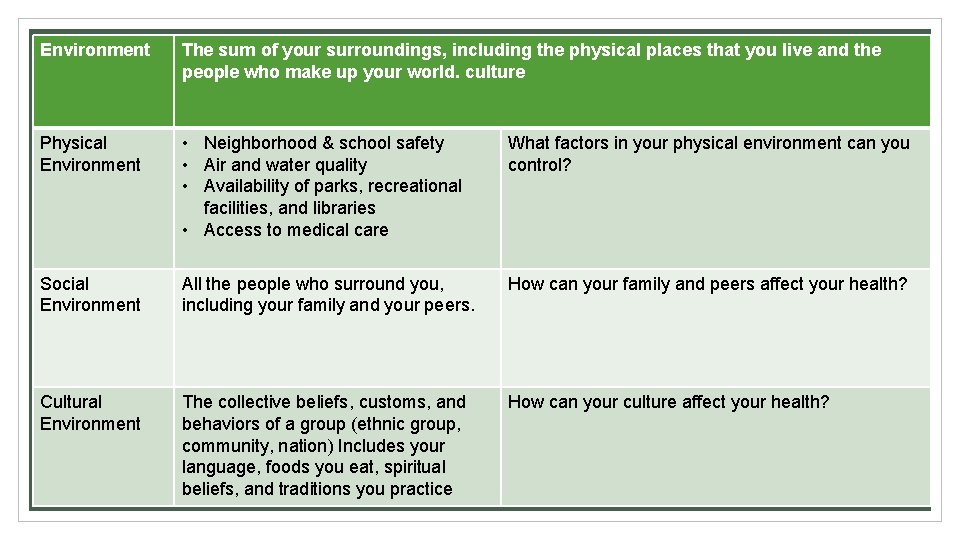
Environment P The sum of your surroundings, including the physical places that you live and the people who make up your world. culture Physical Environment • Neighborhood & school safety • Air and water quality • Availability of parks, recreational facilities, and libraries • Access to medical care What factors in your physical environment can you control? Social Environment All the people who surround you, including your family and your peers. How can your family and peers affect your health? Cultural Environment The collective beliefs, customs, and behaviors of a group (ethnic group, community, nation) Includes your language, foods you eat, spiritual beliefs, and traditions you practice How can your culture affect your health?
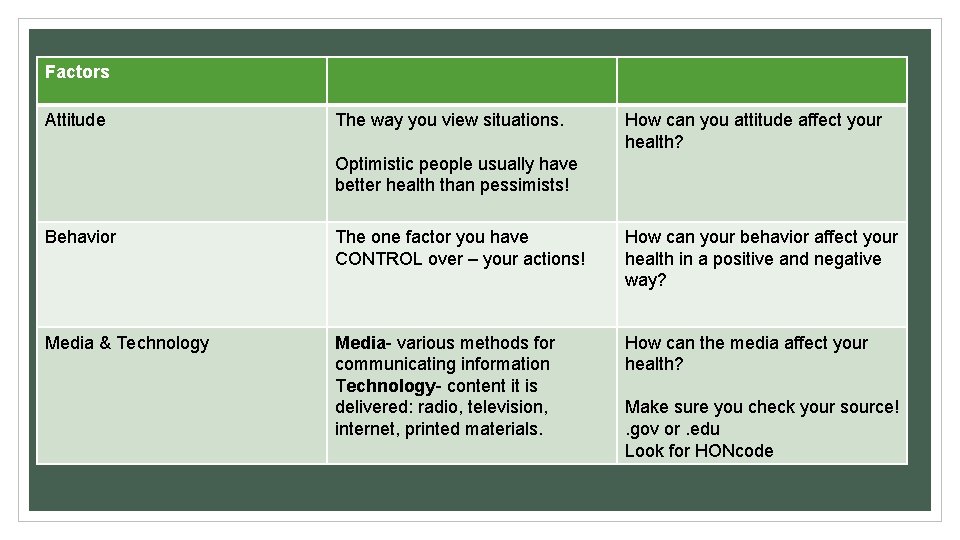
Factors Attitude The way you view situations. How can you attitude affect your health? Optimistic people usually have better health than pessimists! Behavior The one factor you have CONTROL over – your actions! How can your behavior affect your health in a positive and negative way? Media & Technology Media- various methods for communicating information Technology- content it is delivered: radio, television, internet, printed materials. How can the media affect your health? Make sure you check your source!. gov or. edu Look for HONcode
LESSON 3 Health Risks & Your Behavior
Risk Behaviors: actions that can potentially threaten your health or the health of others Tobacco Use Unhealthy dietary behaviors Not using safety belts Behaviors that contribute to unintentional injuries and violence Sexual behaviors that may result in HIV infection, other sexually transmitted diseases, and unintended pregnancies Risk Behaviors Alcohol and other drug use Inadequate physical activity
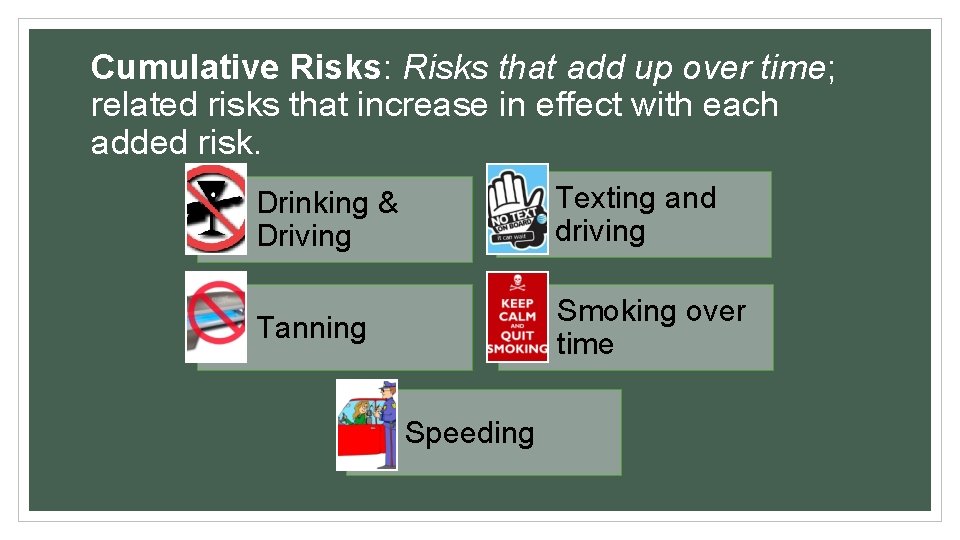
Cumulative Risks: Risks that add up over time; related risks that increase in effect with each added risk. Drinking & Driving Texting and driving Tanning Smoking over time Speeding
Group Activity: Create a PSA • A PSA (Public Service Announcement is a short, informative announcement that shares important information with the public. PSAs are often aired on television and radio. Many PSAs covey information about health behaviors. • Work in small groups to write a 30 -60 commercial PSA that promotes a behavior that reduces a health risk, such as wearing a seatbelt or avoiding tobacco. • • • What is your thesis (point you are going to make in your speech)? How will you grab the readers attention? What facts will you include in your speech? What solutions or actions will you mention to reduce this health risk? How will you end your speech? • Record your PSA using an electronic device and email it to angela. brunner@cobbk 12. org • We will share them with the class! *Best video receives a prize!!!!!!!!!
How to avoid or reduce risks Protective factors are people or values that will help you become successful. • Positive Role Models- peers, or others that a young person looks up to. • Positive Values- are beliefs and standards of conduct that you find important. Prevention: taking steps to keep something from happening (regular medical and dental check ups) Abstinence: a deliberate decision to avoid high-risk behaviors, including sexual activity and the use of alcohol, tobacco, and other drugs.
Lifestyle Factors • Personal habits or behaviors related to the way a person lives • Getting eight hours of sleep each night • Starting each day with a healthy breakfast • Eating a variety of nutritious foods each day • Being physically active for 30 to 60 minutes most days of the week • Maintaining a healthy weight • Abstaining from smoking or using other tobacco products • Abstaining from the use of alcohol or other drugs
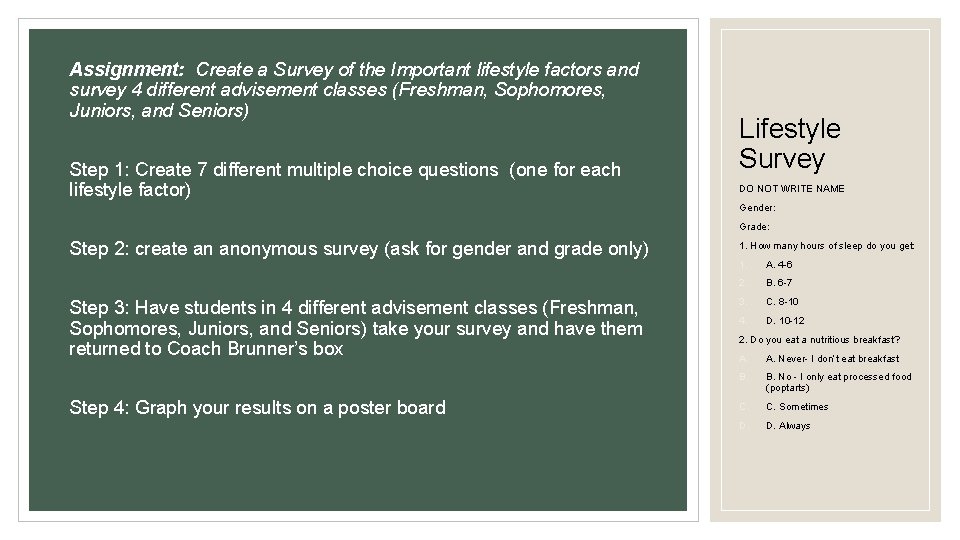
Assignment: Create a Survey of the Important lifestyle factors and survey 4 different advisement classes (Freshman, Sophomores, Juniors, and Seniors) Step 1: Create 7 different multiple choice questions (one for each lifestyle factor) Lifestyle Survey DO NOT WRITE NAME Gender: Grade: Step 2: create an anonymous survey (ask for gender and grade only) Step 3: Have students in 4 different advisement classes (Freshman, Sophomores, Juniors, and Seniors) take your survey and have them returned to Coach Brunner’s box Step 4: Graph your results on a poster board 1. How many hours of sleep do you get: 1. A. 4 -6 2. B. 6 -7 3. C. 8 -10 4. D. 10 -12 2. Do you eat a nutritious breakfast? A. Never- I don’t eat breakfast B. No - I only eat processed food (poptarts) C. Sometimes D. Always
The Importance of Health Education • In 2012, the US spent an average of $8, 915 person on health care, reaching a total of $2. 8 trillion • Much of that expense could be avoided if people made healthier decisions about the way they live, adopted health-promoting habits, and took responsibility for maintaining their wellness. • Educating the public is key to creating a healthier nation • Health Education includes: providing accurate health information and teaching health skills to help people make healthy decisions. Read more: http: //www. chcf. org/publications/2014/07/health-care-costs-101#ixzz 3 id 8 w 935 Z
Healthy People • http: //www. cdc. gov/nchs/healthy_people/hp 2020_topic_areas. htm • HEALTHY PEOPLE is a nationwide health promotion and disease prevention plan designed to serve as a guide for improving the health of all people in the U. S. In December 2010, the Department of Health and Human Services launched Healthy People 2020, which has four overarching goals: • Attain high-quality, longer lives free of preventable disease, disability, injury, and premature death; • Achieve health equity, eliminate disparities, and improve the health of all groups; • Create social and physical environments that promote good health for all; and • Promote quality of life, healthy development, and healthy behaviors across all life stages.
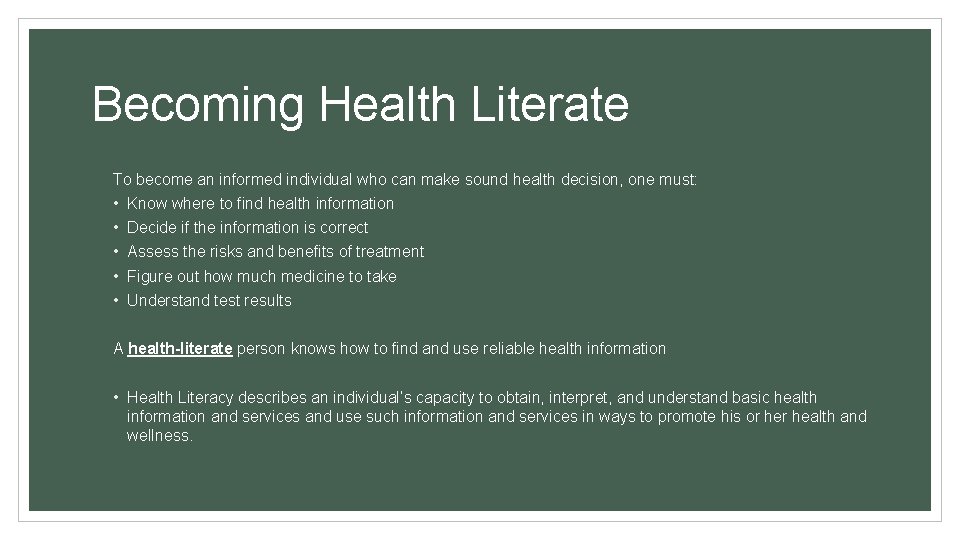
Becoming Health Literate To become an informed individual who can make sound health decision, one must: • • • Know where to find health information Decide if the information is correct Assess the risks and benefits of treatment Figure out how much medicine to take Understand test results A health-literate person knows how to find and use reliable health information • Health Literacy describes an individual’s capacity to obtain, interpret, and understand basic health information and services and use such information and services in ways to promote his or health and wellness.
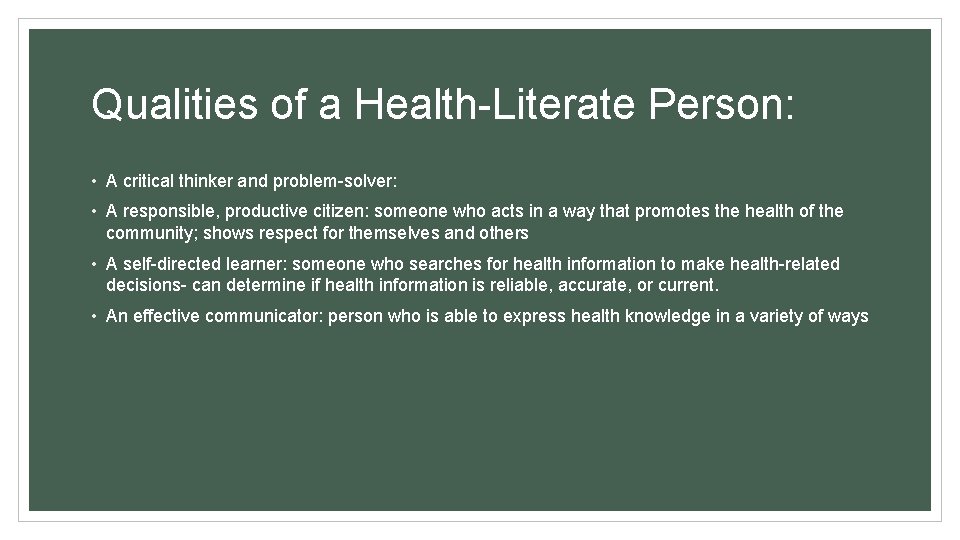
Qualities of a Health-Literate Person: • A critical thinker and problem-solver: • A responsible, productive citizen: someone who acts in a way that promotes the health of the community; shows respect for themselves and others • A self-directed learner: someone who searches for health information to make health-related decisions- can determine if health information is reliable, accurate, or current. • An effective communicator: person who is able to express health knowledge in a variety of ways
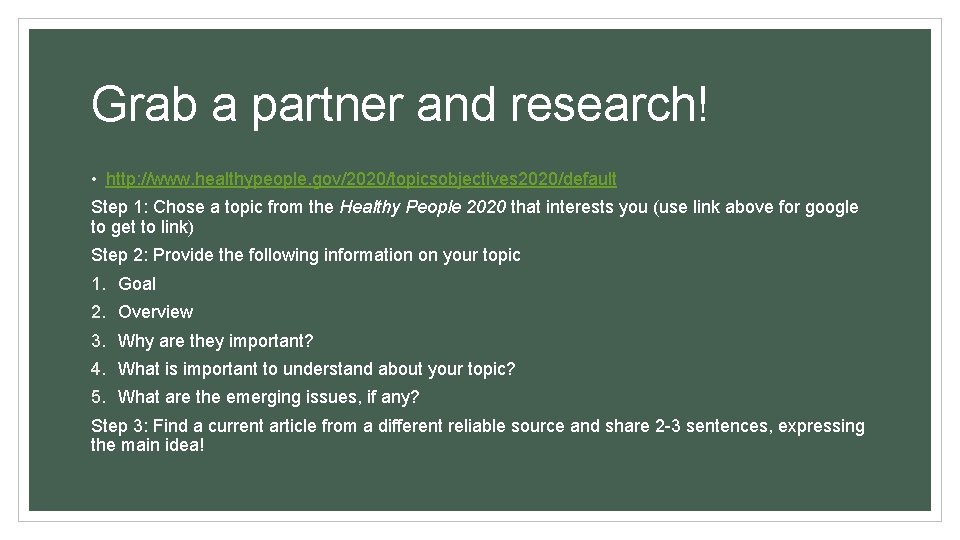
Grab a partner and research! • http: //www. healthypeople. gov/2020/topicsobjectives 2020/default Step 1: Chose a topic from the Healthy People 2020 that interests you (use link above for google to get to link) Step 2: Provide the following information on your topic 1. Goal 2. Overview 3. Why are they important? 4. What is important to understand about your topic? 5. What are the emerging issues, if any? Step 3: Find a current article from a different reliable source and share 2 -3 sentences, expressing the main idea!