
Understanding Headaches Grace Forde M D Assistant Professor
- Slides: 40
Understanding Headaches Grace Forde, M. D Assistant Professor of Neurology New York University Director of Neurological Services North Shore Pain Service
Migraine Epidemiology Go Back to Main Menu
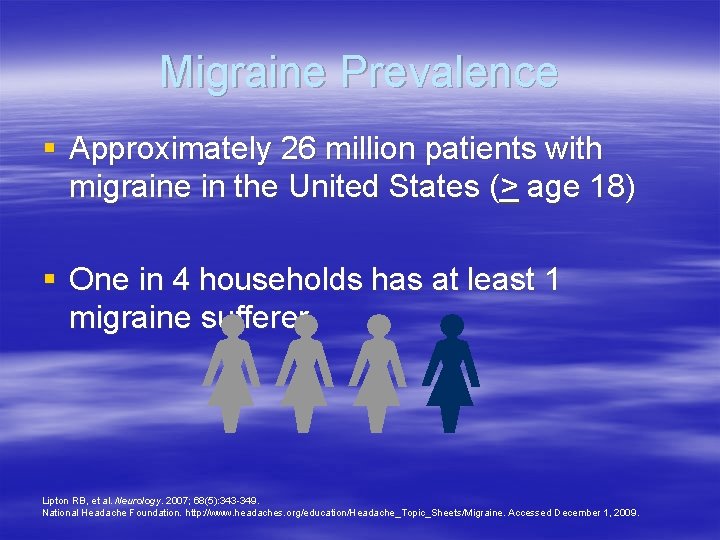
Migraine Prevalence § Approximately 26 million patients with migraine in the United States (> age 18) § One in 4 households has at least 1 migraine sufferer Lipton RB, et al. Neurology. 2007; 68(5): 343 -349. National Headache Foundation. http: //www. headaches. org/education/Headache_Topic_Sheets/Migraine. Accessed December 1, 2009.
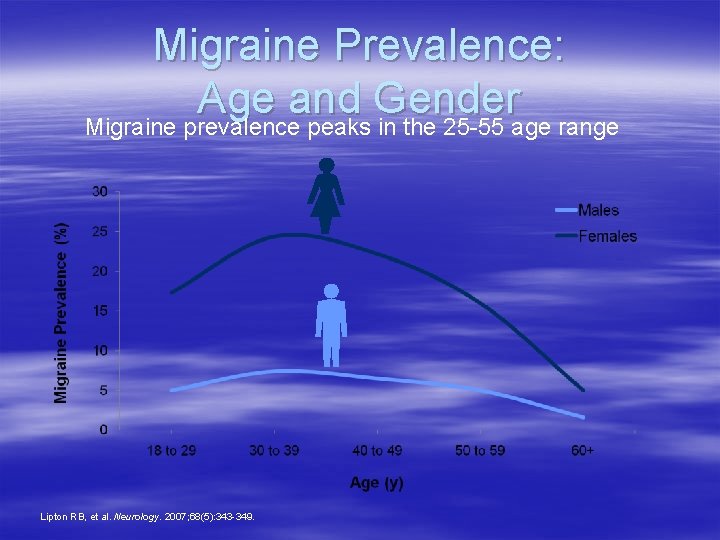
Migraine Prevalence: Age and Gender Migraine prevalence peaks in the 25 -55 age range Lipton RB, et al. Neurology. 2007; 68(5): 343 -349.
Migraine Economic Impact, Productivity, and Quality of Life Go Back to Main Menu
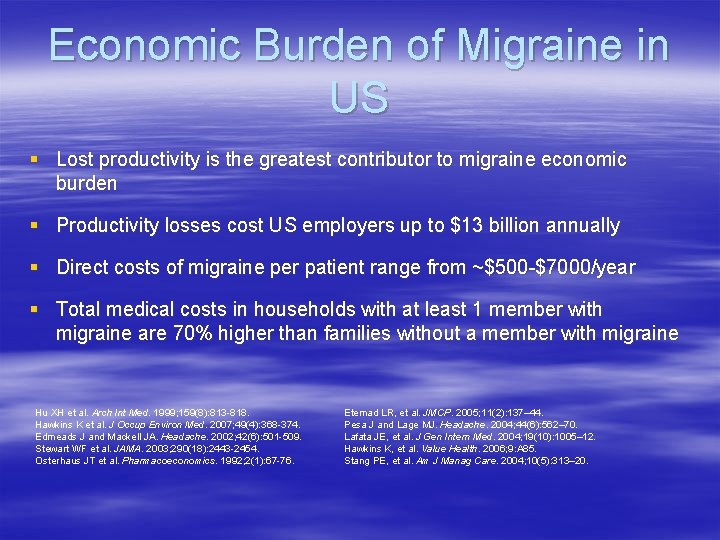
Economic Burden of Migraine in US § Lost productivity is the greatest contributor to migraine economic burden § Productivity losses cost US employers up to $13 billion annually § Direct costs of migraine per patient range from ~$500 -$7000/year § Total medical costs in households with at least 1 member with migraine are 70% higher than families without a member with migraine Hu XH et al. Arch Int Med. 1999; 159(8): 813 -818. Hawkins K et al. J Occup Environ Med. 2007; 49(4): 368 -374. Edmeads J and Mackell JA. Headache. 2002; 42(6): 501 -509. Stewart WF et al. JAMA. 2003; 290(18): 2443 -2454. Osterhaus JT et al. Pharmacoeconomics. 1992; 2(1): 67 -76. Etemad LR, et al. JMCP. 2005; 11(2): 137– 44. Pesa J and Lage MJ. Headache. 2004; 44(6): 562– 70. Lafata JE, et al. J Gen Intern Med. 2004; 19(10): 1005– 12. Hawkins K, et al. Value Health. 2006; 9: A 85. Stang PE, et al. Am J Manag Care. 2004; 10(5): 313– 20.
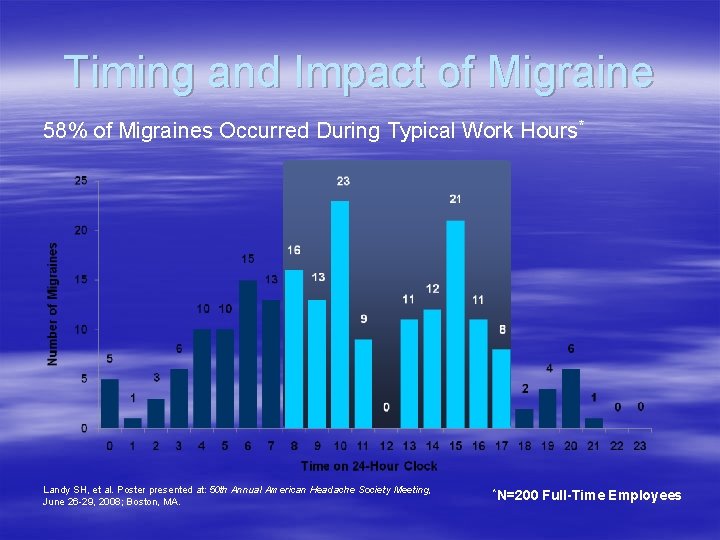
Timing and Impact of Migraine 58% of Migraines Occurred During Typical Work Hours* Landy SH, et al. Poster presented at: 50 th Annual American Headache Society Meeting, June 26 -29, 2008; Boston, MA. *N=200 Full-Time Employees
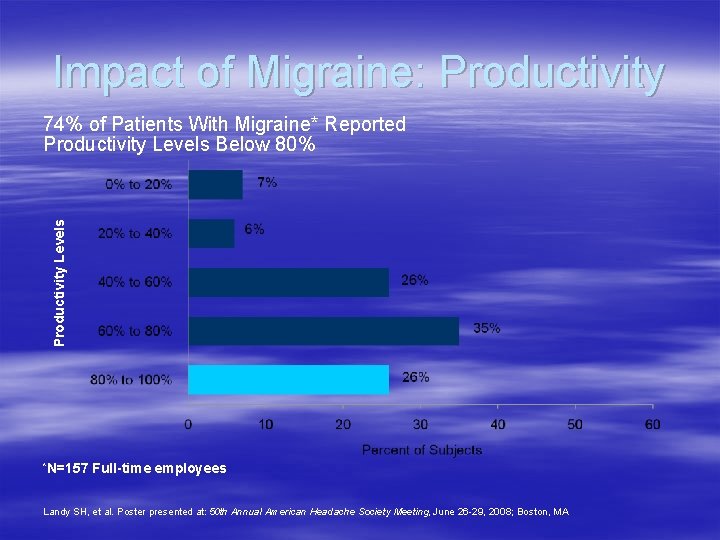
Impact of Migraine: Productivity Levels 74% of Patients With Migraine* Reported Productivity Levels Below 80% *N=157 Full-time employees Landy SH, et al. Poster presented at: 50 th Annual American Headache Society Meeting, June 26 -29, 2008; Boston, MA.
Migraine Diagnosis and Treatment Go Back to Main Menu
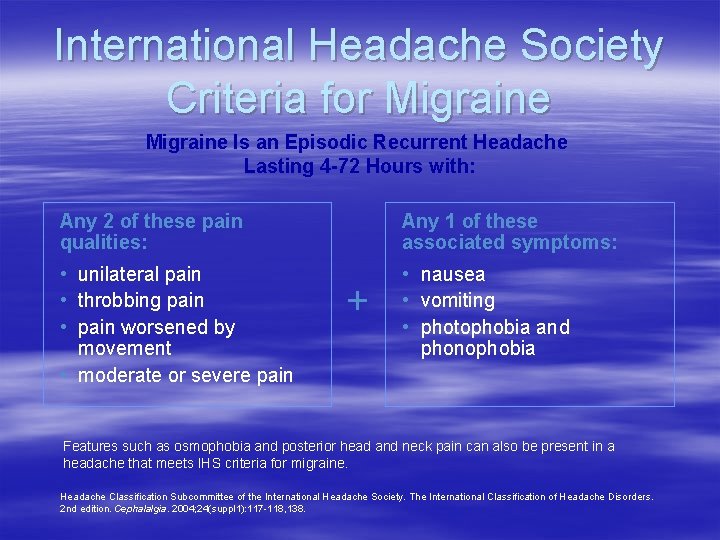
International Headache Society Criteria for Migraine Is an Episodic Recurrent Headache Lasting 4 -72 Hours with: Any 2 of these pain qualities: Any 1 of these associated symptoms: • unilateral pain • throbbing pain • pain worsened by movement • moderate or severe pain • nausea • vomiting • photophobia and phonophobia + Features such as osmophobia and posterior head and neck pain can also be present in a headache that meets IHS criteria for migraine. Headache Classification Subcommittee of the International Headache Society. The International Classification of Headache Disorders. 2 nd edition. Cephalalgia. 2004; 24(suppl 1): 117 -118, 138.
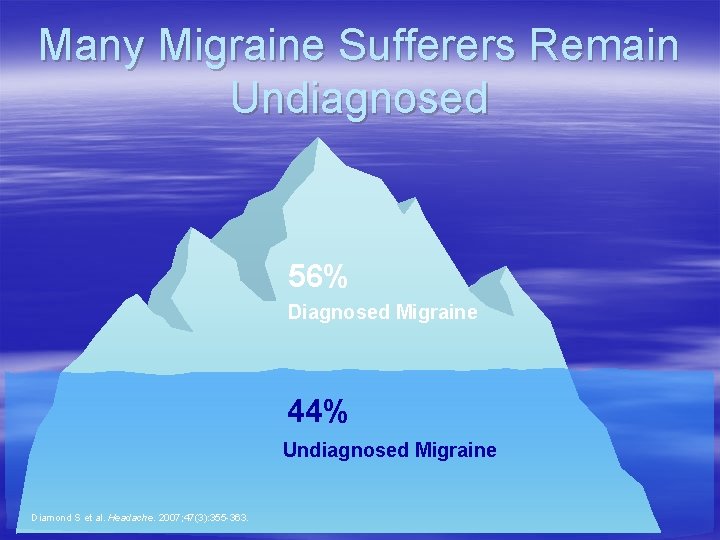
Many Migraine Sufferers Remain Undiagnosed 56% Diagnosed Migraine 44% Undiagnosed Migraine Diamond S et al. Headache. 2007; 47(3): 355 -363.
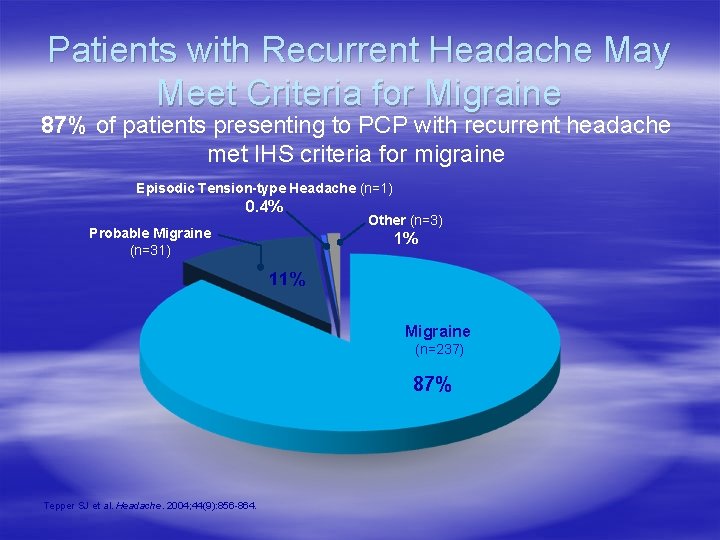
Patients with Recurrent Headache May Meet Criteria for Migraine 87% of patients presenting to PCP with recurrent headache met IHS criteria for migraine Episodic Tension-type Headache (n=1) 0. 4% Probable Migraine (n=31) Other (n=3) 1% 11% Migraine (n=237) 87% Tepper SJ et al. Headache. 2004; 44(9): 856 -864.
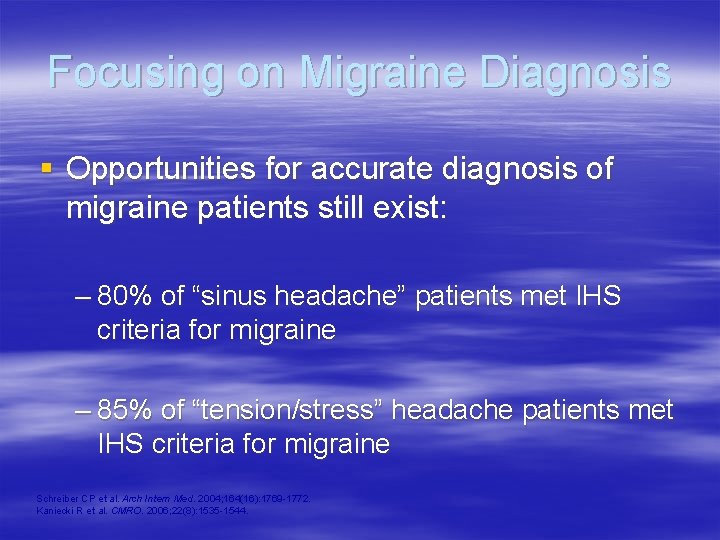
Focusing on Migraine Diagnosis § Opportunities for accurate diagnosis of migraine patients still exist: – 80% of “sinus headache” patients met IHS criteria for migraine – 85% of “tension/stress” headache patients met IHS criteria for migraine Schreiber CP et al. Arch Intern Med. 2004; 164(16): 1769 -1772. Kaniecki R et al. CMRO. 2006; 22(8): 1535 -1544.
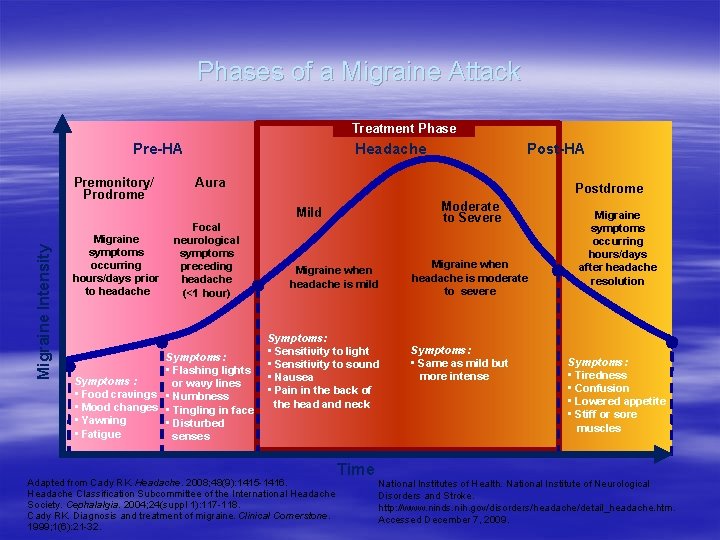
Phases of a Migraine Attack Treatment Phase Pre-HA Premonitory/ Prodrome Headache Aura Postdrome Moderate to Severe Migraine Intensity Mild Migraine symptoms occurring hours/days prior to headache Post-HA Focal neurological symptoms preceding headache (<1 hour) Symptoms: • Flashing lights Symptoms : or wavy lines • Food cravings • Numbness • Mood changes • Tingling in face • Yawning • Disturbed • Fatigue senses Migraine when headache is mild Symptoms: • Sensitivity to light • Sensitivity to sound • Nausea • Pain in the back of the head and neck Adapted from Cady RK. Headache. 2008; 48(9): 1415 -1416. Headache Classification Subcommittee of the International Headache Society. Cephalalgia. 2004; 24(suppl 1): 117 -118. Cady RK. Diagnosis and treatment of migraine. Clinical Cornerstone. 1999; 1(6): 21 -32. Migraine when headache is moderate to severe Symptoms: • Same as mild but more intense Migraine symptoms occurring hours/days after headache resolution Symptoms: • Tiredness • Confusion • Lowered appetite • Stiff or sore muscles Time National Institutes of Health. National Institute of Neurological Disorders and Stroke. http: //www. ninds. nih. gov/disorders/headache/detail_headache. htm. Accessed December 7, 2009.
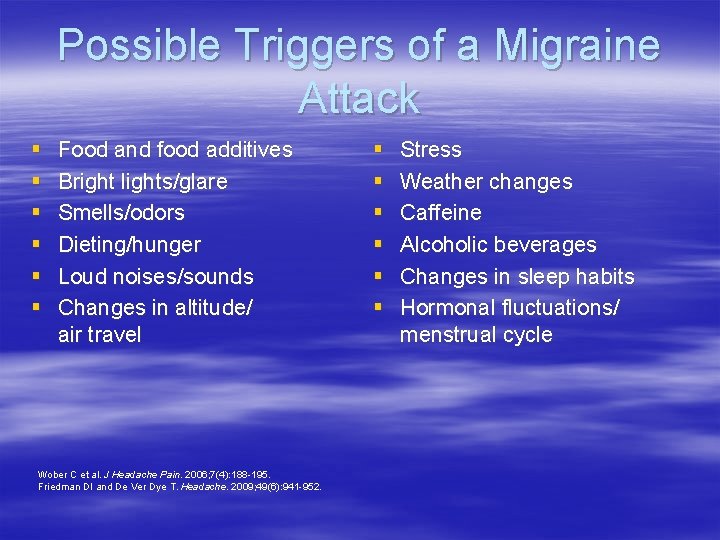
Possible Triggers of a Migraine Attack § § § Food and food additives Bright lights/glare Smells/odors Dieting/hunger Loud noises/sounds Changes in altitude/ air travel Wober C et al. J Headache Pain. 2006; 7(4): 188 -195. Friedman DI and De Ver Dye T. Headache. 2009; 49(6): 941 -952. § § § Stress Weather changes Caffeine Alcoholic beverages Changes in sleep habits Hormonal fluctuations/ menstrual cycle
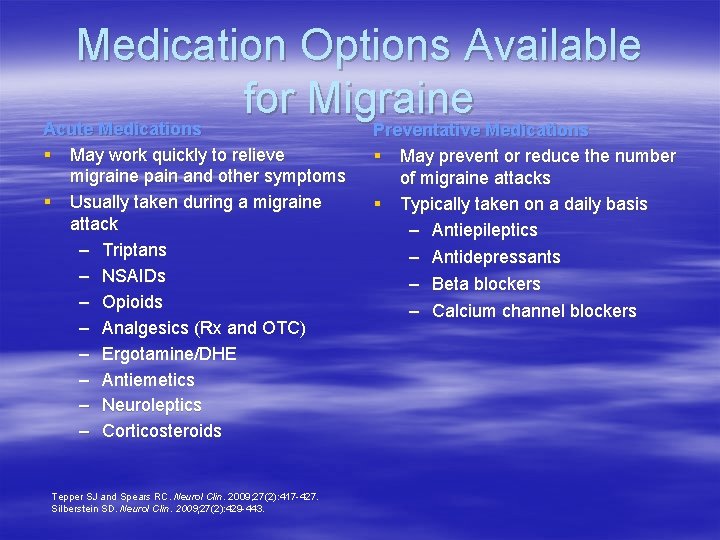
Medication Options Available for Migraine Acute Medications Preventative Medications § May work quickly to relieve migraine pain and other symptoms § Usually taken during a migraine attack – Triptans – NSAIDs – Opioids – Analgesics (Rx and OTC) – Ergotamine/DHE – Antiemetics – Neuroleptics – Corticosteroids Tepper SJ and Spears RC. Neurol Clin. 2009; 27(2): 417 -427. Silberstein SD. Neurol Clin. 2009; 27(2): 429 -443. Preventative Medications § May prevent or reduce the number of migraine attacks § Typically taken on a daily basis – Antiepileptics – Antidepressants – Beta blockers – Calcium channel blockers
Differences in Patients with Migraine § Migraine patient’s brain is in a state of hyperexcitability – Reduced threshold for stimuli – Everyday things can trigger a migraine attack § Migraine patient’s gut is slowed – Gastric stasis is common and can delay tablet absorption – Conventional tablets rely on surface erosion and gastric motility for dissolution in the stomach, which must occur before being absorbed Hargreaves RJ and Shepheard SL. Can J Neurol Sci. 1999; 26(suppl 3): S 12 -S 19. Aurora S et al. Headache. 2006; 46(1): 57 -63.
The Triptans § § § § Sumatriptan Zolmatriptan Naratriptan Rizatriptan Almotriptan Frovatriptan Eletriptan Sumatriptan and Naproxen sodium
Triptan Prescribing Information: Contraindications and Precautions for ALL Triptans § Ischemic cardiac disease § Cerebrovascular disease § Uncontrolled hypertension § Hypersensitivity § Use within 24 hours of other 5 -HTs/ergots § Hemiplegic/basilar migraine § History of risk factors for CAD § SSRI precaution
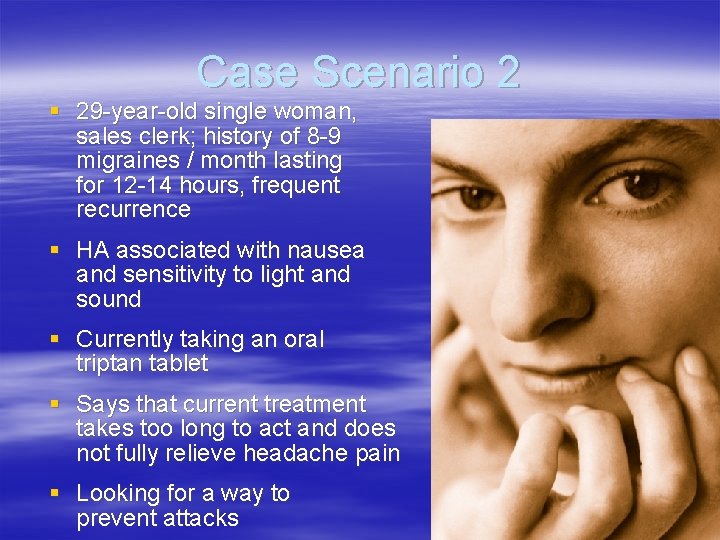
Case Scenario 2 § 29 -year-old single woman, sales clerk; history of 8 -9 migraines / month lasting for 12 -14 hours, frequent recurrence § HA associated with nausea and sensitivity to light and sound § Currently taking an oral triptan tablet § Says that current treatment takes too long to act and does not fully relieve headache pain § Looking for a way to prevent attacks
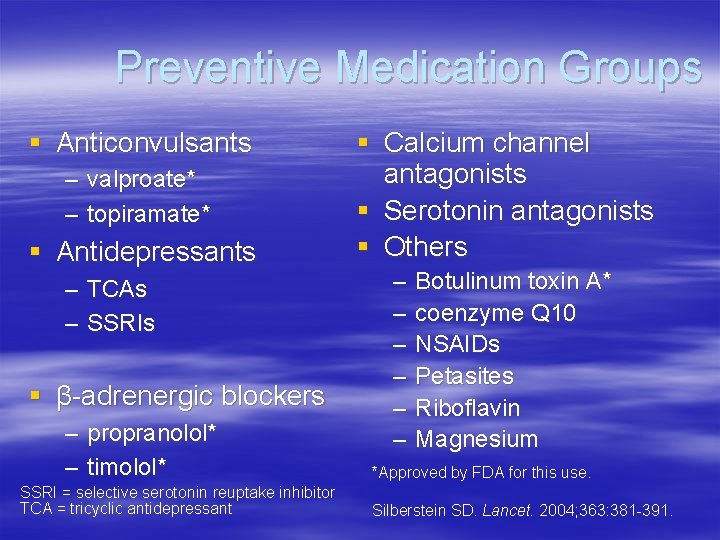
Preventive Medication Groups § Anticonvulsants – valproate* – topiramate* § Antidepressants – TCAs – SSRIs § β-adrenergic blockers – propranolol* – timolol* SSRI = selective serotonin reuptake inhibitor TCA = tricyclic antidepressant § Calcium channel antagonists § Serotonin antagonists § Others – – – Botulinum toxin A* coenzyme Q 10 NSAIDs Petasites Riboflavin Magnesium *Approved by FDA for this use. Silberstein SD. Lancet. 2004; 363: 381 -391.
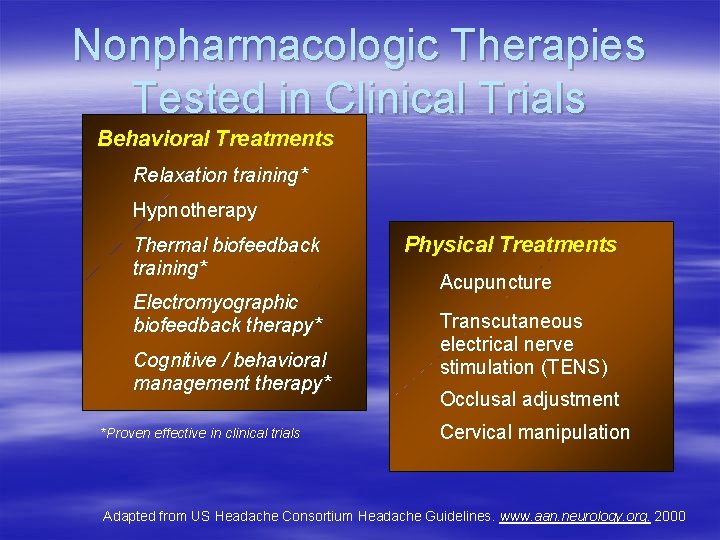
Nonpharmacologic Therapies Tested in Clinical Trials Behavioral Treatments Relaxation training* Hypnotherapy Thermal biofeedback training* Electromyographic biofeedback therapy* Cognitive / behavioral management therapy* *Proven effective in clinical trials Physical Treatments Acupuncture Transcutaneous electrical nerve stimulation (TENS) Occlusal adjustment Cervical manipulation Adapted from US Headache Consortium Headache Guidelines. www. aan. neurology. org. 2000
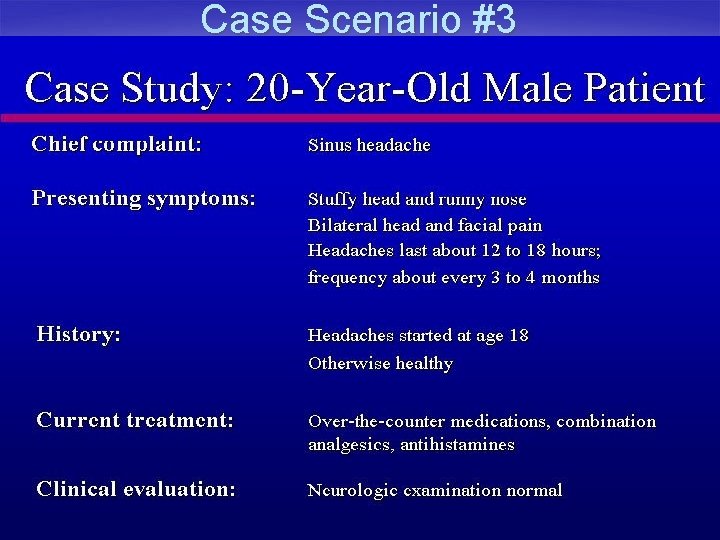
Case Scenario #3
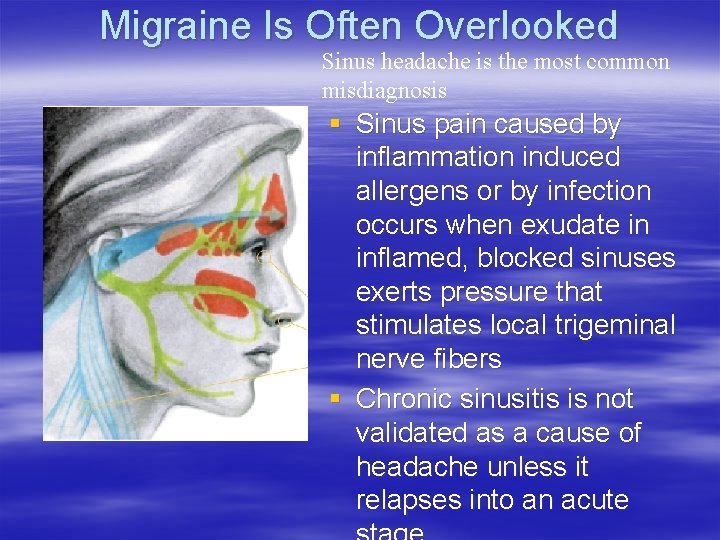
Migraine Is Often Overlooked Sinus headache is the most common misdiagnosis § Sinus pain caused by inflammation induced allergens or by infection occurs when exudate in inflamed, blocked sinuses exerts pressure that stimulates local trigeminal nerve fibers § Chronic sinusitis is not validated as a cause of headache unless it relapses into an acute
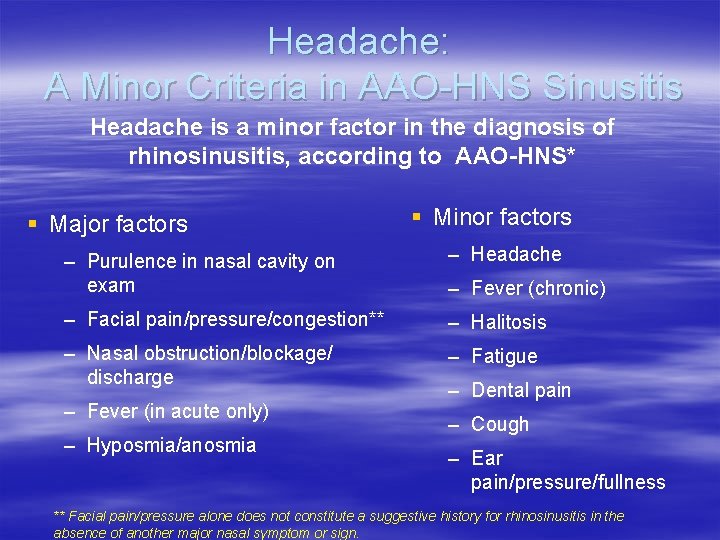
Headache: A Minor Criteria in AAO-HNS Sinusitis Headache is a minor factor in the diagnosis of rhinosinusitis, according to AAO-HNS* § Major factors § Minor factors – Purulence in nasal cavity on exam – Headache – Facial pain/pressure/congestion** – Halitosis – Nasal obstruction/blockage/ discharge – Fatigue – Fever (in acute only) – Hyposmia/anosmia – Fever (chronic) – Dental pain – Cough – Ear pain/pressure/fullness ** Facial pain/pressure alone does not constitute a suggestive history for rhinosinusitis in the absence of another major nasal symptom or sign.
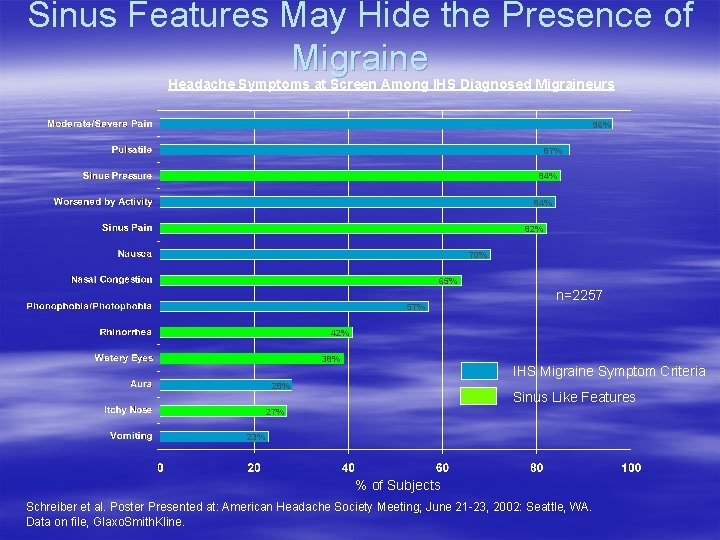
Sinus Features May Hide the Presence of Migraine Headache Symptoms at Screen Among IHS Diagnosed Migraineurs 96% 87% 84% 82% 70% 65% 57% n=2257 42% 38% IHS Migraine Symptom Criteria 28% Sinus Like Features 27% 23% % of Subjects Schreiber et al. Poster Presented at: American Headache Society Meeting; June 21 -23, 2002: Seattle, WA. Data on file, Glaxo. Smith. Kline.
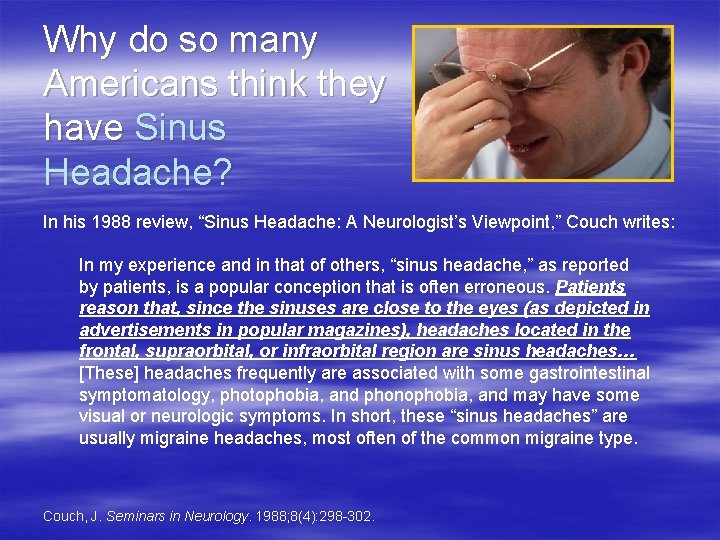
Why do so many Americans think they have Sinus Headache? In his 1988 review, “Sinus Headache: A Neurologist’s Viewpoint, ” Couch writes: In my experience and in that of others, “sinus headache, ” as reported by patients, is a popular conception that is often erroneous. Patients reason that, since the sinuses are close to the eyes (as depicted in advertisements in popular magazines), headaches located in the frontal, supraorbital, or infraorbital region are sinus headaches… [These] headaches frequently are associated with some gastrointestinal symptomatology, photophobia, and phonophobia, and may have some visual or neurologic symptoms. In short, these “sinus headaches” are usually migraine headaches, most often of the common migraine type. Couch, J. Seminars in Neurology. 1988; 8(4): 298 -302.
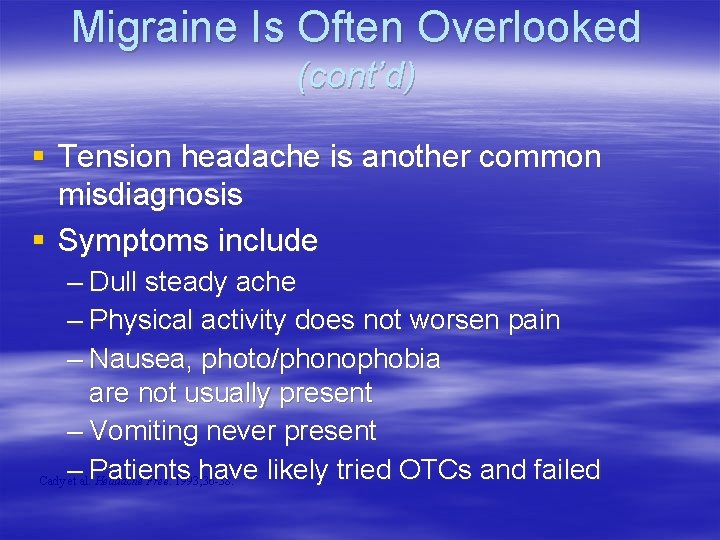
Migraine Is Often Overlooked (cont’d) § Tension headache is another common misdiagnosis § Symptoms include – Dull steady ache – Physical activity does not worsen pain – Nausea, photo/phonophobia are not usually present – Vomiting never present have likely tried OTCs and failed Cady – et al. Patients Headache Free. 1993; 36 -38.
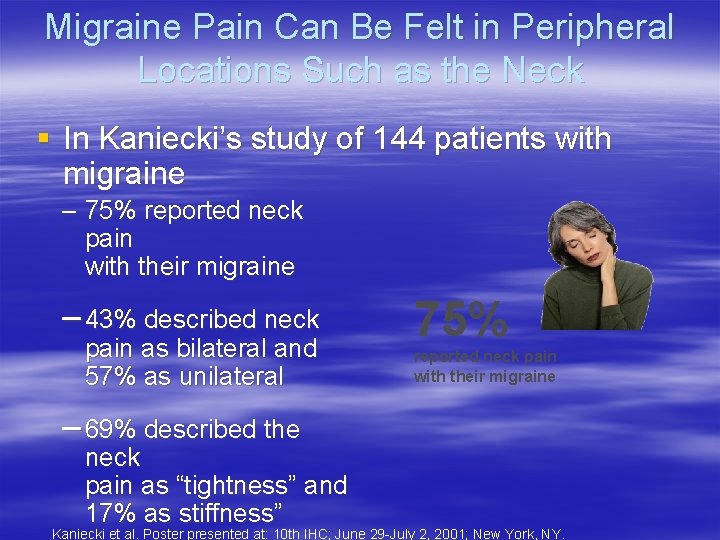
Migraine Pain Can Be Felt in Peripheral Locations Such as the Neck § In Kaniecki’s study of 144 patients with migraine – 75% reported neck pain with their migraine – 43% described neck pain as bilateral and 57% as unilateral 75% reported neck pain with their migraine – 69% described the neck pain as “tightness” and 17% as stiffness” Kaniecki et al. Poster presented at: 10 th IHC; June 29 -July 2, 2001; New York, NY.
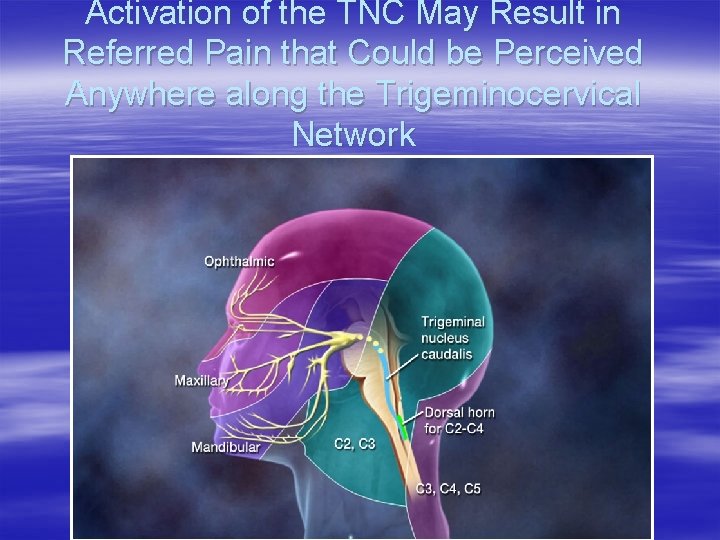
Activation of the TNC May Result in Referred Pain that Could be Perceived Anywhere along the Trigeminocervical Network
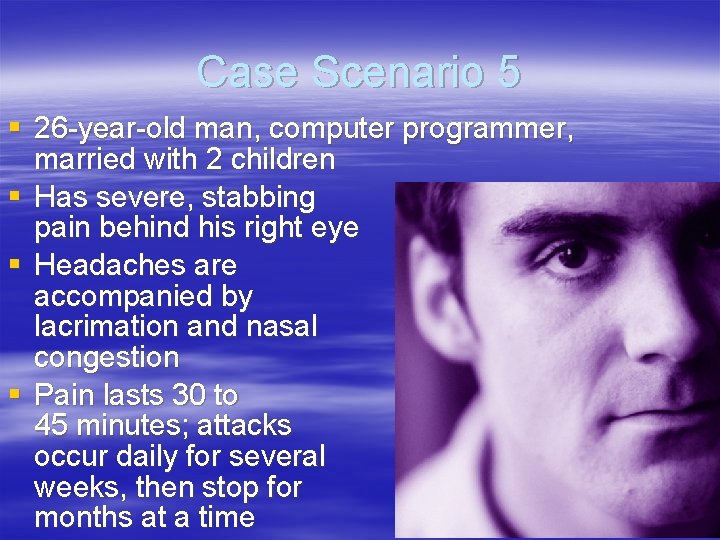
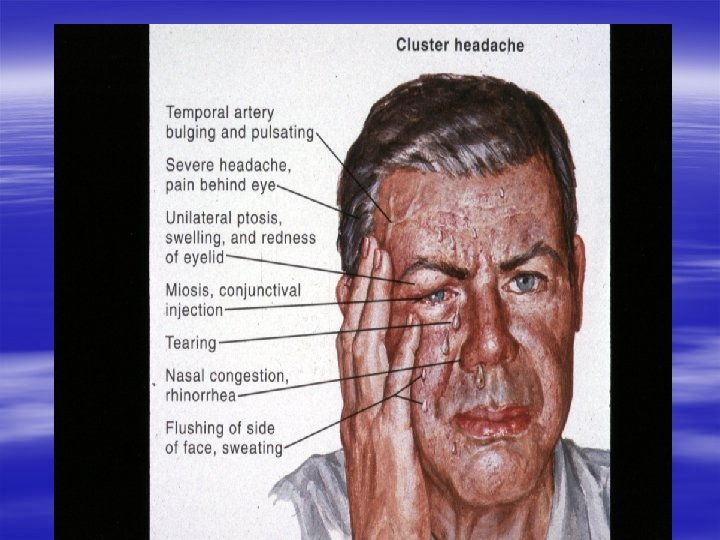
Case Scenario 5 § 26 -year-old man, computer programmer, married with 2 children § Has severe, stabbing pain behind his right eye § Headaches are accompanied by lacrimation and nasal congestion § Pain lasts 30 to 45 minutes; attacks occur daily for several weeks, then stop for months at a time
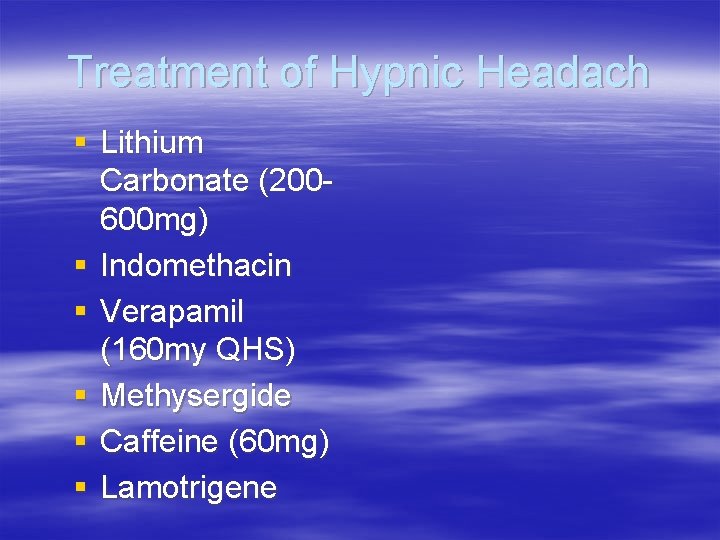
Treatment of Hypnic Headach § Lithium Carbonate (200600 mg) § Indomethacin § Verapamil (160 my QHS) § Methysergide § Caffeine (60 mg) § Lamotrigene
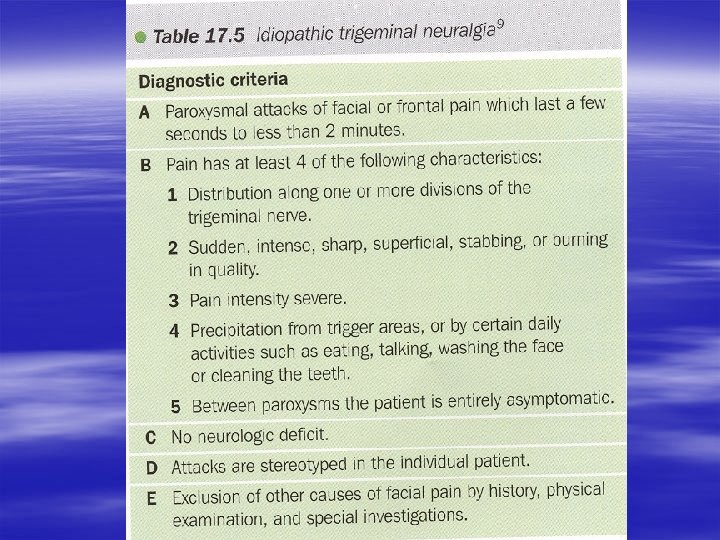
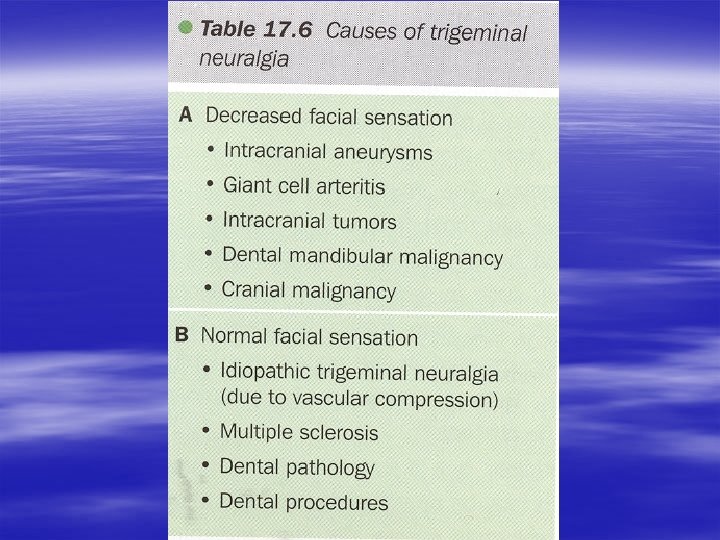
TRIGEMINAL NEURALGIA