
Understanding HACCP 1 Module 1 Understanding Hazards Associated





- Slides: 23
Understanding HACCP 1
Module 1: Understanding Hazards Associated with Foods 2
Food Safety and Food Quality • Food Safety: making a food safe to eat; free of disease causing agents • Food Quality: making a food desirable to eat; good taste, color, and texture 3
Unacceptable Foods Poor Quality bad color wrong texture smells bad Unsafe too many bacteria toxic chemicals foreign objects 4
What is Hazard? Something that could be dangerous Anything that can cause harm to the consumer Something that could mean that food will not be safe to eat 5
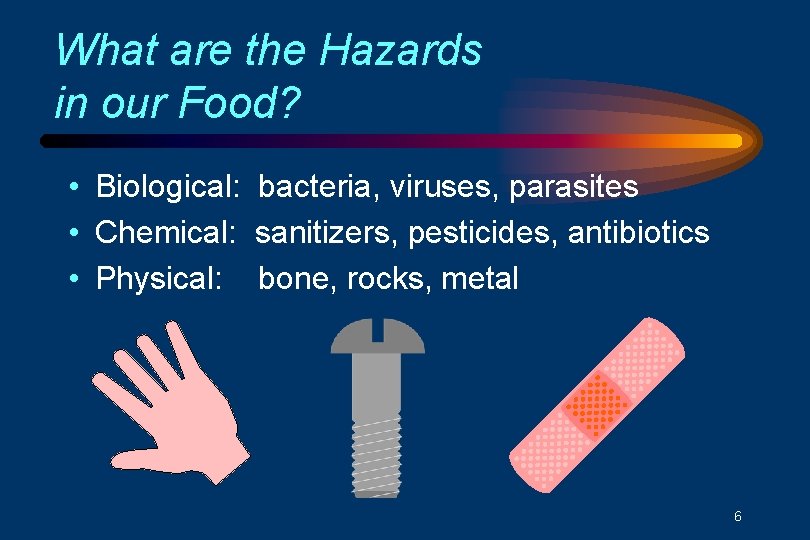
What are the Hazards in our Food? • Biological: bacteria, viruses, parasites • Chemical: sanitizers, pesticides, antibiotics • Physical: bone, rocks, metal 6
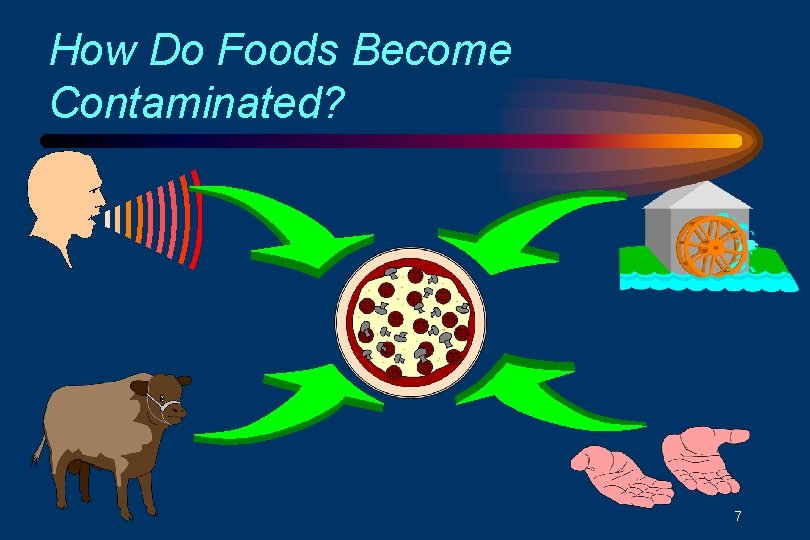
How Do Foods Become Contaminated? 7
Controlling the Hazards • Time and Temperature • Separation 8
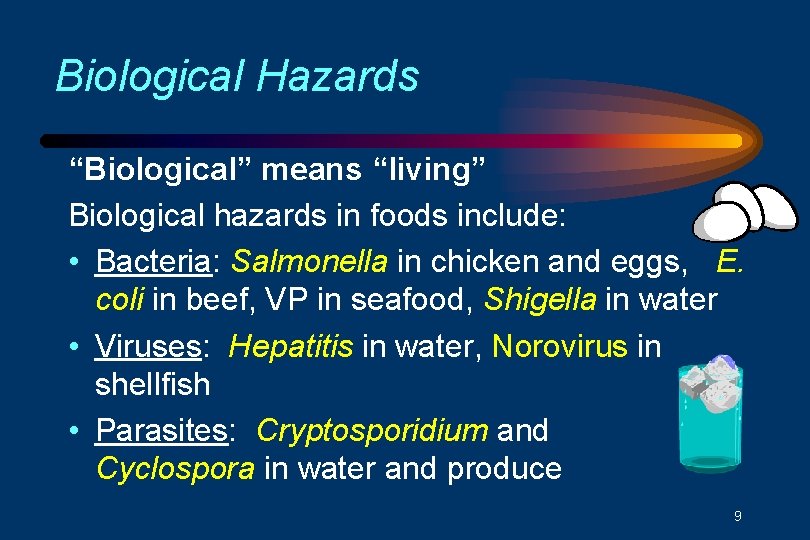
Biological Hazards “Biological” means “living” Biological hazards in foods include: • Bacteria: Salmonella in chicken and eggs, E. coli in beef, VP in seafood, Shigella in water • Viruses: Hepatitis in water, Norovirus in shellfish • Parasites: Cryptosporidium and Cyclospora in water and produce 9
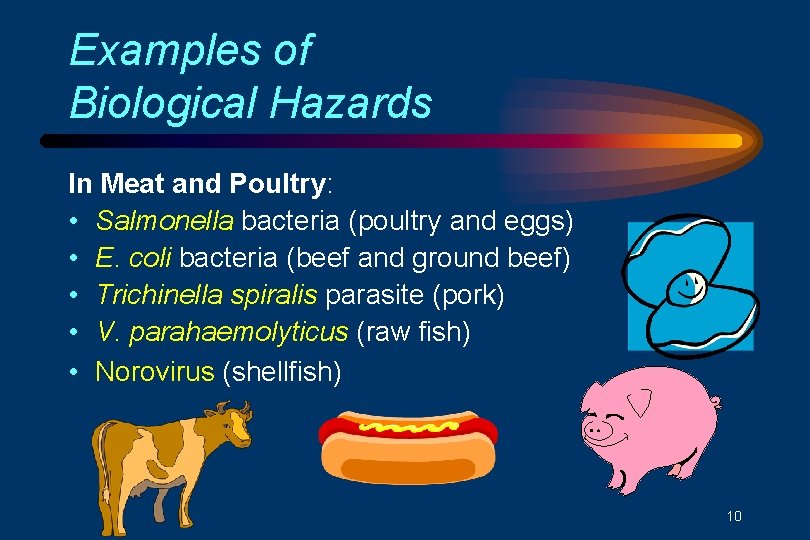
Examples of Biological Hazards In Meat and Poultry: • Salmonella bacteria (poultry and eggs) • E. coli bacteria (beef and ground beef) • Trichinella spiralis parasite (pork) • V. parahaemolyticus (raw fish) • Norovirus (shellfish) 10
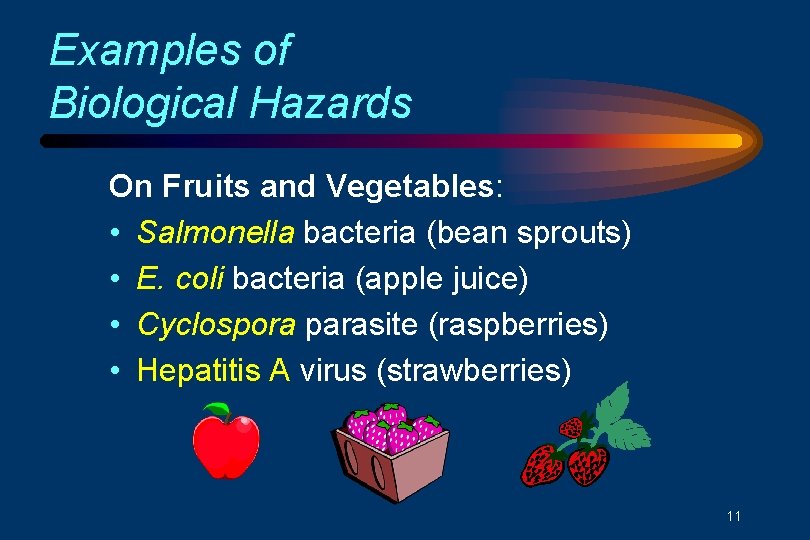
Examples of Biological Hazards On Fruits and Vegetables: • Salmonella bacteria (bean sprouts) • E. coli bacteria (apple juice) • Cyclospora parasite (raspberries) • Hepatitis A virus (strawberries) 11
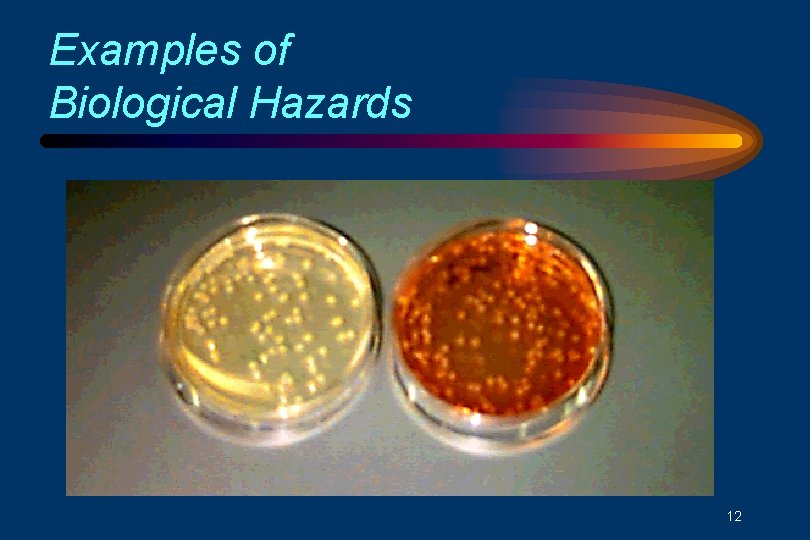
Examples of Biological Hazards 12
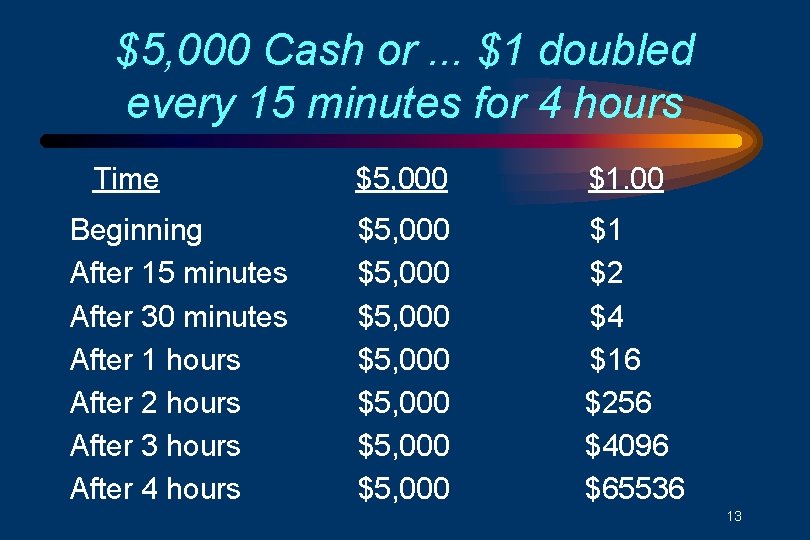
$5, 000 Cash or. . . $1 doubled every 15 minutes for 4 hours Time Beginning After 15 minutes After 30 minutes After 1 hours After 2 hours After 3 hours After 4 hours $5, 000 $1. 00 $5, 000 $5, 000 $1 $2 $4 $16 $256 $4096 $65536 13
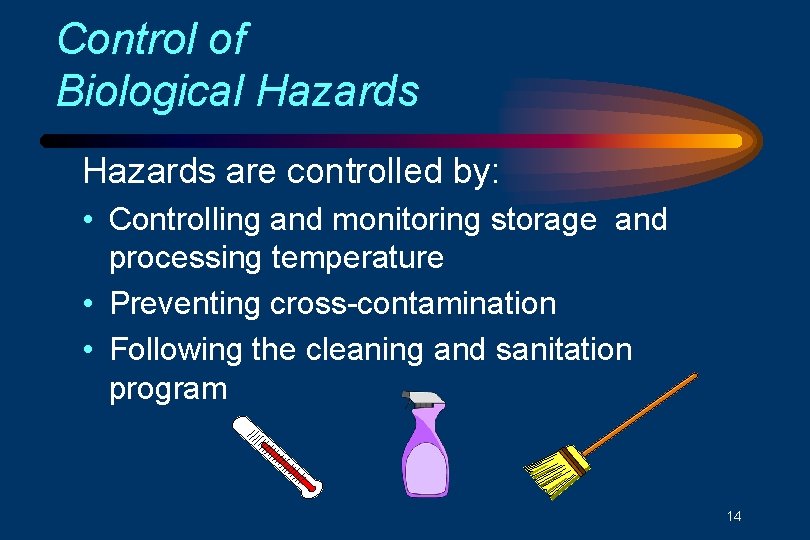
Control of Biological Hazards are controlled by: • Controlling and monitoring storage and processing temperature • Preventing cross-contamination • Following the cleaning and sanitation program 14
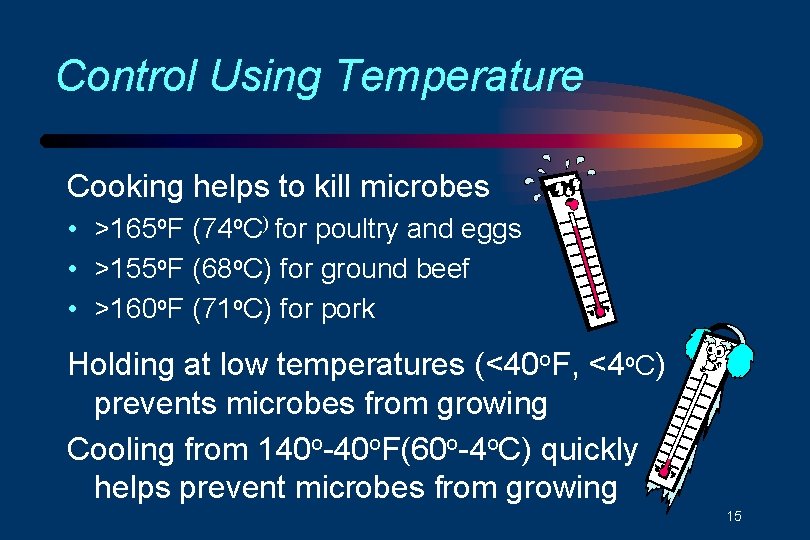
Control Using Temperature Cooking helps to kill microbes • >165 o. F (74 o. C) for poultry and eggs • >155 o. F (68 o. C) for ground beef • >160 o. F (71 o. C) for pork Holding at low temperatures (<40 o. F, <4 o. C) prevents microbes from growing Cooling from 140 o-40 o. F(60 o-4 o. C) quickly helps prevent microbes from growing 15
Chemical Hazards • Chemical hazard: a toxic substance that is produced naturally, is added intentionally or non-intentionally • Naturally-occurring: toxic substances produced by other living organisms • Added intentionally: nitrates in meat, pesticide residues in feed • Added non-intentionally: any unwanted substance (cleaning agents) • Unidentified / wrong ingredient (colors) 16
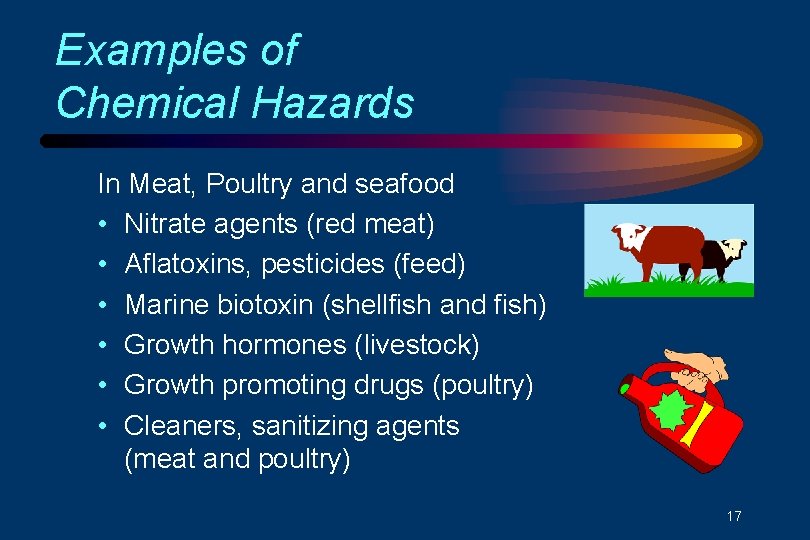
Examples of Chemical Hazards In Meat, Poultry and seafood • Nitrate agents (red meat) • Aflatoxins, pesticides (feed) • Marine biotoxin (shellfish and fish) • Growth hormones (livestock) • Growth promoting drugs (poultry) • Cleaners, sanitizing agents (meat and poultry) 17
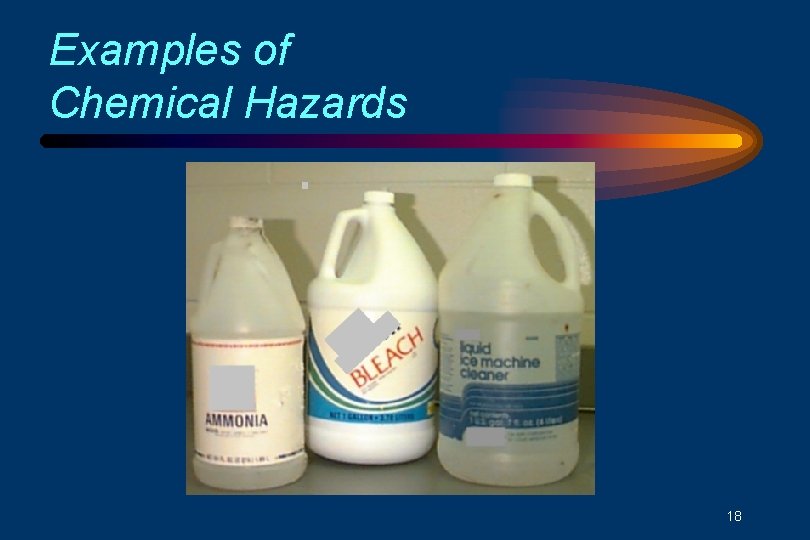
Examples of Chemical Hazards 18
Control of Chemical Hazards • Approved and legal chemicals (cleaners, sanitizers, hormones, pesticides) • Use a safe level • Letters of guarantee and vendor certification • Proper procedures and rinsing (cleaners and sanitizers) • Storage of feed (aflatoxin) • Storage and labeling for ingredients and raw materials 19
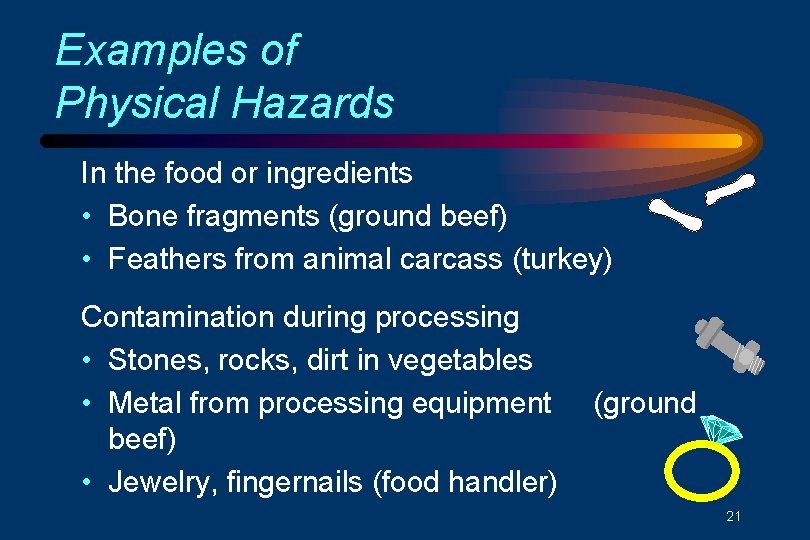
Physical Hazards Physical hazard: a hard foreign object that can cause illness or injury • Inherent to the food or ingredient • Contaminant during processing 20
Examples of Physical Hazards In the food or ingredients • Bone fragments (ground beef) • Feathers from animal carcass (turkey) Contamination during processing • Stones, rocks, dirt in vegetables • Metal from processing equipment beef) • Jewelry, fingernails (food handler) (ground 21
Control of Physical Hazards Separate and remove physical objects • Filter or sieve (meat grinder) • Water bath (vegetables) • Metal detector (all foods) • Good employee practices (jewelry) • Good sanitation and quality control programs 22
Reference: www. Slideshare. com 23