
Understanding Group Interaction 1 What is a Group


- Slides: 13
Understanding Group Interaction 1
What is a Group? o Multiple members n n o o o 2 or more people perceive themselves as a group Group rewards Corresponding effects Common goals 2
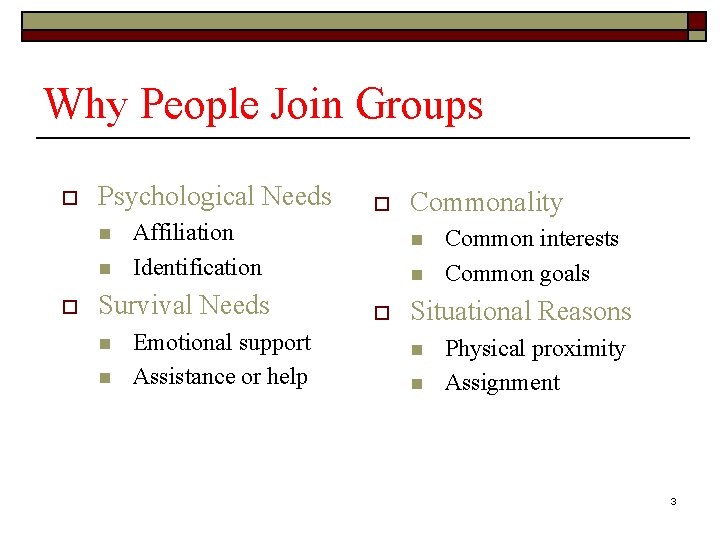
Why People Join Groups o Psychological Needs n n o Affiliation Identification Survival Needs n n o Emotional support Assistance or help Commonality n n o Common interests Common goals Situational Reasons n n Physical proximity Assignment 3
Factors Affecting Group Performance o o o o Group Cohesiveness Communication Structure Group Roles Presence of Others Type of Task Individual Dominance Groupthink 4
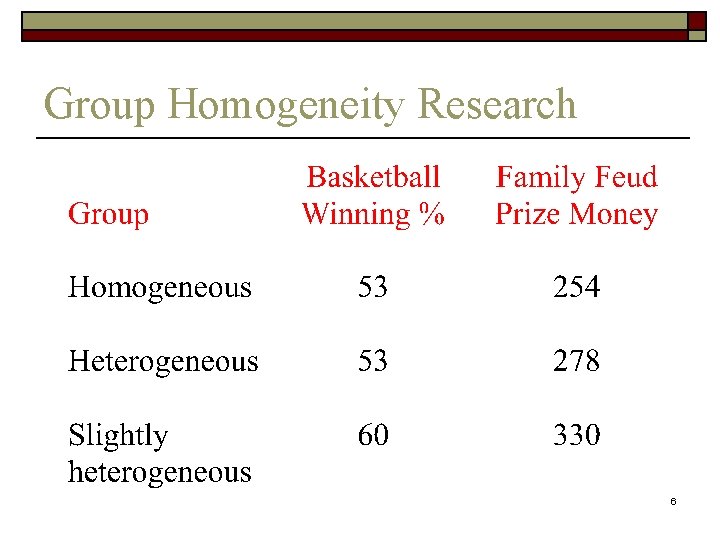
Factors Affecting Group Cohesiveness o Group Homogeneity n n n o o o Homogeneous Heterogeneous Slightly heterogeneous Stability of Membership Isolation Outside Pressure Group Size Group Status 5
Group Homogeneity Research 6
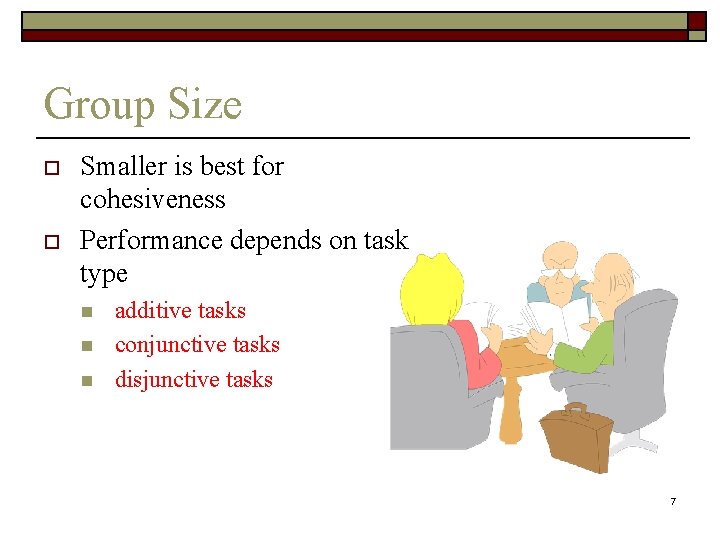
Group Size o o Smaller is best for cohesiveness Performance depends on task type n n n additive tasks conjunctive tasks disjunctive tasks 7
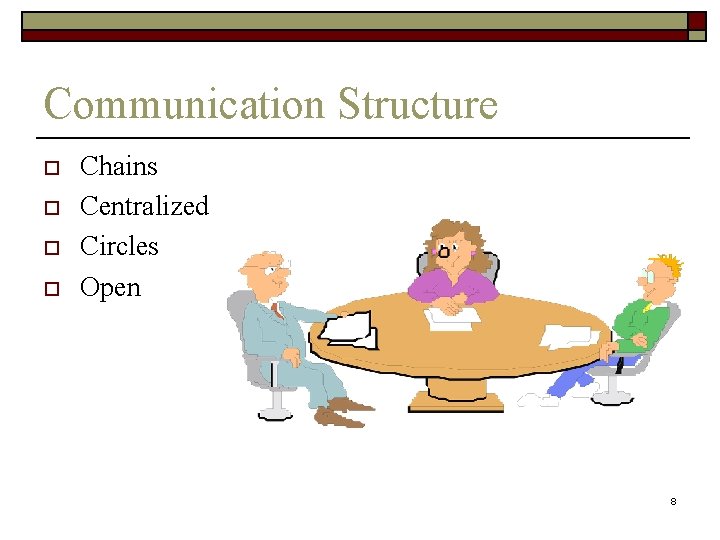
Communication Structure o o Chains Centralized Circles Open 8
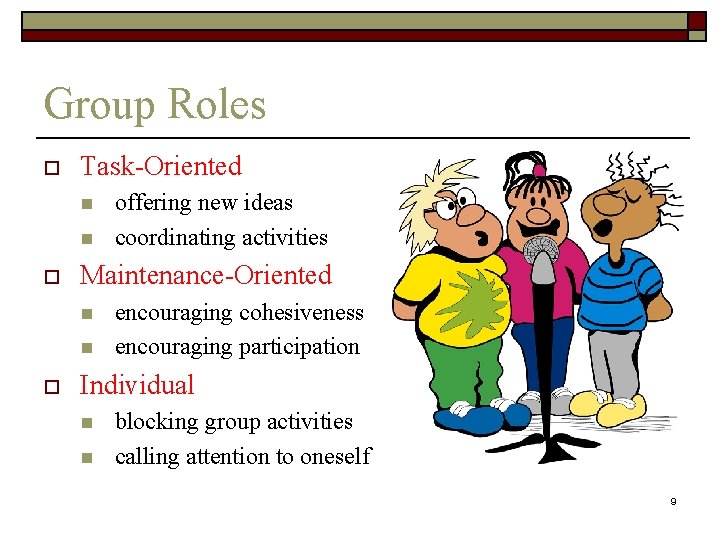
Group Roles o Task-Oriented n n o Maintenance-Oriented n n o offering new ideas coordinating activities encouraging cohesiveness encouraging participation Individual n n blocking group activities calling attention to oneself 9
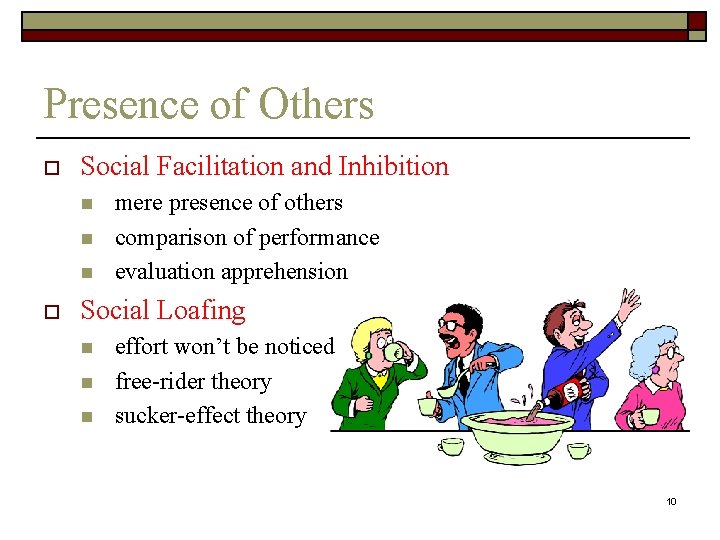
Presence of Others o Social Facilitation and Inhibition n o mere presence of others comparison of performance evaluation apprehension Social Loafing n n n effort won’t be noticed free-rider theory sucker-effect theory 10
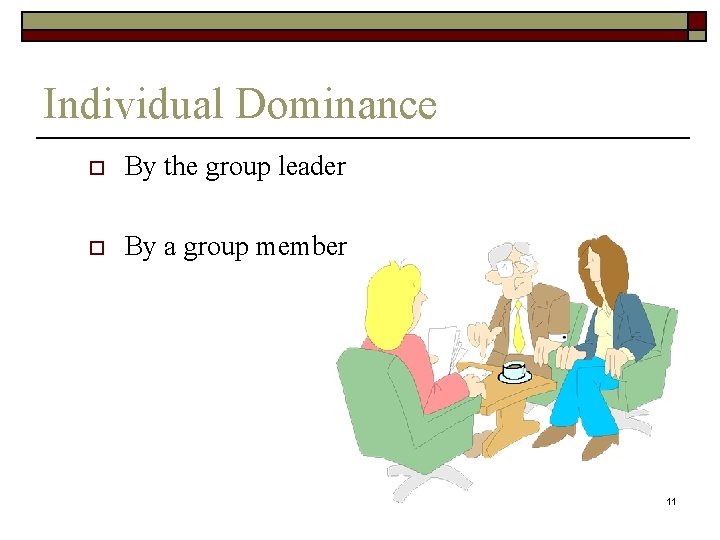
Individual Dominance o By the group leader o By a group member 11
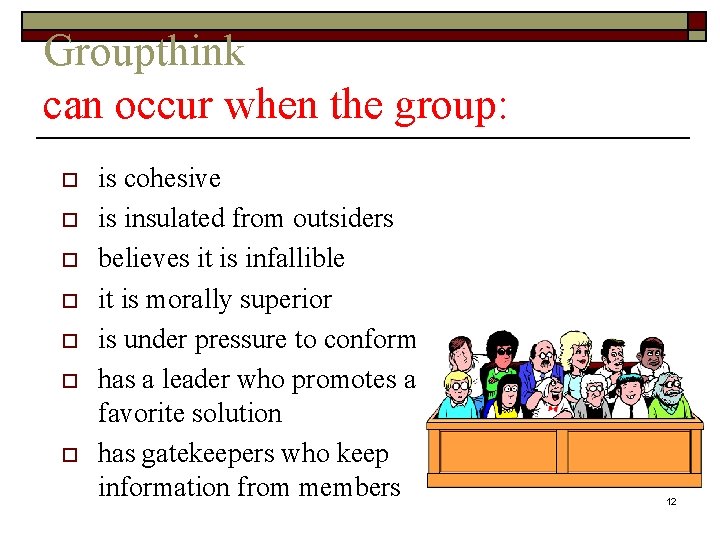
Groupthink can occur when the group: o o o o is cohesive is insulated from outsiders believes it is infallible it is morally superior is under pressure to conform has a leader who promotes a favorite solution has gatekeepers who keep information from members 12
Group versus Individual Performance o Groups n n o have higher quality decisions are more risky Individuals n n are more creative make a decision more quickly 13