
Understanding Giardia Maren von der Heyde National Breed
Understanding Giardia Maren von der Heyde National Breed Supervisor November 2011

What is Giardia? Giardia is a protozoan parasite that colonizes and leaches nutrients from the small intestine of dogs. Giardia is expelled in faeces. It is found in water or ground that has been contaminated by faeces.

Giardia Biology Giardia has two distinct forms: 1. Dormant Cyst: Cysts are expelled in faeces and are extremely hardy. They can survive for months outside the body and are able to survive chlorine treatment. Cysts are ingested by dogs triggering Giardia infection
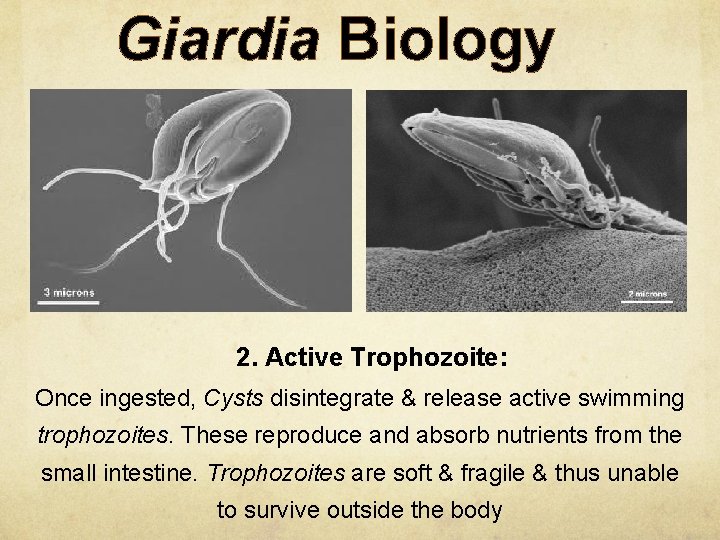
Giardia Biology 2. Active Trophozoite: Once ingested, Cysts disintegrate & release active swimming trophozoites. These reproduce and absorb nutrients from the small intestine. Trophozoites are soft & fragile & thus unable to survive outside the body
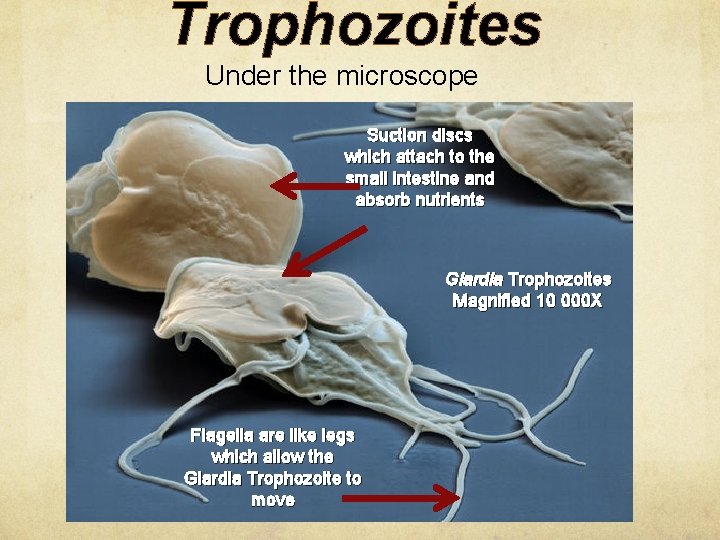
Trophozoites Under the microscope Suction discs which attach to the small intestine and absorb nutrients Giardia Trophozoites Magnified 10 000 X Flagella are like legs which allow the Giardia Trophozoite to move

Giardia Transmission Giardia is transmitted by a dog ingesting a GIARDIA CYST. The incubation period is on average 1 week Common infection routes: • Eating faeces directly • Drinking water contaminated by faeces • Eating anything that has been in contact with faeces C u r r e n t research suggests that bird & other non-canine droppings are not likely to infect dogs with Giardia Despite this Dogs should be prevented from ingesting any faeces

Transmission: Dogs can be carriers of Giardia but show no symptoms of infection Carriers do however expel Giardia cysts in their faeces. These cysts can go on to infect other dogs especially puppies
Transmission: Many adult dogs are Giardia carriers. Their immune systems keep the parasite population under control. The parasite and dog eventually live together IN HARMONY
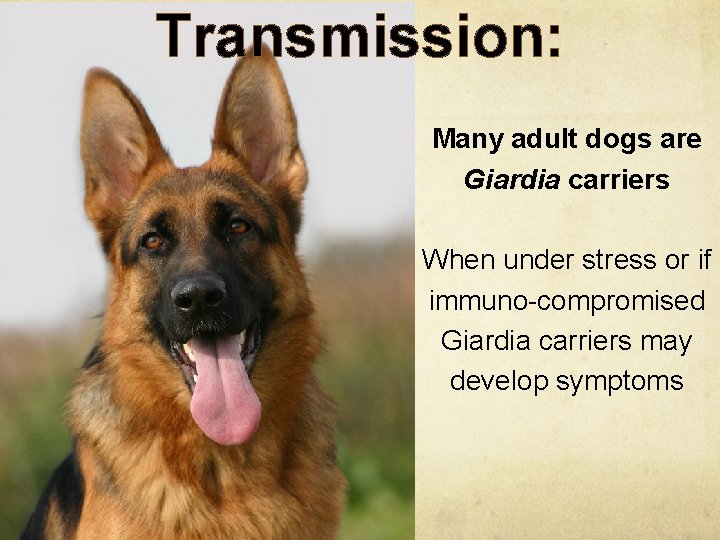
Transmission: Many adult dogs are Giardia carriers When under stress or if immuno-compromised Giardia carriers may develop symptoms

Transmission Giardia does not migrate beyond the digestive tract. Giardia is not transmitted through the skin or through mother’s milk.
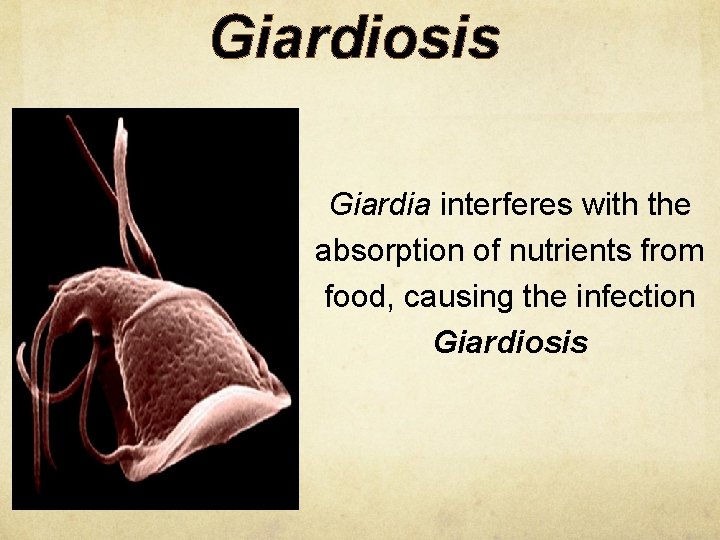
Giardiosis Giardia interferes with the absorption of nutrients from food, causing the infection Giardiosis

Giardiosis Symptoms • Diarrhea: light coloured stools, blood is not typically present • Vomiting • In chronic cases, weight loss, despite good appetite • Fatigue & lethargy • Untreated chronic infection may cause permanent damage to the small intestine
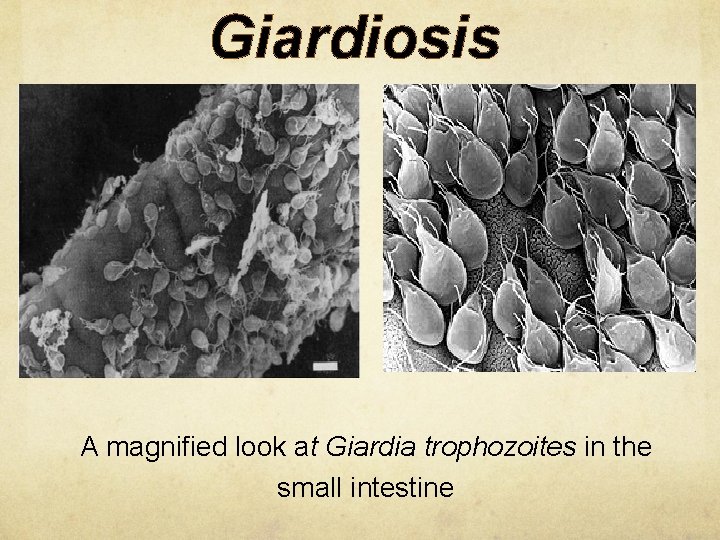
Giardiosis A magnified look at Giardia trophozoites in the small intestine
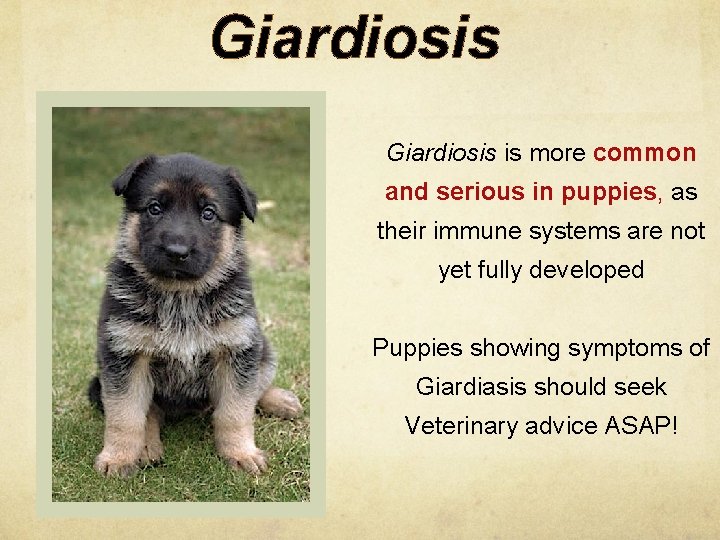
Giardiosis is more common and serious in puppies, as their immune systems are not yet fully developed Puppies showing symptoms of Giardiasis should seek Veterinary advice ASAP!
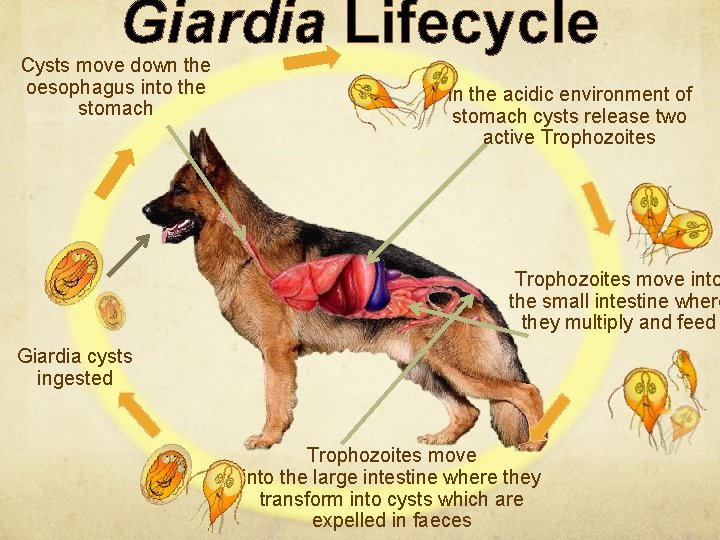
Giardia Lifecycle Cysts move down the oesophagus into the stomach In the acidic environment of stomach cysts release two active Trophozoites move into the small intestine where they multiply and feed Giardia cysts ingested Trophozoites move into the large intestine where they transform into cysts which are expelled in faeces

Many thanks to… VA 1 BSZS Sieger 2011 Remo vom Fichtenschlag
Diagnosis A faecal exam is necessary to diagnose Giardia. Different faecal examination methods can be used. Discuss the best diagnostic methodology with your Veterinarian! It should be noted that Giardia cysts are shed intermittently & thus multiple faecal examinations are necessary for a conclusive result
Treatment This information is purely educational & does not constitute medical advice. Before adopting ANY medical treatments please consult with your Veterinarian!
Treatment Suggested Puppy treatment protocol for Breeders Homeopathy A homeopathic supplement to boost immunity and combat Giardia infection is available From weaning age (normally 3 weeks) start adding Giardia granules to the puppies food. Consult with a Homeopathic Vet for more information on this supplement
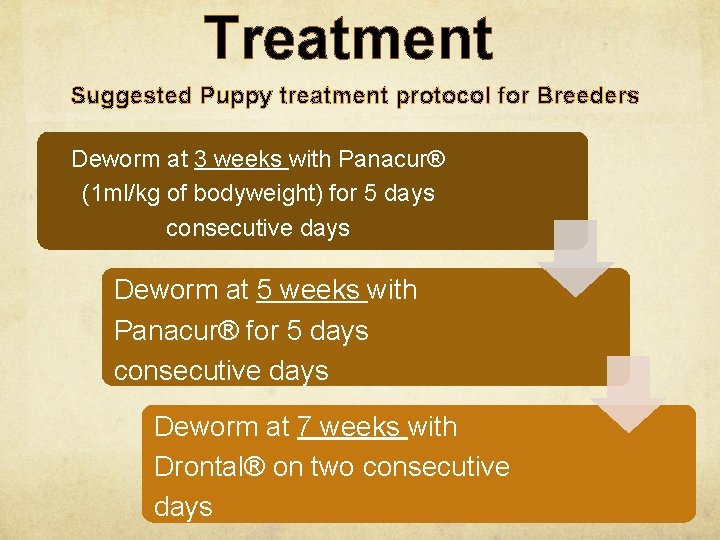
Treatment Suggested Puppy treatment protocol for Breeders Deworm at 3 weeks with Panacur® (1 ml/kg of bodyweight) for 5 days consecutive days Deworm at 5 weeks with Panacur® for 5 days consecutive days Deworm at 7 weeks with Drontal® on two consecutive days
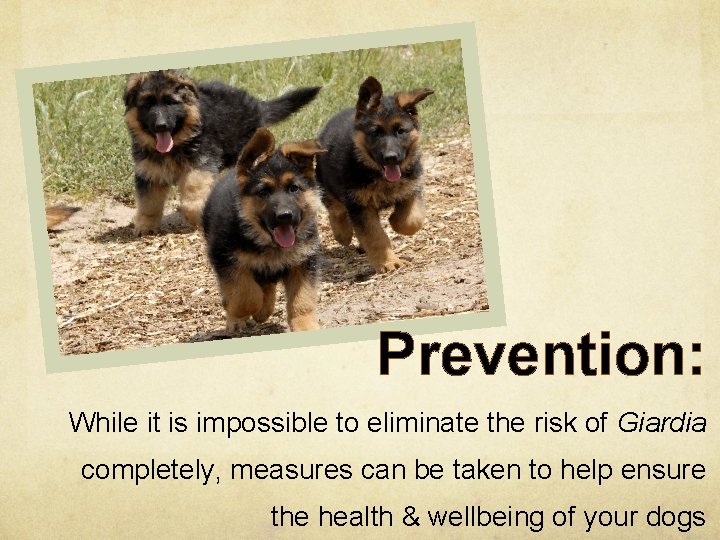
Prevention: While it is impossible to eliminate the risk of Giardia completely, measures can be taken to help ensure the health & wellbeing of your dogs
Prevention Good Sanitation & Hygiene! ü Remove ALL faeces from the dog’s environment AS SOON AS POSSIBLE ü Giardia cysts are resistant to chlorine treatment. As such it is best to clean & disinfect kennels & trailers with quaternary ammonia based disinfectants such as F 10, at least once a week.
Prevention Good Sanitation & Hygiene! ü Clean water and food bowls Dog food and water bowls should not be placed in a position where they can be unintentionally contaminated with fecal material. Elevating bowls and placing bowls out of high traffic areas helps minimise the risk of contamination
Prevention Good Sanitation & Hygiene! ü Provide clean water at all times & prevent dog’s swimming in or drinking dirty water ü Keep dogs clean to prevent the risk of any contamination
Prevention Suggested hygiene protocol for breeders Bath the dam 3 days before whelping with F 10 Shampoo Bath her again immediately after whelping and then every second day until the bleeding stops
Prevention Suggested hygiene protocol for breeders Whelping box must be disinfected before and after whelping. The whelping box should be throughly cleaned and disinfected regular intervals post whelping
Prevention Suggested hygiene protocol for breeders Wash puppies regularly (every morning if possible) before feeding with F 10 shampoo, especially the bums and paws After feeding, clean puppy paws again in case they stepped into their food bowl
Prevention Diet & Holistic Health ü Ensure your dog has a well balanced diet, which is high in fibre. This will help to ensure healthy digestion & prevent Giardia infection. Good overall health will also ensure that a dog’s own immune system can fight parasitic threats

Many thanks to Emeritus Professor: Department of Veterinary Tropical diseases Joop Boomker for graciously sharing his wealth of knowledge
Compiled by: Karishma Bhoolia in consultation with the Parasitological Society of Southern Africa And Emeritus Professor Department of Veterinary Tropical diseases Joop Boomker

Questions?
- Slides: 31