
Understanding Flatness Parallelism Profile in Calypso Flatness When


- Slides: 37
Understanding Flatness, Parallelism, & Profile in Calypso
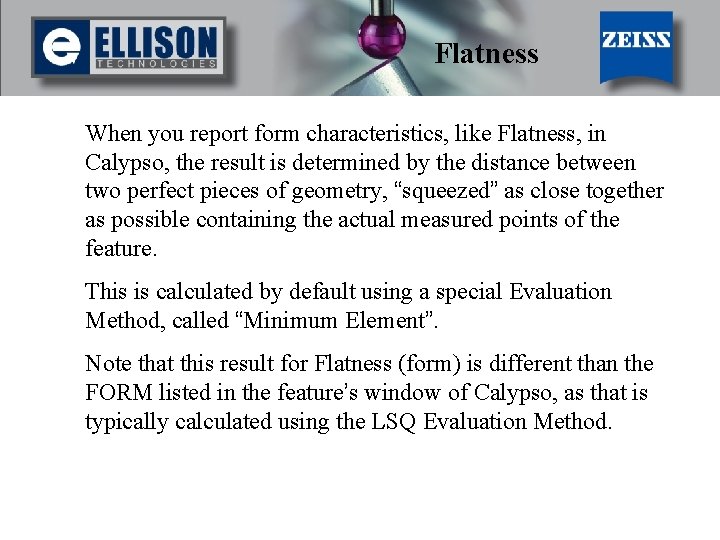
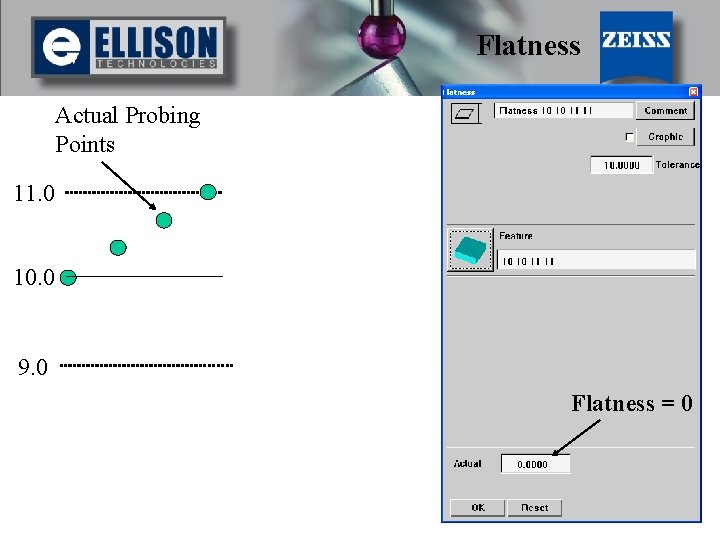
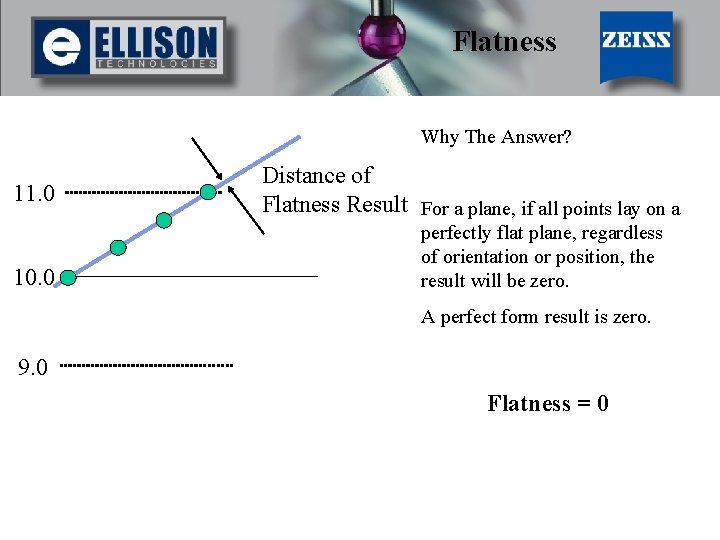
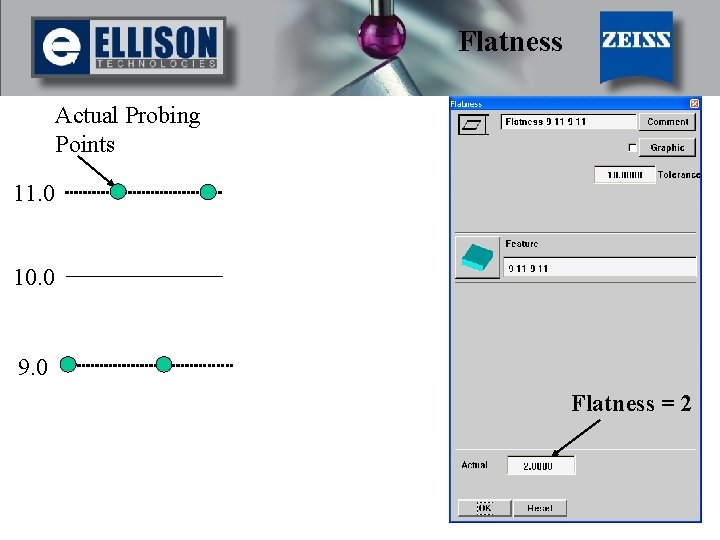
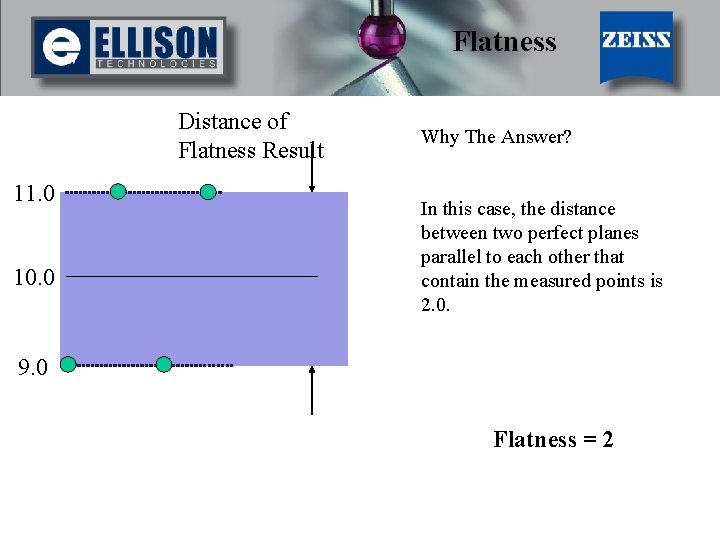
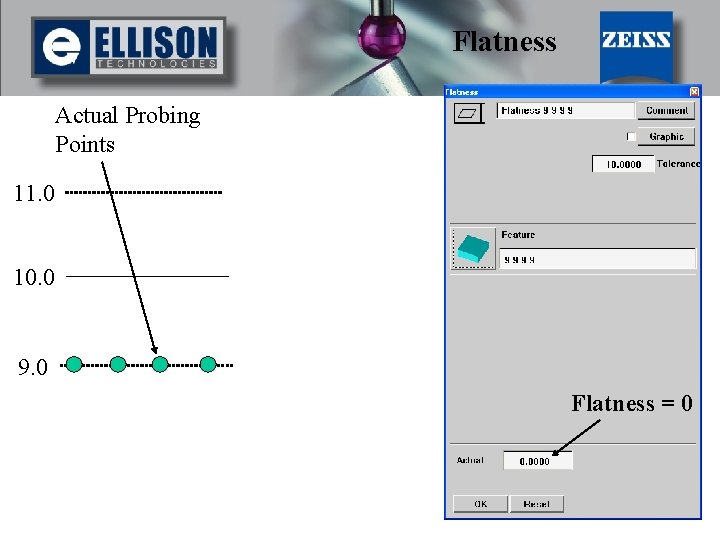
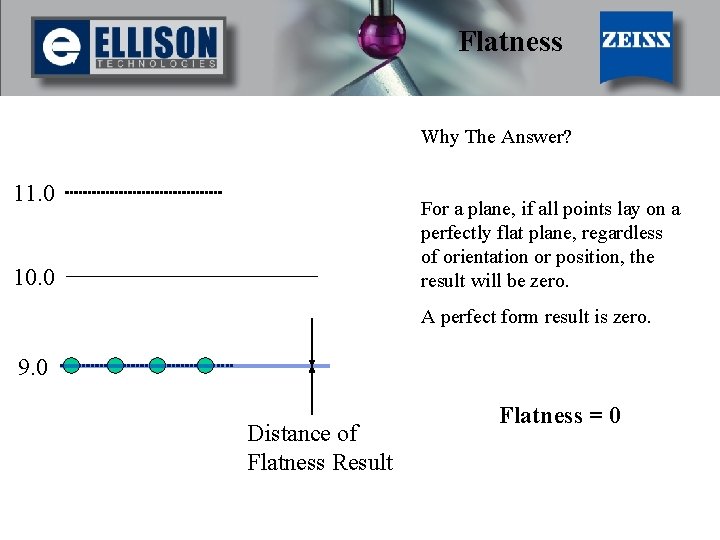
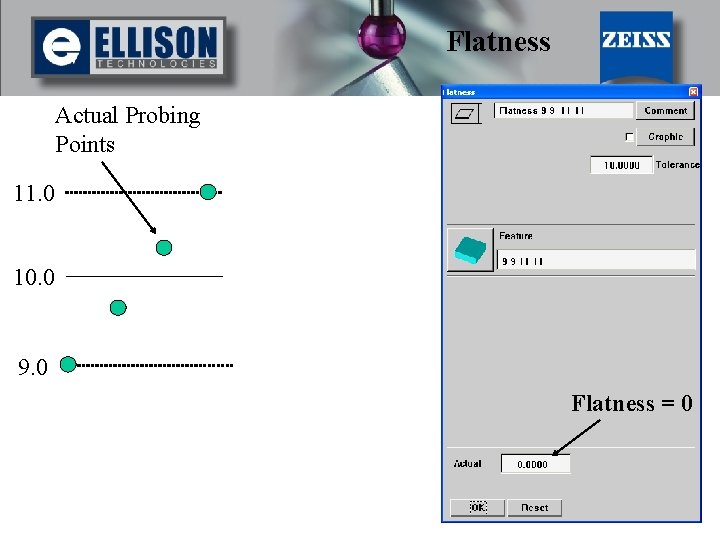
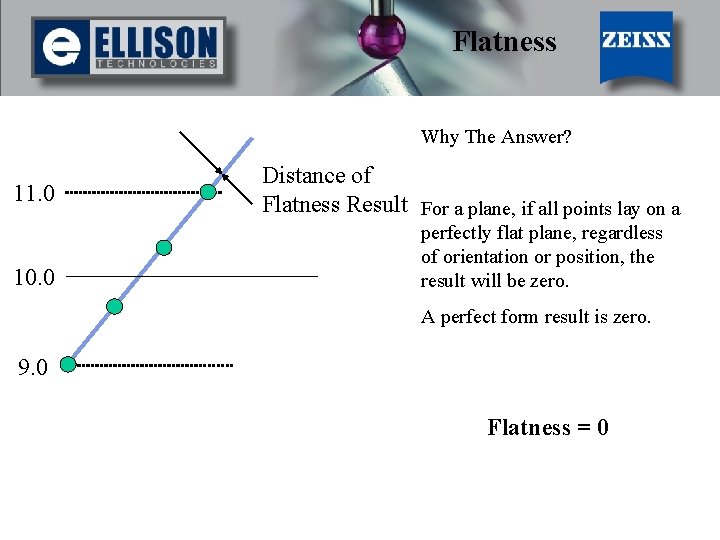
Flatness When you report form characteristics, like Flatness, in Calypso, the result is determined by the distance between two perfect pieces of geometry, “squeezed” as close together as possible containing the actual measured points of the feature. This is calculated by default using a special Evaluation Method, called “Minimum Element”. Note that this result for Flatness (form) is different than the FORM listed in the feature’s window of Calypso, as that is typically calculated using the LSQ Evaluation Method.
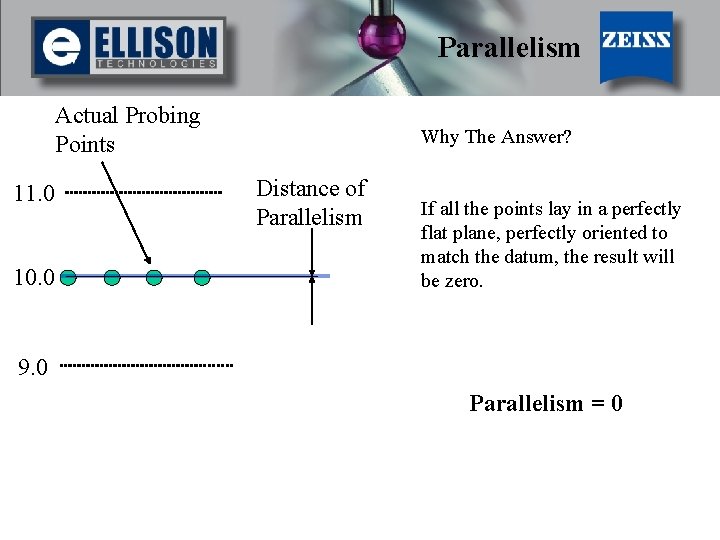
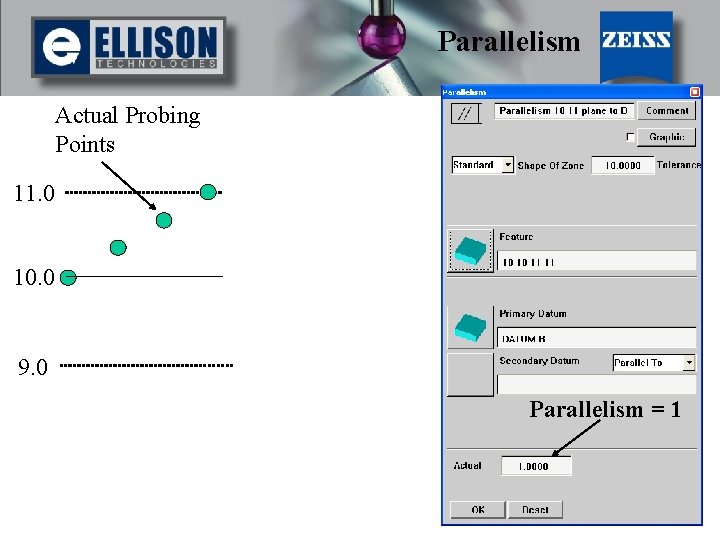
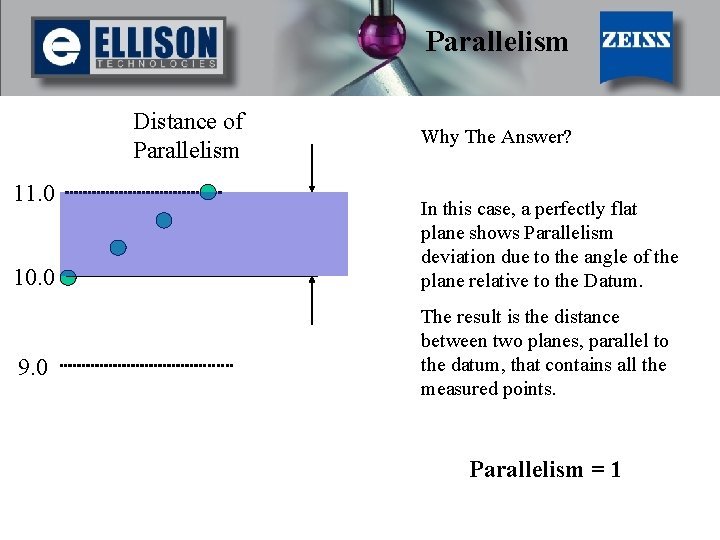
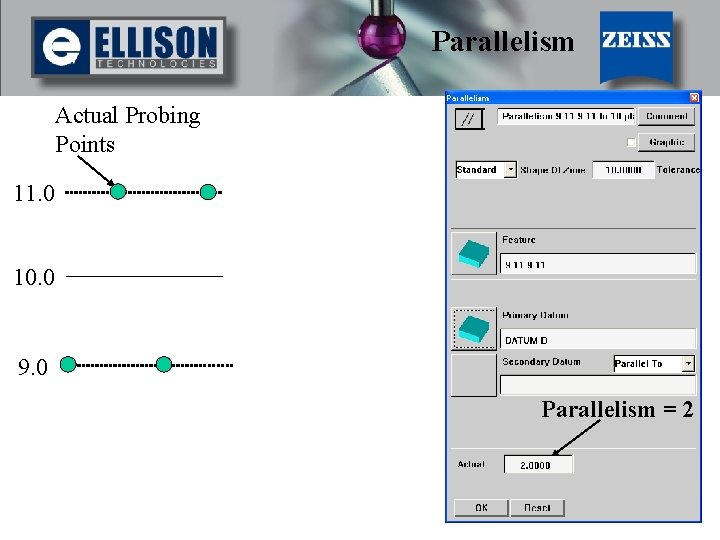
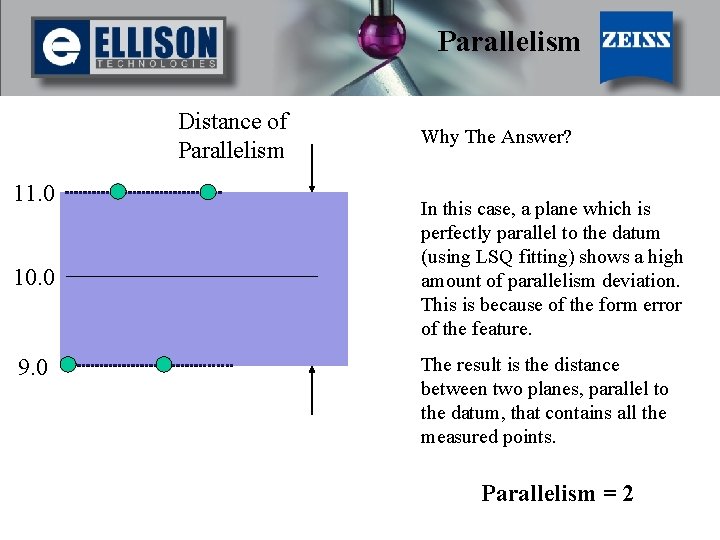
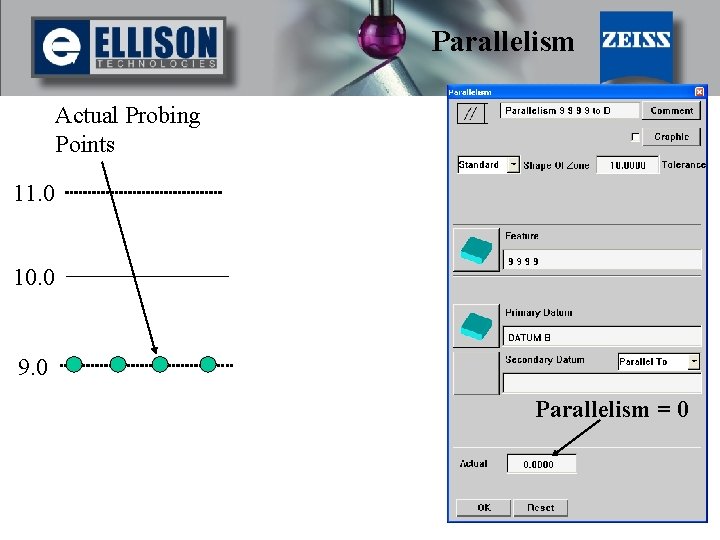
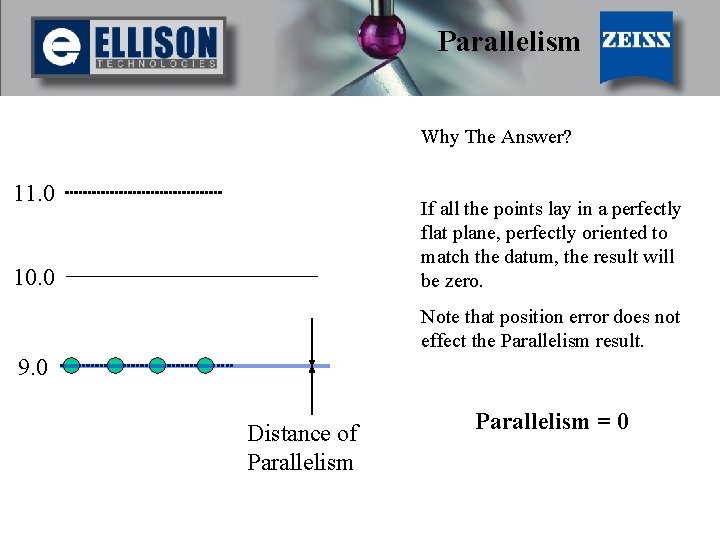
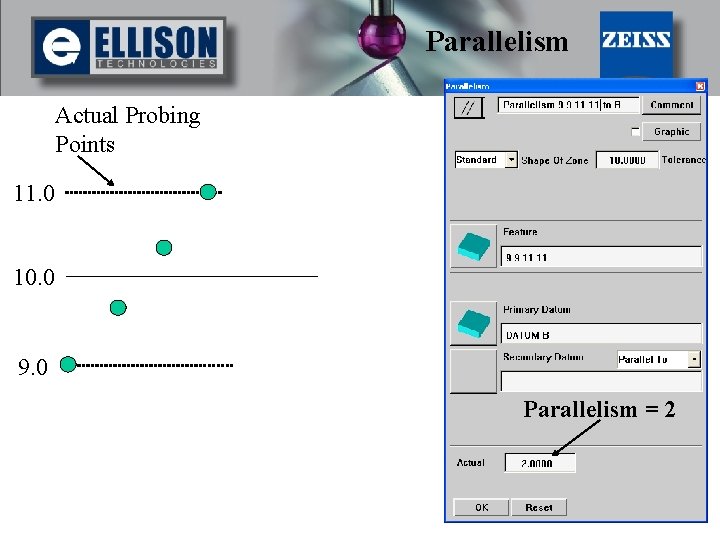
Parallelism When reporting Parallelism of one plane to another in Calypso, the result can be thought of as the distance between two planes, parallel to the datum, that contains all of the actual measured points of the feature being evaluated. By default, the LSQ evaluation method is used to determine the orientation of the Datum. Note that in the Parallelism Characteristic, secondary datums are not necessary if you are evaluating two 3 -dimensional features, like planes.
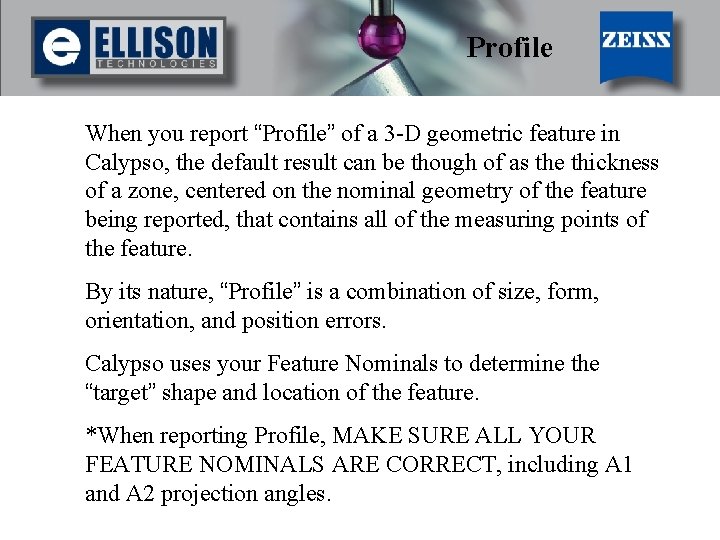
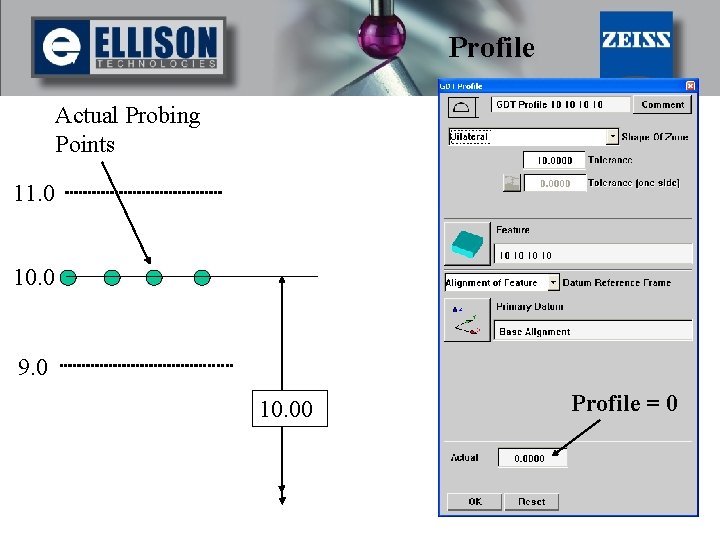
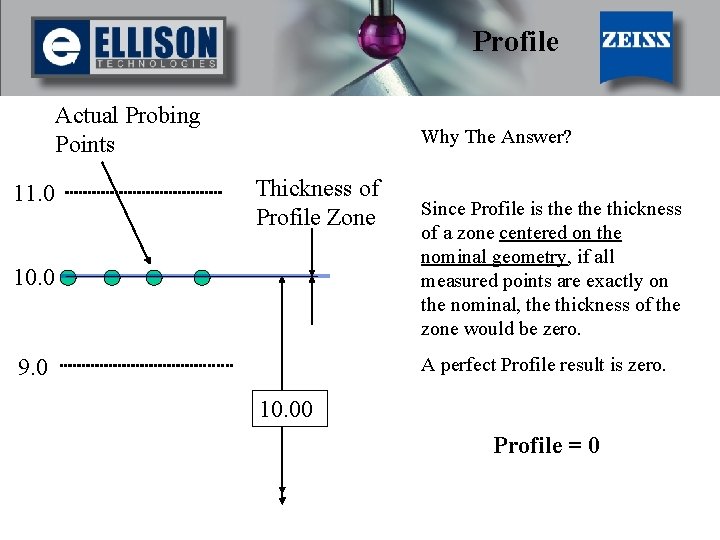
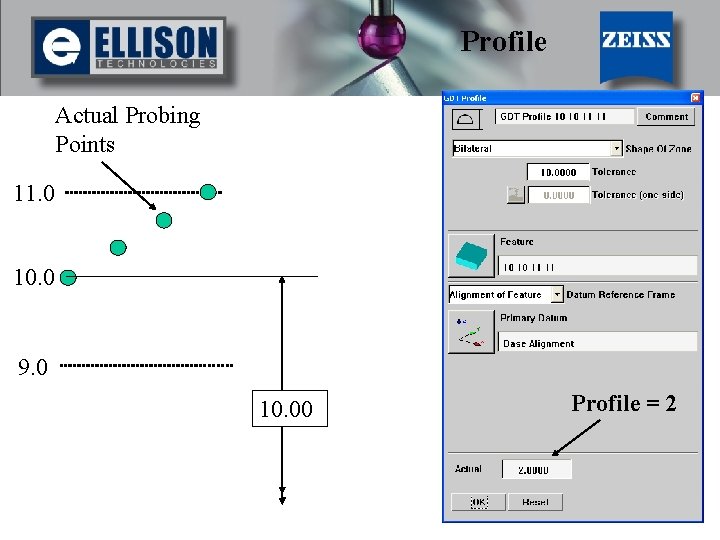
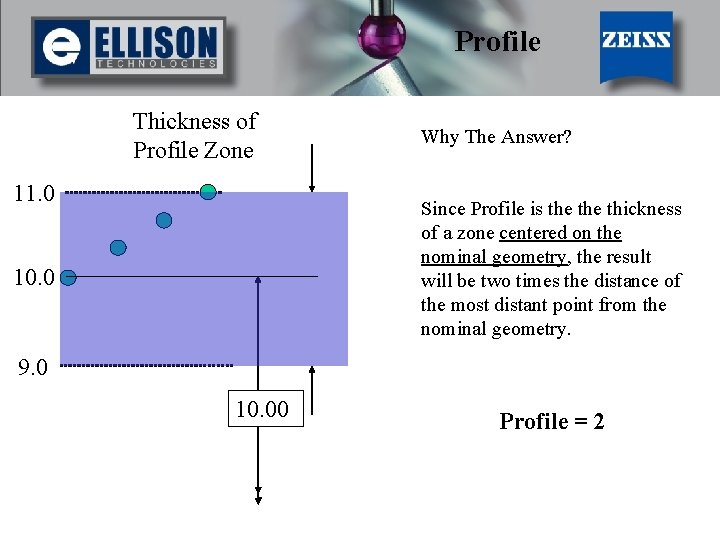
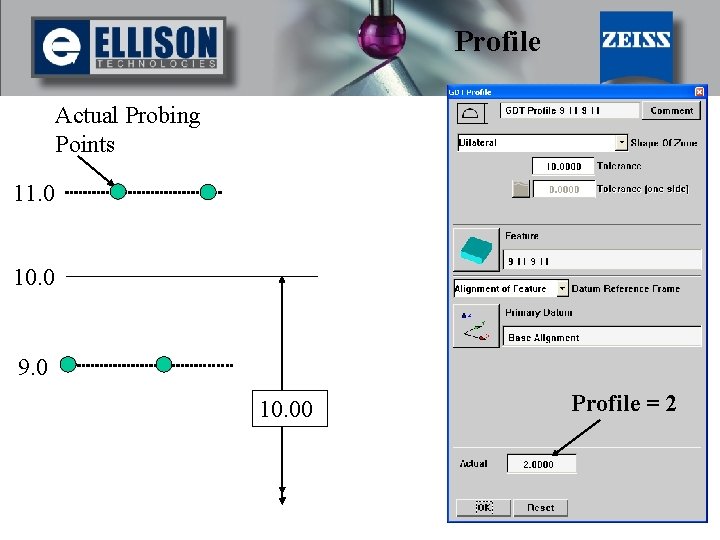
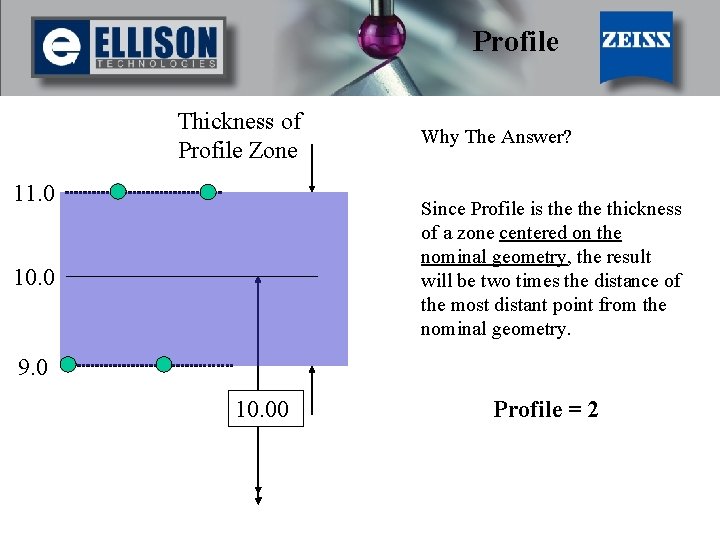
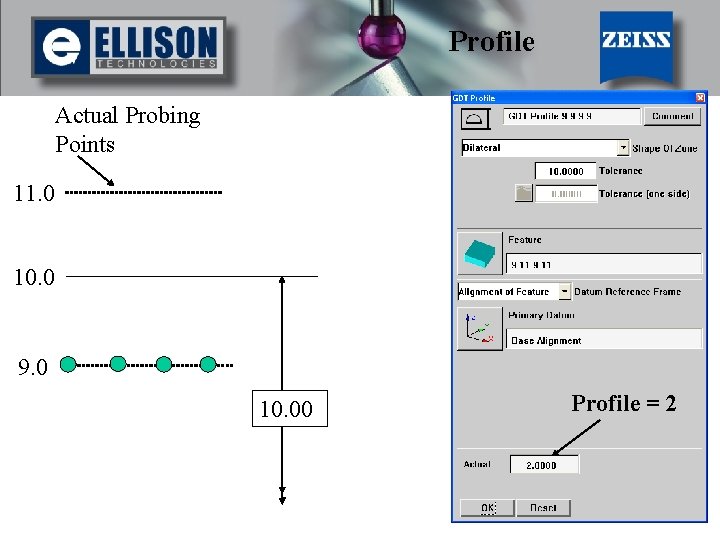
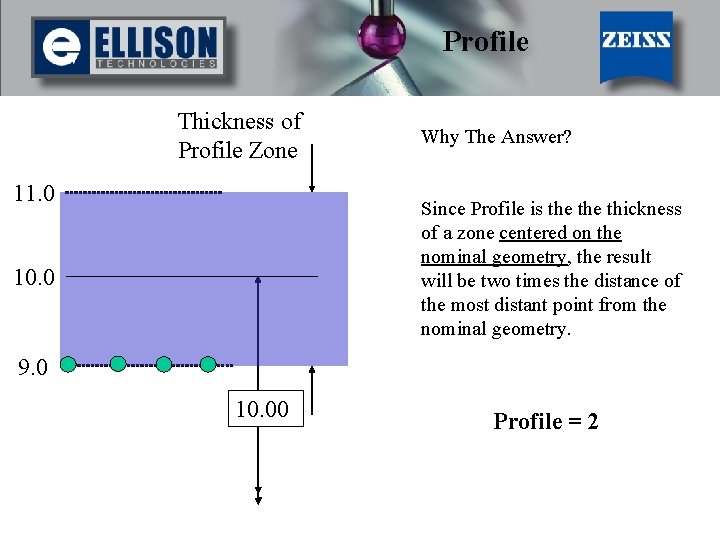
Profile When you report “Profile” of a 3 -D geometric feature in Calypso, the default result can be though of as the thickness of a zone, centered on the nominal geometry of the feature being reported, that contains all of the measuring points of the feature. By its nature, “Profile” is a combination of size, form, orientation, and position errors. Calypso uses your Feature Nominals to determine the “target” shape and location of the feature. *When reporting Profile, MAKE SURE ALL YOUR FEATURE NOMINALS ARE CORRECT, including A 1 and A 2 projection angles.
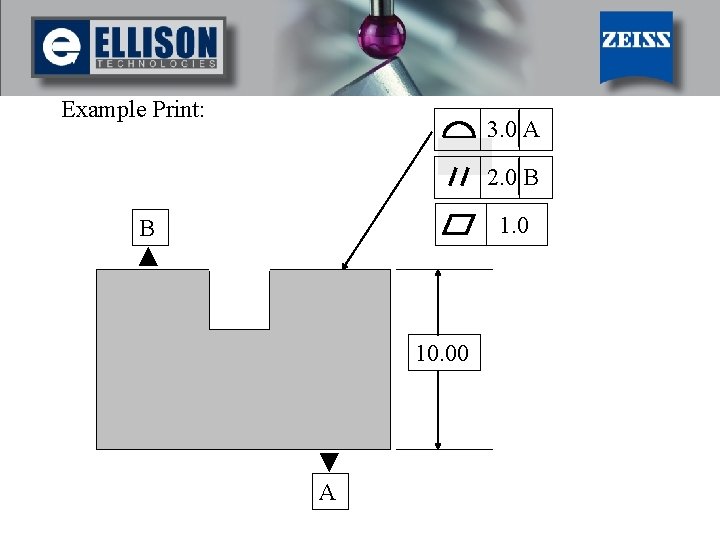
Example Print: 3. 0 A 2. 0 B 10. 00 A
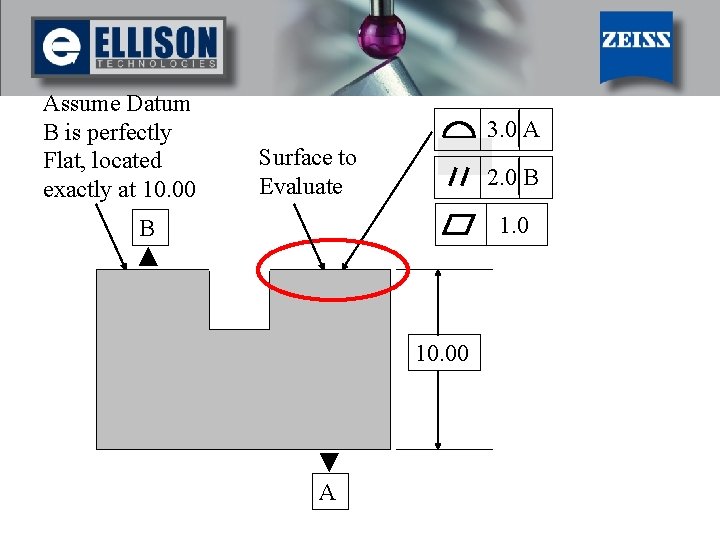
Assume Datum B is perfectly Flat, located exactly at 10. 00 3. 0 A Surface to Evaluate 2. 0 B 10. 00 A
The next several slides show the results for Flatness, Parallelism, and Profile for five different point patterns on the surface to be evaluated. Notice how position, orientation, and form errors in the points that make up the evaluated surface affect the results of Flatness, Parallelism, and Profile. Actual characteristic windows from Calypso are shown, along with explanations of why each result is calculated the way it is.
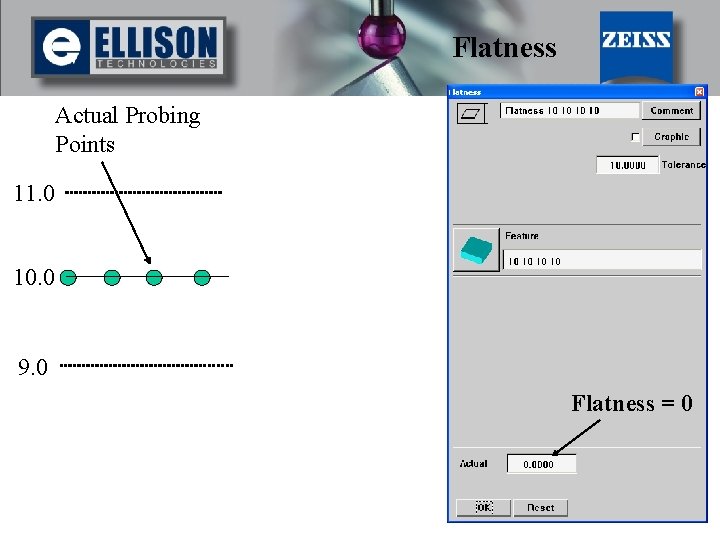
Flatness Actual Probing Points 11. 0 10. 0 9. 0 Flatness = 0
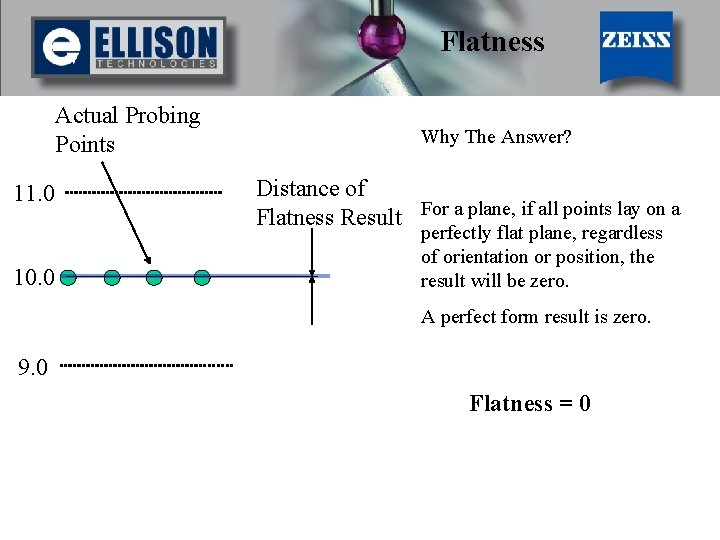
Flatness Actual Probing Points 11. 0 10. 0 Why The Answer? Distance of Flatness Result For a plane, if all points lay on a perfectly flat plane, regardless of orientation or position, the result will be zero. A perfect form result is zero. 9. 0 Flatness = 0
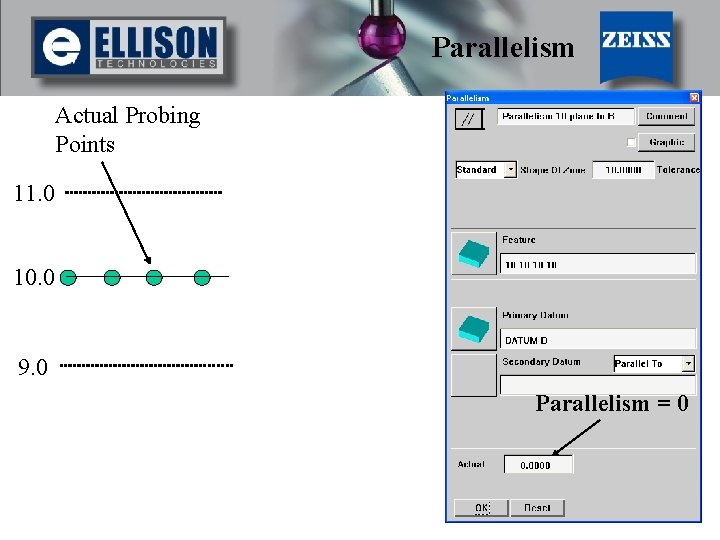
Parallelism Actual Probing Points 11. 0 10. 0 9. 0 Parallelism = 0
Parallelism Actual Probing Points 11. 0 10. 0 Why The Answer? Distance of Parallelism If all the points lay in a perfectly flat plane, perfectly oriented to match the datum, the result will be zero. 9. 0 Parallelism = 0
Profile Actual Probing Points 11. 0 10. 0 9. 0 10. 00 Profile = 0
Profile Actual Probing Points 11. 0 Why The Answer? Thickness of Profile Zone 10. 0 Since Profile is the thickness of a zone centered on the nominal geometry, if all measured points are exactly on the nominal, the thickness of the zone would be zero. 9. 0 A perfect Profile result is zero. 10. 00 Profile = 0
Flatness Actual Probing Points 11. 0 10. 0 9. 0 Flatness = 0
Flatness Why The Answer? 11. 0 10. 0 Distance of Flatness Result For a plane, if all points lay on a perfectly flat plane, regardless of orientation or position, the result will be zero. A perfect form result is zero. 9. 0 Flatness = 0
Parallelism Actual Probing Points 11. 0 10. 0 9. 0 Parallelism = 1
Parallelism Distance of Parallelism 11. 0 10. 0 9. 0 Why The Answer? In this case, a perfectly flat plane shows Parallelism deviation due to the angle of the plane relative to the Datum. The result is the distance between two planes, parallel to the datum, that contains all the measured points. Parallelism = 1
Profile Actual Probing Points 11. 0 10. 0 9. 0 10. 00 Profile = 2
Profile Thickness of Profile Zone 11. 0 Why The Answer? Since Profile is the thickness of a zone centered on the nominal geometry, the result will be two times the distance of the most distant point from the nominal geometry. 10. 0 9. 0 10. 00 Profile = 2
Flatness Actual Probing Points 11. 0 10. 0 9. 0 Flatness = 2
Flatness Distance of Flatness Result 11. 0 10. 0 Why The Answer? In this case, the distance between two perfect planes parallel to each other that contain the measured points is 2. 0. 9. 0 Flatness = 2
Parallelism Actual Probing Points 11. 0 10. 0 9. 0 Parallelism = 2
Parallelism Distance of Parallelism 11. 0 10. 0 9. 0 Why The Answer? In this case, a plane which is perfectly parallel to the datum (using LSQ fitting) shows a high amount of parallelism deviation. This is because of the form error of the feature. The result is the distance between two planes, parallel to the datum, that contains all the measured points. Parallelism = 2
Profile Actual Probing Points 11. 0 10. 0 9. 0 10. 00 Profile = 2
Profile Thickness of Profile Zone 11. 0 Why The Answer? Since Profile is the thickness of a zone centered on the nominal geometry, the result will be two times the distance of the most distant point from the nominal geometry. 10. 0 9. 0 10. 00 Profile = 2
Flatness Actual Probing Points 11. 0 10. 0 9. 0 Flatness = 0
Flatness Why The Answer? 11. 0 For a plane, if all points lay on a perfectly flat plane, regardless of orientation or position, the result will be zero. 10. 0 A perfect form result is zero. 9. 0 Distance of Flatness Result Flatness = 0
Parallelism Actual Probing Points 11. 0 10. 0 9. 0 Parallelism = 0
Parallelism Why The Answer? 11. 0 If all the points lay in a perfectly flat plane, perfectly oriented to match the datum, the result will be zero. 10. 0 Note that position error does not effect the Parallelism result. 9. 0 Distance of Parallelism = 0
Profile Actual Probing Points 11. 0 10. 0 9. 0 10. 00 Profile = 2
Profile Thickness of Profile Zone 11. 0 Why The Answer? Since Profile is the thickness of a zone centered on the nominal geometry, the result will be two times the distance of the most distant point from the nominal geometry. 10. 0 9. 0 10. 00 Profile = 2
Flatness Actual Probing Points 11. 0 10. 0 9. 0 Flatness = 0
Flatness Why The Answer? 11. 0 10. 0 Distance of Flatness Result For a plane, if all points lay on a perfectly flat plane, regardless of orientation or position, the result will be zero. A perfect form result is zero. 9. 0 Flatness = 0
Parallelism Actual Probing Points 11. 0 10. 0 9. 0 Parallelism = 2
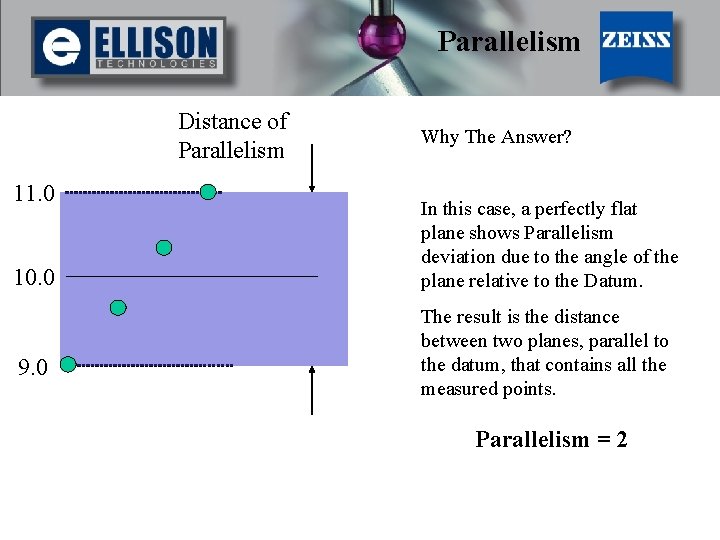
Parallelism Distance of Parallelism 11. 0 10. 0 9. 0 Why The Answer? In this case, a perfectly flat plane shows Parallelism deviation due to the angle of the plane relative to the Datum. The result is the distance between two planes, parallel to the datum, that contains all the measured points. Parallelism = 2
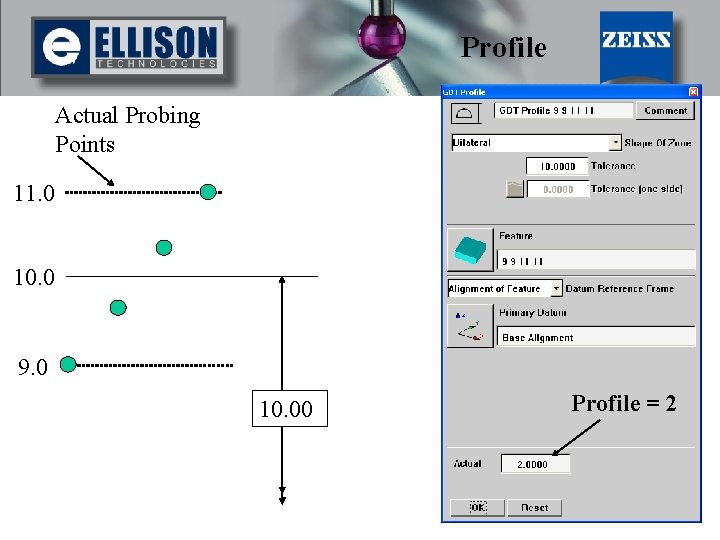
Profile Actual Probing Points 11. 0 10. 0 9. 0 10. 00 Profile = 2
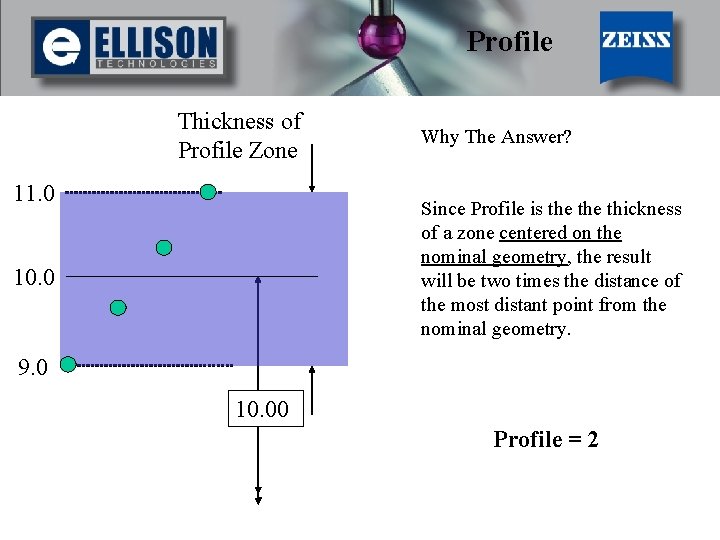
Profile Thickness of Profile Zone 11. 0 Why The Answer? Since Profile is the thickness of a zone centered on the nominal geometry, the result will be two times the distance of the most distant point from the nominal geometry. 10. 0 9. 0 10. 00 Profile = 2