
Understanding Erosion Deposition and Burial 1 7 Opener
Understanding Erosion, Deposition, and Burial 1. 7
Opener • What do you think happens to sediment after it is formed? Describe your ideas in your journals.
Last time…. • The candies in our model in the last session represented large pieces of the same type of rock. • If the candies represent rock, what did the small bits of candy represent? • We learned in the last session that smaller pieces of rock that have been weathered from a larger rock are called sediment. Sand can be an example of sediment.
Sediment • Small pieces of rock and other earth materials, such as mud or sand
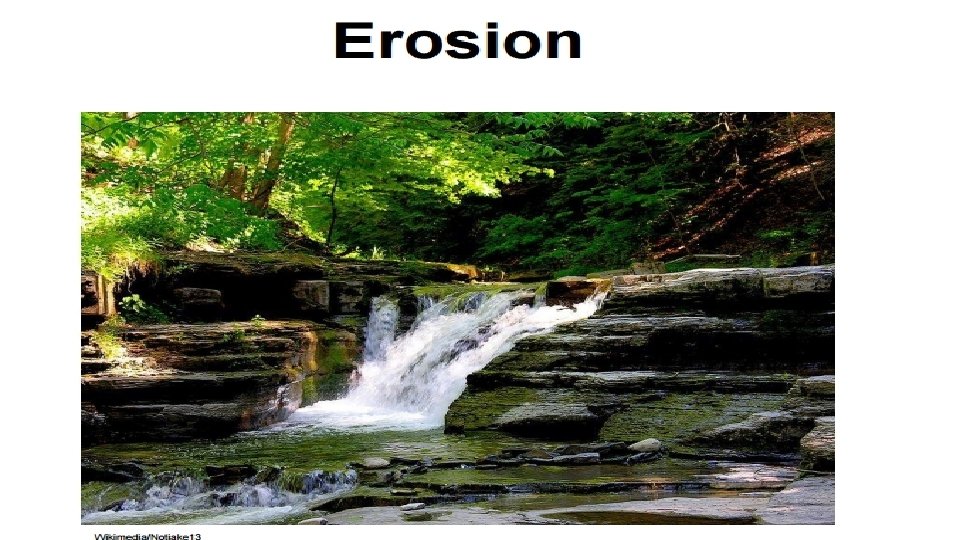
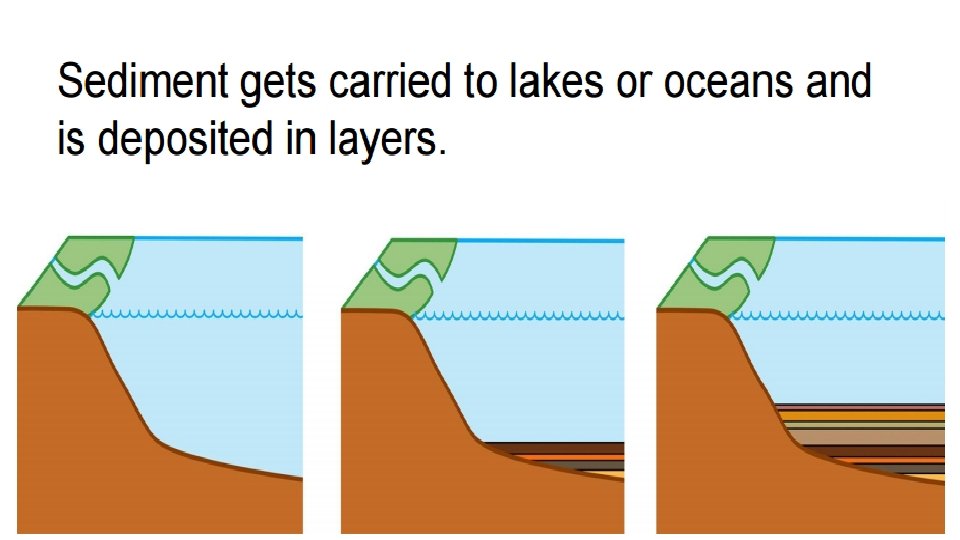
Erosion • The movement of sediment from place to place, often caused by wind or flowing water
Model and predictions • In your journals, make predictions about what you think the sediment will be like after it has been buried under the books overnight.
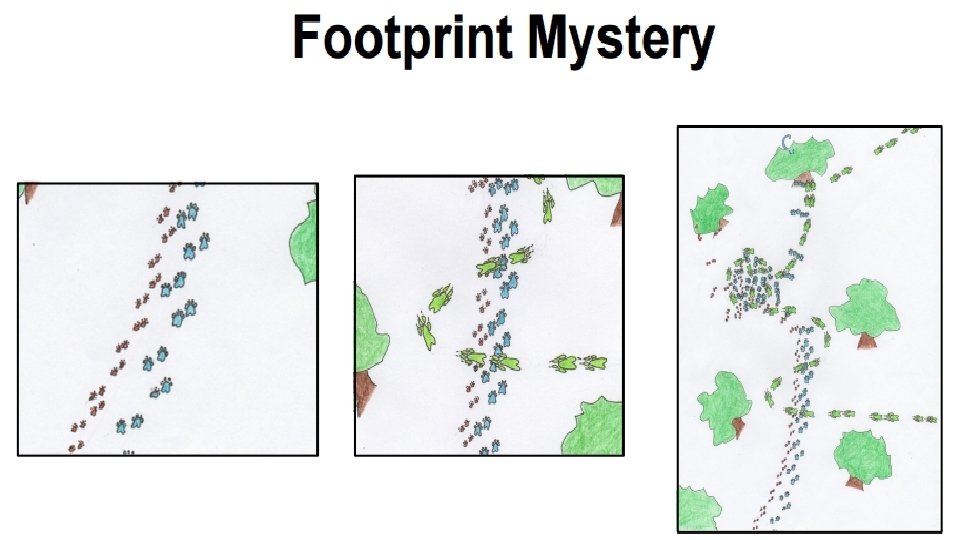
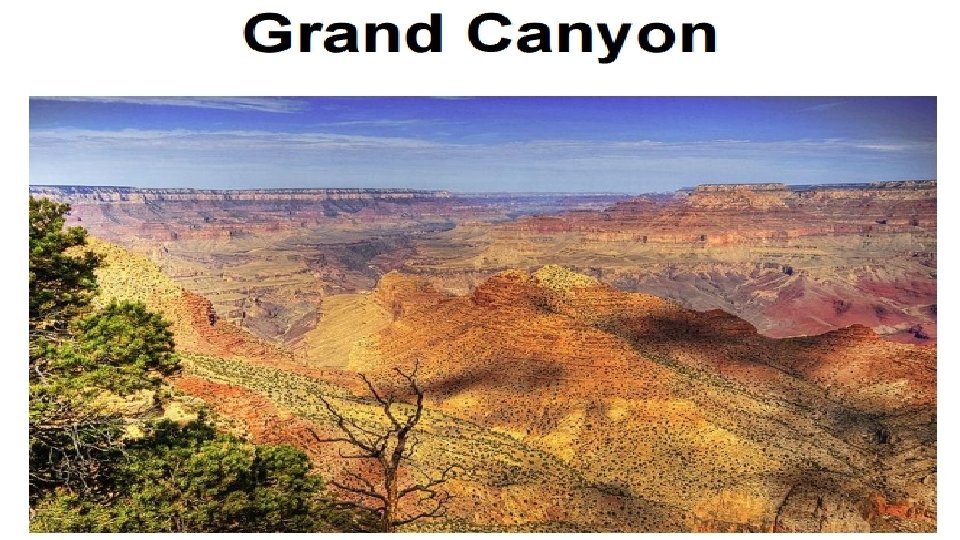
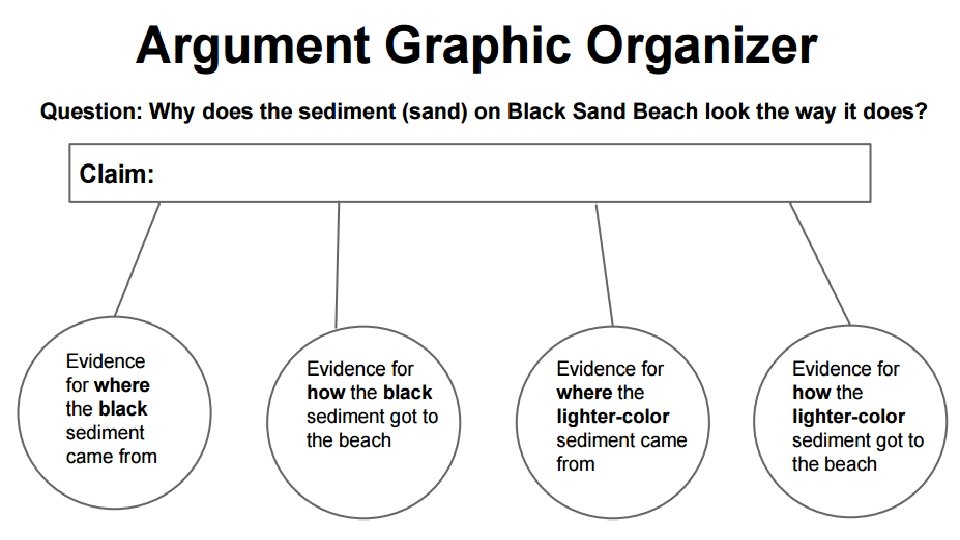
Writing an argument about Black Sand Beach. • You will use the same skills as scientists—making observations and inferences, collecting evidence, and explaining— in order to make an argument about a unique and beautiful beach and how it came to look the way it does.
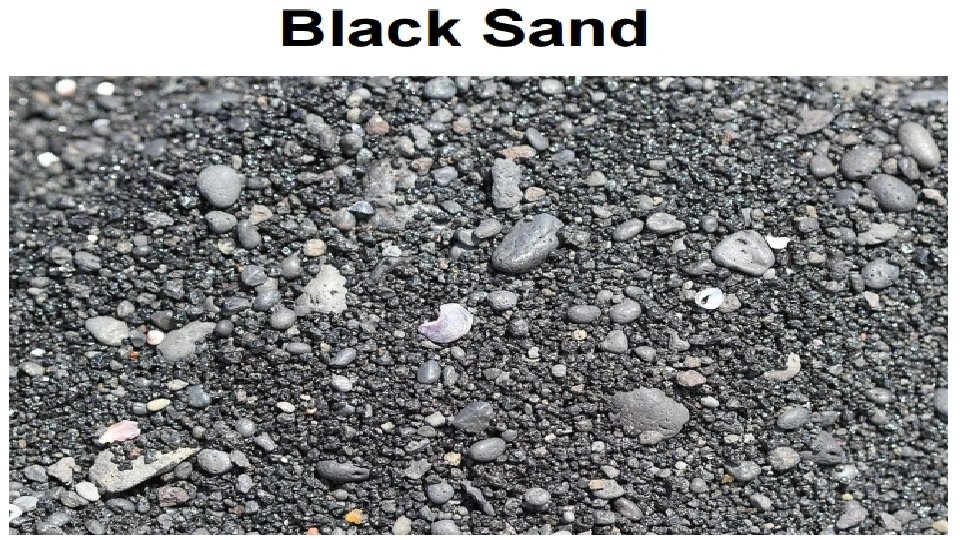
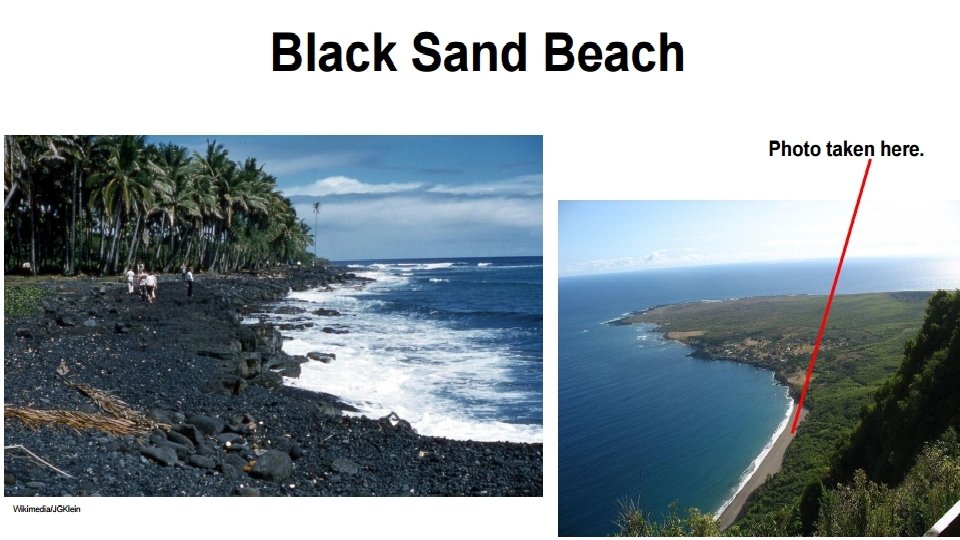
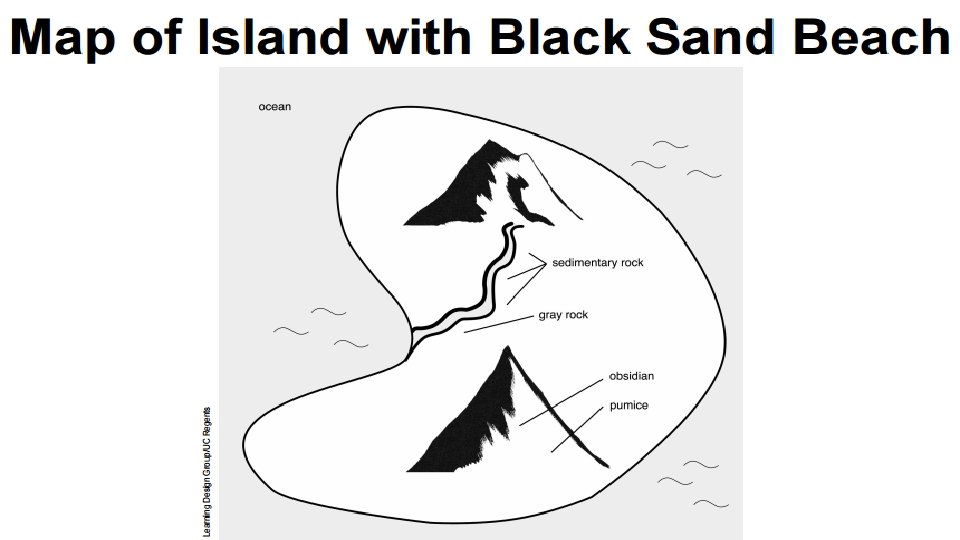
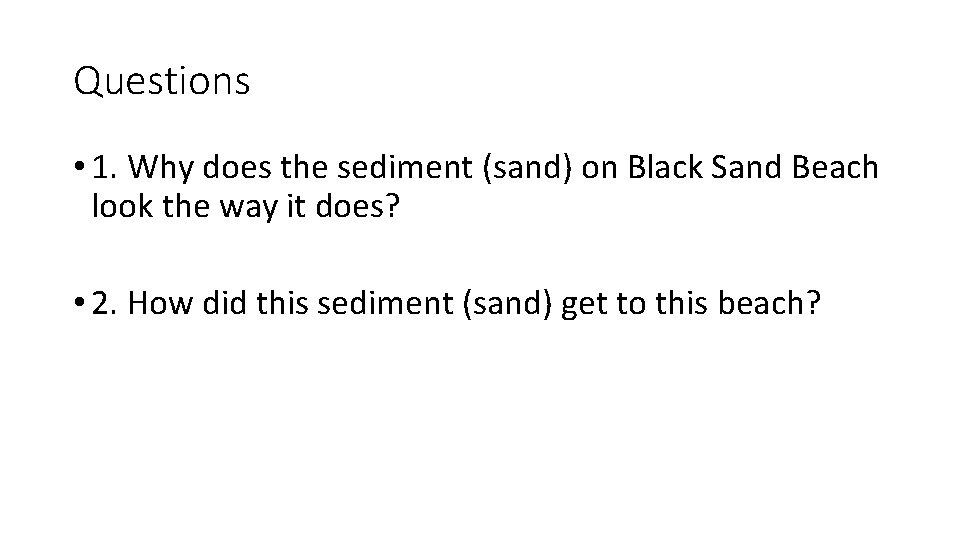
Questions • 1. Why does the sediment (sand) on Black Sand Beach look the way it does? • 2. How did this sediment (sand) get to this beach?
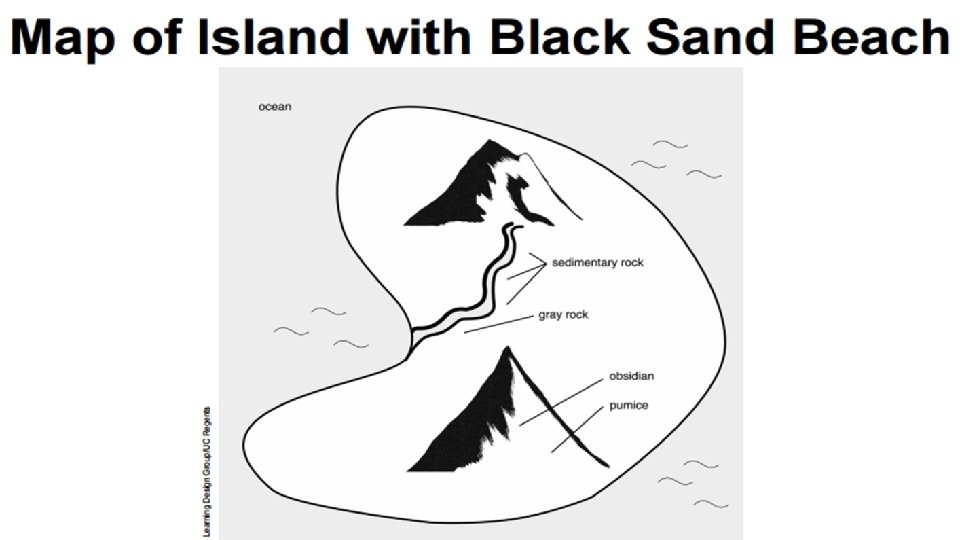
Share your thinking • Where did the black sediment come from? How did it get there? • Where did the lighter-color sand come from? How did it get there?
- Slides: 18