
Understanding Effective Leadership Development John WestBurnham Components of
Understanding Effective Leadership Development John West-Burnham
Components of Effective Leadership • • • Strategic direction and ethos Teaching and learning Developing and managing people Networking and collaboration Operational matters Accountability (Pricewaterhouse. Cooper 2007)
Why leadership? • As far as we are aware, there is not a single documented case of a school successfully turning around its pupil achievement trajectory in the absence of talented leadership. • Total leadership accounted for a quite significant 27 per cent of the variation in student achievement across the school. This is a much higher proportion of explained (two to three times higher) than is typically reported in studies of individual headteacher effects. (Leithwood 2007)
Barriers to Effective Leadership 1. Operational dominates strategic 2. Problems with holding to account and developing 3. Difficulty in modifying/changing behaviours Pricewaterhouse. Cooper (2007)
Developing Leadership Authority derived from: • Status and position • Knowledge and experience • Relationships and qualities.
Outcomes of leadership development programmes • • Social interaction Access to information Motivation – inspiration Skills development Behavioural – attitudinal change Building confidence Personal growth
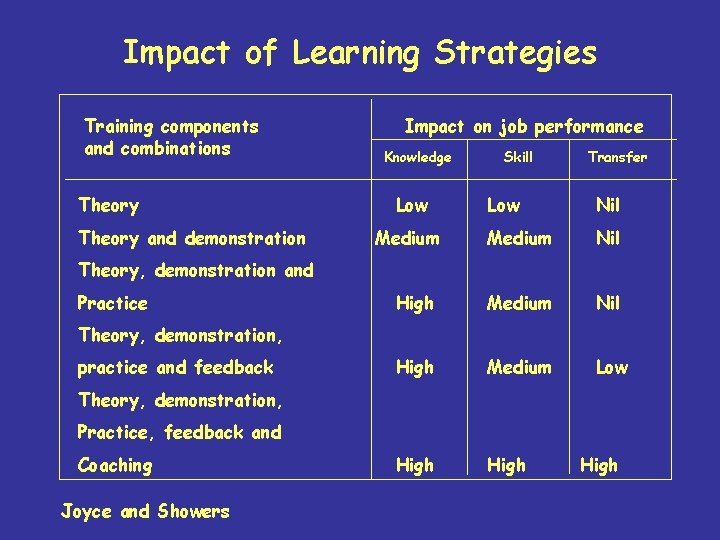
Impact of Learning Strategies Training components and combinations Theory and demonstration Impact on job performance Knowledge Low Skill Transfer Low Nil Medium Nil High Medium Low High Theory, demonstration and Practice Theory, demonstration, practice and feedback Theory, demonstration, Practice, feedback and Coaching Joyce and Showers High
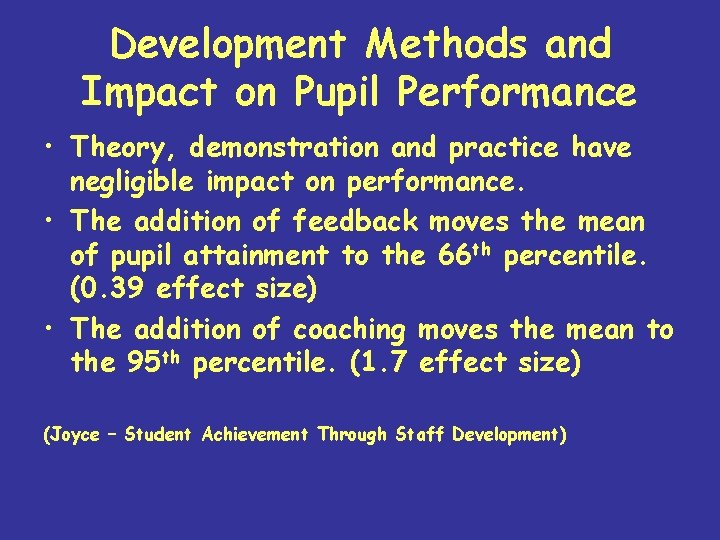
Development Methods and Impact on Pupil Performance • Theory, demonstration and practice have negligible impact on performance. • The addition of feedback moves the mean of pupil attainment to the 66 th percentile. (0. 39 effect size) • The addition of coaching moves the mean to the 95 th percentile. (1. 7 effect size) (Joyce – Student Achievement Through Staff Development)
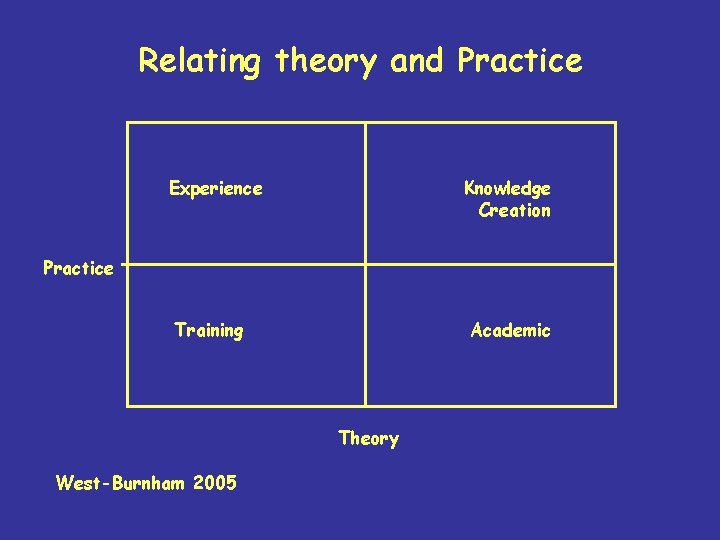
Relating theory and Practice Experience Knowledge Creation Practice Training Academic Theory West-Burnham 2005
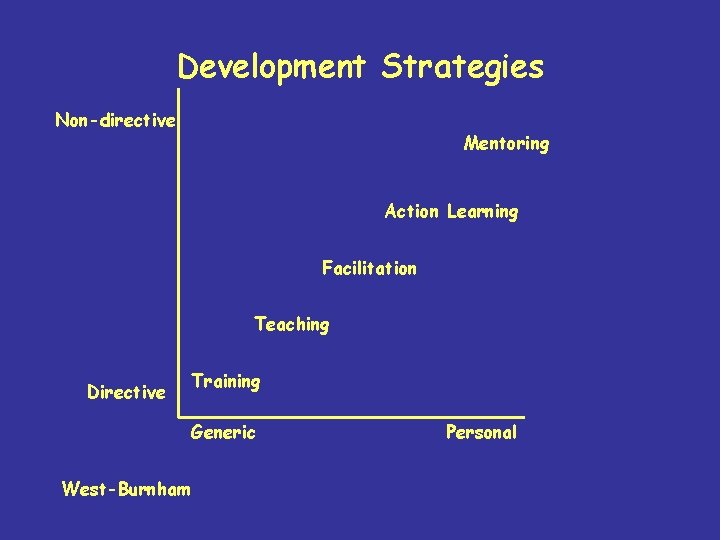
Development Strategies Non-directive Mentoring Action Learning Facilitation Teaching Directive Training Generic West-Burnham Personal
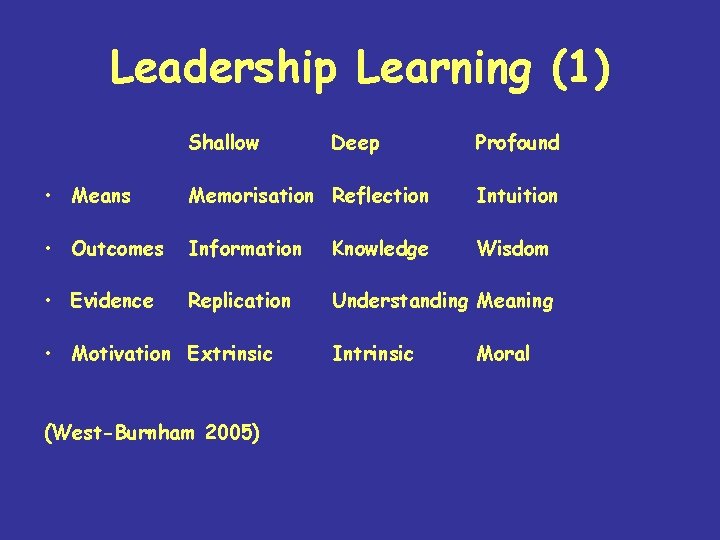
Leadership Learning (1) Shallow Deep Profound • Means Memorisation Reflection Intuition • Outcomes Information Knowledge Wisdom • Evidence Replication Understanding Meaning • Motivation Extrinsic (West-Burnham 2005) Intrinsic Moral
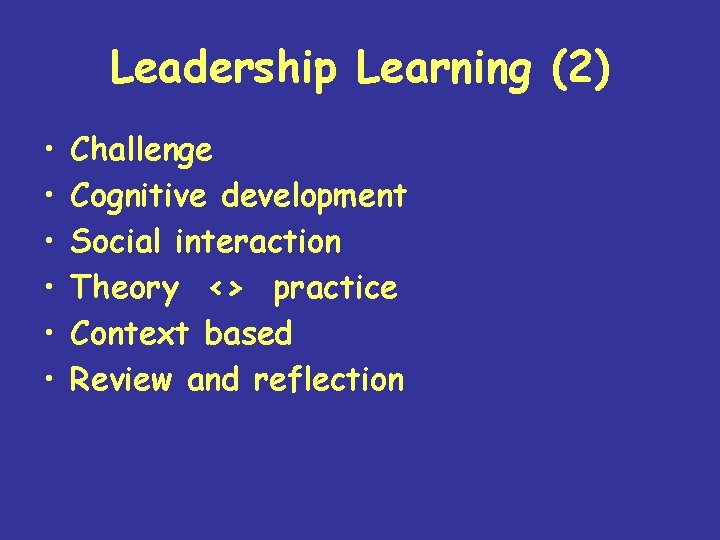
Leadership Learning (2) • • • Challenge Cognitive development Social interaction Theory <> practice Context based Review and reflection
Effective Leadership Development • • • Shared language Explicit criteria Non-chronological Personalized Cumulative Outcomes focused
Principles • Leadership as collective capacity • Process not event • ‘Predict and Prevent’ not ‘Find and Fix’ • Targeted
- Slides: 14