
Understanding Economics Lecture 2 Markets Competition Production Models
- Slides: 15
Understanding Economics Lecture 2: Markets, Competition, Production Models.
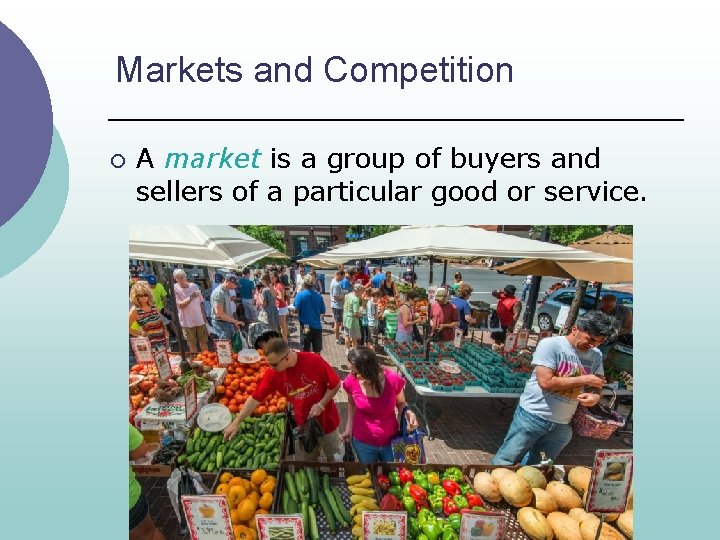
Markets and Competition ¡ A market is a group of buyers and sellers of a particular good or service.
Markets and Competition A competitive market is a market in which there are many buyers and sellers so that each has a negligible impact on the market price.
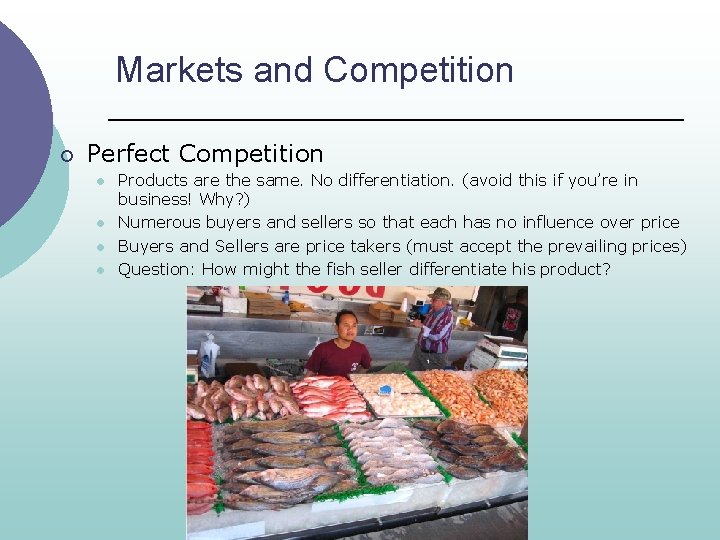
Markets and Competition ¡ Perfect Competition l l Products are the same. No differentiation. (avoid this if you’re in business! Why? ) Numerous buyers and sellers so that each has no influence over price Buyers and Sellers are price takers (must accept the prevailing prices) Question: How might the fish seller differentiate his product?
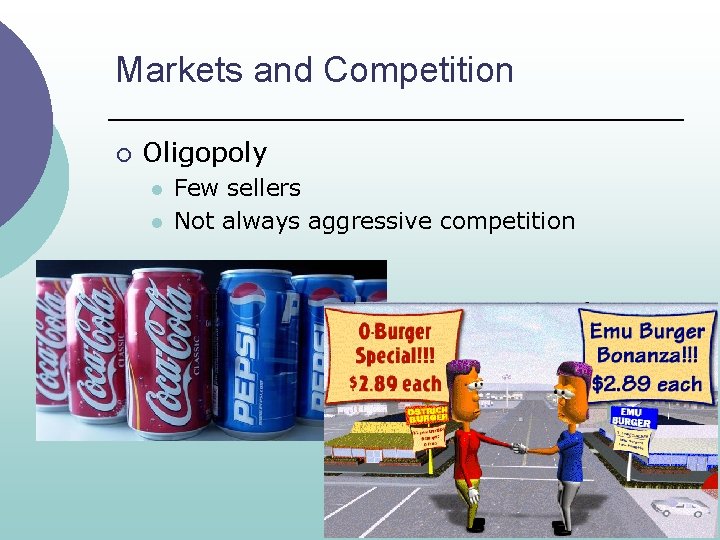
Markets and Competition ¡ Oligopoly l l Few sellers Not always aggressive competition
Markets and Competition ¡ Monopoly l l One seller, and seller controls price Sometimes benefits society, sometimes not (discuss)
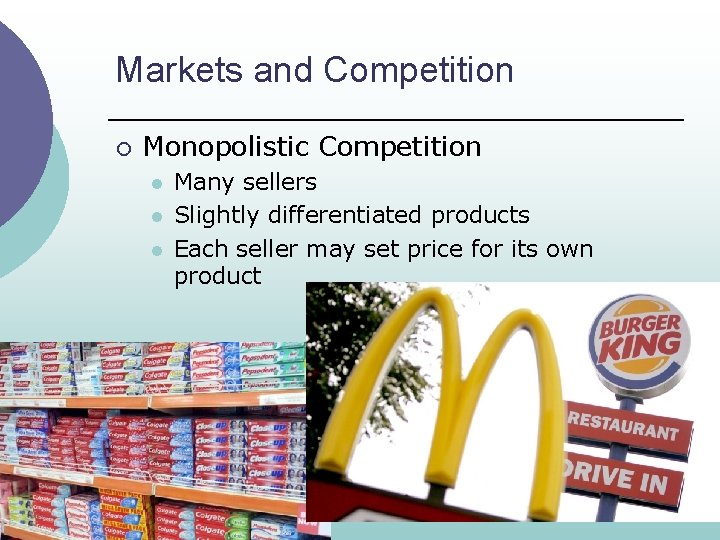
Markets and Competition ¡ Monopolistic Competition l l l Many sellers Slightly differentiated products Each seller may set price for its own product
Factors of Production The classic 18 th century list: l l l Land Labor Capital A more modern list: l l Land, raw materials, minerals Labor Capital: Plant, property & equipment AND monetary capital Information, technology, Patents, ideas, the “I -factor”
Cost of Production ¡ ¡ Consider: What are the main categories of costs in producing something? Think of manufacturing drones or i. Phones or deli sandwiches, let’s say….
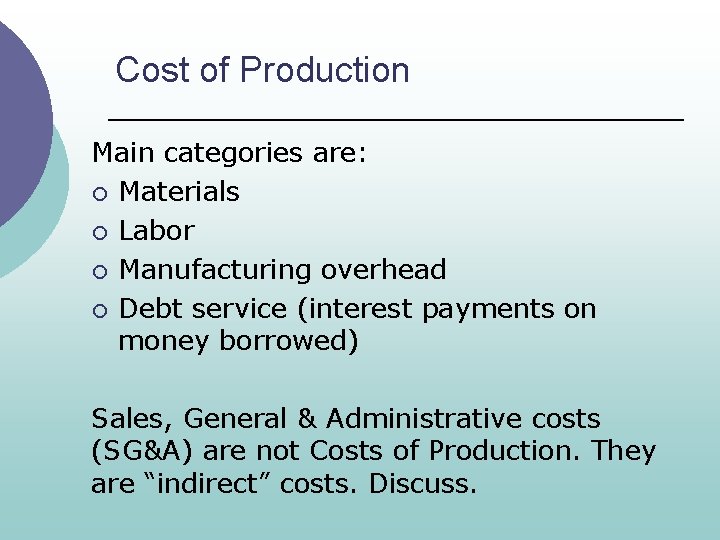
Cost of Production Main categories are: ¡ Materials ¡ Labor ¡ Manufacturing overhead ¡ Debt service (interest payments on money borrowed) Sales, General & Administrative costs (SG&A) are not Costs of Production. They are “indirect” costs. Discuss.
What is meant by “Profit”? ¡ ¡ ¡ Discuss: gross profit and net profit Discuss: is Profit a good thing? “It has come to our attention that firms are profiting. Henceforth, no profiting is allowed”…what would happen?
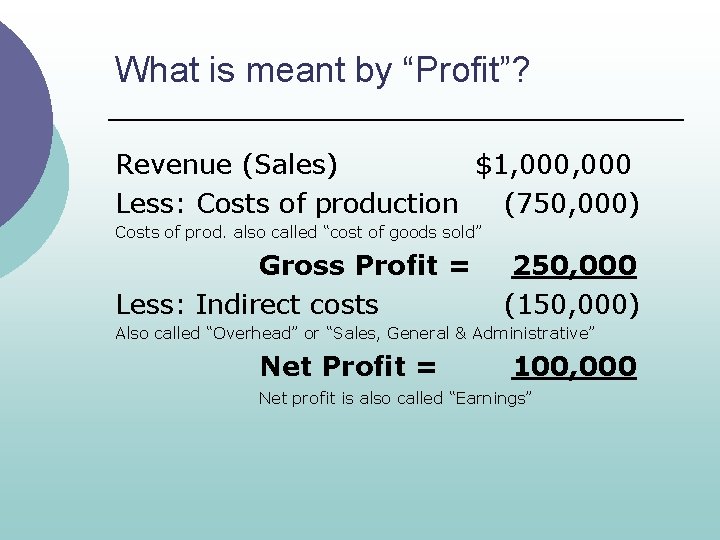
What is meant by “Profit”? Revenue (Sales) $1, 000 Less: Costs of production (750, 000) Costs of prod. also called “cost of goods sold” Gross Profit = Less: Indirect costs 250, 000 (150, 000) Also called “Overhead” or “Sales, General & Administrative” Net Profit = 100, 000 Net profit is also called “Earnings”
The Production Possibilities Curve ¡ ¡ ¡ The production possibilities curve shows the range of production possibilities for an economy. Assumes the factors of production are fixed (for the moment). It is a simplified model with just 2 alternative products
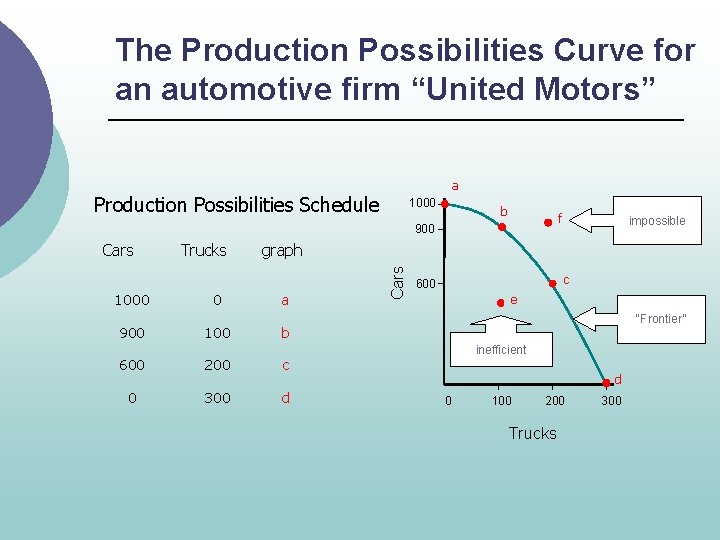
The Production Possibilities Curve for an automotive firm “United Motors” a Production Possibilities Schedule 1000 b f 900 1000 900 Trucks 0 100 graph a Cars impossible c 600 e “Frontier” b 600 200 c 0 300 d inefficient d 0 100 200 Trucks 300
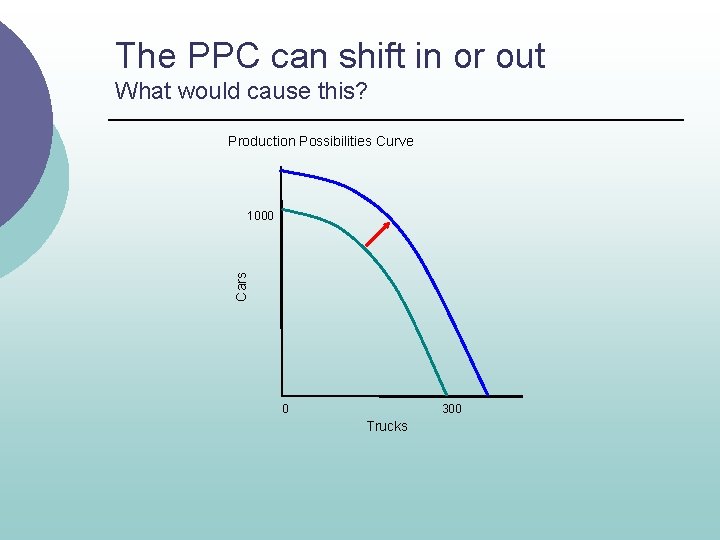
The PPC can shift in or out What would cause this? Production Possibilities Curve Cars 1000 0 300 Trucks