
Understanding Diffusion Ms Aseel Samaro DIFFUSION Gases and


- Slides: 20
Understanding Diffusion Ms. Aseel Samaro
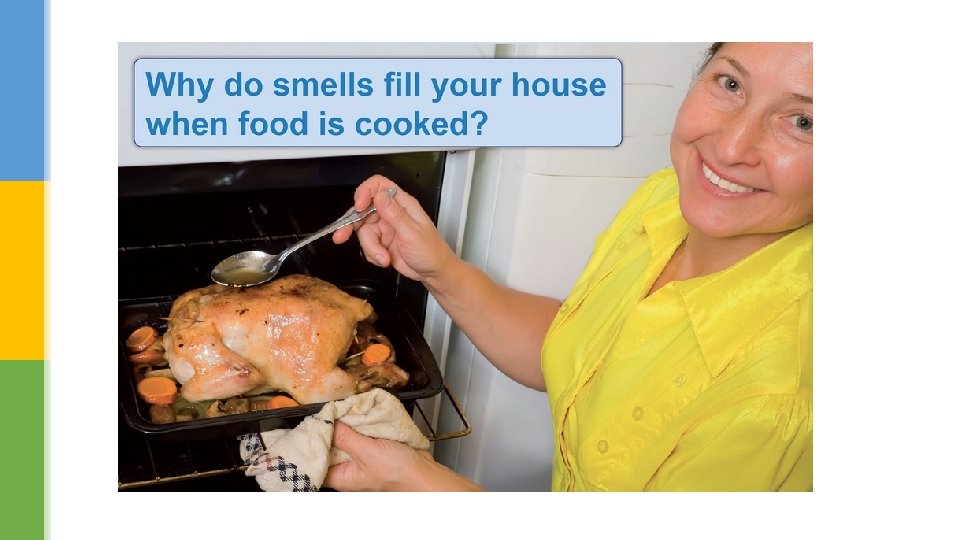
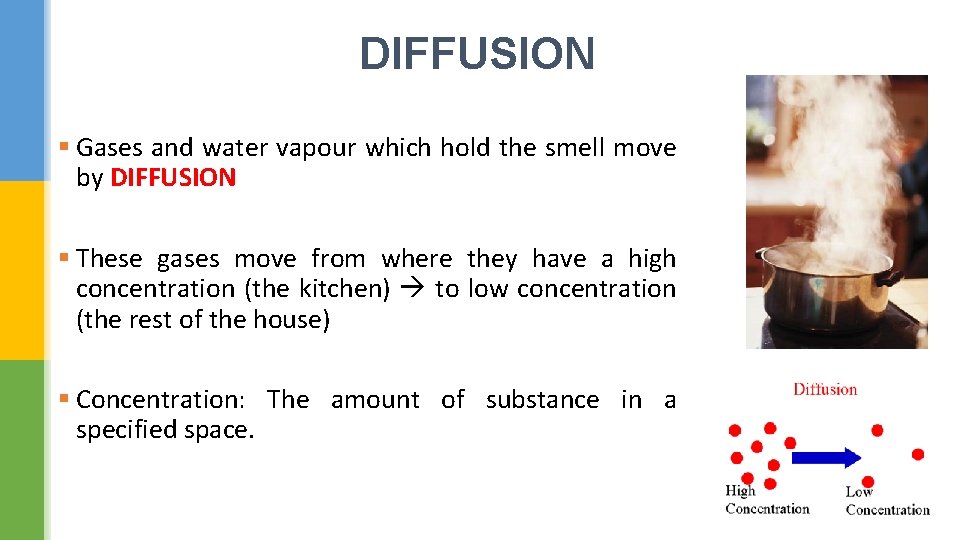
DIFFUSION § Gases and water vapour which hold the smell move by DIFFUSION § These gases move from where they have a high concentration (the kitchen) to low concentration (the rest of the house) § Concentration: The amount of substance in a specified space.
Diffusion - Introduction § How do substances move from the outside of a cell to the inside of a cell? § One answer lies in the process of diffusion. § Using this, and other processes, cells allow only the substances they need to enter the cell, and keep themselves safe from unwanted and toxic chemicals.
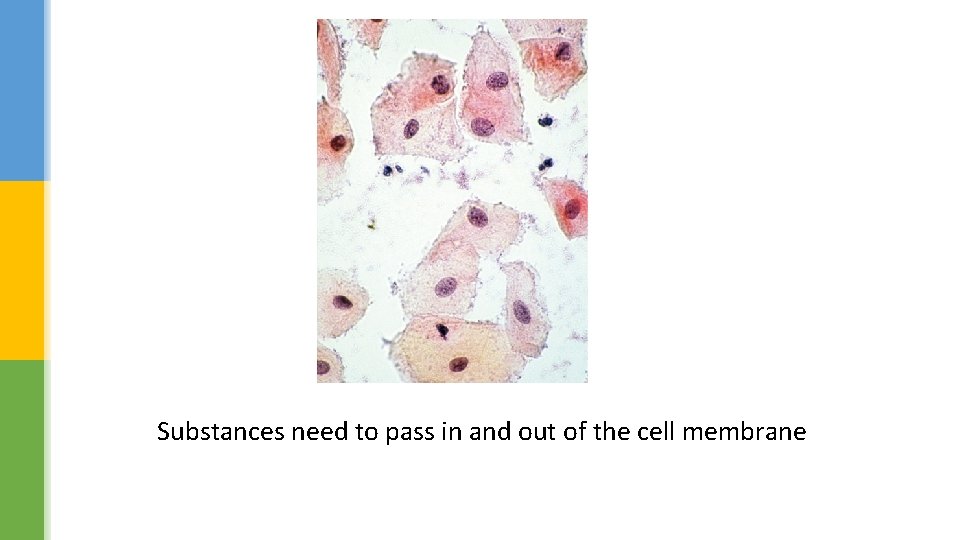
Substances need to pass in and out of the cell membrane
Chemicals on the move All cells require chemicals in order to survive including: üGlucose üOxygen üNutrients üminerals § These pass through the cell membrane by diffusion
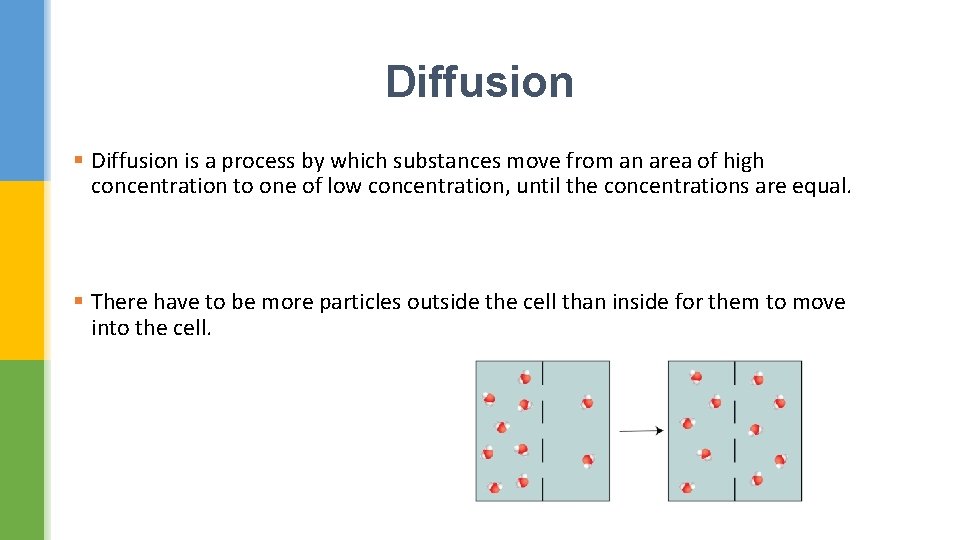
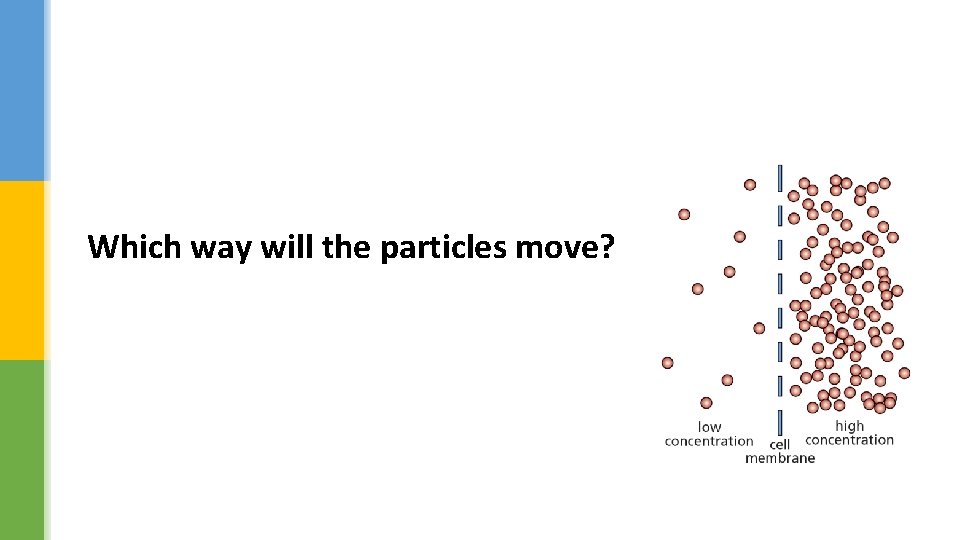
Diffusion § Diffusion is a process by which substances move from an area of high concentration to one of low concentration, until the concentrations are equal. § There have to be more particles outside the cell than inside for them to move into the cell.
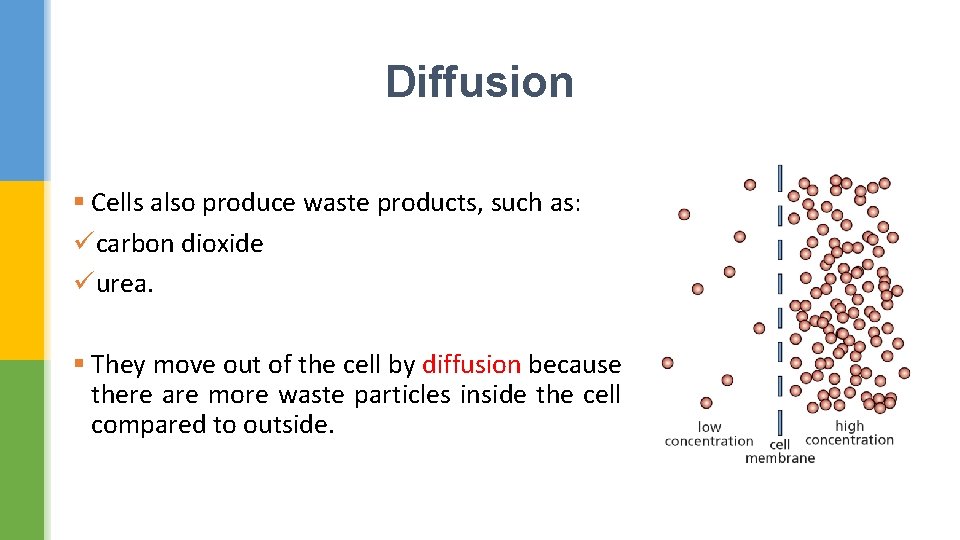
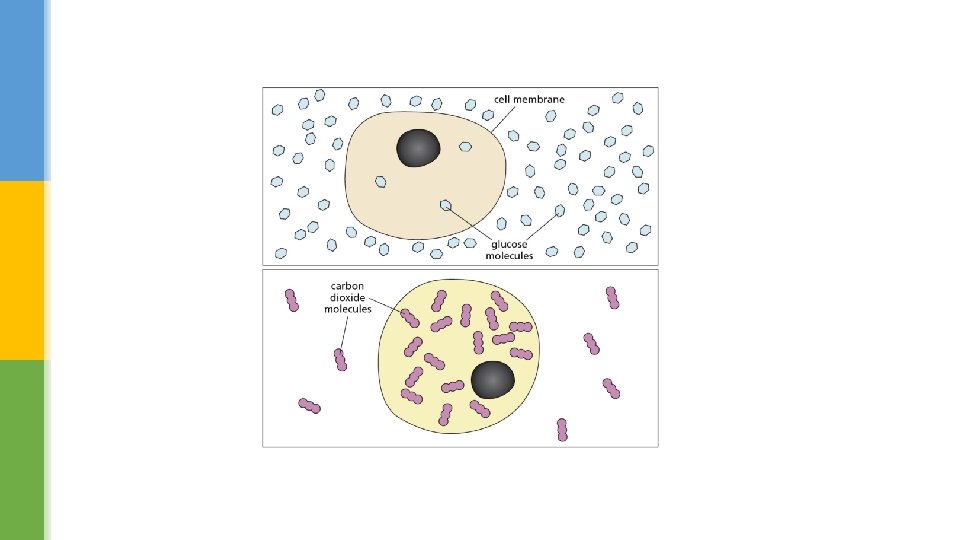
Diffusion § Cells also produce waste products, such as: ücarbon dioxide üurea. § They move out of the cell by diffusion because there are more waste particles inside the cell compared to outside.
Which way will the particles move?
Draw an outline of a cell showing the movement of substances into and out of the cell.
Factors affecting diffusion Many factors affect how quickly diffusion occurs. 1. TEMPRUTURE: It occurs more rapidly at higher temperatures because the particles have more energy and move faster. 2. CONCENTRATION: In a highly concentrated solution, there are many particles packed into a small space. The particles try to move away from each other as quickly as possible. If a cell is placed in a high concentration of nutrients, the nutrients diffuse faster into the cell compared to when it is in an area of low concentration.
It is time for a worksheet
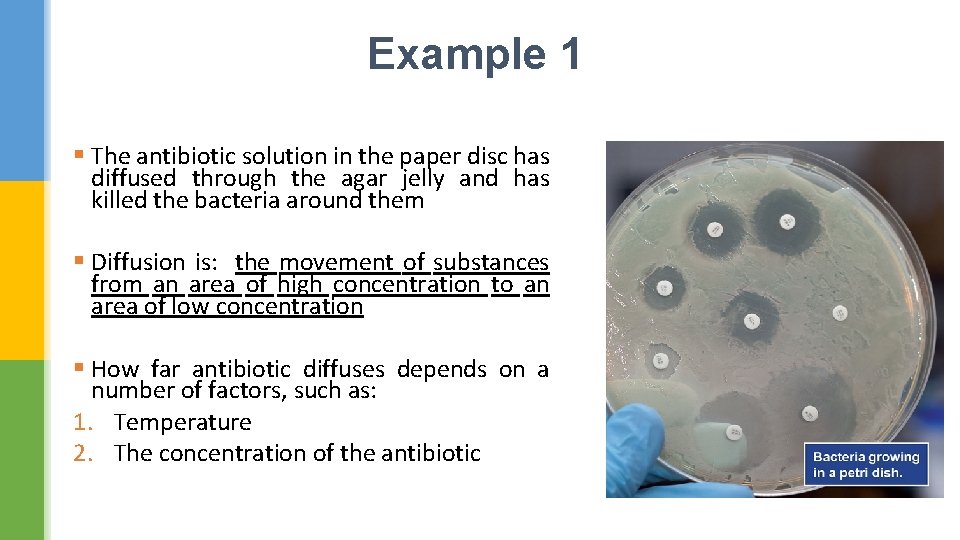
Example 1 § The antibiotic solution in the paper disc has diffused through the agar jelly and has killed the bacteria around them § Diffusion is: the movement of substances from an area of high concentration to an area of low concentration § How far antibiotic diffuses depends on a number of factors, such as: 1. Temperature 2. The concentration of the antibiotic
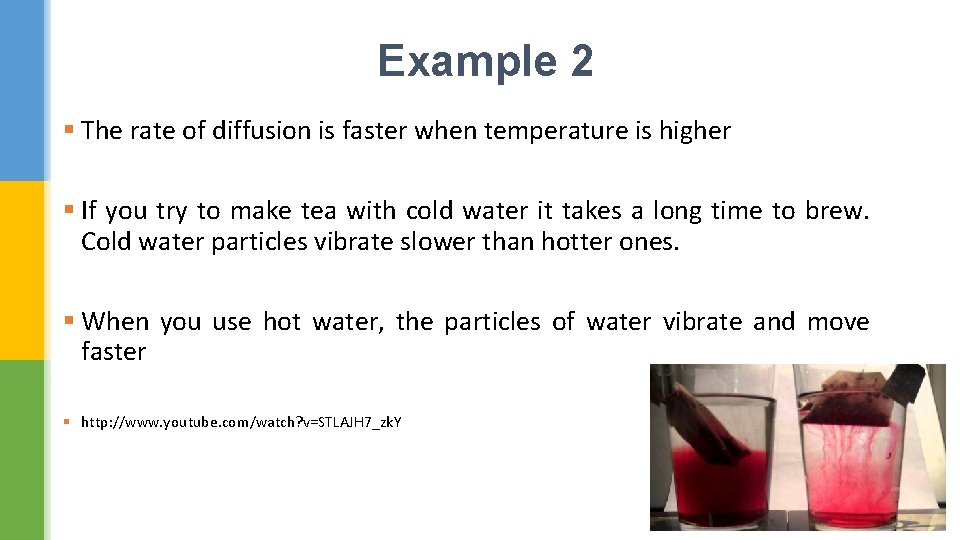
Example 2 § The rate of diffusion is faster when temperature is higher § If you try to make tea with cold water it takes a long time to brew. Cold water particles vibrate slower than hotter ones. § When you use hot water, the particles of water vibrate and move faster § http: //www. youtube. com/watch? v=STLAJH 7_zk. Y
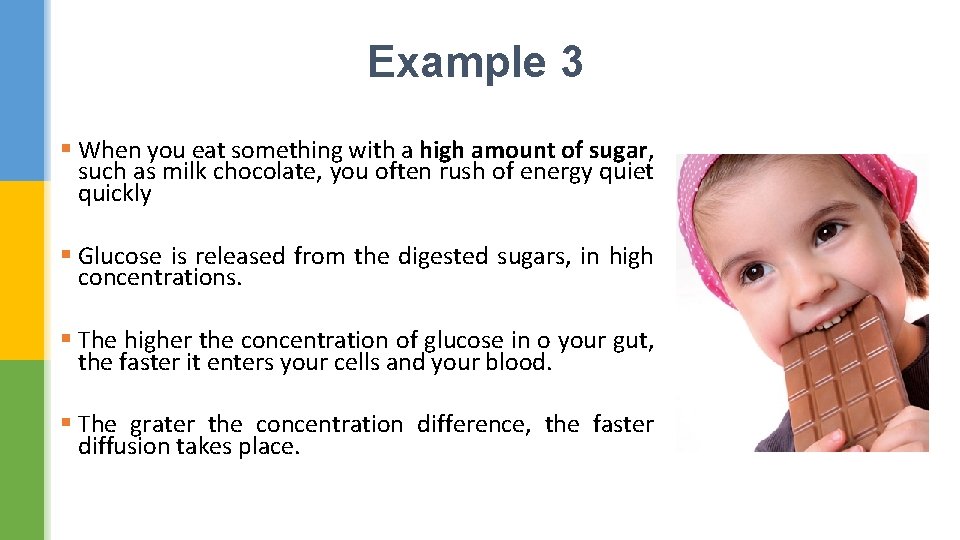
Example 3 § When you eat something with a high amount of sugar, such as milk chocolate, you often rush of energy quiet quickly § Glucose is released from the digested sugars, in high concentrations. § The higher the concentration of glucose in o your gut, the faster it enters your cells and your blood. § The grater the concentration difference, the faster diffusion takes place.
Effect of surface area § Diffusion of oxygen into the blood happens quicker if the surface area is higher and the diffusion distance is short. § The lungs; small air sacs, called alveoli, increase the surface area and provide a short distance for diffusion § Smokers who suffer from emphysema have damaged alveoli with less surface area and thick walls. Therefore, diffusion of oxygen is slower
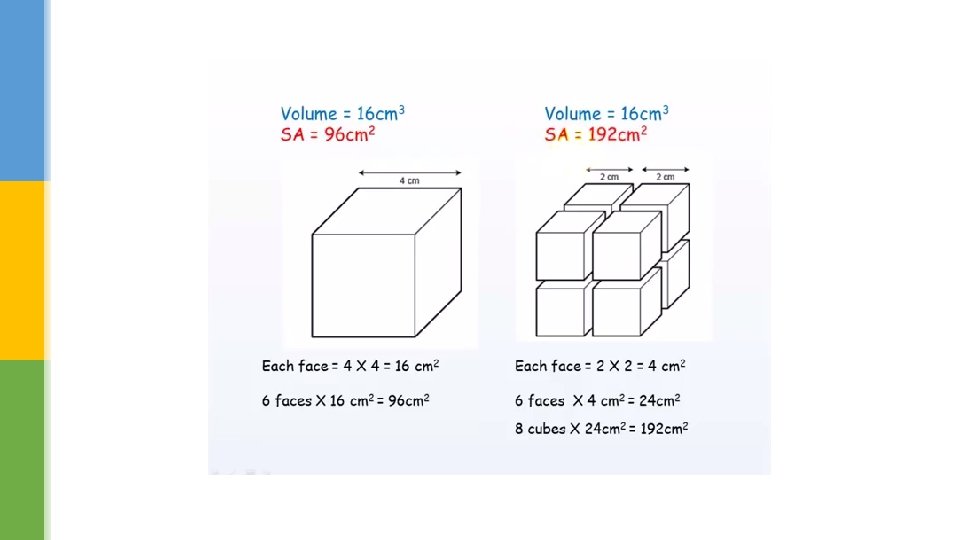
Effect of surface area The survival of unicellular organisms depends on the rate of diffusion of chemicals into and out of the cell. The ratio of the surface area of the cell to its volume affects how quickly diffusion across the cell membrane can occur. With a higher surface area to volumeratio, the rate of diffusion into and out of the cell is faster.
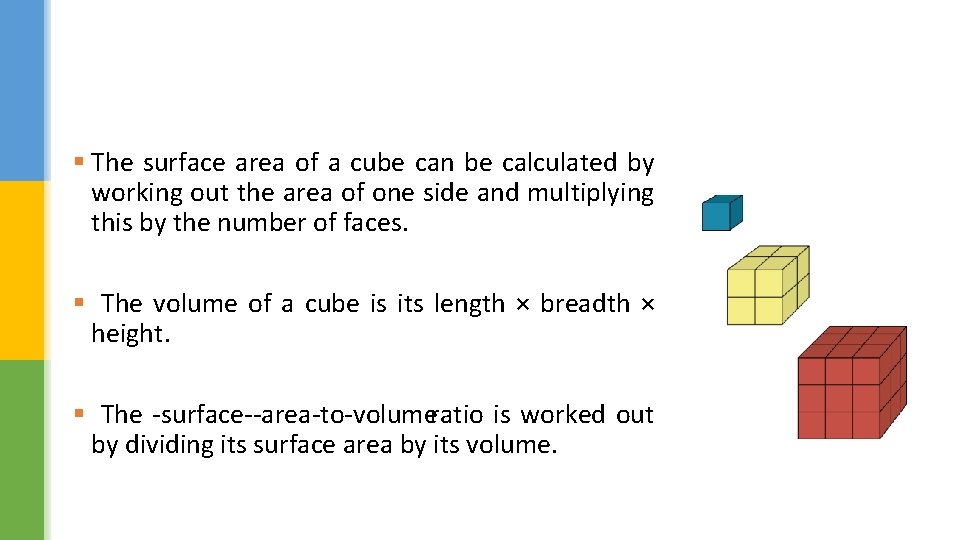
§ The surface area of a cube can be calculated by working out the area of one side and multiplying this by the number of faces. § The volume of a cube is its length × breadth × height. § The surface area to volumeratio is worked out by dividing its surface area by its volume.