
Understanding Dementia and Delirium Learning Outcomes Learn about
Understanding Dementia and Delirium
Learning Outcomes • Learn about dementia and how it affects people • Learn about delirium – what it is and how it can affect a person • Understand the difference between dementia and delirium • Discuss the impact of the hospital environment • Discover how volunteers can assist people with dementia and delirium

Dementia?
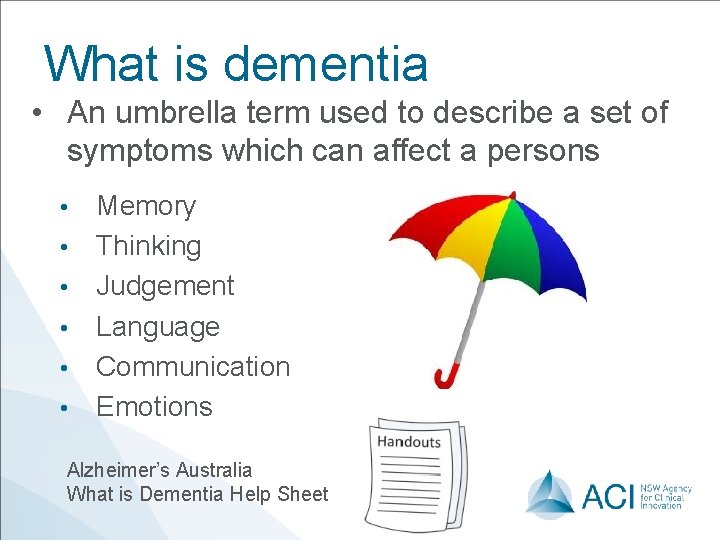
What is dementia • An umbrella term used to describe a set of symptoms which can affect a persons • • • Memory Thinking Judgement Language Communication Emotions Alzheimer’s Australia What is Dementia Help Sheet
The most common causes are: 1. Alzheimer’s Disease 2. Vascular dementia 3. Mixed Alzheimer’s and Vascular dementia 4. Dementia with Lewy bodies 5. Fronto temporal dementia
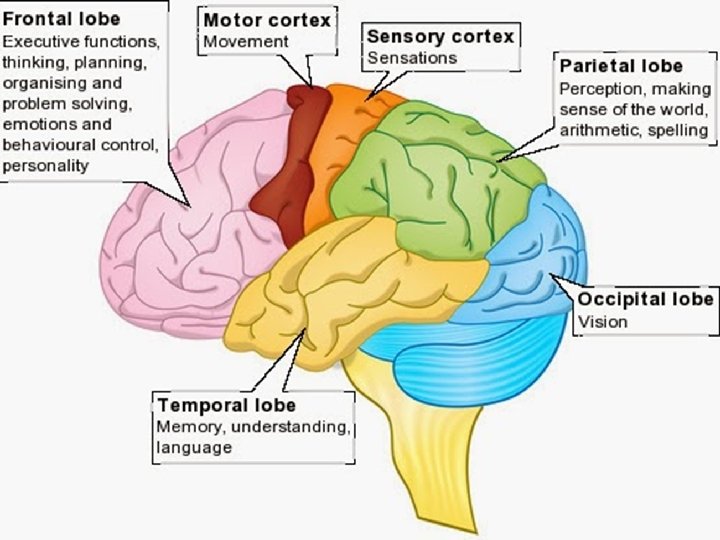
Changes to abilities and behaviour will depend on where damage has occurred in the brain Brain and behaviour fact sheet
Dementia • The biggest predictor of prevalence and incidence rates for dementia is increasing age • Since the number of people living into their old age in Australia is rising the prevalence of dementia in Australia will rise significantly in the future (WHO 2006)
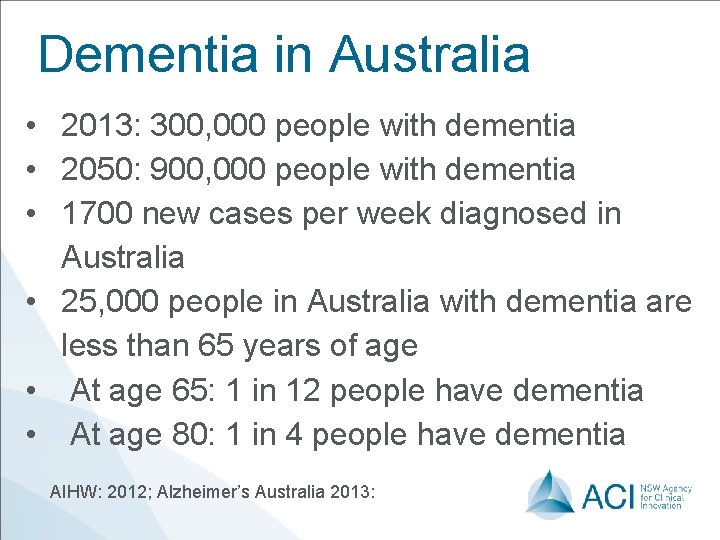
Dementia in Australia • 2013: 300, 000 people with dementia • 2050: 900, 000 people with dementia • 1700 new cases per week diagnosed in Australia • 25, 000 people in Australia with dementia are less than 65 years of age • At age 65: 1 in 12 people have dementia • At age 80: 1 in 4 people have dementia AIHW: 2012; Alzheimer’s Australia 2013:
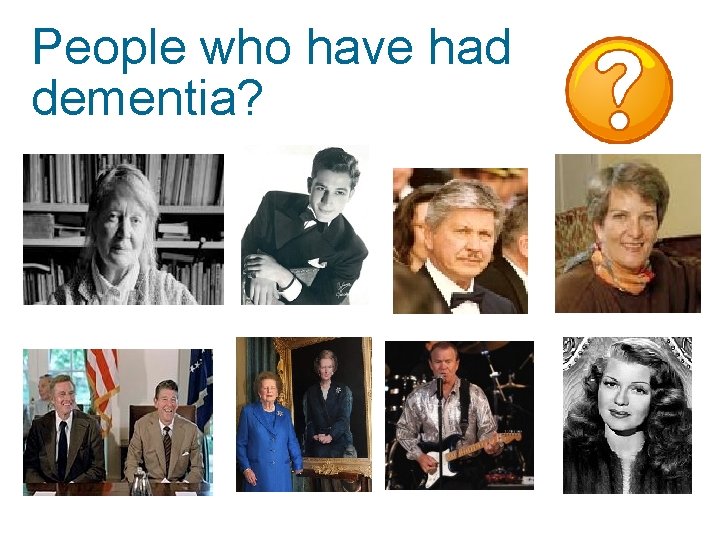
People who have had dementia?
How are people affected? • Everyone is different. Common symptoms may include: • • loss of memory problems with thinking and judgement difficulties with tasks of everyday living mood or personality changes
How is dementia diagnosed? • History from family • Memory tests • Investigations to exclude other causes
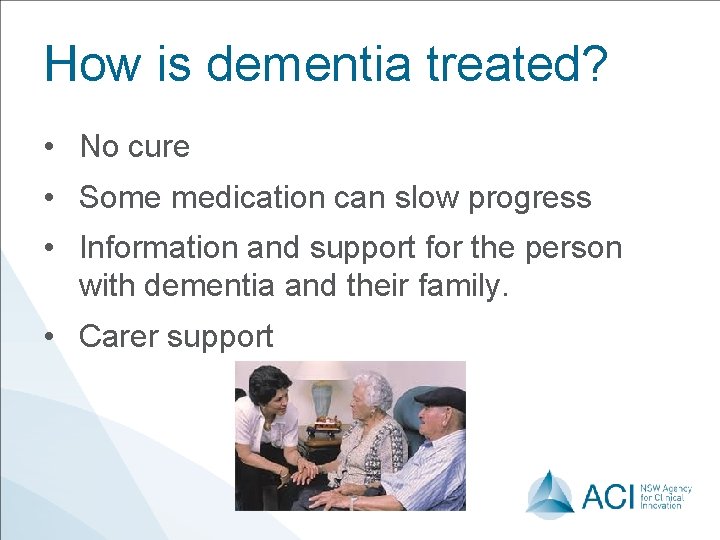
How is dementia treated? • No cure • Some medication can slow progress • Information and support for the person with dementia and their family. • Carer support
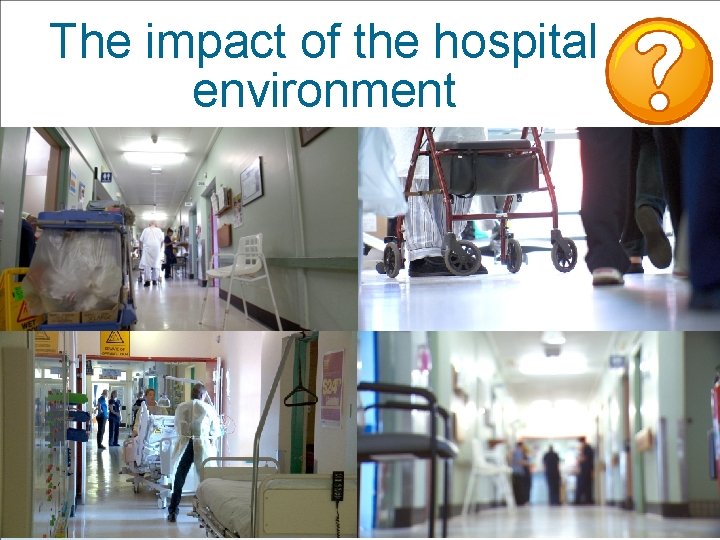
The impact of the hospital environment
Alzheimer’s Australia information and resources http: //www. dementiadaily. org. au/
Time for a break or stretch
Delirium?
What is Delirium? • Delirium is a serious medical condition characterised by sudden changes in: Memory and orientation Ø Thinking Ø Behaviour Ø Ability to do things Ø • A common condition in hospitals • It is more common older people and is much more common in dementia
Symptoms of delirium • Appear confused and forgetful • Be unable to pay attention or concentrate • Be either very agitated or quiet and withdrawn or sleepy • Be unsure of the time of day or where they are • Be different from their usual selves
Symptoms of delirium cont: • Have changes to their sleeping • Feel fearful, upset, irritable angry or sad. • See or things that are not there but seem very real to them called Hallucinations • Believe that something is occurring that is not – called delusions ACI Delirium patient and family carer information brochure
Who is susceptible to developing delirium? People who: • • Have dementia Are very sick Are aged 70 or greater Have poor eyesight or hearing Suffer from depression Are taking multiple medications Are having a surgical procedure in particular heart or hip surgery
How does delirium differ from dementia? • Delirium occurs suddenly • Dementia typically has a slow progressive onset • People with dementia or who already have memory and thinking problems are much more susceptible to developing delirium.
Types of delirium There are three different types of delirium 1. Hyperactive 2. Hypoactive 3. Mixed hyperactive and hypoactive
How common is delirium? • Approx 20% of older people admitted to hospital • Very common in palliative care, intensive care • More than 50% people from Nursing Homes
What causes delirium? Common causes of delirium include: ▲ Severe illness ▲ Infection ▲ Constipation ▲ Severe pain ▲ Medications ▲ Dehydration/malnourishment ▲ Withdrawal from alcohol or medication, particularly sleeping pills
How long does delirium last? • This depends on the cause or causes • If the cause can be found and treated, the delirium will resolve in hours or days • When this is not the case, delirium can sometimes last for weeks or months
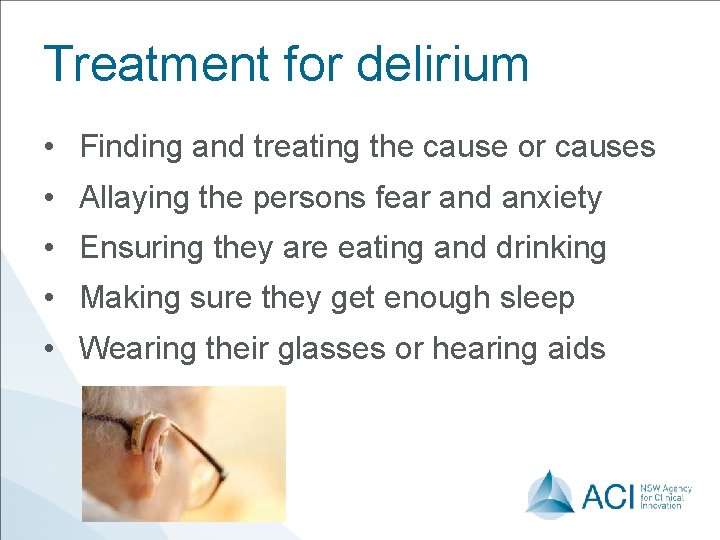
Treatment for delirium • Finding and treating the cause or causes • Allaying the persons fear and anxiety • Ensuring they are eating and drinking • Making sure they get enough sleep • Wearing their glasses or hearing aids
What the people who have experienced delirium say • Fear, anxiety or terror – often related to hallucinations • Feeling threatened • Hopelessness, loneliness and depression • Not being heard or understood • Not being able to tell night from day • Dreamlike state
What patients found helpful • Familiar people • Reassurance that they were safe • Calmness • Information about what was happening and why
The delirium experience http: //www. europeandeliriumassociation. com /delirium-information/healthprofessionals/patient-experience-ofdelirium-teaching-video/
Do you know anyone who has experienced a delirium?
What are some ways a volunteer could support a patient with delirium?
What the volunteer can do • Tell the person your name and who you are. Wear you ID badge • Be calm & speak slowly in a clear voice. • Remind the person of where they are, what day and time it is • Encourage and assist with eating and drinking • If the person wears glasses or hearing aids, check they are clean and working and help them put them on
What the volunteer can do cont: • Use available personal belongings • Gain information from the family carer and or refer to their person profile information. • Provide reassurance • Try distraction • Walk with them, if safe to do so
Inform staff if: • You feel unsafe or do not feel confident remaining with the patient • If you notice any changes in the person or if the persons behaviour changes while you are with them or over time ACI Delirium Brochure for carers
What to do if you feel unsafe • Stay calm • Leave the room • Report to staff • Do not return to the patient until cleared by staff
In summary: we have covered • What dementia is and some of the common causes • The impact of the hospital environment on patients with dementia • What delirium is, the causes and treatments • The difference between dementia and delirium • What the person with delirium may experience • How volunteers can greatly assist patients and family carers
Time for a break and stretch
- Slides: 40