
Understanding Cyber Security Incident Response Teams CSIRTs as

Understanding Cyber Security Incident Response Teams (CSIRTs) as Multiteam Systems (MTSs) Stephen J. Zaccaro, Tiffani R. Chen, Carolyn J. Winslow, and Amber K. Hargrove .
Acknowledgements • Project funded by the U. S. Department of Homeland Security (BAA 11 -02) Additional contributors: • • Lois Tetrick, GMU Reeshad Dalal, GMU Jennifer Green, GMU Aiva Gorab, GMU Qikun Niu, GMU Daniel Shore, GMU Alan Tomassetti, GMU Mark D. Troutman, GMU • • • John Gudgel, GMU William A. Grasmeder, GMU Shari L. Pfleeger, Dartmouth College William G. Horne, HP Sandeep N. Bhatt, HP Loai Zomlot, HP 2
Overall Research Objectives • Conceptualize CSIRTs as MTSs • Increase understanding of factors that foster MTS and CSIRT effectiveness • Provide CSIRT managers and team members with guidance on facilitating effectiveness 3
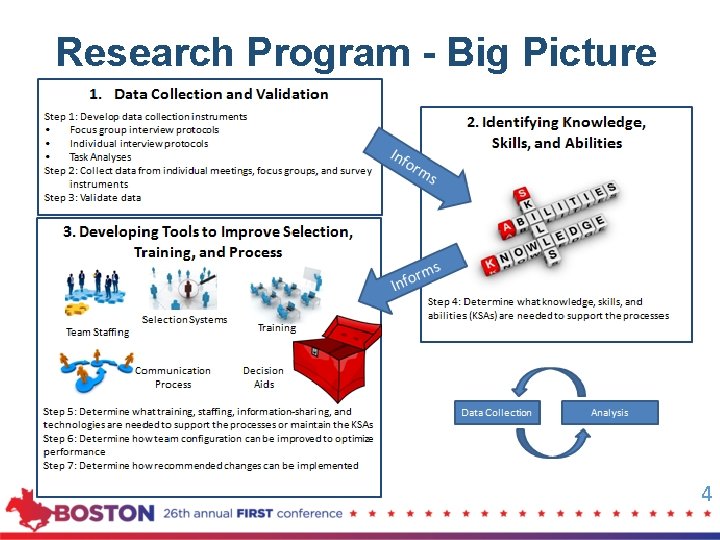
Research Program - Big Picture 4
Presentation Outline • Nature of teamwork in CSIRTs • Drivers of effective CSIRT performance • CSIR MTSs • What are MTSs? • Key elements of MTSs • Examples of cyber security MTSs • Drivers of effective CSIR MTS performance • Process of collaboration escalation • Prescriptions and future directions 5
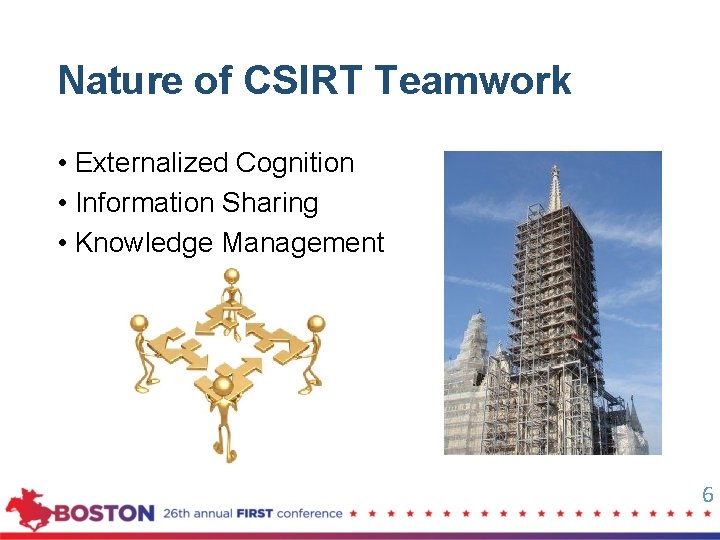
Nature of CSIRT Teamwork • Externalized Cognition • Information Sharing • Knowledge Management 6
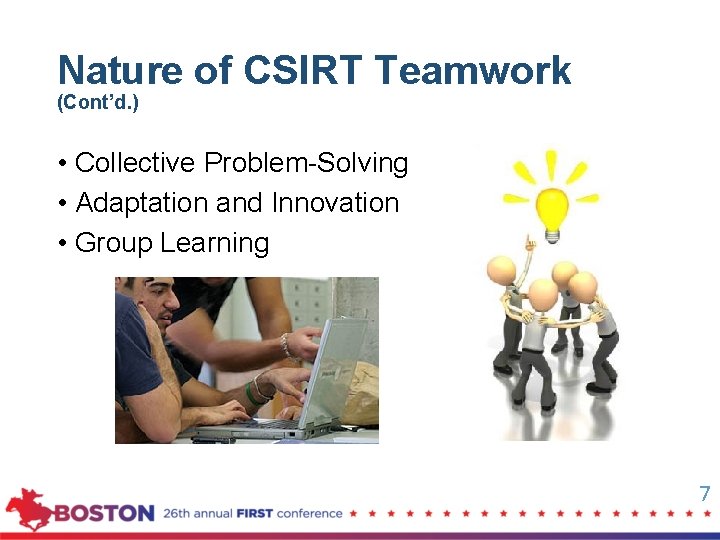
Nature of CSIRT Teamwork (Cont’d. ) • Collective Problem-Solving • Adaptation and Innovation • Group Learning 7
Effective CSIRT Performance • CSIRT performance requires Taskwork and Teamwork Taskwork: • triaging incoming incidents • analyzing incidents • developing and executing comprehensive solutions • skills in detecting and responding to incidents Teamwork: • giving, seeking, and receiving task-clarifying feedback • Collective problem solving • Monitoring and assessing team performance • Active listening skills • Communication skills • Collaboration skills 8
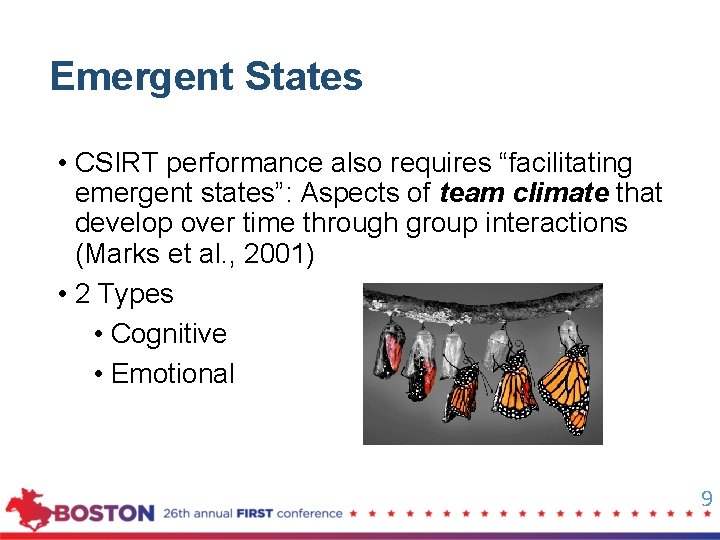
Emergent States • CSIRT performance also requires “facilitating emergent states”: Aspects of team climate that develop over time through group interactions (Marks et al. , 2001) • 2 Types • Cognitive • Emotional 9
Cognitive Emergent States • Shared mental models “…It's more than just staring at a screen all day. It's having a mutual understanding of why what’s going on is important. ” • Transactive Memory “We know each other, so we know what our strengths and weaknesses are. We know who to go to who and for what. ” 10
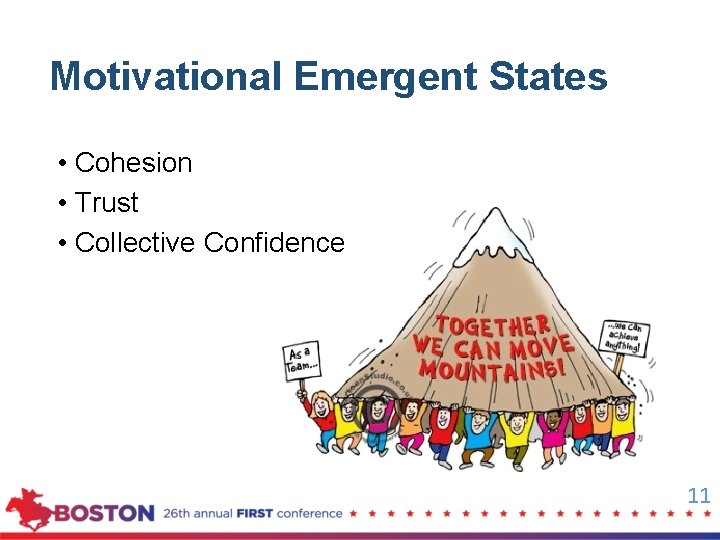
Motivational Emergent States • Cohesion • Trust • Collective Confidence 11
CSIRTS as Multiteam Systems . . . Creating the best CSIRT is not enough: CSIRTS typically operate as part of multiteam systems 12
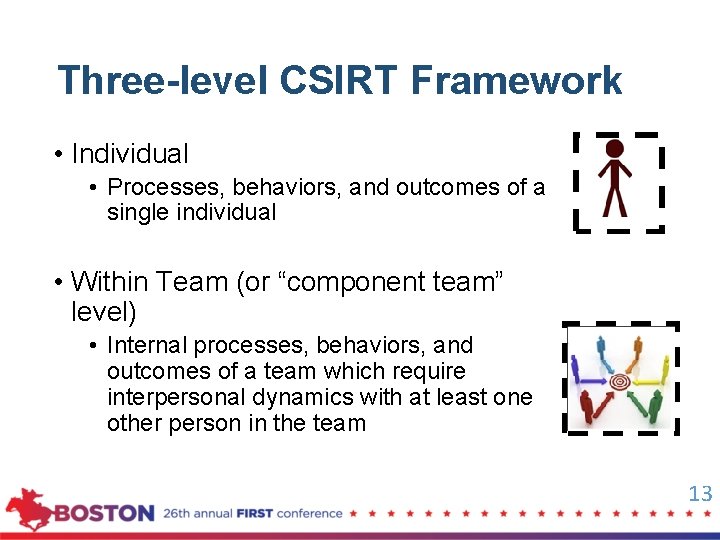
Three-level CSIRT Framework • Individual • Processes, behaviors, and outcomes of a single individual • Within Team (or “component team” level) • Internal processes, behaviors, and outcomes of a team which require interpersonal dynamics with at least one other person in the team 13
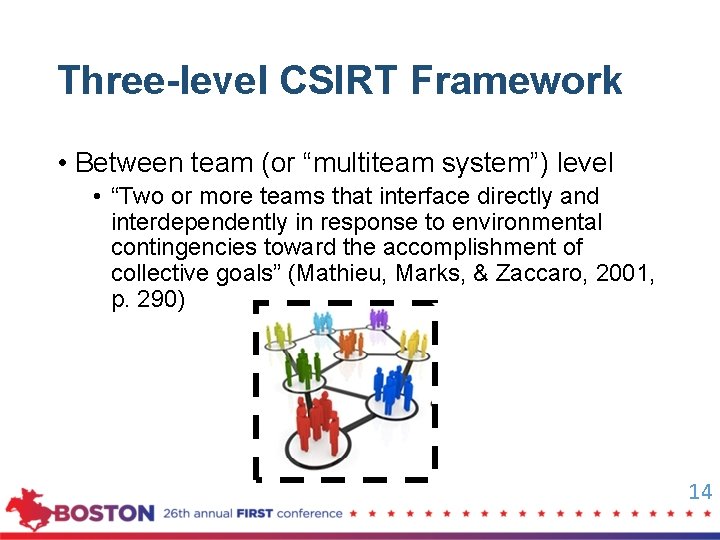
Three-level CSIRT Framework • Between team (or “multiteam system”) level • “Two or more teams that interface directly and interdependently in response to environmental contingencies toward the accomplishment of collective goals” (Mathieu, Marks, & Zaccaro, 2001, p. 290) 14
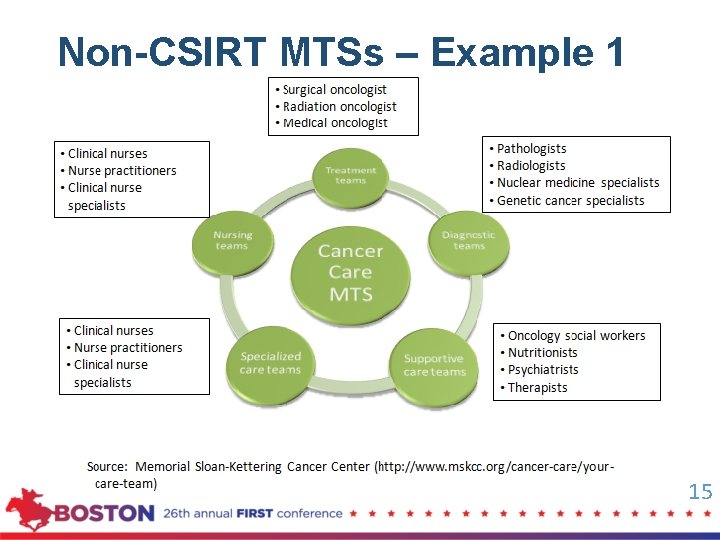
Non-CSIRT MTSs – Example 1 15
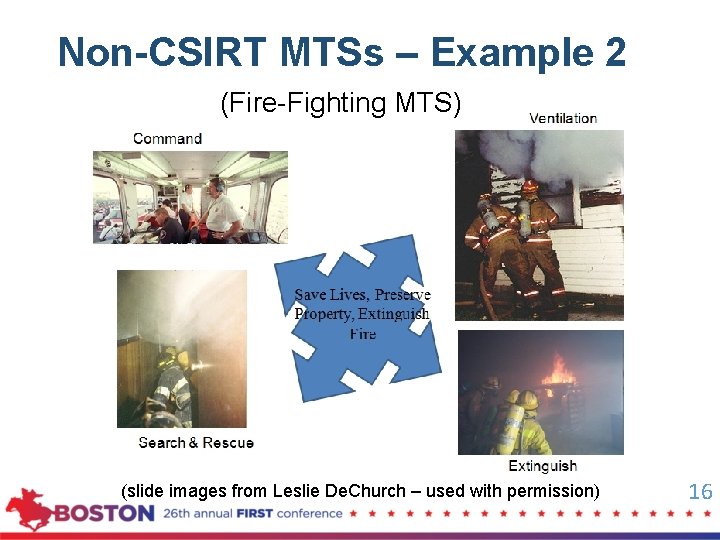
Non-CSIRT MTSs – Example 2 (Fire-Fighting MTS) (slide images from Leslie De. Church – used with permission) 16
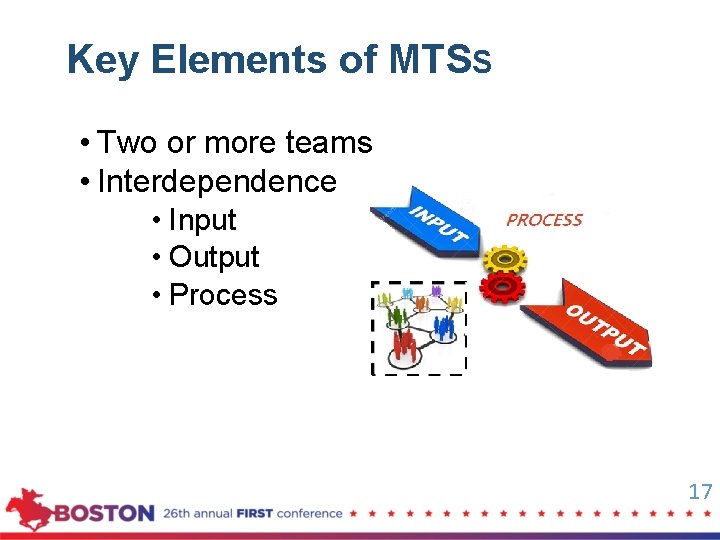
Key Elements of MTSS • Two or more teams • Interdependence • Input • Output • Process 17
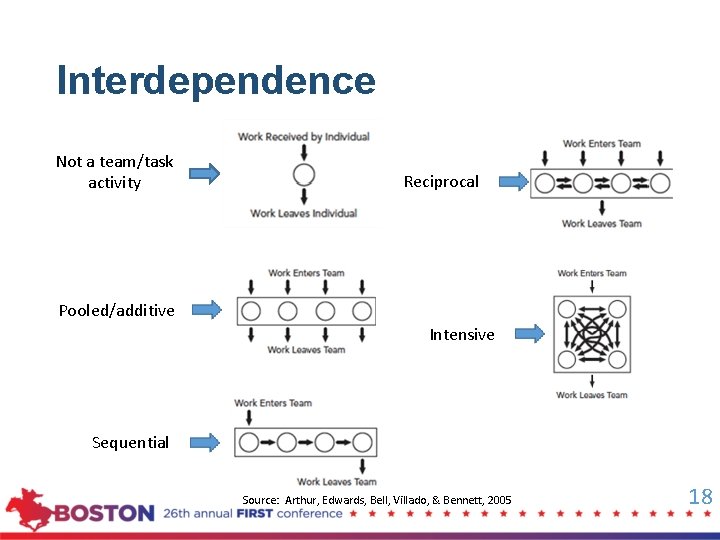
Interdependence Not a team/task activity Reciprocal Pooled/additive Intensive Sequential Source: Arthur, Edwards, Bell, Villado, & Bennett, 2005 18
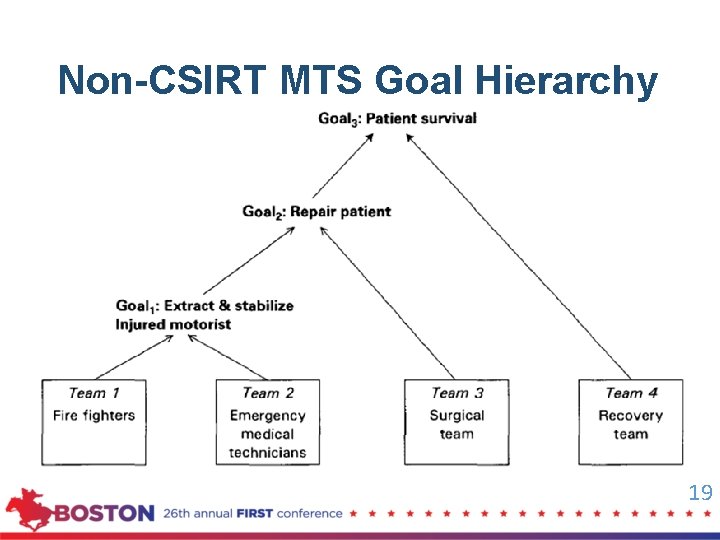
Non-CSIRT MTS Goal Hierarchy 19
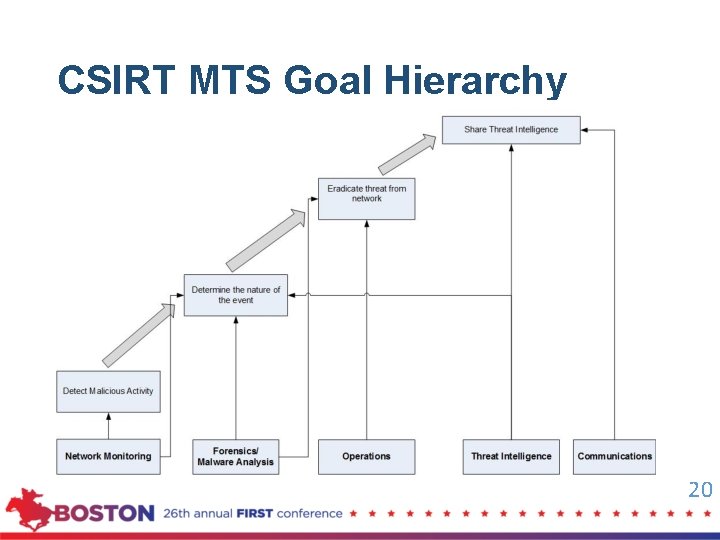
CSIRT MTS Goal Hierarchy 20
Key Issues in MTS Effectiveness • Between Team Activities • Externalized Cognition • Information Sharing • Knowledge Management “We connect the dots…We correlate and coordinate. We have many different facets that we've talked about, threat analysis, network analysis, digital, analytics, malware…. We use that capability along with our trusted partnerships with industry, local governments and so forth to correlate information and try and create a common operating picture. And to try and link everything together and connect the dots, so we can paint the actual picture…What is the actual cyber incident? ” 21
Key Issues in MTS Effectiveness (Cont’d. ) • Between Team Activities • Collective Problem-Solving • Adaptation and Innovation • MTS Learning “We configured it. Another team shipped it, and then the contractors are going to be racking it. Then, a fourth person is going to be using it, and coming back to us if they have problems. ” 22
Drivers of MTS Success & Failure • Between-team emergent states • Leadership and boundary spanning dynamics • Motivational dynamics 23
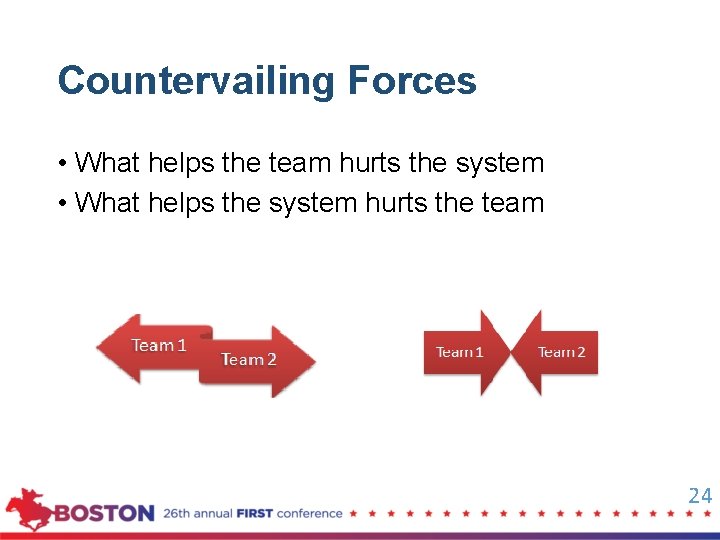
Countervailing Forces • What helps the team hurts the system • What helps the system hurts the team 24
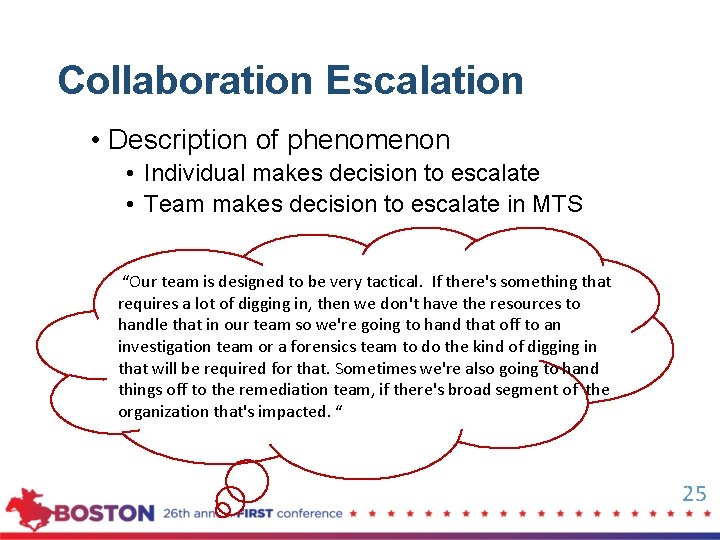
Collaboration Escalation • Description of phenomenon • Individual makes decision to escalate • Team makes decision to escalate in MTS “Our team is designed to be very tactical. If there's something that requires a lot of digging in, then we don't have the resources to handle that in our team so we're going to hand that off to an investigation team or a forensics team to do the kind of digging in that will be required for that. Sometimes we're also going to hand things off to the remediation team, if there's broad segment of the organization that's impacted. “ 25
Collaboration Escalation (Cont’d. ) • What are the drivers of escalation? • • • Nature of the problem Organizational protocols, policy and politics Individual disposition Team norms and states Between team and MTS norms and states 26
Suggested Prescriptions for Enhancing CSIR-MTSs • Build and train teams and MTSs to effectively “think together” • Facilitate within and between team dynamics • Key role for CSIRT and MTS leaders • Select and train team members with high communication and collaboration skills, in addition to technical expertise • Select team members who are predisposed to work well in a highly collaborative environment 27
Future Research and Practice Requirements • Understanding CSIR-MTS dynamics • Deriving best practices • Developing tools for CSIRT managers to use when hiring and training CSIRT members • Helping CSIRTs collaborate more effectively within the team and the entire system 28
- Slides: 29