
Understanding Culture CULTURE All shared products of human


- Slides: 30
Understanding Culture
CULTURE • All shared products of human groups • Includes values, material artifacts, and rules of behavior • They are not a result of biological inheritance
Cultural Universals • Features that all societies must develop to ensure they fulfill their needs – George Murdoch • Identified 65 cultural universals • Included family, cooking, government, economy, medicine, tool making, funeral rights, religious rituals, sports, dance, arts, games, music • Cultures might differ in the way they show these traits. • Ex. All cultures have families in order to care for young children, but the makeup of the family varies among different cultures. • http: //www. youtube. com/watch? v=Vx. KTXO 6 Rhrw
Culture includes…… • • • Technology Language Religion Food Aesthetics (art, music, architecture) Values, ideas Norms Gender roles Recreational Activities Commercial Practices Social Structure
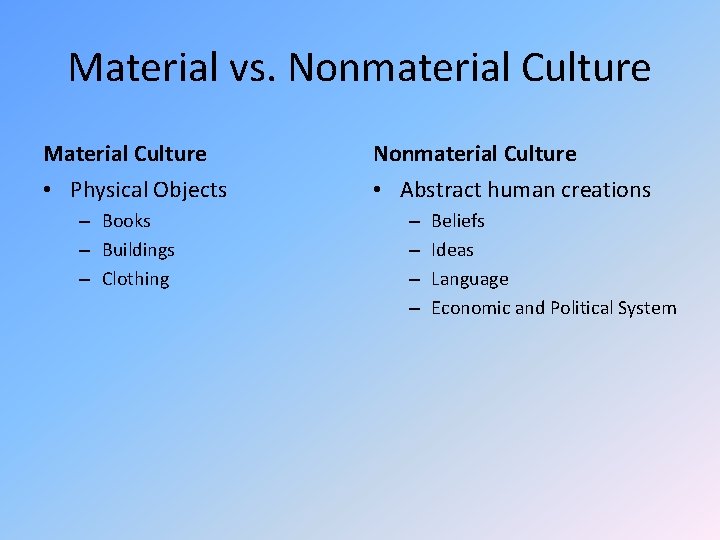
Material vs. Nonmaterial Culture Material Culture Nonmaterial Culture • Physical Objects • Abstract human creations – Books – Buildings – Clothing – – Beliefs Ideas Language Economic and Political System
How do changes in material culture give rise to changes in nonmaterial culture? http: //www. youtube. com/watch? v= 5 Mn. Q 8 Ekw. XJ 0
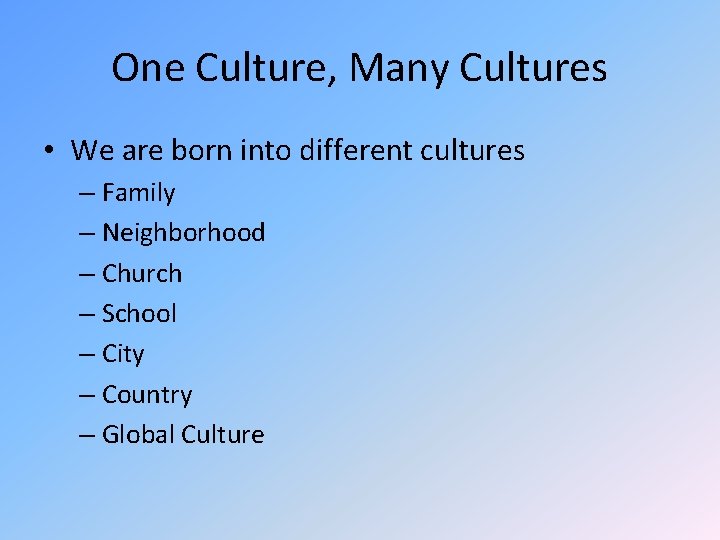
One Culture, Many Cultures • We are born into different cultures – Family – Neighborhood – Church – School – City – Country – Global Culture
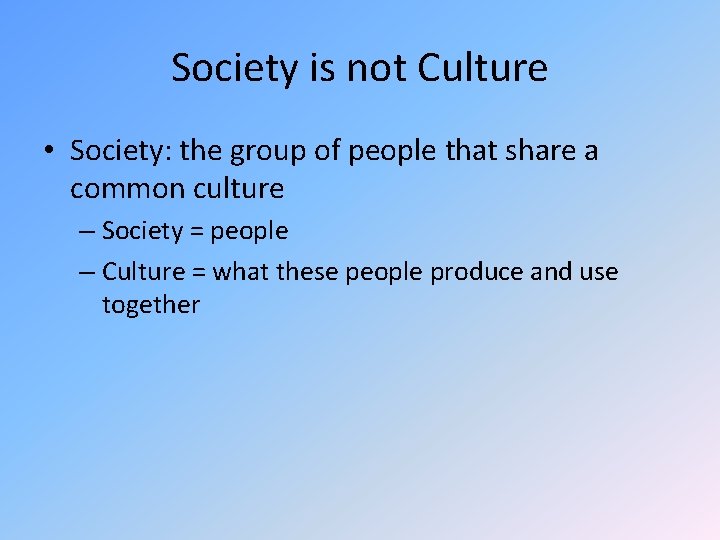
Society is not Culture • Society: the group of people that share a common culture – Society = people – Culture = what these people produce and use together
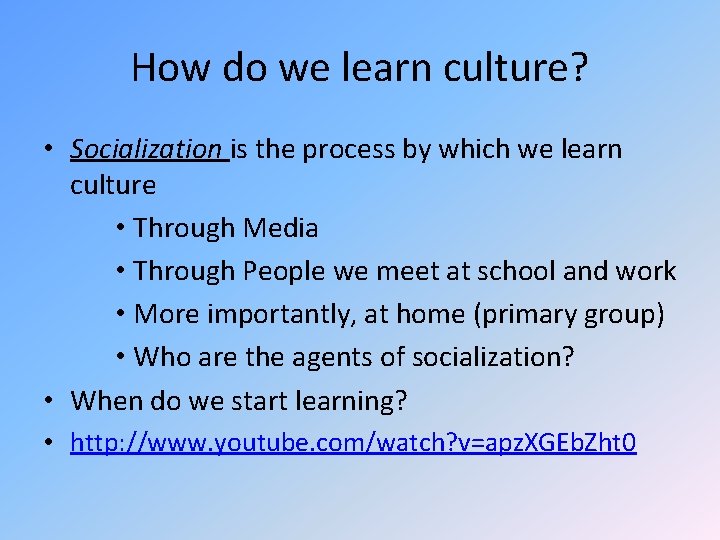
How do we learn culture? • Socialization is the process by which we learn culture • Through Media • Through People we meet at school and work • More importantly, at home (primary group) • Who are the agents of socialization? • When do we start learning? • http: //www. youtube. com/watch? v=apz. XGEb. Zht 0
Socialization and Cooperation in Animals – Moral Behavior • http: //www. ted. com/talks/frans_de_waal_do _animals_have_morals. html • Time: 3: 20 • Time 12: 35
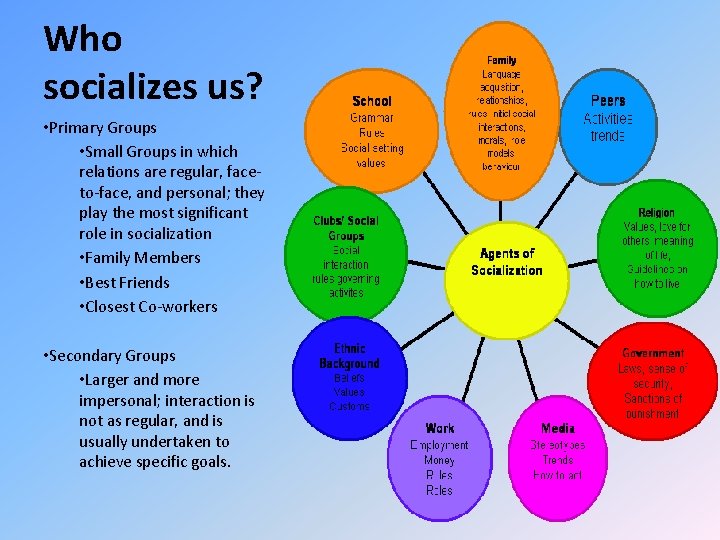
Who socializes us? • Primary Groups • Small Groups in which relations are regular, faceto-face, and personal; they play the most significant role in socialization • Family Members • Best Friends • Closest Co-workers • Secondary Groups • Larger and more impersonal; interaction is not as regular, and is usually undertaken to achieve specific goals.
What do we learn?
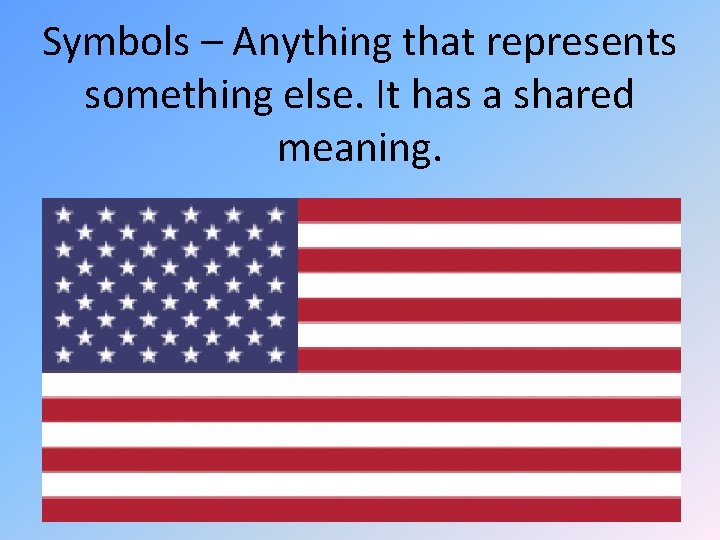
Symbols – Anything that represents something else. It has a shared meaning.
SYMBOLS
More on Symbols • Symbols occur in different forms: – Words (hello) – Events (church service, pre-game chant) – Physical object (class ring) – Gestures (handshake) – Images (team logo) • What’s the hidden meaning behind each of those symbols?
What’s the symbolism behind this pre-game huddle? • http: //www. youtube. com/watch? v=RABQY 0 t 1 Bqw
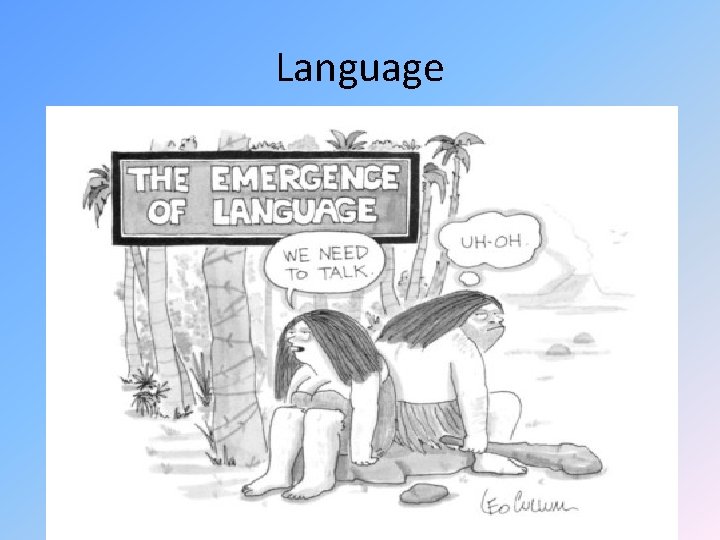
Language
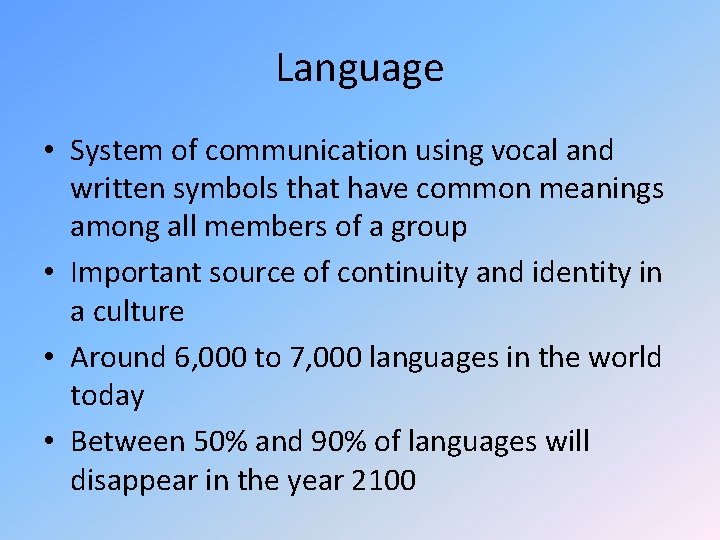
Language • System of communication using vocal and written symbols that have common meanings among all members of a group • Important source of continuity and identity in a culture • Around 6, 000 to 7, 000 languages in the world today • Between 50% and 90% of languages will disappear in the year 2100
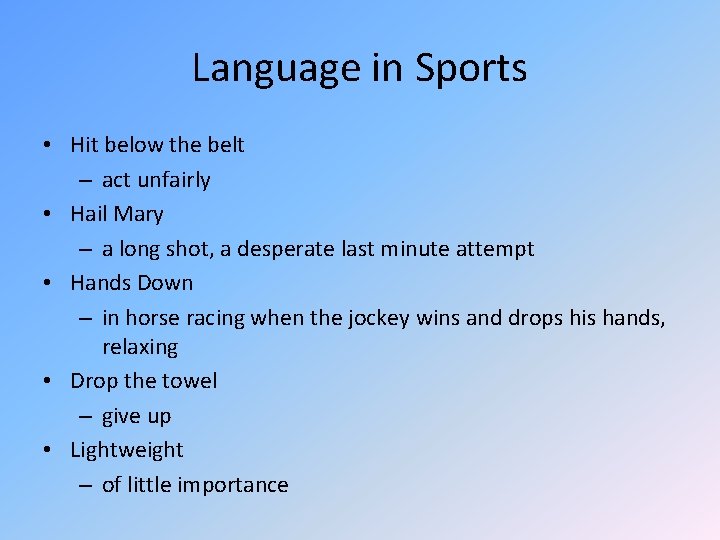
Language in Sports • Hit below the belt – act unfairly • Hail Mary – a long shot, a desperate last minute attempt • Hands Down – in horse racing when the jockey wins and drops his hands, relaxing • Drop the towel – give up • Lightweight – of little importance
Language in Sports • http: //www. youtube. com/watch? v=2 z. Qf 6 bxs. Zo
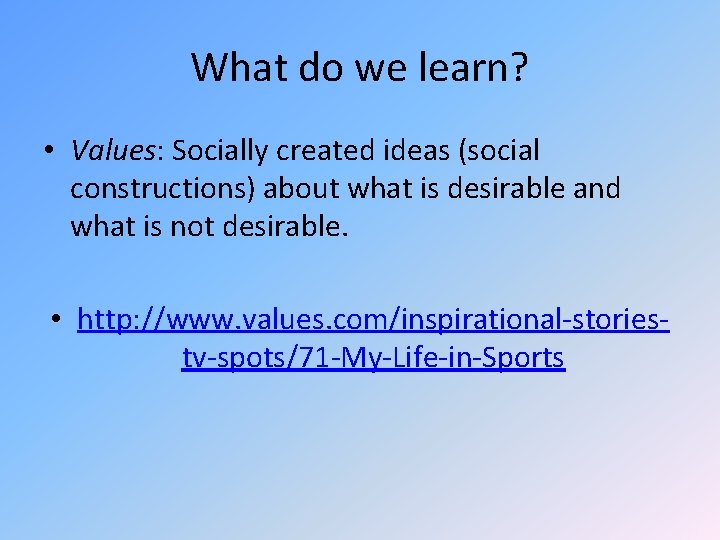
What do we learn? • Values: Socially created ideas (social constructions) about what is desirable and what is not desirable. • http: //www. values. com/inspirational-storiestv-spots/71 -My-Life-in-Sports
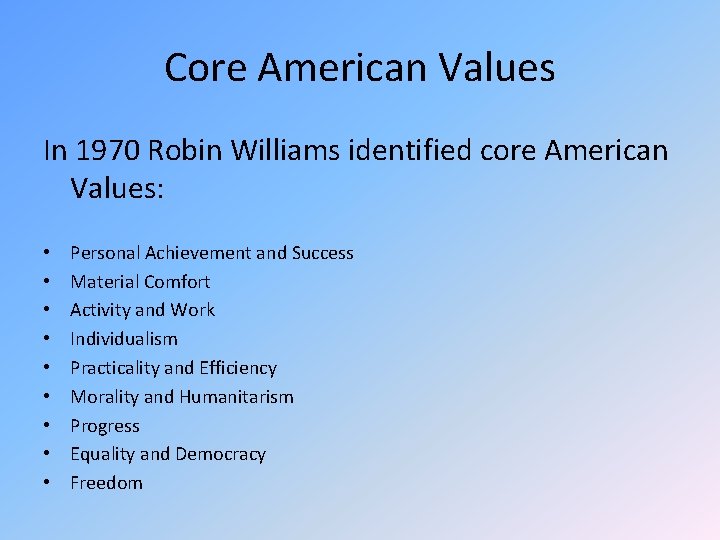
Core American Values In 1970 Robin Williams identified core American Values: • • • Personal Achievement and Success Material Comfort Activity and Work Individualism Practicality and Efficiency Morality and Humanitarism Progress Equality and Democracy Freedom
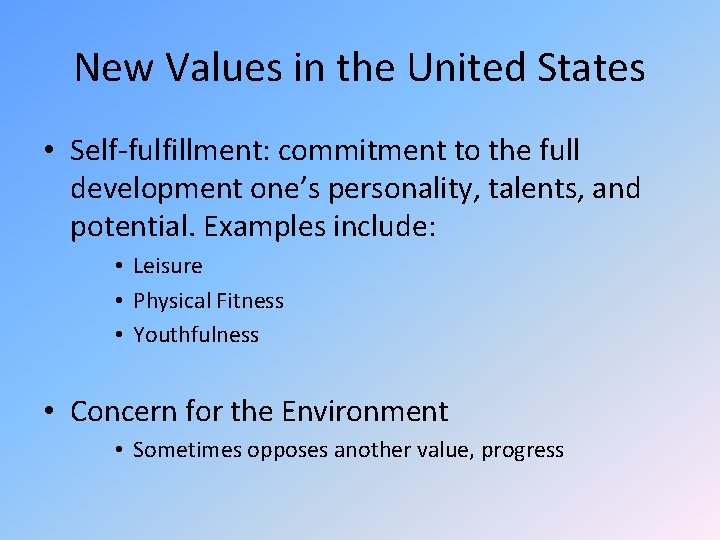
New Values in the United States • Self-fulfillment: commitment to the full development one’s personality, talents, and potential. Examples include: • Leisure • Physical Fitness • Youthfulness • Concern for the Environment • Sometimes opposes another value, progress
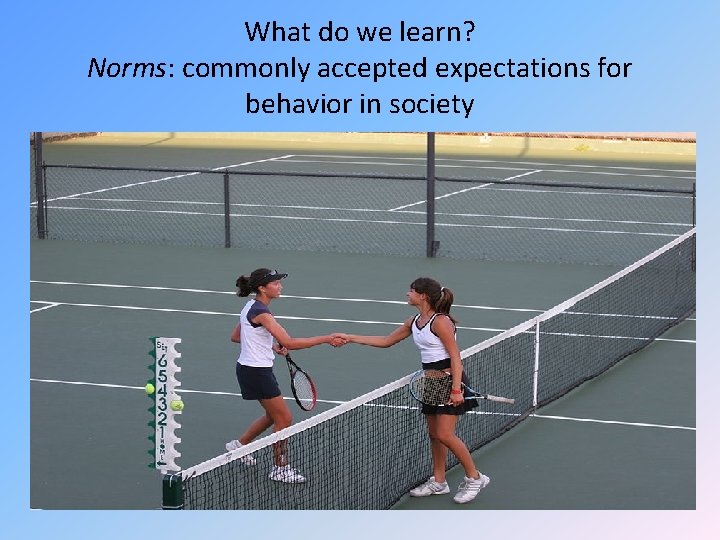
What do we learn? Norms: commonly accepted expectations for behavior in society
Breaking norms • http: //www. socialengineer. org/framework/Influence_Tactics: _C onsensus_or_Social_Proof
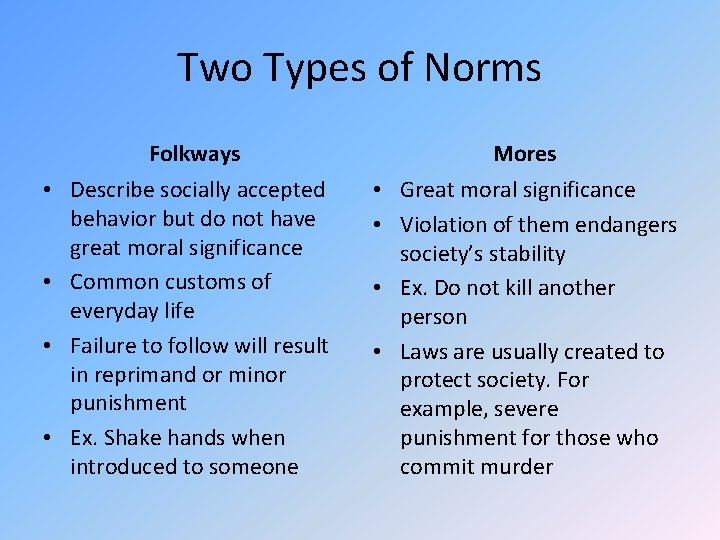
Two Types of Norms Folkways • Describe socially accepted behavior but do not have great moral significance • Common customs of everyday life • Failure to follow will result in reprimand or minor punishment • Ex. Shake hands when introduced to someone Mores • Great moral significance • Violation of them endangers society’s stability • Ex. Do not kill another person • Laws are usually created to protect society. For example, severe punishment for those who commit murder
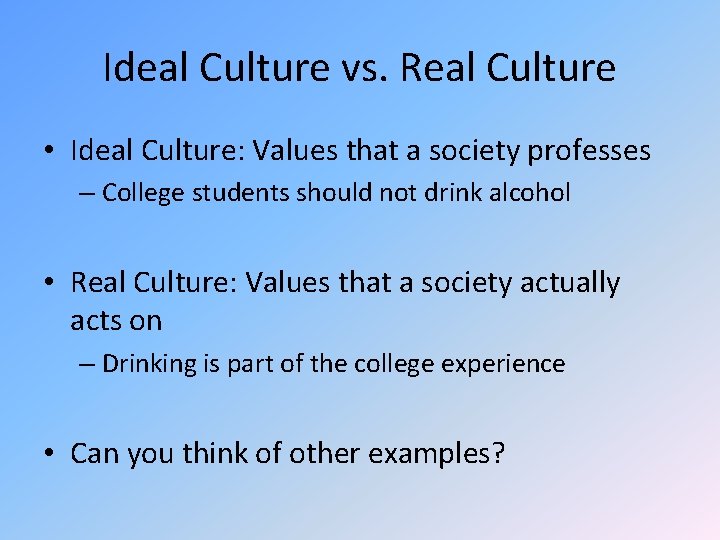
Ideal Culture vs. Real Culture • Ideal Culture: Values that a society professes – College students should not drink alcohol • Real Culture: Values that a society actually acts on – Drinking is part of the college experience • Can you think of other examples?
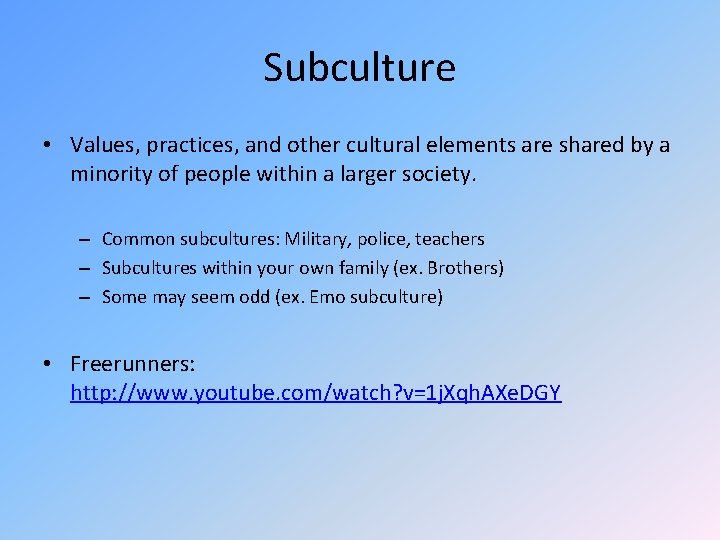
Subculture • Values, practices, and other cultural elements are shared by a minority of people within a larger society. – Common subcultures: Military, police, teachers – Subcultures within your own family (ex. Brothers) – Some may seem odd (ex. Emo subculture) • Freerunners: http: //www. youtube. com/watch? v=1 j. Xqh. AXe. DGY
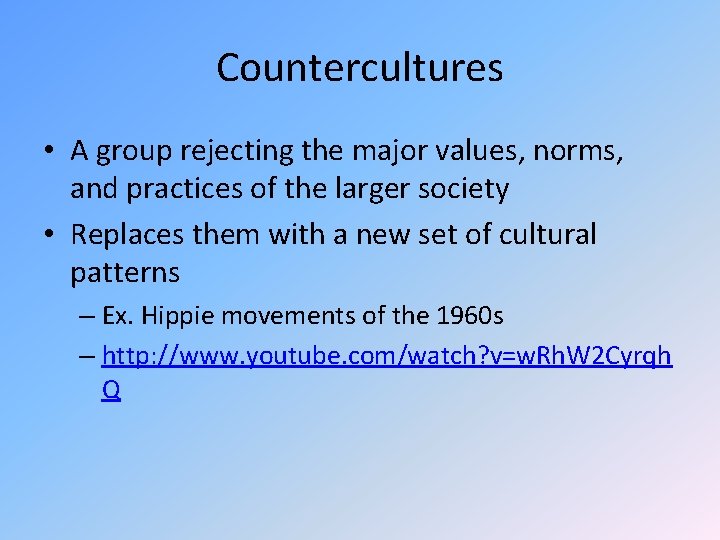
Countercultures • A group rejecting the major values, norms, and practices of the larger society • Replaces them with a new set of cultural patterns – Ex. Hippie movements of the 1960 s – http: //www. youtube. com/watch? v=w. Rh. W 2 Cyrqh Q
The End