
Understanding Conflict Resolution Tools Mediation and Negotiation Jared



- Slides: 21
Understanding Conflict Resolution Tools (Mediation and Negotiation) Jared O. Bell, Ph. D, Visiting Scholar , The University of The Gambia
What tools might we use to address conflict? • What are some tools might we use to address conflicts?
Conflict Management Tools • Negotiation • Meditation
Defining Negotiation • How might we define negotiation? • What are some things that can be negotiated community wide? Nationally? Or Internationally?
Negotiation • Negotiation is a method by which two or more conflict parties settle differences. It is a process by which compromise or agreement is reached.
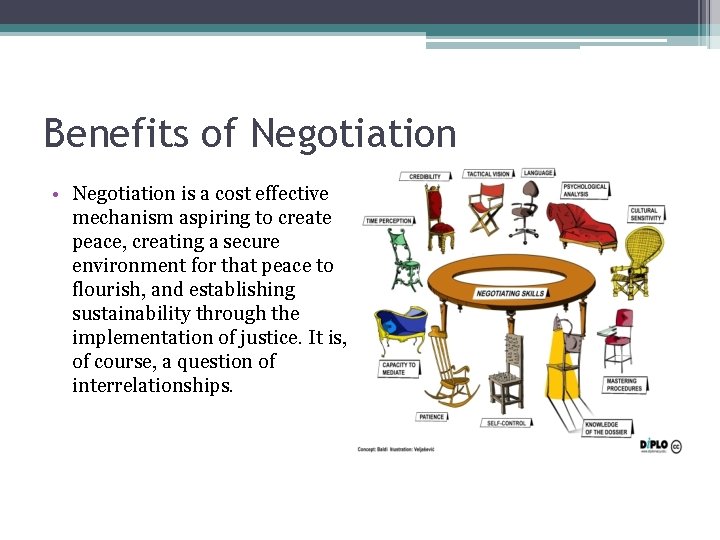
Benefits of Negotiation • Negotiation is a cost effective mechanism aspiring to create peace, creating a secure environment for that peace to flourish, and establishing sustainability through the implementation of justice. It is, of course, a question of interrelationships.
How negotiation can be used • Negotiation can be used to avoid wars, and it is nearly always used after wars are over. • Negotiation can be used to make deals and agreements • Negotiation can be used to form alliances • What else can negotiation be used for?
5 Steps of Negotiation • • • Preparation and Planning. Definition of Ground Rules. Clarification and Justification. Bargaining and Problem Solving. Closure and Implementation.
Levels of Negotiation • Negotiations may take place between individuals and within communities, societies, nationally, and Internationally.
International Negotiation is Much more Complex • International negotiations involve some of the dynamics of • the interpersonal and interorganizational levels of negotiation but also • involve vast diplomatic bureaucracies, the possibility of military coercion, • the infl uence of transnational and nonstate actors, the absence of an overarching • legal framework, and the infl uence of other international events • on any particular negotiation (Hopmann, 1996).
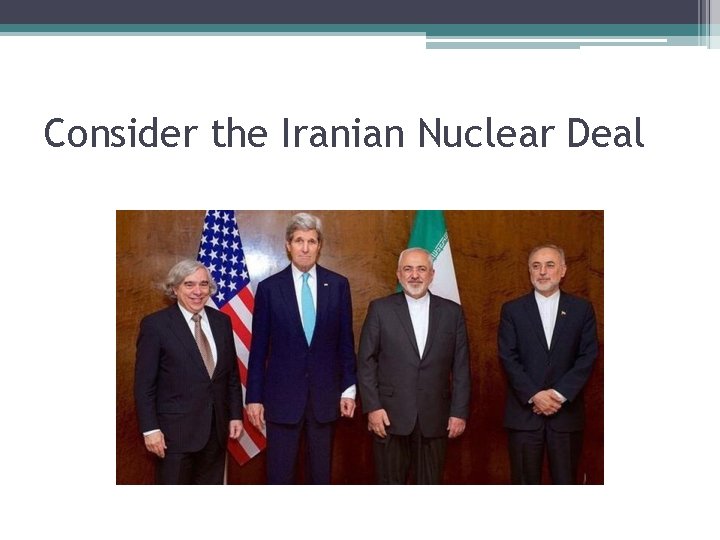
Consider the Iranian Nuclear Deal
Factors of Negotiation (Cont. ) • The factors influencing this process are so numerous that a thorough understanding of the actual proceedings is almost impossible. • Diplomatic Negotiation it was pointed out that the negotiators, with their own characteristics and circumstances, have a certain influence, but that the real determining factor does not rest with them but is ingrained in the power of the countries that they represent, or, in other words, in the power structure, the measure of asymmetry.
Factors (Cont. ) • • Culture Socio-economic status Structural Power Position in the negotiation ( what do they have to offer) • Incentives • Personal style and experience of those negotiating
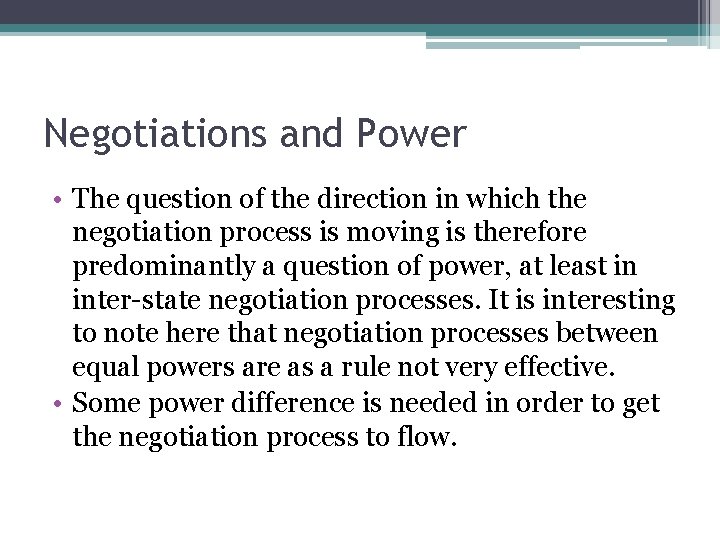
Negotiations and Power • The question of the direction in which the negotiation process is moving is therefore predominantly a question of power, at least in inter-state negotiation processes. It is interesting to note here that negotiation processes between equal powers are as a rule not very effective. • Some power difference is needed in order to get the negotiation process to flow.
Defining mediation • How can we define mediation in our own words?
Mediation • Meditation is a process where a neutral third party works to settle disputes and conflicts between two or more parties.
Levels of Mediation • Mediation like negotiation takes place at a variety of levels conflict from families and communities, to warring factions in intra-state conflicts.
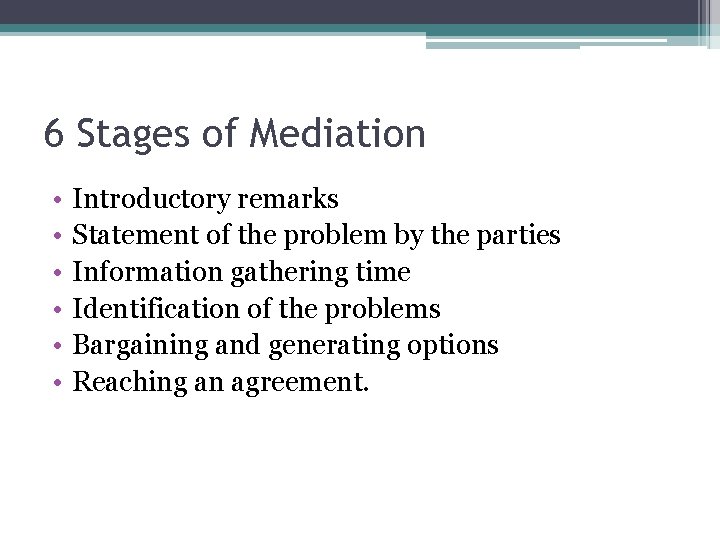
6 Stages of Mediation • • • Introductory remarks Statement of the problem by the parties Information gathering time Identification of the problems Bargaining and generating options Reaching an agreement.
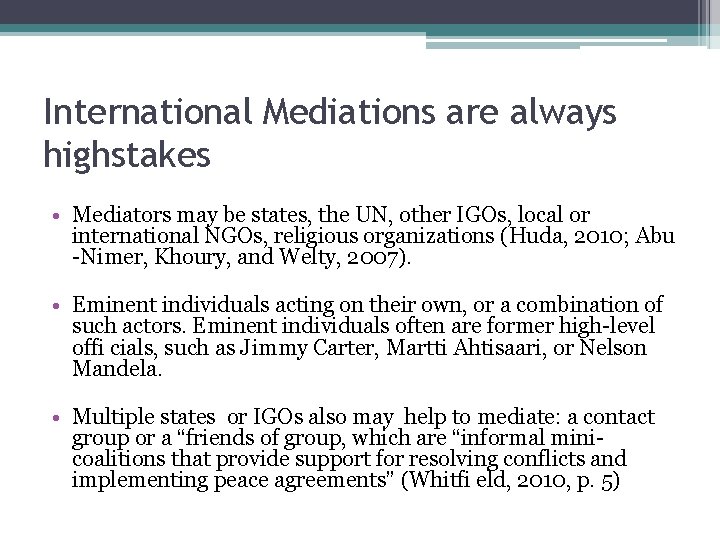
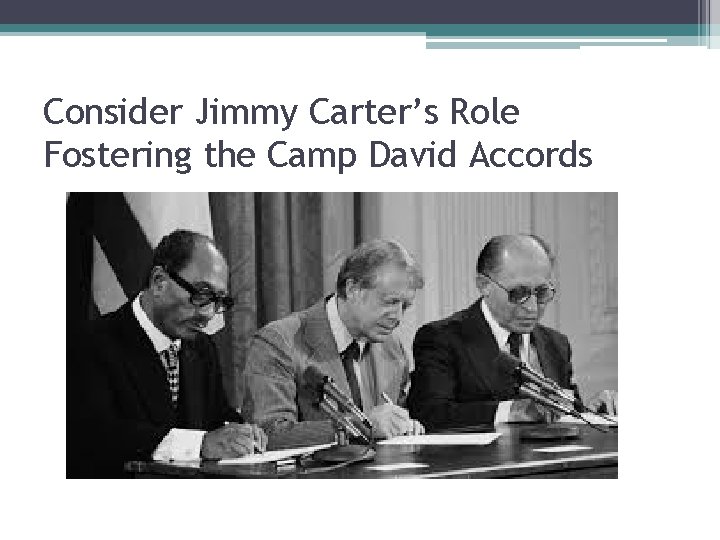
International Mediations are always highstakes • Mediators may be states, the UN, other IGOs, local or international NGOs, religious organizations (Huda, 2010; Abu -Nimer, Khoury, and Welty, 2007). • Eminent individuals acting on their own, or a combination of such actors. Eminent individuals often are former high-level offi cials, such as Jimmy Carter, Martti Ahtisaari, or Nelson Mandela. • Multiple states or IGOs also may help to mediate: a contact group or a “friends of group, which are “informal minicoalitions that provide support for resolving conflicts and implementing peace agreements” (Whitfi eld, 2010, p. 5)
Consider Jimmy Carter’s Role Fostering the Camp David Accords
Questions?