
Understanding Commercial Kitchen System Fires Sponsored by the
Understanding Commercial Kitchen System Fires Sponsored by the Calgary Fire Department May 28 -29, 2012 © 2012 Copyright, Phil Ackland Associates 1
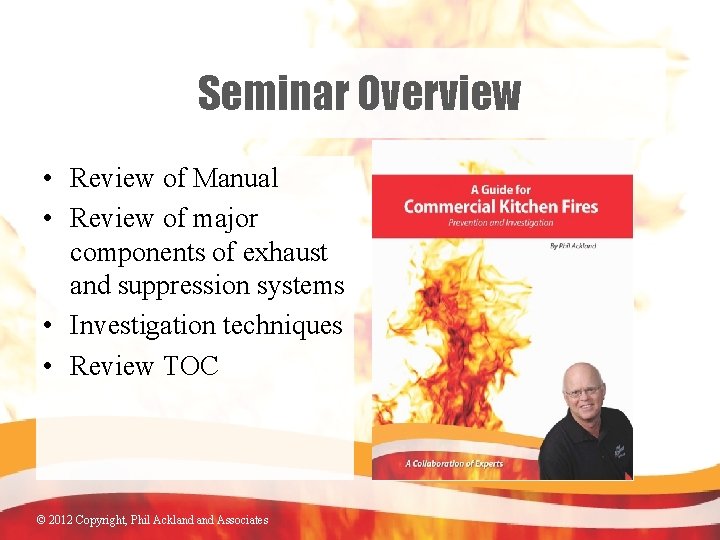
Seminar Overview • Review of Manual • Review of major components of exhaust and suppression systems • Investigation techniques • Review TOC © 2012 Copyright, Phil Ackland Associates
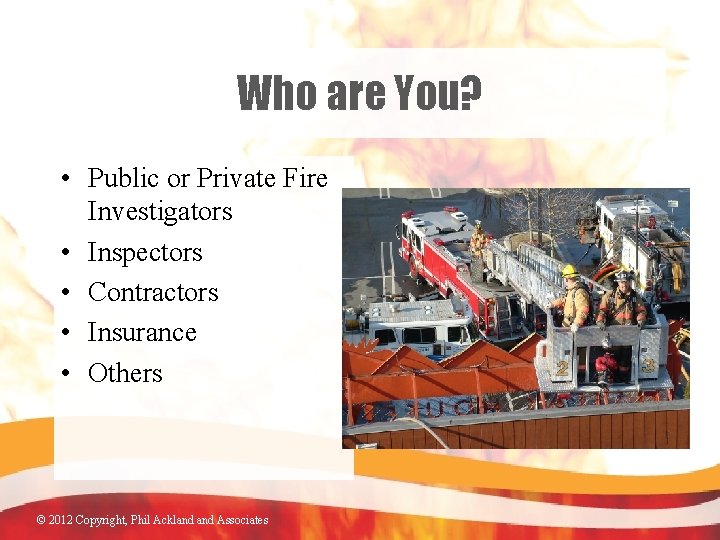
Who are You? • Public or Private Fire Investigators • Inspectors • Contractors • Insurance • Others © 2012 Copyright, Phil Ackland Associates
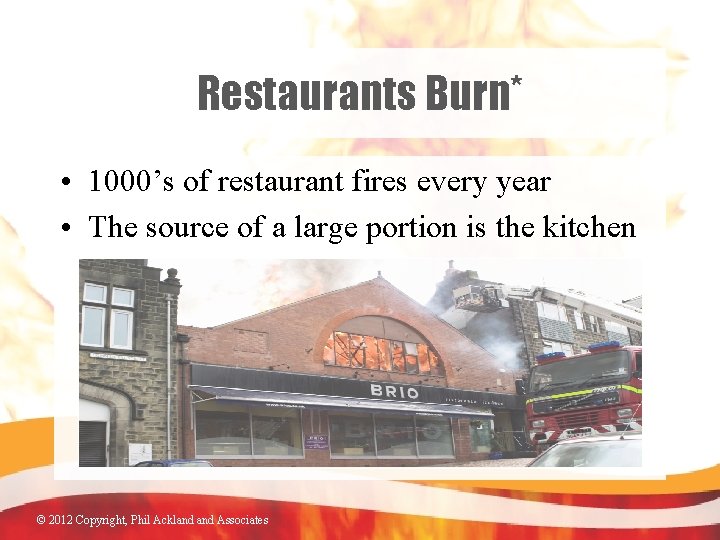
Restaurants Burn* • 1000’s of restaurant fires every year • The source of a large portion is the kitchen © 2012 Copyright, Phil Ackland Associates

Commercial Kitchen Fire* • Many fires are a result of inadequate inspection • Beyond Arson or Accident • What can be learned? © 2012 Copyright, Phil Ackland Associates
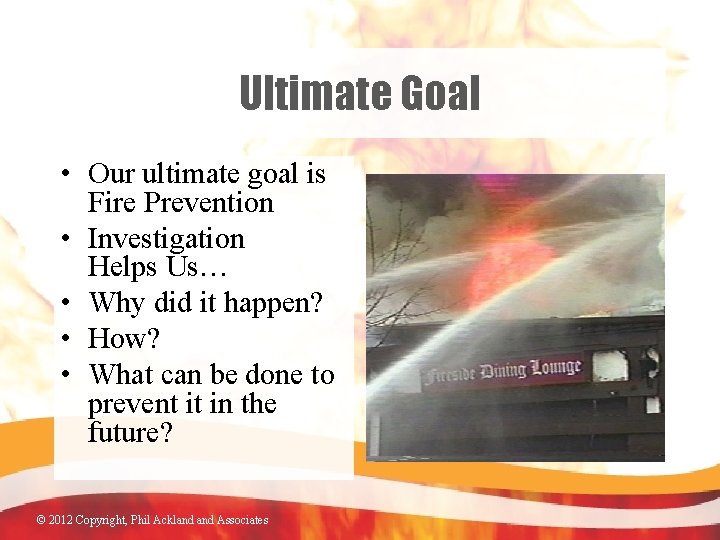
Ultimate Goal • Our ultimate goal is Fire Prevention • Investigation Helps Us… • Why did it happen? • How? • What can be done to prevent it in the future? © 2012 Copyright, Phil Ackland Associates
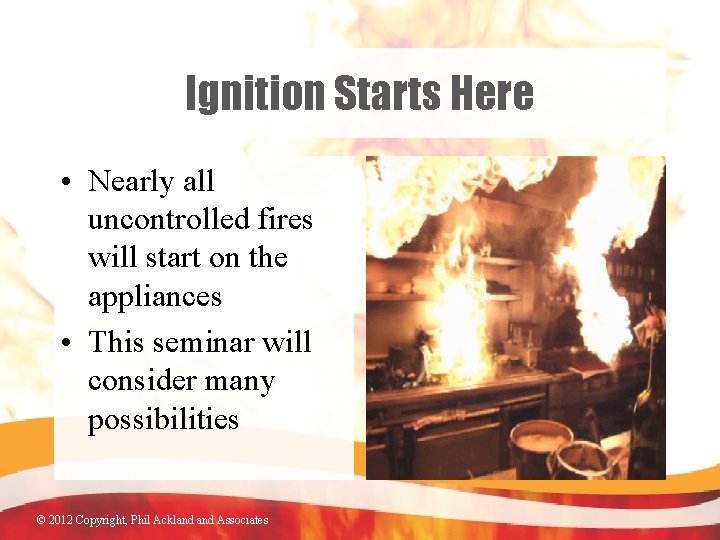
Ignition Starts Here • Nearly all uncontrolled fires will start on the appliances • This seminar will consider many possibilities © 2012 Copyright, Phil Ackland Associates
Primary Safety Breakdowns • Construction • Installation • Maintenance © 2012 Copyright, Phil Ackland Associates
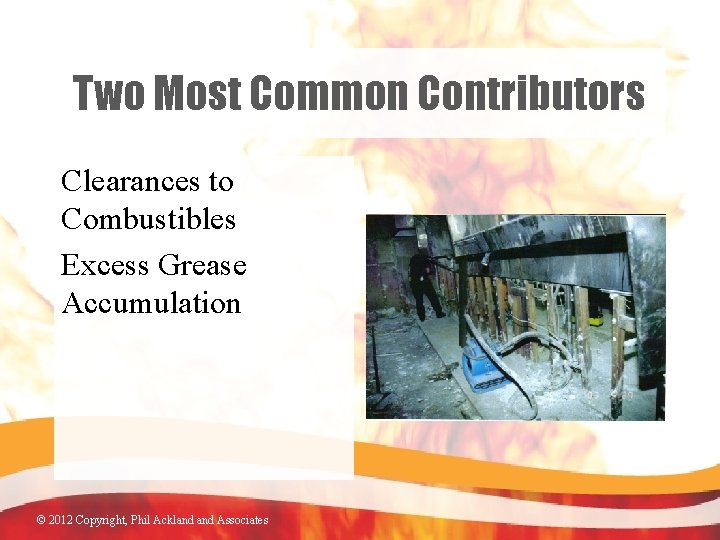
Two Most Common Contributors Clearances to Combustibles Excess Grease Accumulation © 2012 Copyright, Phil Ackland Associates
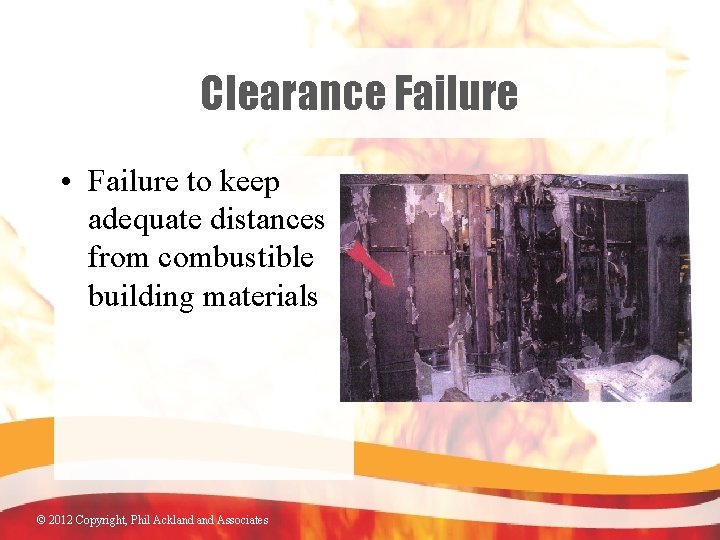
Clearance Failure • Failure to keep adequate distances from combustible building materials © 2012 Copyright, Phil Ackland Associates
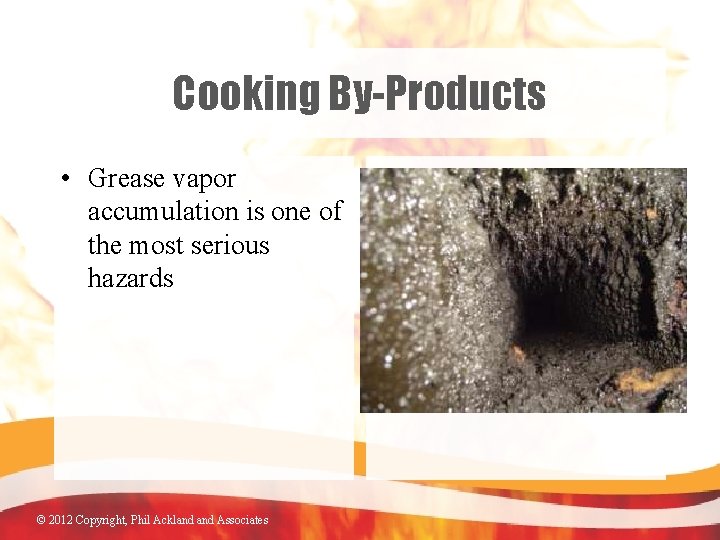
Cooking By-Products • Grease vapor accumulation is one of the most serious hazards © 2012 Copyright, Phil Ackland Associates
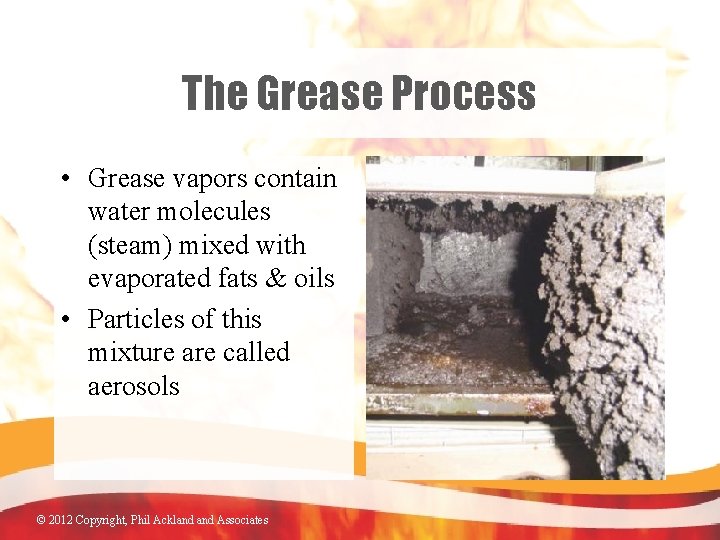
The Grease Process • Grease vapors contain water molecules (steam) mixed with evaporated fats & oils • Particles of this mixture are called aerosols © 2012 Copyright, Phil Ackland Associates

The Grease Hazard • The higher the temperature, the more grease is transformed into a vapor state • As the vapor cools, it condenses into a chemically altered solid state • This grease residue (altered oils) is combustible • The exhaust system actually becomes a fire hazard © 2012 Copyright, Phil Ackland Associates
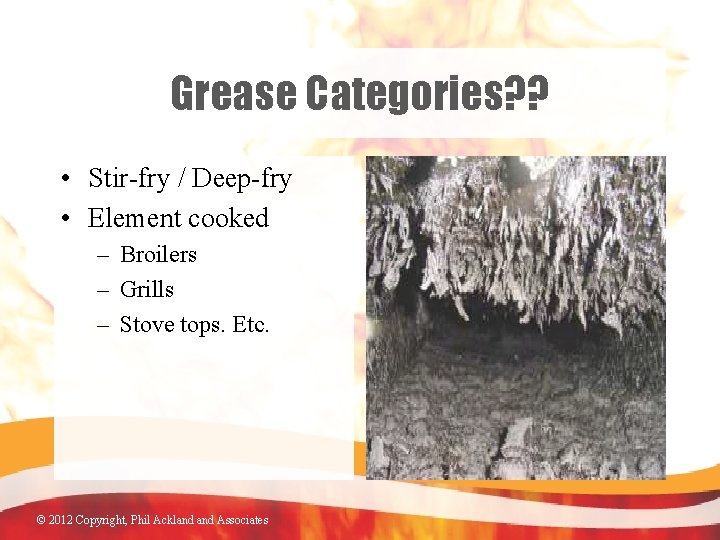
Grease Categories? ? • Stir-fry / Deep-fry • Element cooked – Broilers – Grills – Stove tops. Etc. © 2012 Copyright, Phil Ackland Associates
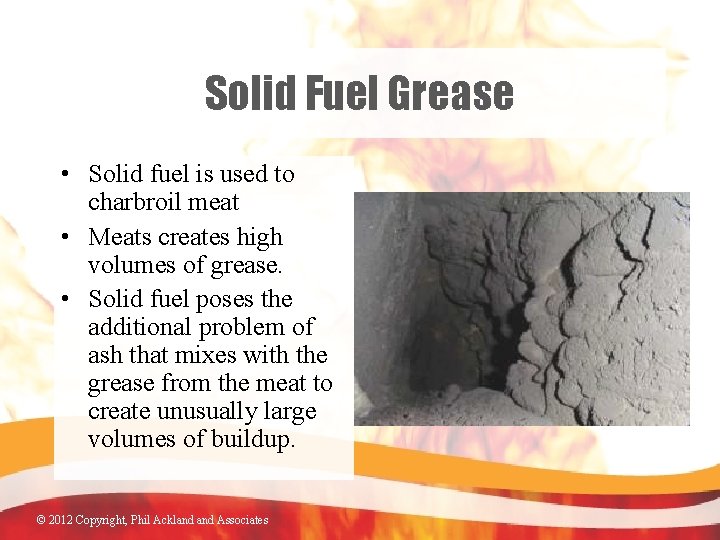
Solid Fuel Grease • Solid fuel is used to charbroil meat • Meats creates high volumes of grease. • Solid fuel poses the additional problem of ash that mixes with the grease from the meat to create unusually large volumes of buildup. © 2012 Copyright, Phil Ackland Associates
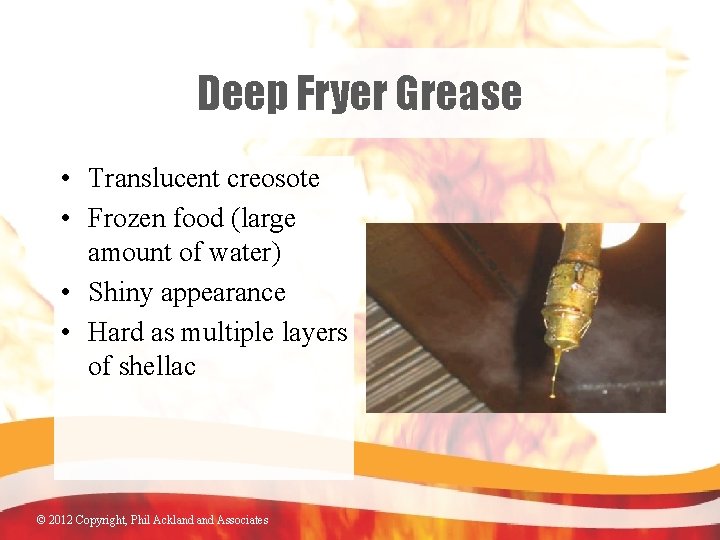
Deep Fryer Grease • Translucent creosote • Frozen food (large amount of water) • Shiny appearance • Hard as multiple layers of shellac © 2012 Copyright, Phil Ackland Associates
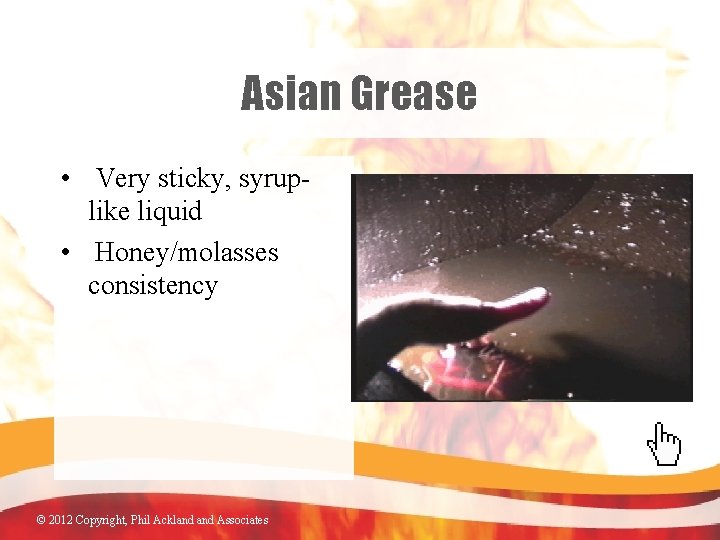
Asian Grease • Very sticky, syruplike liquid • Honey/molasses consistency © 2012 Copyright, Phil Ackland Associates
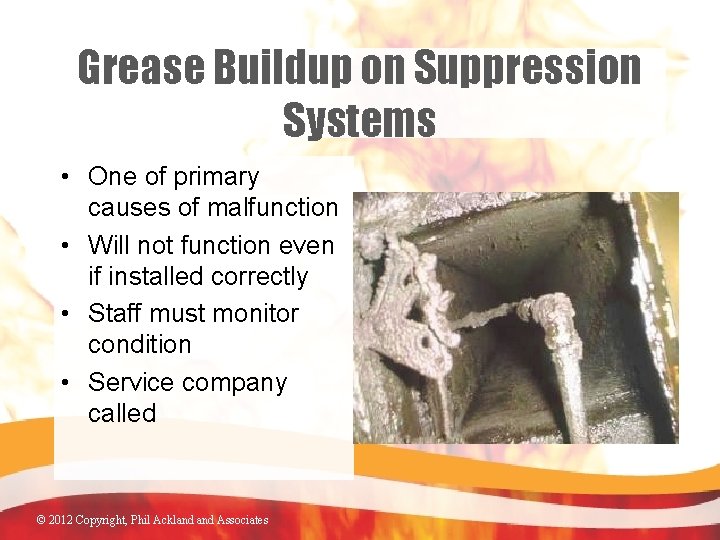
Grease Buildup on Suppression Systems • One of primary causes of malfunction • Will not function even if installed correctly • Staff must monitor condition • Service company called © 2012 Copyright, Phil Ackland Associates
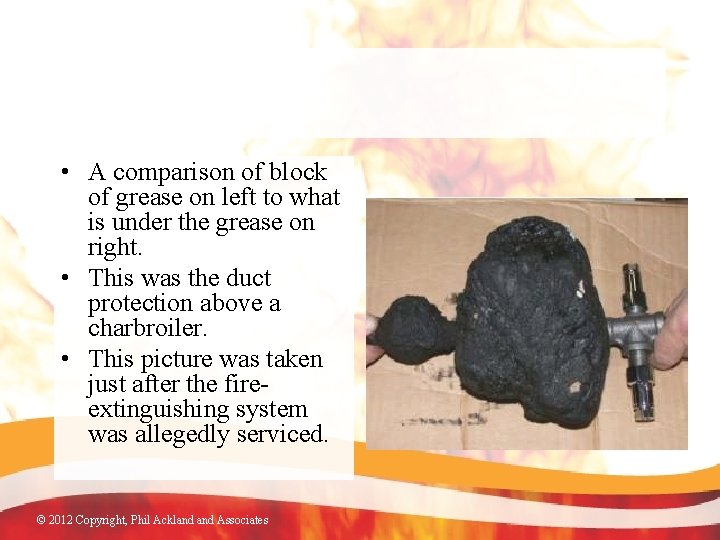
• A comparison of block of grease on left to what is under the grease on right. • This was the duct protection above a charbroiler. • This picture was taken just after the fireextinguishing system was allegedly serviced. © 2012 Copyright, Phil Ackland Associates
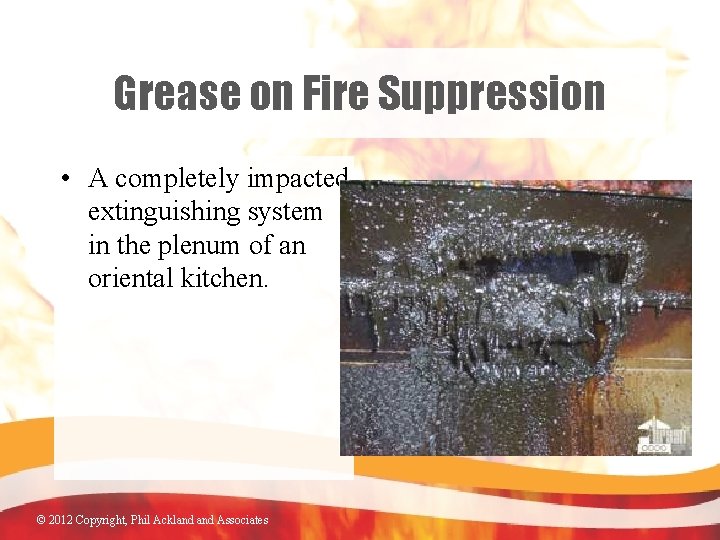
Grease on Fire Suppression • A completely impacted extinguishing system in the plenum of an oriental kitchen. © 2012 Copyright, Phil Ackland Associates
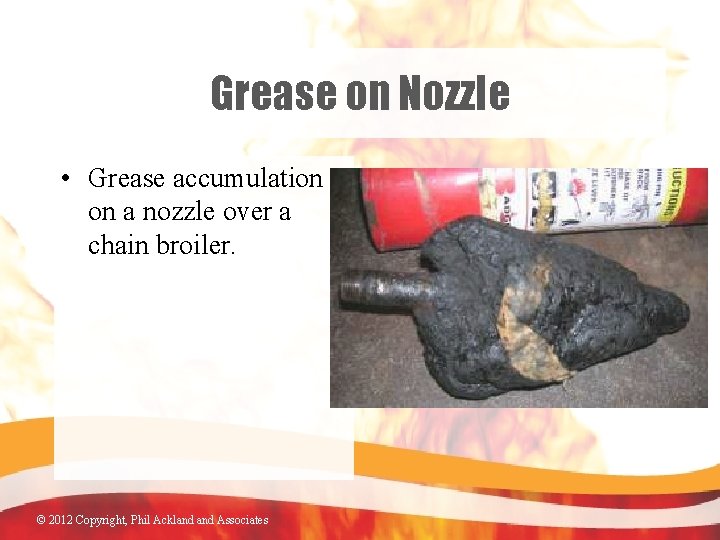
Grease on Nozzle • Grease accumulation on a nozzle over a chain broiler. © 2012 Copyright, Phil Ackland Associates
How Kitchen Fires Can Start/Spread • Abnormal event on cooking surface • Commonly, cooking oil vapors are ignited by flames or excess heat • Flare ups create high flames that reach to the hood and filters • If the heat and exposure time are sufficient (approx 2 minutes) • Flame impingement will ignite residual grease in hood and exhaust systems © 2012 Copyright, Phil Ackland Associates
Fire Spread is Twofold • First, ignition of grease accumulation in exhaust system. – Oxygen is always present – Flare up (high temperature) – Flare up from an appliance (source of ignition) – Grease residues evaporate & then (ignite point of ignition) © 2012 Copyright, Phil Ackland Associates
Spread • Second, ignition of combustible materials (generally wood building materials or cardboard storage containers) too close to the radiant heat energy being emitted from the metal exhaust duct. © 2012 Copyright, Phil Ackland Associates
• High air velocity • Consistency of grease • Lack of flame impingement from original fire © 2012 Copyright, Phil Ackland Associates • Exhaust fan can feed or “blow out” the fire • Carbon/oil content & the volume of grease • Deny grease fire sufficient energy
Summary • Cooking appliances produce grease laden vapors • Exhaust fan draws vapors and room air into the hood & duct exhaust system • Grease vapor condenses on the surfaces throughout the exhaust system • Appliance malfunction or human error produce flare-ups © 2012 Copyright, Phil Ackland Associates
Summary • Flame can have sufficient energy to ignite grease residue on filters and hood (~2 min. ) • Once ignited, several factors will determine severity and continued combustion • Fuel and Oxygen are usually the key factors © 2012 Copyright, Phil Ackland Associates
Summary • If there is sufficient fuel, air movement provided by the fan will supply all the oxygen necessary. • Therefore, it is the abundance of fuel (grease) that most often increases the severity of a fire and creates the radiant heat that may ignite building structures. © 2012 Copyright, Phil Ackland Associates
Review 2 main areas of issue Greater sources of grease accumulation © 2012 Copyright, Phil Ackland Associates
- Slides: 29