
Understanding Comics by Scott Mc Cloud The Vocabulary
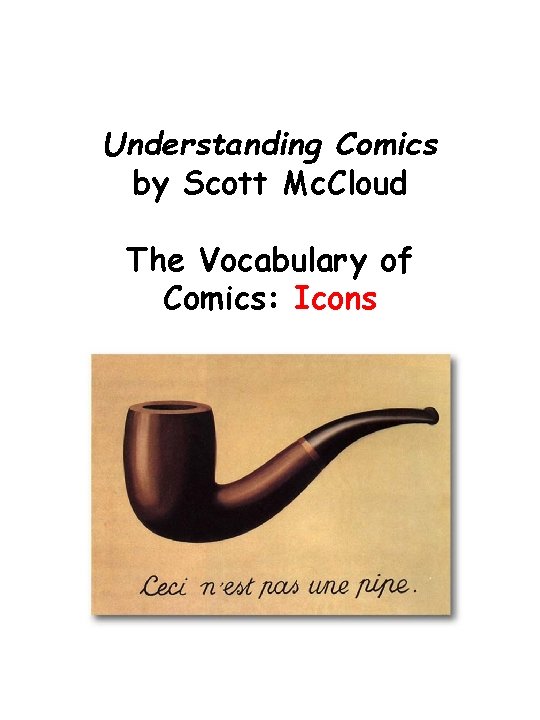
Understanding Comics by Scott Mc. Cloud The Vocabulary of Comics: Icons
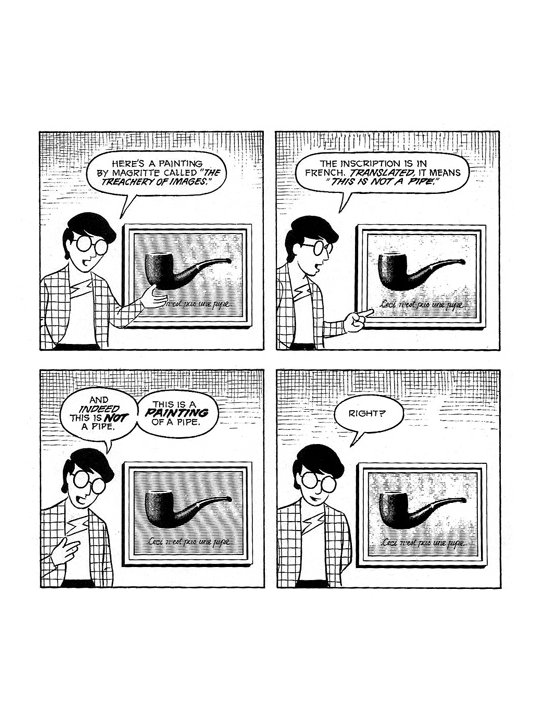
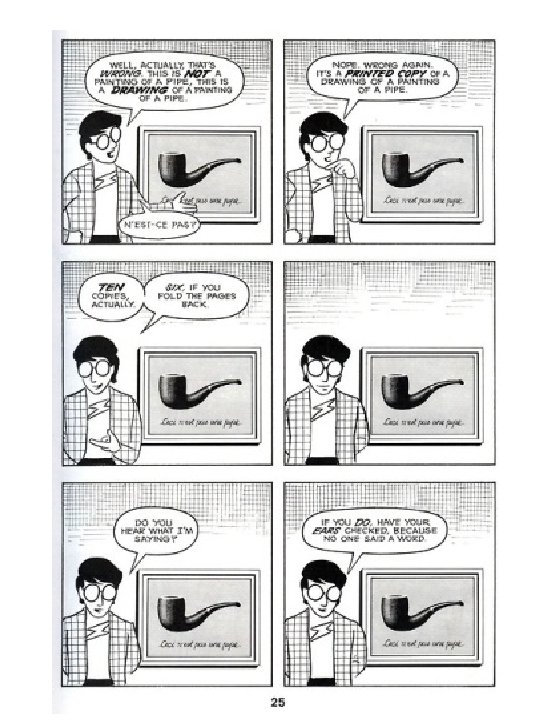

THE PREMISE Images are the basic vocabulary of comics. These images, or “icons, ” are images used to represent information that can be, but is not necessarily visual. They can • appeal to senses other than sight (taste, touch, smell, hearing) • represent abstract thought and feeling. We allow ourselves to be manipulated or “fooled” by the visuals. By processing what are often highly simplified drawings or marks on a page, we Ø hear, smell, touch, taste Ø acknowledge concepts like time, speed, and emotion. Words are highly abstract icons, but abstraction levels vary when discussing pictorial icons.
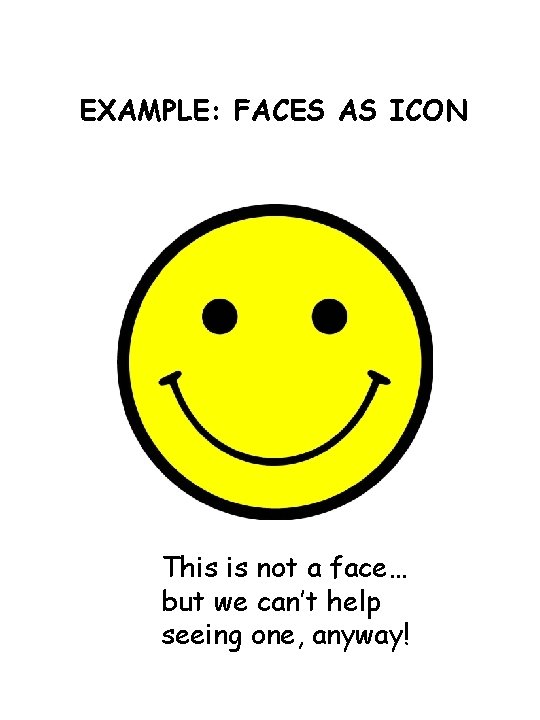
EXAMPLE: FACES AS ICON This is not a face… but we can’t help seeing one, anyway!
“Facial Pareidolia”: We are programmed to see faces, even in inanimate objects https: //www. youtube. com /watch? v=Zsx. IJ 32 Eg 2 A
Awareness of Others versus Awareness of Self: 1. Close your eyes. 2. Smile. 3. What did you see when you smiled? 4. How do you know you smiled? We see a detailed image of others’ faces, but we hold a constant, if sketchy awareness of our own faces (and, to a lesser degree, our bodies). This self-image is somewhat like a cartoon representation of our physical being. ü Connection to Mc. Luhan / inanimate objects. ü Experiences: Sensual (external world) and Conceptual (Identity) = Form (tangible) and Ideal (abstract) = Matrix (artificial construct) and Real World (real…whatever that means) ü Sometimes combined (Disney)
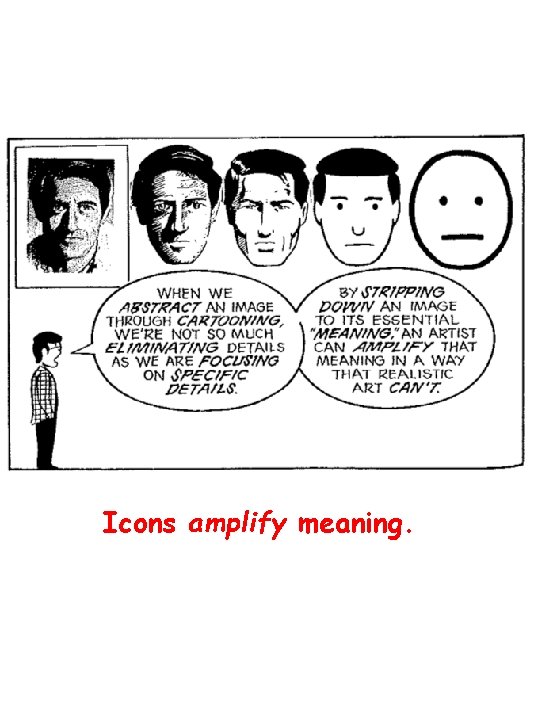
Icons amplify meaning.
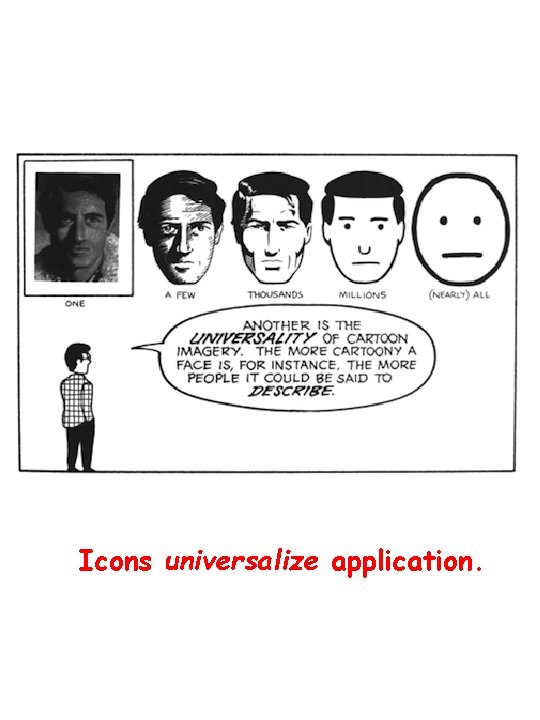
Icons universalize application.
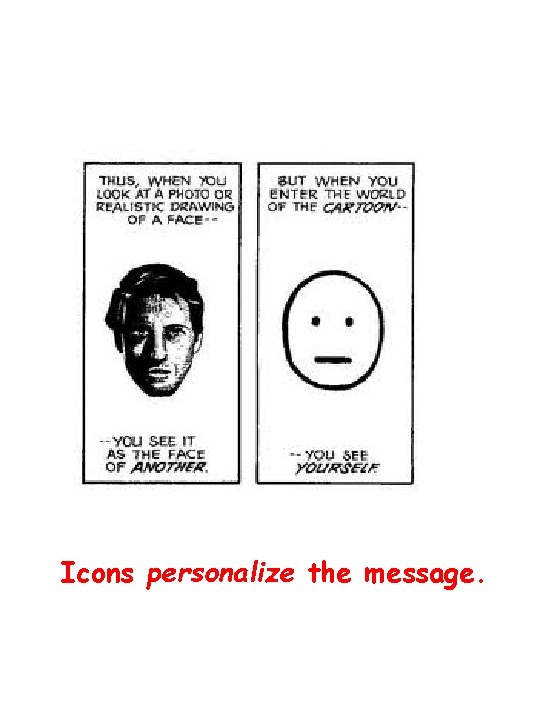
Icons personalize the message.
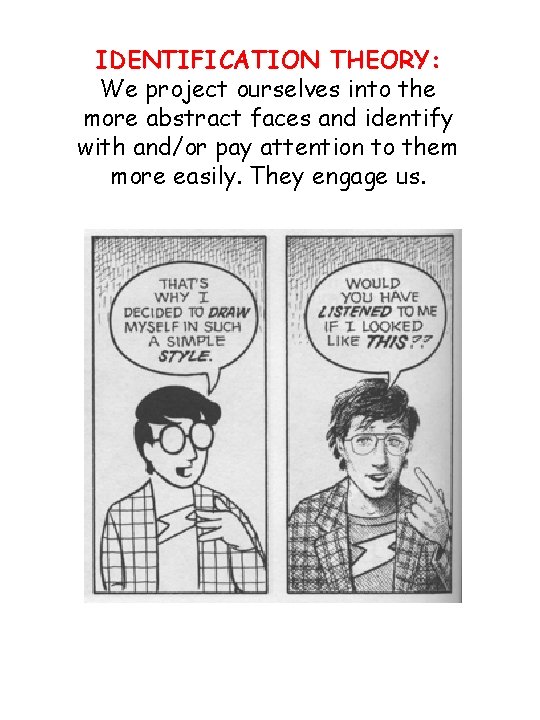
IDENTIFICATION THEORY: We project ourselves into the more abstract faces and identify with and/or pay attention to them more easily. They engage us.
- Slides: 12