
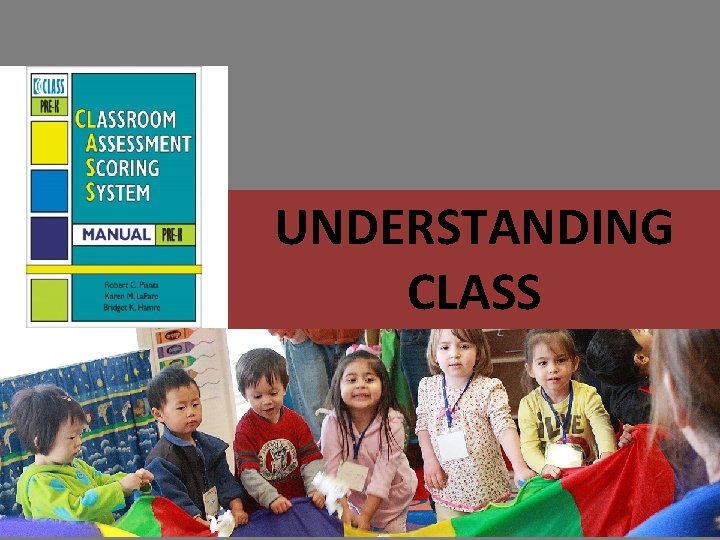
UNDERSTANDING CLASS What is the CLASS The Classroom


- Slides: 23
UNDERSTANDING CLASS
What is the CLASS? The Classroom Assessment Scoring System© (CLASS) is a research-based observation tool used to help teachers and schools improve the quality of classroom interactions.
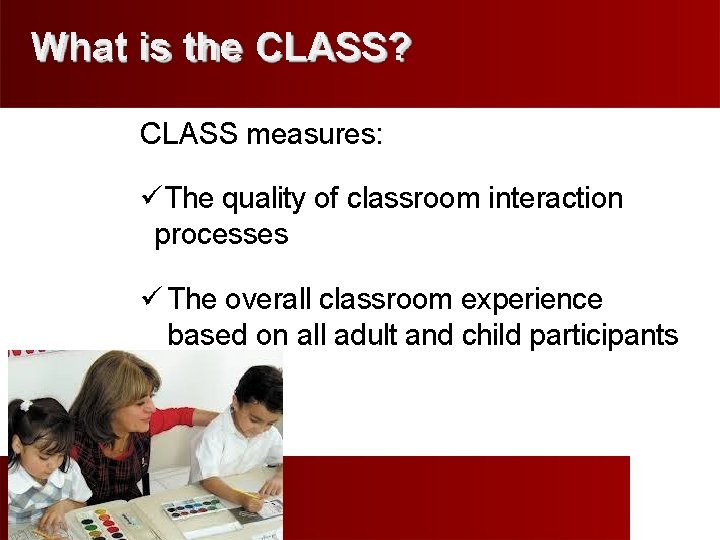
What is the CLASS? CLASS measures: The quality of classroom interaction processes The overall classroom experience based on all adult and child participants
What is the CLASS? CLASS observations are conducted in 4 or more cycles. A cycle consists of: - one 20 -minute observation period - one 10 -minute recording period
How is the CLASS observation instrument organized?
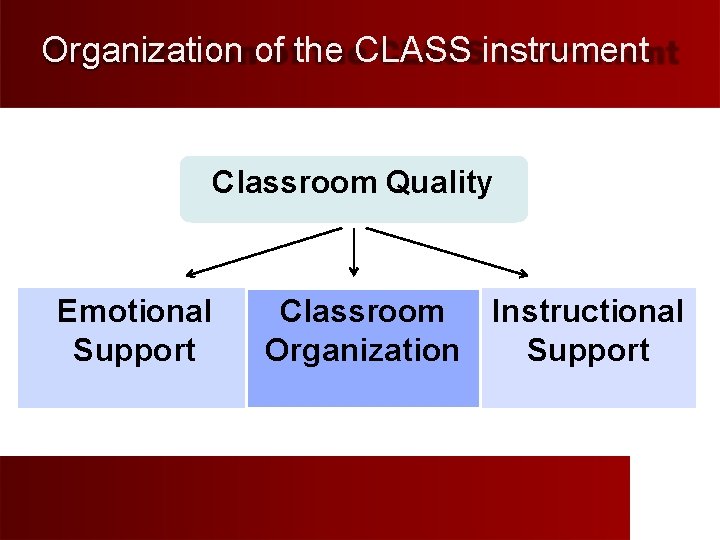
Organization of the CLASS instrument Classroom Quality Emotional Support Classroom Instructional Organization Support
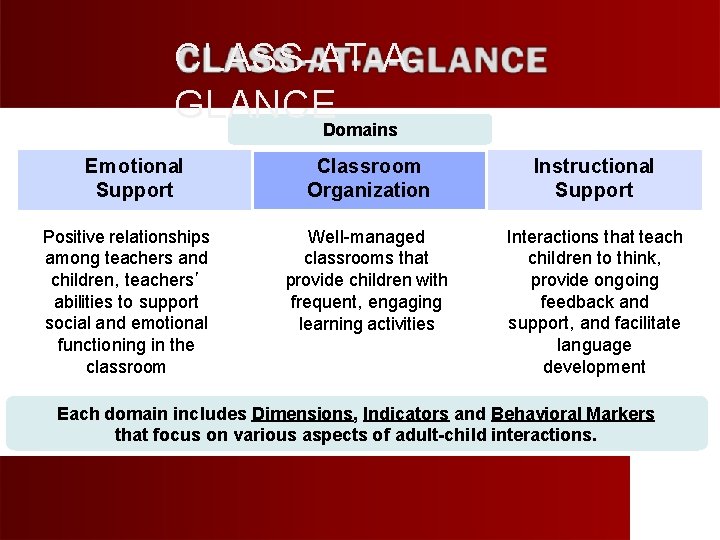
CLASS-AT-AGLANCEDomains Emotional Support Positive relationships among teachers and children, teachers’ abilities to support social and emotional functioning in the classroom Classroom Organization Instructional Support Well-managed classrooms that provide children with frequent, engaging learning activities Interactions that teach children to think, provide ongoing feedback and support, and facilitate language development Each domain includes Dimensions, Indicators and Behavioral Markers that focus on various aspects of adult-child interactions.
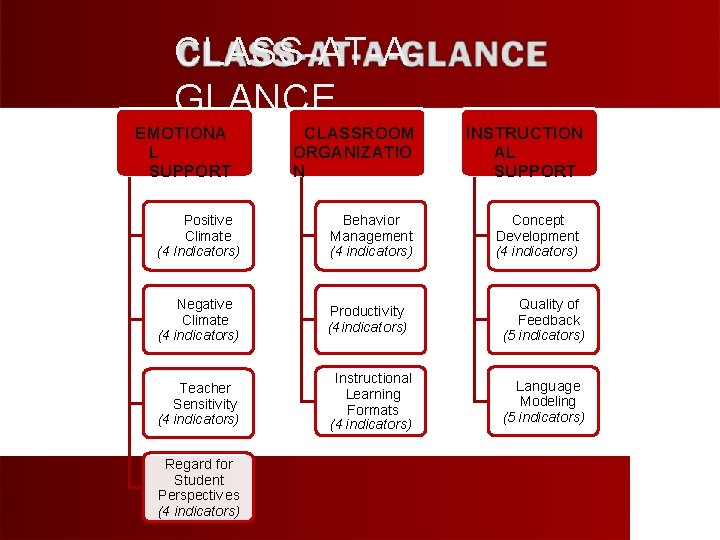
CLASS-AT-AGLANCE EMOTIONA L SUPPORT CLASSROOM ORGANIZATIO N INSTRUCTION AL SUPPORT Positiv e Climate (4 Indicators) Behavior Management (4 indicators) Negativ e Climate (4 indicators) Productiv ity (4 indicators) Quality of Feedback (5 indicators) Teacher Sensitiv ity (4 indicators) Instructional Learning Formats (4 indicators) Language Modeling (5 indicators) Regard for Student Perspectiv es (4 indicators) Concept Dev elopment (4 indicators)
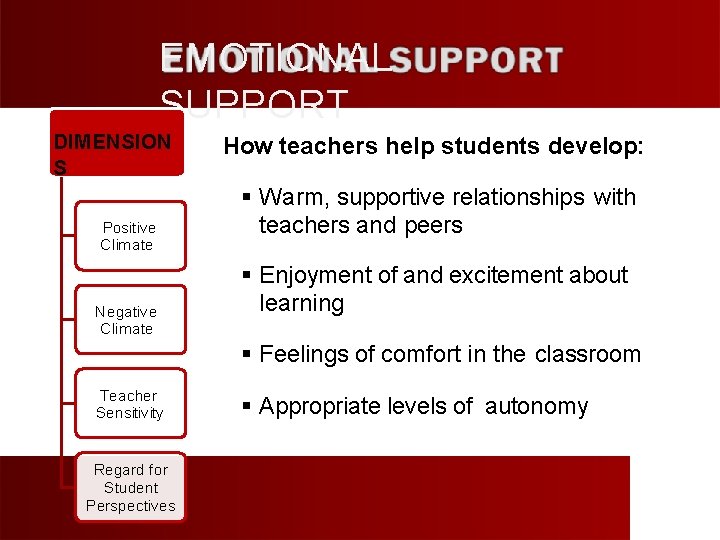
EMOTIONAL SUPPORT DIMENSION S Positive Climate Negative Climate How teachers help students develop: Warm, supportive relationships with teachers and peers Enjoyment of and excitement about learning Feelings of comfort in the classroom Teacher Sensitivity Regard for Student Perspectives Appropriate levels of autonomy
Emotional Support Classrooms have a positive climate when teachers and students: • Have positive relationships and clearly enjoy being with each other • Children are excited about learning and spending time in the classroom • Are respectful of one another
Emotional Support Classrooms have a negative climate when teachers and students: • Demonstrate frequent irritation with each other • Negative situations escalate and the teacher is unable to diffuse them • When there are examples of threatening or bullying behaviors, when there is frequent teasing or humiliation, or when harsh punishment is used.
Emotional Support Teachers are sensitive when: • They know their students well enough both academically and socially to be aware of and respond to their needs. • Children are comfortable enough to freely participate and take risks, seeking adult support and guidance when needed
Emotional Support Teachers who demonstrate a high regard for student perspectives: • Are flexible in incorporating children’s interests and ideas in their learning activities • Encourage children to express their ideas • Foster independence and responsibility
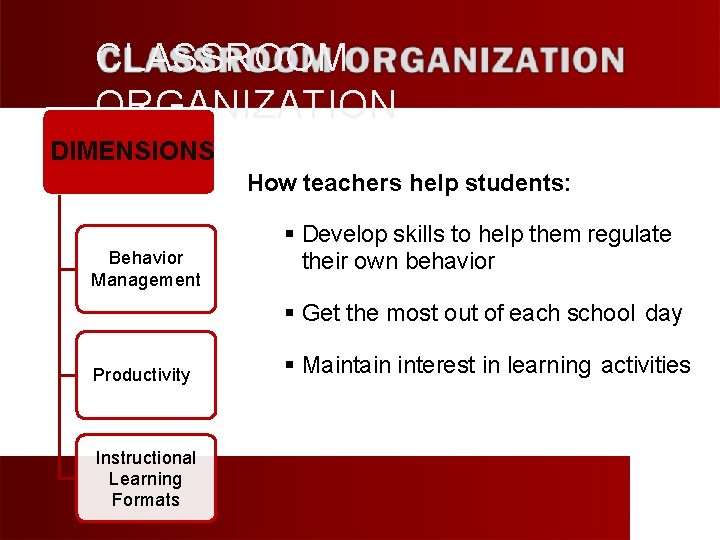
CLASSROOM ORGANIZATION DIMENSIONS How teachers help students: Behavior Management Develop skills to help them regulate their own behavior Get the most out of each school day Productivity Instructional Learning Formats Maintain interest in learning activities
Classroom Organization Teachers in classrooms that score high on behavior management: • Have clear rules and expectations that are consistently reinforced. • Are proactive in anticipating difficulties • Reinforce the positive behaviors and redirect unwanted behaviors
Classroom Organization Teachers in classrooms that score high on productivity: • Maximize learning time by having clearly defined learning activities ready for children so transitions are brief, there is little waiting and few disruptions • Have routines that children know and follow throughout the day • There is little wandering in the productive classroom
Classroom Organization High quality instructional learning formats can be seen in classrooms where: • Teachers actively facilitate children’s involvement in activities • They use a variety of materials and modalities to teach • Children are focused and actively involved in lessons • Learning objectives are clear
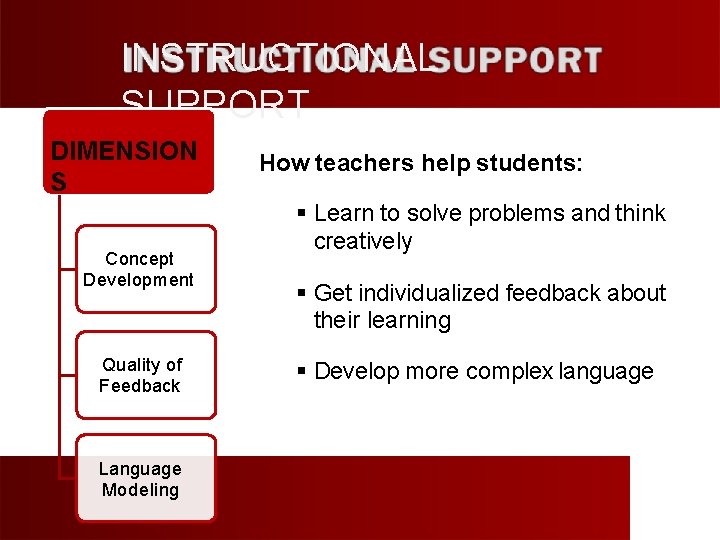
INSTRUCTIONAL SUPPORT DIMENSION S Concept Development Quality of Feedback Language Modeling How teachers help students: Learn to solve problems and think creatively Get individualized feedback about their learning Develop more complex language
Instructional Support Teachers who score high in concept development: Intentionally sustain interactions that deepen and expand understanding • Ask “why” and “how” questions to encourage analysis and reasoning • Integrate new ideas into previous knowledge and connect it with real-world applications •
Instructional Support Teachers who score high in providing quality of feedback: • Focus on the process of learning rather than getting the “right answer” • Provide children with specific information about their work by expanding and clarifying ideas • Ask follow-up questions to help deepen understanding
Instructional Support Teachers who score high in language modeling: • Participate in frequent conversations • Ask open-ended questions • Repeat, extend and elaborate children’s responses • Use advanced language that contains a variety of words.
CLASS Resources v CLASS Manual –Pre. K v CLASS Dimensions Overview v Pre-K CLASS Dimensions Guide v CLASS Strategy Cards v CLASS Dictionary v Teachstone-CLASS Video Library v Early Childhood Knowledge and Learning Center (http: //eclkc. ohs. acf. hhs. gov/hslc)
Adapted from a presentation created by Los Angeles County Office of Education, Head Start State Preschool and the Classroom Assessment Scoring System Manual, Pre-K, Robert C. Pianta, Karen M. La. Paro, Bridget K. Hamre