
Understanding Child Time Use Measurement Challenges Findings Why
- Slides: 13
Understanding Child Time Use Measurement, Challenges, Findings
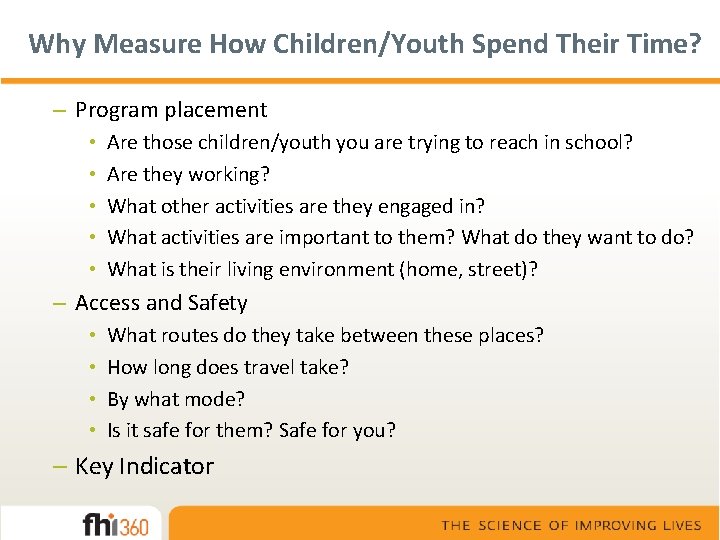
Why Measure How Children/Youth Spend Their Time? – Program placement • • • Are those children/youth you are trying to reach in school? Are they working? What other activities are they engaged in? What activities are important to them? What do they want to do? What is their living environment (home, street)? – Access and Safety • • What routes do they take between these places? How long does travel take? By what mode? Is it safe for them? Safe for you? – Key Indicator
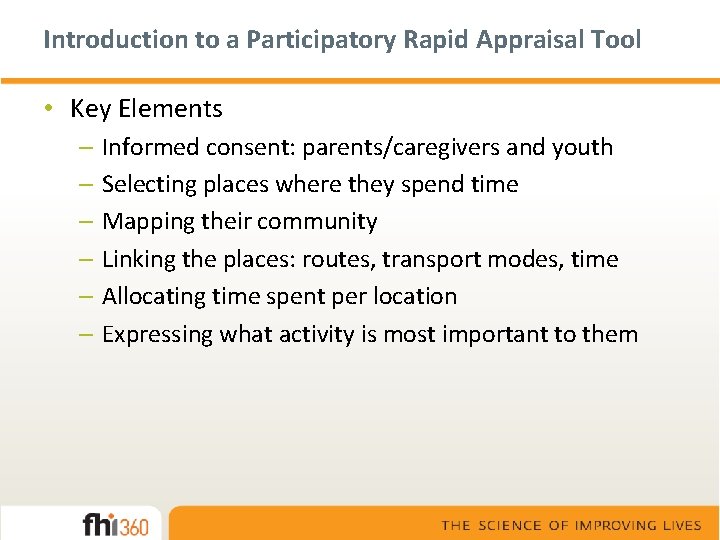
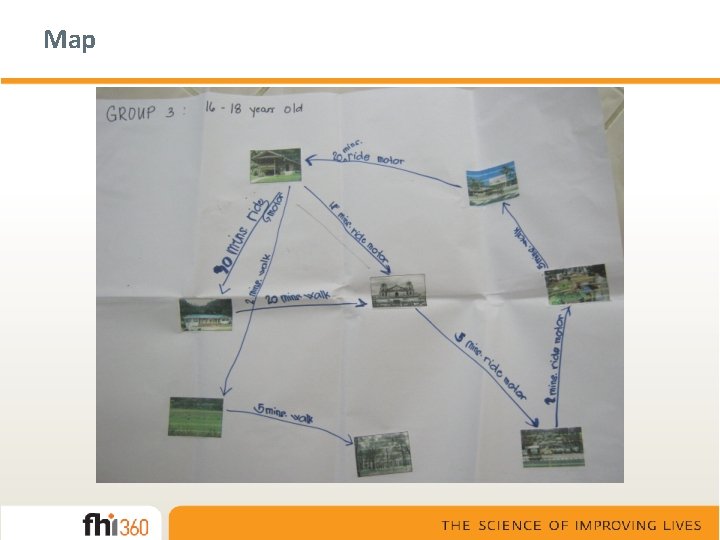
Introduction to a Participatory Rapid Appraisal Tool • Key Elements – Informed consent: parents/caregivers and youth – Selecting places where they spend time – Mapping their community – Linking the places: routes, transport modes, time – Allocating time spent per location – Expressing what activity is most important to them
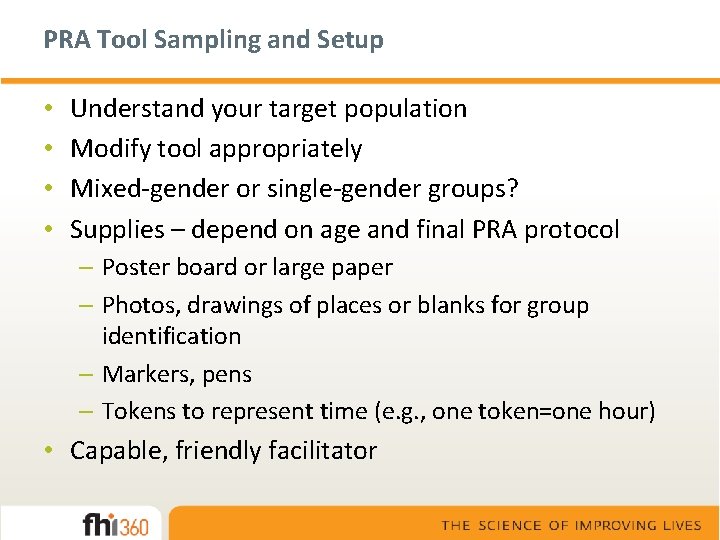
PRA Tool Sampling and Setup • • Understand your target population Modify tool appropriately Mixed-gender or single-gender groups? Supplies – depend on age and final PRA protocol – Poster board or large paper – Photos, drawings of places or blanks for group identification – Markers, pens – Tokens to represent time (e. g. , one token=one hour) • Capable, friendly facilitator
Map
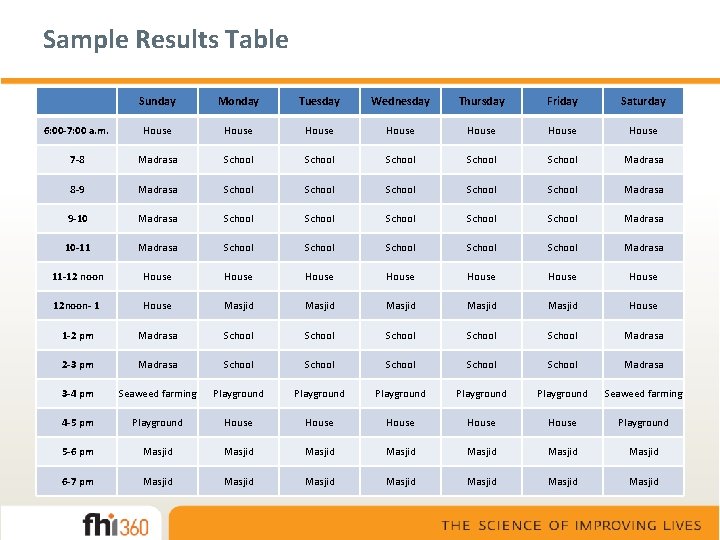
Sample Results Table Sunday Monday Tuesday Wednesday Thursday Friday Saturday 6: 00 -7: 00 a. m. House House 7 -8 Madrasa School School Madrasa 8 -9 Madrasa School School Madrasa 9 -10 Madrasa School School Madrasa 10 -11 Madrasa School School Madrasa 11 -12 noon House House 12 noon- 1 House Masjid Masjid House 1 -2 pm Madrasa School School Madrasa 2 -3 pm Madrasa School School Madrasa 3 -4 pm Seaweed farming Playground Playground Seaweed farming 4 -5 pm Playground House House Playground 5 -6 pm Masjid Masjid 6 -7 pm Masjid Masjid
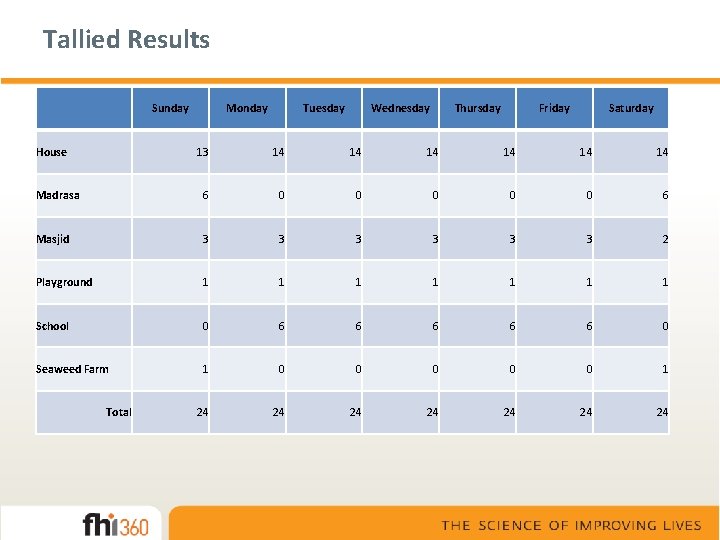
Tallied Results Sunday House Monday Tuesday Wednesday Thursday Friday Saturday 13 14 14 14 Madrasa 6 0 0 0 6 Masjid 3 3 3 2 Playground 1 1 1 1 School 0 6 6 6 0 Seaweed Farm 1 0 0 0 1 24 24 Total
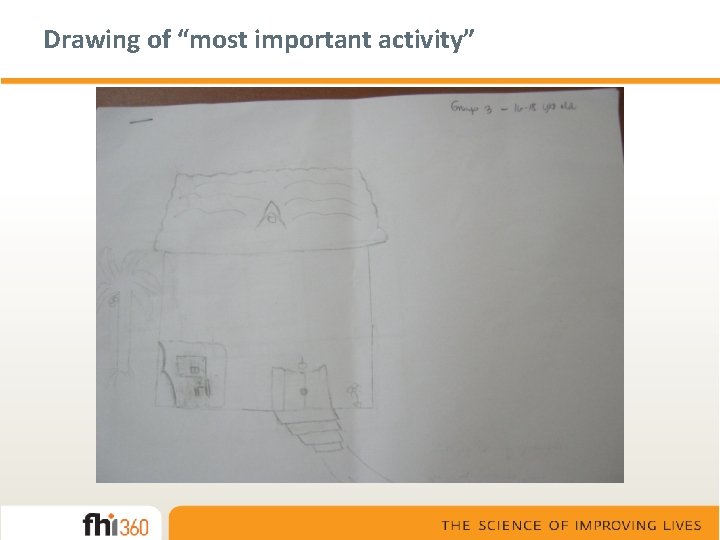
Drawing of “most important activity”
Power of Mixed Methods – Time tables – Maps – Drawings • These tools enable us to see the complex system in which young people live. This in turn enables us to design appropriate, targeted interventions to meet their needs.
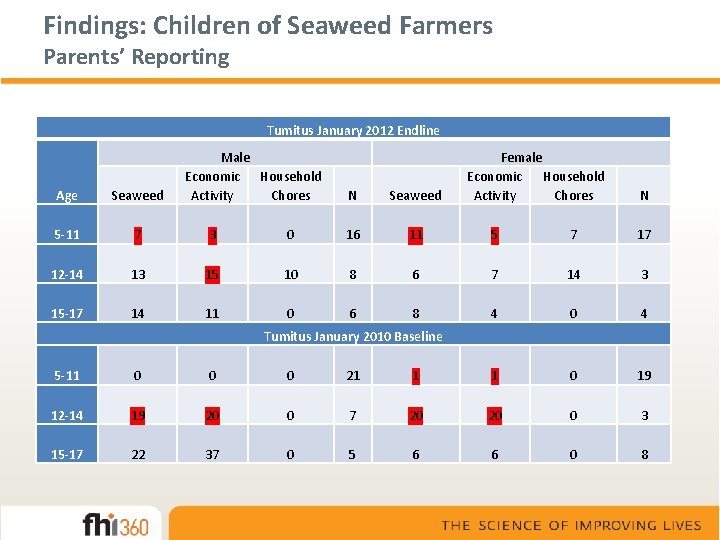
Findings: Children of Seaweed Farmers Parents’ Reporting Tumitus January 2012 Endline Male Economic Household Activity Chores Age Seaweed 5 -11 7 3 12 -14 13 15 -17 14 Female Economic Household Activity Chores N Seaweed N 0 16 11 5 7 17 15 10 8 6 7 14 3 11 0 6 8 4 0 4 Tumitus January 2010 Baseline 5 -11 0 0 0 21 1 1 0 19 12 -14 19 20 0 7 20 20 0 3 15 -17 22 37 0 5 6 6 0 8
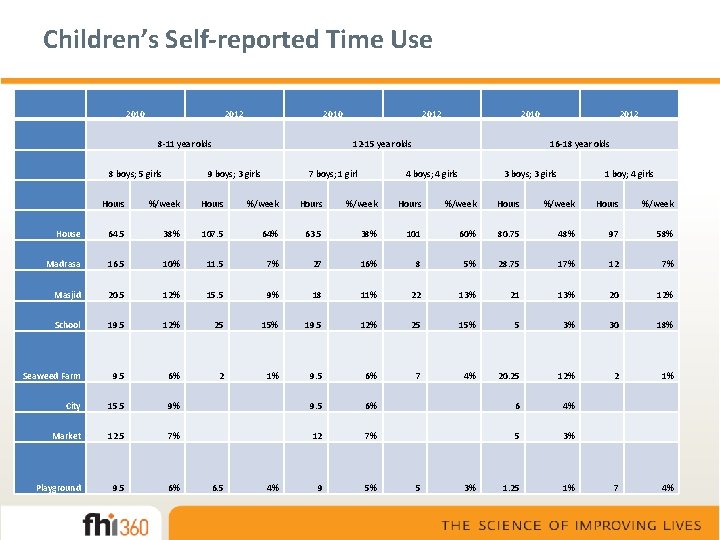
Children’s Self-reported Time Use 2010 2012 2010 8 -11 year olds 8 boys; 5 girls 2012 2010 12 -15 year olds 9 boys; 3 girls 7 boys; 1 girl 2012 16 -18 year olds 4 boys; 4 girls 3 boys; 3 girls 1 boy; 4 girls Hours %/week Hours %/week House 64. 5 38% 107. 5 64% 63. 5 38% 101 60% 80. 75 48% 97 58% Madrasa 16. 5 10% 11. 5 7% 27 16% 8 5% 28. 75 17% 12 7% Masjid 20. 5 12% 15. 5 9% 18 11% 22 13% 21 13% 20 12% School 19. 5 12% 25 15% 5 3% 30 18% Seaweed Farm 9. 5 6% 2 1% 9. 5 6% 7 4% 20. 25 12% 2 1% City 15. 5 9% 9. 5 6% 6 4% Market 12. 5 7% 12 7% 5 3% Playground 9. 5 6% 9 5% 1. 25 1% 6. 5 4% 5 3% 7 4%
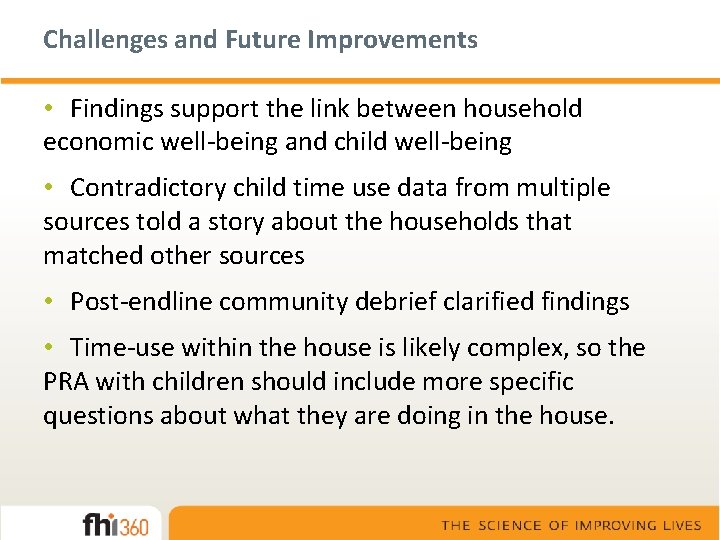
Challenges and Future Improvements • Findings support the link between household economic well-being and child well-being • Contradictory child time use data from multiple sources told a story about the households that matched other sources • Post-endline community debrief clarified findings • Time-use within the house is likely complex, so the PRA with children should include more specific questions about what they are doing in the house.
For more information: Please contact Diana Rutherford at FHI 360 drutherford@fhi 360. org Thank you for participating.