
Understanding Child Development within a Relational Context IECMH





- Slides: 29
Understanding Child Development within a Relational Context IECMH Training May 31, 2019 Stacey Cornett, LISW-S, IMH-E®
Objectives • Participants will be able to identify 3 major influences in overall development. • Participants will be able to identify 3 considerations when assessing the influence of caregivers relationships. • Participants will identify new strategies to support overall development. 2
Attachment: Mediator of Development • Provides sense of trust and security • Allows the child to explore and try new things • Supports feelings and sense of being overwhelmed • Motivates the child to communicate and feel understood 3
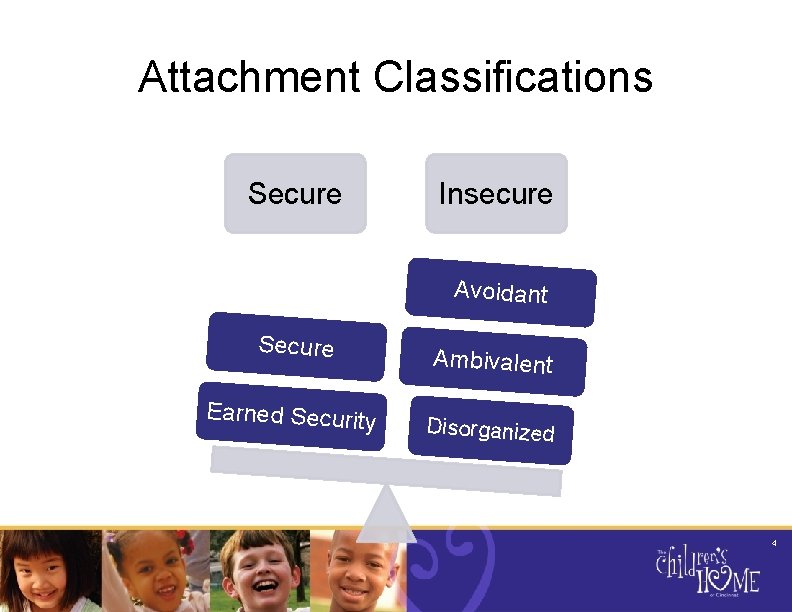
Attachment Classifications Secure Insecure Avoidant Secure Earned Security Ambivalent Disorganized 4
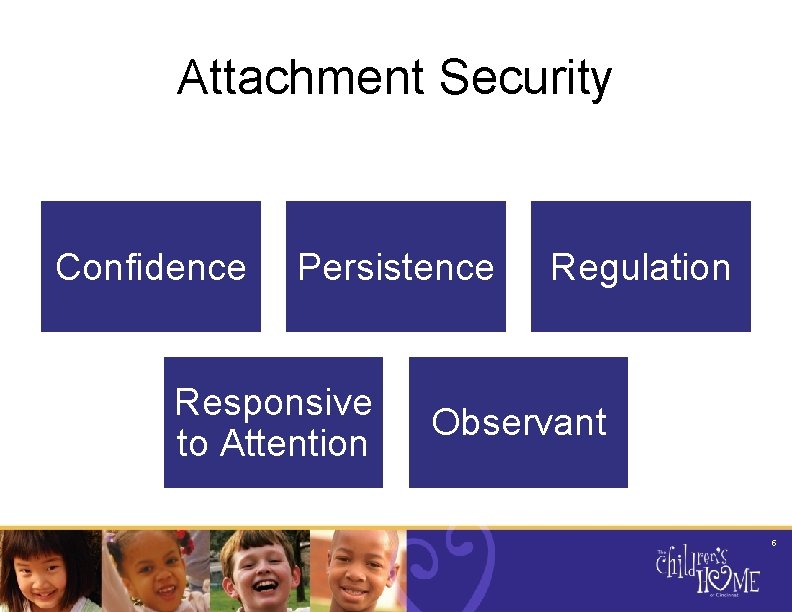
Attachment Security Confidence Persistence Responsive to Attention Regulation Observant 5
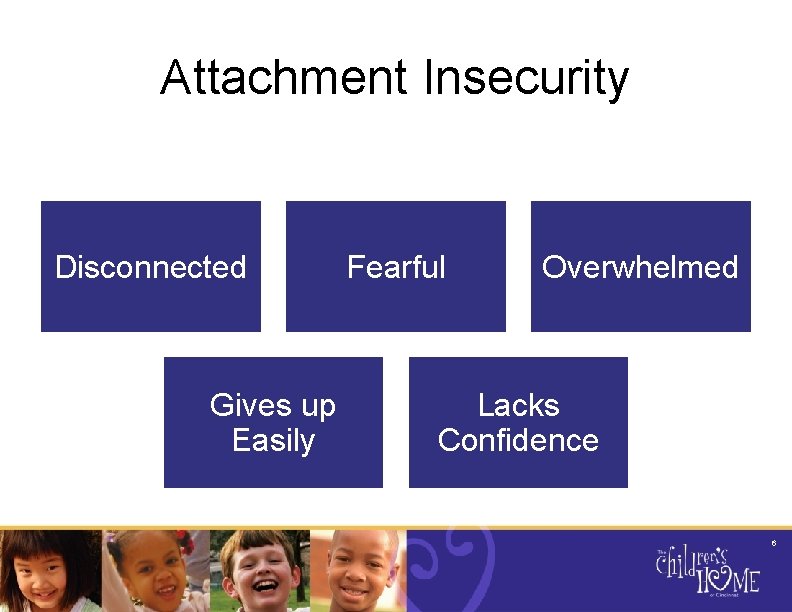
Attachment Insecurity Disconnected Gives up Easily Fearful Overwhelmed Lacks Confidence 6
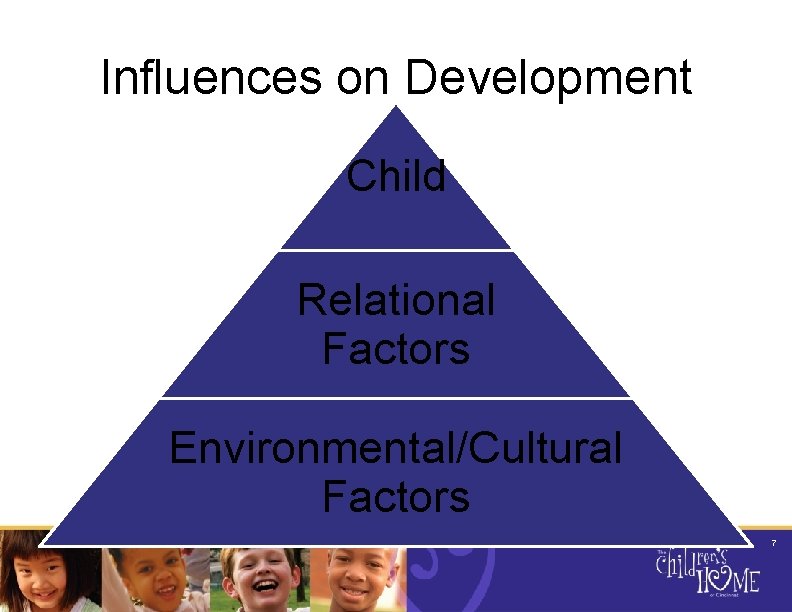
Influences on Development Child Relational Factors Environmental/Cultural Factors 7
Video Observe Video Share observations of child, parent and your own reactions with small group Share themes with larger group 8
https: //www. youtube. com/watch? v=AGRT 6 Vjn. T m 8 https: //www. youtube. com/watch? v=Rdrp-0 GLzws https: //www. youtube. com/watch? v=Qqu. Zx. Jhu. Sg 8 9
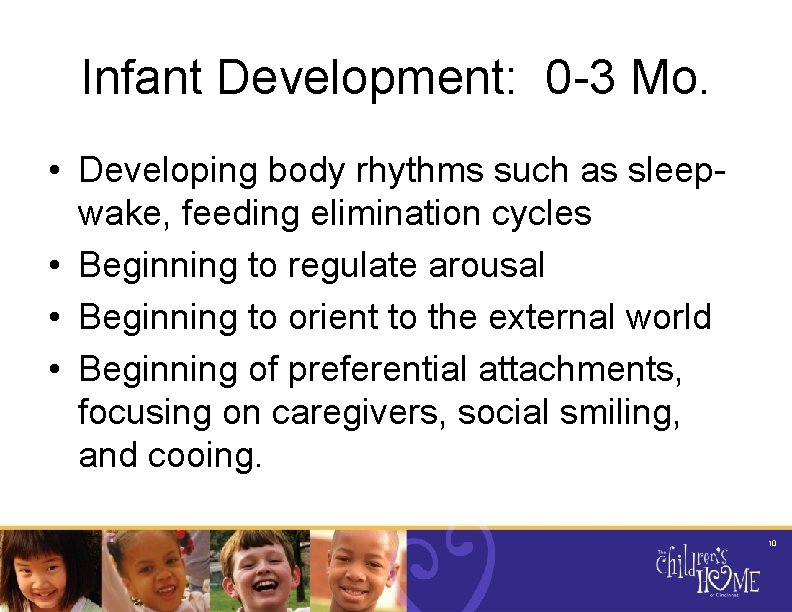
Infant Development: 0 -3 Mo. • Developing body rhythms such as sleepwake, feeding elimination cycles • Beginning to regulate arousal • Beginning to orient to the external world • Beginning of preferential attachments, focusing on caregivers, social smiling, and cooing. 10
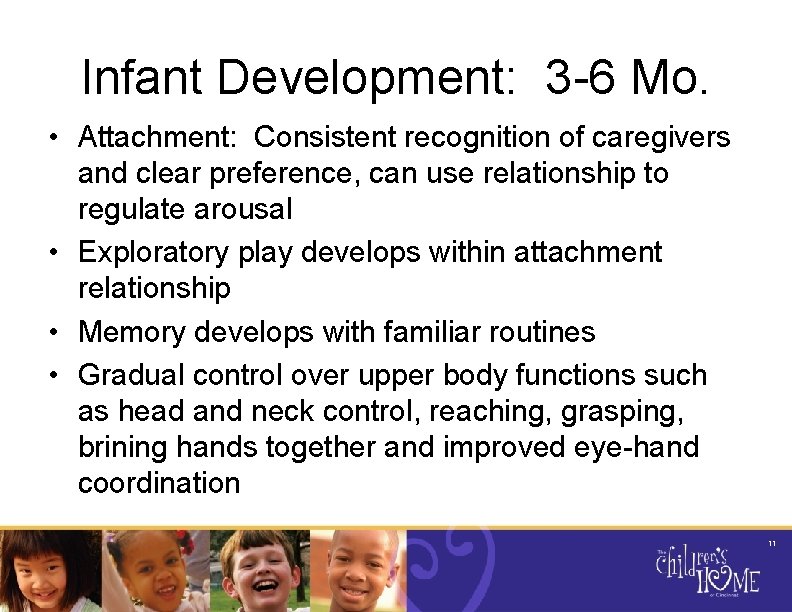
Infant Development: 3 -6 Mo. • Attachment: Consistent recognition of caregivers and clear preference, can use relationship to regulate arousal • Exploratory play develops within attachment relationship • Memory develops with familiar routines • Gradual control over upper body functions such as head and neck control, reaching, grasping, brining hands together and improved eye-hand coordination 11
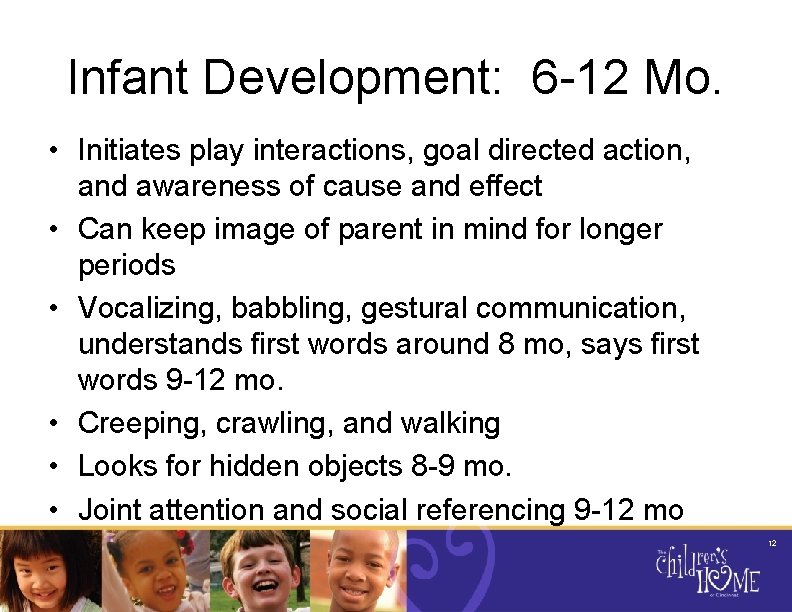
Infant Development: 6 -12 Mo. • Initiates play interactions, goal directed action, and awareness of cause and effect • Can keep image of parent in mind for longer periods • Vocalizing, babbling, gestural communication, understands first words around 8 mo, says first words 9 -12 mo. • Creeping, crawling, and walking • Looks for hidden objects 8 -9 mo. • Joint attention and social referencing 9 -12 mo 12
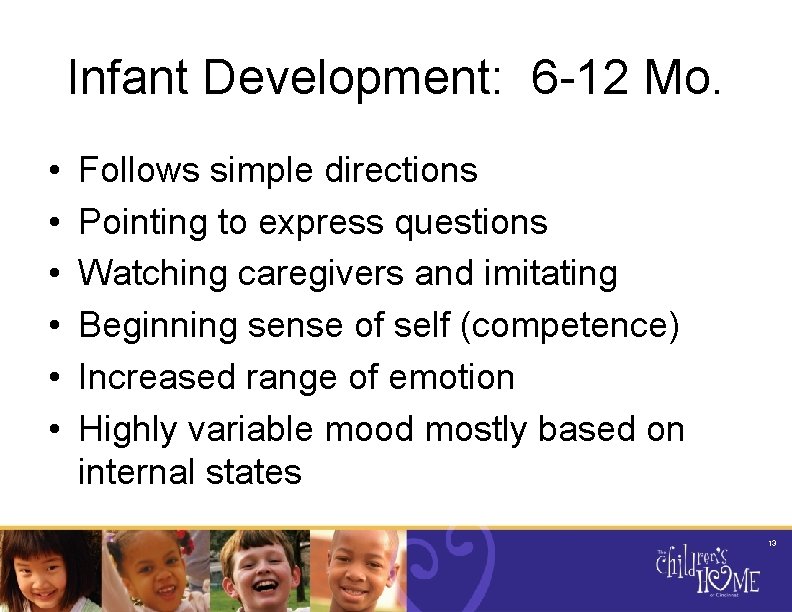
Infant Development: 6 -12 Mo. • • • Follows simple directions Pointing to express questions Watching caregivers and imitating Beginning sense of self (competence) Increased range of emotion Highly variable mood mostly based on internal states 13
Video https: //www. youtube. com/watch? v=KIy. Wt_ qtcn. M 14
Review Vignettes in Small Groups 15
Toddler Development • Continued regulation of arousal and affect with adult help • Some autonomous self-protective and selfsoothing behavior (2 -3 years) • Use of transitional objects to assist in transitions and separations (16 -36 mo) • Limited ability to share and tolerate intentions of others (16 -36 mo) • Beginning of social reciprocity and understanding social expectations (2 -3 years) 16
Toddler Development • By 18 months can formulate a simple plan and work towards achieving it. • By 18 mos using two word sentences • By 18 mos using language in a social way to share experiences, making requests and sharing feelings • Limitations in language are a source of frustration • Uses gestures in a functional manner 17
Toddler Development • Relies heavily on adult support to regulate emotions • Impulse control is variable and dependent on circumstances and toddler’s internal state • Recognizes self in mirror, egocentric in thinking • Sense of gender identity by 2 years typically • Understands others have feelings by 18 mo • Becoming more fluid in movements 18
Toddler Areas of Concern • Insecure base behavior: Overly reliant or dependent • Frequent aggressive or impulsive behavior • Cannot regulate with adult help for over 10 -15 min • Poor joint attention and social referencing • Play themes reflective of stress and trauma 19
Video https: //www. youtube. com/watch? v=caf. Xa 6 Z -el. A&t=261 s 20
Review Vignette in Small Groups 21
Preschool • Attachment needs more often verbalized than acted out • Better sense of time and memory allows for tolerating separation • Can manage social issues with adult support. Main issues are possessiveness, completion, and exclusion. • Peers becoming important and tries to please peers 22
Preschool • By 3 years speaks over 1, 000 words and is easily understood • By 4 years speaks in 8 -10 word sentences • Language should be primary form of communication • Play is imaginative, dramatic and interactive • Continued egocentric and magical thinking • Very beginnings of suppressing emotional expression and arousal at age 4 23
Preschool • By age 3 beginnings of right and wrong guide actions • Increased self-monitoring and use of selftalk at age 4 • General positive self esteem • Gender and racial identity by age 4 • Guilt established by age 4 24
Preschool Areas of Concern • Insecure attachment: not seeking help, indiscriminate interactions • Poor peer relationships • Consistently withdrawn in social situations • Limited vocabulary • Impulsive and aggressive behavior impacting functioning 25
Video https: //vimeo. com/194719755 26
Vignette Discuss Vignettes in small groups 27
Summary and Wrap Up • Strategy Review • Next Steps 28
Questions Stacey Cornett, LISW-S, IMH-E® scornett@thechildrenshomecinti. org 29