
Understanding Chemical Reactions Lesson Bonds Energy Basic Revision
Understanding Chemical Reactions Lesson: Bonds & Energy
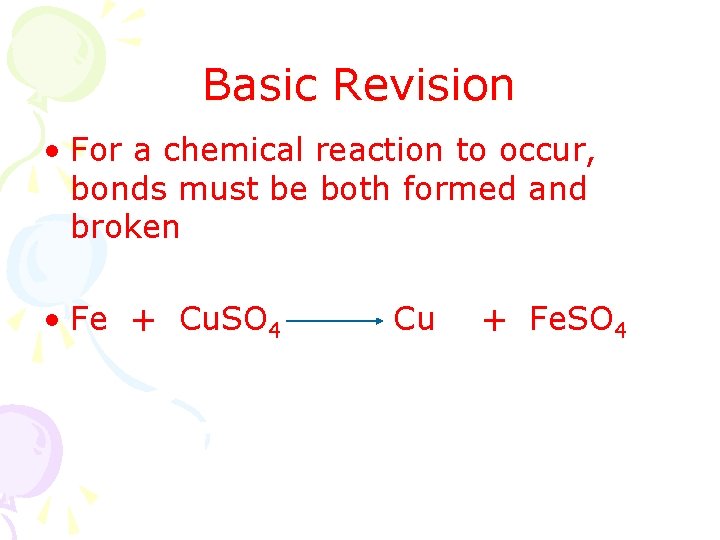
Basic Revision • For a chemical reaction to occur, bonds must be both formed and broken • Fe + Cu. SO 4 Cu + Fe. SO 4

Basic Revision • Chemical reactions always involve energy changes. • Making and breaking bonds involves energy changes
ENERGY AND CHEMICAL REACTIONS Exothermic reactions • These reactions give out heat energy. • Combustion is an exothermic reaction.
ENERGY AND CHEMICAL REACTIONS Endothermic reactions • These reactions take in heat energy from their surroundings. • These cause temperatures to fall.
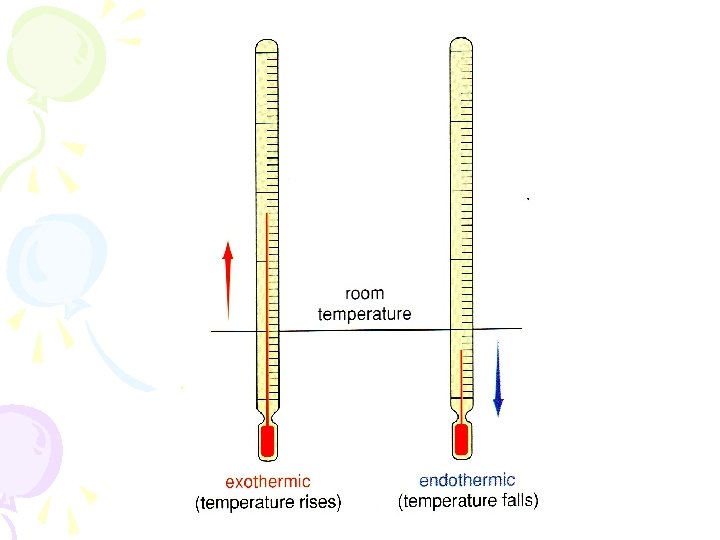
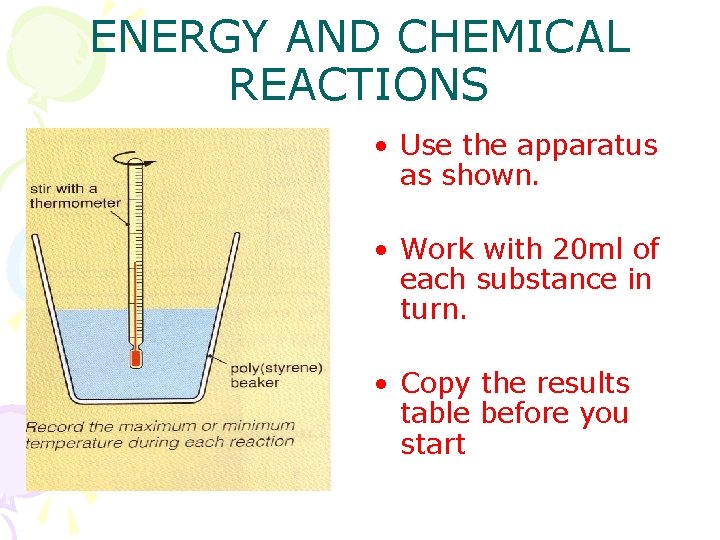
ENERGY AND CHEMICAL REACTIONS • Use the apparatus as shown. • Work with 20 ml of each substance in turn. • Copy the results table before you start
RISK ASSESSMENT • You will be using acids so wear safety goggles. • Wipe up spills immediately • Replace stoppers • Do not put solids down the sink – use the bowl at the front!
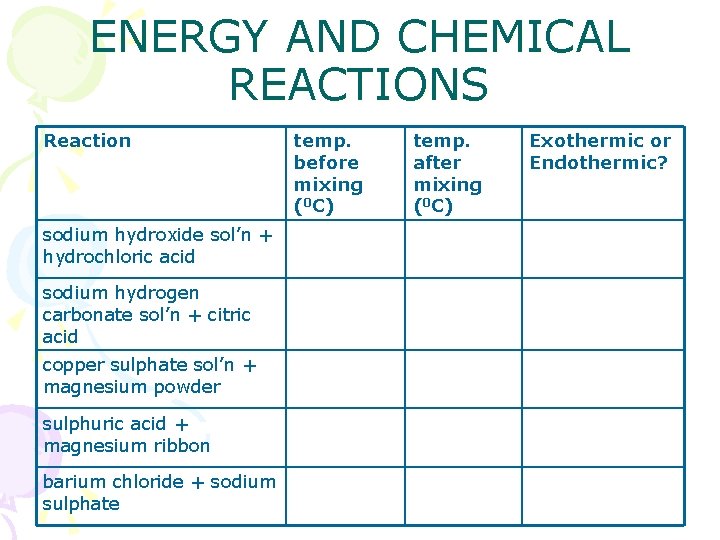
ENERGY AND CHEMICAL REACTIONS Reaction sodium hydroxide sol’n + hydrochloric acid sodium hydrogen carbonate sol’n + citric acid copper sulphate sol’n + magnesium powder sulphuric acid + magnesium ribbon barium chloride + sodium sulphate temp. before mixing (0 C) temp. after mixing (0 C) Exothermic or Endothermic?
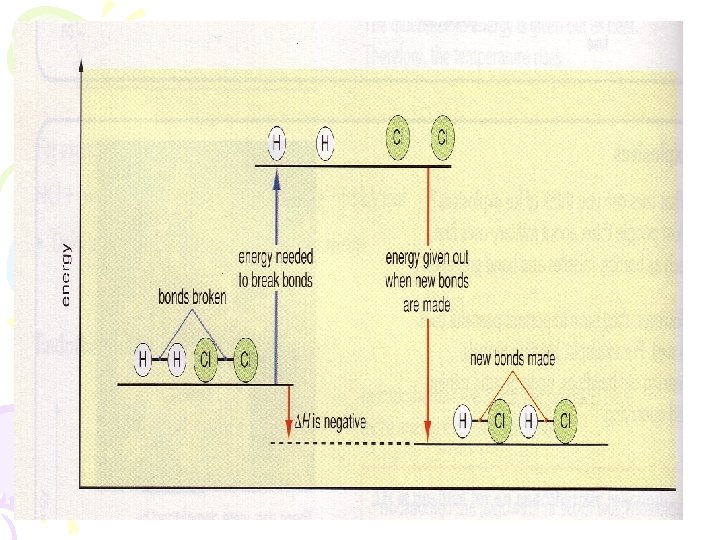
ENERGY LEVEL DIAGRAMS • We can show the energy transfers in reactions on an energy level diagram. • These show us the energy stored in the reactants compared to the energy stored in the products.
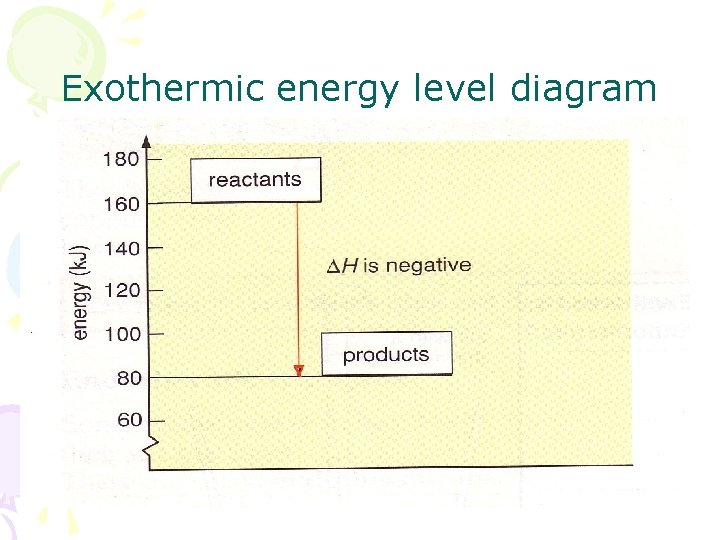
Exothermic energy level diagram
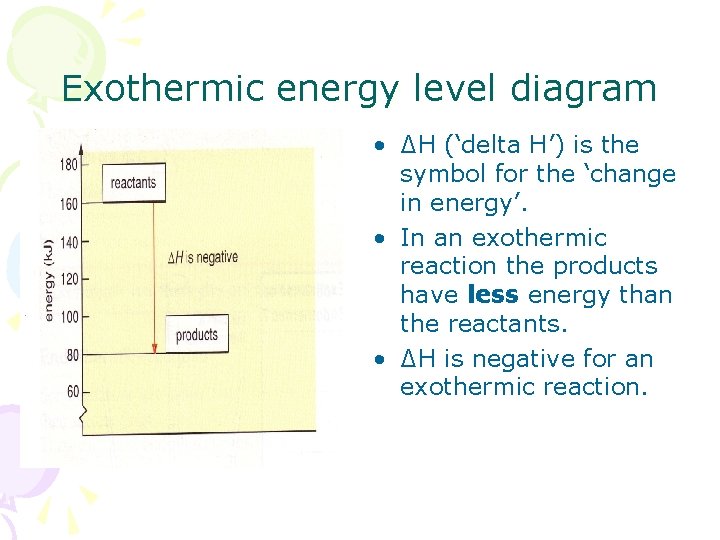
Exothermic energy level diagram • ∆H (‘delta H’) is the symbol for the ‘change in energy’. • In an exothermic reaction the products have less energy than the reactants. • ∆H is negative for an exothermic reaction.
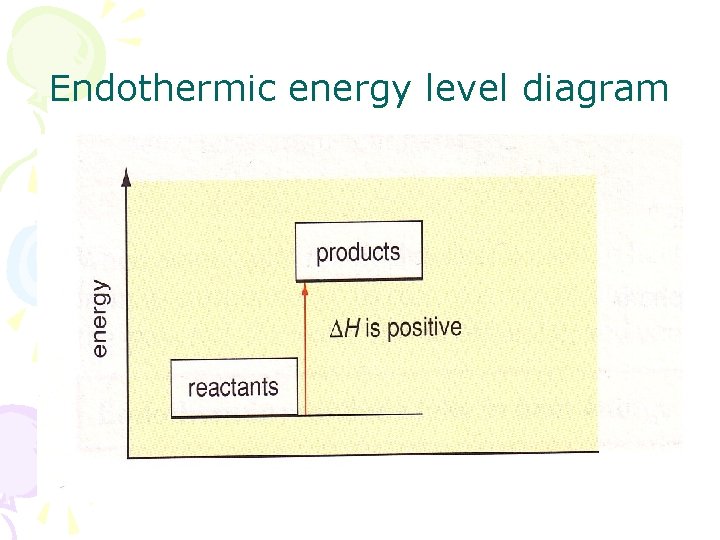
Endothermic energy level diagram
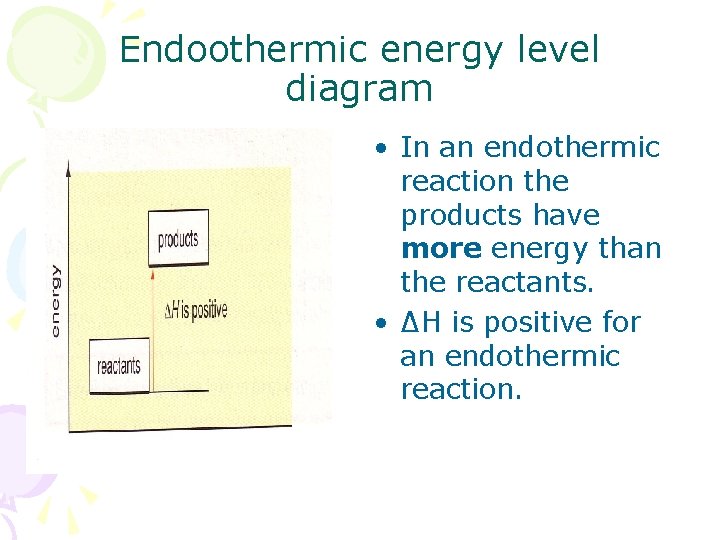
Endoothermic energy level diagram • In an endothermic reaction the products have more energy than the reactants. • ∆H is positive for an endothermic reaction.
Making and breaking bonds • We have seen how bonds are formed (both ionic and covalent) • Do you think energy is needed to break bonds?
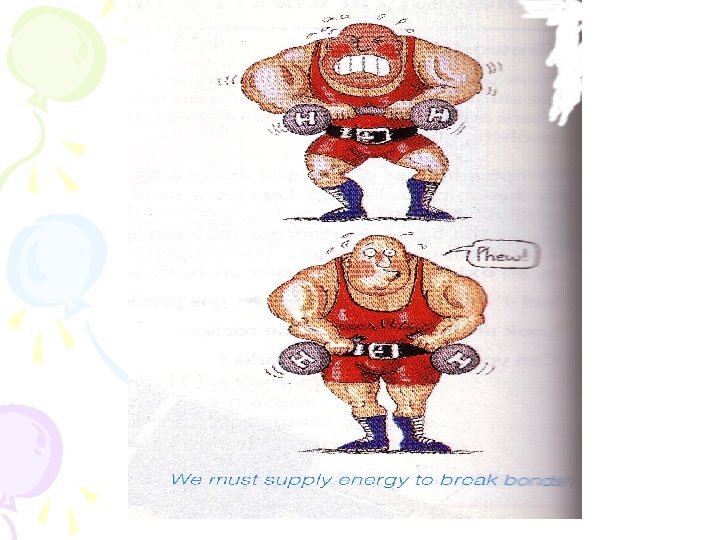
• Breaking bonds requires energy. It is endothermic.
• Breaking bonds requires energy. It is endothermic. • Making new bonds gives out energy. It is exothermic.

This powerpoint was kindly donated to www. worldofteaching. com http: //www. worldofteaching. com is home to over a thousand powerpoints submitted by teachers. This is a completely free site and requires no registration. Please visit and I hope it will help in your teaching.
- Slides: 20