
Understanding Cancer What Is Cancer n Cancer is
- Slides: 47
Understanding Cancer
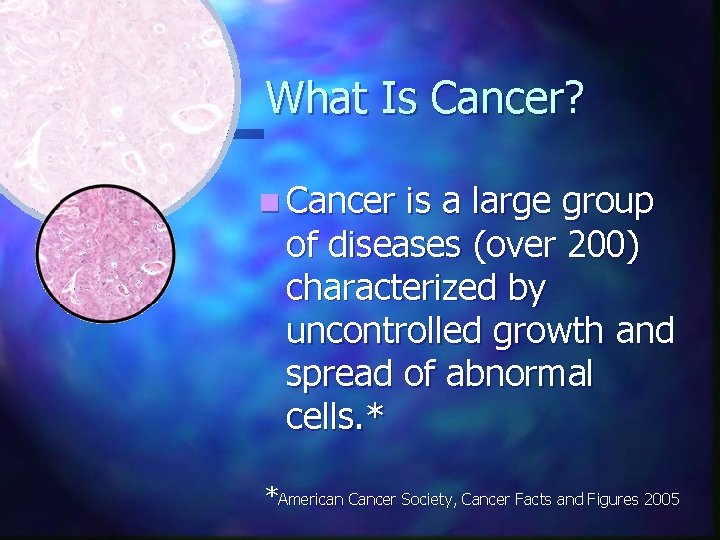
What Is Cancer? n Cancer is a large group of diseases (over 200) characterized by uncontrolled growth and spread of abnormal cells. * *American Cancer Society, Cancer Facts and Figures 2005
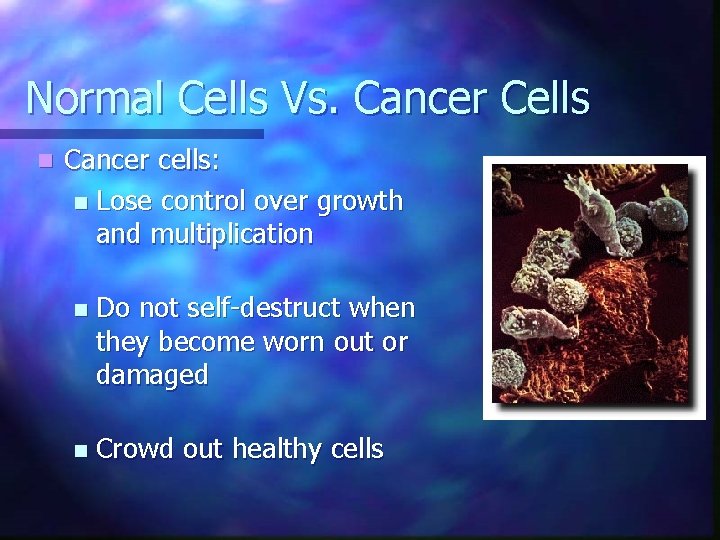
Normal Cells Vs. Cancer Cells n Cancer cells: n Lose control over growth and multiplication n Do not self-destruct when they become worn out or damaged n Crowd out healthy cells
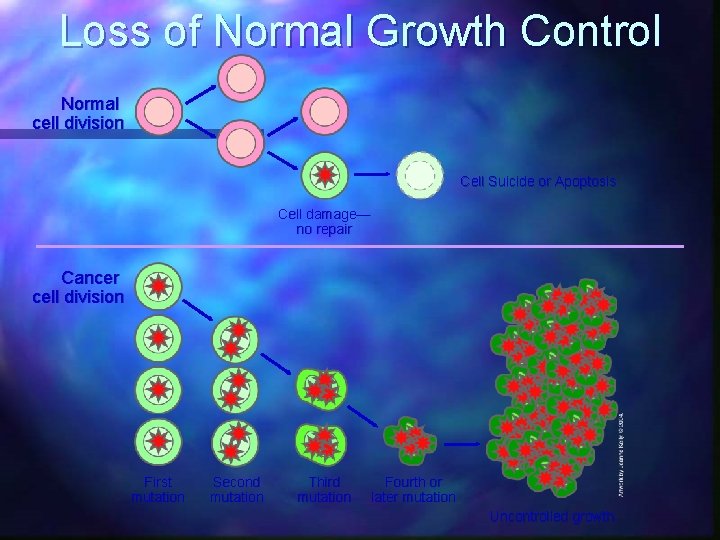
What causes cancer? n Cancer arises from the mutation of a normal gene. n Mutated genes that cause cancer are called oncogenes. n It is thought that several mutations need to occur to give rise to cancer n Cells that are old or not functioning properly normally self destruct and are replaced by new cells. n However, cancerous cells do not self destruct and continue to divide rapidly producing millions of new cancerous cells.
Loss of Normal Growth Control Normal cell division Cell Suicide or Apoptosis Cell damage— no repair Cancer cell division First mutation Second mutation Third mutation Fourth or later mutation Uncontrolled growth
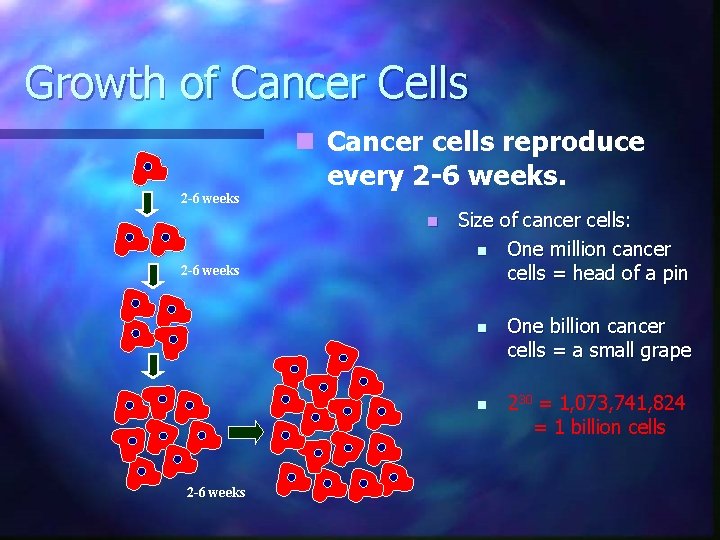
Growth of Cancer Cells 2 -6 weeks n Cancer cells reproduce every 2 -6 weeks. n 2 -6 weeks Size of cancer cells: n One million cancer cells = head of a pin n One billion cancer cells = a small grape n 230 = 1, 073, 741, 824 = 1 billion cells
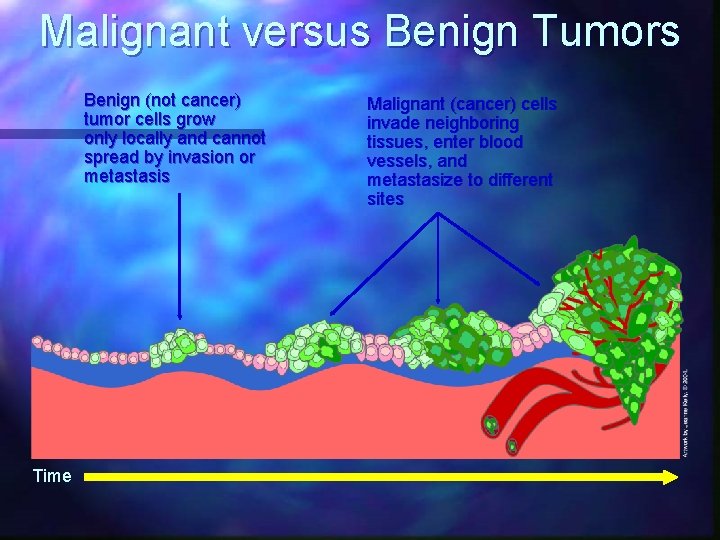
Benign or malignant? n Benign tumours do not spread from their site of origin, but can crowd out (squash) surrounding cells eg brain tumour. n Malignant tumours can spread from the original site and cause secondary tumours. This is called metastasis. They interfere with neighbouring cells and can block blood vessels, the gut, glands, lungs etc. n Why are secondary tumours so bad? n Both types of tumour can tire the body out as they both need a huge amount of nutrients to sustain the rapid growth and division of the cells.
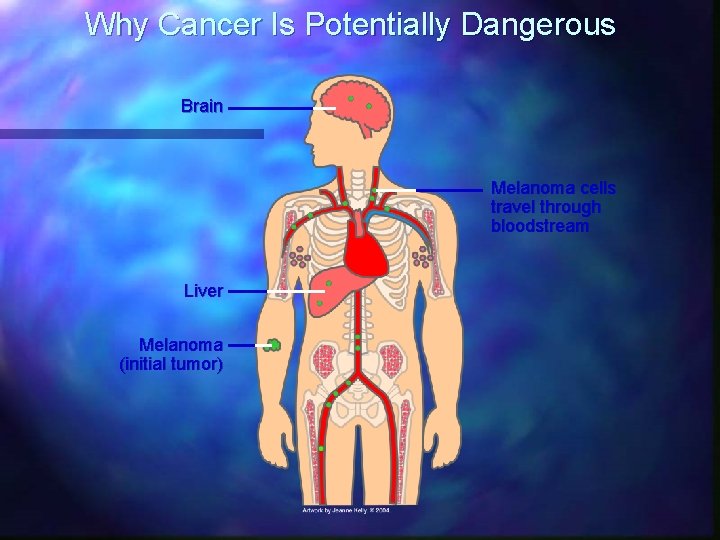
Malignant versus Benign Tumors Benign (not cancer) tumor cells grow only locally and cannot spread by invasion or metastasis Time Malignant (cancer) cells invade neighboring tissues, enter blood vessels, and metastasize to different sites
Why Cancer Is Potentially Dangerous Brain Melanoma cells travel through bloodstream Liver Melanoma (initial tumor)
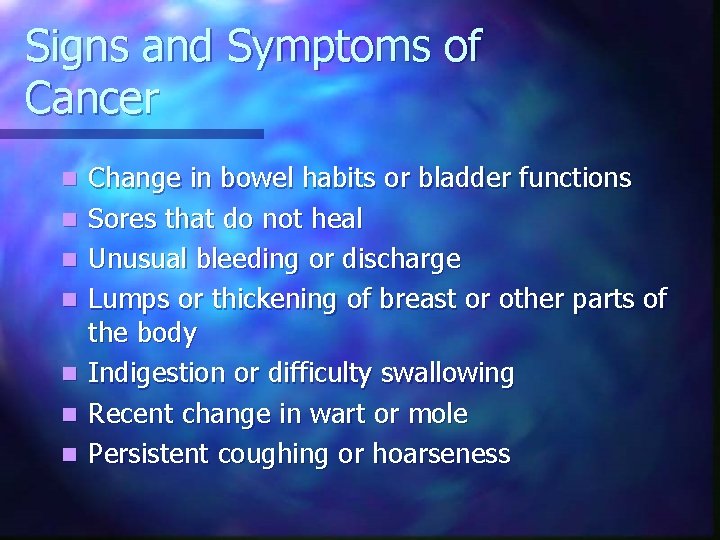
Signs and Symptoms of Cancer n n n n Change in bowel habits or bladder functions Sores that do not heal Unusual bleeding or discharge Lumps or thickening of breast or other parts of the body Indigestion or difficulty swallowing Recent change in wart or mole Persistent coughing or hoarseness
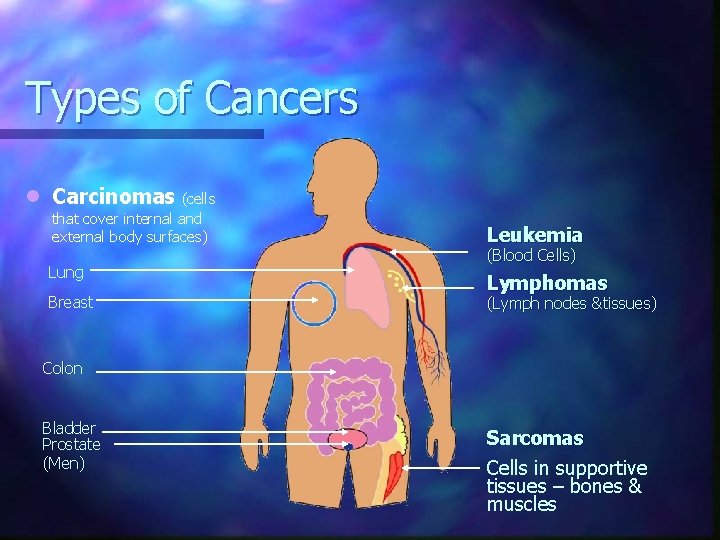
Types of Cancers l Carcinomas (cells that cover internal and external body surfaces) Lung Breast Leukemia (Blood Cells) Lymphomas (Lymph nodes &tissues) Colon Bladder Prostate (Men) Sarcomas Cells in supportive tissues – bones & muscles
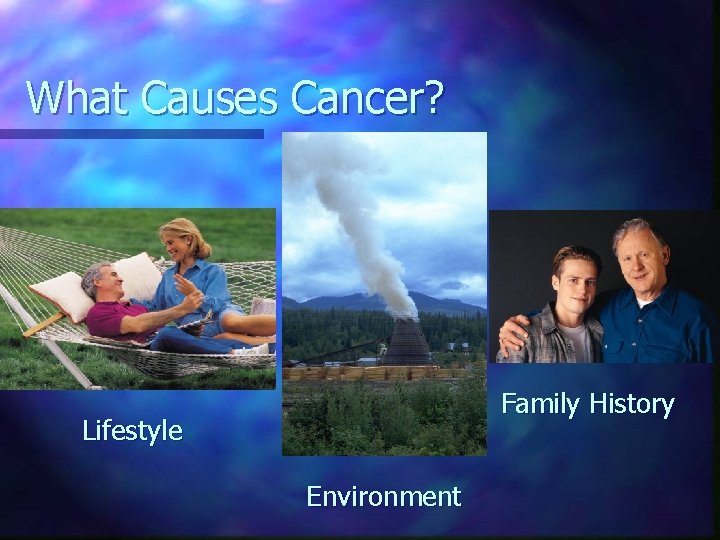
What Causes Cancer? Family History Lifestyle Environment
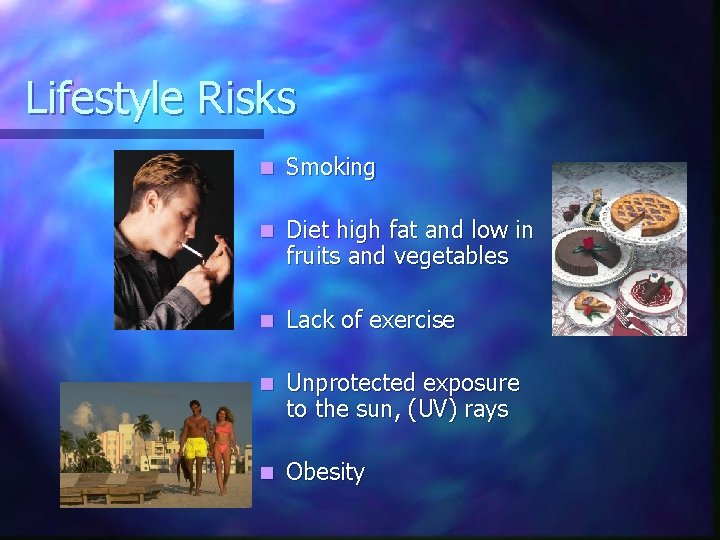
Lifestyle Risks n Smoking n Diet high fat and low in fruits and vegetables n Lack of exercise n Unprotected exposure to the sun, (UV) rays n Obesity
Environmental Risks n Second hand smoke n Air pollution n Industrial pollution n Chemical exposures
Inherited Risks Less than 15% of cancers are inherited n Gene mutations are linked to some inherited cancers n Cancers that may be caused by inherited gene mutations are: n Colon cancer n Breast cancer n Ovarian n Prostate cancer n Skin cancer n
Biological Factors n Some cancers such as breast, stomach, colon, prostate, uterus, ovaries and lung appear to run in families n Hodgkin’s disease and certain leukemia's show similar patterns n University of Utah research suggests that a gene for breast cancer exists n A rare form of eye cancer appears to be transmitted genetically from mother to child
Reproductive And Hormonal Risks For Cancer n Pregnancy and oral contraceptives increase a woman’s chances of breast cancer n Late menarche, early menopause, early first childbirth, having many children have been shown to reduce risk of breast cancer
Occupational And Environmental Factors n Asbestos n Nickel n Chromate n Benzene n Arsenic n Radioactive substances n Cool tars n Herbicides/pesticides
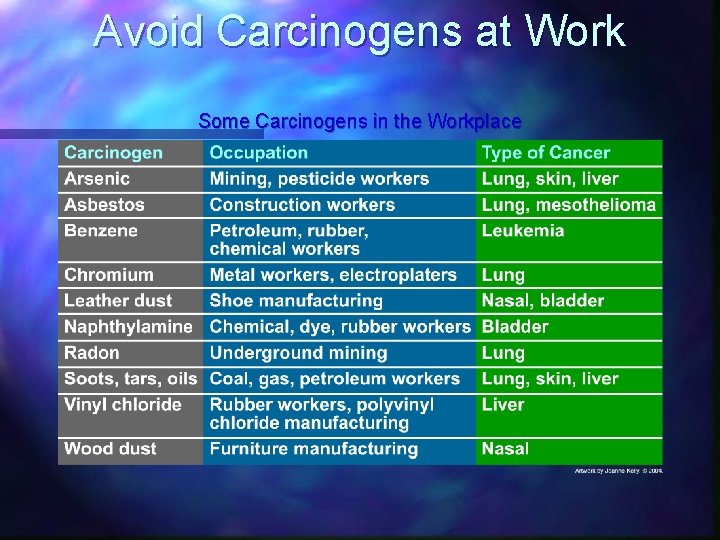
Avoid Carcinogens at Work Some Carcinogens in the Workplace
Social And Psychological Factors n Stress has been implicated in increased susceptibility to several types of cancers n Sleep disturbances, diet, or a combination of factors may weaken the body’s immune system
Chemicals In Foods n Sodium nitrate when ingested forms a potential carcinogen, nitrosamine n Sodium nitrate is still used because it is effective in preventing botulism n Pesticide and herbicide residues
Viral Factors n Herpes-related viruses may be involved in the development of leukemia, Hodgkin’s disease, cervical cancer, and Burkitt’s lymphoma n Epstein-Barr virus, associated with mononucleosis, may contribute to cancer n Human papillomavirus (HPV), virus that causes genital warts, has been linked to cervical cancer n Helicobacter pylori causes ulcers which are a major factor in the development of stomach cancer
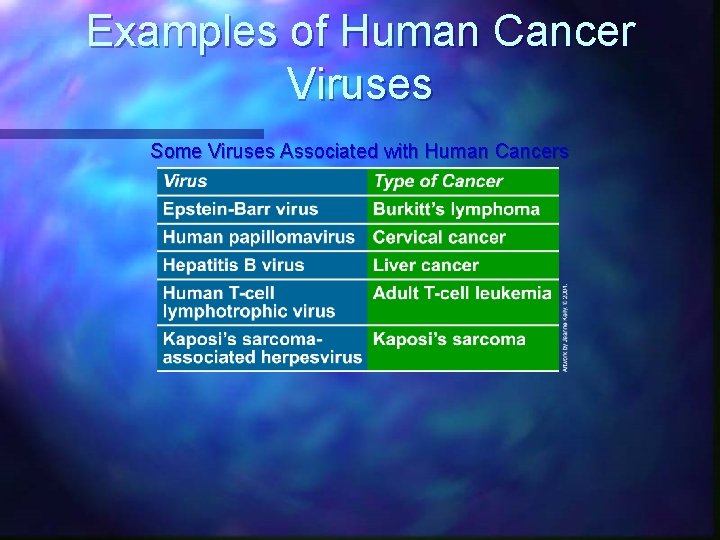
Examples of Human Cancer Viruses Some Viruses Associated with Human Cancers
Medical Factors n Some medical treatments actually increase a person’s risk for cancer n Diethylstilbestrol (DES) used 1940 to 1960 to control bleeding during pregnancy, the daughters of mothers that used DES were found to have an increased risk for cancers of the reproductive organs n Estrogen supplementation n Chemotherapy used to treat one form of cancer may increase risk for another type of cancer
Screening Tests and Self-exams Screening tests: n Colon n Breast n Cervical n Prostate Self-exams: n Testicular n Skin
Why Screening Tests? The treatment of cancer is most successful when the cancer is detected as early as possible, often before symptoms occur.
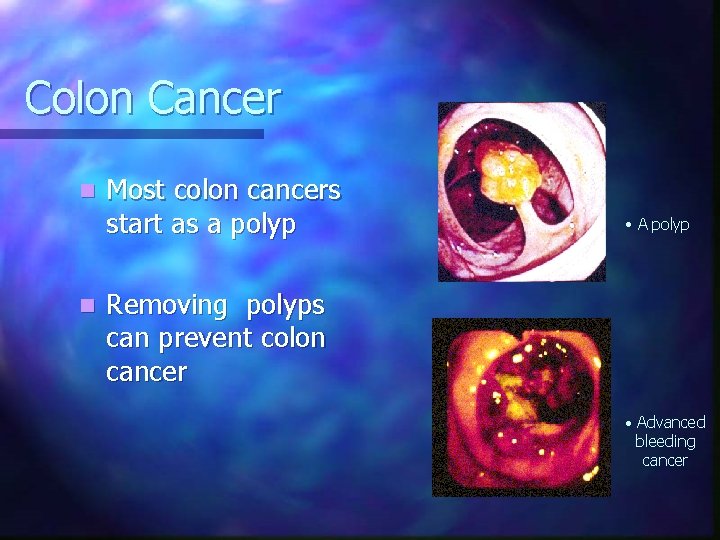
Colon Cancer n n Most colon cancers start as a polyp • A polyp Removing polyps can prevent colon cancer • Advanced bleeding cancer
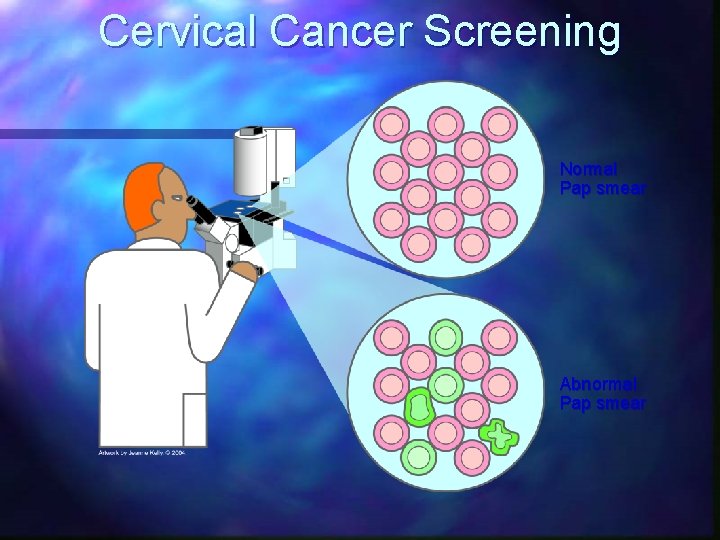
Cervical Cancer Screening Normal Pap smear Abnormal Pap smear
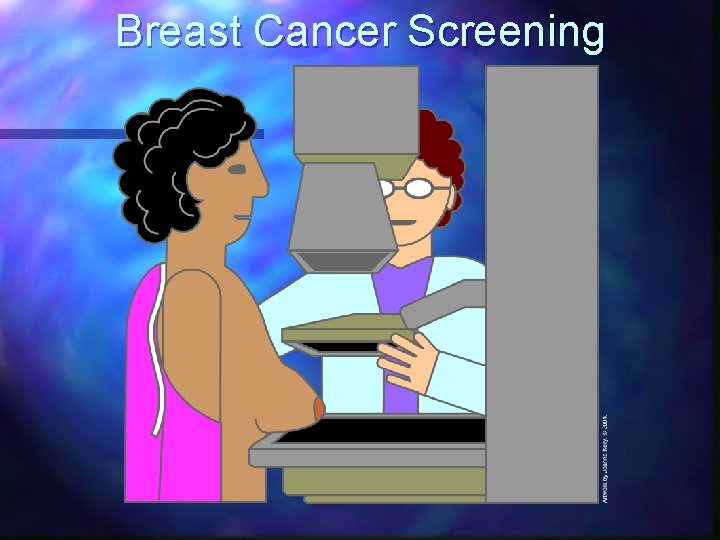
Breast Cancer Screening
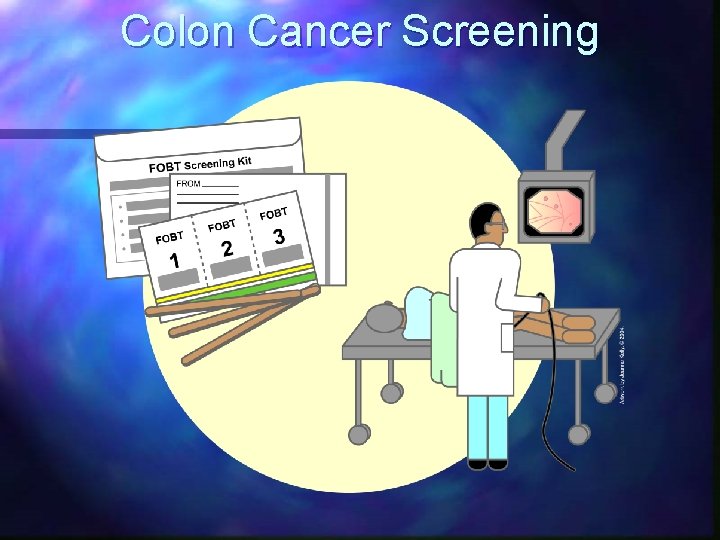
Colon Cancer Screening
Colon Cancer Screening Guidelines n n n Age of 50 and older; younger if there is a family history Yearly fecal occult blood test (FOBT) or Flexible sigmoidoscopy every 5 years or Yearly FOBT and sigmoidoscopy (a procedure used to see inside the sigmoid colon and rectum. The sigmoid colon is the area of the large intestine nearest the rectum) every 5 years Colonoscopy every 10 years
Breast Cancer Screening Guidelines n Yearly mammograms starting at age 40 and continuing for as long as a woman is in good health. n Clinical breast exams (CBE) should be part of a periodic health exam, about every three years for women in their 20 s and 30 s and every year for women 40 and over.
Breast Cancer Screening Guidelines Women should report any breast change promptly to their health care providers. Breast self‑exam (BSE) is an option for women starting in their 20 s. n Women at increased risk (e. g. , family history, genetic tendency, past breast cancer ) should talk with their doctors about the benefits and limitations of starting mammography screening earlier, having additional tests (e. g. , breast ultrasound or MRI), or having more frequent exams. n
Cervical Cancer Guidelines Annual pap testing should begin with the onset of sexual activity or at age 18 n Investigate pros & cons of new HPV vaccine n Pap testing should continue less frequently at the discretion of the medical provider and patient after three or more annual tests have been normal n Screening
Prostate Cancer Screening Guidelines n Men should speak to their doctor about the pros and cons of prostate cancer screening n Both prostate specific antigen (PSA) and digital rectal examinations (DRE) are recommended for men over 50 and who choose to undergo screening for prostate cancer
Testicular Cancer Screening Guidelines n Doctors agree that examination of a man’s testicles is an important part of a general physical exam. It is recommended that a testicular exam be conducted during routine cancer-related checkups. n It is believed that it is important to make men aware of testicular cancer and that any unusual mass should be evaluated by a health care provider immediately.
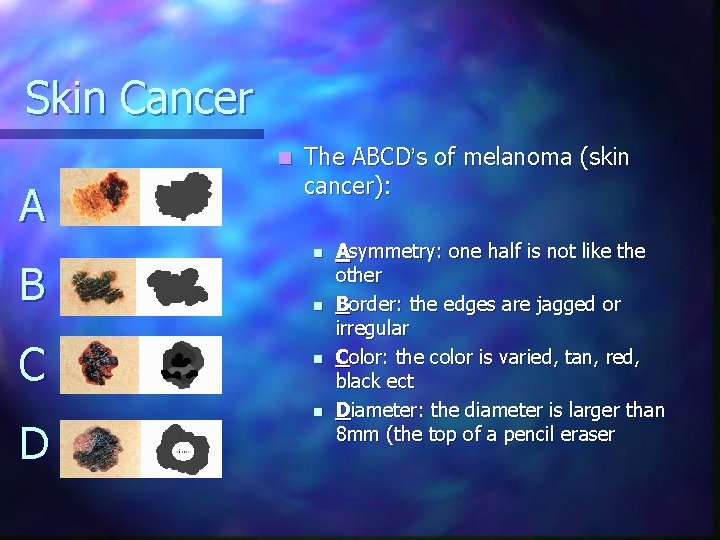
Skin Cancer n A B C D The ABCD’s of melanoma (skin cancer): n n Asymmetry: one half is not like the other Border: the edges are jagged or irregular Color: the color is varied, tan, red, black ect Diameter: the diameter is larger than 8 mm (the top of a pencil eraser
Skin Cancer Prevention n It is important to: Protect your skin with hats, long sleeves and sunscreen n Do a self examination of your skin monthly n Become familiar with any moles, freckles or other abnormalities on your skin n Check for changes once a month. Show any suspicious or changing areas to your health care provider. n
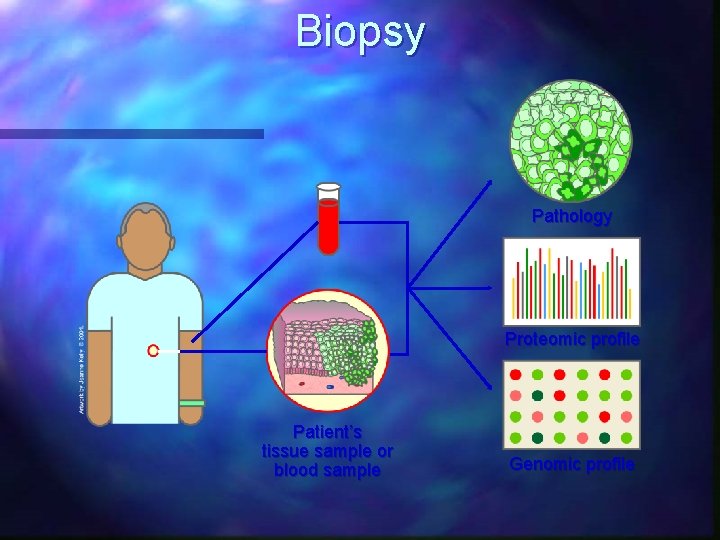
Biopsy Pathology Proteomic profile Patient’s tissue sample or blood sample Genomic profile
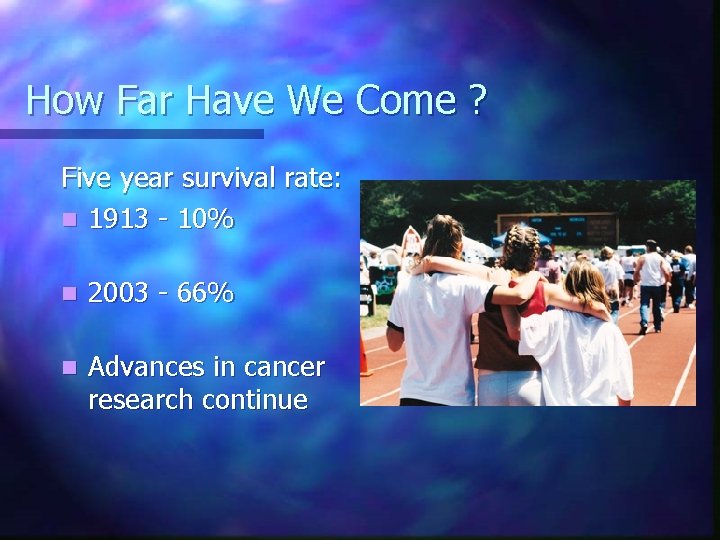
How Far Have We Come ? Five year survival rate: n 1913 - 10% n 2003 - 66% n Advances in cancer research continue
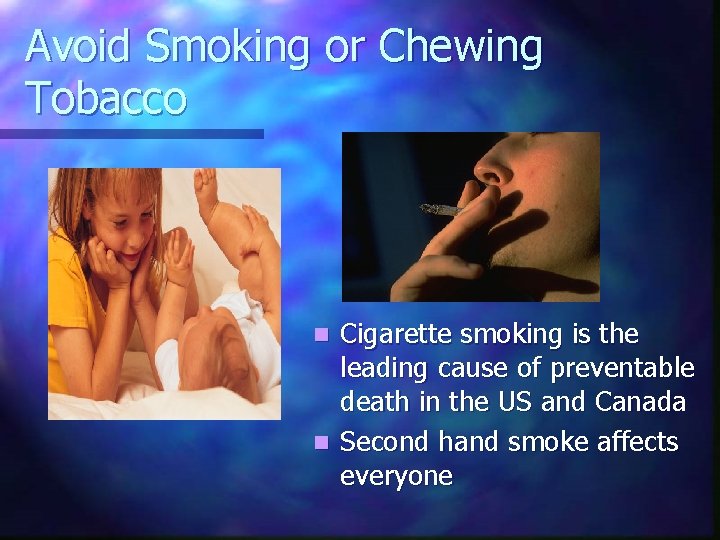
Avoid Smoking or Chewing Tobacco Cigarette smoking is the leading cause of preventable death in the US and Canada n Second hand smoke affects everyone n
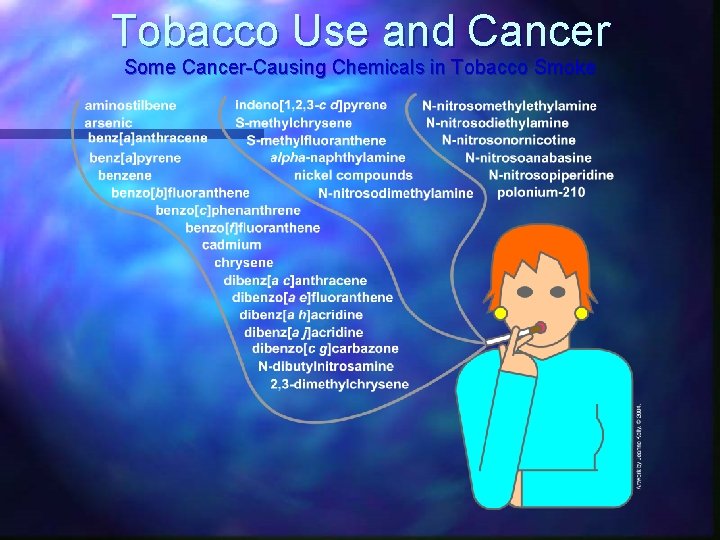
Tobacco Use and Cancer Some Cancer-Causing Chemicals in Tobacco Smoke
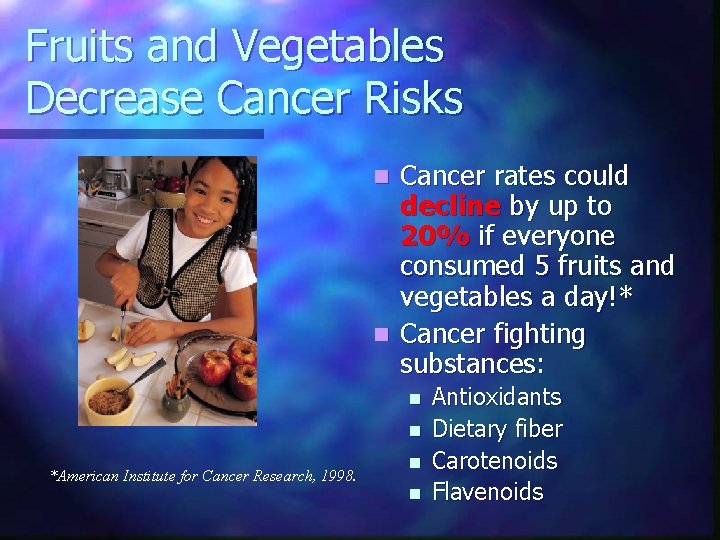
Fruits and Vegetables Decrease Cancer Risks Cancer rates could decline by up to 20% if everyone consumed 5 fruits and vegetables a day!* n Cancer fighting substances: n n n *American Institute for Cancer Research, 1998. n n Antioxidants Dietary fiber Carotenoids Flavenoids
Limit Alcohol to No More Than n Men – 2 drinks per day n Women - 1 drink per day
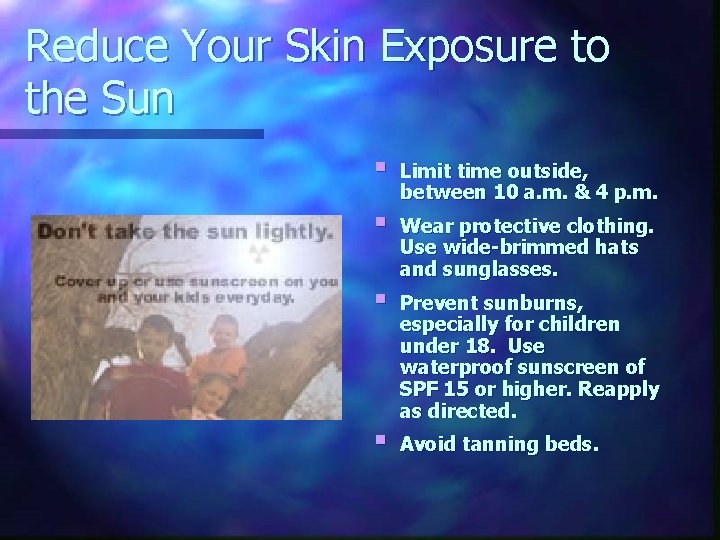
Reduce Your Skin Exposure to the Sun § § § Limit time outside, between 10 a. m. & 4 p. m. Wear protective clothing. Use wide-brimmed hats and sunglasses. Prevent sunburns, especially for children under 18. Use waterproof sunscreen of SPF 15 or higher. Reapply as directed. Avoid tanning beds.
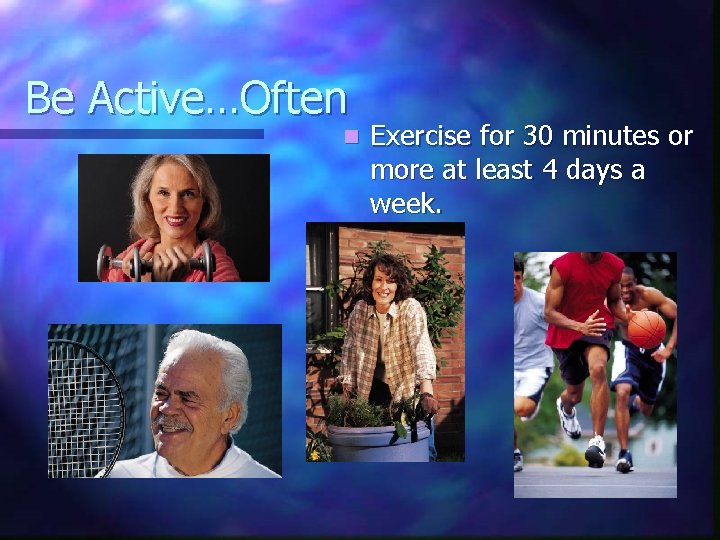
Be Active…Often n Exercise for 30 minutes or more at least 4 days a week.
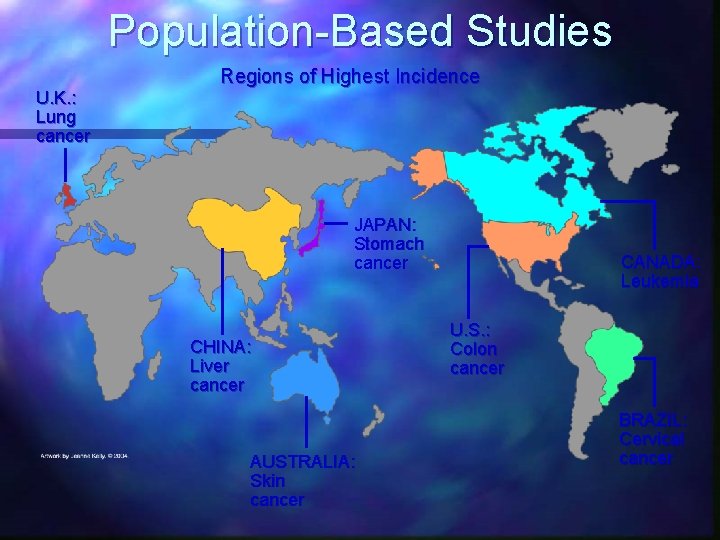
Population-Based Studies U. K. : Lung cancer Regions of Highest Incidence JAPAN: Stomach cancer CHINA: Liver cancer AUSTRALIA: Skin cancer CANADA: Leukemia U. S. : Colon cancer BRAZIL: Cervical cancer