
Understanding Cancer and Related Topics Understanding Nanodevices Developed
- Slides: 24
Understanding Cancer and Related Topics Understanding Nanodevices Developed by: Jennifer Michalowski, M. S. Donna Kerrigan, M. S. Jeanne Kelly Brian Hollen Explains nanotechnology and its potential to improve cancer detection, diagnosis, and treatment. Illustrates several nanotechnology tools in development, including nanopores, quantum dots, and dendrimers. These Power. Point slides are not locked files. You can mix and match slides from different tutorials as you prepare your own lectures. In the Notes section, you will find explanations of the graphics. The art in this tutorial is copyrighted and may not be reused for commercial gain. Please do not remove the NCI logo or the copyright mark from any slide. These tutorials may be copied only if they are distributed free of charge for educational purposes.
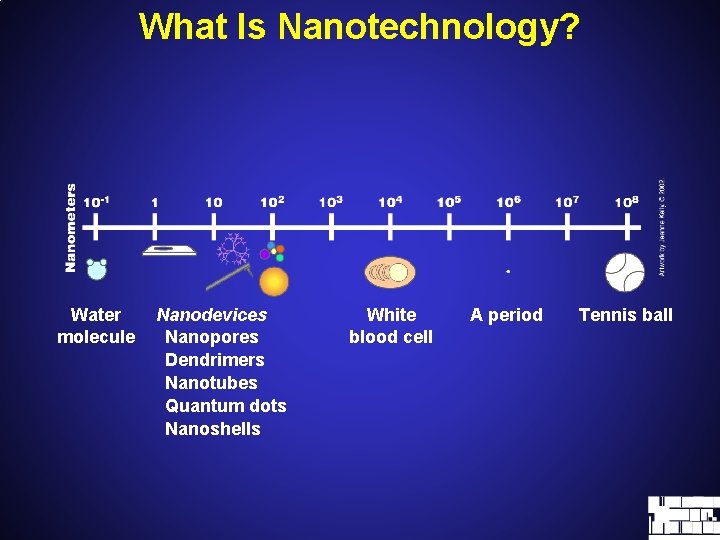
What Is Nanotechnology? Water molecule Nanodevices Nanopores Dendrimers Nanotubes Quantum dots Nanoshells White blood cell A period Tennis ball
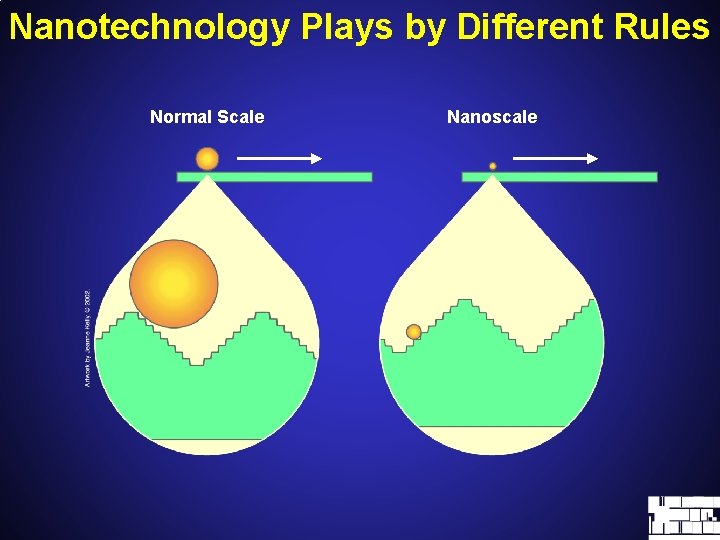
Nanotechnology Plays by Different Rules Normal Scale Nanoscale
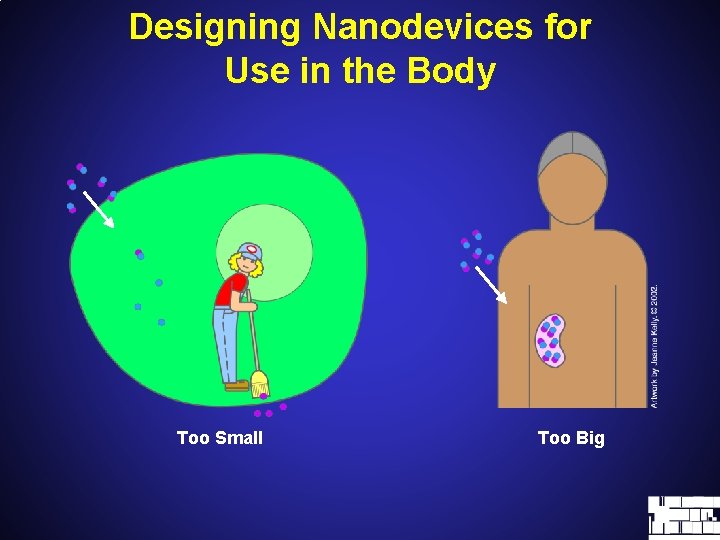
Designing Nanodevices for Use in the Body Too Small Too Big
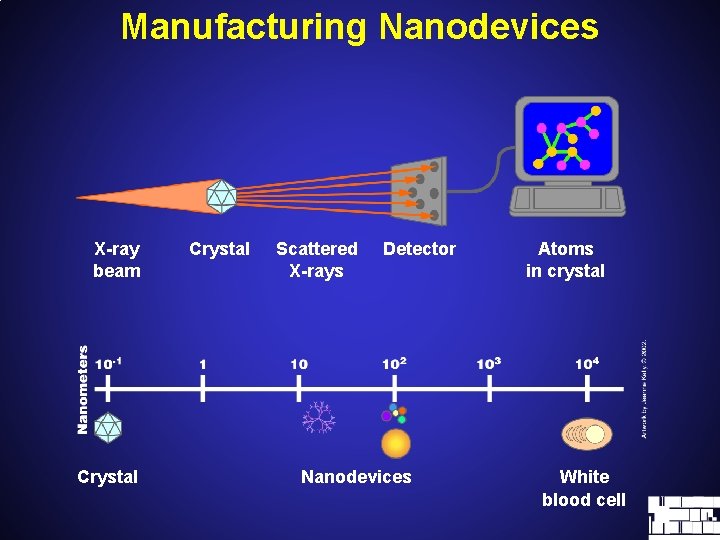
Manufacturing Nanodevices X-ray beam Crystal Scattered X-rays Detector Nanodevices Atoms in crystal White blood cell
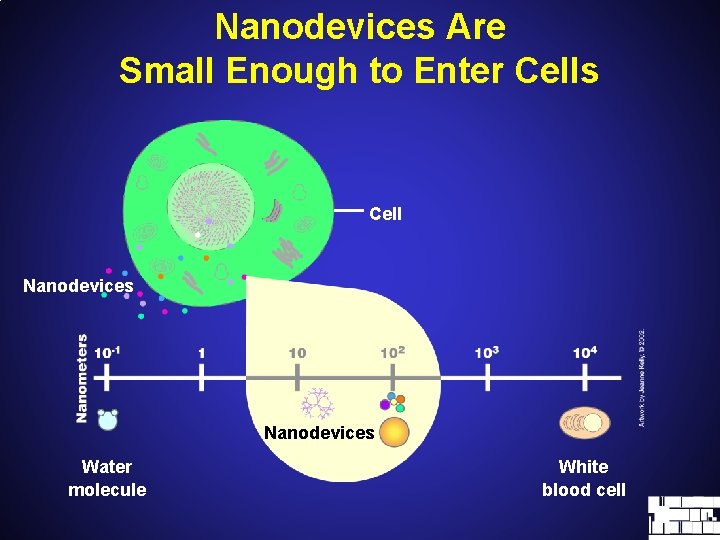
Nanodevices Are Small Enough to Enter Cells Cell Nanodevices Water molecule White blood cell
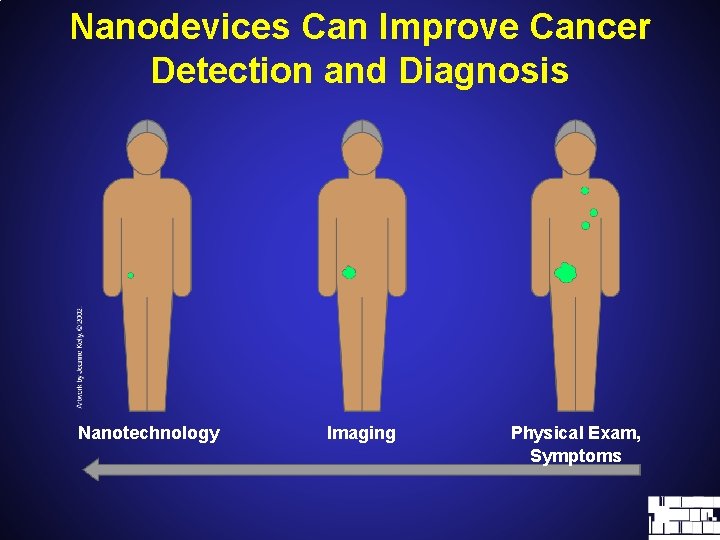
Nanodevices Can Improve Cancer Detection and Diagnosis Nanotechnology Imaging Physical Exam, Symptoms
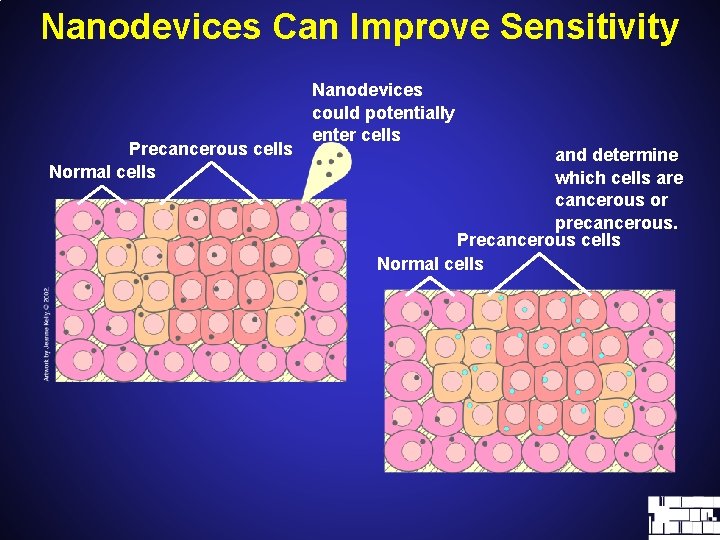
Nanodevices Can Improve Sensitivity Precancerous cells Normal cells Nanodevices could potentially enter cells and determine which cells are cancerous or precancerous. Precancerous cells Normal cells
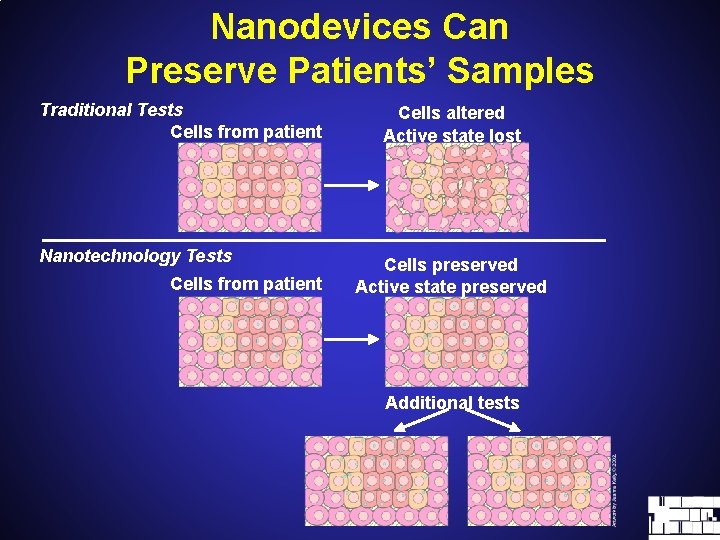
Nanodevices Can Preserve Patients’ Samples Traditional Tests Cells from patient Nanotechnology Tests Cells from patient Cells altered Active state lost Cells preserved Active state preserved Additional tests
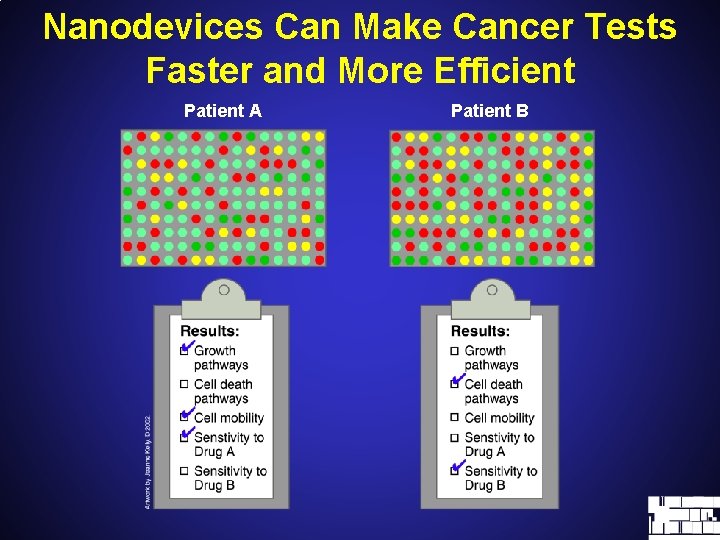
Nanodevices Can Make Cancer Tests Faster and More Efficient Patient A Patient B
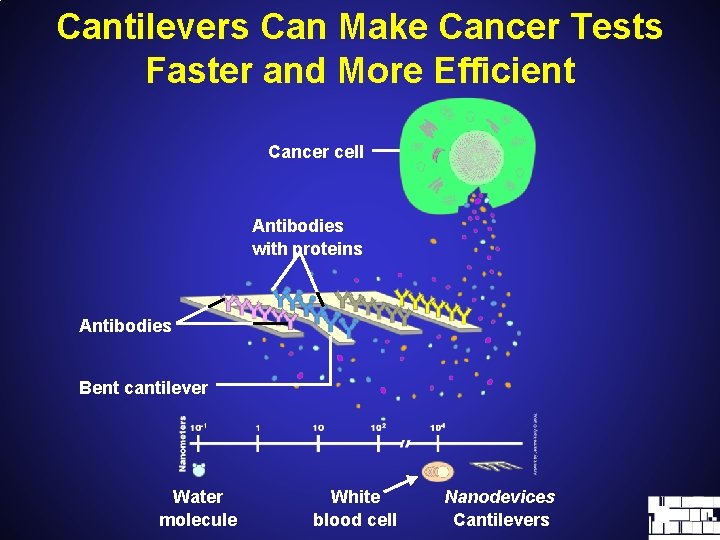
Cantilevers Can Make Cancer Tests Faster and More Efficient Cancer cell Antibodies with proteins Antibodies Bent cantilever Water molecule White blood cell Nanodevices Cantilevers
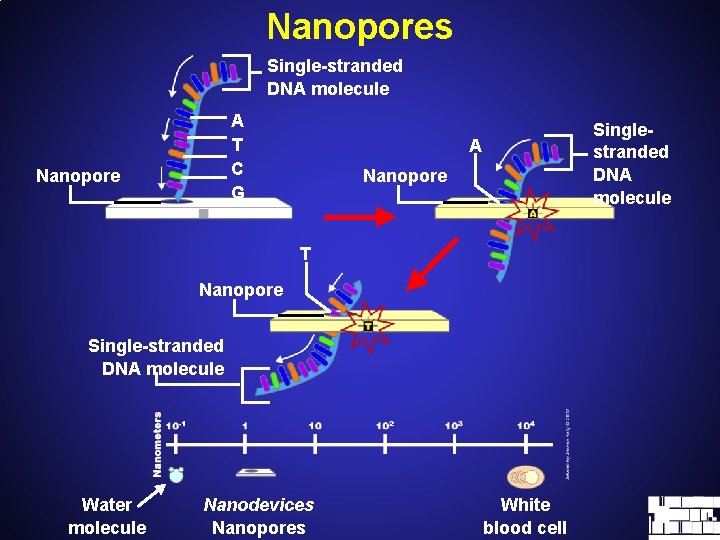
Nanopores Single-stranded DNA molecule A T C G Nanopore Singlestranded DNA molecule A Nanopore T Nanopore Single-stranded DNA molecule Water molecule Nanodevices Nanopores White blood cell
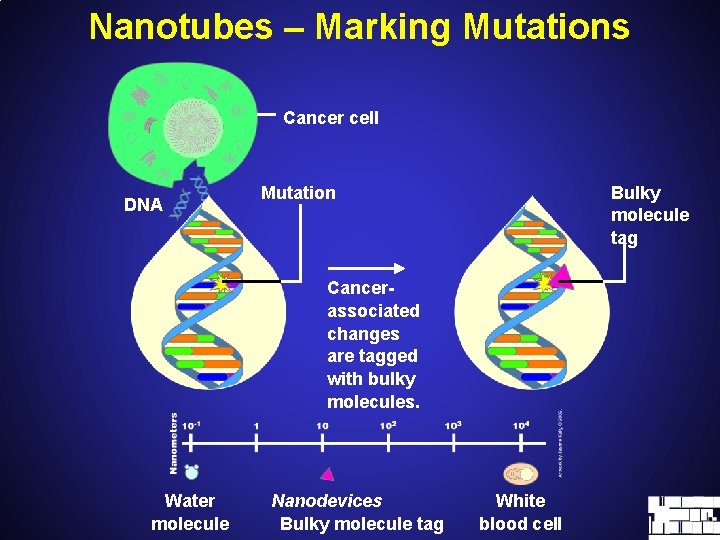
Nanotubes – Marking Mutations Cancer cell DNA Bulky molecule tag Mutation Cancerassociated changes are tagged with bulky molecules. Water molecule Nanodevices Bulky molecule tag White blood cell
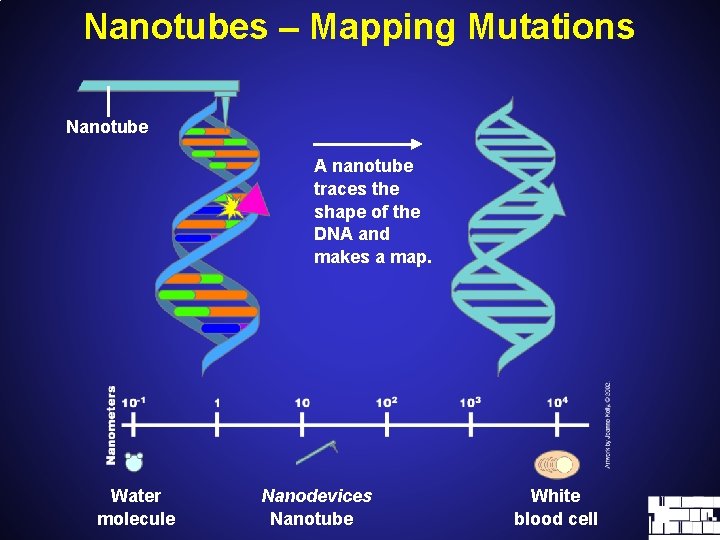
Nanotubes – Mapping Mutations Nanotube A nanotube traces the shape of the DNA and makes a map. Water molecule Nanodevices Nanotube White blood cell
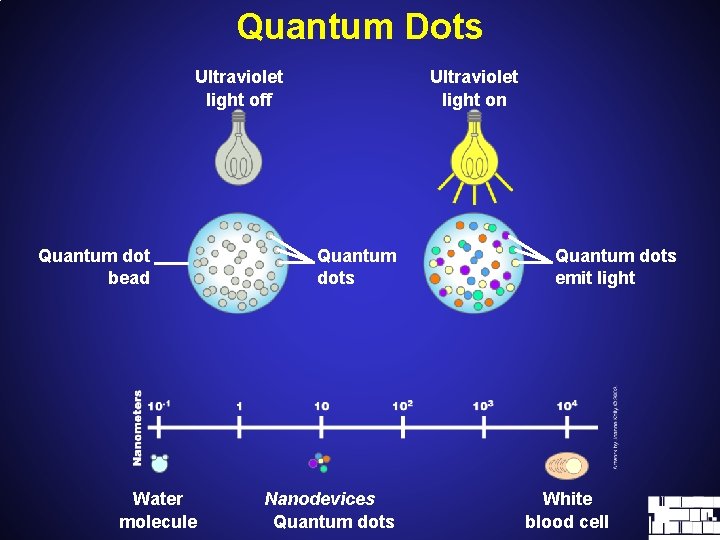
Quantum Dots Ultraviolet light off Quantum dot bead Water molecule Ultraviolet light on Quantum dots Nanodevices Quantum dots emit light White blood cell
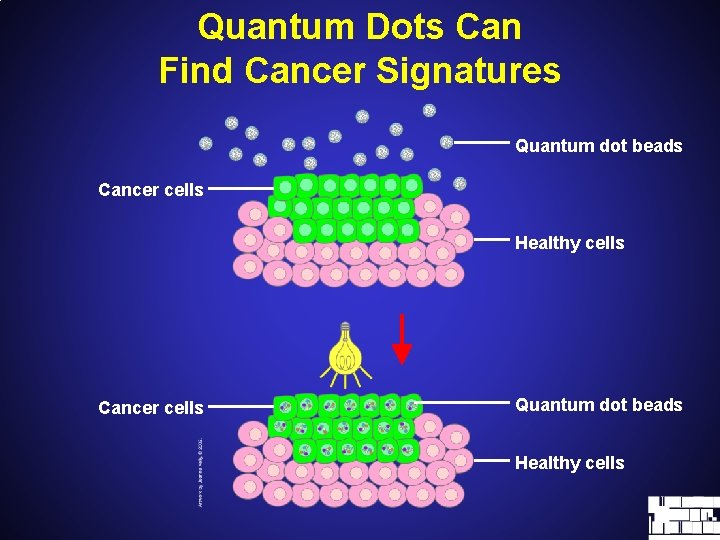
Quantum Dots Can Find Cancer Signatures Quantum dot beads Cancer cells Healthy cells Cancer cells Quantum dot beads Healthy cells
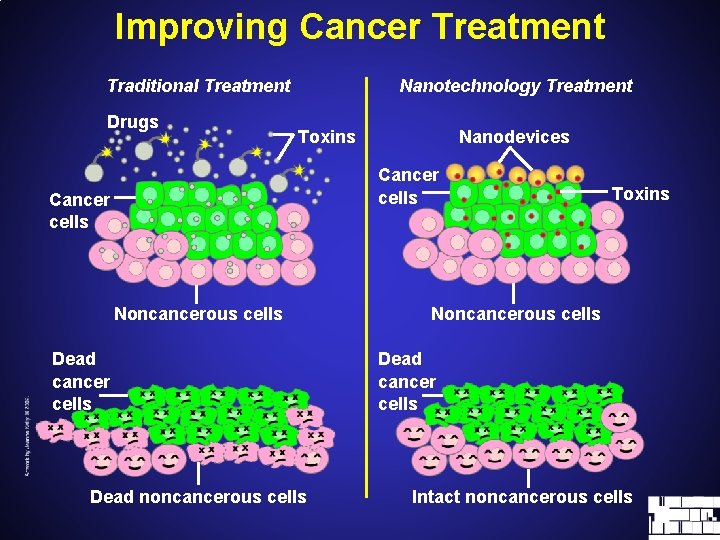
Improving Cancer Treatment Traditional Treatment Drugs Nanotechnology Treatment Toxins Nanodevices Cancer cells Noncancerous cells Dead cancer cells Dead noncancerous cells Toxins Noncancerous cells Dead cancer cells Intact noncancerous cells
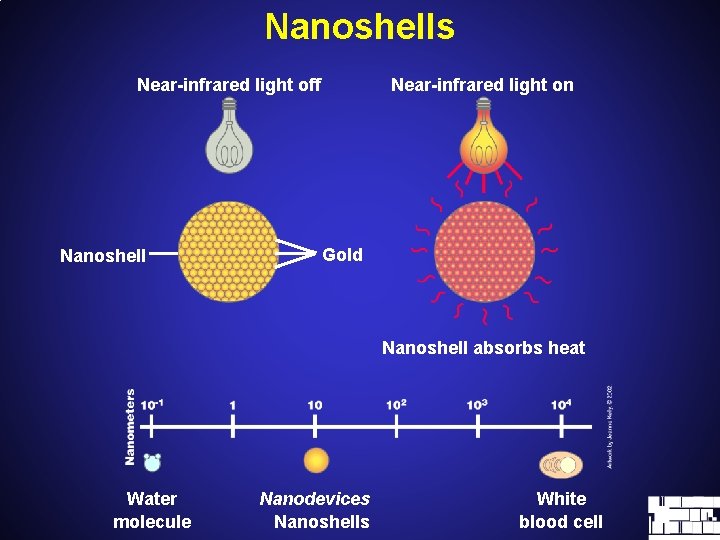
Nanoshells Near-infrared light off Nanoshell Near-infrared light on Gold Nanoshell absorbs heat Water molecule Nanodevices Nanoshells White blood cell
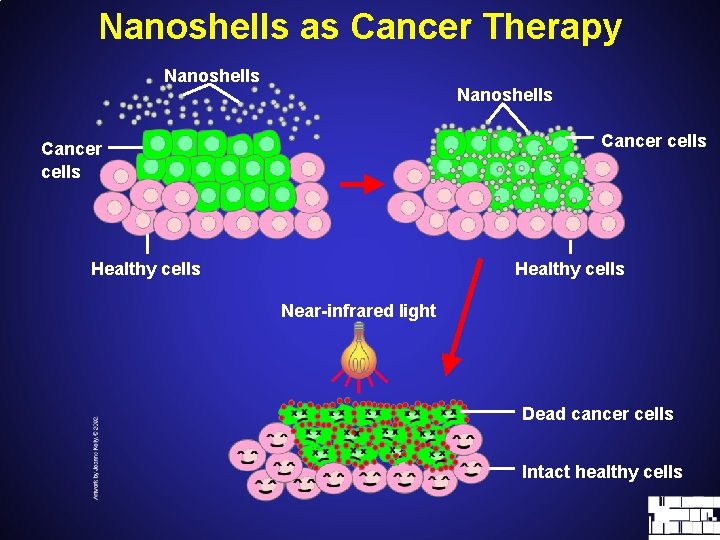
Nanoshells as Cancer Therapy Nanoshells Cancer cells Healthy cells Near-infrared light Dead cancer cells Intact healthy cells
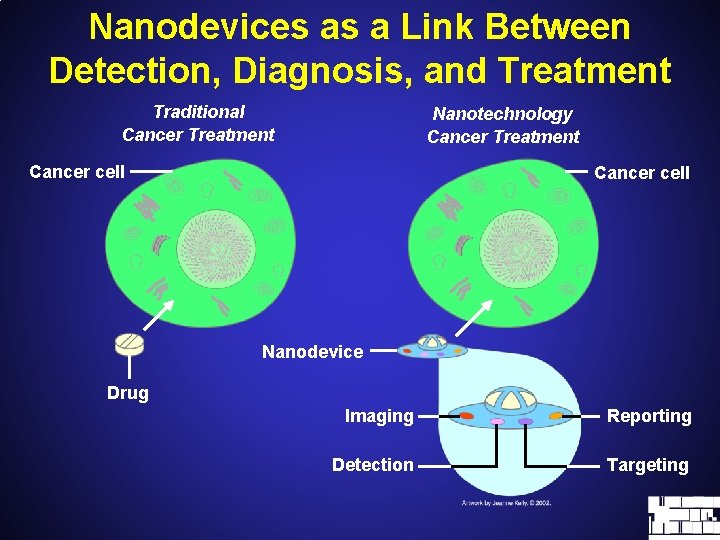
Nanodevices as a Link Between Detection, Diagnosis, and Treatment Traditional Cancer Treatment Nanotechnology Cancer Treatment Cancer cell Nanodevice Drug Imaging Reporting Detection Targeting
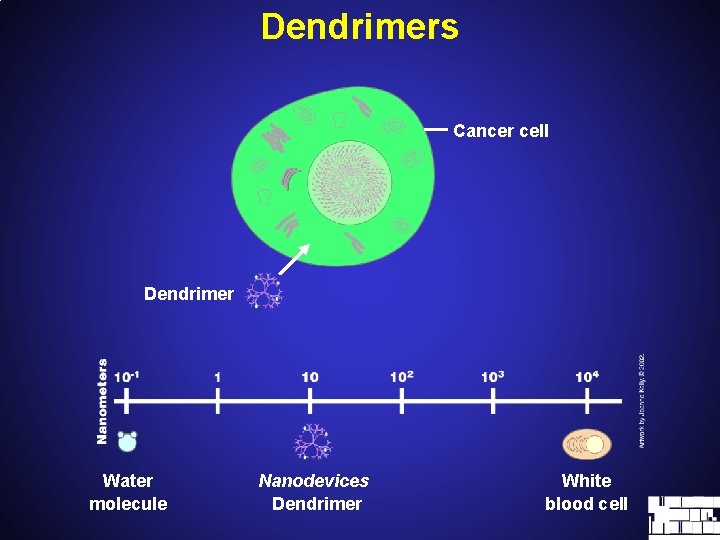
Dendrimers Cancer cell Dendrimer Water molecule Nanodevices Dendrimer White blood cell
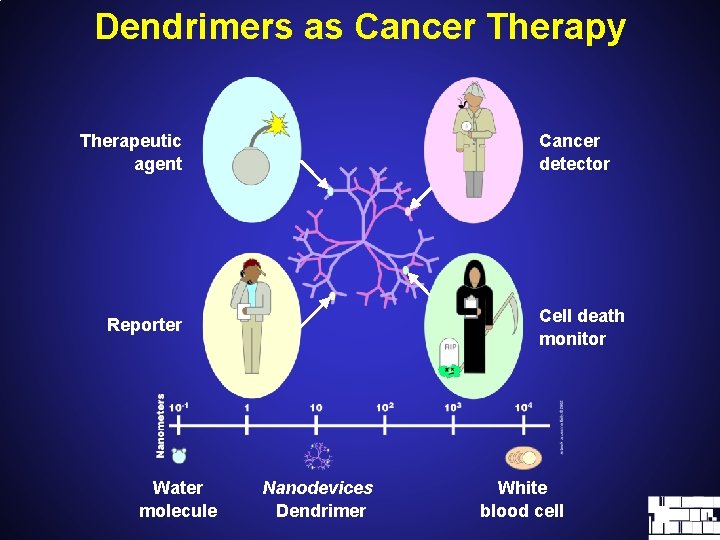
Dendrimers as Cancer Therapy Therapeutic agent Cancer detector Cell death monitor Reporter Water molecule Nanodevices Dendrimer White blood cell
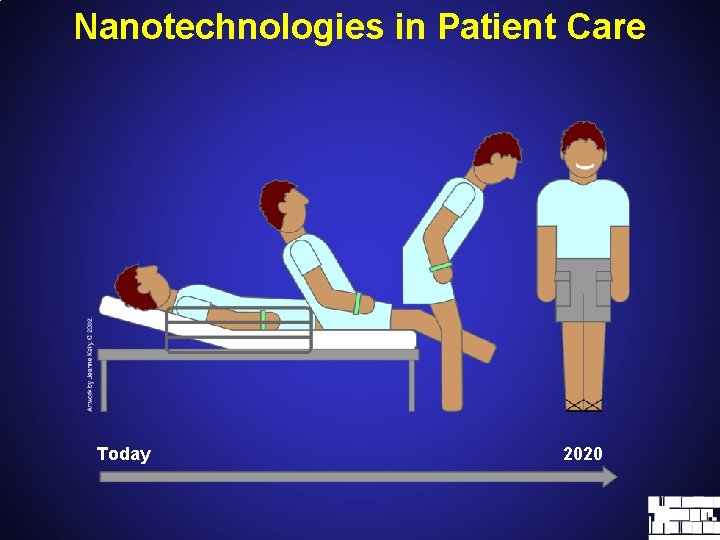
Nanotechnologies in Patient Care Today 2020
We would like to hear from you. . . If you have questions about this tutorial’s content, suggestions for new topics, or other feedback on the Web site, please send an e-mail to kerrigad@mail. nih. gov. If you have questions about this tutorial’s artwork or want permission to use it, please send an e-mail to beankelly@verizon. net.