
UNDERSTANDING BIAS AND INFERENCE TODAYS OBJECTIVES To be
UNDERSTANDING BIAS AND INFERENCE
TODAY’S OBJECTIVES • To be able to explain bias • To be able to identify bias in a text • To design a piece of biased writing
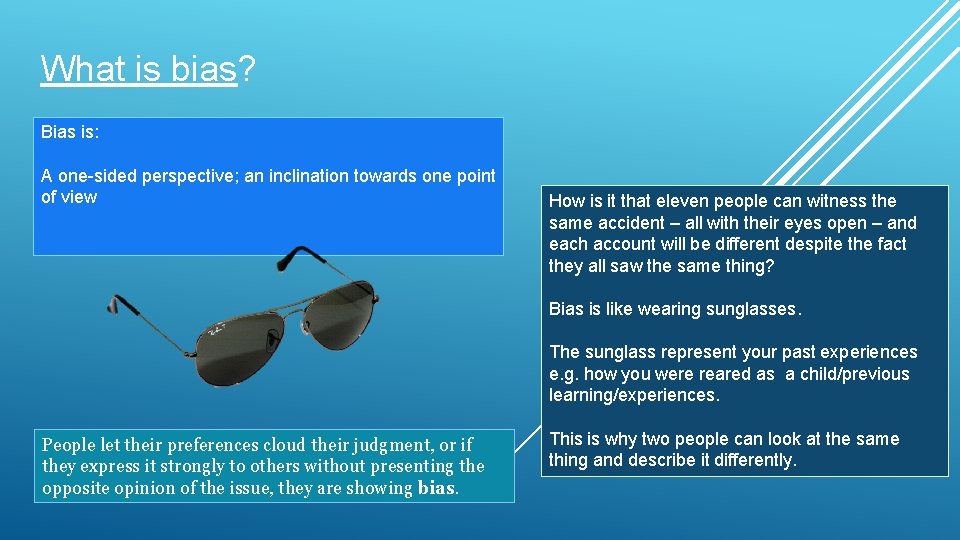
What is bias? Bias is: A one-sided perspective; an inclination towards one point of view How is it that eleven people can witness the same accident – all with their eyes open – and each account will be different despite the fact they all saw the same thing? Bias is like wearing sunglasses. The sunglass represent your past experiences e. g. how you were reared as a child/previous learning/experiences. People let their preferences cloud their judgment, or if they express it strongly to others without presenting the opposite opinion of the issue, they are showing bias. This is why two people can look at the same thing and describe it differently.
DICTIONARY TASK All words aimed at getting you to consider the writer’s viewpoint. Subjective Objective Neutral Bias Unbiased Prejudice
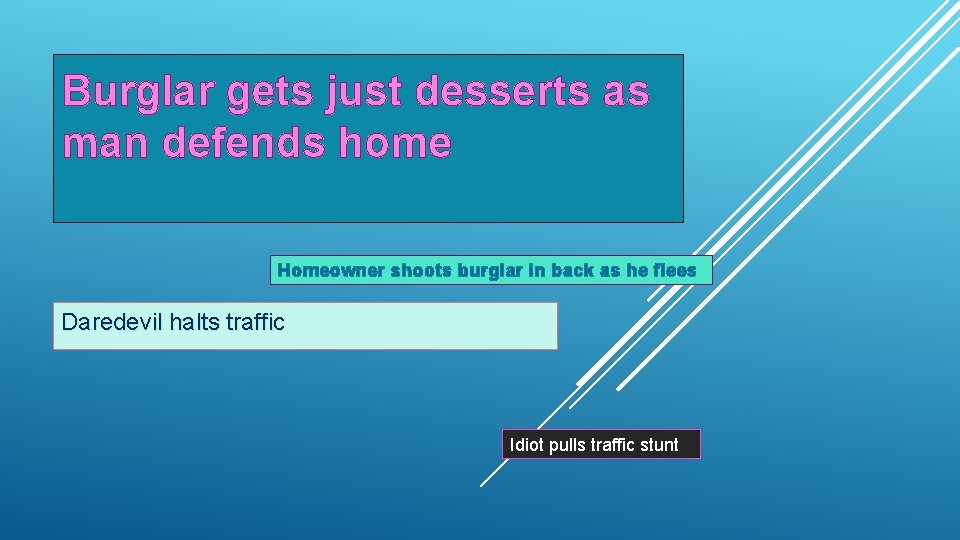
Burglar gets just desserts as man defends home Homeowner shoots burglar in back as he flees Daredevil halts traffic Idiot pulls traffic stunt
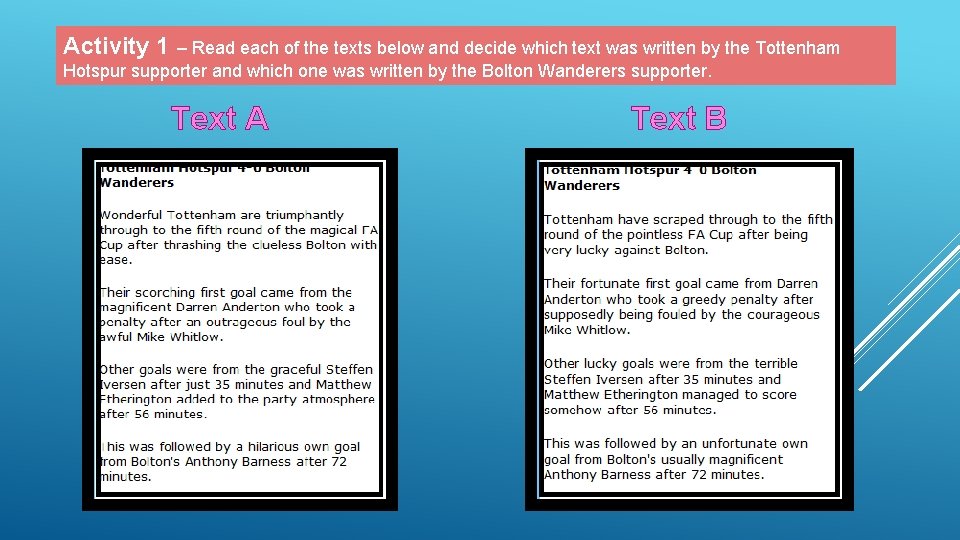
Activity 1 – Read each of the texts below and decide which text was written by the Tottenham Hotspur supporter and which one was written by the Bolton Wanderers supporter. Text A Text B
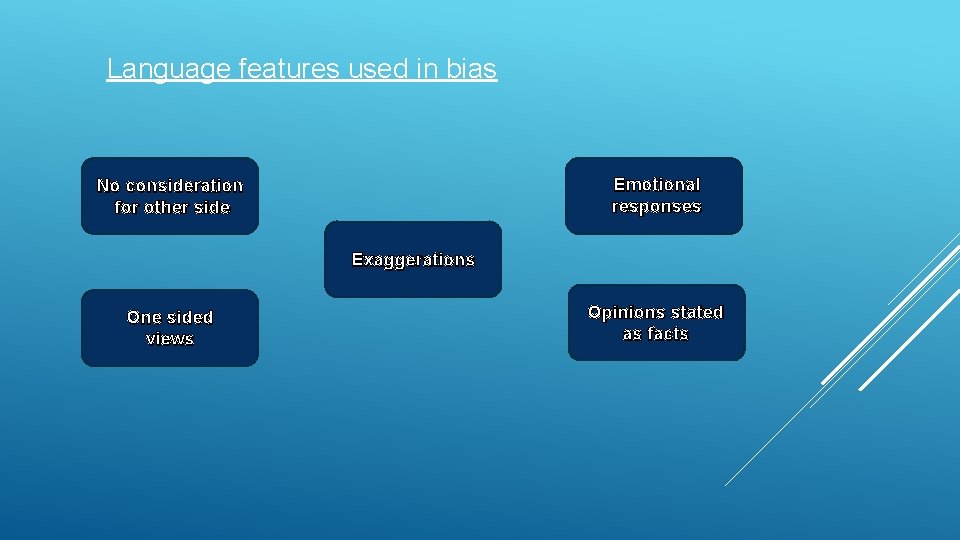
Language features used in bias Emotional responses No consideration for other side Exaggerations One sided views Opinions stated as facts
HOW CAN WE TELL IF A NEWSPAPER REPORT IS BIASED? You are going to be shown three newspaper reports on the release of murderer Harry Roberts from prison. Write some notes on each one thinking about the writer’s bias. You will have 6 minutes for each one.
TEXT 1) IS THIS A NEUTRAL PIECE? DOES IT CONTAIN BIAS? IS IT OBJECTIVE? Police killer Harry Roberts has been released from prison, it has been revealed. The 78 -year-old, who was jailed for life for shooting dead three unarmed policemen in 1966, was released from Littlehey prison in Cambridgeshire on Monday night, The Sun reported. A spokesman for the Ministry of Justice said: “We do not comment on individuals. “Offenders on life sentences are subject to strict controls for as long as their risk requires them. If they fail to comply with these conditions they can be immediately returned to prison. “Offenders managed through multi-agency public protection arrangements (Mappa) are monitored and supervised by probation, police and other agencies. ” Roberts was behind bars for 45 years after murdering Detective Sergeant Christopher Head, 30, Detective Constable David Wombwell, 25, and Constable Geoffrey Fox, 41. The revelation he was to be released sparked anger from police and politicians last month.
TEXT 2) IS THIS A NEUTRAL PIECE? DOES IT CONTAIN BIAS? IS IT OBJECTIVE? It was a warm, sunny afternoon in August 1966 when Harry Roberts shot dead three unarmed, plain-clothes policemen in cold blood. The act, dubbed the Massacre Of Braybook Street, was described by a trial judge as “the most heinous crime for a generation or more”, and a shocked British public reacted with revulsion, heaping pressure on the government to restore capital punishment. As it was, Roberts received a life sentence and has spent 42 years behind bars but this week reports have surfaced suggesting the country’s most notorious police killer could soon be set free. Following a secret Parole Board hearing this week Roberts, 72, is to be moved to an open jail, something that is likely to pave the way for his release in 18 months time. “He is openly telling people he is on his way to freedom, ” says an insider at Littlehey Prison in Huntingdon, Cambridgeshire.
TEXT 3) IS THIS A NEUTRAL PIECE? DOES IT CONTAIN BIAS? IS IT OBJECTIVE? The decision to release triple murderer Harry Roberts by the parole board is beyond comprehension and a contemptuous kick in the teeth to our police force, whose officers face death every day, whilst they struggle to prevent crime. To release a killer who took the lives of three police officers demonstrates a despicable betrayal and cruel contempt by the parole board and our present government towards that murderer’s victims and their families, as well as every past, present and future police officer. Many police officers have had their lives so callously snatched away, during the courses of their services to this country. Their sacrifices have saved countless lives of other people, and I believe their memories deserve better at the hands of successive governments.

INFERENCE

WHAT DOES INFERENCE MEAN? Inference is an idea or conclusion that's drawn from evidence and reasoning. An inference is an educated guess
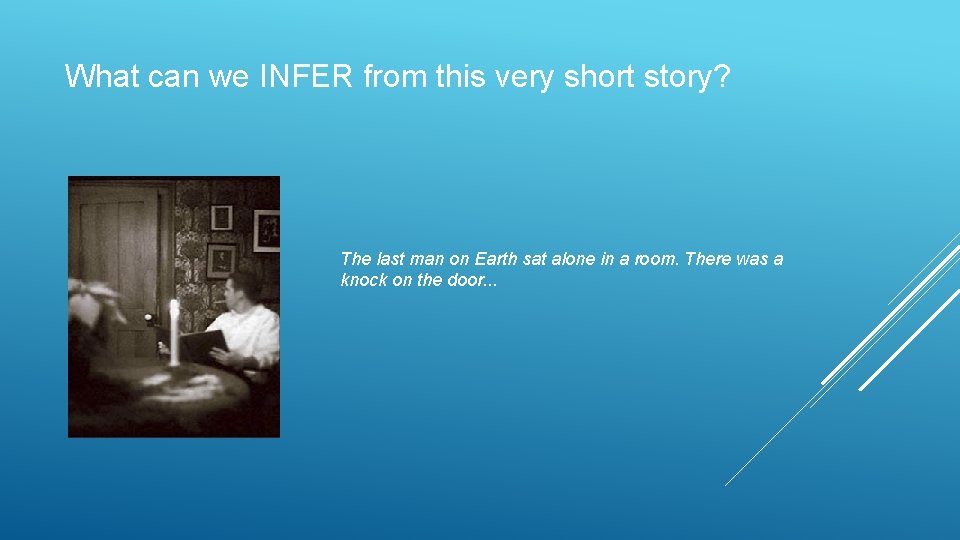
What can we INFER from this very short story? The last man on Earth sat alone in a room. There was a knock on the door. . .
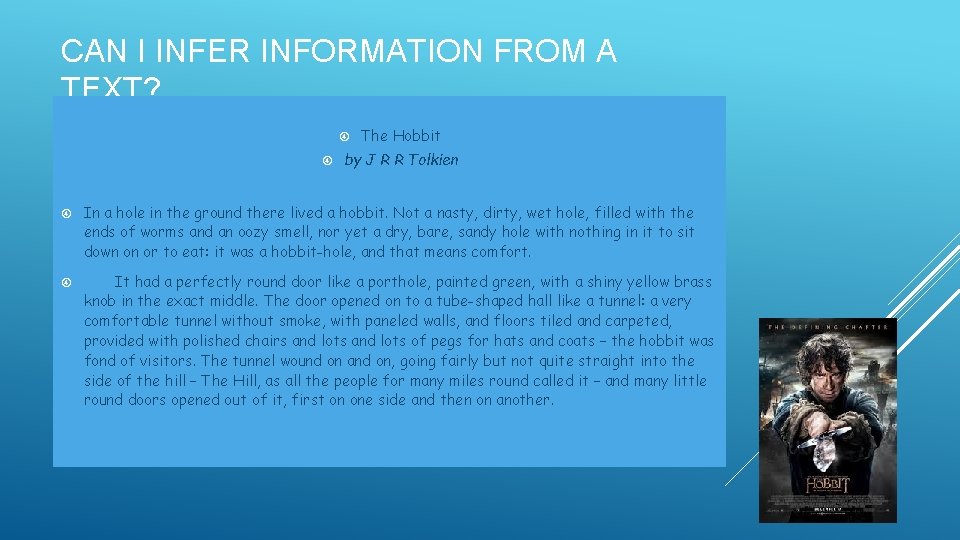
CAN I INFER INFORMATION FROM A TEXT? The Hobbit by J R R Tolkien In a hole in the ground there lived a hobbit. Not a nasty, dirty, wet hole, filled with the ends of worms and an oozy smell, nor yet a dry, bare, sandy hole with nothing in it to sit down on or to eat: it was a hobbit-hole, and that means comfort. It had a perfectly round door like a porthole, painted green, with a shiny yellow brass knob in the exact middle. The door opened on to a tube-shaped hall like a tunnel: a very comfortable tunnel without smoke, with paneled walls, and floors tiled and carpeted, provided with polished chairs and lots of pegs for hats and coats – the hobbit was fond of visitors. The tunnel wound on and on, going fairly but not quite straight into the side of the hill – The Hill, as all the people for many miles round called it – and many little round doors opened out of it, first on one side and then on another.
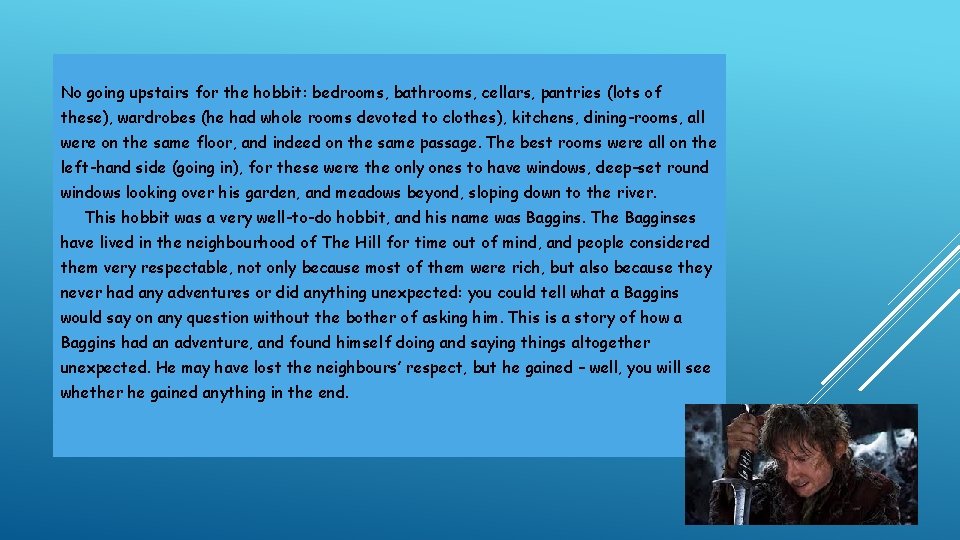
No going upstairs for the hobbit: bedrooms, bathrooms, cellars, pantries (lots of these), wardrobes (he had whole rooms devoted to clothes), kitchens, dining-rooms, all were on the same floor, and indeed on the same passage. The best rooms were all on the left-hand side (going in), for these were the only ones to have windows, deep-set round windows looking over his garden, and meadows beyond, sloping down to the river. This hobbit was a very well-to-do hobbit, and his name was Baggins. The Bagginses have lived in the neighbourhood of The Hill for time out of mind, and people considered them very respectable, not only because most of them were rich, but also because they never had any adventures or did anything unexpected: you could tell what a Baggins would say on any question without the bother of asking him. This is a story of how a Baggins had an adventure, and found himself doing and saying things altogether unexpected. He may have lost the neighbours’ respect, but he gained – well, you will see whether he gained anything in the end.
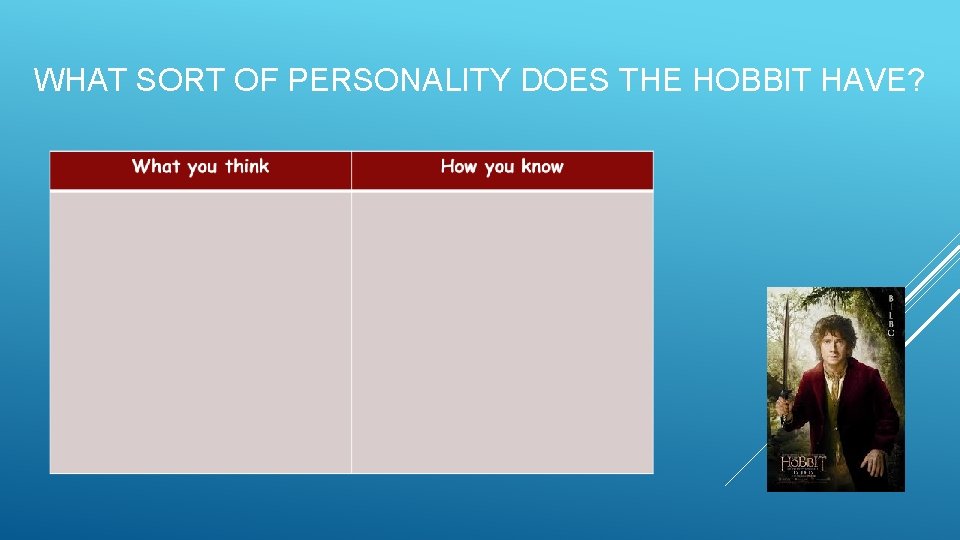
WHAT SORT OF PERSONALITY DOES THE HOBBIT HAVE?
- Slides: 17