
Understanding Behaviour Why is the student doing this
Understanding Behaviour Why is the student doing this behaviour? 1
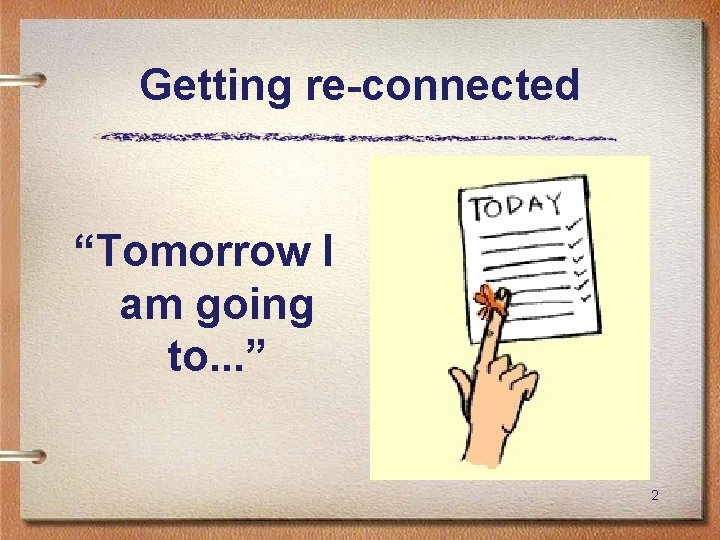
Getting re-connected “Tomorrow I am going to. . . ” 2
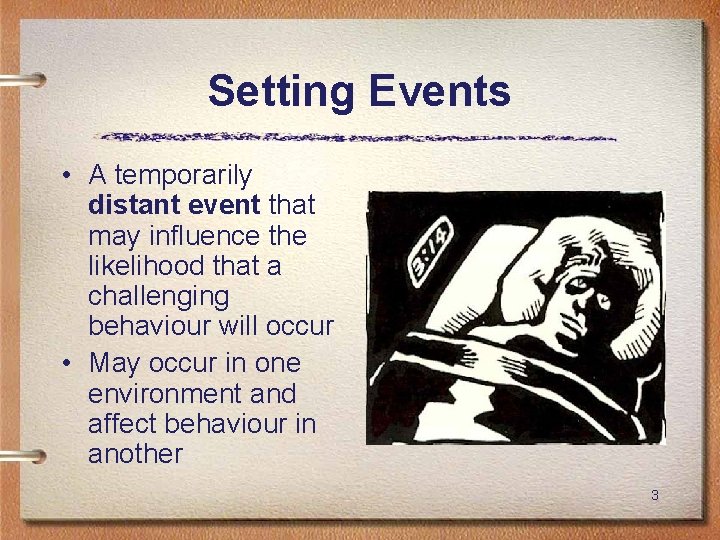
Setting Events • A temporarily distant event that may influence the likelihood that a challenging behaviour will occur • May occur in one environment and affect behaviour in another 3
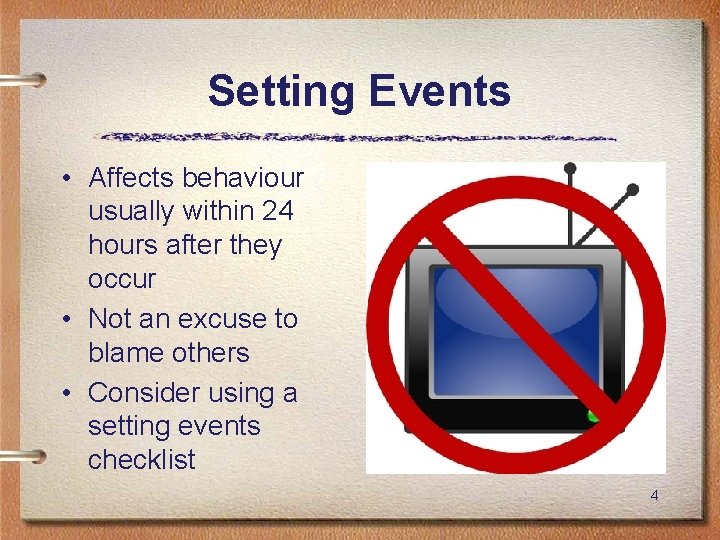
Setting Events • Affects behaviour usually within 24 hours after they occur • Not an excuse to blame others • Consider using a setting events checklist 4

Setting Events • 2 options for dealing with: – Change circumstances so that setting events no longer occur to influence the behaviour (proactive) – Provide supports to offset the impact the setting events (supportive) 5
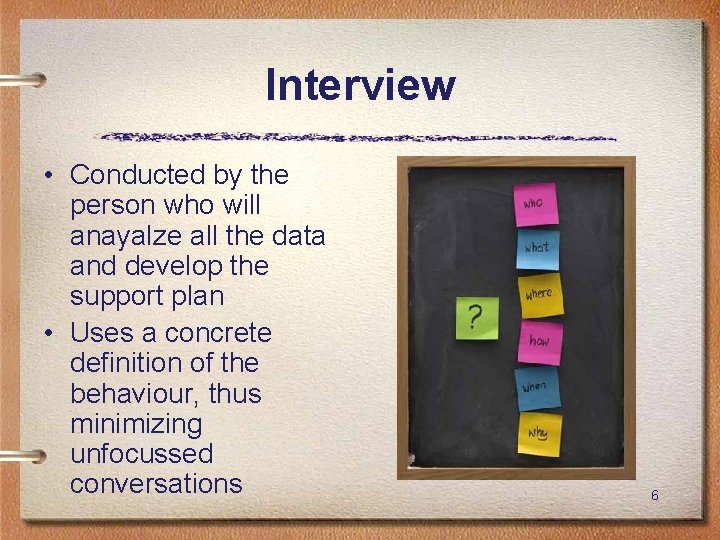
Interview • Conducted by the person who will anayalze all the data and develop the support plan • Uses a concrete definition of the behaviour, thus minimizing unfocussed conversations 6

Interview • Emphasizes the student’s routines, events, and areas staff have control over • Guides the team to look at predictors and patterns • Many commercial products • Student, the team as a group, individual team members or family could be interviewed 7

Interview Typical questions: • When, and under what circumstances (setting, staff, activity, time of day) is the behaviour most likely to occur? • What happens just before the behaviour occurs? Just after the behaviour occurs? • Why do you think the behaviour occurs? 8
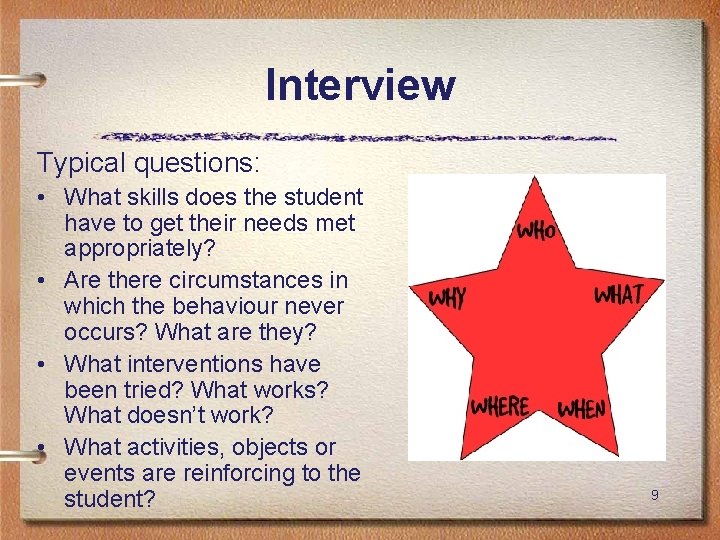
Interview Typical questions: • What skills does the student have to get their needs met appropriately? • Are there circumstances in which the behaviour never occurs? What are they? • What interventions have been tried? What works? What doesn’t work? • What activities, objects or events are reinforcing to the student? 9

Functional Behaviour Assessment Steps 1. 2. 3. 4. 5. 6. 7. 8. 9. Decide if a intervention is warranted Develop a personal profile Define the target behaviour Conduct a functional behaviour interview Conduct direct observations Use setting events checklist Form hypothesis Design an support plan (prevent, teach and respond) Evaluate plan 10
Hypothesis • 1 -2 summary statements • Based on the data (direct observations, interviews, setting events) • Addresses the relation between the target behaviour, the function of the behaviour (communicative intent) and the antecedent / setting event 11
Hypothesis • Includes environmental factors • Informs the development of the support plan • All team members need to consider it logical 12

Examples of Hypothesis Statements 1. Sally makes loud noises when she is given a difficult assignment. She does this to get out of social studies. 2. When Ali does not sleep well, and is left alone, she hits herself. She does this to get attention. 13
Functional Behaviour Assessment Steps 1. 2. 3. 4. 5. 6. 7. 8. 9. Decide if a intervention is warranted Develop a personal profile Define the target behaviour Conduct a functional behaviour interview Conduct direct observations Use setting events checklist Form hypothesis Design an support plan (prevent, teach and respond) Evaluate plan 14
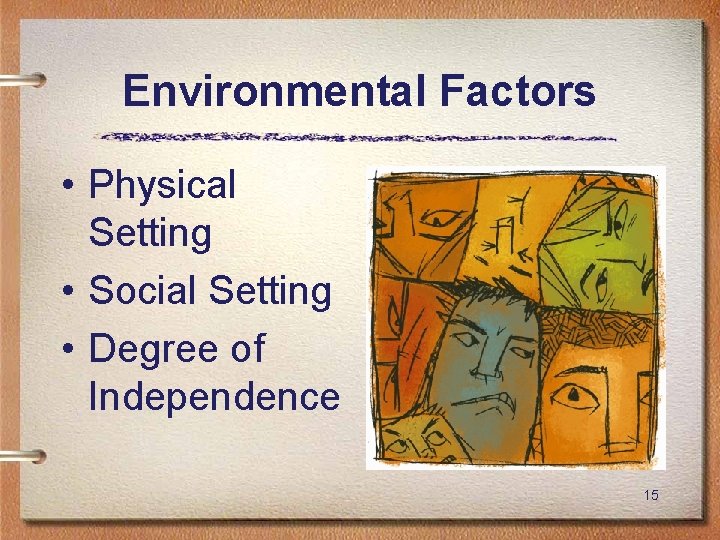
Environmental Factors • Physical Setting • Social Setting • Degree of Independence 15

Environmental Factors • Instructional Strategies, curriculum and activities • Social Interaction • Degree of choice 16
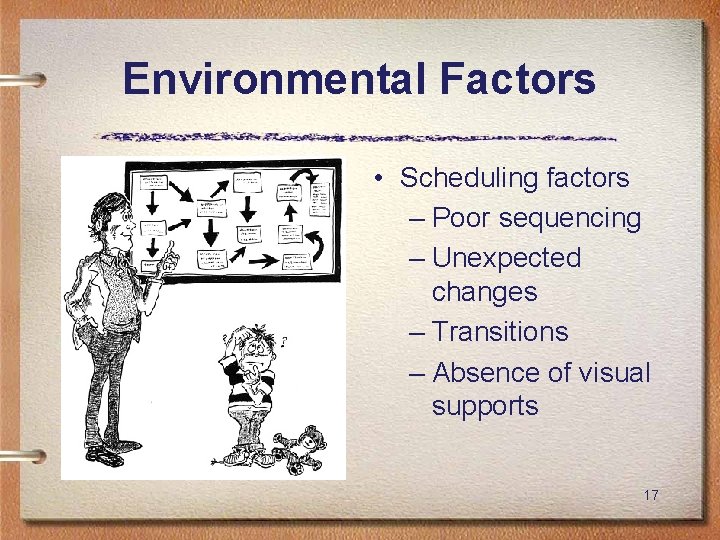
Environmental Factors • Scheduling factors – Poor sequencing – Unexpected changes – Transitions – Absence of visual supports 17

A simplified way of framing the assessment and intervention process Antecedent Behaviour Consequence Proactive Teach Response You! 18

Educator changes • Physical Setting • Social Setting • Degree of Independence • Degree of choice 19

Educator changes • Instructional Strategies, curriculum and activities • Social Interaction • Scheduling factors 20
Things to Try for Next Time • Continue practice with recording formats And, one of the following: • Conduct Environmental Observation and Analysis • Functions of Behaviour Extended 21
- Slides: 21