
UNDERSTANDING BEHAVIOUR In early childhood Development What do
UNDERSTANDING BEHAVIOUR In early childhood
Development What do you know about child development?
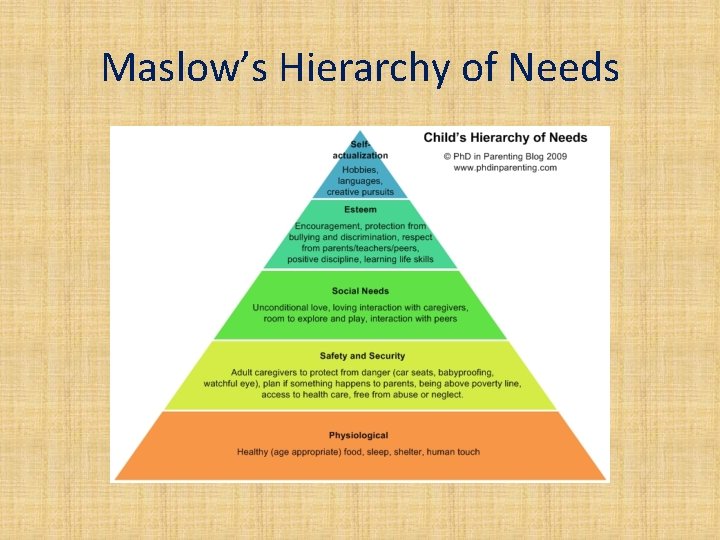
Maslow’s Hierarchy of Needs
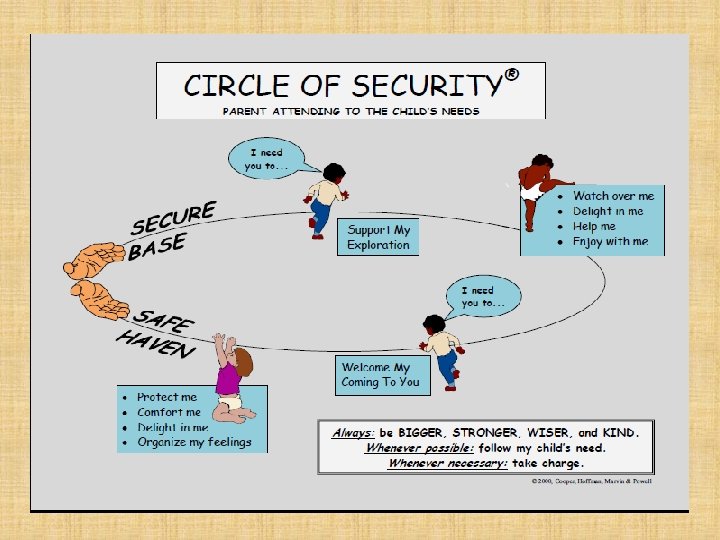
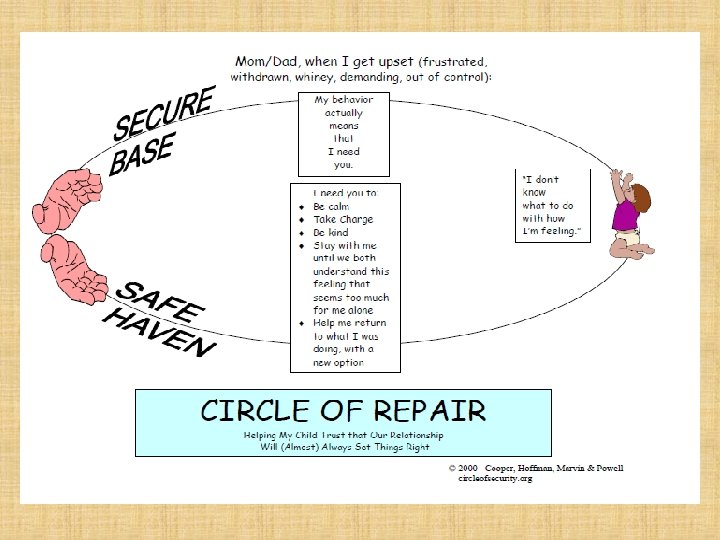
Circle of Security • Early intervention program for parents • Based on the principles of attachment theory • Focuses on meeting children’s relationship needs rather than behaviour • Encourages adults to be more emotionally available to children • Acknowledges that children need help to organise their internal world (feelings) as well as their external world (behaviour) Taken from The Circle of Security: Roadmap to building supportive relationships. Written by Robyn Dolby 2007. Research in Practice Series published by Early Childhood Australia
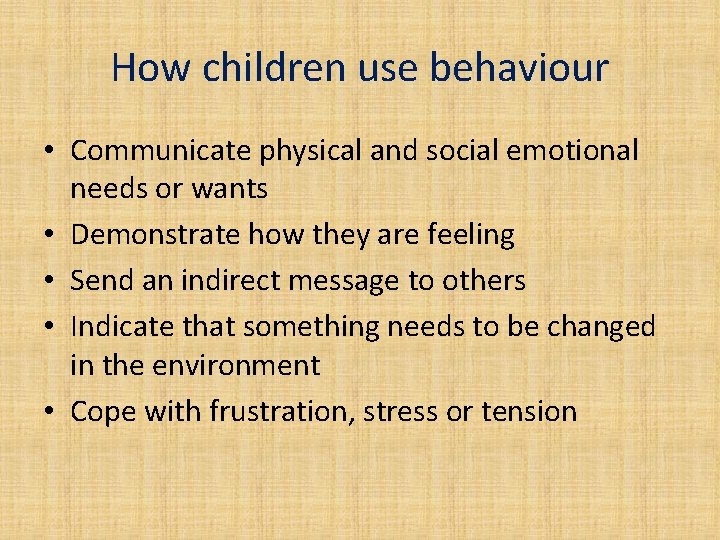
How children use behaviour • Communicate physical and social emotional needs or wants • Demonstrate how they are feeling • Send an indirect message to others • Indicate that something needs to be changed in the environment • Cope with frustration, stress or tension
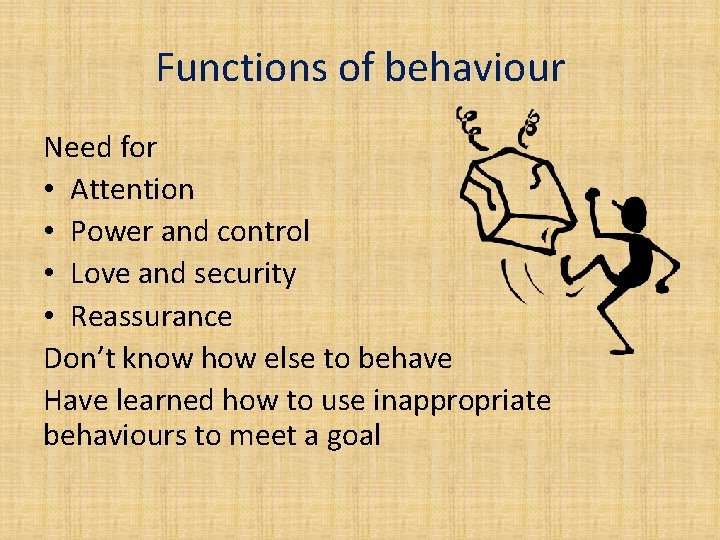
Functions of behaviour Need for • Attention • Power and control • Love and security • Reassurance Don’t know how else to behave Have learned how to use inappropriate behaviours to meet a goal
Factors that influence behaviour Poor role models Inconsistent or non-existent limits Poor relationships – lack of security Sense of powerlessness – emotional needs not being met • Lack of social skills • •
Factors that influence behaviour • Feeling threatened & unsafe • Inability to express feelings, wishes needs verbally • Poor impulse control • Lack of tolerance of the views, rights, needs of others • Cultural practices
Values, beliefs & expectations Faraz (4. 8 yrs) is Australian/Arabic. He is an only child of older parents. Faraz still tantrums and pouts when he does not get his own way with adults or peers. He is becoming increasingly isolated as the other children will no longer tolerate his behaviour. His mother laughs and gives in to him, saying ‘He is such a baby my beautiful boy!’
Cultural expectations • Males tend to favoured and indulged in some middle eastern cultures • As an only child he may be over-indulged • May be differences in expectations of behaviour
Caleb (3. 2 yrs) and his sister Ella (18 mths) attend child care 5 days per week. Their parents are solicitors and have their own busy practice. Caleb is becoming increasingly aggressive with younger children – he pushes, bites and hits. When challenged by the educator he usually starts crying and promise that he will not hurt his peers. However the behaviour reoccurs several times a day. The educator has tried to address the behaviour with Caleb’s parents. His mother tells the educator to ‘Just deal with it’ and his father responds by saying ‘he can be a handful sometimes. ’
Child rearing practices • Mother expects the practitioner to ‘deal with’ the problem – does not take ownership/responsibility for addressing the behaviour • Father appears not to have any strategies • Neither parent appears to be overly concerned nor aware of the implications of reasons for this behaviour
Summer (22 mths) lives in a large shared house with her mother and her partner and several other families. All of the adults take responsibility for caring for the children based on the philosophy that children learn by their mistakes and therefore children should be rule free and as unrestricted as possible. In practice this means that Summer has no set routines – she eats when hungry and falls asleep when she is tired. Summer is not used to being in a routine nor is she used to being required to share or follow simple directions.
Personal beliefs and values Mother’s personal beliefs and values related to being a free spirit – lack of routines and expectations of behaviour
UN Rights of the Children everywhere have the right to: • survival • develop to the fullest • protection from harmful influences, abuse and exploitation • participate fully in family, cultural and social life.
Reflecting the Rights of the Child • always treat children with respect and acknowledge that they are beginners in relation to managing their own behaviour • support children to develop appropriate behaviour by guiding, modelling and supporting • provide children with age appropriate choices
Reflecting the Rights of the Child • ensure expectations of behaviour are age, culturally and individually appropriate • teach children conflict resolution strategies • allow older children to help in setting rules and limits • apply both logical and natural consequences to support children in learning socially acceptable behaviours
Research Tasks Describe each of these types of behaviour and the difference between them. Please give examples. • Stress related behaviour • Socially inappropriate behaviour • Socially and developmentally inappropriate behaviour • What does the EYLF and the NQS say about managing behaviour?
For homework Think about children you have worked with who have demonstrated inappropriate behaviour. Reflect on • Factors influencing their behaviour • What would developmental theorists say about the behaviour? • Were the child’s rights respected when the behaviour was responded to?
- Slides: 21