
Understanding Atomic Structure Things to Remember n n
Understanding Atomic Structure
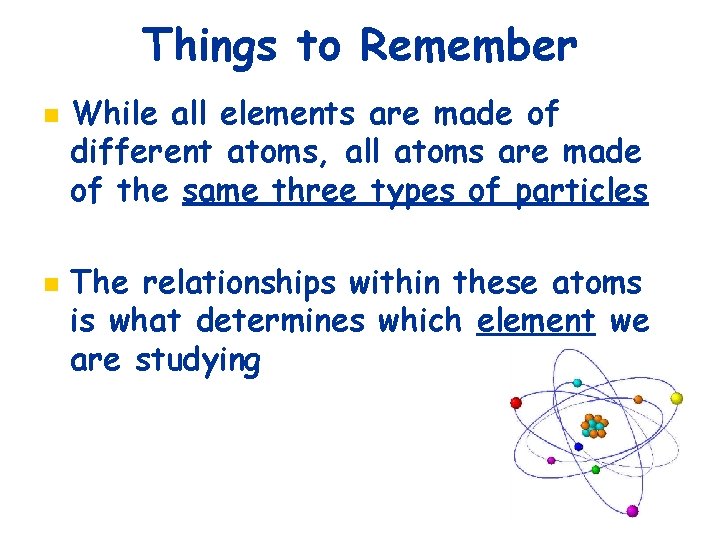
Things to Remember n n While all elements are made of different atoms, all atoms are made of the same three types of particles The relationships within these atoms is what determines which element we are studying
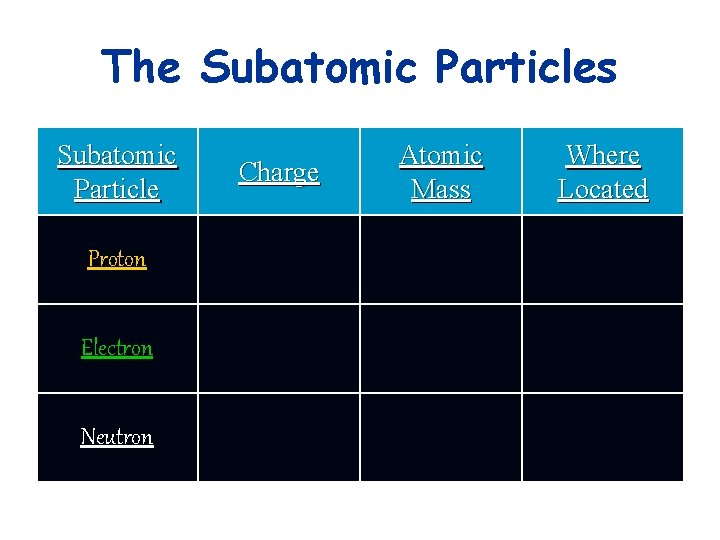
The Subatomic Particles Subatomic Particle Proton Electron Neutron Charge Atomic Mass Where Located
Negative or Neutral Charge of Subatomic Particles n n Positive and Negative Particles are Attracted Neutral Particles have no effect on Total Charge
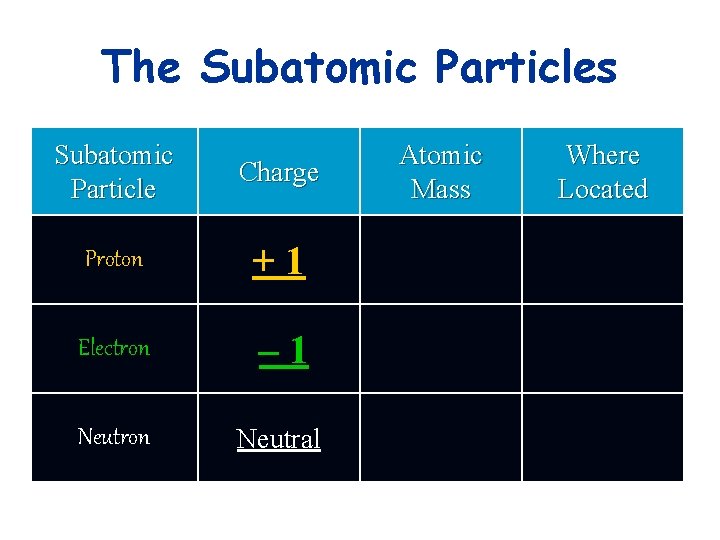
The Subatomic Particles Subatomic Particle Charge Proton +1 Electron – 1 Neutron Neutral Atomic Mass Where Located
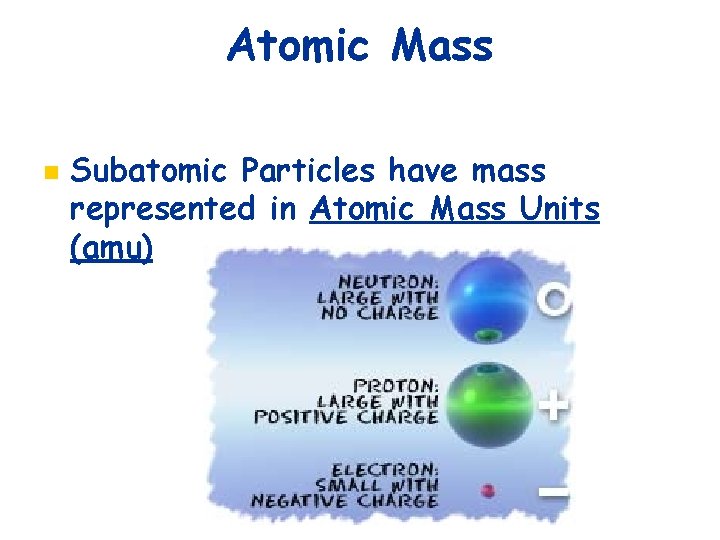
Atomic Mass n Subatomic Particles have mass represented in Atomic Mass Units (amu)
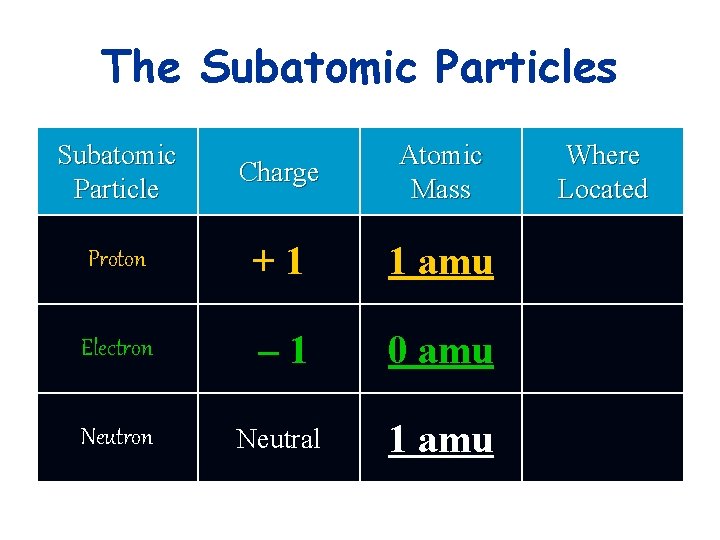
The Subatomic Particles Subatomic Particle Charge Atomic Mass Proton +1 1 amu Electron – 1 0 amu Neutron Neutral 1 amu Where Located
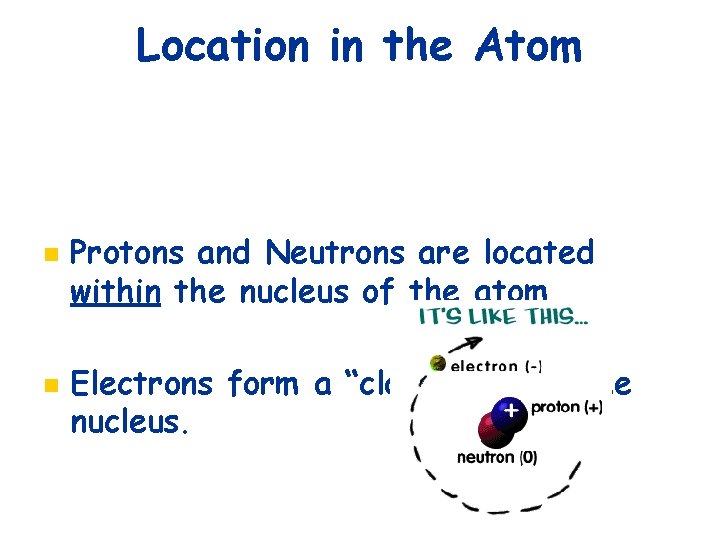
Location in the Atom n n Protons and Neutrons are located within the nucleus of the atom Electrons form a “cloud” around the nucleus.
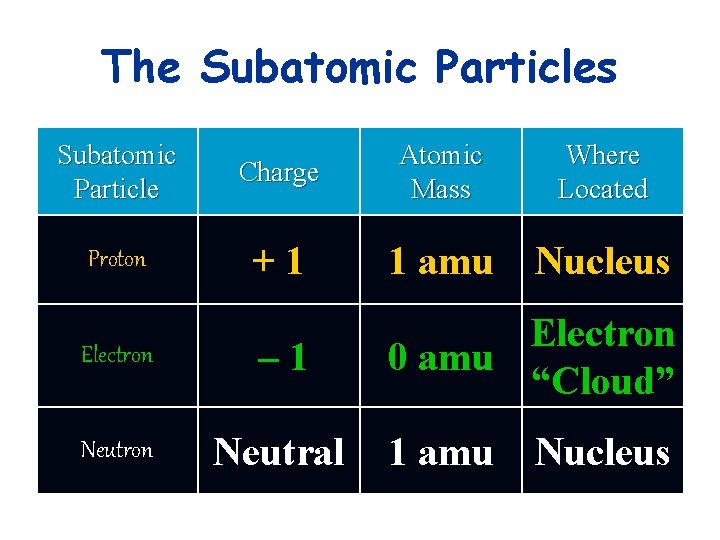
The Subatomic Particles Subatomic Particle Atomic Mass Where Located Charge Proton +1 1 amu Nucleus Electron – 1 Electron 0 amu “Cloud” Neutron Neutral 1 amu Nucleus
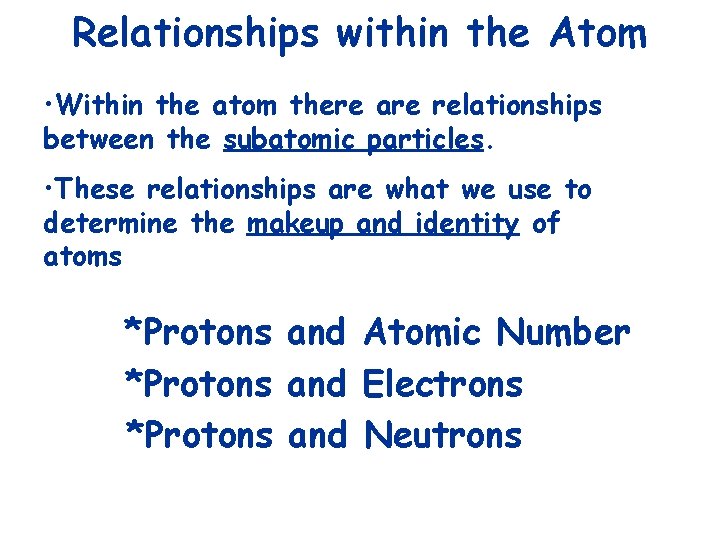
Relationships within the Atom • Within the atom there are relationships between the subatomic particles. • These relationships are what we use to determine the makeup and identity of atoms *Protons and Atomic Number *Protons and Electrons *Protons and Neutrons
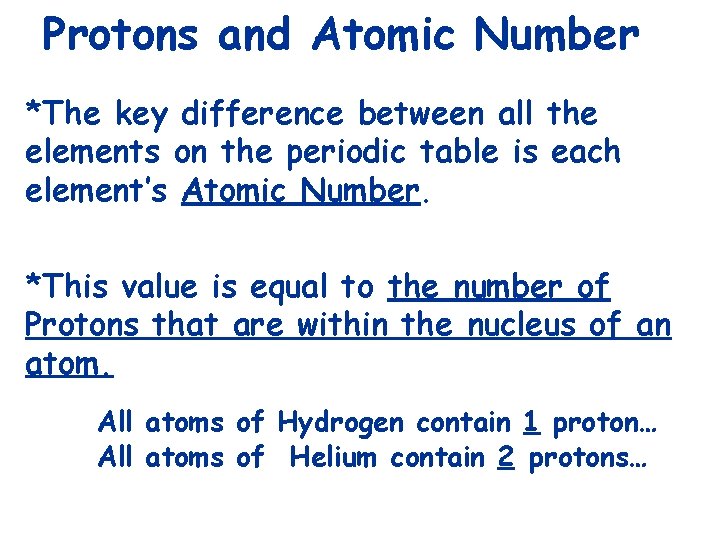
Protons and Atomic Number *The key difference between all the elements on the periodic table is each element’s Atomic Number. *This value is equal to the number of Protons that are within the nucleus of an atom. All atoms of Hydrogen contain 1 proton… All atoms of Helium contain 2 protons…
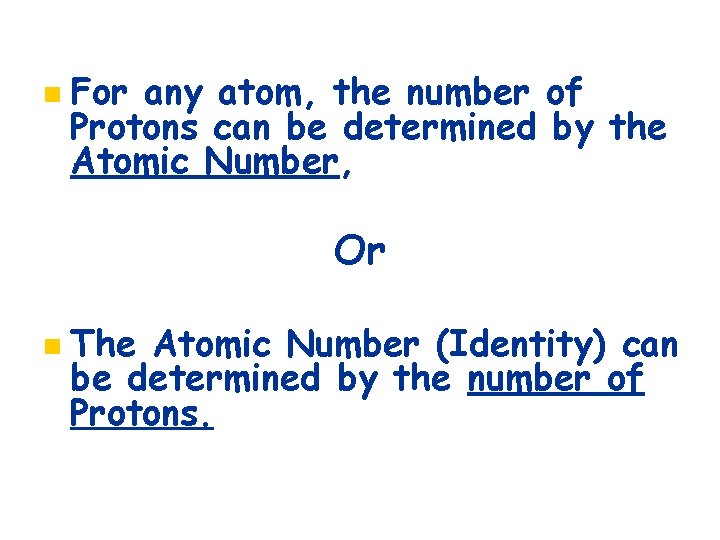
n For any atom, the number of Protons can be determined by the Atomic Number, Or n The Atomic Number (Identity) can be determined by the number of Protons.
Protons and Electrons *Atoms of elements are neutral, or have no charge. *The number of Protons in an atom (Atomic #) must equal the number of Electrons in the atom -If all atoms of Hydrogen have 1 proton, they have 1 electron… -If all atoms of Helium have 2 protons, they have 2 electrons…
For any Neutral Atom (All atoms we are dealing with at this point) The # Protons (Atomic #) = # Electrons
Protons and Neutrons are the only Sub. Atomic Particles that have mass. (Remember that the mass of an electron is negligible) Atomic Mass or mass number of an atom is determined entirely by the Protons and Neutrons.
The Atomic mass or mass number is the sum of the total number of Protons (Atomic #) and the total number of Neutrons or The Atomic Mass minus the # Protons = # Neutrons or The Atomic Mass minus the # Neutrons = # Protons
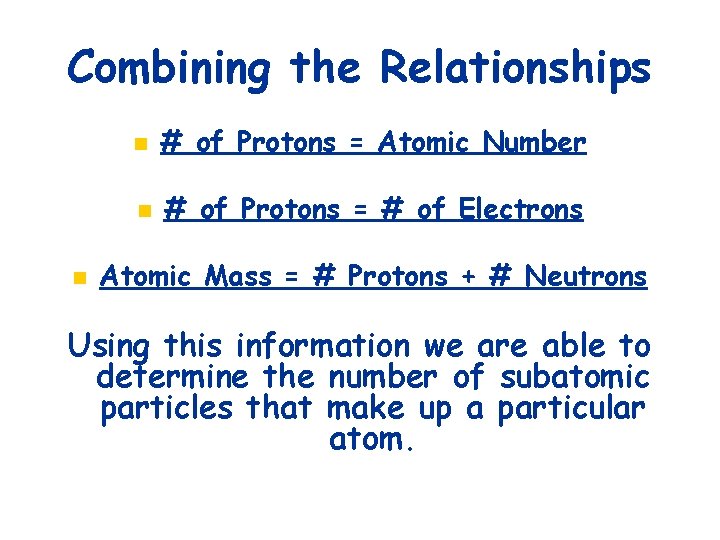
Combining the Relationships n n # of Protons = Atomic Number n # of Protons = # of Electrons Atomic Mass = # Protons + # Neutrons Using this information we are able to determine the number of subatomic particles that make up a particular atom.
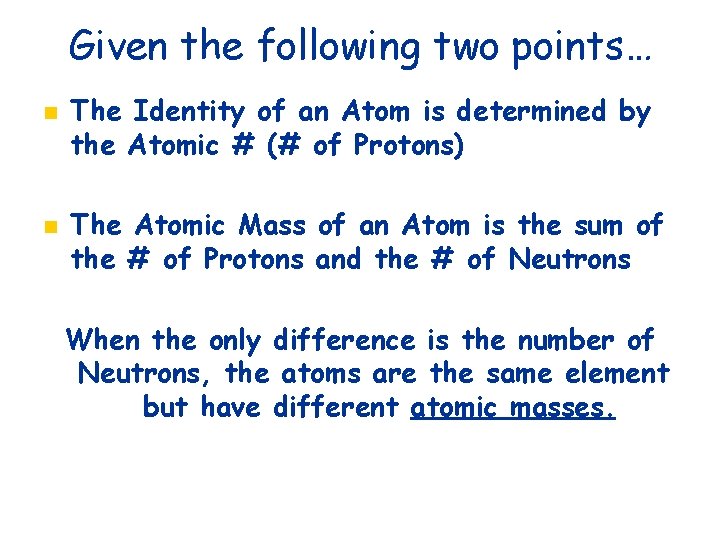
Given the following two points… n n The Identity of an Atom is determined by the Atomic # (# of Protons) The Atomic Mass of an Atom is the sum of the # of Protons and the # of Neutrons When the only difference is the number of Neutrons, the atoms are the same element but have different atomic masses.
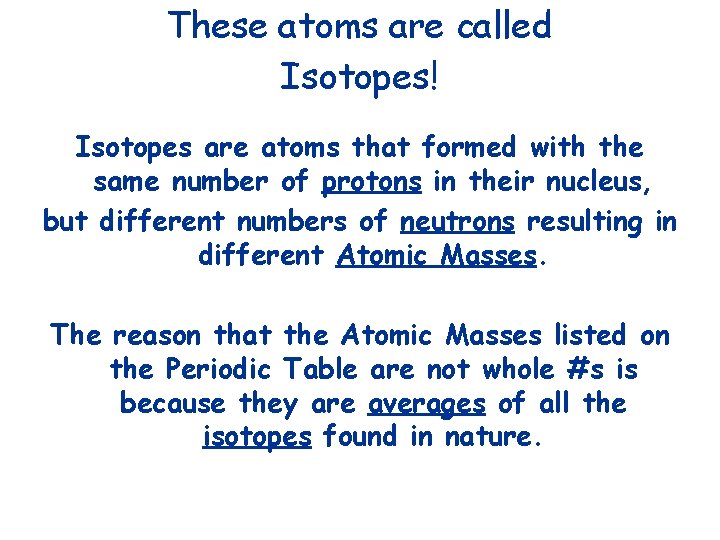
These atoms are called Isotopes! Isotopes are atoms that formed with the same number of protons in their nucleus, but different numbers of neutrons resulting in different Atomic Masses. The reason that the Atomic Masses listed on the Periodic Table are not whole #s is because they are averages of all the isotopes found in nature.
- Slides: 19