
Understanding and Working With Childrens Misdirected Goals of
- Slides: 45
Understanding and Working With Children's Misdirected Goals of Behaviour Keith Naunton
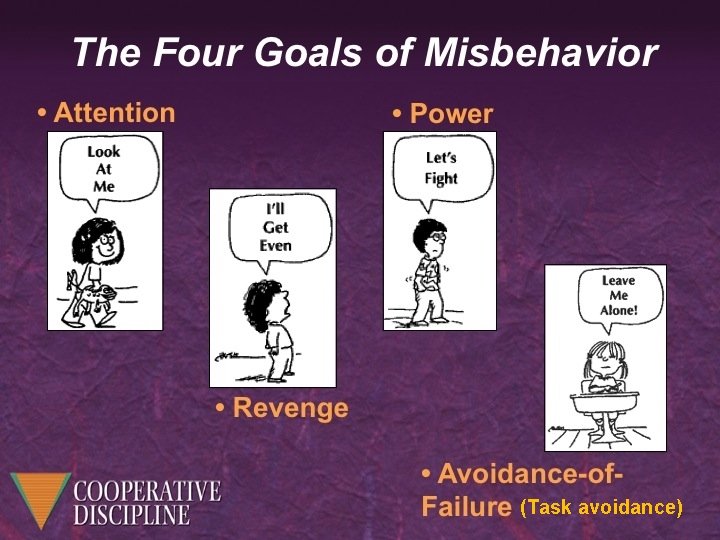
(Task avoidance)
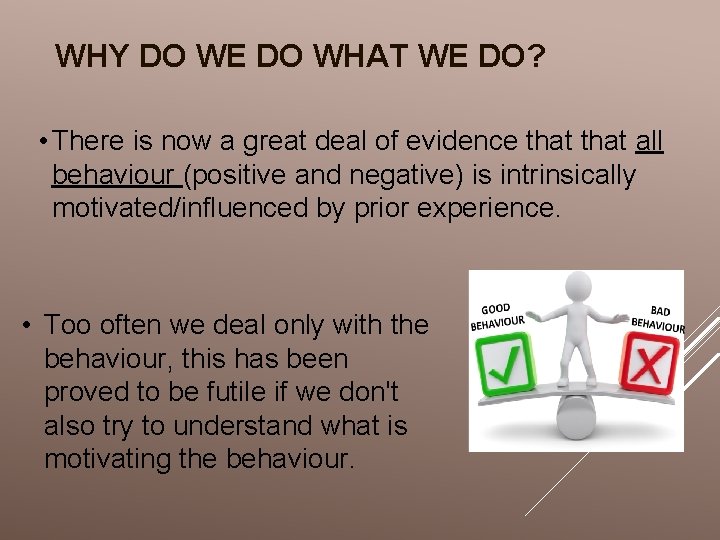
WHY DO WE DO WHAT WE DO? • There is now a great deal of evidence that all behaviour (positive and negative) is intrinsically motivated/influenced by prior experience. • Too often we deal only with the behaviour, this has been proved to be futile if we don't also try to understand what is motivating the behaviour.
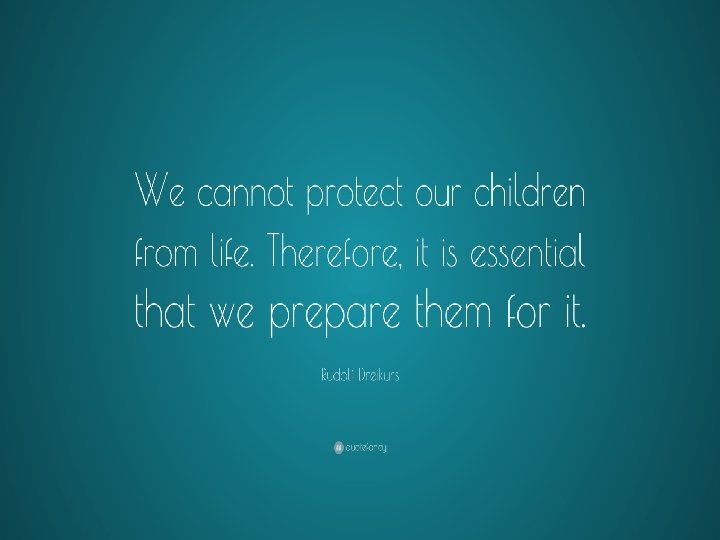
WHY DO WE DO WHAT WE DO? • The work of Rudolf Dreikurs and other eminent Social Psychologists and Behaviourists evidenced that “a misbehaving child was almost certainly a child who was discouraged. “ • A misbehaving child feels discouraged because she/he does not believe she/he belongs. She/he does not believe she/he is significant or more importantly – valued!
WHY DO WE DO WHAT WE DO? • Out of this discouragement, she/he chooses a mistaken/misplaced goal (behaviour) in a misguided attempt to gain belonging and significance. • The goal is mistaken because it is based on a mistaken belief, and the behaviour usually creates from others (the member of staff dealing with the situation, the parent/carer and/or notable other) the opposite of what she/he is trying to achieve.
WHY DO WE DO WHAT WE DO? • She/he wants to belong and be significant, yet their behaviour usually causes adults and other children to act negatively towards them pushing them away and reinforcing the negative truth! • This does not solve the problem but further exacerbates it leading to the likelihood of repeat behaviours or further escalation.
If you are going to work affectively with challenging behaviour it is critical to Recognise the Dominant Emotion that is driving the negative responses.
WHY DO STUDENTS (OR ADULTS COME TO THAT!) DO WHAT THEY DO? DON’T ASK THEM! This can be a tortuous route. Do they Know until we tell them? Rudolph Dreikurs
THE MISDIRECTED GOALS OF BEHAVIOUR By identifying a student’s characteristic purpose and observing their emotional responses in particular situations an individual tool box of strategies can be generated. Our understanding of a student can be continually refined and updated. Strategies can be tailored to a particular School/Classroom setting.
THE MISDIRECTED GOALS OF BEHAVIOUR “If we have not considered the purpose of the behaviour the first impulse is nearly always wrong. This is because it is precisely what the pupil wants the teacher to do and fulfils the expectations of the pupil, who behaves inappropriately. ” Maurice Balson
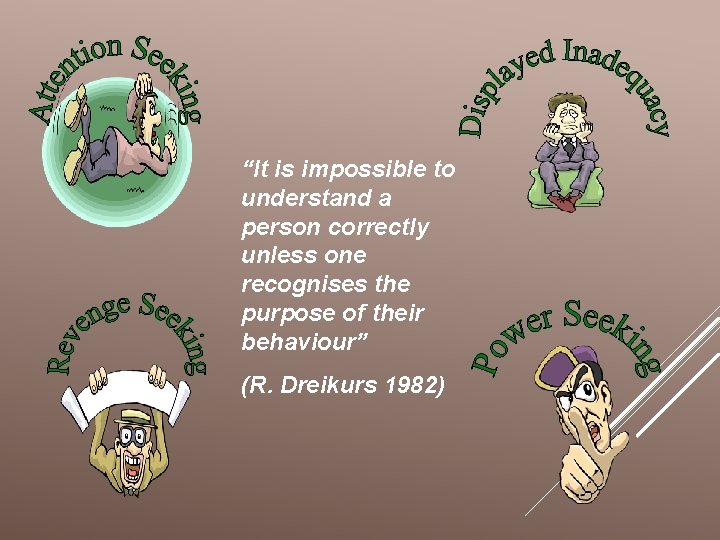
“It is impossible to understand a person correctly unless one recognises the purpose of their behaviour” (R. Dreikurs 1982)
If we are to develop a really affective tool box we must consider the dominant emotion?
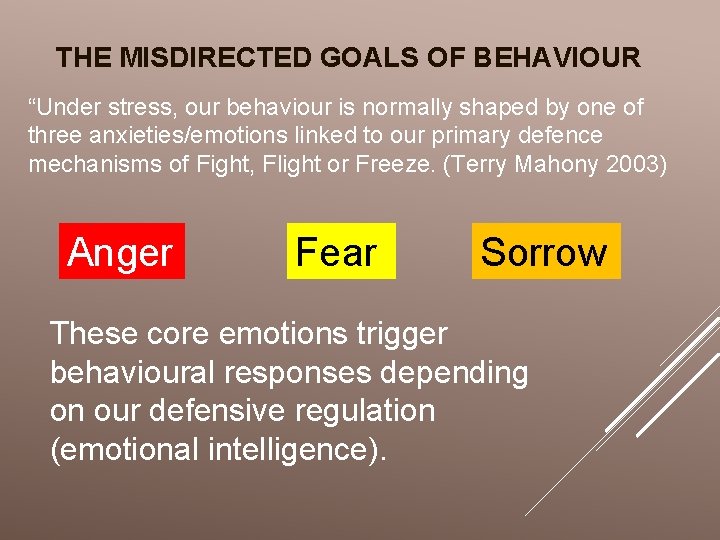
THE MISDIRECTED GOALS OF BEHAVIOUR “Under stress, our behaviour is normally shaped by one of three anxieties/emotions linked to our primary defence mechanisms of Fight, Flight or Freeze. (Terry Mahony 2003) Anger Fear Sorrow These core emotions trigger behavioural responses depending on our defensive regulation (emotional intelligence).
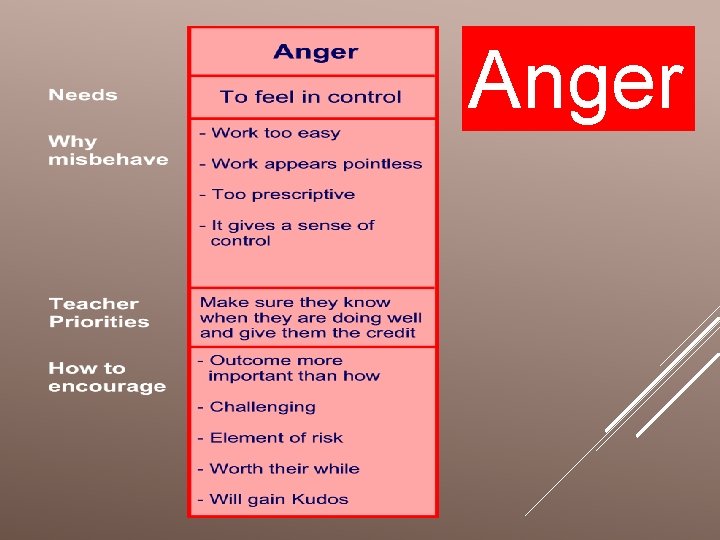
Anger
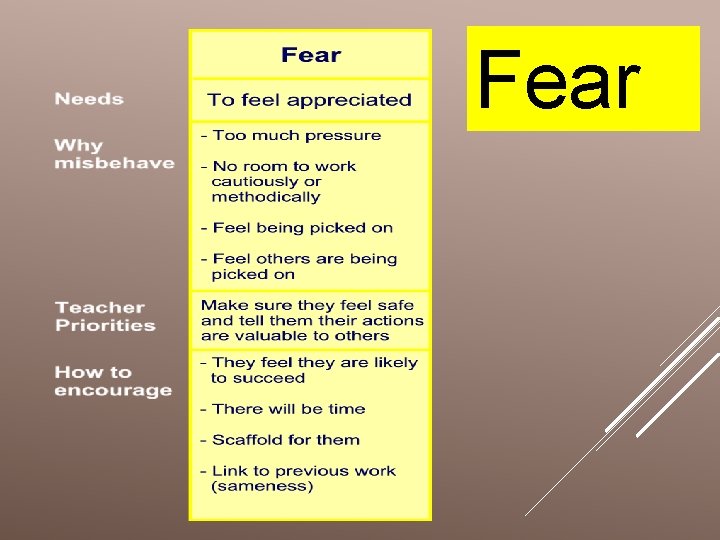
Fear
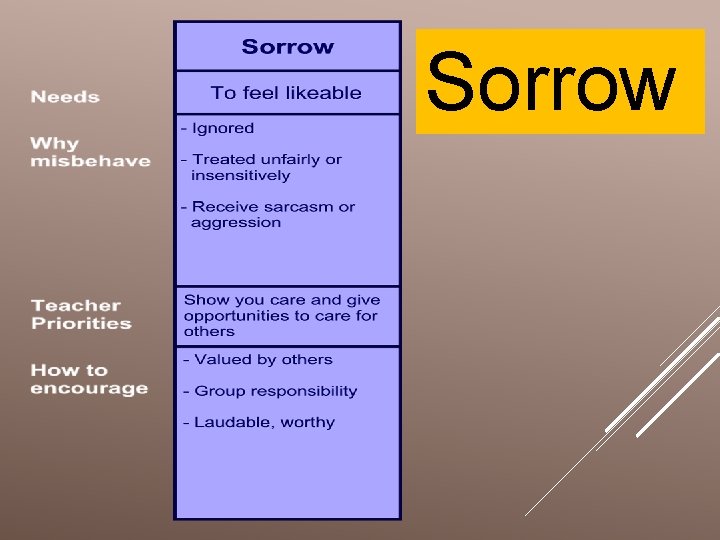
Sorrow
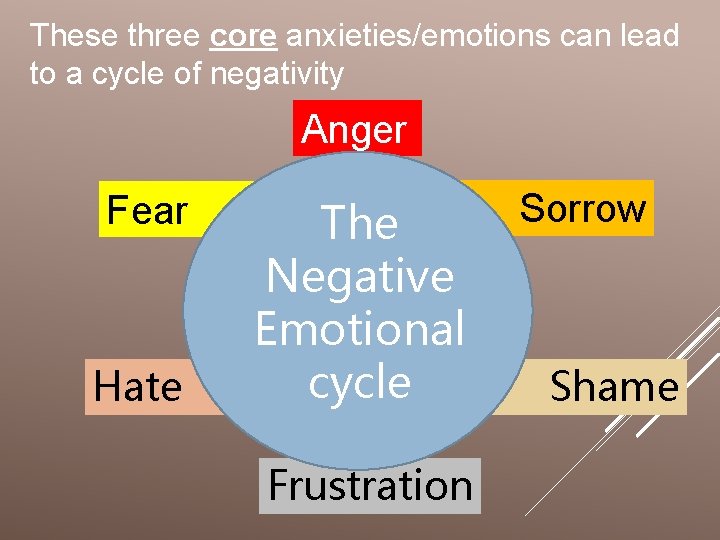
These three core anxieties/emotions can lead to a cycle of negativity Anger Fear Hate The Negative Emotional cycle Frustration Sorrow Shame
• As teachers no matter how well trained or emotionally stable we are, we are not immune to negative emotional responses! They are a survival mechanism! • The child who is using ‘misplaced goals’ is looking to gain a reaction. If we don’t consider the emotions behind the behaviour before we respond, the outcome will nearly always be negative and definitely not conducive to positive learning
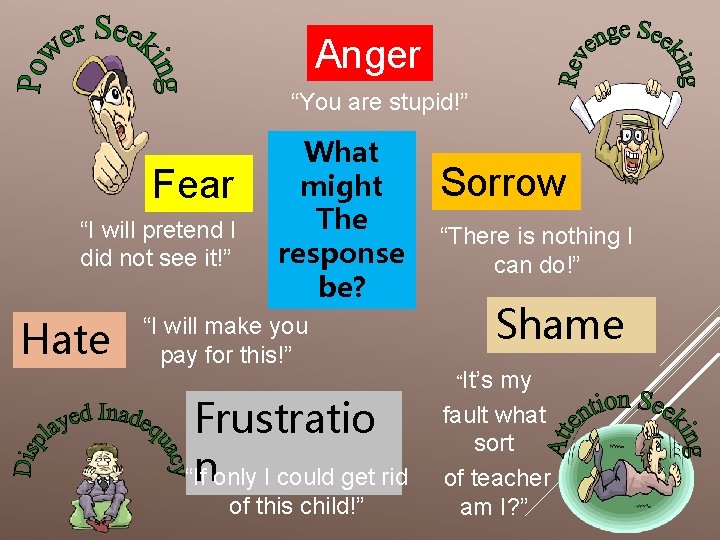
Anger “You are stupid!” Fear “I will pretend I did not see it!” Hate What might The response be? “I will make you pay for this!” Frustratio nonly I could get rid “If of this child!” Sorrow “There is nothing I can do!” Shame “It’s my fault what sort of teacher am I? ”
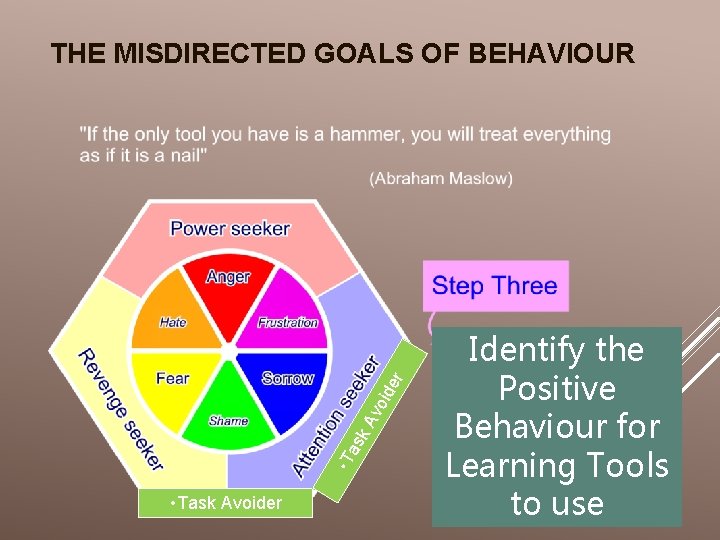
• Ta sk A vo ide r THE MISDIRECTED GOALS OF BEHAVIOUR • Task Avoider Identify the Positive Behaviour for Learning Tools to use
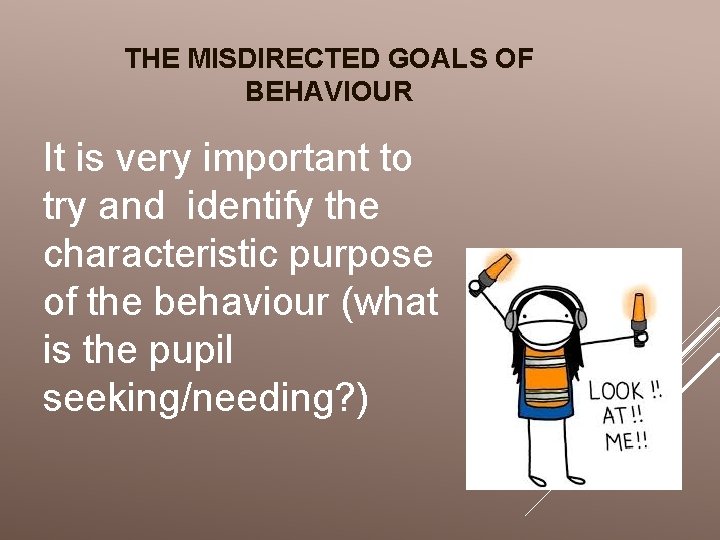
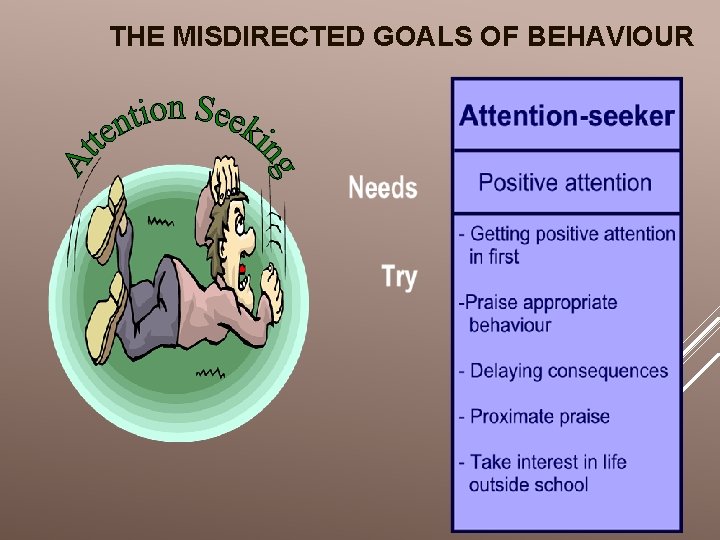
THE MISDIRECTED GOALS OF BEHAVIOUR It is very important to try and identify the characteristic purpose of the behaviour (what is the pupil seeking/needing? )
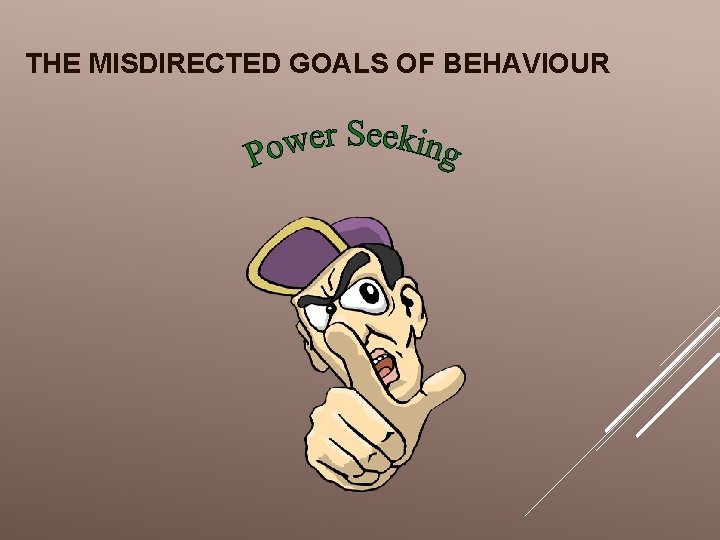
THE MISDIRECTED GOALS OF BEHAVIOUR
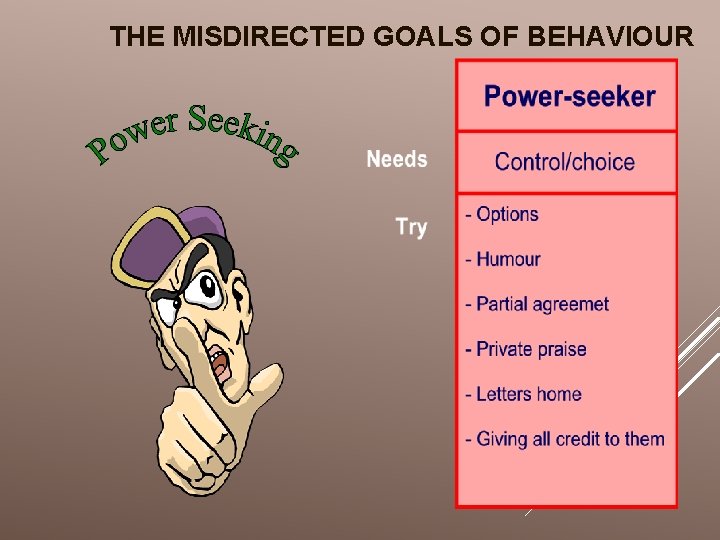
What behaviours can you expect? • Refusing to comply. • Answering back. • Refusal to listen when reminders are given. • Laughing at you. • Walking out. • Making negative comments about you, the work or their peers.
How do you feel? Challenged! Threatened!!
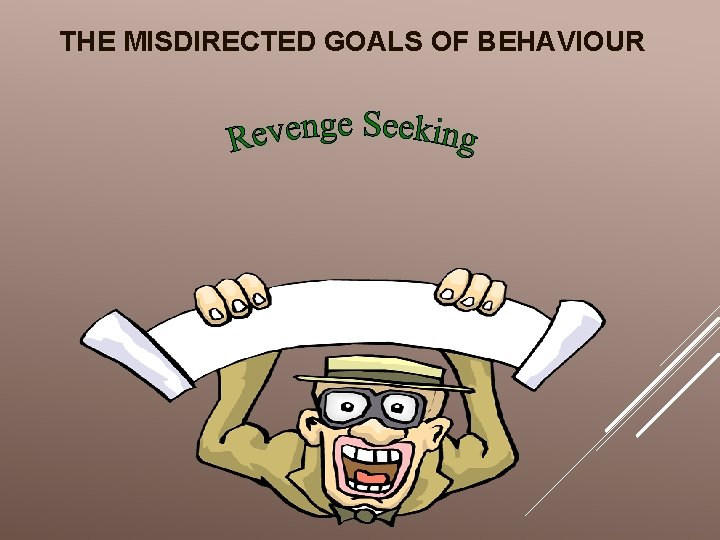
THE MISDIRECTED GOALS OF BEHAVIOUR
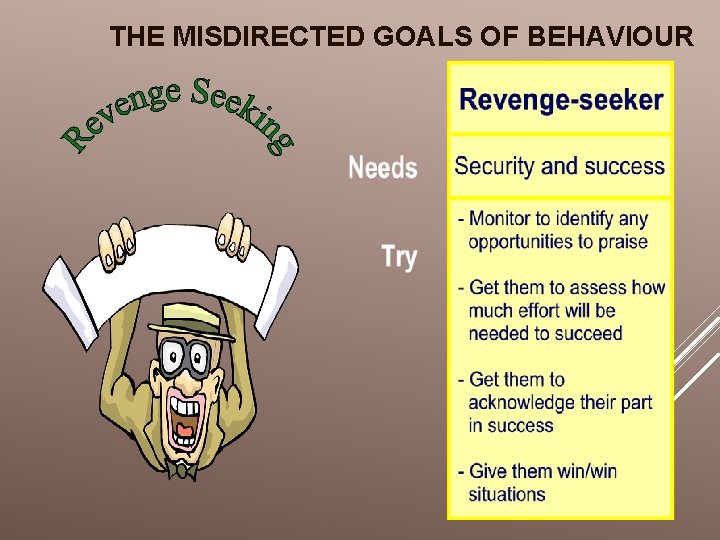
What behaviours can you expect? • • Unprovoked attacking. Refusal to show remorse. Saying how unfair you are. Bullying especially those who are weaker than them. • Saying very hurtful things. • Damaging property or defacing their books/work.
How do you feel? • Worried • Angry!!!!! • Hurt, you want to give up! “What can I do? ”
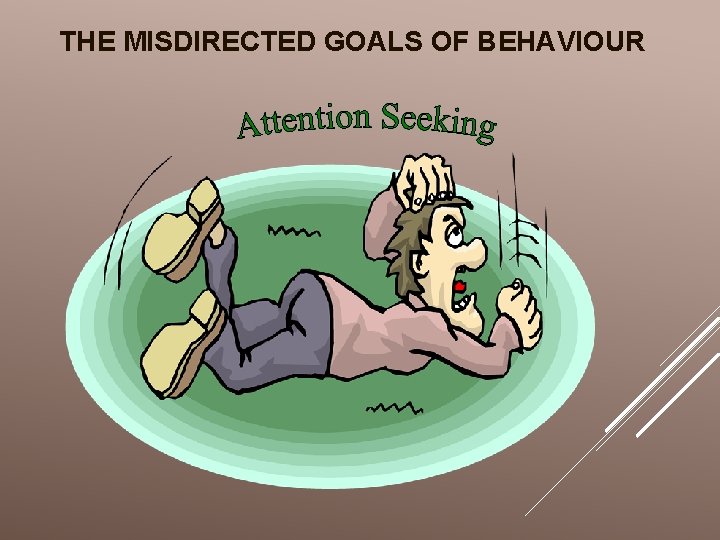
THE MISDIRECTED GOALS OF BEHAVIOUR
What behaviours can you expect? • • • Calling out. Whistling. Tapping. Making silly comments. Paper aeroplanes! Making silly noises. Fidgeting. Rocking on chairs. Crawling around on the floor etc.
How do you feel? Irritated/Annoyed!
THE MISDIRECTED GOALS OF BEHAVIOUR
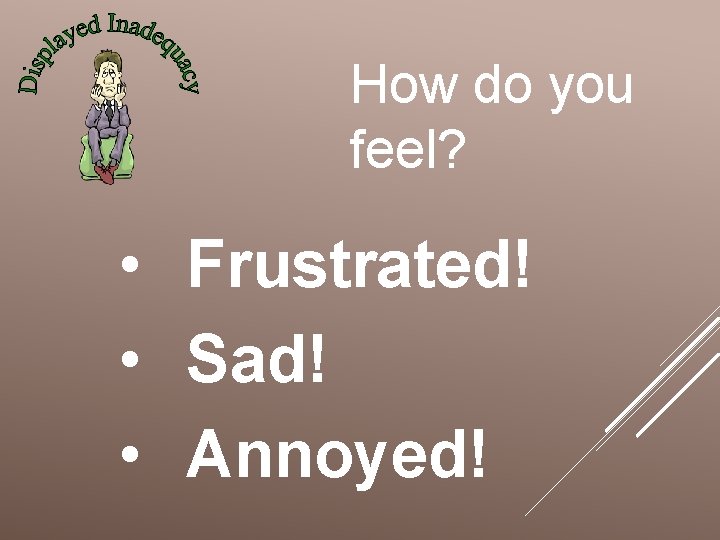
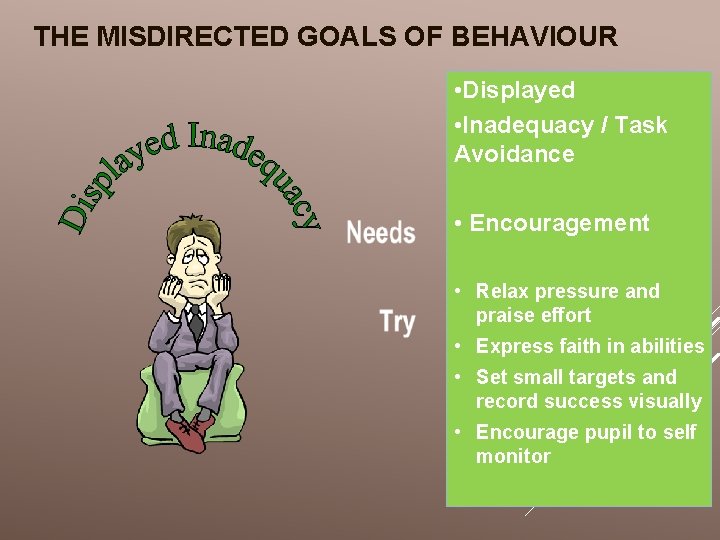
What behaviours can you expect? • • Won’t try! Telling you they cannot do it. Saying the works too hard. Giving up before they have started! Struggles to make friends. Prefers to be left alone. Work avoidance strategies. Often isolated from peers.
How do you feel? • Frustrated! • Sad! • Annoyed!
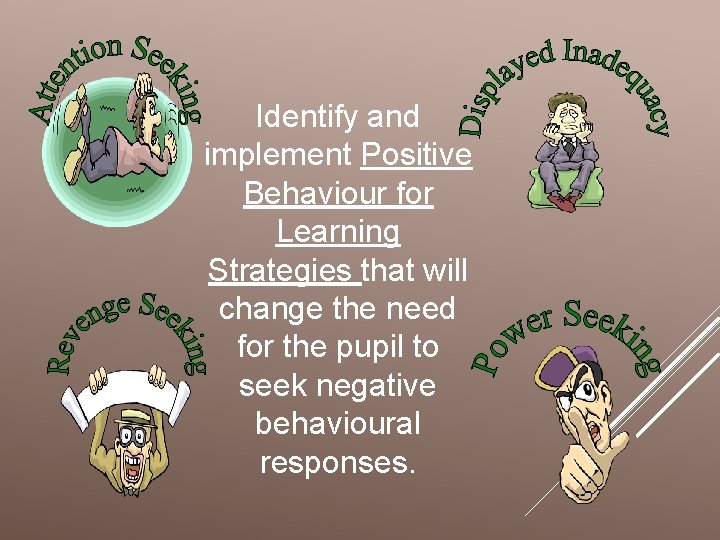
Identify and implement Positive Behaviour for Learning Strategies that will change the need for the pupil to seek negative behavioural responses.
THE MISDIRECTED GOALS OF BEHAVIOUR
THE MISDIRECTED GOALS OF BEHAVIOUR
THE MISDIRECTED GOALS OF BEHAVIOUR
THE MISDIRECTED GOALS OF BEHAVIOUR • Displayed • Inadequacy / Task Avoidance • Encouragement • Relax pressure and praise effort • Express faith in abilities • Set small targets and record success visually • Encourage pupil to self monitor
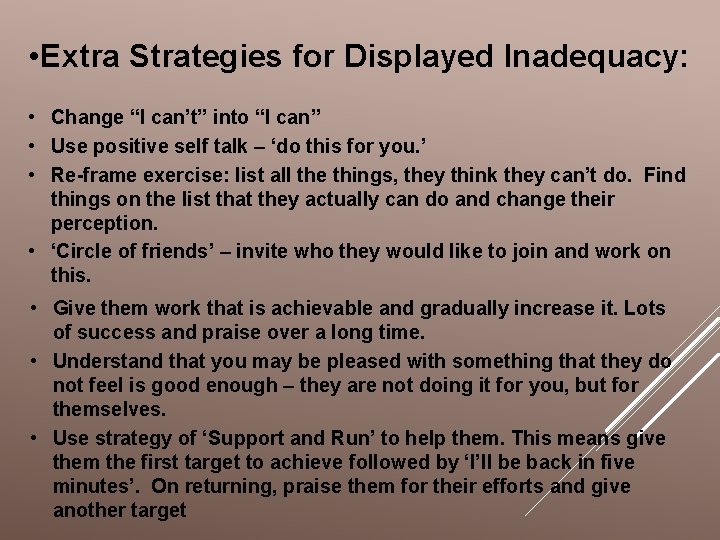
• Extra Strategies for Displayed Inadequacy: • Change “I can’t” into “I can” • Use positive self talk – ‘do this for you. ’ • Re-frame exercise: list all the things, they think they can’t do. Find things on the list that they actually can do and change their perception. • ‘Circle of friends’ – invite who they would like to join and work on this. • Give them work that is achievable and gradually increase it. Lots of success and praise over a long time. • Understand that you may be pleased with something that they do not feel is good enough – they are not doing it for you, but for themselves. • Use strategy of ‘Support and Run’ to help them. This means give them the first target to achieve followed by ‘I’ll be back in five minutes’. On returning, praise them for their efforts and give another target
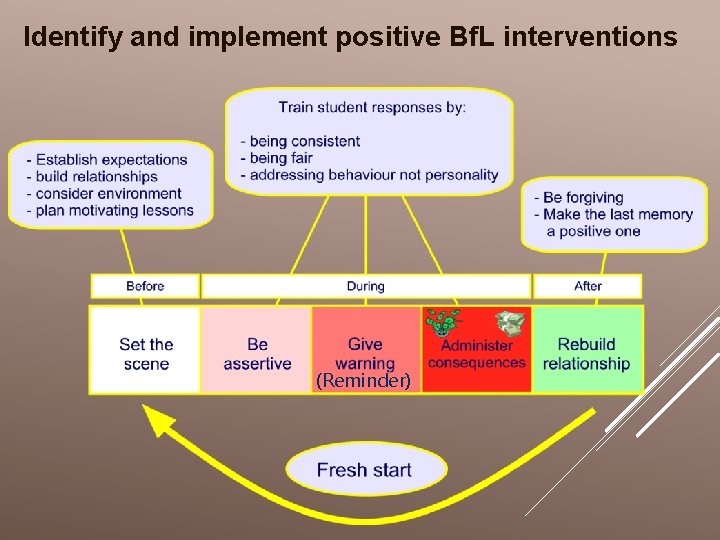
Identify and implement positive Bf. L interventions (Reminder)
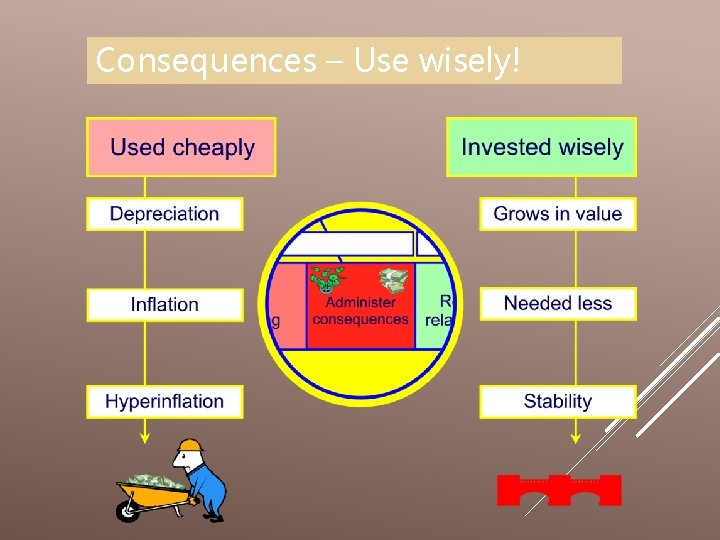
Consequences – Use wisely!
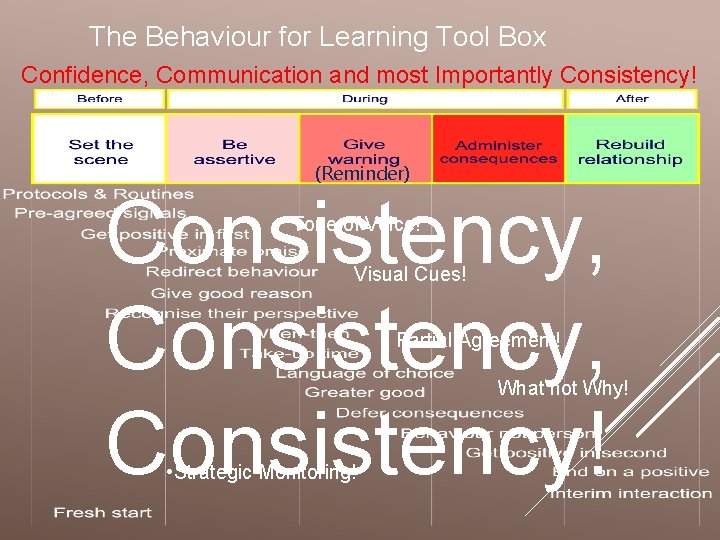
The Behaviour for Learning Tool Box Confidence, Communication and most Importantly Consistency! (Reminder) Consistency, Consistency! Tone of Voice! Visual Cues! Partial Agreement! What not Why! • Strategic Monitoring!
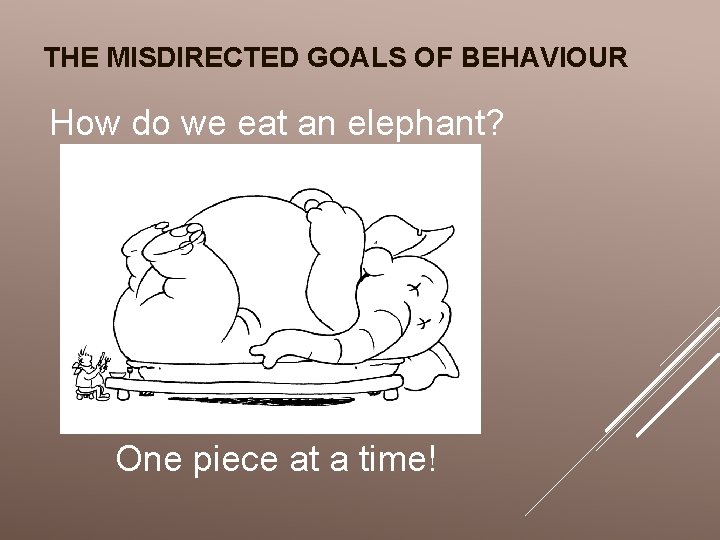
THE MISDIRECTED GOALS OF BEHAVIOUR How do we eat an elephant? One piece at a time!