
Understanding and using the whiskerson a Trends Graph
- Slides: 6
Understanding and using the “whiskers”on a Trends Graph
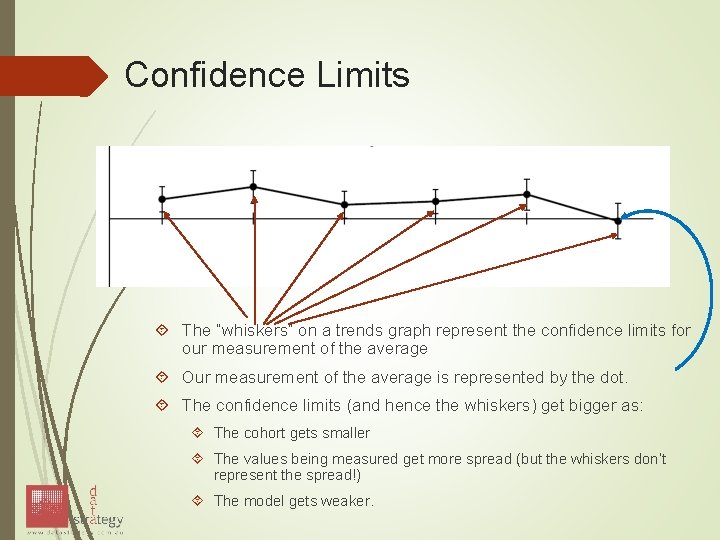
Confidence Limits The “whiskers” on a trends graph represent the confidence limits for our measurement of the average Our measurement of the average is represented by the dot. The confidence limits (and hence the whiskers) get bigger as: The cohort gets smaller The values being measured get more spread (but the whiskers don’t represent the spread!) The model gets weaker.
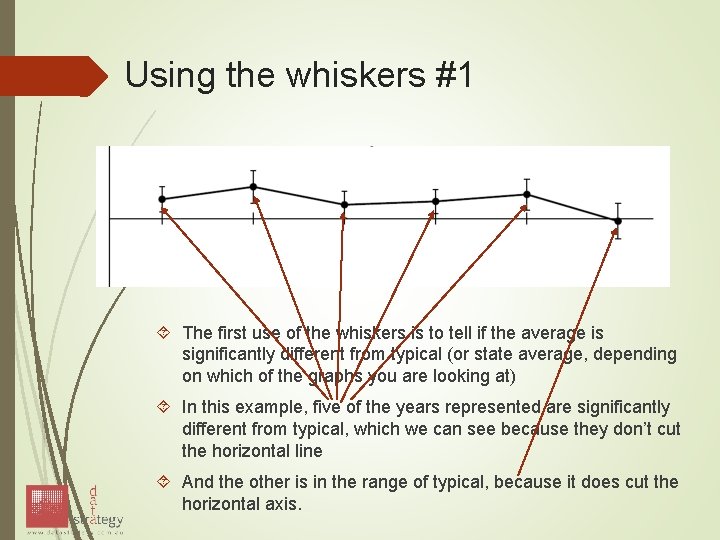
Using the whiskers #1 The first use of the whiskers is to tell if the average is significantly different from typical (or state average, depending on which of the graphs you are looking at) In this example, five of the years represented are significantly different from typical, which we can see because they don’t cut the horizontal line And the other is in the range of typical, because it does cut the horizontal axis.
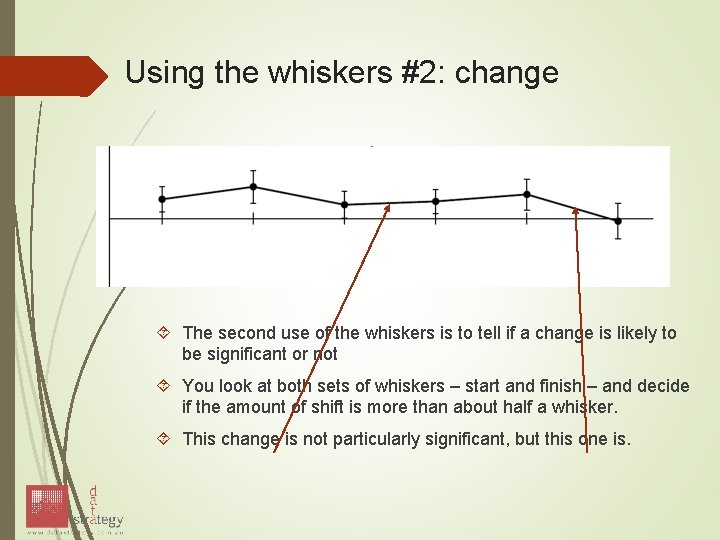
Using the whiskers #2: change The second use of the whiskers is to tell if a change is likely to be significant or not You look at both sets of whiskers – start and finish – and decide if the amount of shift is more than about half a whisker. This change is not particularly significant, but this one is.
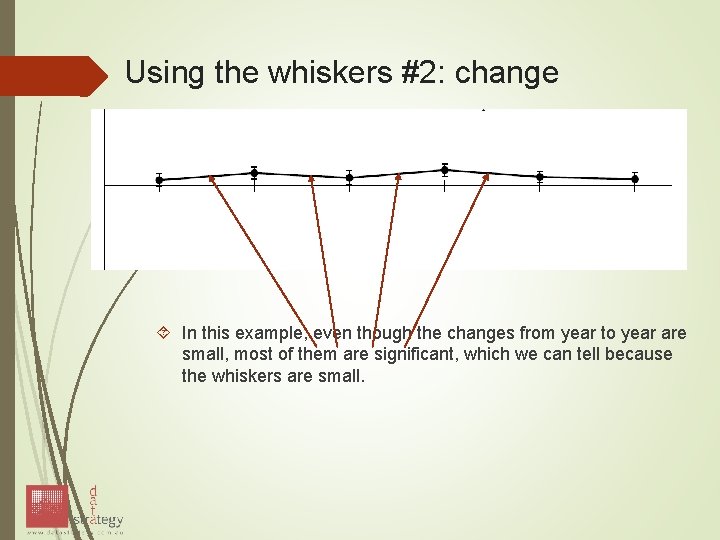
Using the whiskers #2: change In this example, even though the changes from year to year are small, most of them are significant, which we can tell because the whiskers are small.
Take-home message Don’t over-interpret small changes, particularly when the confidence limits of the mean are large.