
Understanding and using feedback effectively Dr Andrew Williams
Understanding and using feedback effectively Dr Andrew Williams
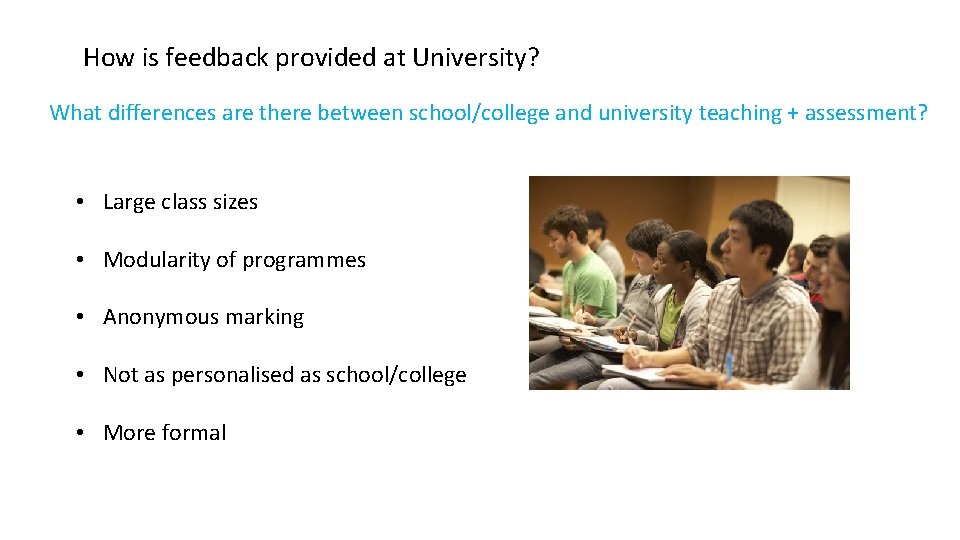
How is feedback provided at University? What differences are there between school/college and university teaching + assessment? • Large class sizes • Modularity of programmes • Anonymous marking • Not as personalised as school/college • More formal
What is feedback for? • Student development • To enhance academic performance (academic literacy) • Provide advice to improve skills/knowledge • Learn how to be objective (don’t take feedback personally) • Become a reflective learner • Promote dialogue • Motivation Feedback is a unique form of communication!
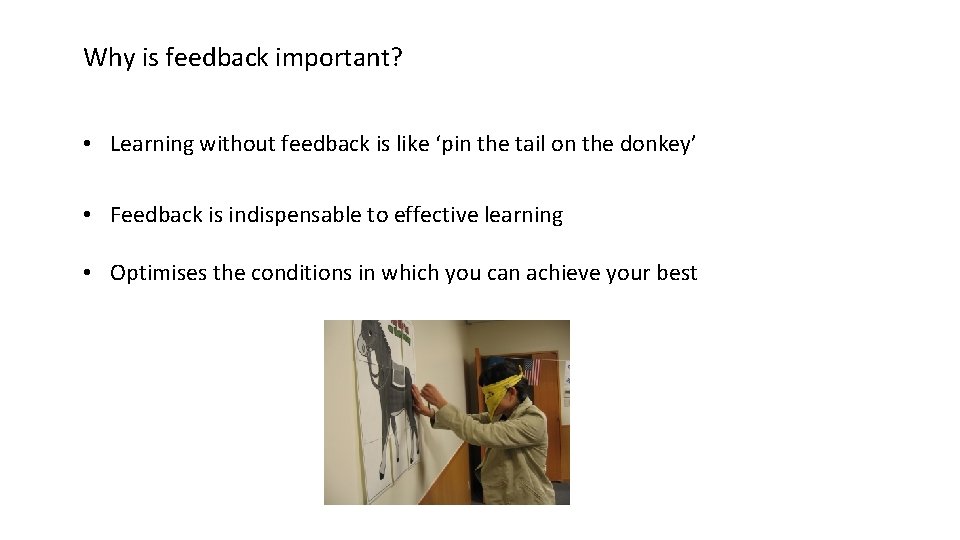
Why is feedback important? • Learning without feedback is like ‘pin the tail on the donkey’ • Feedback is indispensable to effective learning • Optimises the conditions in which you can achieve your best
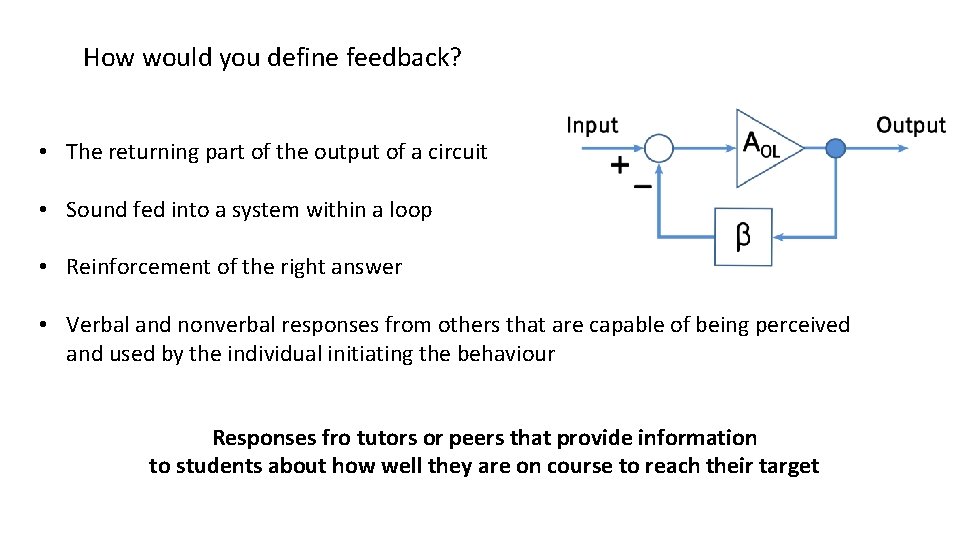
How would you define feedback? • The returning part of the output of a circuit • Sound fed into a system within a loop • Reinforcement of the right answer • Verbal and nonverbal responses from others that are capable of being perceived and used by the individual initiating the behaviour Responses fro tutors or peers that provide information to students about how well they are on course to reach their target
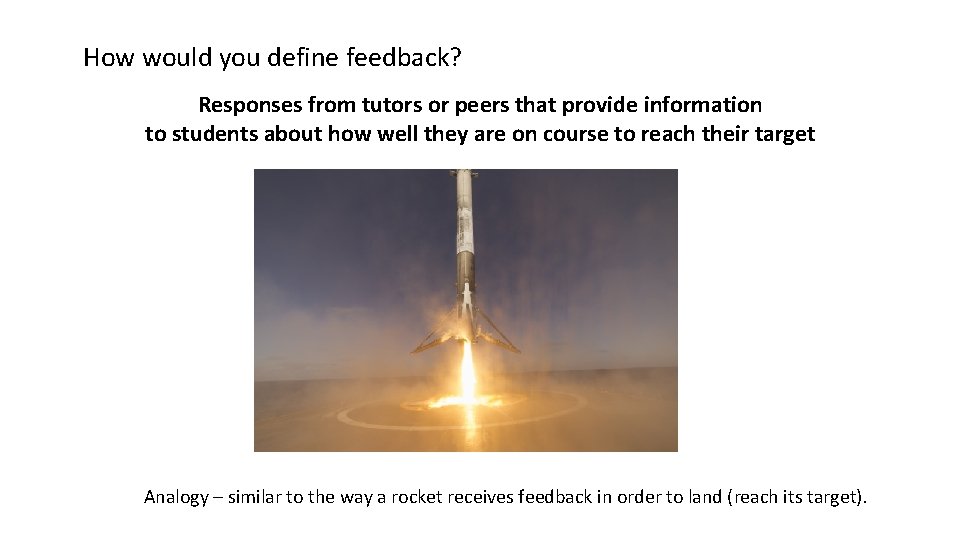
How would you define feedback? Responses from tutors or peers that provide information to students about how well they are on course to reach their target Analogy – similar to the way a rocket receives feedback in order to land (reach its target).
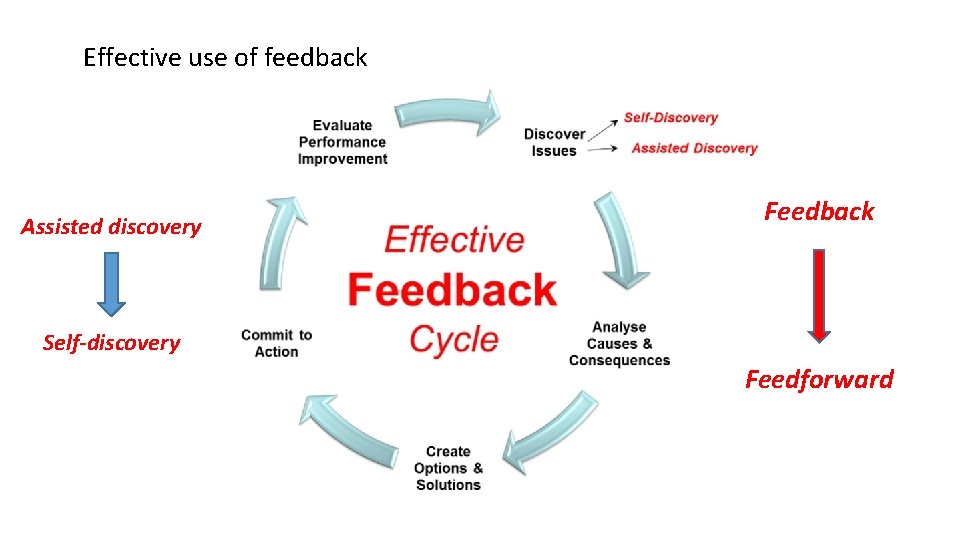
Effective use of feedback Assisted discovery Feedback Self-discovery Feedforward
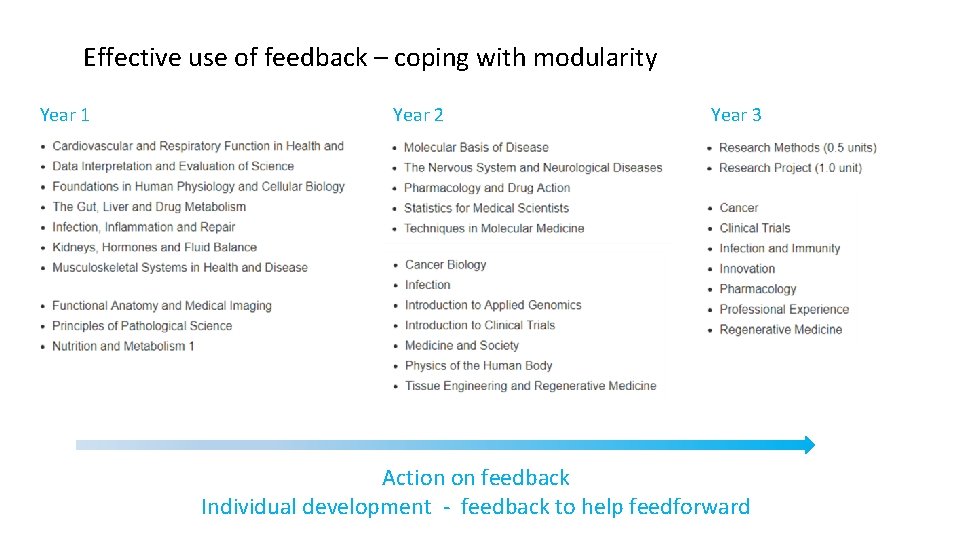
Effective use of feedback – coping with modularity Year 1 Year 2 Year 3 Action on feedback Individual development - feedback to help feedforward

Types of feedback ‘You make clear and concise points when describing the action of innate immune cells but fail to describe the mechanisms in full. You could be more critical when discussing these mechanisms in relation to the literature. ’ Good points versus areas for improvement Unpacking feedback
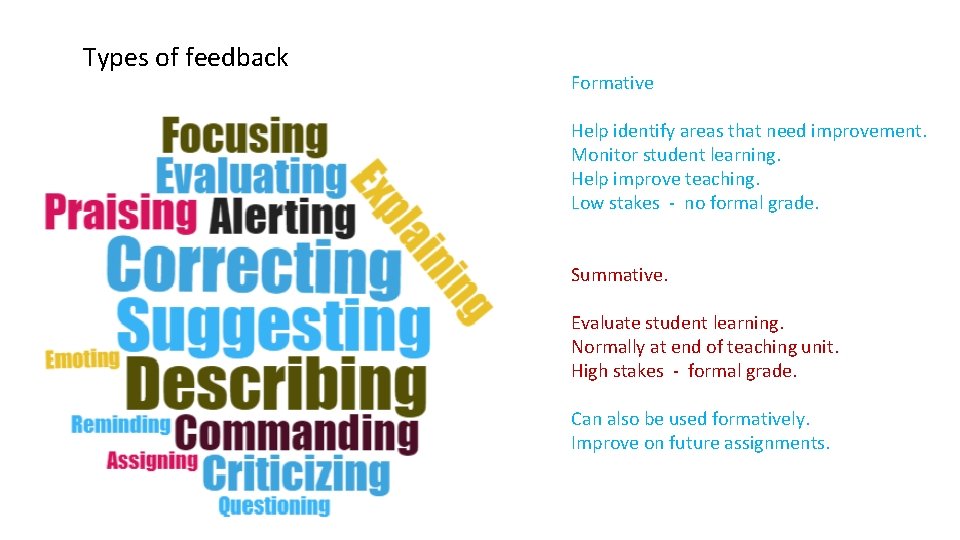
Types of feedback What do you want? Formative Help identify areas that need improvement. Monitor student learning. Help improve teaching. Low stakes - no formal grade. Summative. Evaluate student learning. Normally at end of teaching unit. High stakes - formal grade. Can also be used formatively. Improve on future assignments.
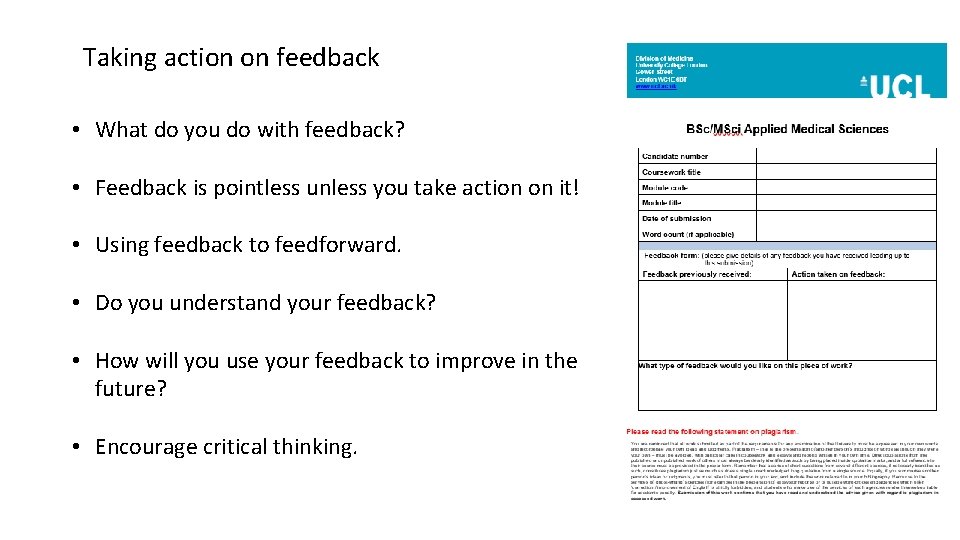
Taking action on feedback • What do you do with feedback? • Feedback is pointless unless you take action on it! • Using feedback to feedforward. • Do you understand your feedback? • How will you use your feedback to improve in the future? • Encourage critical thinking.
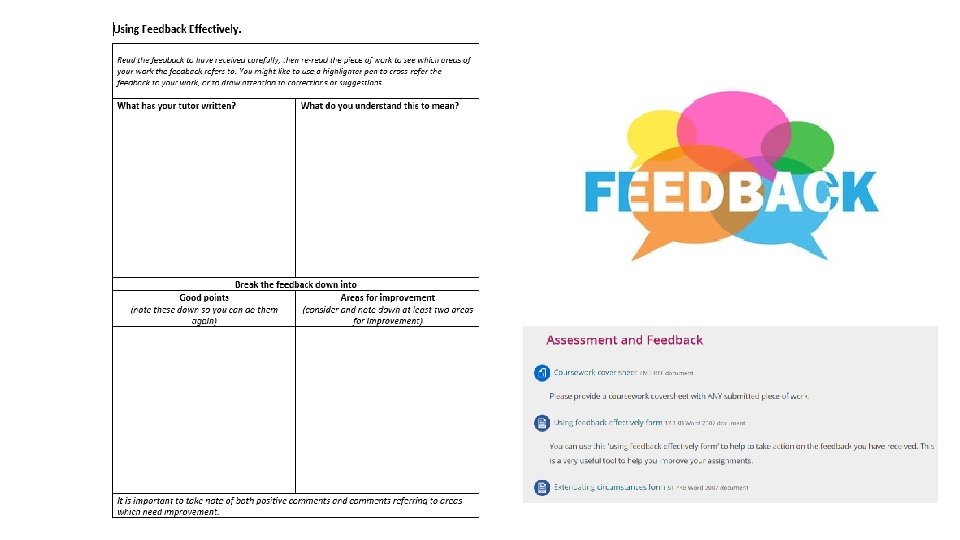
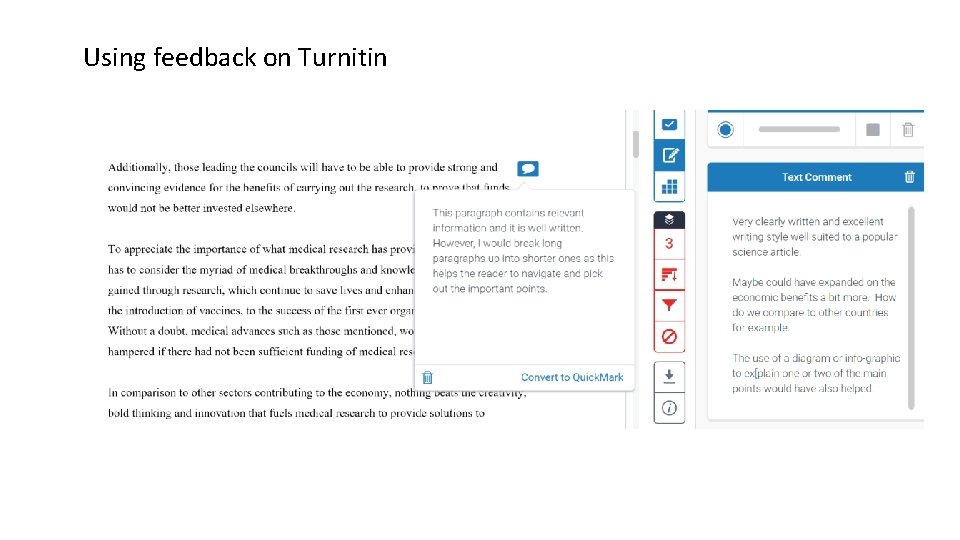
Using feedback on Turnitin
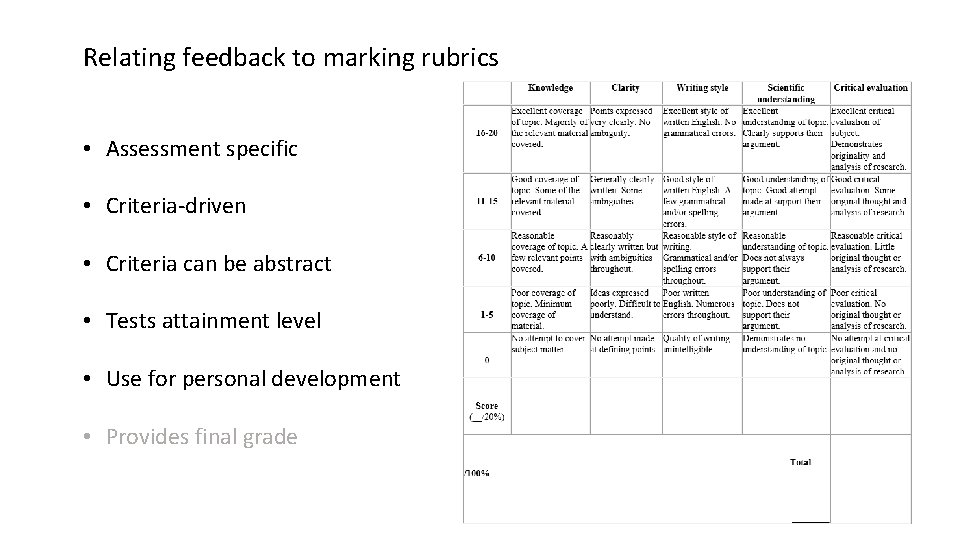
Relating feedback to marking rubrics • Assessment specific • Criteria-driven • Criteria can be abstract • Tests attainment level • Use for personal development • Provides final grade
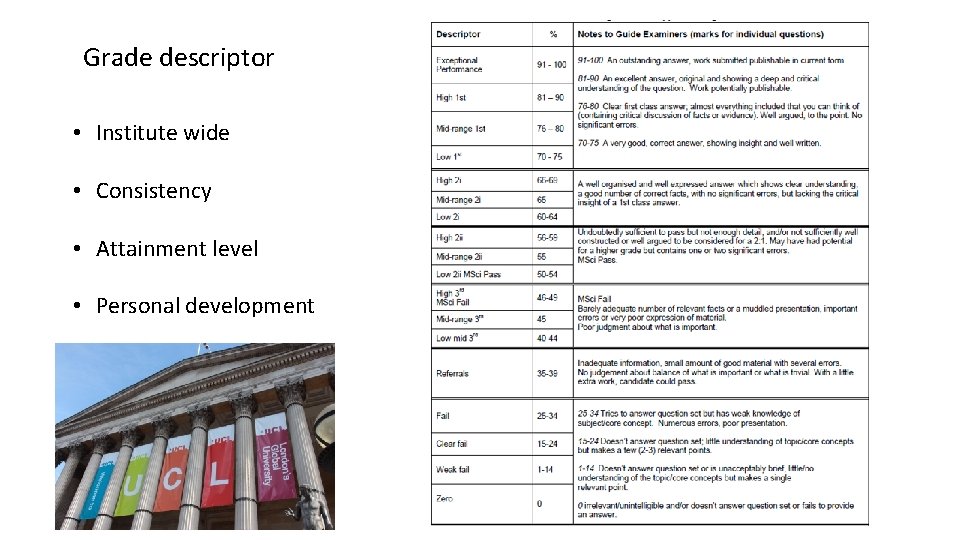
Grade descriptor • Institute wide • Consistency • Attainment level • Personal development
Preparing for assessments • Feedback helps you prepare for assessment • Achieving academic literacy • Use learning resources effectively • Ask questions • Use this workshop to talk to your tutor about your feedback
Using feedback effectively tutorial Refer to the related Word document – ‘Understanding and using feedback effectively tutorial. ’
- Slides: 17