
Understanding and Using Comparison Structures Comparison is one
- Slides: 35
Understanding and Using Comparison Structures Comparison is one of the oldest and most commonly used methods of discovery and development. 1
Comparison Strategies An understanding of the rhetorical strategies of comparison will help students with common assignments such as Research papers Regular essays Debates and oral arguments Essay tests 2
Discovery and Development with Comparison Essay questions, for example, often call for the use of comparison. The following question was given during a in-class final exam (time limit: 45 minutes) “Compare Romanesque and Gothic architectural styles as expressions of religious experience” 3
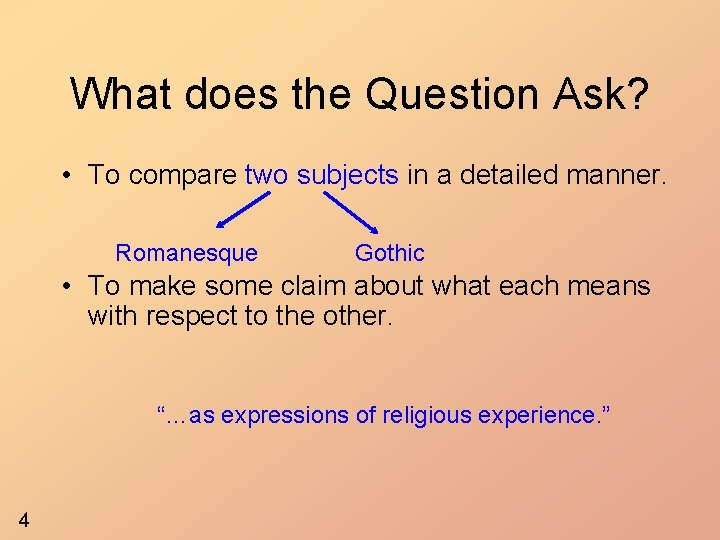
What does the Question Ask? • To compare two subjects in a detailed manner. Romanesque Gothic • To make some claim about what each means with respect to the other. “…as expressions of religious experience. ” 4
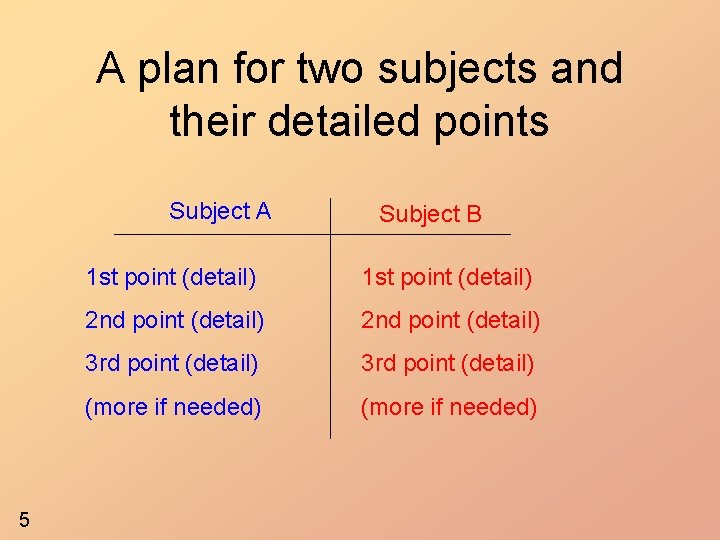
A plan for two subjects and their detailed points Subject A 5 Subject B 1 st point (detail) 2 nd point (detail) 3 rd point (detail) (more if needed)
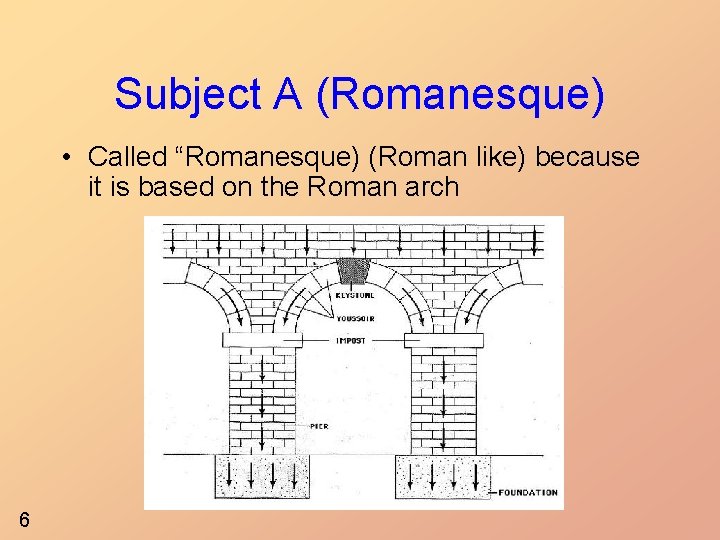
Subject A (Romanesque) • Called “Romanesque) (Roman like) because it is based on the Roman arch 6
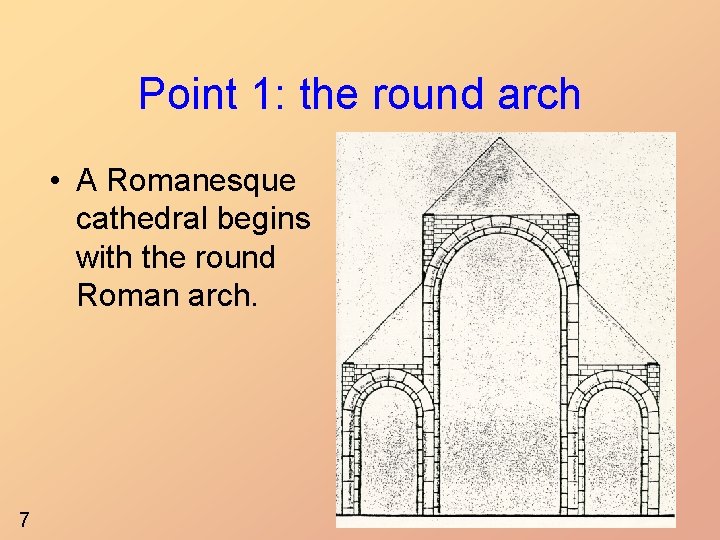
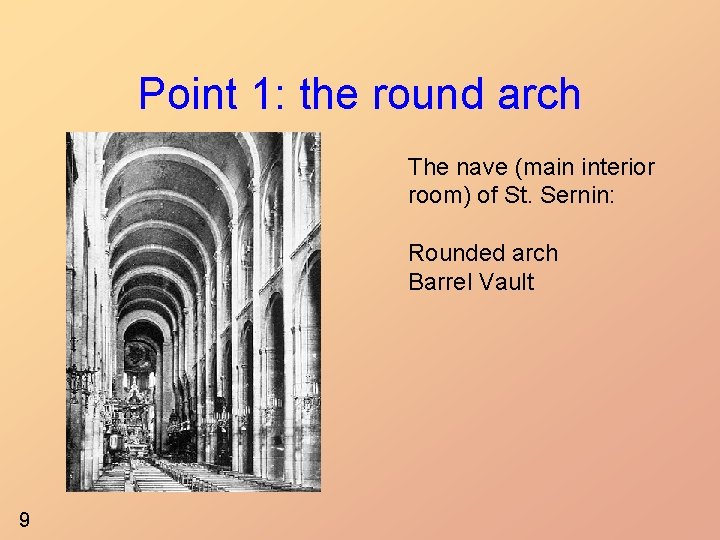
Point 1: the round arch • A Romanesque cathedral begins with the round Roman arch. 7
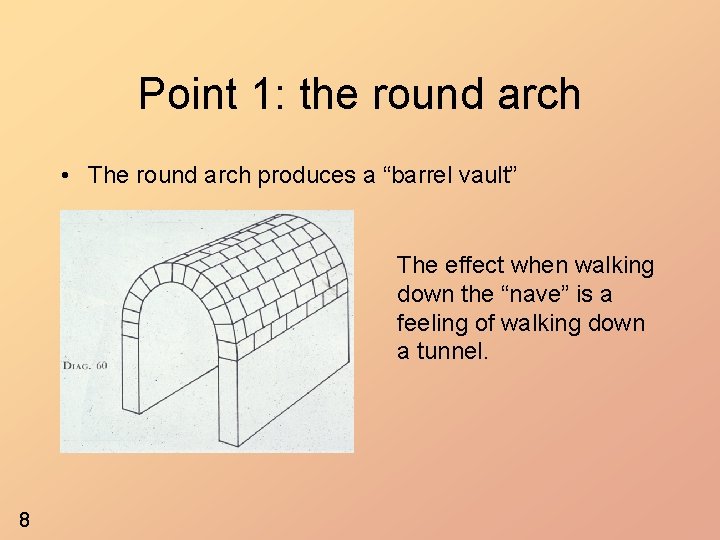
Point 1: the round arch • The round arch produces a “barrel vault” The effect when walking down the “nave” is a feeling of walking down a tunnel. 8
Point 1: the round arch The nave (main interior room) of St. Sernin: Rounded arch Barrel Vault 9
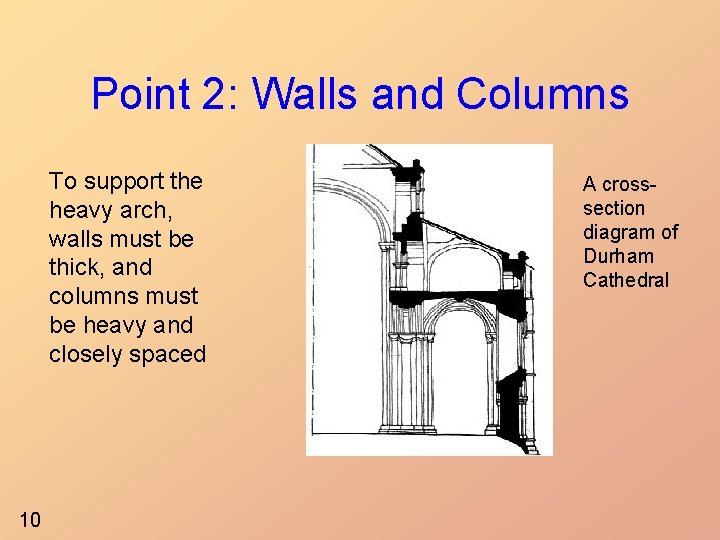
Point 2: Walls and Columns To support the heavy arch, walls must be thick, and columns must be heavy and closely spaced 10 A crosssection diagram of Durham Cathedral
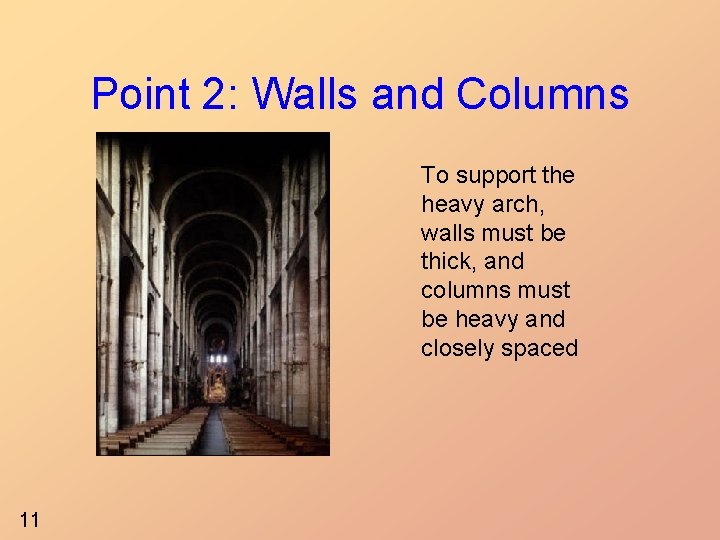
Point 2: Walls and Columns To support the heavy arch, walls must be thick, and columns must be heavy and closely spaced 11
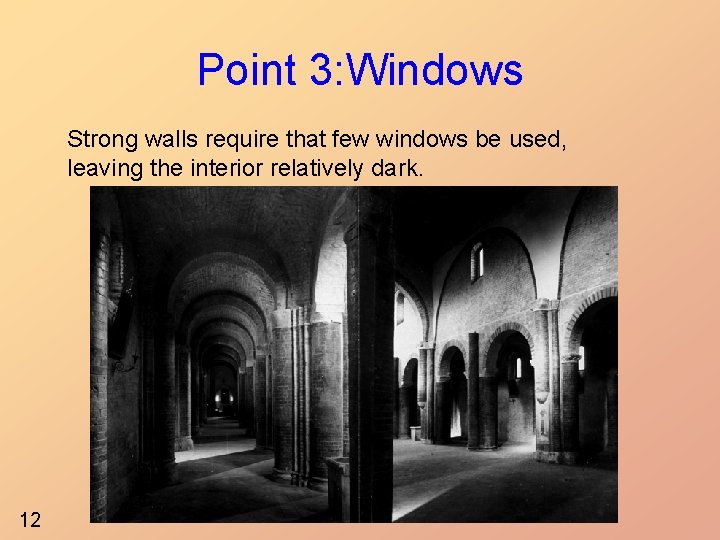
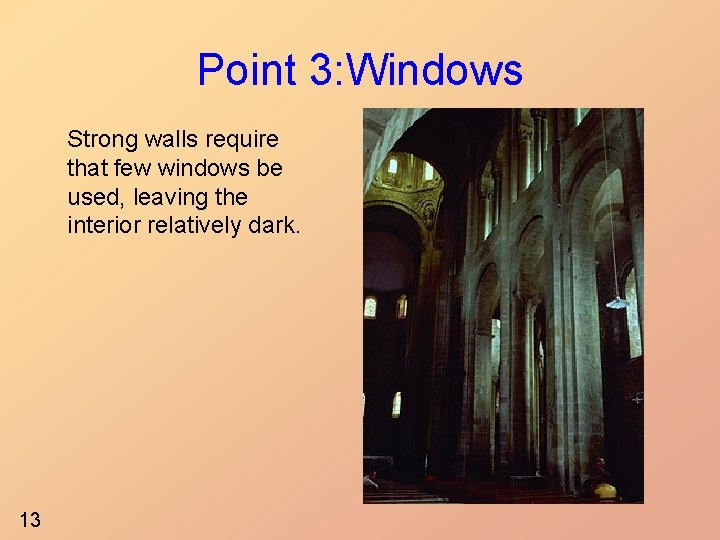
Point 3: Windows Strong walls require that few windows be used, leaving the interior relatively dark. 12
Point 3: Windows Strong walls require that few windows be used, leaving the interior relatively dark. 13
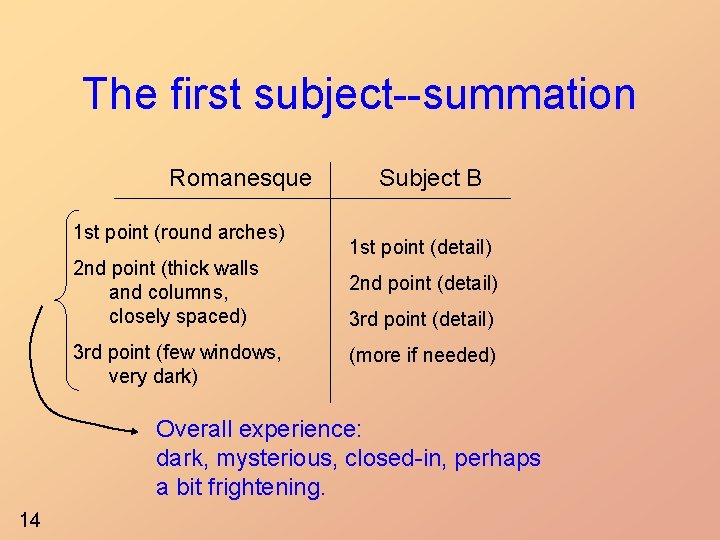
The first subject--summation Romanesque 1 st point (round arches) 2 nd point (thick walls and columns, closely spaced) 3 rd point (few windows, very dark) Subject B 1 st point (detail) 2 nd point (detail) 3 rd point (detail) (more if needed) Overall experience: dark, mysterious, closed-in, perhaps a bit frightening. 14
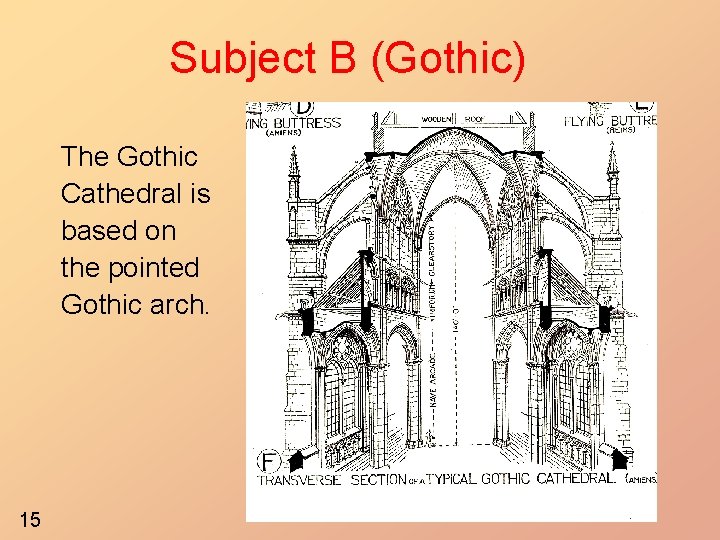
Subject B (Gothic) The Gothic Cathedral is based on the pointed Gothic arch. 15
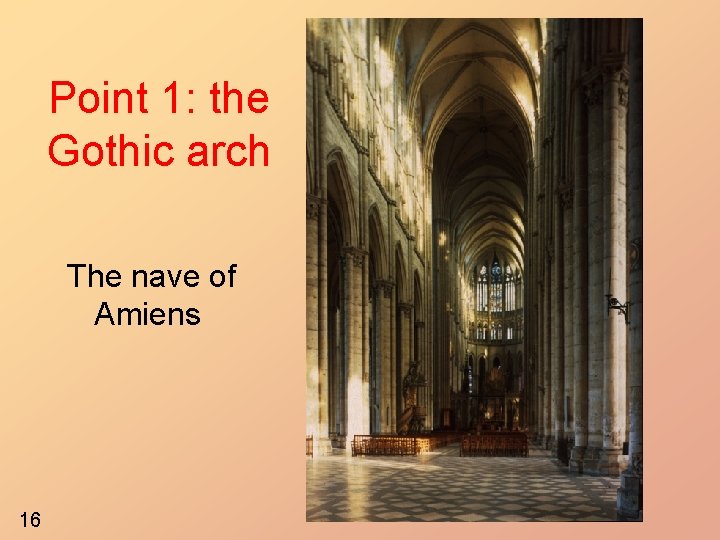
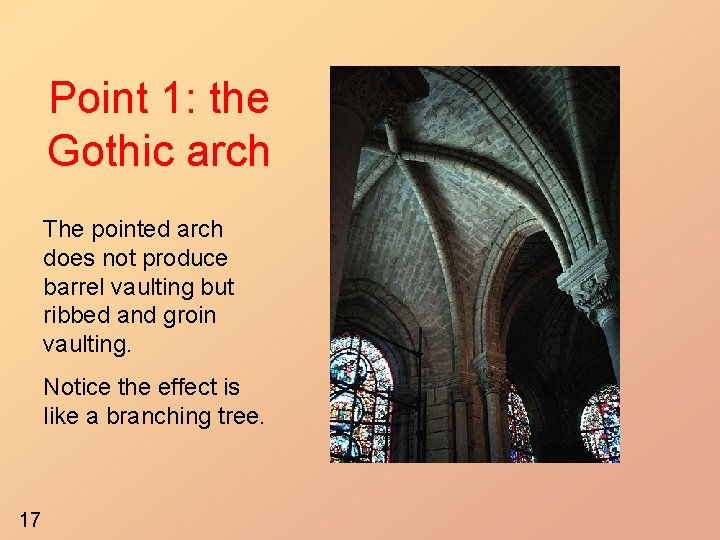
Point 1: the Gothic arch The nave of Amiens 16
Point 1: the Gothic arch The pointed arch does not produce barrel vaulting but ribbed and groin vaulting. Notice the effect is like a branching tree. 17
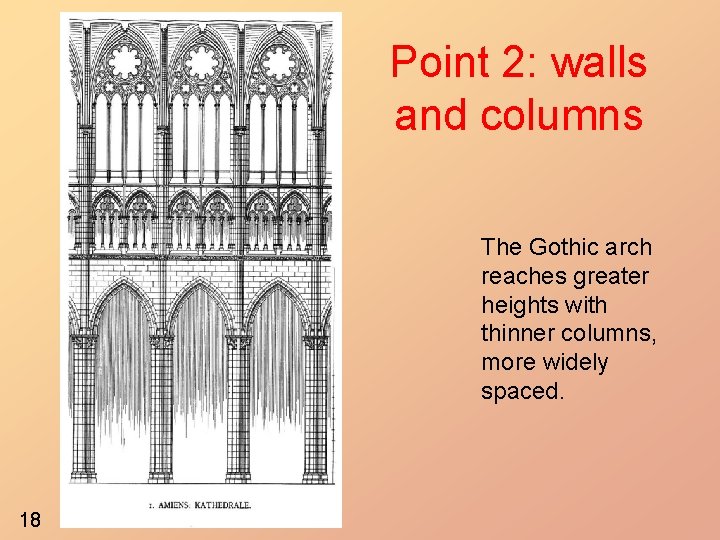
Point 2: walls and columns The Gothic arch reaches greater heights with thinner columns, more widely spaced. 18
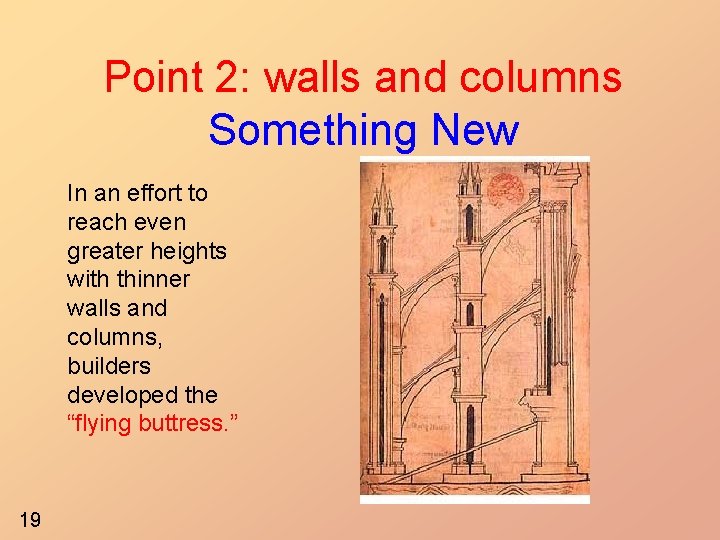
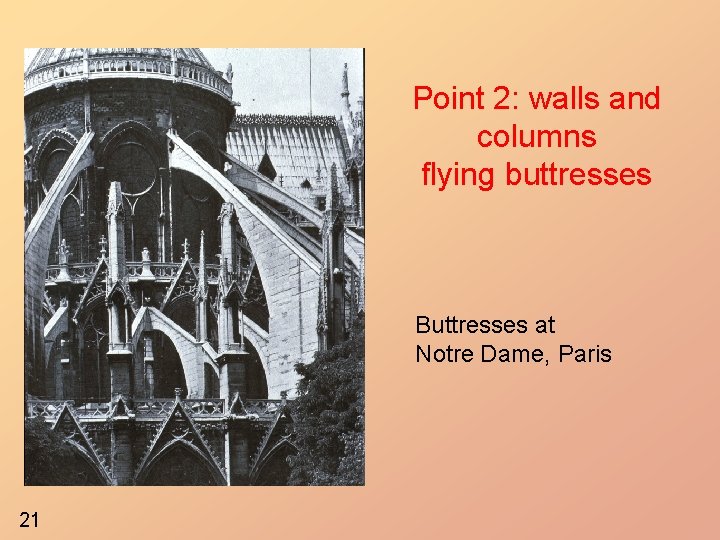
Point 2: walls and columns Something New In an effort to reach even greater heights with thinner walls and columns, builders developed the “flying buttress. ” 19
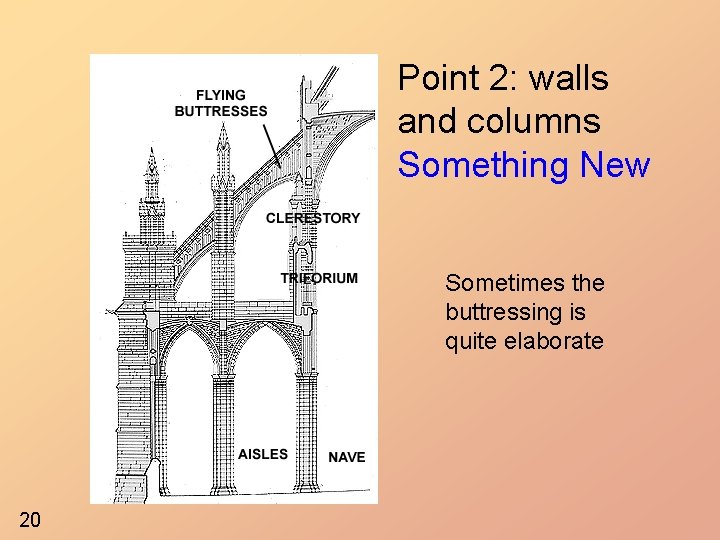
Point 2: walls and columns Something New Sometimes the buttressing is quite elaborate 20
Point 2: walls and columns flying buttresses Buttresses at Notre Dame, Paris 21
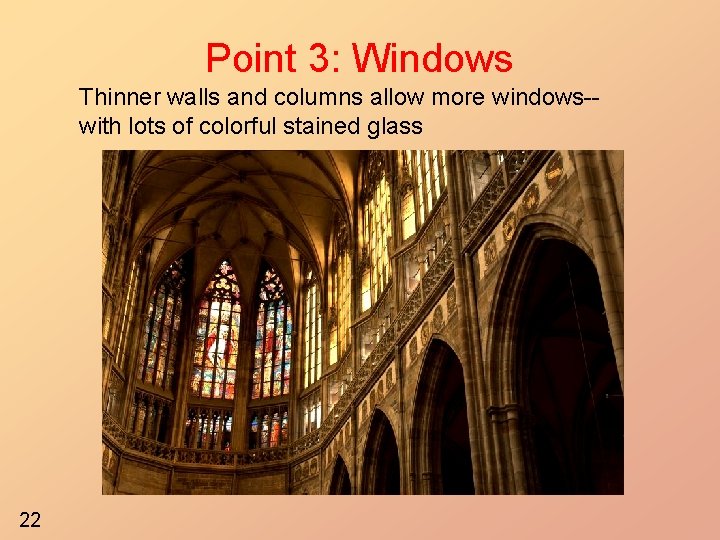
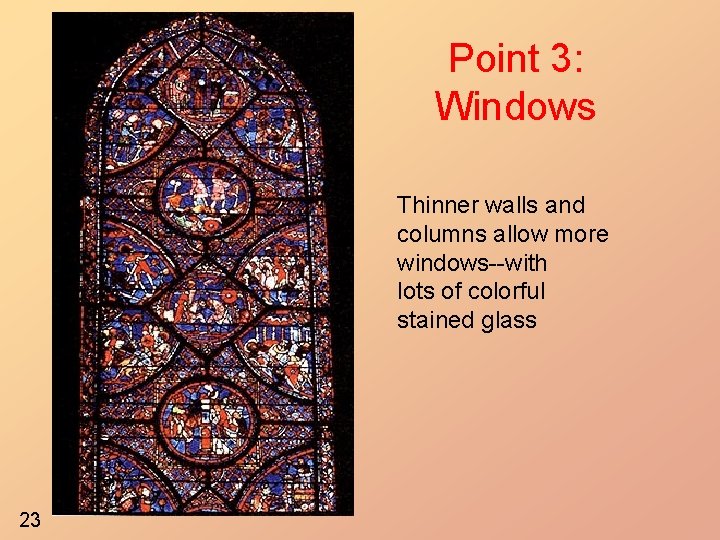
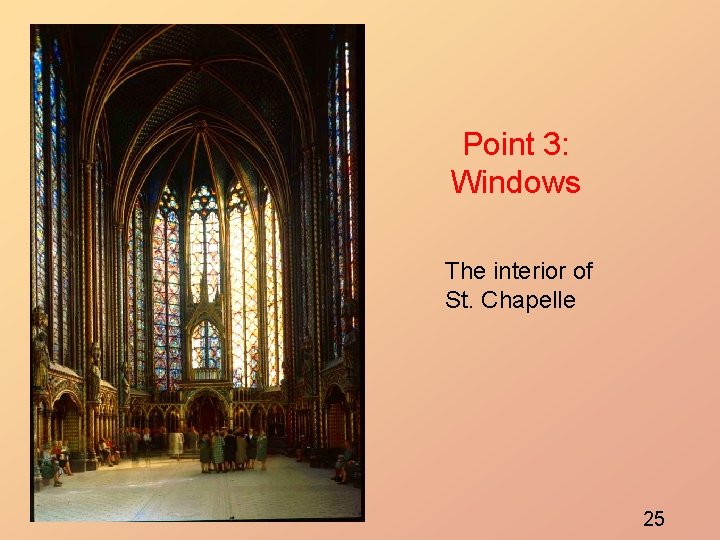
Point 3: Windows Thinner walls and columns allow more windows-with lots of colorful stained glass 22
Point 3: Windows Thinner walls and columns allow more windows--with lots of colorful stained glass 23
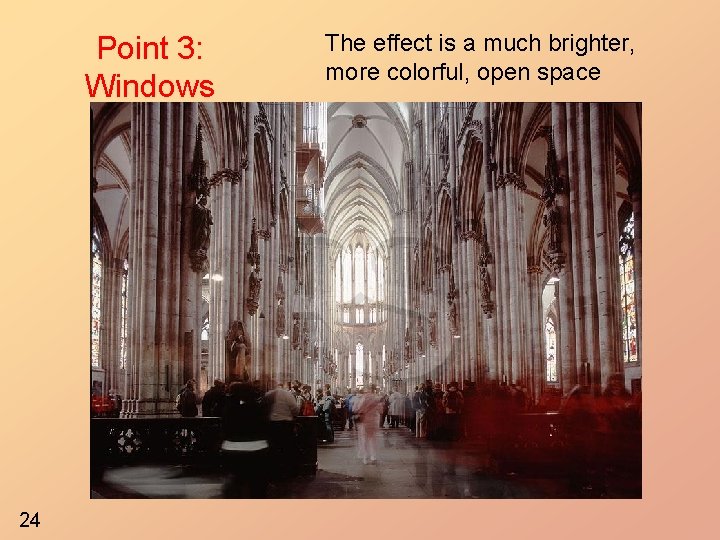
Point 3: Windows 24 The effect is a much brighter, more colorful, open space
Point 3: Windows The interior of St. Chapelle 25
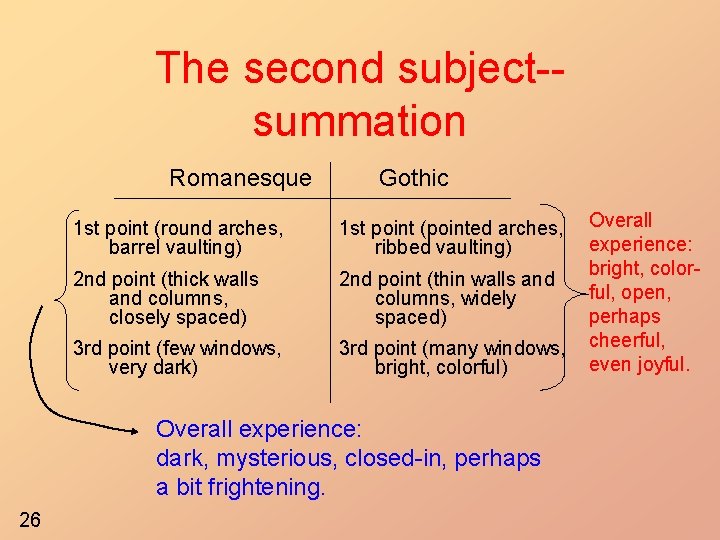
The second subject-summation Romanesque Gothic 1 st point (round arches, barrel vaulting) 1 st point (pointed arches, ribbed vaulting) 2 nd point (thick walls and columns, closely spaced) 2 nd point (thin walls and columns, widely spaced) 3 rd point (few windows, very dark) 3 rd point (many windows, bright, colorful) Overall experience: dark, mysterious, closed-in, perhaps a bit frightening. 26 Overall experience: bright, colorful, open, perhaps cheerful, even joyful.
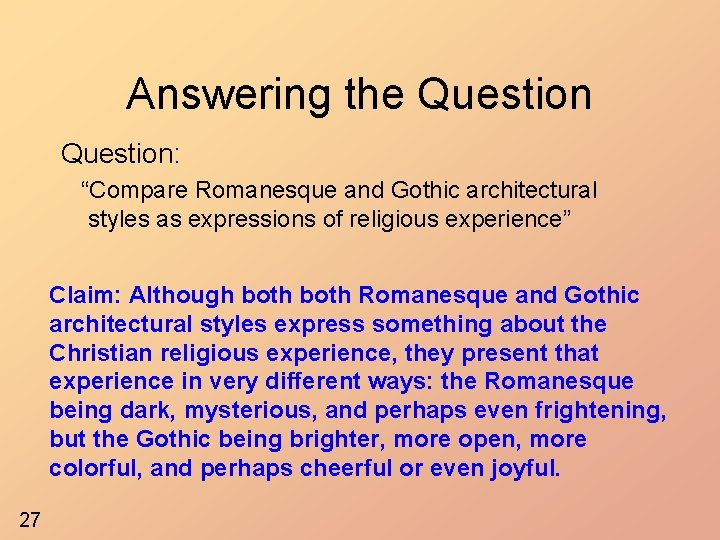
Answering the Question: “Compare Romanesque and Gothic architectural styles as expressions of religious experience” Claim: Although both Romanesque and Gothic architectural styles express something about the Christian religious experience, they present that experience in very different ways: the Romanesque being dark, mysterious, and perhaps even frightening, but the Gothic being brighter, more open, more colorful, and perhaps cheerful or even joyful. 27
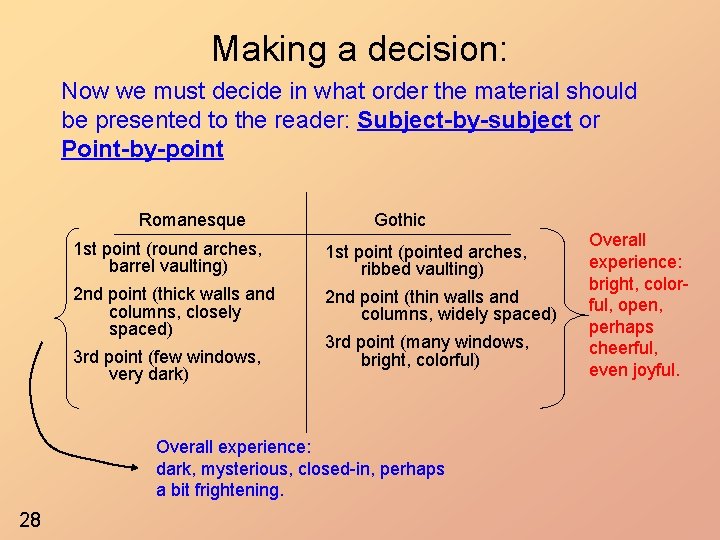
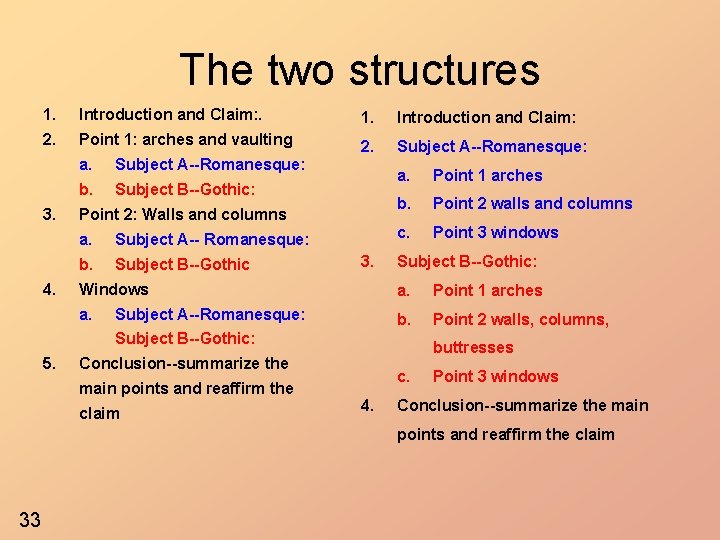
Making a decision: Now we must decide in what order the material should be presented to the reader: Subject-by-subject or Point-by-point Romanesque Gothic 1 st point (round arches, barrel vaulting) 1 st point (pointed arches, ribbed vaulting) 2 nd point (thick walls and columns, closely spaced) 2 nd point (thin walls and columns, widely spaced) 3 rd point (few windows, very dark) 3 rd point (many windows, bright, colorful) Overall experience: dark, mysterious, closed-in, perhaps a bit frightening. 28 Overall experience: bright, colorful, open, perhaps cheerful, even joyful.
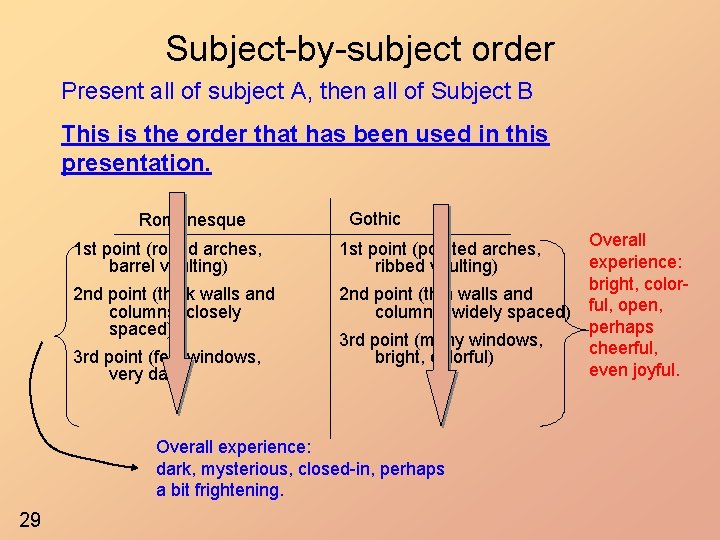
Subject-by-subject order Present all of subject A, then all of Subject B This is the order that has been used in this presentation. Romanesque 1 st point (round arches, barrel vaulting) 2 nd point (thick walls and columns, closely spaced) 3 rd point (few windows, very dark) Gothic Overall experience: bright, color 2 nd point (thin walls and columns, widely spaced) ful, open, perhaps 3 rd point (many windows, cheerful, bright, colorful) even joyful. 1 st point (pointed arches, ribbed vaulting) Overall experience: dark, mysterious, closed-in, perhaps a bit frightening. 29
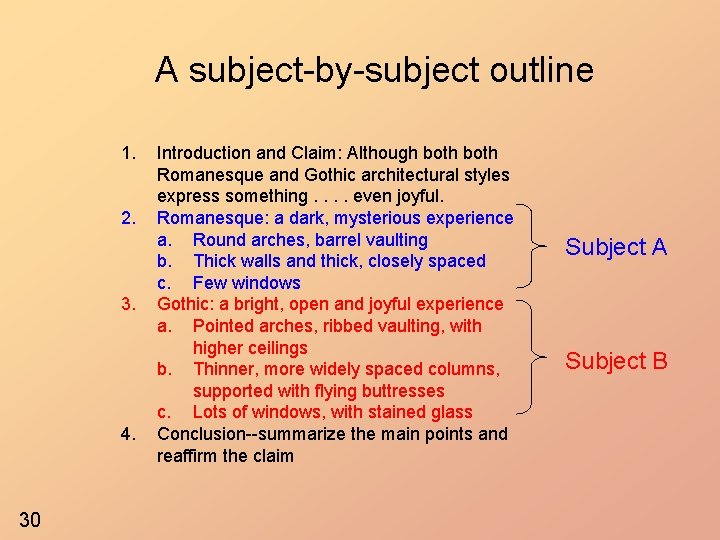
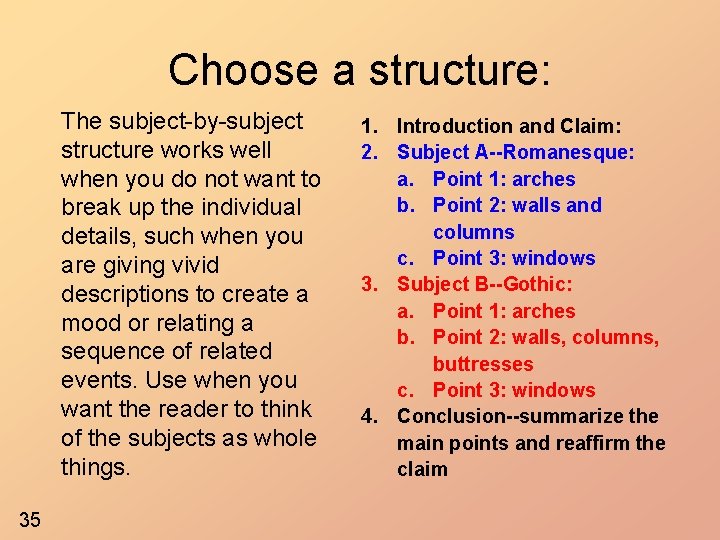
A subject-by-subject outline 1. 2. 3. 4. 30 Introduction and Claim: Although both Romanesque and Gothic architectural styles express something. . even joyful. Romanesque: a dark, mysterious experience a. Round arches, barrel vaulting b. Thick walls and thick, closely spaced c. Few windows Gothic: a bright, open and joyful experience a. Pointed arches, ribbed vaulting, with higher ceilings b. Thinner, more widely spaced columns, supported with flying buttresses c. Lots of windows, with stained glass Conclusion--summarize the main points and reaffirm the claim Subject A Subject B
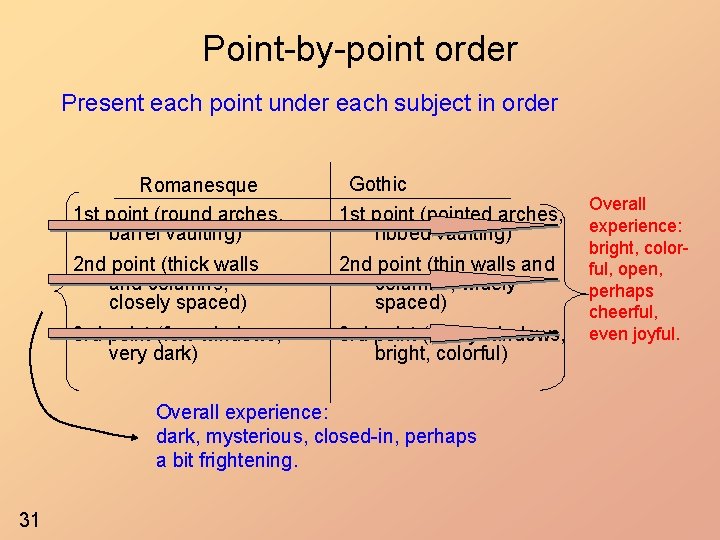
Point-by-point order Present each point under each subject in order Romanesque 1 st point (round arches, barrel vaulting) Gothic 1 st point (pointed arches, ribbed vaulting) 2 nd point (thick walls and columns, closely spaced) 2 nd point (thin walls and columns, widely spaced) 3 rd point (few windows, very dark) 3 rd point (many windows, bright, colorful) Overall experience: dark, mysterious, closed-in, perhaps a bit frightening. 31 Overall experience: bright, colorful, open, perhaps cheerful, even joyful.
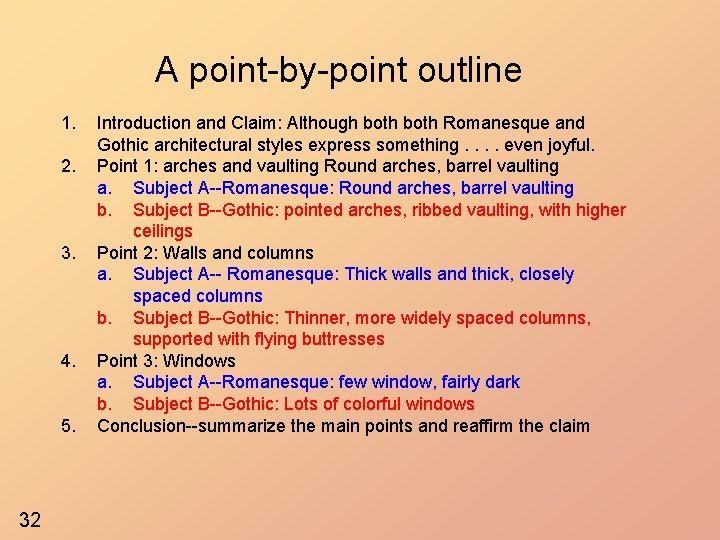
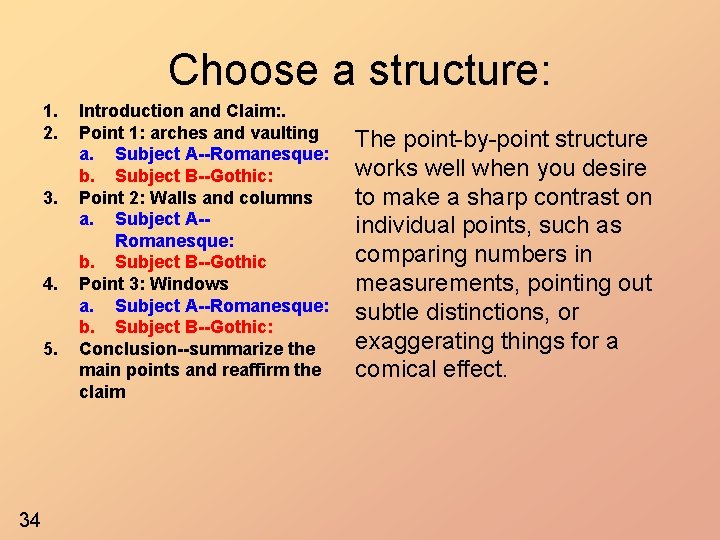
A point-by-point outline 1. 2. 3. 4. 5. 32 Introduction and Claim: Although both Romanesque and Gothic architectural styles express something. . even joyful. Point 1: arches and vaulting Round arches, barrel vaulting a. Subject A--Romanesque: Round arches, barrel vaulting b. Subject B--Gothic: pointed arches, ribbed vaulting, with higher ceilings Point 2: Walls and columns a. Subject A-- Romanesque: Thick walls and thick, closely spaced columns b. Subject B--Gothic: Thinner, more widely spaced columns, supported with flying buttresses Point 3: Windows a. Subject A--Romanesque: few window, fairly dark b. Subject B--Gothic: Lots of colorful windows Conclusion--summarize the main points and reaffirm the claim
The two structures 1. Introduction and Claim: 2. Point 1: arches and vaulting 2. Subject A--Romanesque: 3. 4. a. Subject A--Romanesque: b. Subject B--Gothic: Point 2: Walls and columns a. Subject A-- Romanesque: b. Subject B--Gothic 3. a. Point 1 arches b. Point 2 walls and columns c. Point 3 windows Subject B--Gothic: Windows a. Point 1 arches a. b. Point 2 walls, columns, Subject A--Romanesque: Subject B--Gothic: 5. buttresses Conclusion--summarize the main points and reaffirm the claim c. 4. Point 3 windows Conclusion--summarize the main points and reaffirm the claim 33
Choose a structure: 1. 2. 3. 4. 5. 34 Introduction and Claim: . Point 1: arches and vaulting a. Subject A--Romanesque: b. Subject B--Gothic: Point 2: Walls and columns a. Subject A-Romanesque: b. Subject B--Gothic Point 3: Windows a. Subject A--Romanesque: b. Subject B--Gothic: Conclusion--summarize the main points and reaffirm the claim The point-by-point structure works well when you desire to make a sharp contrast on individual points, such as comparing numbers in measurements, pointing out subtle distinctions, or exaggerating things for a comical effect.
Choose a structure: The subject-by-subject structure works well when you do not want to break up the individual details, such when you are giving vivid descriptions to create a mood or relating a sequence of related events. Use when you want the reader to think of the subjects as whole things. 35 1. Introduction and Claim: 2. Subject A--Romanesque: a. Point 1: arches b. Point 2: walls and columns c. Point 3: windows 3. Subject B--Gothic: a. Point 1: arches b. Point 2: walls, columns, buttresses c. Point 3: windows 4. Conclusion--summarize the main points and reaffirm the claim