
Understanding and Minimizing Your Income Taxes MIKE PIPER

- Slides: 33
Understanding (and Minimizing) Your Income Taxes MIKE PIPER, CPA
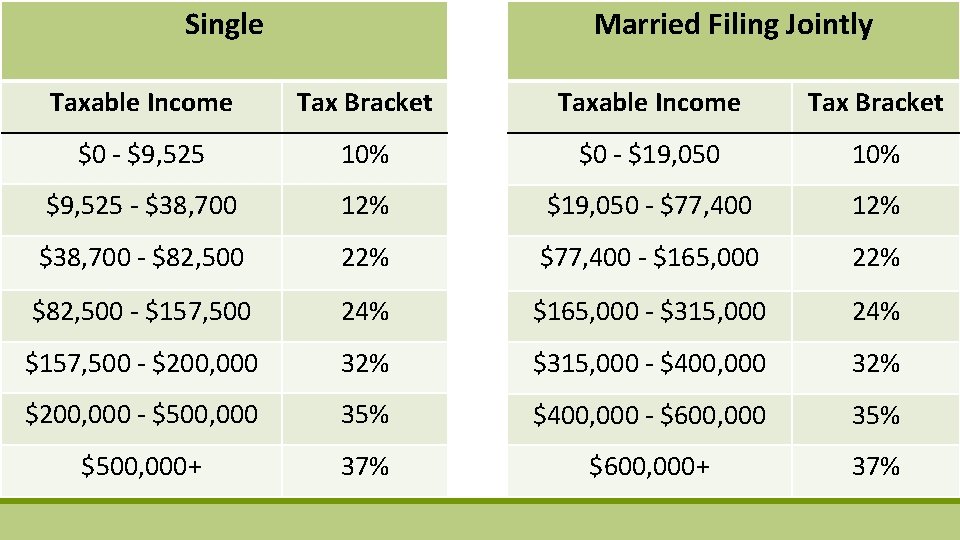
Married Filing Jointly Single Taxable Income Tax Bracket $0 - $9, 525 10% $0 - $19, 050 10% $9, 525 - $38, 700 12% $19, 050 - $77, 400 12% $38, 700 - $82, 500 22% $77, 400 - $165, 000 22% $82, 500 - $157, 500 24% $165, 000 - $315, 000 24% $157, 500 - $200, 000 32% $315, 000 - $400, 000 32% $200, 000 - $500, 000 35% $400, 000 - $600, 000 35% $500, 000+ 37% $600, 000+ 37%
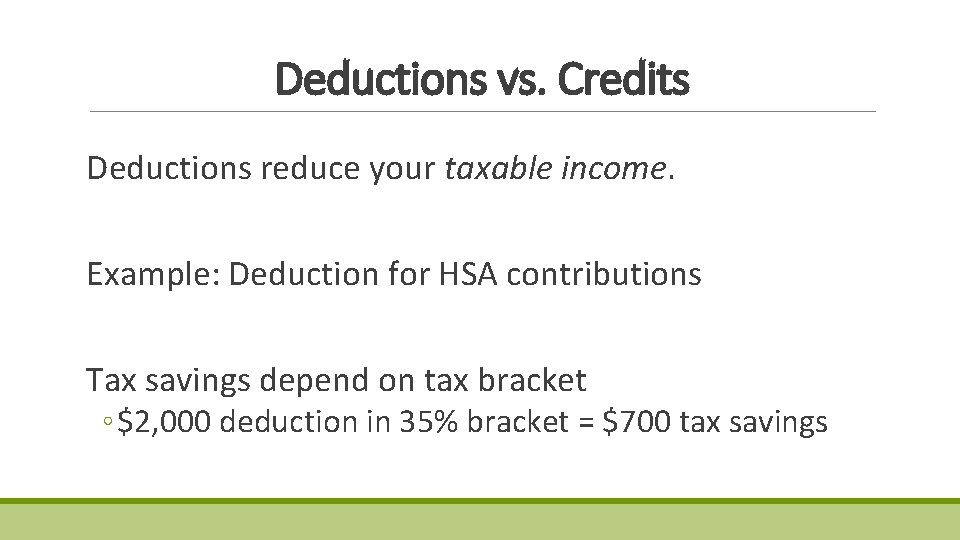
Deductions vs. Credits Deductions reduce your taxable income. Example: Deduction for HSA contributions Tax savings depend on tax bracket ◦ $2, 000 deduction in 35% bracket = $700 tax savings
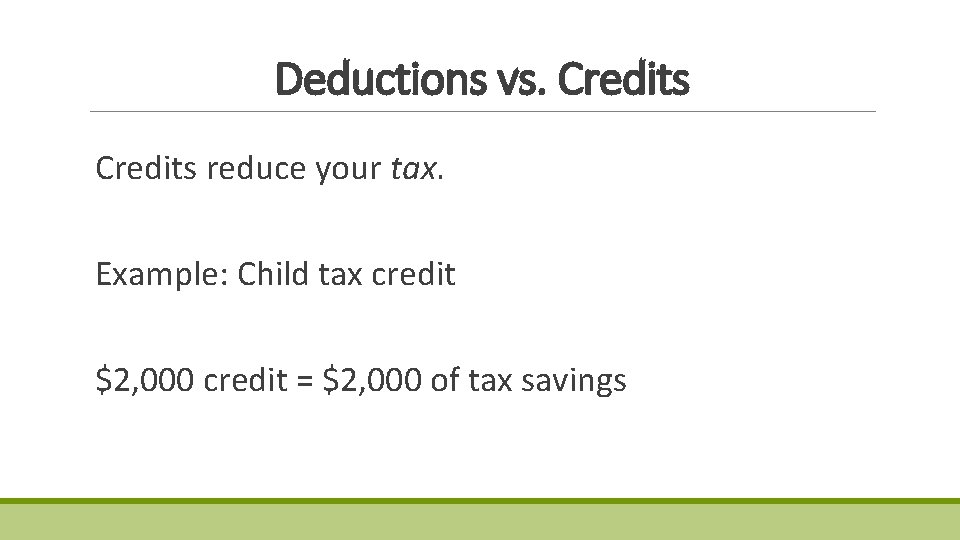
Deductions vs. Credits reduce your tax. Example: Child tax credit $2, 000 credit = $2, 000 of tax savings
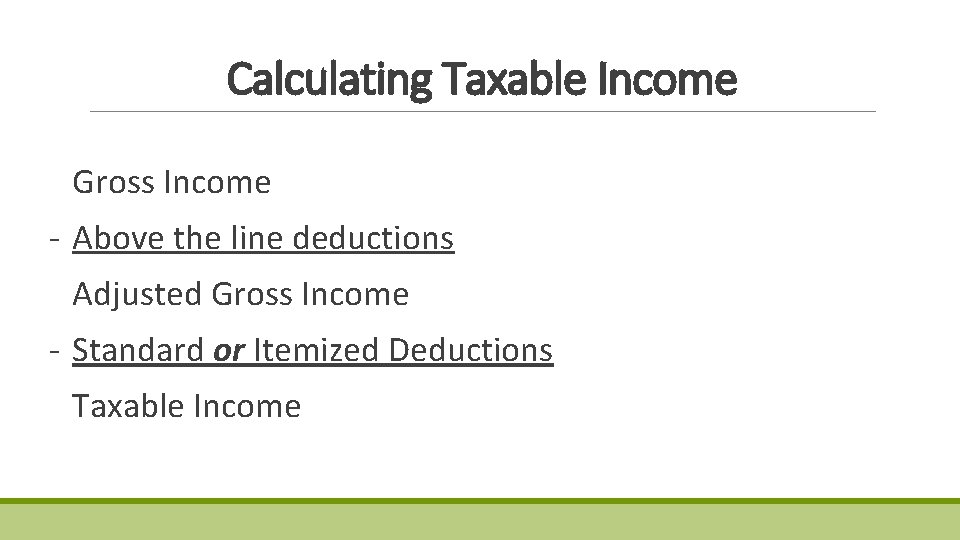
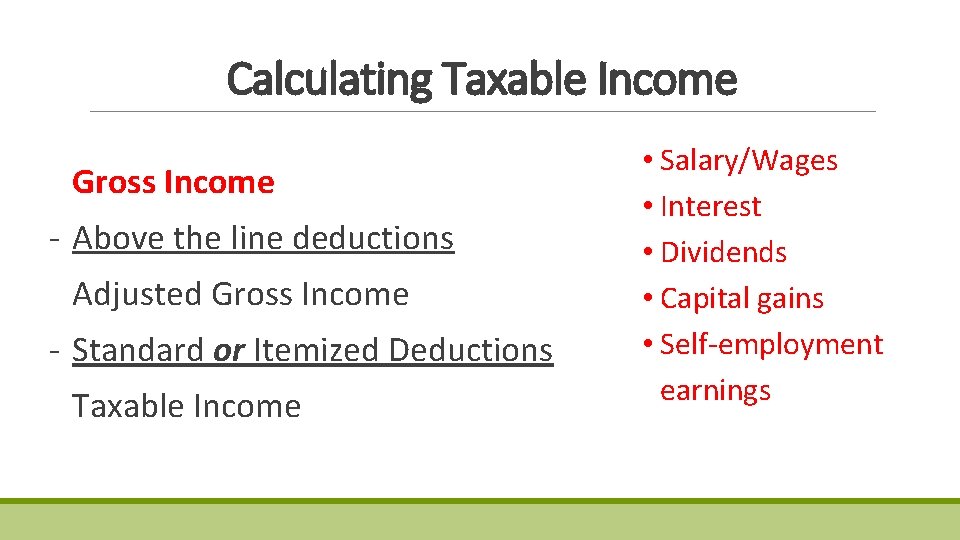
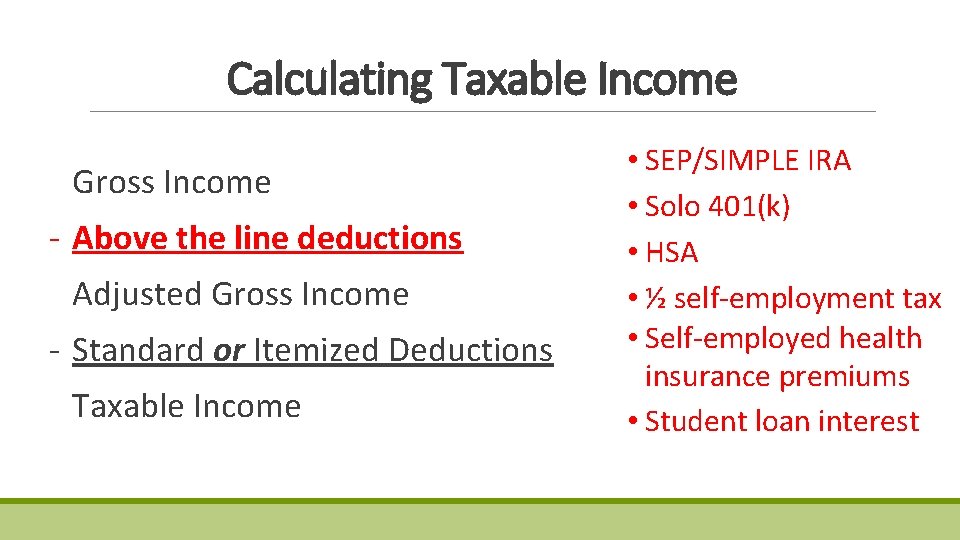
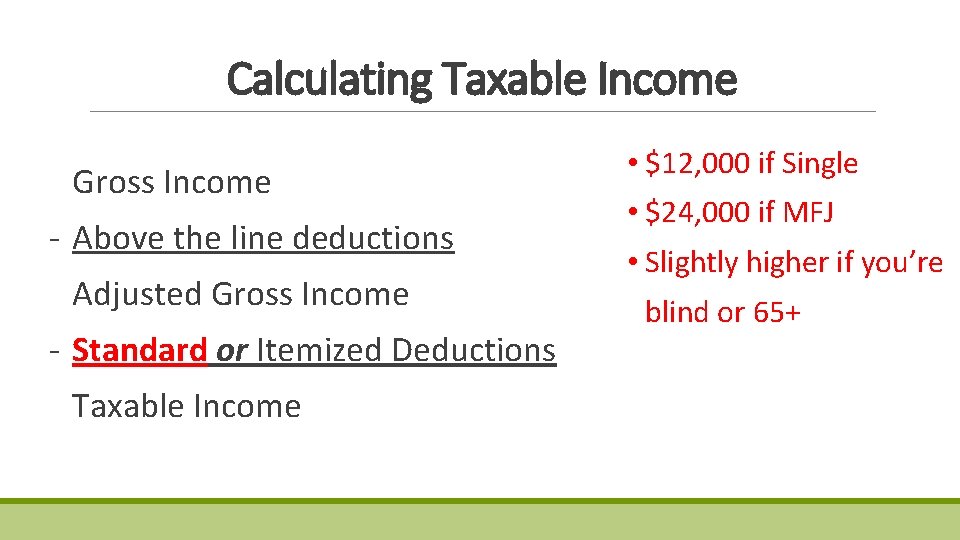
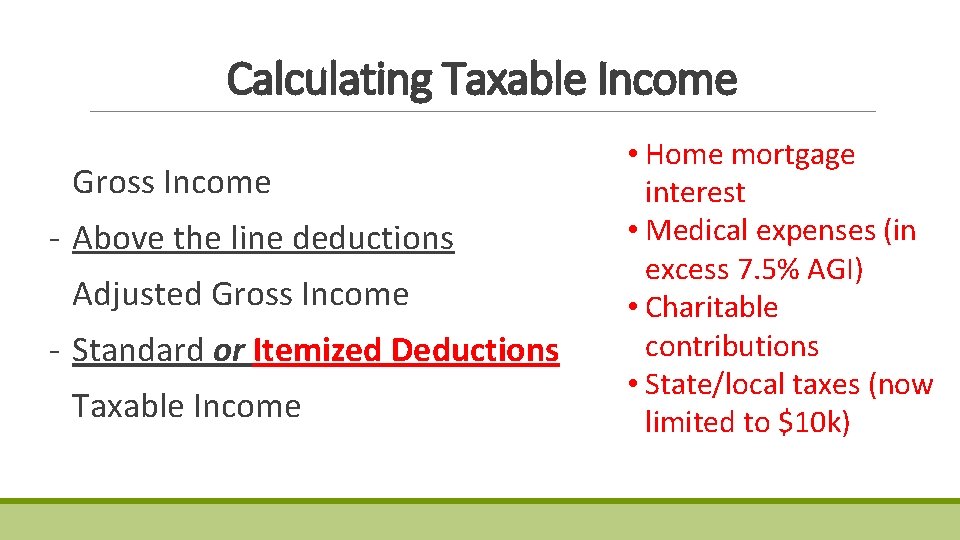
Calculating Taxable Income Gross Income - Above the line deductions Adjusted Gross Income - Standard or Itemized Deductions Taxable Income
Calculating Taxable Income Gross Income - Above the line deductions Adjusted Gross Income - Standard or Itemized Deductions Taxable Income • Salary/Wages • Interest • Dividends • Capital gains • Self-employment earnings
Calculating Taxable Income Gross Income - Above the line deductions Adjusted Gross Income - Standard or Itemized Deductions Taxable Income • SEP/SIMPLE IRA • Solo 401(k) • HSA • ½ self-employment tax • Self-employed health insurance premiums • Student loan interest
Calculating Taxable Income Gross Income - Above the line deductions Adjusted Gross Income - Standard or Itemized Deductions Taxable Income
Calculating Taxable Income Gross Income - Above the line deductions Adjusted Gross Income - Standard or Itemized Deductions Taxable Income • $12, 000 if Single • $24, 000 if MFJ • Slightly higher if you’re blind or 65+
Calculating Taxable Income Gross Income - Above the line deductions Adjusted Gross Income - Standard or Itemized Deductions Taxable Income • Home mortgage interest • Medical expenses (in excess 7. 5% AGI) • Charitable contributions • State/local taxes (now limited to $10 k)
Tax-Efficient Investing Max out contributions to retirement accounts every year. How to minimize costs in taxable brokerage accounts?
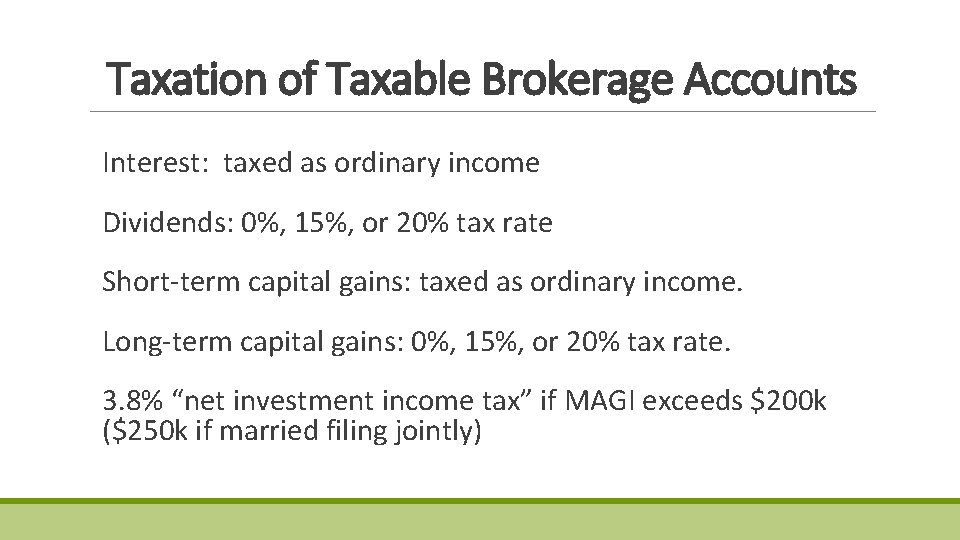
Taxation of Taxable Brokerage Accounts Interest: taxed as ordinary income Dividends: 0%, 15%, or 20% tax rate Short-term capital gains: taxed as ordinary income. Long-term capital gains: 0%, 15%, or 20% tax rate. 3. 8% “net investment income tax” if MAGI exceeds $200 k ($250 k if married filing jointly)
Tax-Efficient Investing in Taxable Accounts Look for mutual funds with low portfolio turnover Asset location Tax-loss harvesting
Tax-Efficient Investing: Low Turnover Funds Low turnover = fewer transactions within the fund’s portfolio Results in fewer capital gain distributions (and more are LT rather than ST) Usually index funds or ETFs have lowest turnover
Tax-Efficient Investing: Asset Location Asset location: which assets in which accounts? Overall principle: put assets with highest tax costs in retirement accounts
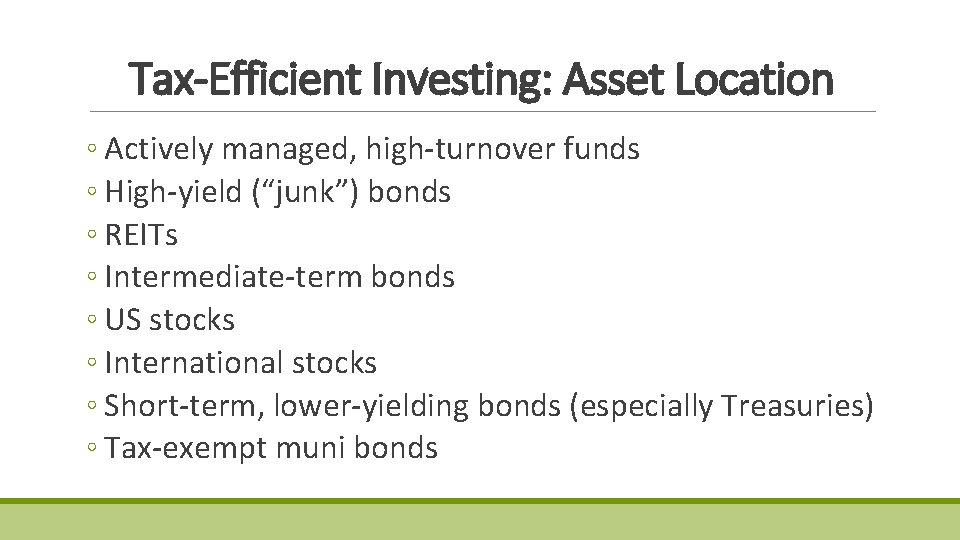
Tax-Efficient Investing: Asset Location ◦ Actively managed, high-turnover funds ◦ High-yield (“junk”) bonds ◦ REITs ◦ Intermediate-term bonds ◦ US stocks ◦ International stocks ◦ Short-term, lower-yielding bonds (especially Treasuries) ◦ Tax-exempt muni bonds
Tax-Efficient Investing: Tax-Loss Harvesting Look for shares with value less than your basis. ◦ Sell those shares, so you can claim a loss (offset CGs or up to $3, 000 of ordinary income) ◦ Buy a replacement so you don’t have to change allocation Be careful of “wash sale” rules. (Won’t get to claim the loss. )
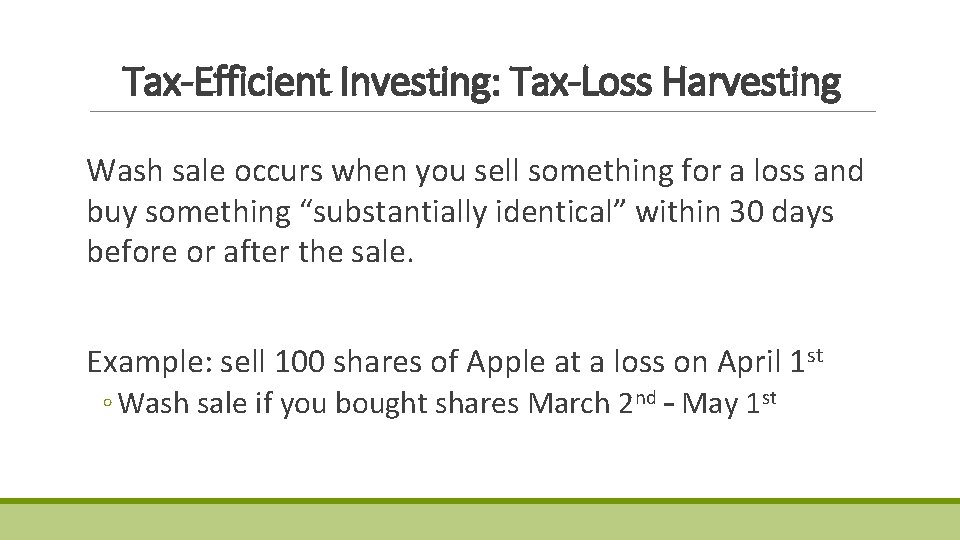
Tax-Efficient Investing: Tax-Loss Harvesting Wash sale occurs when you sell something for a loss and buy something “substantially identical” within 30 days before or after the sale. Example: sell 100 shares of Apple at a loss on April 1 st ◦ Wash sale if you bought shares March 2 nd – May 1 st
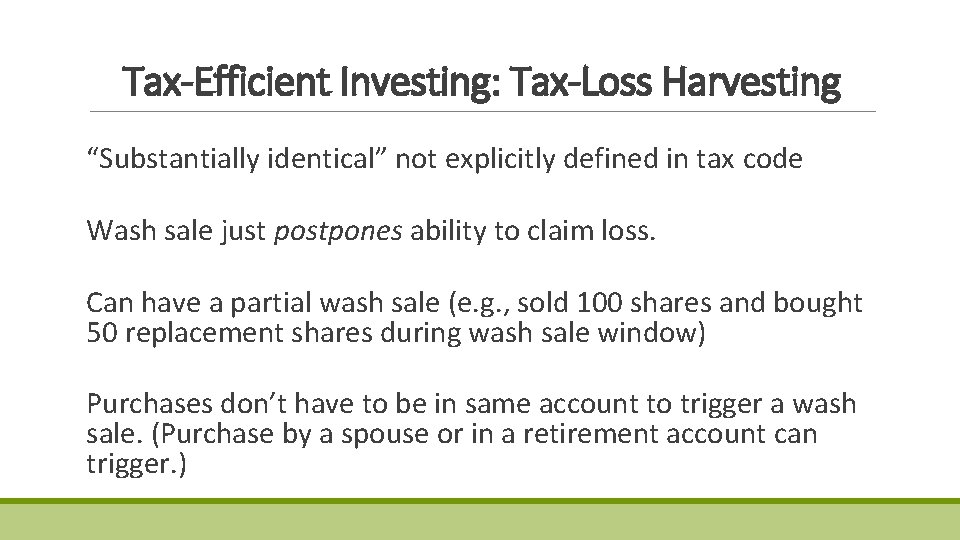
Tax-Efficient Investing: Tax-Loss Harvesting “Substantially identical” not explicitly defined in tax code Wash sale just postpones ability to claim loss. Can have a partial wash sale (e. g. , sold 100 shares and bought 50 replacement shares during wash sale window) Purchases don’t have to be in same account to trigger a wash sale. (Purchase by a spouse or in a retirement account can trigger. )
Entity Selection 3 options for single-owner business ◦Sole proprietorship (or LLC taxed as such) ◦S-corporation (or LLC taxed as such) ◦C-corporation (or LLC taxed as such)
Entity Selection 3 options for multiple-owner business ◦Partnership (or LLC taxed as such) ◦S-corporation (or LLC taxed as such) ◦C-corporation (or LLC taxed as such)
Entity Selection: Sole Proprietorships and Partnerships Sole proprietorships and partnerships are “pass through” businesses. Business doesn’t pay income tax. Owners pay tax on profit at ordinary income tax rates. Also subject to self-employment tax ◦ Employer and employee halves of SS and Medicare taxes ◦ (15. 3% up to $128, 400. 2. 9% beyond that)
Entity Selection: S-Corporations “Pass-through” businesses: corporation doesn’t pay income tax. Owners pay tax on profit at ordinary income tax rates. Profit is not subject to self-employment tax.
Entity Selection: S-Corporations Must pay owner-employees a “reasonable” amount of compensation before there can be any profit. ◦ Compensation is subject to SS and Medicare taxes. Only get any savings once there’s enough income for sizable profit after paying “reasonable” compensation
Entity Selection: C-Corporations Corporation itself pays tax on profits (flat 21% rate now) When profit is distributed to shareholders (dividend), it’s taxed again (0%, 15%, 20%) ◦ Also subject to 3. 8% “net investment income tax” if MAGI exceeds $200 k ($250 k if married filing jointly)
Entity Selection: C-Corporations Overall effect: double taxation C-corp taxation is not usually advantageous. (Still true with 2018 tax changes. )
Entity Selection: Deduction for Pass-Through Business Income Deduction for income from “pass-through businesses” ◦ Sole proprietorships ◦ Partnerships ◦ S-corporations ◦ Not C-corporations Amount of deduction: 20% of pass-through profit Limited to 20% of your taxable income (excluding CGs)
Entity Selection: Deduction for Pass-Through Business Income Phaseout for “specified service businesses” Specified service business includes any business in the field of health.
Entity Selection: Deduction for Pass-Through Business Income “Specified service businesses” is: ◦ Any business in fields of health, law, accounting, actuarial science, performing arts, consulting, athletics, financial services, brokerage services ◦ Any business where principal asset is reputation or skill of one or more owner or employee ◦ Any business which involves investment management or dealing in securities
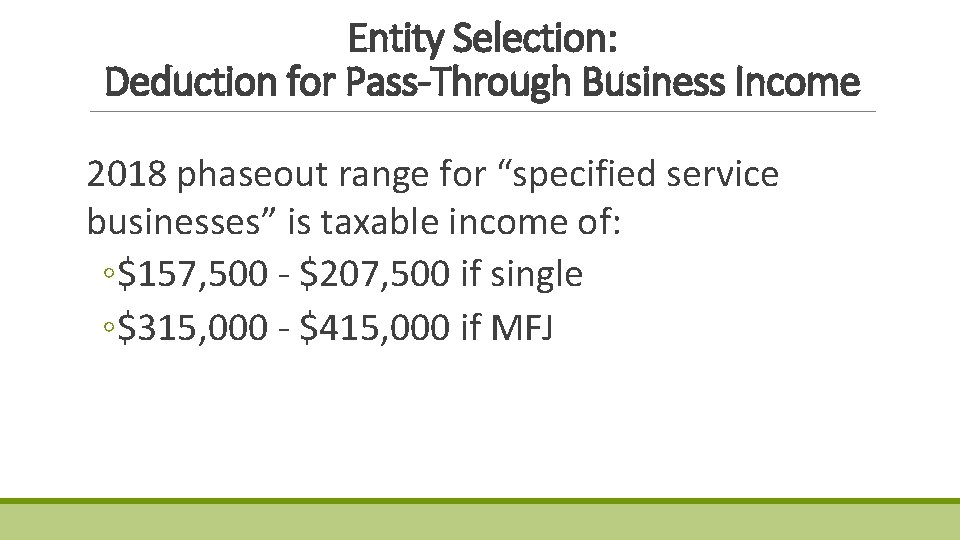
Entity Selection: Deduction for Pass-Through Business Income 2018 phaseout range for “specified service businesses” is taxable income of: ◦$157, 500 - $207, 500 if single ◦$315, 000 - $415, 000 if MFJ
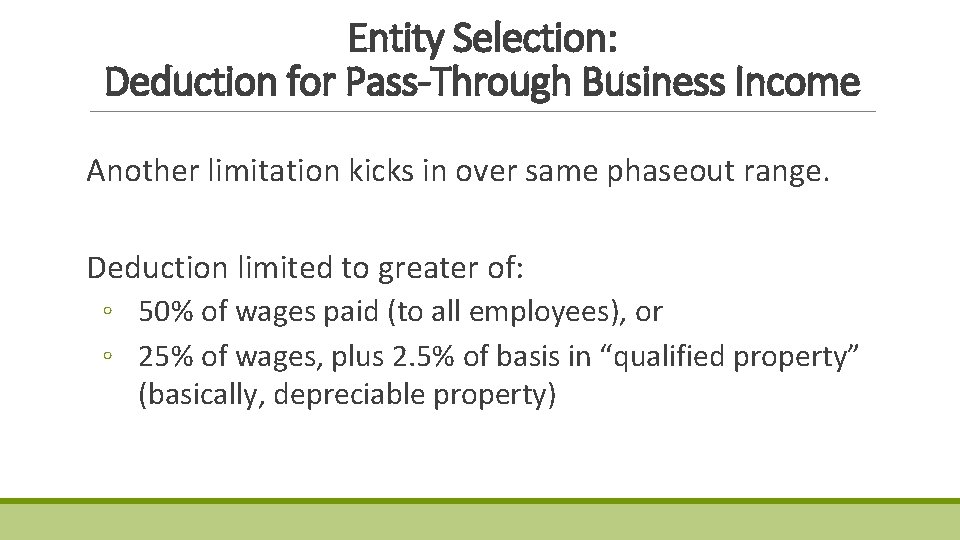
Entity Selection: Deduction for Pass-Through Business Income Another limitation kicks in over same phaseout range. Deduction limited to greater of: ◦ 50% of wages paid (to all employees), or ◦ 25% of wages, plus 2. 5% of basis in “qualified property” (basically, depreciable property)
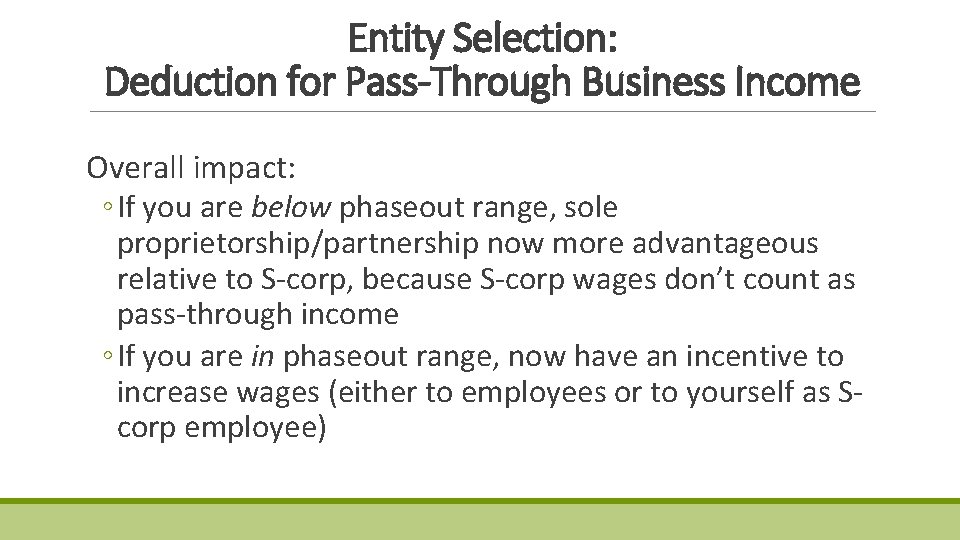
Entity Selection: Deduction for Pass-Through Business Income Overall impact: ◦ If you are below phaseout range, sole proprietorship/partnership now more advantageous relative to S-corp, because S-corp wages don’t count as pass-through income ◦ If you are in phaseout range, now have an incentive to increase wages (either to employees or to yourself as Scorp employee)
Understanding (and Minimizing) Your Income Taxes MIKE PIPER, CPA