
Understanding and Measuring Resilience in Programming Irish Aid
- Slides: 18
Understanding and Measuring Resilience in Programming Irish Aid Focal Points Meeting Agriculture; climate change; Nutrition Malawi 11 th & 12 th June 2018
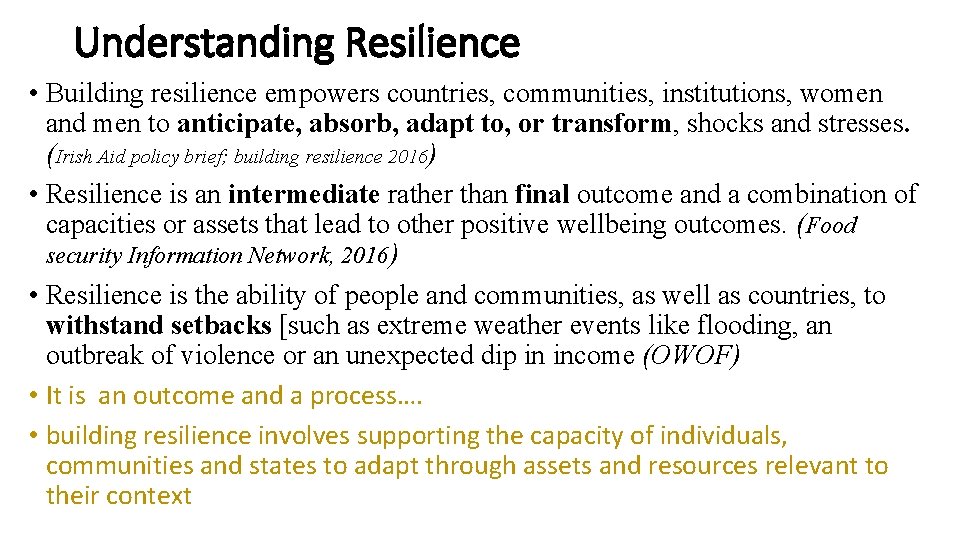
Understanding Resilience • Building resilience empowers countries, communities, institutions, women and men to anticipate, absorb, adapt to, or transform, shocks and stresses. (Irish Aid policy brief; building resilience 2016) • Resilience is an intermediate rather than final outcome and a combination of capacities or assets that lead to other positive wellbeing outcomes. (Food security Information Network, 2016) • Resilience is the ability of people and communities, as well as countries, to withstand setbacks [such as extreme weather events like flooding, an outbreak of violence or an unexpected dip in income (OWOF) • It is an outcome and a process…. • building resilience involves supporting the capacity of individuals, communities and states to adapt through assets and resources relevant to their context
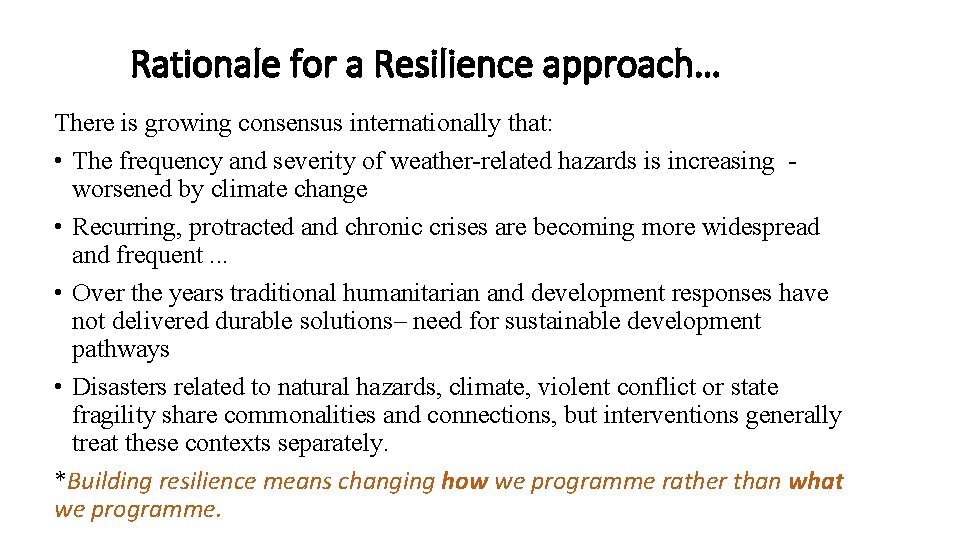
Rationale for a Resilience approach… There is growing consensus internationally that: • The frequency and severity of weather-related hazards is increasing worsened by climate change • Recurring, protracted and chronic crises are becoming more widespread and frequent. . . • Over the years traditional humanitarian and development responses have not delivered durable solutions– need for sustainable development pathways • Disasters related to natural hazards, climate, violent conflict or state fragility share commonalities and connections, but interventions generally treat these contexts separately. *Building resilience means changing how we programme rather than what we programme.
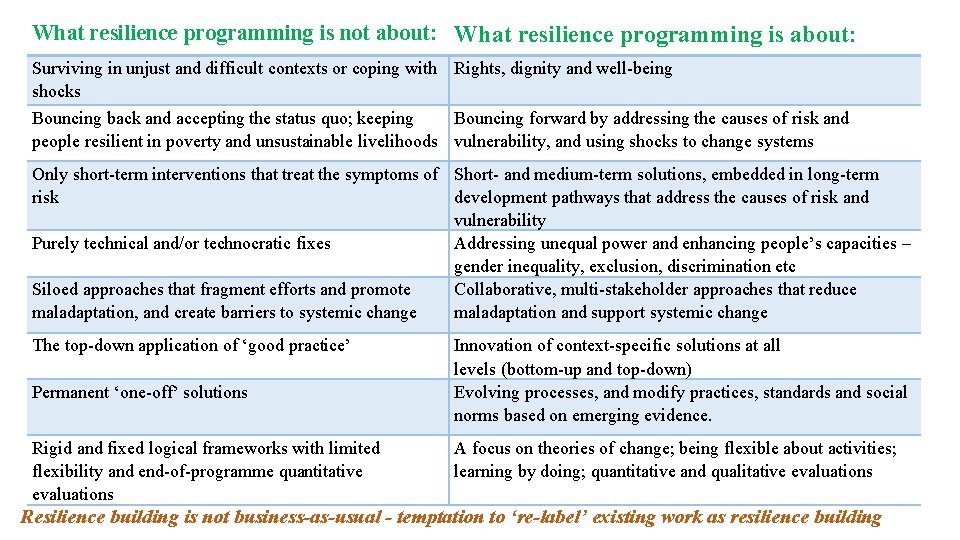
What resilience programming is not about: What resilience programming is about: Surviving in unjust and difficult contexts or coping with Rights, dignity and well-being shocks Bouncing back and accepting the status quo; keeping Bouncing forward by addressing the causes of risk and people resilient in poverty and unsustainable livelihoods vulnerability, and using shocks to change systems Only short-term interventions that treat the symptoms of Short- and medium-term solutions, embedded in long-term risk development pathways that address the causes of risk and vulnerability Purely technical and/or technocratic fixes Addressing unequal power and enhancing people’s capacities – gender inequality, exclusion, discrimination etc Siloed approaches that fragment efforts and promote Collaborative, multi-stakeholder approaches that reduce maladaptation, and create barriers to systemic change maladaptation and support systemic change The top-down application of ‘good practice’ Permanent ‘one-off’ solutions Rigid and fixed logical frameworks with limited flexibility and end-of-programme quantitative evaluations Innovation of context-specific solutions at all levels (bottom-up and top-down) Evolving processes, and modify practices, standards and social norms based on emerging evidence. A focus on theories of change; being flexible about activities; learning by doing; quantitative and qualitative evaluations Resilience building is not business-as-usual - temptation to ‘re-label’ existing work as resilience building
Addressing resilience in programming • Building resilience into existing programming will take different forms in different contexts. In some cases, it can mean improving on-going activities (incremental changes) • It can mean revising activities and doing things in a different way (reframing) • Sometimes it may require doing new things, working in a radically different way (transformation). • It is also about monitoring change, which could then lead to recognising opportunities through being prepared for or exploiting transformational shifts in systems. • it will mean supporting the positive aspects of resilience while avoiding reinforcement of negative manifestations
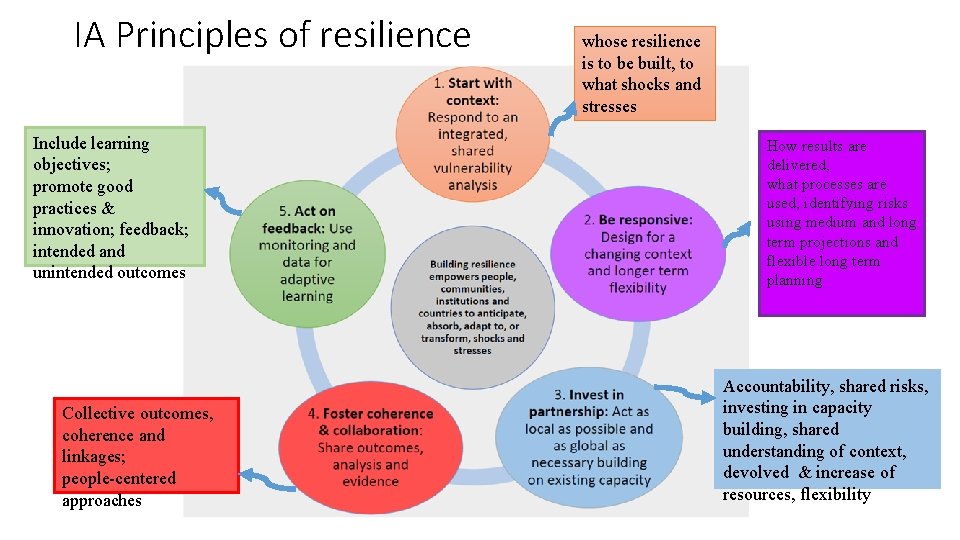
IA Principles of resilience Include learning objectives; promote good practices & innovation; feedback; intended and unintended outcomes Collective outcomes, coherence and linkages; people-centered approaches whose resilience is to be built, to what shocks and stresses How results are delivered, what processes are used, identifying risks using medium and long term projections and flexible long term planning Accountability, shared risks, investing in capacity building, shared understanding of context, devolved & increase of resources, flexibility
Measuring Resilience • Resilience building should lead to; more dynamic, responsive, integrated and +sustainable investments that deliver lasting positive change for poor people and countries So, how is it measured? . . . (IA resilience paper) Measuring resilience as a process • Whether a resilience approach is being adopted - by ourselves, our partners, and by their partners (measurement of resilience in terms of the quality of the process – design, planning, implementation, M&E); • Measuring resilience as an outcome; Whether our efforts are building resilience at an appropriate level – individual, community, institutional or national (measurement of resilience as an outcome). Challenge!. . . Resilience is multi-scale, and multi-dimensional – how does it get measured in a holistic way? Formal vs informal dimensions, beneficiaries with different characteristics, different locations, context etc – how do you avoid erroneous assumptions?
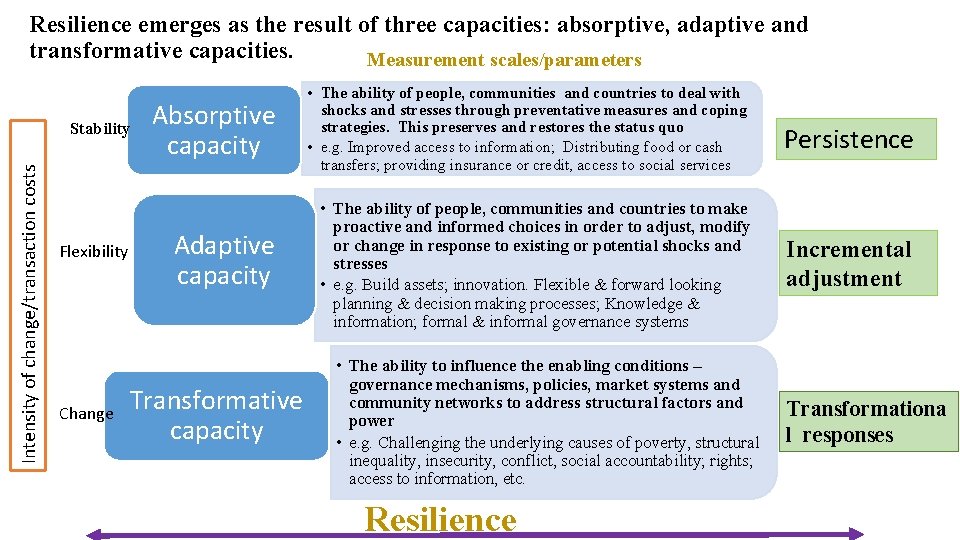
Resilience emerges as the result of three capacities: absorptive, adaptive and transformative capacities. Measurement scales/parameters Intensity of change/transaction costs Stability Flexibility Change Absorptive capacity • The ability of people, communities and countries to deal with shocks and stresses through preventative measures and coping strategies. This preserves and restores the status quo • e. g. Improved access to information; Distributing food or cash transfers; providing insurance or credit, access to social services Adaptive capacity • The ability of people, communities and countries to make proactive and informed choices in order to adjust, modify or change in response to existing or potential shocks and stresses • e. g. Build assets; innovation. Flexible & forward looking planning & decision making processes; Knowledge & information; formal & informal governance systems Transformative capacity • The ability to influence the enabling conditions – governance mechanisms, policies, market systems and community networks to address structural factors and power • e. g. Challenging the underlying causes of poverty, structural inequality, insecurity, conflict, social accountability; rights; access to information, etc. Resilience Persistence Incremental adjustment Transformationa l responses
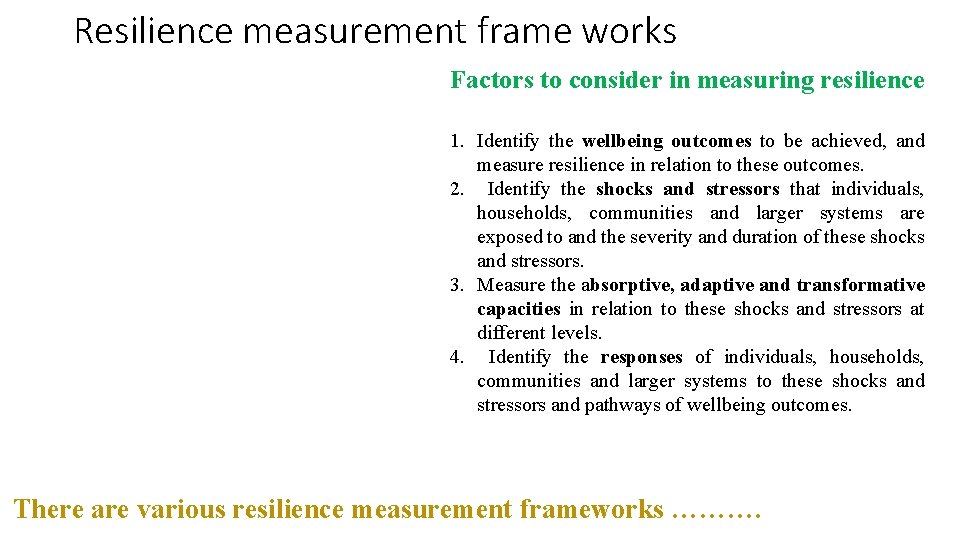
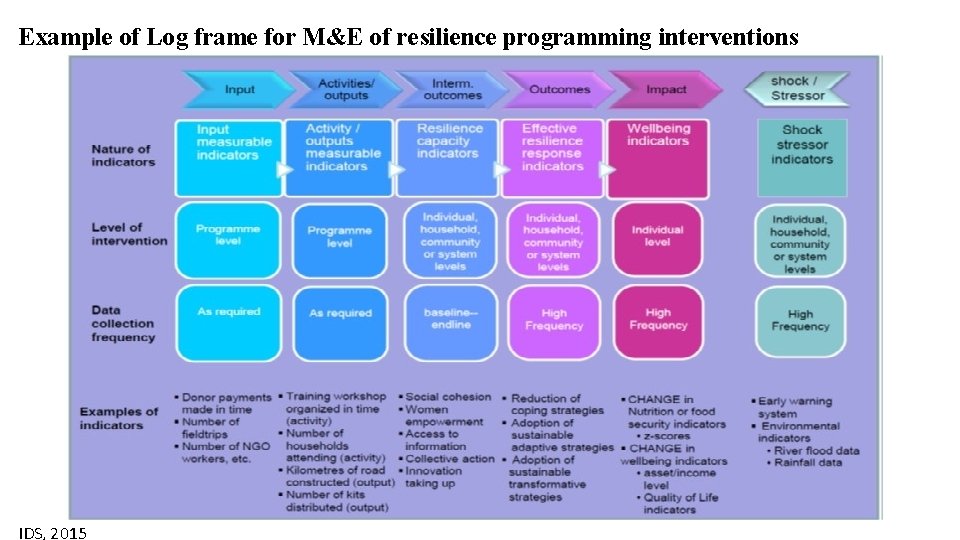
Resilience measurement frame works Factors to consider in measuring resilience 1. Identify the wellbeing outcomes to be achieved, and measure resilience in relation to these outcomes. 2. Identify the shocks and stressors that individuals, households, communities and larger systems are exposed to and the severity and duration of these shocks and stressors. 3. Measure the absorptive, adaptive and transformative capacities in relation to these shocks and stressors at different levels. 4. Identify the responses of individuals, households, communities and larger systems to these shocks and stressors and pathways of wellbeing outcomes. There are various resilience measurement frameworks ……….
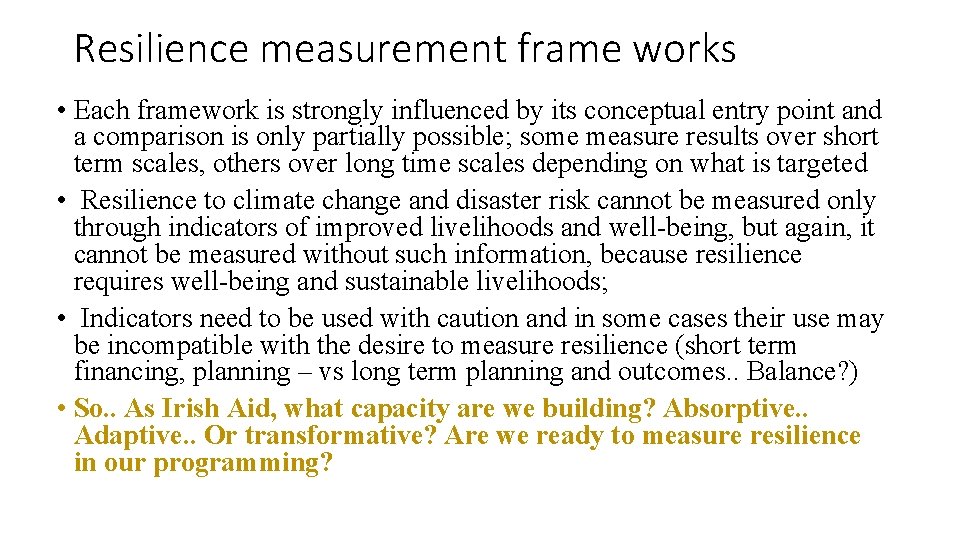
Resilience measurement frame works • Each framework is strongly influenced by its conceptual entry point and a comparison is only partially possible; some measure results over short term scales, others over long time scales depending on what is targeted • Resilience to climate change and disaster risk cannot be measured only through indicators of improved livelihoods and well-being, but again, it cannot be measured without such information, because resilience requires well-being and sustainable livelihoods; • Indicators need to be used with caution and in some cases their use may be incompatible with the desire to measure resilience (short term financing, planning – vs long term planning and outcomes. . Balance? ) • So. . As Irish Aid, what capacity are we building? Absorptive. . Adaptive. . Or transformative? Are we ready to measure resilience in our programming?
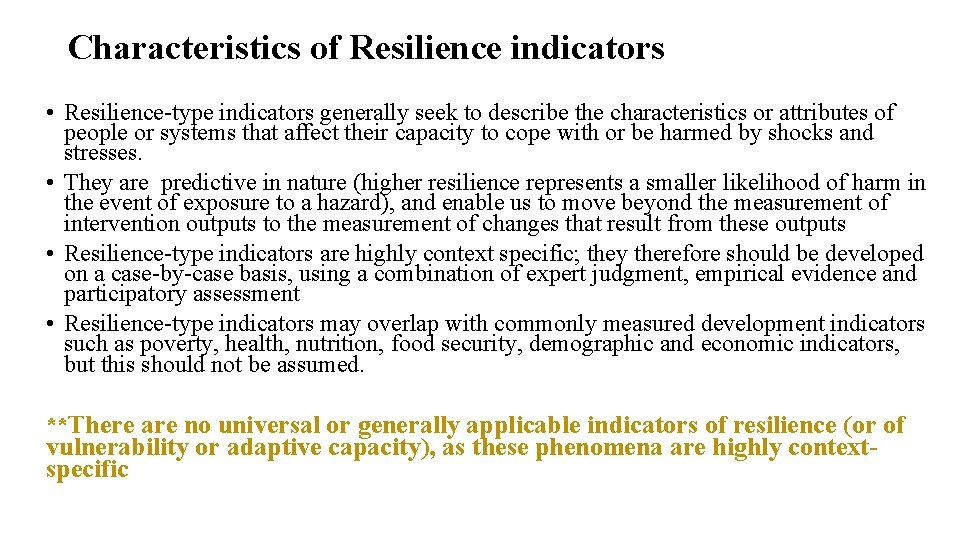
Characteristics of Resilience indicators • Resilience-type indicators generally seek to describe the characteristics or attributes of people or systems that affect their capacity to cope with or be harmed by shocks and stresses. • They are predictive in nature (higher resilience represents a smaller likelihood of harm in the event of exposure to a hazard), and enable us to move beyond the measurement of intervention outputs to the measurement of changes that result from these outputs • Resilience-type indicators are highly context specific; they therefore should be developed on a case-by-case basis, using a combination of expert judgment, empirical evidence and participatory assessment • Resilience-type indicators may overlap with commonly measured development indicators such as poverty, health, nutrition, food security, demographic and economic indicators, but this should not be assumed. **There are no universal or generally applicable indicators of resilience (or of vulnerability or adaptive capacity), as these phenomena are highly contextspecific
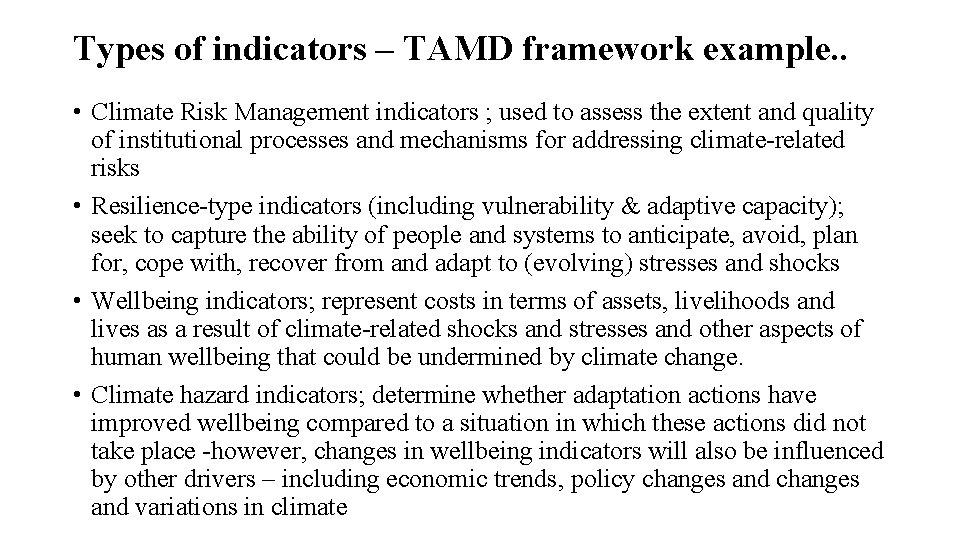
Types of indicators – TAMD framework example. . • Climate Risk Management indicators ; used to assess the extent and quality of institutional processes and mechanisms for addressing climate-related risks • Resilience-type indicators (including vulnerability & adaptive capacity); seek to capture the ability of people and systems to anticipate, avoid, plan for, cope with, recover from and adapt to (evolving) stresses and shocks • Wellbeing indicators; represent costs in terms of assets, livelihoods and lives as a result of climate-related shocks and stresses and other aspects of human wellbeing that could be undermined by climate change. • Climate hazard indicators; determine whether adaptation actions have improved wellbeing compared to a situation in which these actions did not take place -however, changes in wellbeing indicators will also be influenced by other drivers – including economic trends, policy changes and variations in climate
Example of Log frame for M&E of resilience programming interventions IDS, 2015
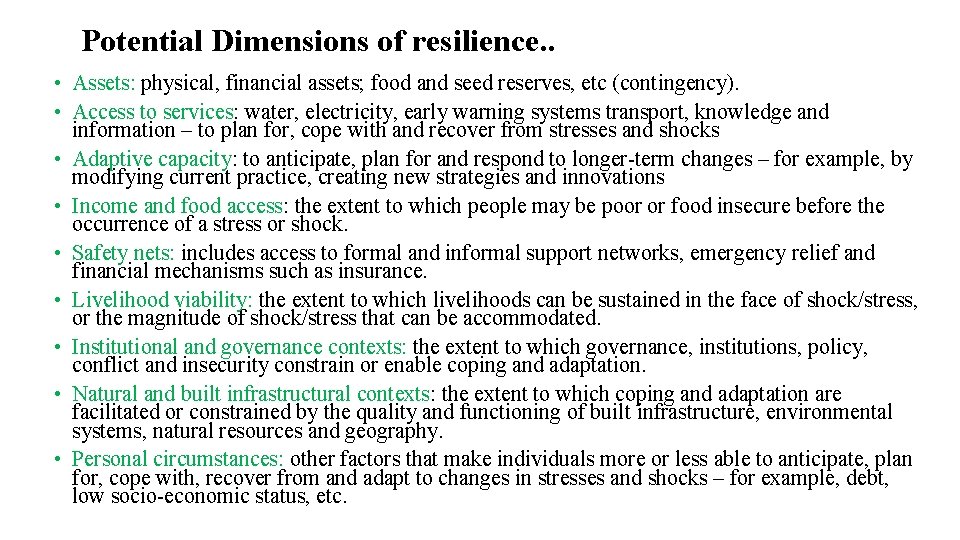
Potential Dimensions of resilience. . • Assets: physical, financial assets; food and seed reserves, etc (contingency). • Access to services: water, electricity, early warning systems transport, knowledge and information – to plan for, cope with and recover from stresses and shocks • Adaptive capacity: to anticipate, plan for and respond to longer-term changes – for example, by modifying current practice, creating new strategies and innovations • Income and food access: the extent to which people may be poor or food insecure before the occurrence of a stress or shock. • Safety nets: includes access to formal and informal support networks, emergency relief and financial mechanisms such as insurance. • Livelihood viability: the extent to which livelihoods can be sustained in the face of shock/stress, or the magnitude of shock/stress that can be accommodated. • Institutional and governance contexts: the extent to which governance, institutions, policy, conflict and insecurity constrain or enable coping and adaptation. • Natural and built infrastructural contexts: the extent to which coping and adaptation are facilitated or constrained by the quality and functioning of built infrastructure, environmental systems, natural resources and geography. • Personal circumstances: other factors that make individuals more or less able to anticipate, plan for, cope with, recover from and adapt to changes in stresses and shocks – for example, debt, low socio-economic status, etc.
M&E, evidence generation and Learning – tips! • Ensure M&E is considered in initial planning and a clear theory of change is followed and is revisited and revised through implementation • Build an explicit learning phase into planning or programme cycles • Involve beneficiaries and key stakeholders in M&E to build ownership as well as to learn from the evaluation process • Institutionalise the function of learning into a unit or existing team • Be flexible and honest – learn from both failure and successes - revise what is not working based on the context • Allocate resources for baselines, data collection and periodic evaluations and impact assessments to generate evidence for learning
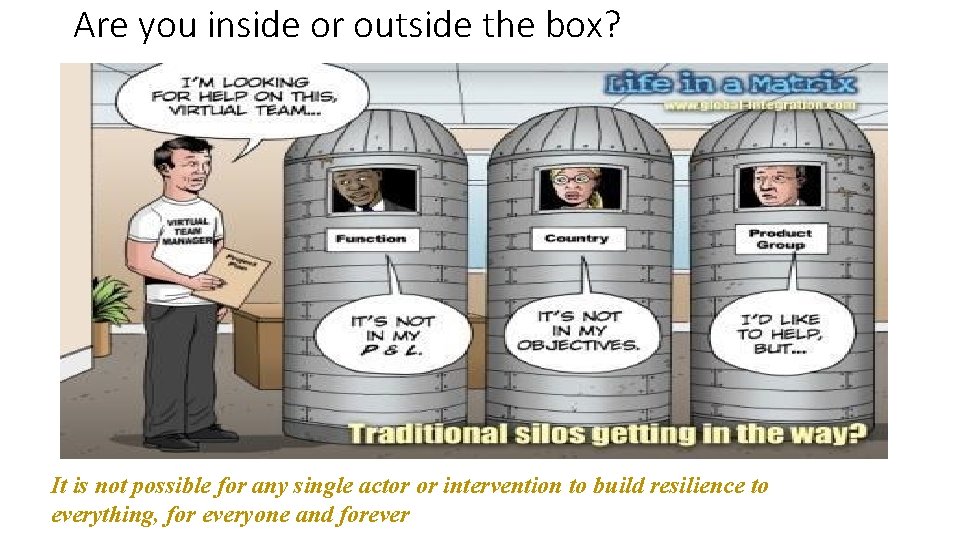
Are you inside or outside the box? It is not possible for any single actor or intervention to build resilience to everything, for everyone and forever
Further reading… • E. Lisa F. Schipper & Lara Langston, 2015. A comparative overview of resilience measurement frameworks analysing indicators and approaches https: //www. odi. org/sites/odi. org. uk/files/odiassets/publications. . . files/9754. pdf • Irish Aid, 2016. Irish Aid policy brief: Building resilience • http: //policy-practice. oxfam. org. uk/publications/a-multidimensional-approach-to-measuring-resilience 302641 • http: //www. iied. org/tracking-adaptation-measuring-development-tamd • http: //www. ids. ac. uk/publication/design-monitoring-and-evaluation-of-resilience-interventions-conceptualand-empirical-considerations • Measuring Resilience; https: //www. gov. uk/dfid-research-outputs/measuring-resilience • Nick Brooks and Susannah Fisher. 2014. Tracking Adaptation and Measuring Development: a step-by-step guide. Toolkit. IIED, London. http: //pubs. iied. org/10100 IIED/
Discussions questions 1. Based on your understanding of resilience and from your planning and implementation experience, how can Irish Aid make programmes more resilient? 2. How can we improve our performance measurement framework process to ensure we are measuring the right indicators? ( 2 groups each discussing one question and report back)