
Understanding and fulfilling the rights and responsibilities of
Understanding and fulfilling the rights and responsibilities of A 8 nationals Gerard Lemos&Crane
Overview • Accession Eight countries joined the EU on 1 st May 2004 • Only Ireland, Sweden and the UK did not prevent access to domestic labour markets • Most newcomers are from Poland (62%), Lithuania (12%) and Slovakia (11%) • UK’s right to restrict access to the labour market ends in 2011
Working in the UK • Can work freely: – those working for a non-UK employer – self-employed workers – A 8 nationals who are also citizens (or family relations of a citizen) of another EEA 16 state • Other workers must register with the Home Office Worker Registration Scheme (WRS) – Grants full rights and entitlements after working legally in the UK for “ 12 months without interruption”
Means-tested benefits (MTBs) • MTBs: housing benefit, council tax benefit, income support, income-based job-seekers’ allowance and pension credit • Eligible: – – workers who have completed 12 months workers registered with the WRS self-employed students • Ineligible: – workers not registered with the WRS – those out of work for more than 30 days – retired people
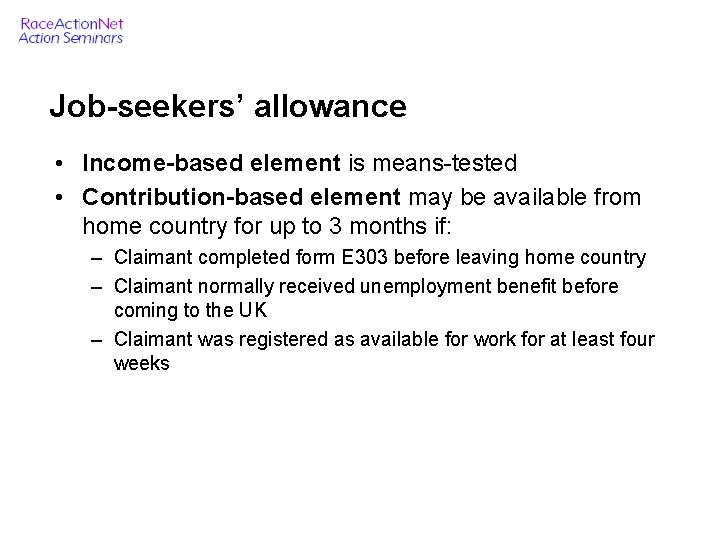
Job-seekers’ allowance • Income-based element is means-tested • Contribution-based element may be available from home country for up to 3 months if: – Claimant completed form E 303 before leaving home country – Claimant normally received unemployment benefit before coming to the UK – Claimant was registered as available for work for at least four weeks
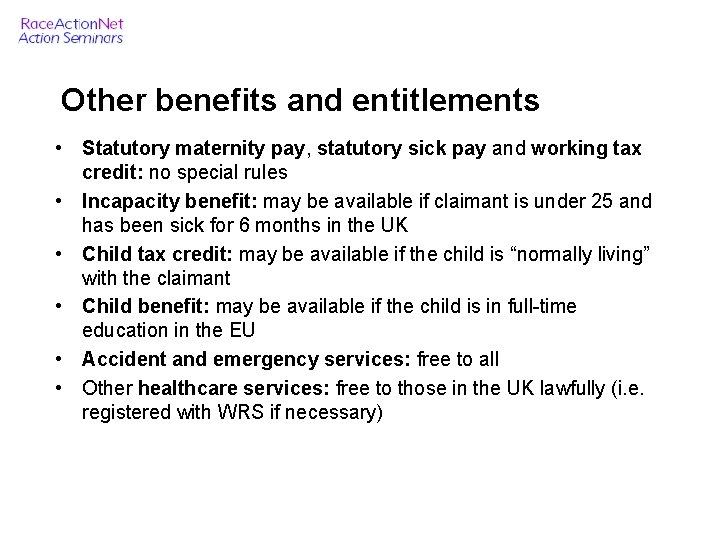
Other benefits and entitlements • Statutory maternity pay, statutory sick pay and working tax credit: no special rules • Incapacity benefit: may be available if claimant is under 25 and has been sick for 6 months in the UK • Child tax credit: may be available if the child is “normally living” with the claimant • Child benefit: may be available if the child is in full-time education in the EU • Accident and emergency services: free to all • Other healthcare services: free to those in the UK lawfully (i. e. registered with WRS if necessary)
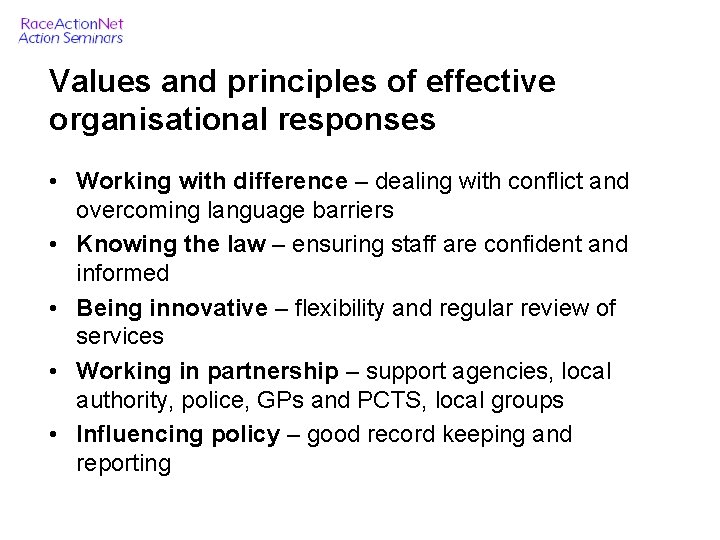
Values and principles of effective organisational responses • Working with difference – dealing with conflict and overcoming language barriers • Knowing the law – ensuring staff are confident and informed • Being innovative – flexibility and regular review of services • Working in partnership – support agencies, local authority, police, GPs and PCTS, local groups • Influencing policy – good record keeping and reporting
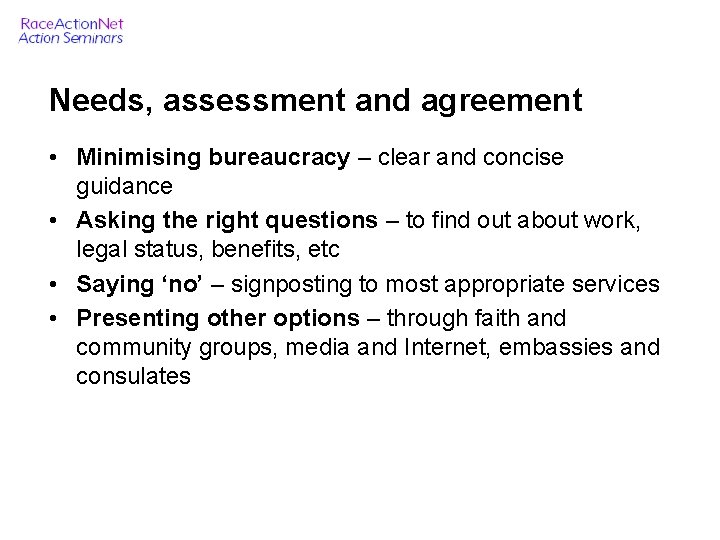
Needs, assessment and agreement • Minimising bureaucracy – clear and concise guidance • Asking the right questions – to find out about work, legal status, benefits, etc • Saying ‘no’ – signposting to most appropriate services • Presenting other options – through faith and community groups, media and Internet, embassies and consulates
How organisations can help in finding work for A 8 nationals • Qualifications – translate previous qualifications so that they are recognised in the UK • Searching for jobs – getting round unfamiliar process of looking for and applying for work • Training – English language skills • Applying for work – resources such as telephones, CVS and letter writing • Banking – start-up fees for bank accounts and access to basic bank accounts
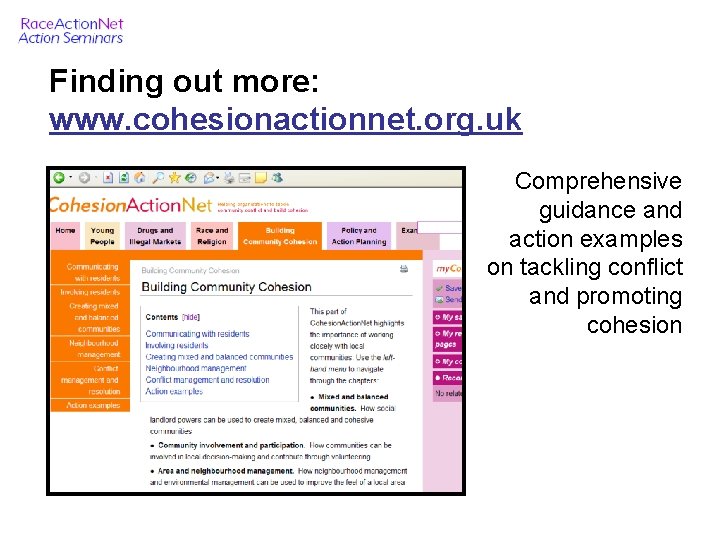
Finding out more: www. cohesionactionnet. org. uk Comprehensive guidance and action examples on tackling conflict and promoting cohesion
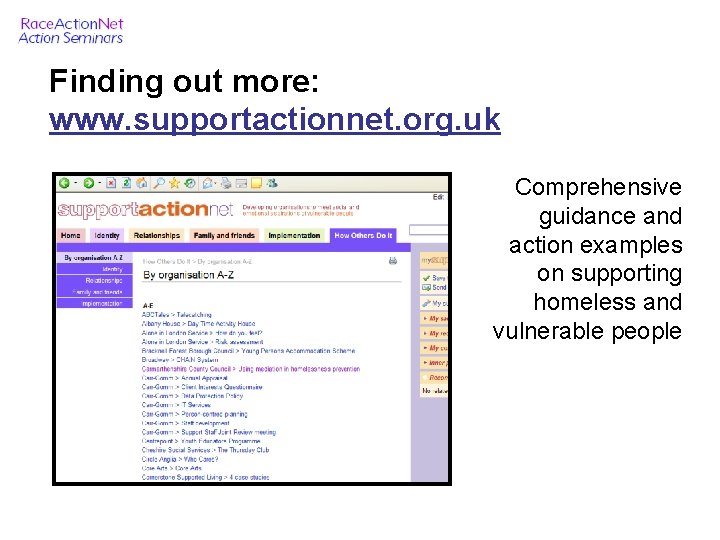
Finding out more: www. supportactionnet. org. uk Comprehensive guidance and action examples on supporting homeless and vulnerable people
- Slides: 11