
Understanding American IndianAlaska Native Communication Styles Dean S
- Slides: 12
“Understanding American Indian/Alaska Native Communication Styles” Dean S. Seneca, MPH, MCURP Director, Office of Tribal Affairs Agency for Toxic Substances and Disease Registry
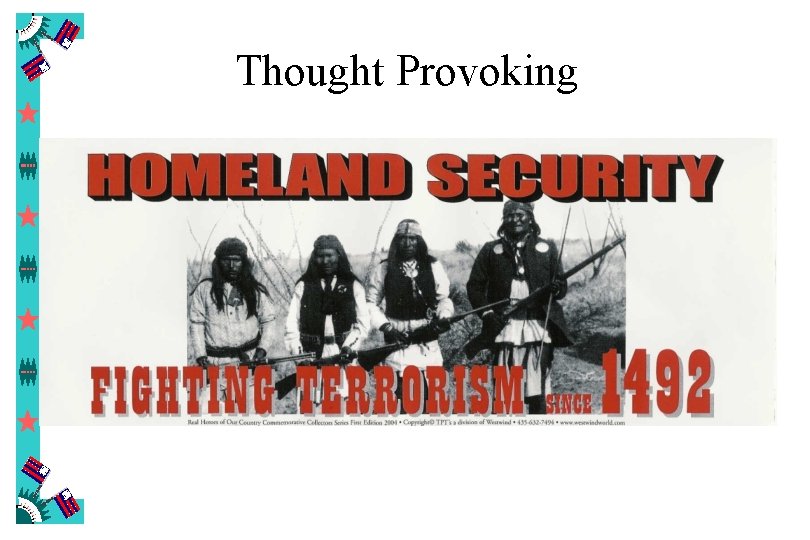
Thought Provoking
Environmental Issues “Land is life” ØThreat to Subsistence Lifestyles; fish consumption, plants (medical purposes) and animals ØThreat to Cultural Practices; sweat lodges, basket weaving, pottery making ØPolluted Land Waterways; environmental compensation
Environmental Health Issues ØEmotional Trauma ØPhysiological Trauma ØPhysical Trauma ØSpiritual Trauma
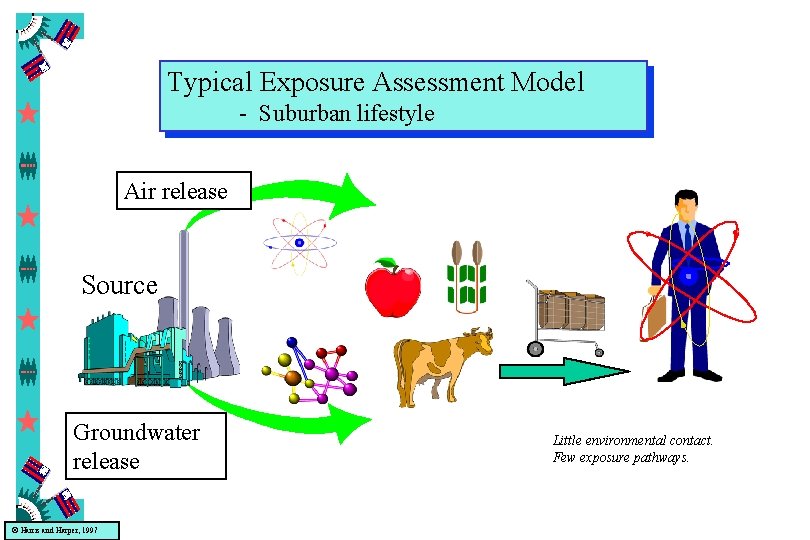
Typical Exposure Assessment Model - Suburban lifestyle Air release Source Groundwater release © Harris and Harper, 1997 Little environmental contact. Few exposure pathways.
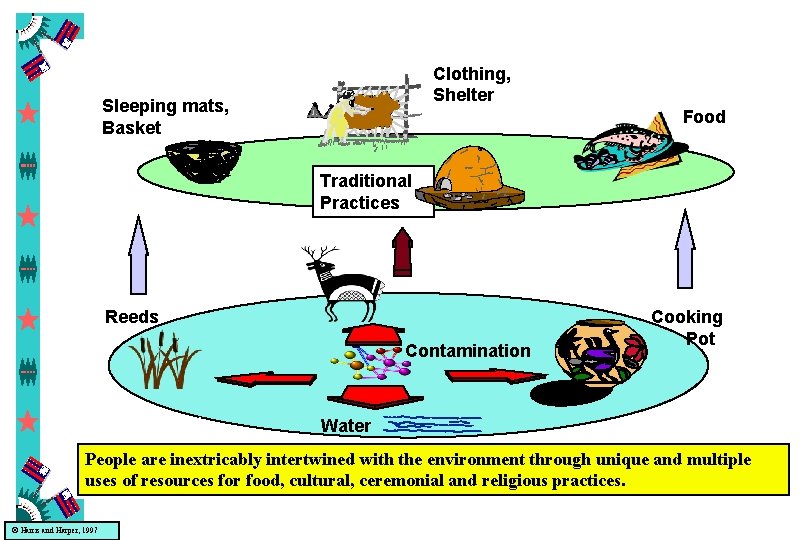
Clothing, Shelter Sleeping mats, Basket Food Traditional Practices Reeds Contamination Cooking Pot Water People are inextricably intertwined with the environment through unique and multiple uses of resources for food, cultural, ceremonial and religious practices. © Harris and Harper, 1997
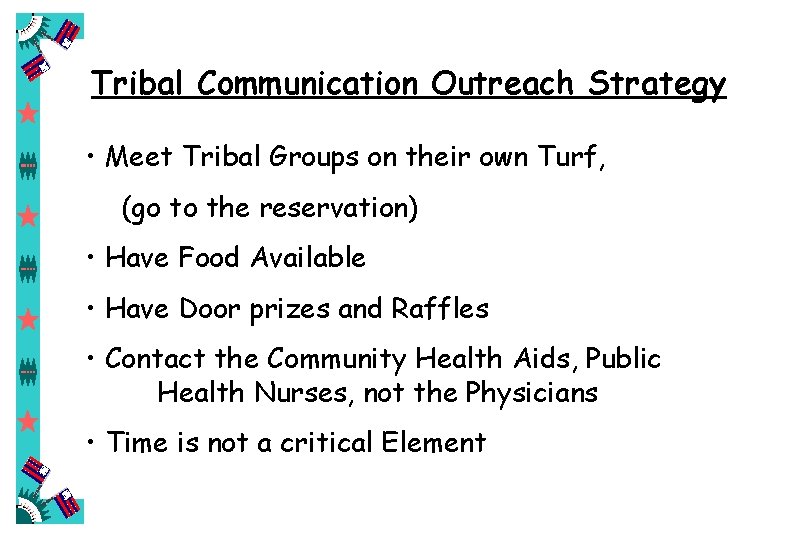
Tribal Communication Outreach Strategy • Meet Tribal Groups on their own Turf, (go to the reservation) • Have Food Available • Have Door prizes and Raffles • Contact the Community Health Aids, Public Health Nurses, not the Physicians • Time is not a critical Element
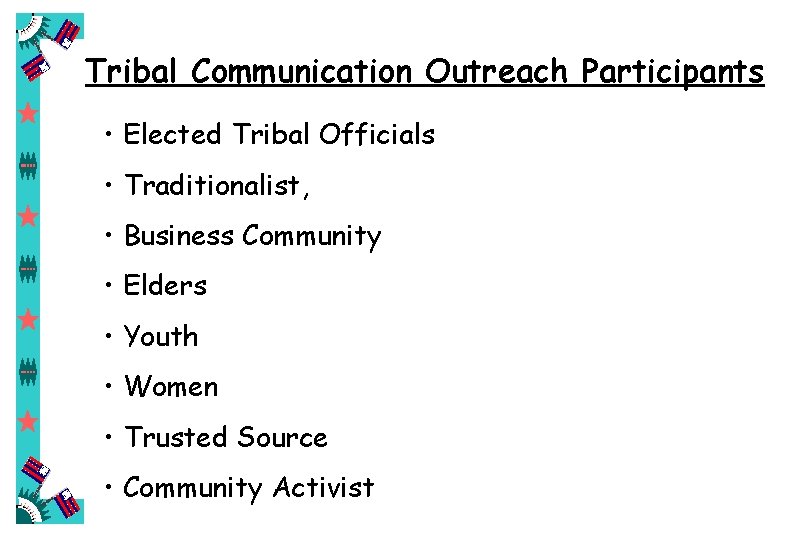
Tribal Communication Outreach Participants • Elected Tribal Officials • Traditionalist, • Business Community • Elders • Youth • Women • Trusted Source • Community Activist
Tribal Communications Strategies • Tribes have a severe distrust of federal government and government employees • Don’t make promises you cannot keep • Always ask what is the respectful approach to implementing the sharing of critical or important information • Listen for Direction from interpreters and community members • Develop Health Education Message with the Tribe
Tribal Communications Strategies • Watch for body style and facial expressions of your audience • Remember you are working with the tribes and not for the tribes • Be honest in building relationships (federal Shuffle) • Find an interpreter who is respected and recognized member of the community, not a stranger!
Tribal Communications Strategies • Very circular thinking patterns • Tribal symbols, be Tribal Specific, Caution • Build you message with the tribal community • Be as graphic, picturesque and as visual as possible • Talking Circles, beware! • Utilize the gossip community • Most of all Commitment Earns Respect