
Understanding 131 Iodine Health Risks Lessons from Chernobyl
Understanding 131 Iodine Health Risks: Lessons from Chernobyl NPHS 1530
Biological Incorporation of Iodine • 131 I is major fission product of uranium, thorium and plutonium • Concentrated by Thyroid • Beta radiation in thyroid • High levels kill tissue • Lower levels are carcinogenic • Uptake can be blocked by large doses of potassium iodide
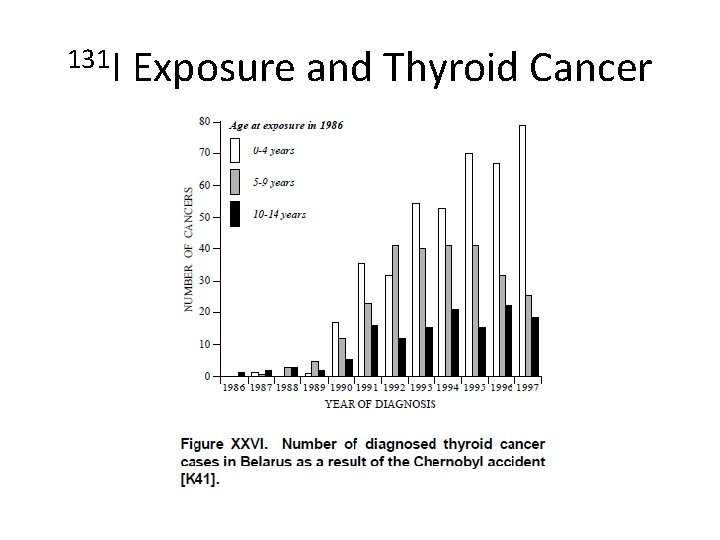
131 I Exposure and Thyroid Cancer
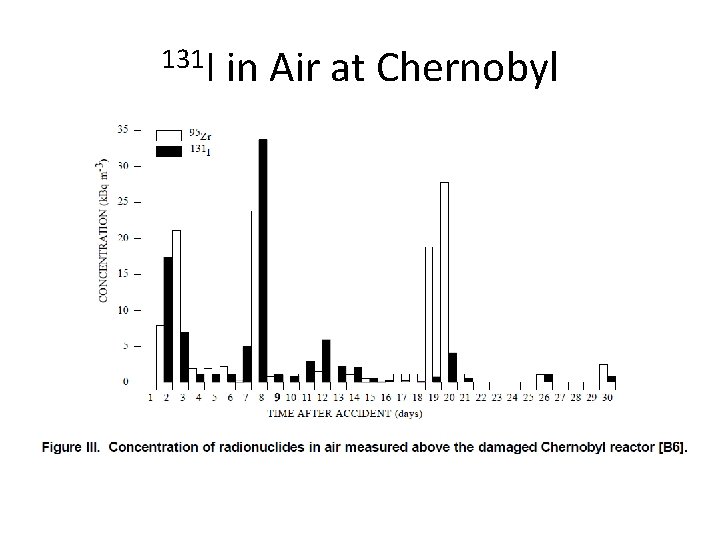
131 I in Air at Chernobyl
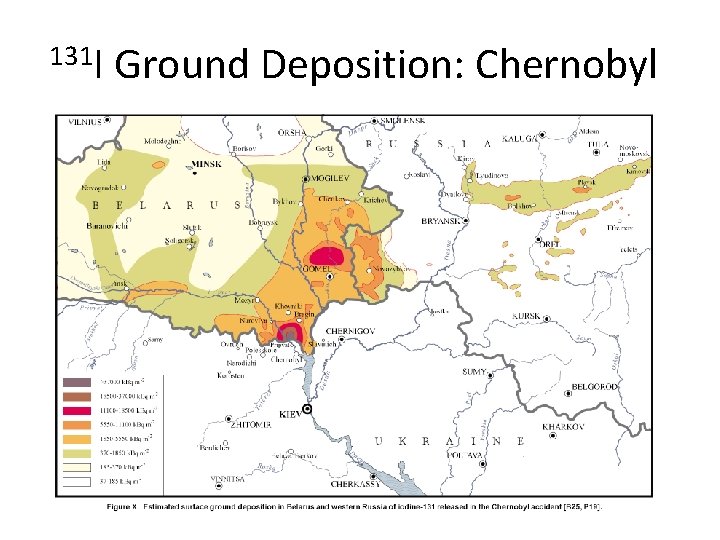
131 I Ground Deposition: Chernobyl
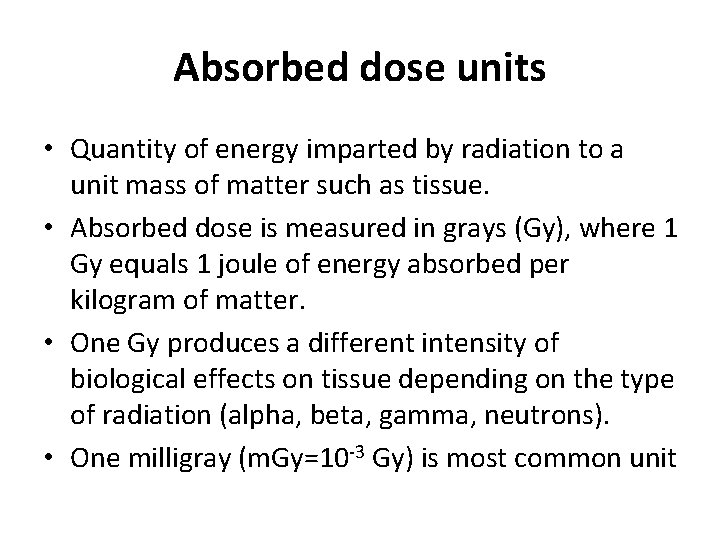
Absorbed dose units • Quantity of energy imparted by radiation to a unit mass of matter such as tissue. • Absorbed dose is measured in grays (Gy), where 1 Gy equals 1 joule of energy absorbed per kilogram of matter. • One Gy produces a different intensity of biological effects on tissue depending on the type of radiation (alpha, beta, gamma, neutrons). • One milligray (m. Gy=10 -3 Gy) is most common unit
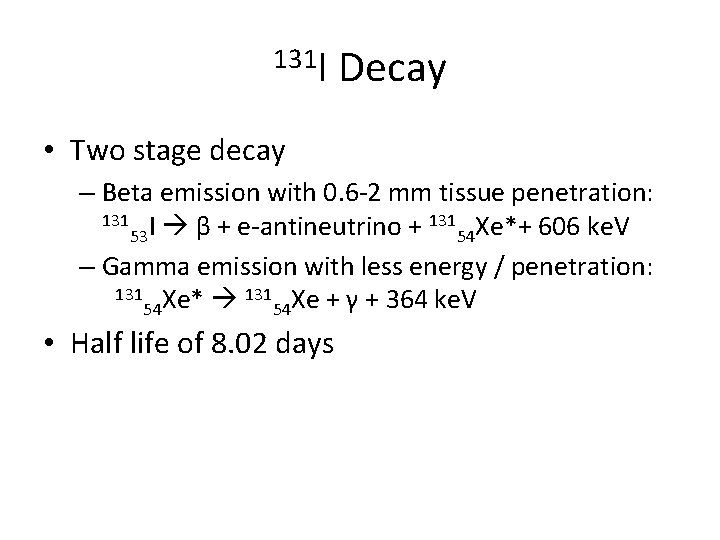
131 I Decay • Two stage decay – Beta emission with 0. 6 -2 mm tissue penetration: 131 I β + e-antineutrino + 131 Xe*+ 606 ke. V 53 54 – Gamma emission with less energy / penetration: 131 Xe* 131 Xe + γ + 364 ke. V 54 54 • Half life of 8. 02 days
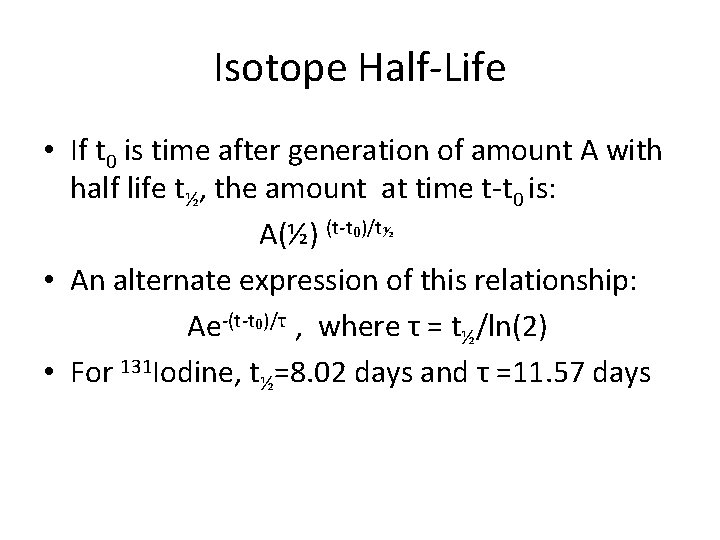
Isotope Half-Life • If t 0 is time after generation of amount A with half life t½, the amount at time t-t 0 is: A(½) (t-t 0)/t½ • An alternate expression of this relationship: Ae-(t-t 0)/τ , where τ = t½/ln(2) • For 131 Iodine, t½=8. 02 days and τ =11. 57 days
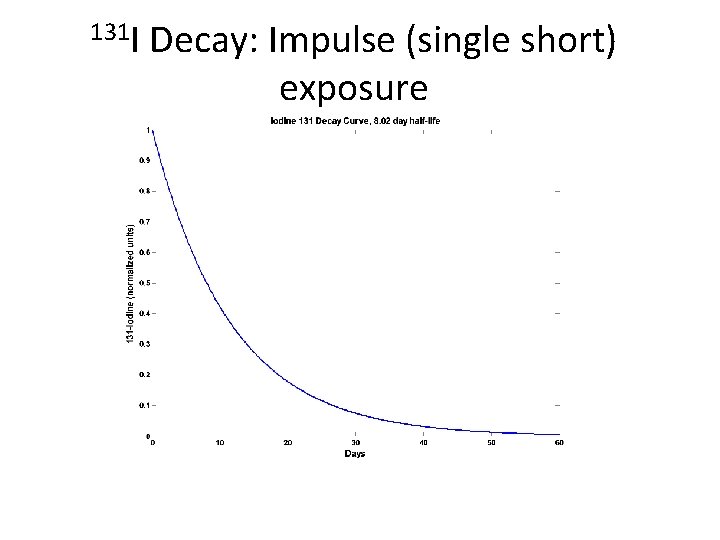
131 I Decay: Impulse (single short) exposure
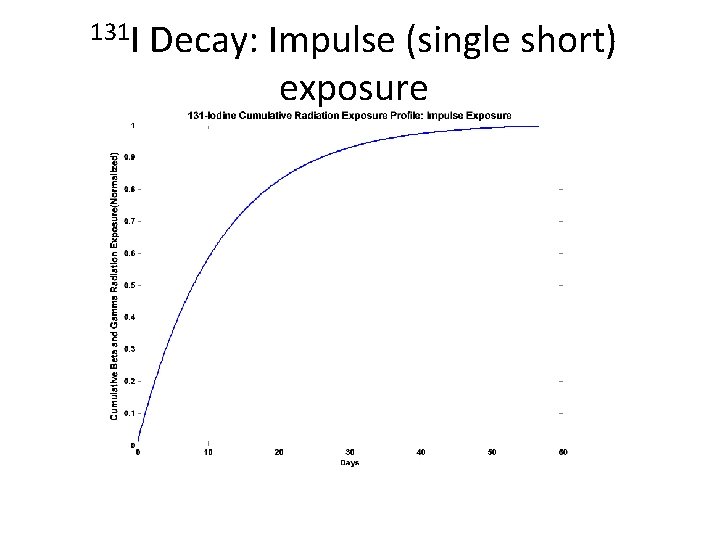
131 I Decay: Impulse (single short) exposure
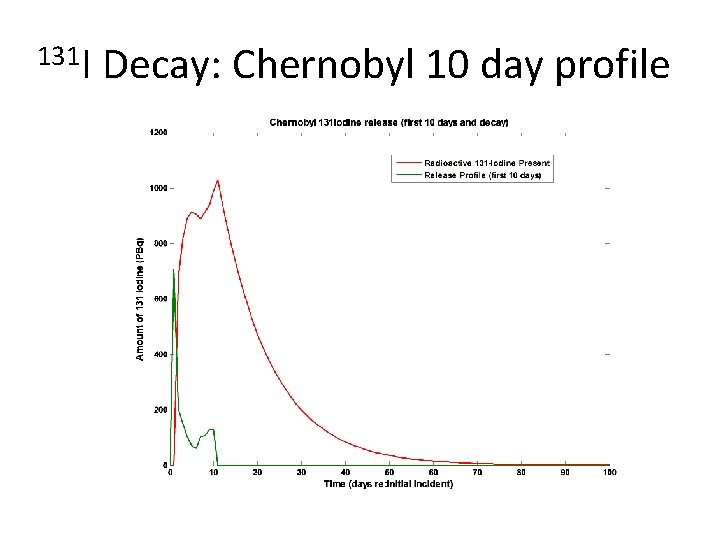
131 I Decay: Chernobyl 10 day profile
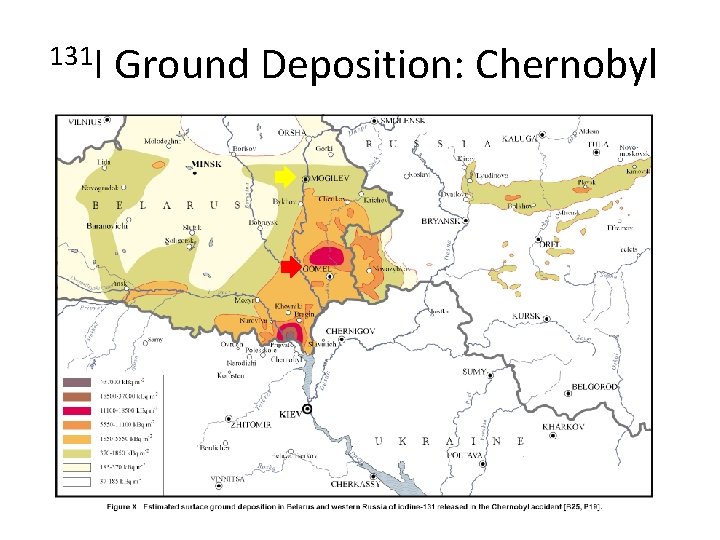
131 I Ground Deposition: Chernobyl
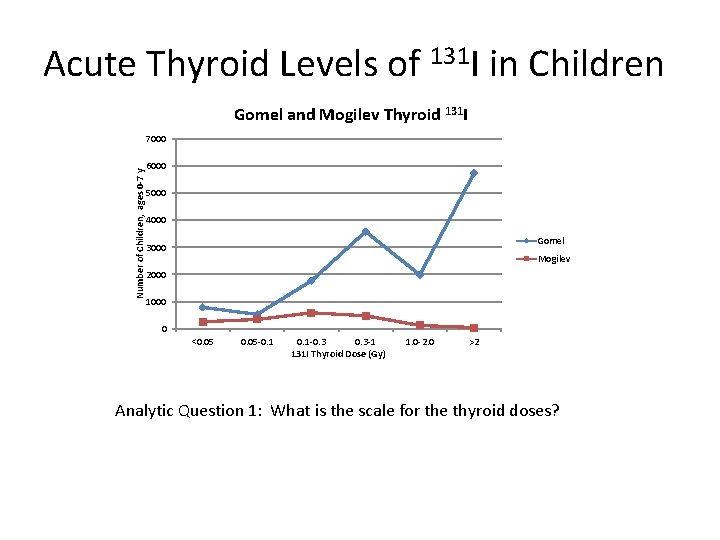
Acute Thyroid Levels of 131 I in Children Gomel and Mogilev Thyroid 131 I Number of Children, ages 0 -7 y 7000 6000 5000 4000 Gomel 3000 Mogilev 2000 1000 0 <0. 05 -0. 1 -0. 3 -1 131 I Thyroid Dose (Gy) 1. 0 -2. 0 >2 Analytic Question 1: What is the scale for the thyroid doses?
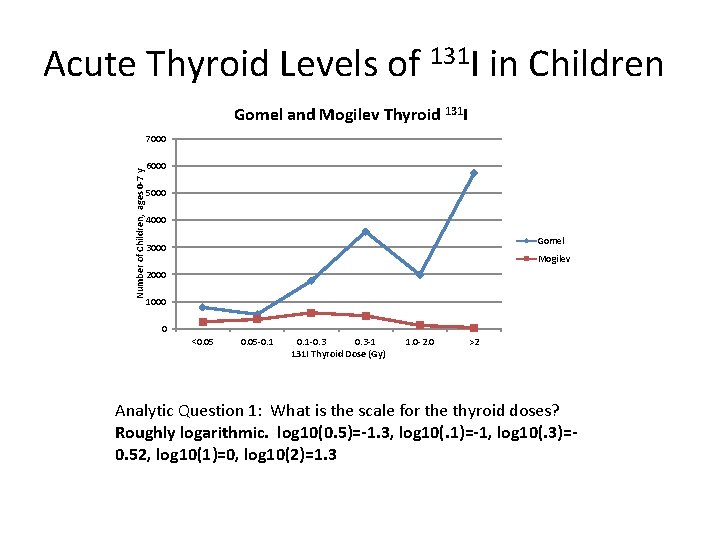
Acute Thyroid Levels of 131 I in Children Gomel and Mogilev Thyroid 131 I Number of Children, ages 0 -7 y 7000 6000 5000 4000 Gomel 3000 Mogilev 2000 1000 0 <0. 05 -0. 1 -0. 3 -1 131 I Thyroid Dose (Gy) 1. 0 -2. 0 >2 Analytic Question 1: What is the scale for the thyroid doses? Roughly logarithmic. log 10(0. 5)=-1. 3, log 10(. 1)=-1, log 10(. 3)=0. 52, log 10(1)=0, log 10(2)=1. 3
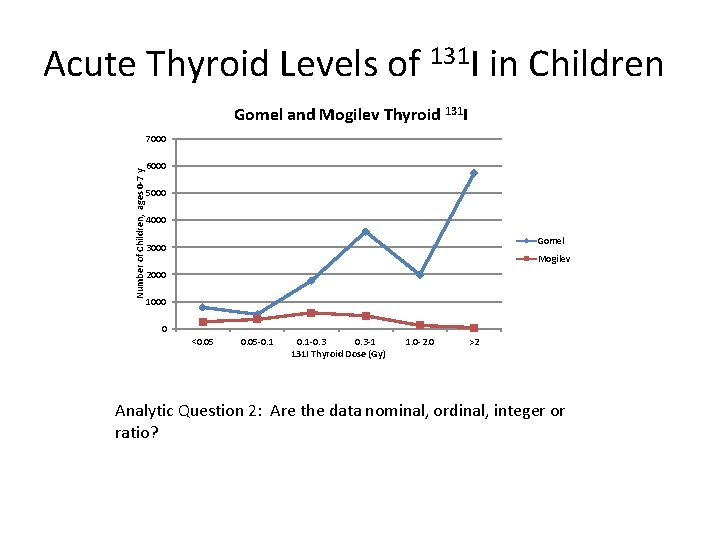
Acute Thyroid Levels of 131 I in Children Gomel and Mogilev Thyroid 131 I Number of Children, ages 0 -7 y 7000 6000 5000 4000 Gomel 3000 Mogilev 2000 1000 0 <0. 05 -0. 1 -0. 3 -1 131 I Thyroid Dose (Gy) 1. 0 -2. 0 >2 Analytic Question 2: Are the data nominal, ordinal, integer or ratio?
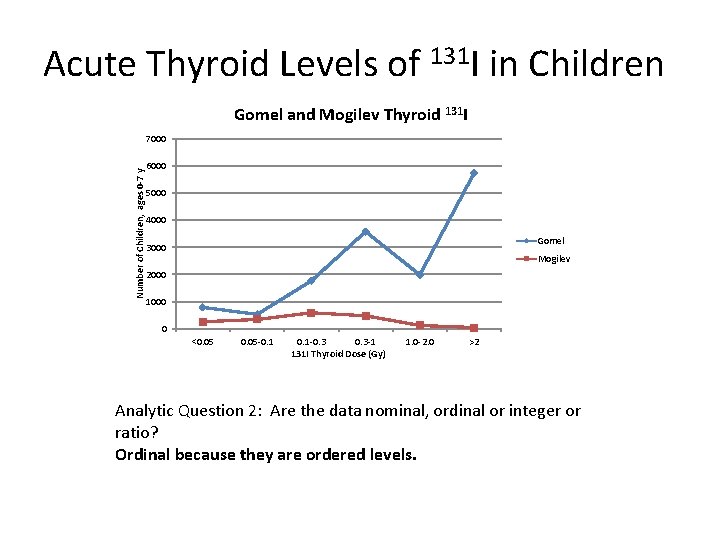
Acute Thyroid Levels of 131 I in Children Gomel and Mogilev Thyroid 131 I Number of Children, ages 0 -7 y 7000 6000 5000 4000 Gomel 3000 Mogilev 2000 1000 0 <0. 05 -0. 1 -0. 3 -1 131 I Thyroid Dose (Gy) 1. 0 -2. 0 >2 Analytic Question 2: Are the data nominal, ordinal or integer or ratio? Ordinal because they are ordered levels.
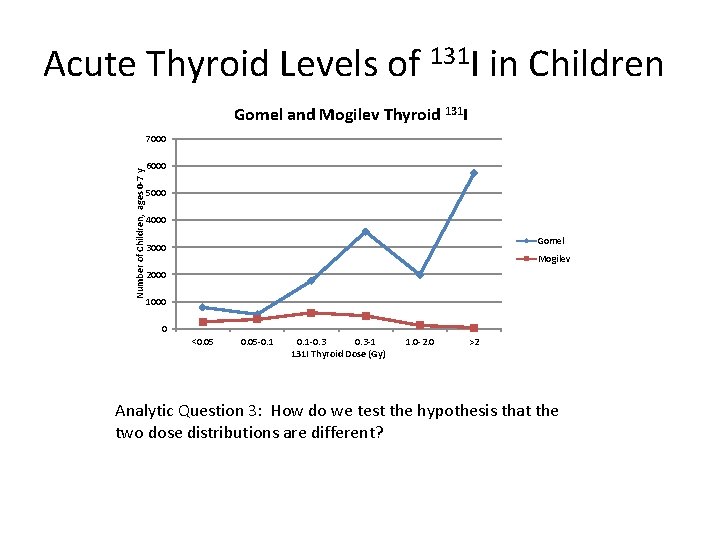
Acute Thyroid Levels of 131 I in Children Gomel and Mogilev Thyroid 131 I Number of Children, ages 0 -7 y 7000 6000 5000 4000 Gomel 3000 Mogilev 2000 1000 0 <0. 05 -0. 1 -0. 3 -1 131 I Thyroid Dose (Gy) 1. 0 -2. 0 >2 Analytic Question 3: How do we test the hypothesis that the two dose distributions are different?
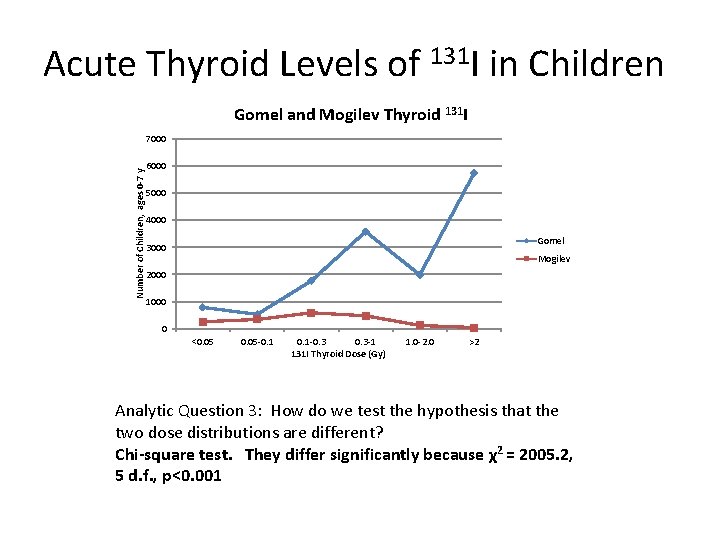
Acute Thyroid Levels of 131 I in Children Gomel and Mogilev Thyroid 131 I Number of Children, ages 0 -7 y 7000 6000 5000 4000 Gomel 3000 Mogilev 2000 1000 0 <0. 05 -0. 1 -0. 3 -1 131 I Thyroid Dose (Gy) 1. 0 -2. 0 >2 Analytic Question 3: How do we test the hypothesis that the two dose distributions are different? Chi-square test. They differ significantly because χ2 = 2005. 2, 5 d. f. , p<0. 001
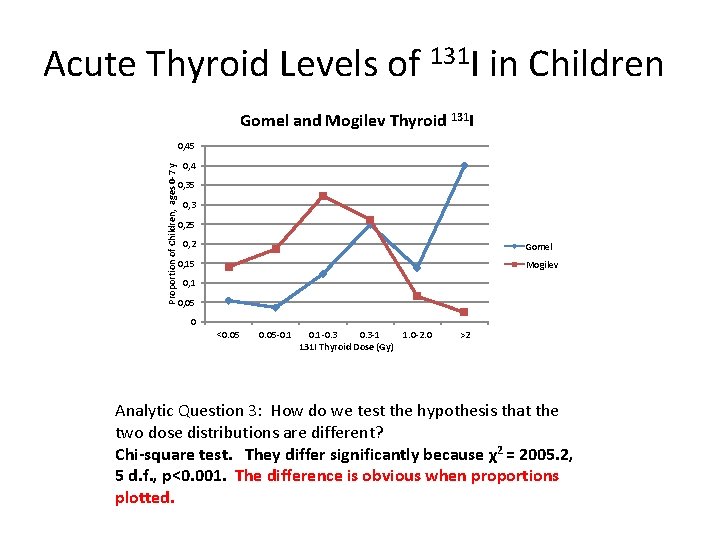
Acute Thyroid Levels of 131 I in Children Gomel and Mogilev Thyroid 131 I Proportion of Children, ages 0 -7 y 0, 45 0, 4 0, 35 0, 3 0, 25 0, 2 Gomel 0, 15 Mogilev 0, 1 0, 05 0 <0. 05 -0. 1 -0. 3 -1 1. 0 -2. 0 131 I Thyroid Dose (Gy) >2 Analytic Question 3: How do we test the hypothesis that the two dose distributions are different? Chi-square test. They differ significantly because χ2 = 2005. 2, 5 d. f. , p<0. 001. The difference is obvious when proportions plotted.
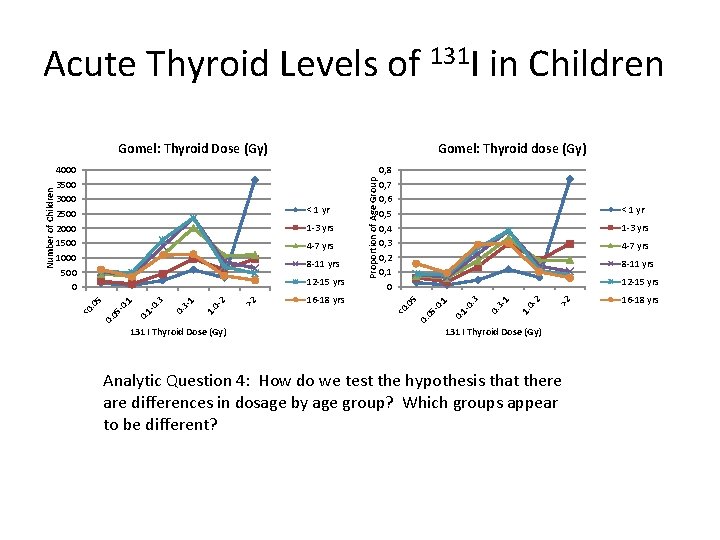
Acute Thyroid Levels of 131 I in Children Gomel: Thyroid dose (Gy) 131 I Thyroid Dose (Gy) >2 1. 02 0. 31 0. 10. 3 12 -15 yrs. 1 16 -18 yrs 8 -11 yrs 05 -0 >2 1. 02 0. 31 3 10. 0. 1 0. 05 - . 0 5 12 -15 yrs 4 -7 yrs 5 8 -11 yrs 1 -3 yrs 0. 4 -7 yrs < 1 yr . 0 1 -3 yrs 0, 8 0, 7 0, 6 0, 5 0, 4 0, 3 0, 2 0, 1 0 <0 < 1 yr Proportion of Age Group 4000 3500 3000 2500 2000 1500 1000 500 0 <0 Number of Children Gomel: Thyroid Dose (Gy) 131 I Thyroid Dose (Gy) Analytic Question 4: How do we test the hypothesis that there are differences in dosage by age group? Which groups appear to be different? 16 -18 yrs
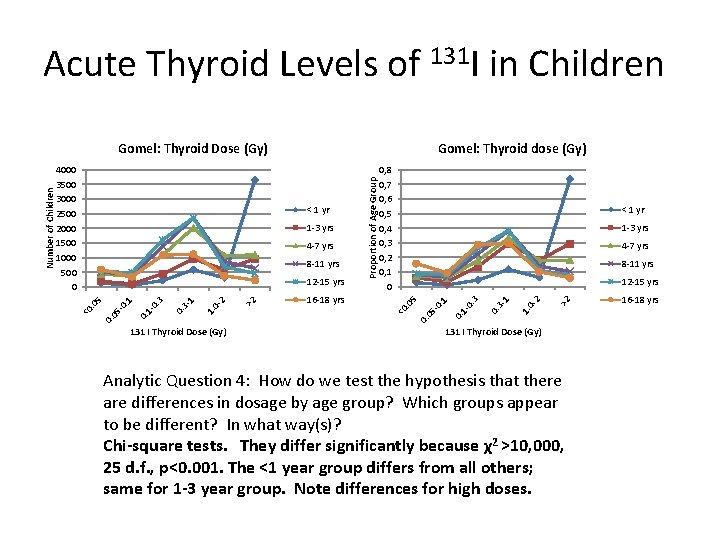
Acute Thyroid Levels of 131 I in Children Gomel: Thyroid dose (Gy) 131 I Thyroid Dose (Gy) >2 1. 02 0. 31 0. 10. 3 12 -15 yrs. 1 16 -18 yrs 8 -11 yrs 05 -0 >2 1. 02 0. 31 3 10. 0. 1 0. 05 - . 0 5 12 -15 yrs 4 -7 yrs 5 8 -11 yrs 1 -3 yrs 0. 4 -7 yrs < 1 yr . 0 1 -3 yrs 0, 8 0, 7 0, 6 0, 5 0, 4 0, 3 0, 2 0, 1 0 <0 < 1 yr Proportion of Age Group 4000 3500 3000 2500 2000 1500 1000 500 0 <0 Number of Children Gomel: Thyroid Dose (Gy) 131 I Thyroid Dose (Gy) Analytic Question 4: How do we test the hypothesis that there are differences in dosage by age group? Which groups appear to be different? In what way(s)? Chi-square tests. They differ significantly because χ2 >10, 000, 25 d. f. , p<0. 001. The <1 year group differs from all others; same for 1 -3 year group. Note differences for high doses. 16 -18 yrs
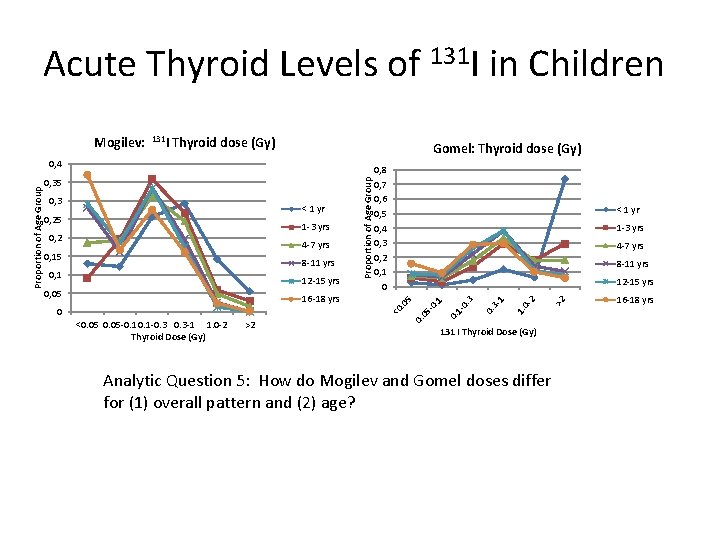
Acute Thyroid Levels of 131 I in Children Thyroid dose (Gy) Gomel: Thyroid dose (Gy) <0 <0. 05 -0. 1 -0. 3 -1 1. 0 -2 Thyroid Dose (Gy) >2 >2 1. 02 16 -18 yrs 0 12 -15 yrs 0. 31 12 -15 yrs 0, 05 8 -11 yrs 3 8 -11 yrs 0, 1 4 -7 yrs 10. 4 -7 yrs 0, 15 1 -3 yrs 0, 2 < 1 yr . 1 < 1 yr 0, 25 05 -0 0, 3 0, 8 0, 7 0, 6 0, 5 0, 4 0, 3 0, 2 0, 1 0 5 0, 35 Proportion of Age Group 0, 4 0. 131 I . 0 Mogilev: 131 I Thyroid Dose (Gy) Analytic Question 5: How do Mogilev and Gomel doses differ for (1) overall pattern and (2) age? 16 -18 yrs
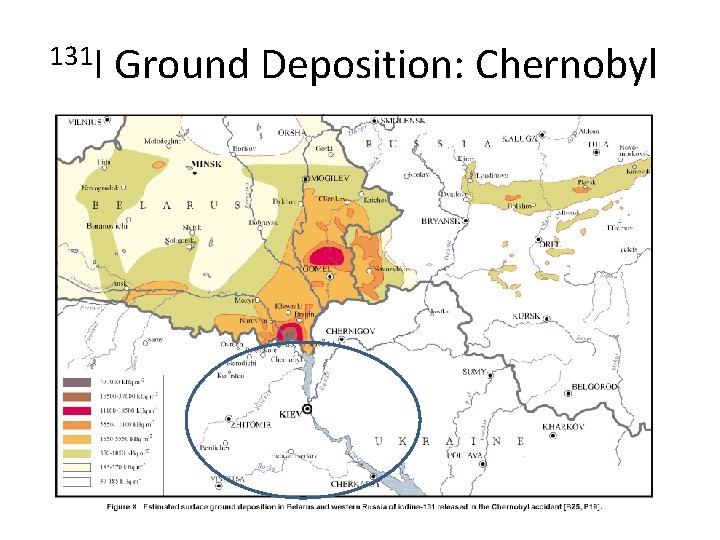
131 I Ground Deposition: Chernobyl
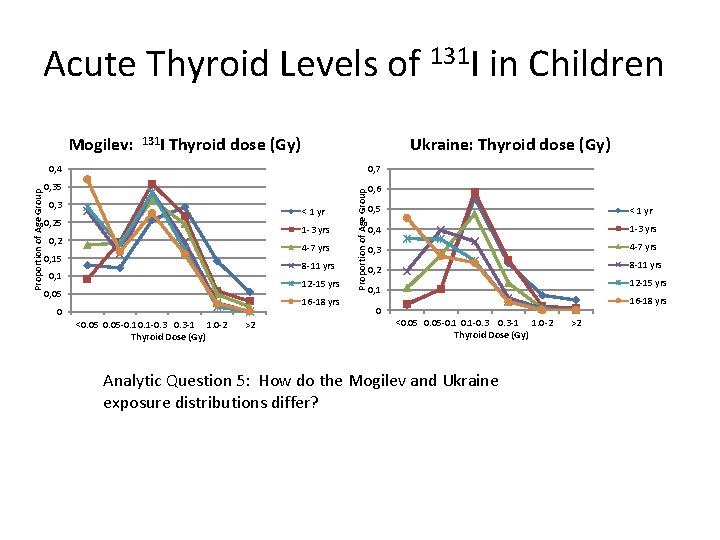
Acute Thyroid Levels of 131 I in Children 131 I Thyroid dose (Gy) Ukraine: Thyroid dose (Gy) 0, 4 0, 7 0, 35 0, 6 0, 3 < 1 yr 0, 25 1 -3 yrs 0, 2 4 -7 yrs 0, 15 8 -11 yrs 0, 1 12 -15 yrs 0, 05 16 -18 yrs 0 <0. 05 -0. 1 -0. 3 -1 1. 0 -2 Thyroid Dose (Gy) >2 Proportion of Age Group Mogilev: 0, 5 < 1 yr 0, 4 1 -3 yrs 0, 3 4 -7 yrs 8 -11 yrs 0, 2 12 -15 yrs 0, 1 16 -18 yrs 0 <0. 05 -0. 1 -0. 3 -1 1. 0 -2 Thyroid Dose (Gy) Analytic Question 5: How do the Mogilev and Ukraine exposure distributions differ? >2
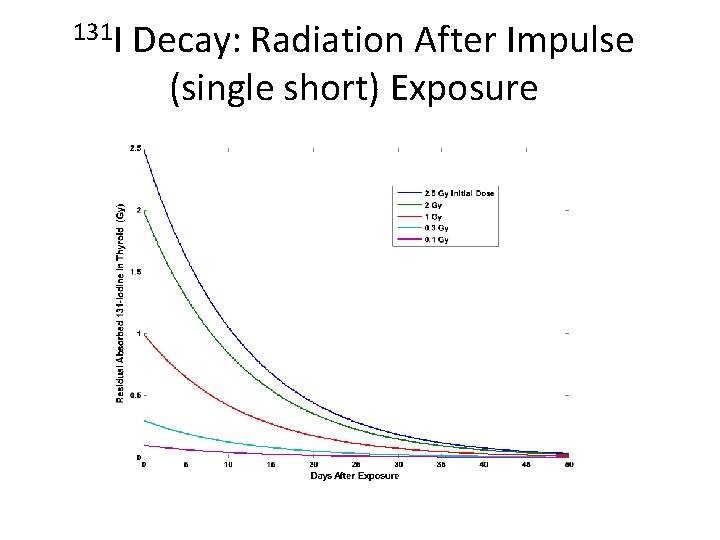
131 I Decay: Radiation After Impulse (single short) Exposure
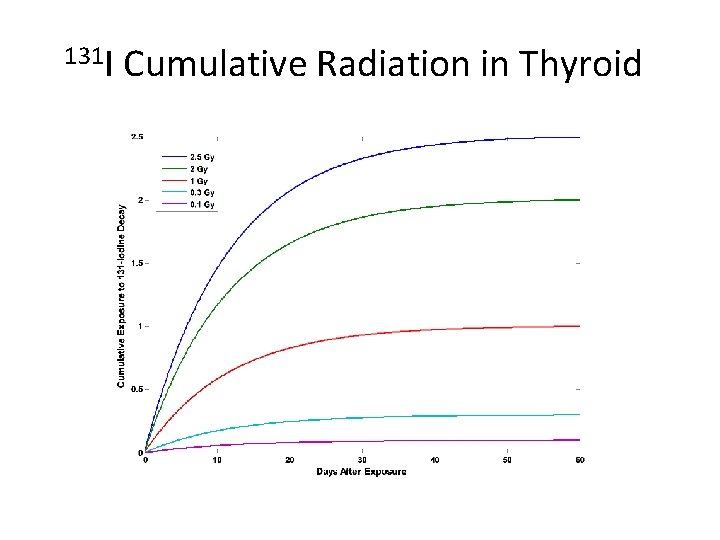
131 I Cumulative Radiation in Thyroid
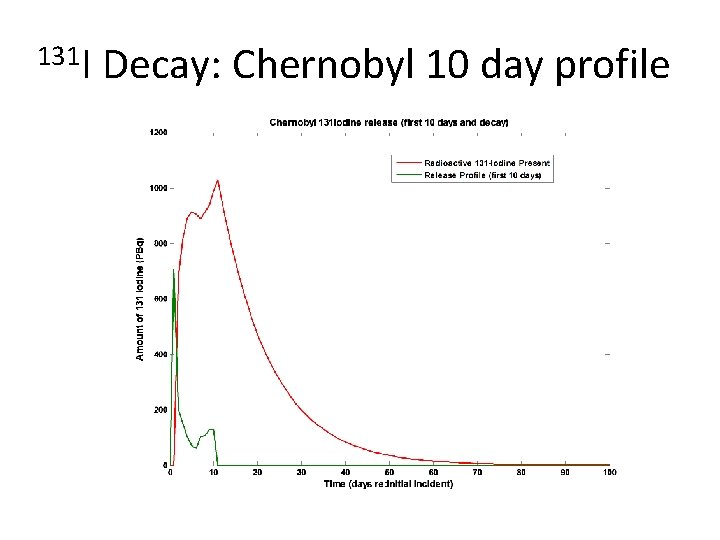
131 I Decay: Chernobyl 10 day profile
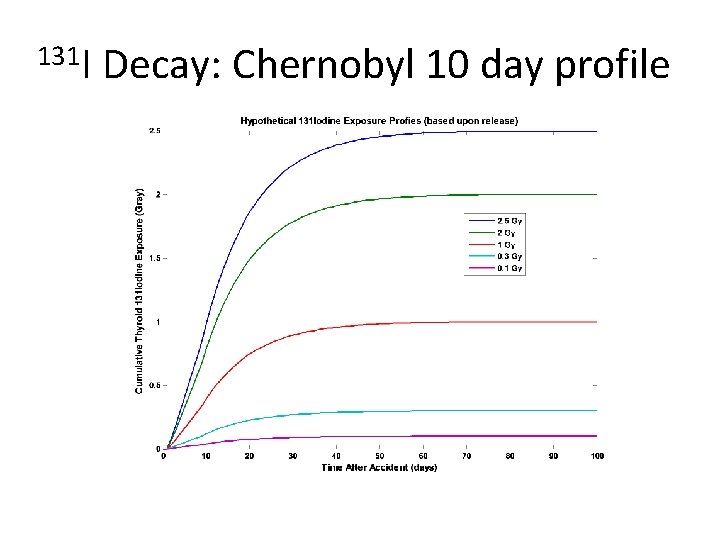
131 I Decay: Chernobyl 10 day profile
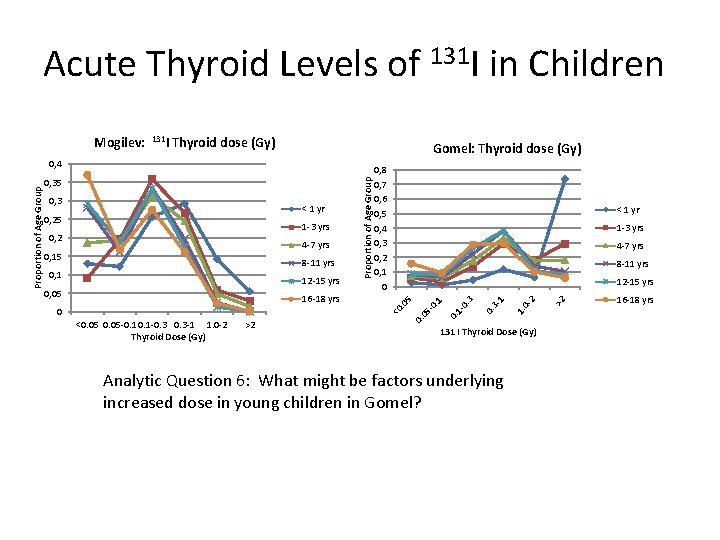
Acute Thyroid Levels of 131 I in Children Thyroid dose (Gy) Gomel: Thyroid dose (Gy) <0 <0. 05 -0. 1 -0. 3 -1 1. 0 -2 Thyroid Dose (Gy) >2 131 I Thyroid Dose (Gy) Analytic Question 6: What might be factors underlying increased dose in young children in Gomel? >2 1. 02 16 -18 yrs 0 12 -15 yrs 0. 31 12 -15 yrs 0, 05 8 -11 yrs 3 8 -11 yrs 0, 1 4 -7 yrs 10. 4 -7 yrs 0, 15 1 -3 yrs 0, 2 < 1 yr . 1 < 1 yr 0, 25 05 -0 0, 3 0, 8 0, 7 0, 6 0, 5 0, 4 0, 3 0, 2 0, 1 0 5 0, 35 Proportion of Age Group 0, 4 0. 131 I . 0 Mogilev: 16 -18 yrs
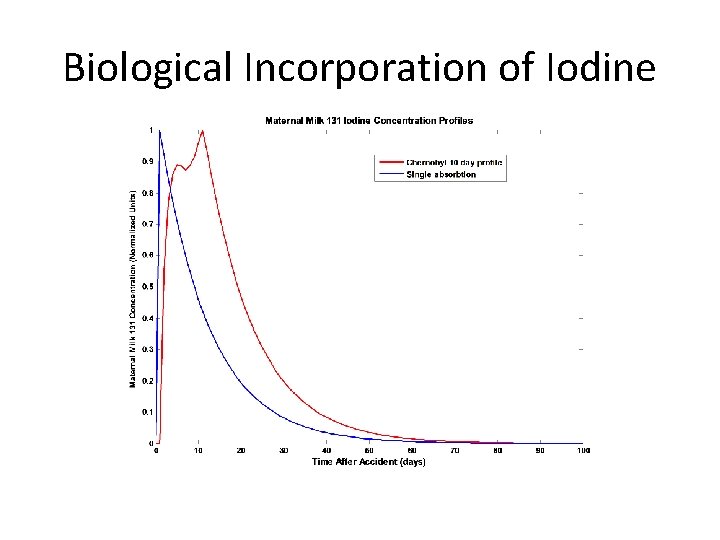
Biological Incorporation of Iodine • “The concentration of iodide in milk can be 20 to 30 -fold higher than that found in maternal plasma (Brown-Grant K (1961) Extrathyroidal iodide concentrating mechanisms. Physiol Rev 41: 189– 213), matching the requirements of the suckling for the synthesis of thyroid hormones. ” Shennan & Peaker (2000) Transport of Milk Constituents by the Mammary Gland, Physiol Rev 80: 925 -951
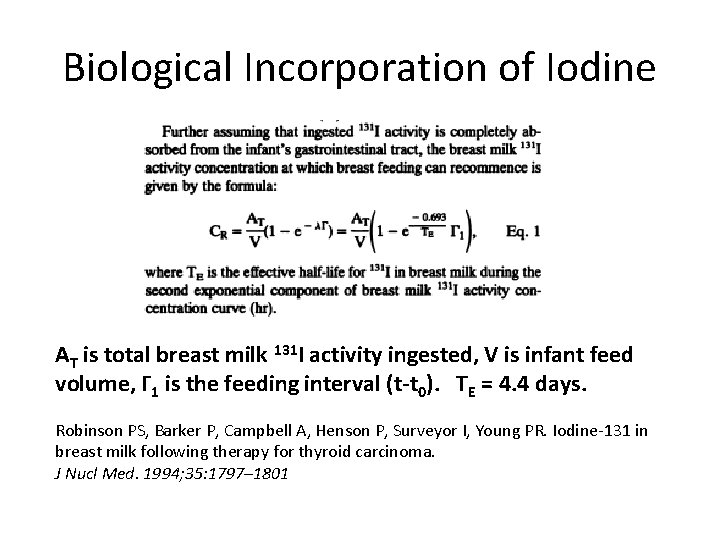
Biological Incorporation of Iodine AT is total breast milk 131 I activity ingested, V is infant feed volume, Γ 1 is the feeding interval (t-t 0). TE = 4. 4 days. Robinson PS, Barker P, Campbell A, Henson P, Surveyor I, Young PR. Iodine-131 in breast milk following therapy for thyroid carcinoma. J Nucl Med. 1994; 35: 1797– 1801
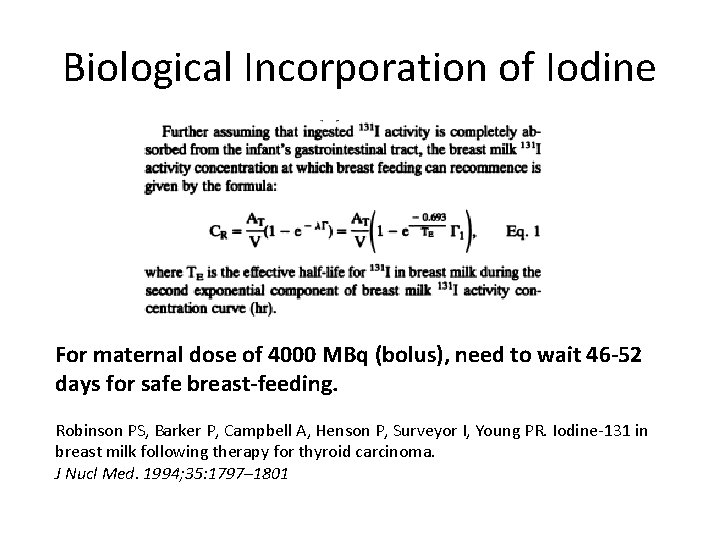
Biological Incorporation of Iodine For maternal dose of 4000 MBq (bolus), need to wait 46 -52 days for safe breast-feeding. Robinson PS, Barker P, Campbell A, Henson P, Surveyor I, Young PR. Iodine-131 in breast milk following therapy for thyroid carcinoma. J Nucl Med. 1994; 35: 1797– 1801
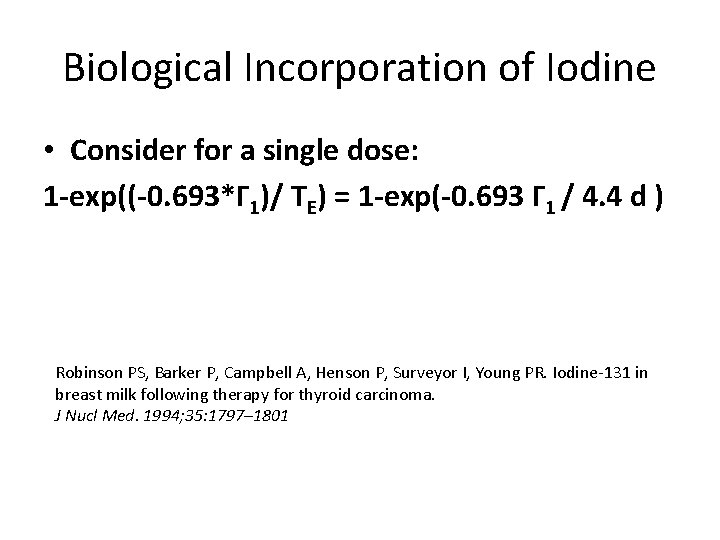
Biological Incorporation of Iodine • Consider for a single dose: 1 -exp((-0. 693*Γ 1)/ TE) = 1 -exp(-0. 693 Γ 1 / 4. 4 d ) Robinson PS, Barker P, Campbell A, Henson P, Surveyor I, Young PR. Iodine-131 in breast milk following therapy for thyroid carcinoma. J Nucl Med. 1994; 35: 1797– 1801
Biological Incorporation of Iodine
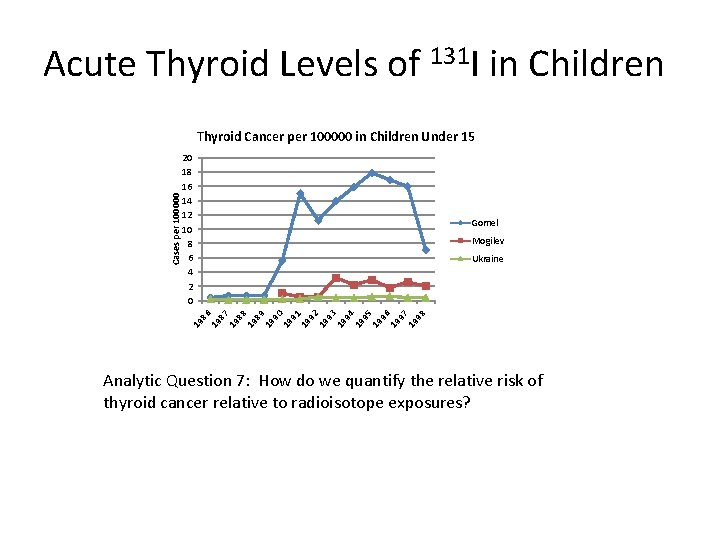
Acute Thyroid Levels of 131 I in Children 20 18 16 14 12 10 8 6 4 2 0 Gomel Mogilev Ukraine 19 86 19 87 19 88 19 89 19 90 19 91 19 92 19 93 19 94 19 95 19 96 19 97 19 98 Cases per 100000 Thyroid Cancer per 100000 in Children Under 15 Analytic Question 7: How do we quantify the relative risk of thyroid cancer relative to radioisotope exposures?
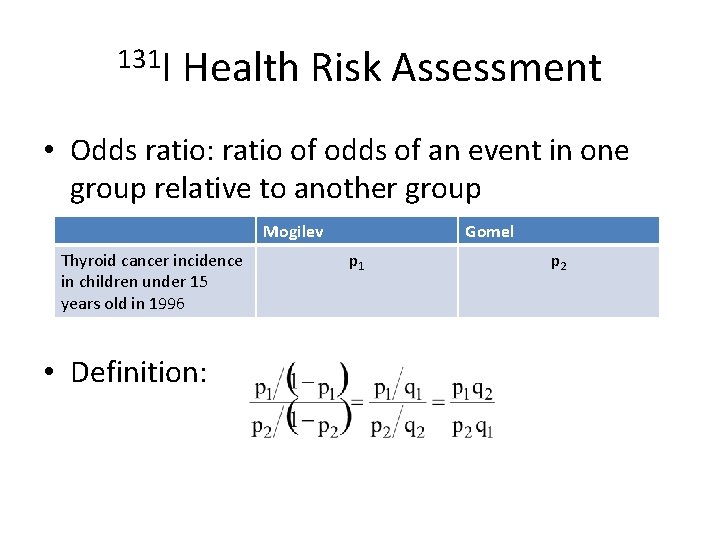
131 I Health Risk Assessment • Odds ratio: ratio of odds of an event in one group relative to another group Mogilev Thyroid cancer incidence in children under 15 years old in 1996 • Definition: Gomel p 1 p 2
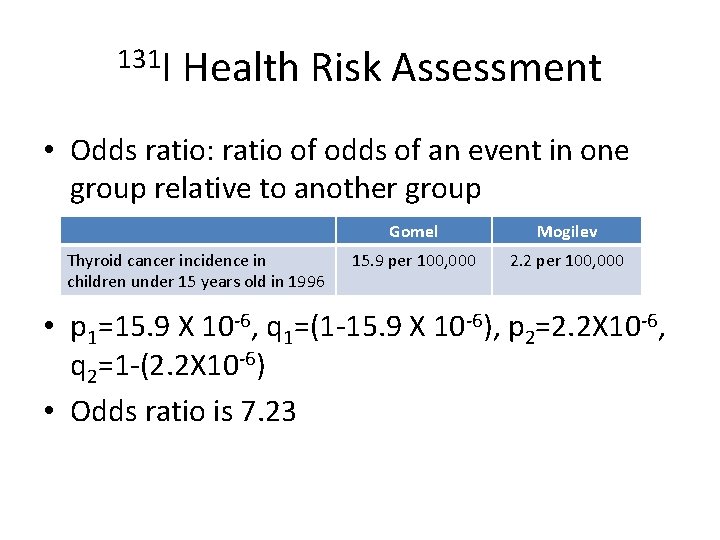
131 I Health Risk Assessment • Odds ratio: ratio of odds of an event in one group relative to another group Thyroid cancer incidence in children under 15 years old in 1996 Gomel Mogilev 15. 9 per 100, 000 2. 2 per 100, 000 • p 1=15. 9 X 10 -6, q 1=(1 -15. 9 X 10 -6), p 2=2. 2 X 10 -6, q 2=1 -(2. 2 X 10 -6) • Odds ratio is 7. 23
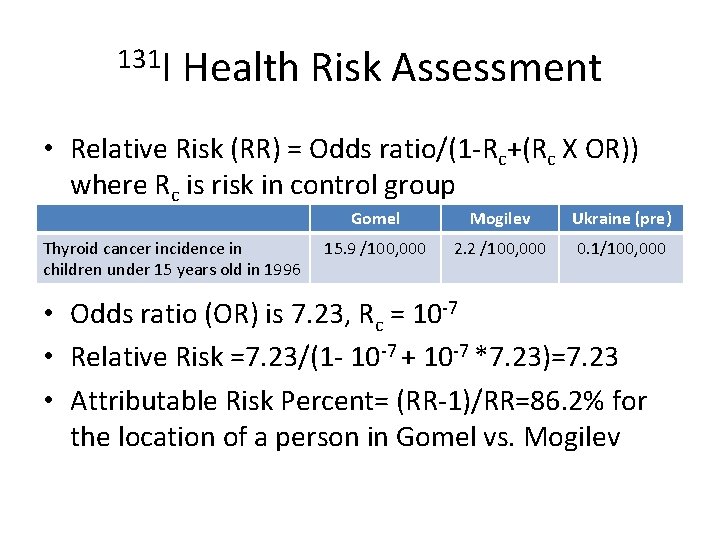
131 I Health Risk Assessment • Relative Risk (RR) = Odds ratio/(1 -Rc+(Rc X OR)) where Rc is risk in control group Thyroid cancer incidence in children under 15 years old in 1996 Gomel Mogilev Ukraine (pre) 15. 9 /100, 000 2. 2 /100, 000 0. 1/100, 000 • Odds ratio (OR) is 7. 23, Rc = 10 -7 • Relative Risk =7. 23/(1 - 10 -7 + 10 -7 *7. 23)=7. 23 • Attributable Risk Percent= (RR-1)/RR=86. 2% for the location of a person in Gomel vs. Mogilev
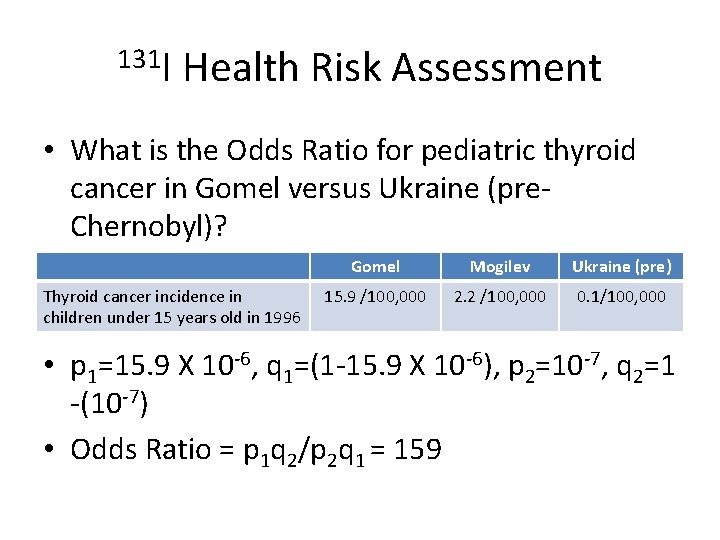
131 I Health Risk Assessment • What is the Odds Ratio for pediatric thyroid cancer in Gomel versus Ukraine (pre. Chernobyl)? Thyroid cancer incidence in children under 15 years old in 1996 Gomel Mogilev Ukraine (pre) 15. 9 /100, 000 2. 2 /100, 000 0. 1/100, 000 • p 1=15. 9 X 10 -6, q 1=(1 -15. 9 X 10 -6), p 2=10 -7, q 2=1 -(10 -7) • Odds Ratio = p 1 q 2/p 2 q 1 = 159
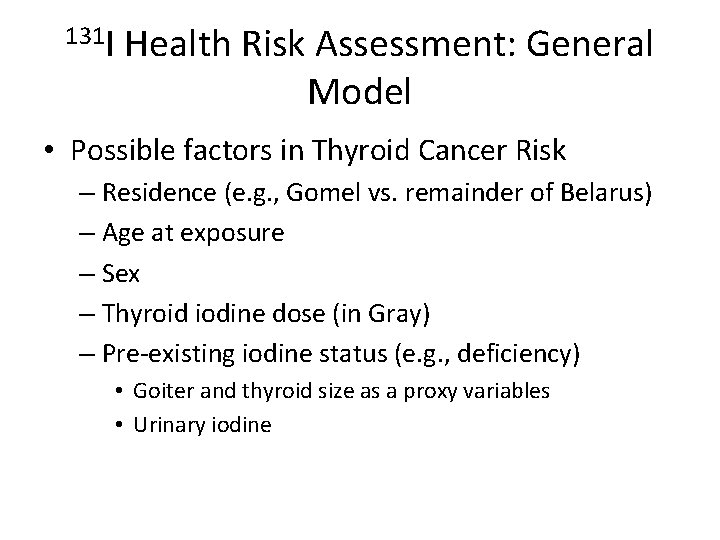
131 I Health Risk Assessment: General Model • Possible factors in Thyroid Cancer Risk – Residence (e. g. , Gomel vs. remainder of Belarus) – Age at exposure – Sex – Thyroid iodine dose (in Gray) – Pre-existing iodine status (e. g. , deficiency) • Goiter and thyroid size as a proxy variables • Urinary iodine
131 I Health Risk Assessment: General Model
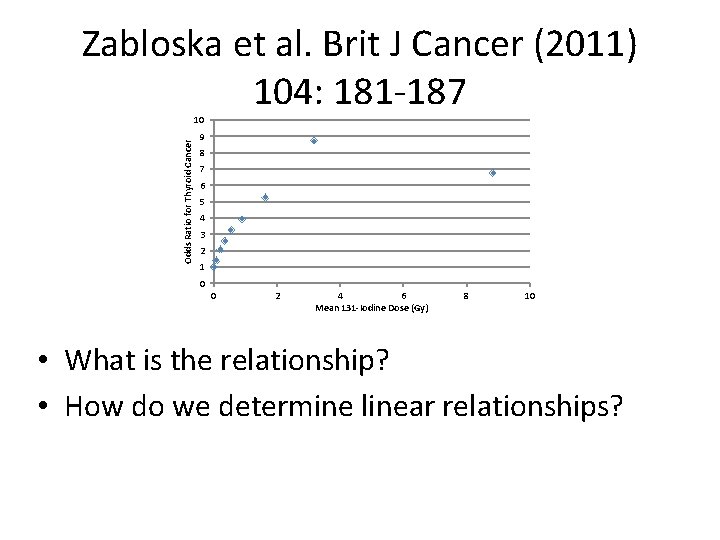
Zabloska et al. Brit J Cancer (2011) 104: 181 -187 • Modeled Excess Odds Ratio per Gray exposure (EOR/Gy) from screening of 11, 970 individuals in Belarus exposed to Chernobyl 131 I as children • Disease odds estimated as function of radiation dose, sex, age, proxy variables for iodine status (residence, goiter, thyroid size) and iodine dose
Zabloska et al. Brit J Cancer (2011) 104: 181 -187 • No significant increased incidence as a function of age at screening, residence at screening, urban/rural status, or urinary iodine concentration • Significant contributions of thyroid status proxy variables (history or diagnosis of goiter, family history of goiter)
Zabloska et al. Brit J Cancer (2011) 104: 181 -187
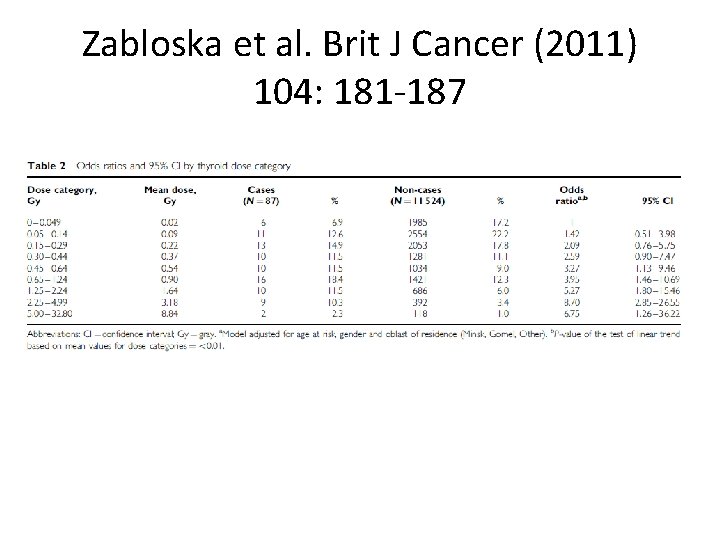
Zabloska et al. Brit J Cancer (2011) 104: 181 -187 Odds Ratio for Thyroid Cancer 10 9 8 7 6 5 4 3 2 1 0 0 2 4 6 Mean 131 -Iodine Dose (Gy) 8 10 • What is the relationship? • How do we determine linear relationships?
Regression Analysis
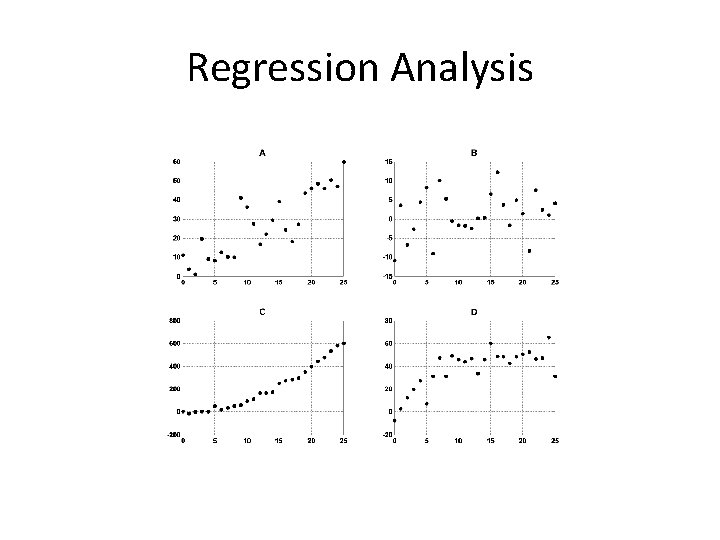
Regression Analysis • Data relationships may be linear (single line) or non-linear (other function) • Use a least-squares criterion to fit the data to a model: y=f(x)+ε, where ε ~ N(0, σ) [Gaussian (bellshaped) distribution with mean zero and unknown standard deviation σ) • Strategy: Minimize regression error, defined as the sum of the squared differences between an observation and the value predicted by the model.
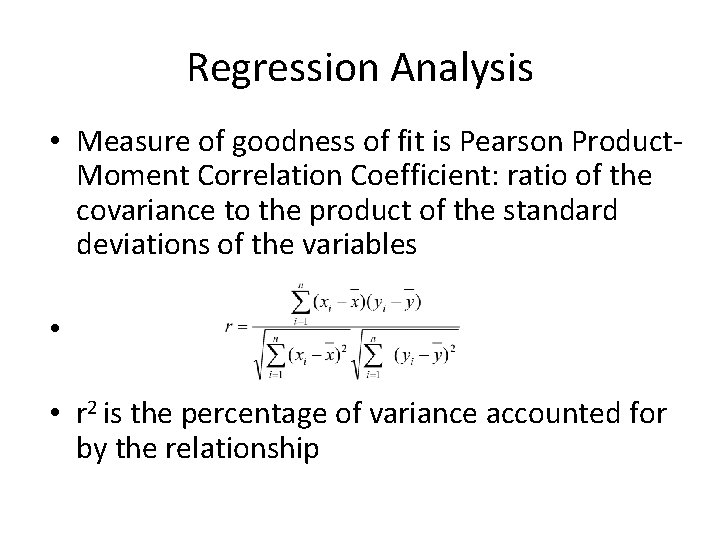
Regression Analysis • Measure of goodness of fit is Pearson Product. Moment Correlation Coefficient: ratio of the covariance to the product of the standard deviations of the variables • • r 2 is the percentage of variance accounted for by the relationship
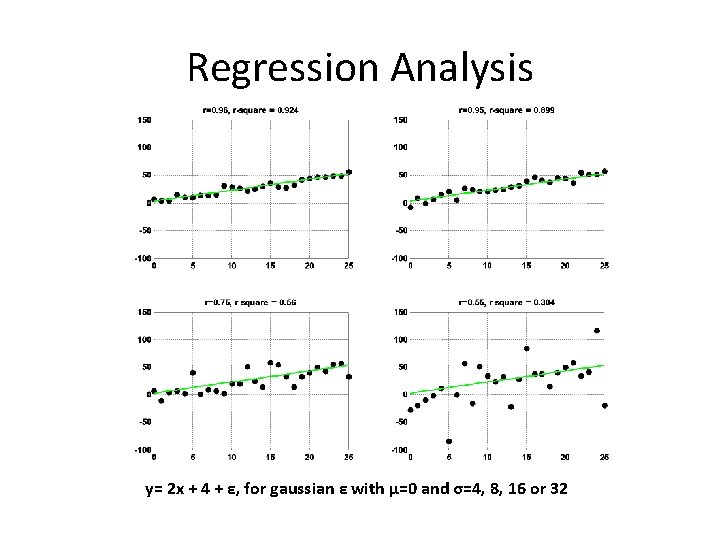
Regression Analysis y= 2 x + 4 + ε, for gaussian ε with µ=0 and σ=4, 8, 16 or 32
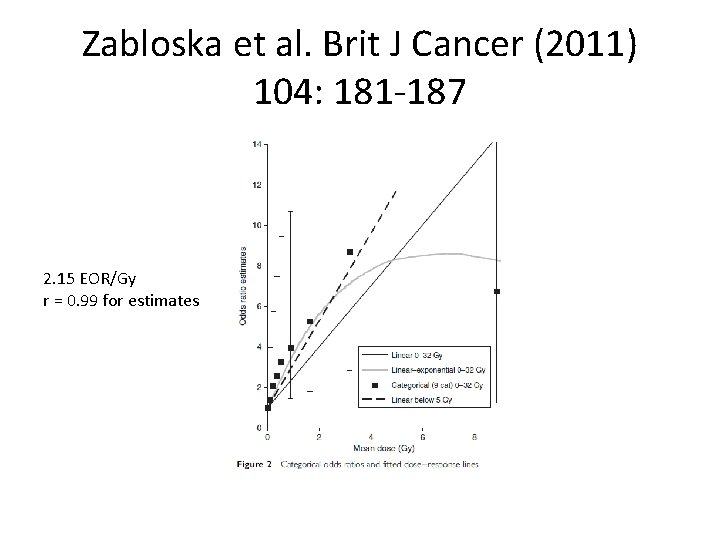
Zabloska et al. Brit J Cancer (2011) 104: 181 -187 2. 15 EOR/Gy r = 0. 99 for estimates
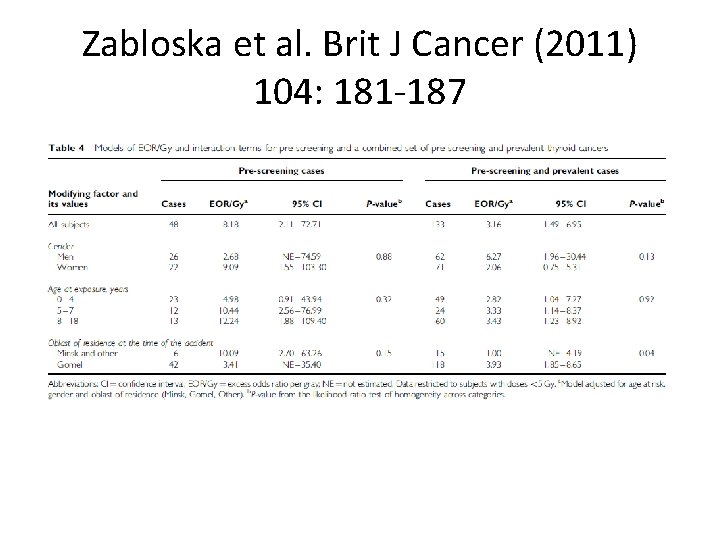
Zabloska et al. Brit J Cancer (2011) 104: 181 -187
131 I Health Risk Assessment: Lessons Learned for the Next Incident • Identifiable factors in Thyroid Cancer Risk – Thyroid iodine dose (in Gray) – Current Iodine status (e. g. , deficiency) • Goiter and thyroid size as a proxy variables • Urinary iodine • Residence: Why do we have a Gomel vs. remainder of Belarus effect? – Suggestions?
- Slides: 52