
Understand the nature of business 2 02 Understand
Understand the nature of business 2. 02 Understand the leadership and management.
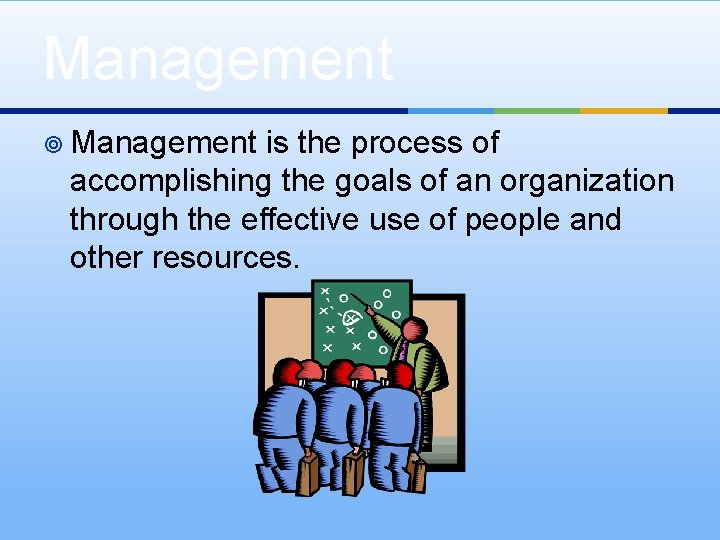
Management ¥ Management is the process of accomplishing the goals of an organization through the effective use of people and other resources.
5 Functions of Management ¥Planning ¥Organizing ¥Staffing ¥Implementing ¥Controlling
Planning ¥ The planning function involves… ¥Analyzing information ¥Setting goals ¥Making decisions to accomplish the goals
Organizing ¥ The organizing function involves… ¥Identifying the work & resources needed to achieve the goals of the business that have been set in the planning stage.
Staffing ¥ The staffing function includes the activities involved in… ¥ Obtaining the employees ¥ Training the employees ¥ Compensating the employees
Implementing ¥ The implementing function involves directing and leading people in order to accomplish the goals set out in the planning stage.
Controlling ¥The controlling function is used to determine whether a business is accomplishing its goals that were set in the planning stage.
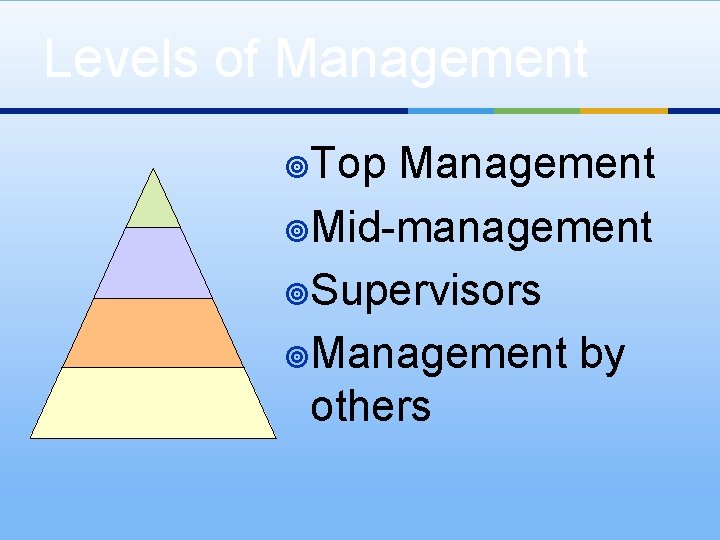
Levels of Management ¥Top Management ¥Mid-management ¥Supervisors ¥Management by others
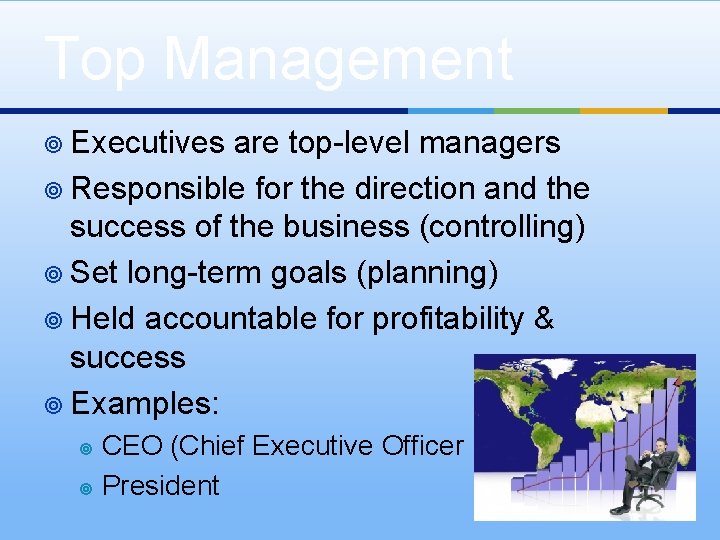
Top Management ¥ Executives are top-level managers ¥ Responsible for the direction and the success of the business (controlling) ¥ Set long-term goals (planning) ¥ Held accountable for profitability & success ¥ Examples: CEO (Chief Executive Officer ¥ President ¥
Mid-Management ¥ Mid-managers are specialists ¥ Responsible for specific parts of the business ¥ Devoted to the organizing, staffing, and implementing functions ¥ Examples Marketing Manager ¥ Information Technology Manager ¥ Customer Service Manager ¥
Supervisors ¥ First level of management ¥ Responsible for the routine work of a group of employees ¥ Evaluate the work of the employees ¥ Implement the plans set forth by executives and mid-managers
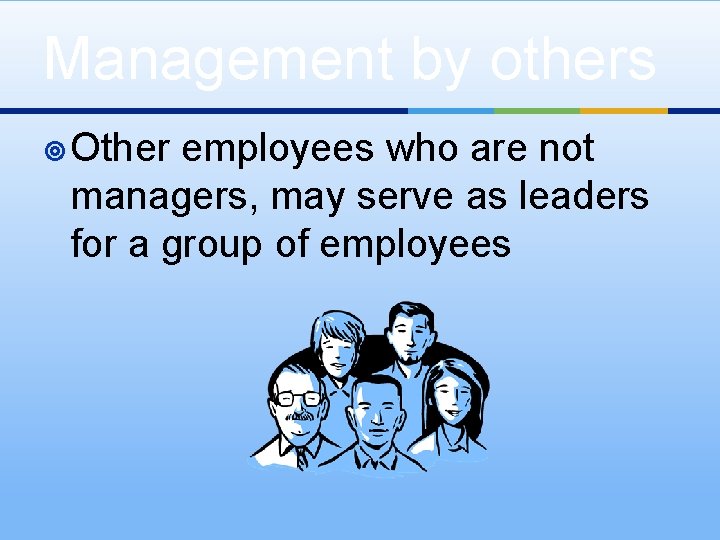
Management by others ¥ Other employees who are not managers, may serve as leaders for a group of employees
Management Styles ¥ The management style is the way a manager treats and involves employees Tactical ¥ Strategic ¥ Mixed ¥
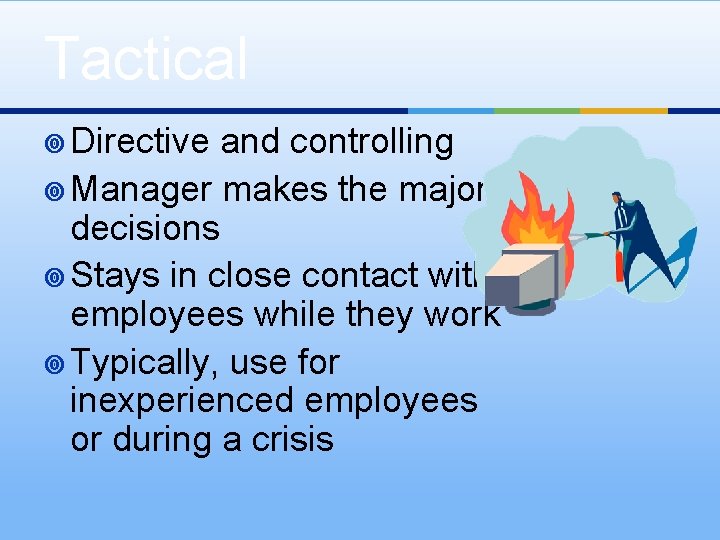
Tactical ¥ Directive and controlling ¥ Manager makes the major decisions ¥ Stays in close contact with employees while they work ¥ Typically, use for inexperienced employees or during a crisis
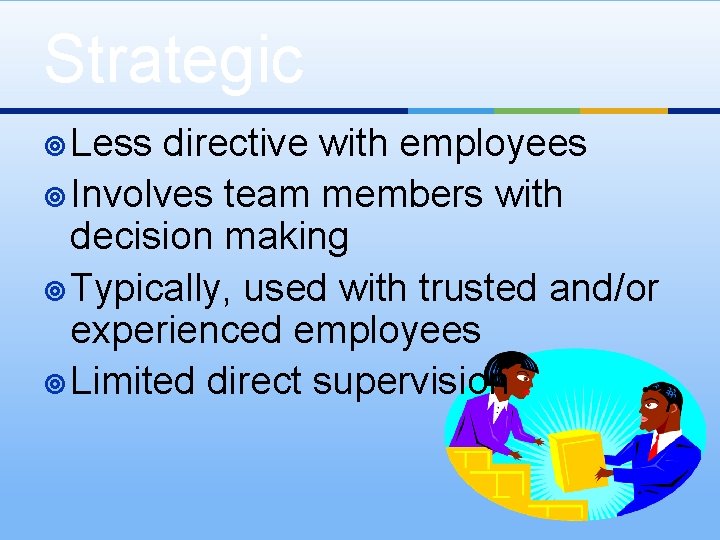
Strategic ¥ Less directive with employees ¥ Involves team members with decision making ¥ Typically, used with trusted and/or experienced employees ¥ Limited direct supervision
Mixed ¥ Combination of both tactical and strategic ¥ Effective managers can use both styles in order to accommodate different types of employees
Leadership Styles ¥ Leadership is the ability to motivate individuals and groups to accomplish important goals. ¥ What type of traits should a leader possess?
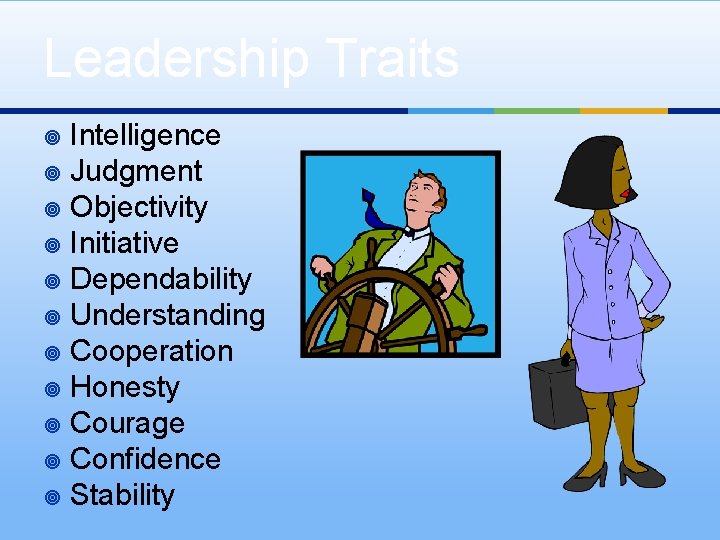
Leadership Traits Intelligence ¥ Judgment ¥ Objectivity ¥ Initiative ¥ Dependability ¥ Understanding ¥ Cooperation ¥ Honesty ¥ Courage ¥ Confidence ¥ Stability ¥
Leadership Styles ¥Autocratic Leader ¥Democratic Leader ¥Open or Laissez-faire leader
Autocratic Leader ¥ ¥ Used when a leader needs to give direct, clear, and precise orders and makes decisions Situations to use style: ¥ ¥ During an emergency To direct the work of inexperienced employees
Democratic Leader ¥ One who includes employees in making decisions ¥ Situations to use style: To monitor quality of work of employees ¥ To direct the work of employees working as a team ¥
Open/Laissez-faire Leader ¥ One who gives little or no direction to employees ¥ Situation to use style: To monitor achievements and communicate regularly with employees ¥ To direct the work of experienced and trained employees ¥
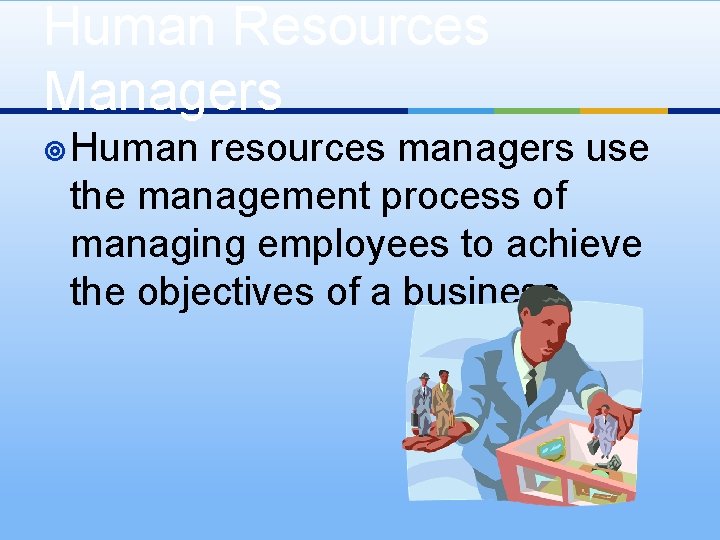
Human Resources Managers ¥ Human resources managers use the management process of managing employees to achieve the objectives of a business.
Human Resources Management Activities ¥ ¥ ¥ Planning, staffing, recruiting, & hiring Managing compensation and benefits Managing performance of employees
Planning, Staffing, Recruiting, Hiring ¥ Planning & Staffing ¥ Classifying employees ¥ Permanent ¥ ¥ Temporary ¥ ¥ Hired for a specific time/job Full Time ¥ ¥ Long term commitment 30 or more hours per week (usually 40+ hours) Part Time ¥ Short work week
Planning, Staffing, Recruiting, Hiring ¥ Planning ¥ Determining job requirements: ¥ ¥ & Job Staffing The use of job analysis to determine all the duties for a particular job Recruiting and hiring employees ¥ The application process ¥ ¥ Reviewing applications/resumes Interviewing applicants Checking references of applicants Making a job offer to applicants
Planning, Staffing, Recruiting, Hiring ¥ Recruiting & Hiring ¥ New employee orientation ¥ ¥ ¥ Paperwork Training Mentor
Managing Compensation & Benefits ¥ Compensation method ¥ ¥ ¥ Time Wage – Direct payment per hour Salary – Direct payment per week, bi-weekly, or monthly Commission – Percentage of sales Piece Rate – Payment per unit produced Base plus incentive – Direct payment plus performance based pay Employee benefits ¥ Other items given to employee for working. For example, health insurance, vacation time, sick time, dental insurance, etc.
Managing performance of employees ¥ Employee evaluation ¥ ¥ Promotion ¥ ¥ Advancement of an employee to a position with greater responsibility Transfer ¥ ¥ Objective evaluations of employees’ quality of work Assignment of the employee to a job in another area with similar responsibility Termination ¥ Ends employment relationship
- Slides: 30