
Understand the electromagnetic spectrum and how it is

- Slides: 15
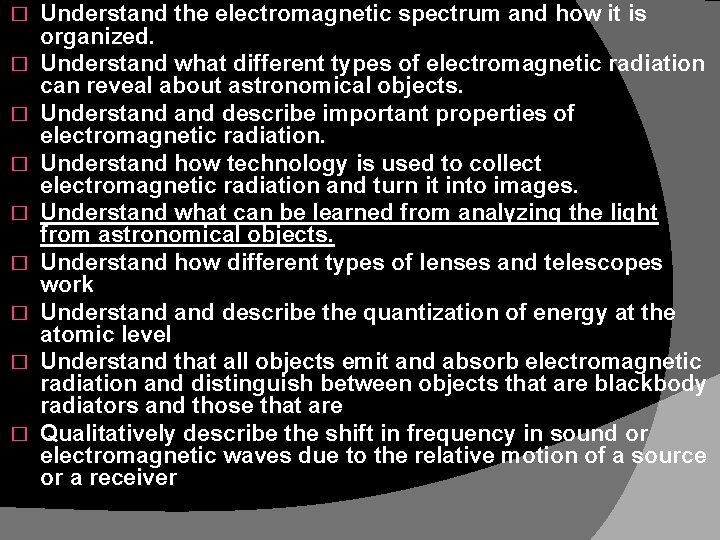
� � � � � Understand the electromagnetic spectrum and how it is organized. Understand what different types of electromagnetic radiation can reveal about astronomical objects. Understand describe important properties of electromagnetic radiation. Understand how technology is used to collect electromagnetic radiation and turn it into images. Understand what can be learned from analyzing the light from astronomical objects. Understand how different types of lenses and telescopes work Understand describe the quantization of energy at the atomic level Understand that all objects emit and absorb electromagnetic radiation and distinguish between objects that are blackbody radiators and those that are Qualitatively describe the shift in frequency in sound or electromagnetic waves due to the relative motion of a source or a receiver
Learning Goals: � � � What is electromagnetic radiation? What can different types of electromagnetic radiation reveal about astronomical objects? What are the important properties of electromagnetic radiation and how are they typically organized? What can be learned from analyzing the light from astronomic objects? How is technology used to collect electromagnetic radiation and turn it into images?
Finally SPECTRUM ANALYSIS Light Analysis
Read the FYI � NO QUESTIONS TO ANSWER � But this will explain what you are doing today as well as what you need to be looking for during the lab.
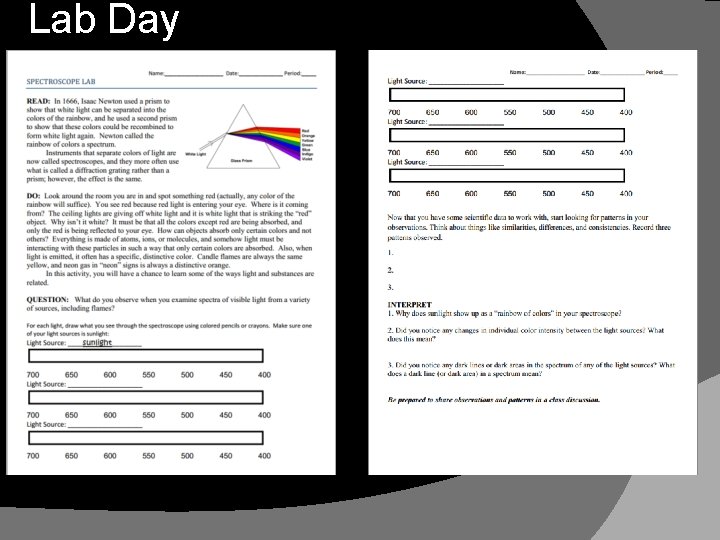
Lab Day
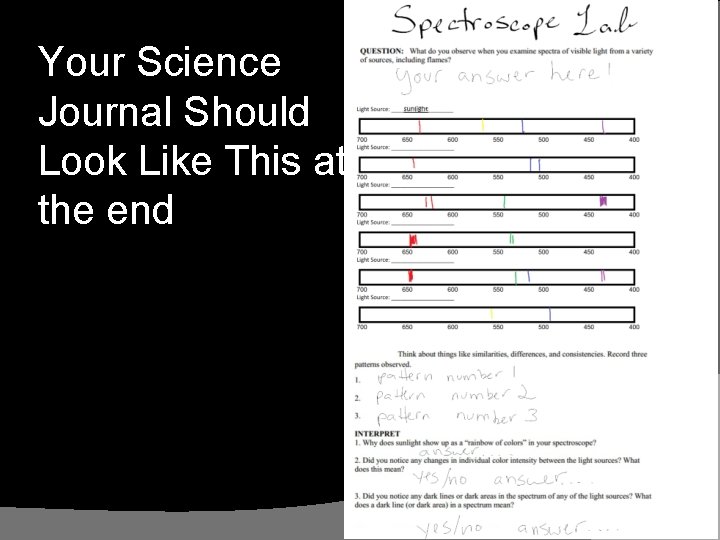
Your Science Journal Should Look Like This at the end
Lab/Observation Day � Cut the sheets in half and glue/tape in your journal � Follow the directions on the lab �Make sure that everybody has a chance to look at each station �It will be easier the closer you get to the light source �Please don’t go ahead until we rotate (it’s going to be dark � When you rotate, please be careful of the cords on the ground! These are hundreds of dollars each!
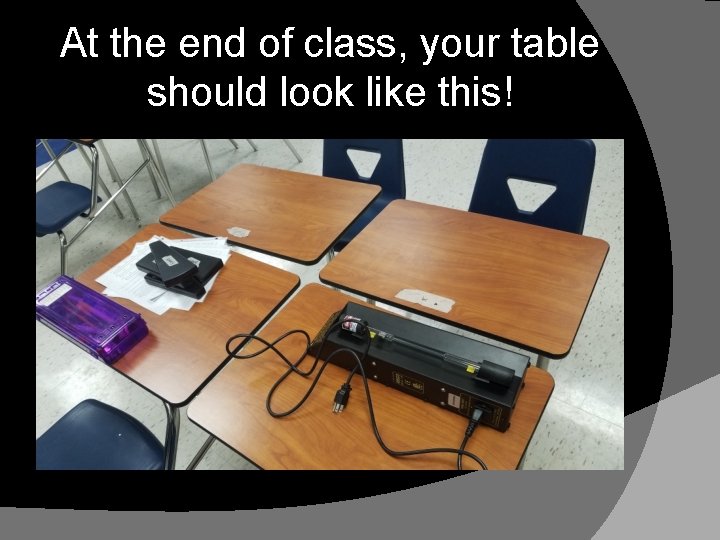
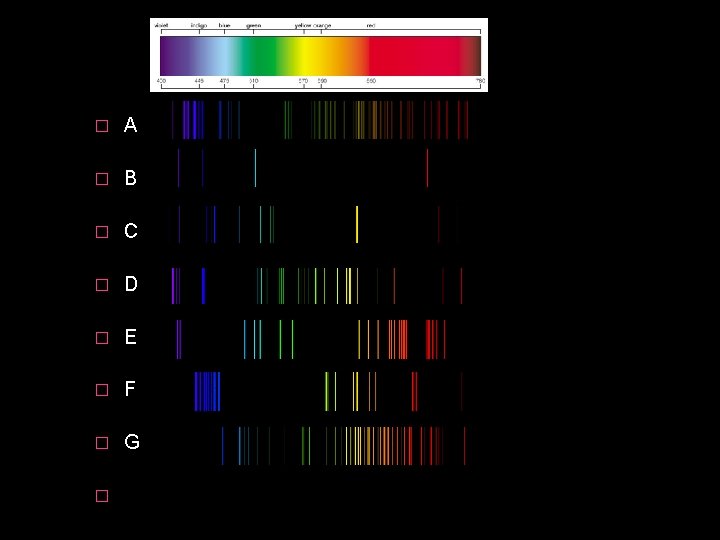
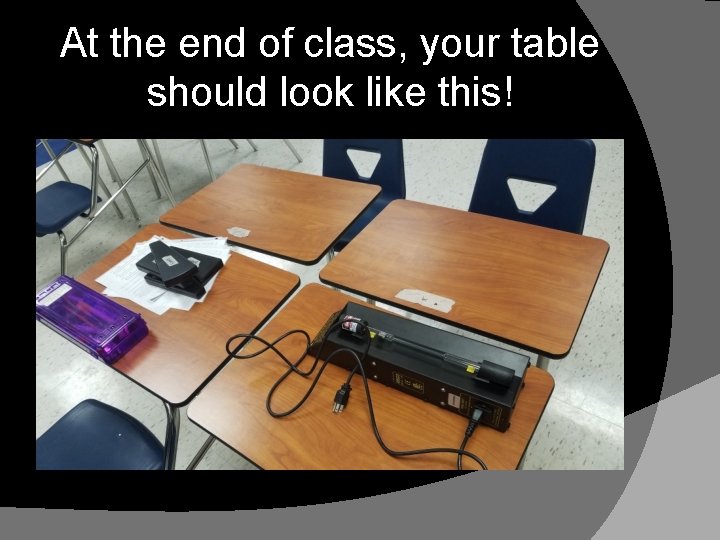
At the end of class, your table should look like this!
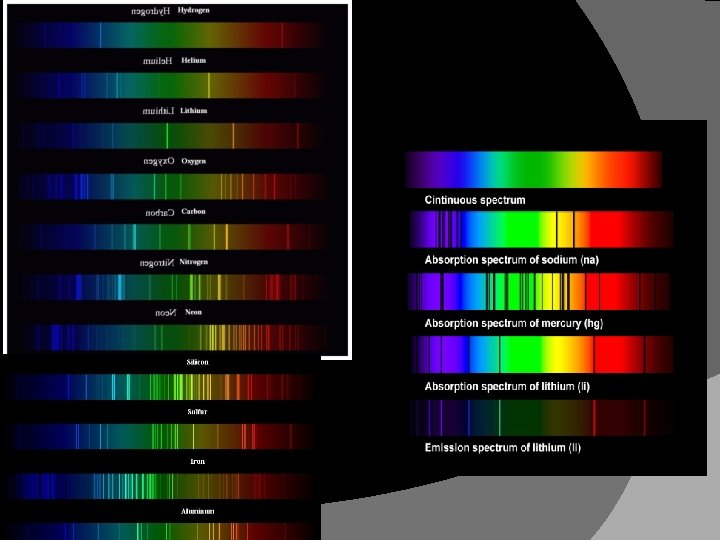
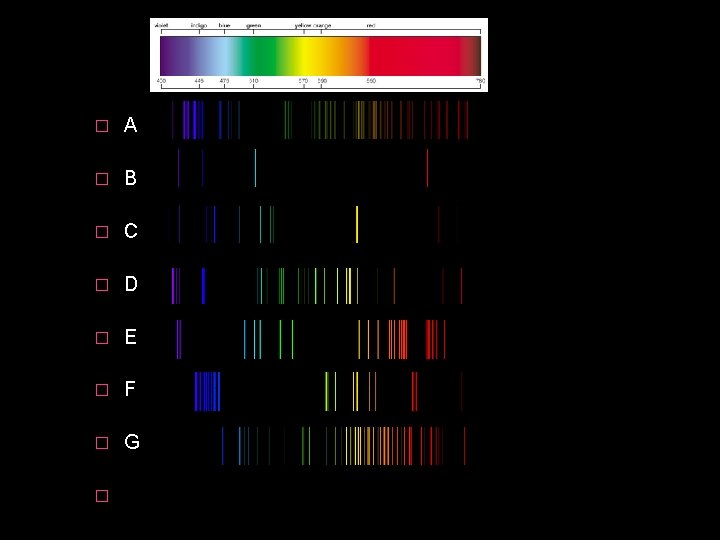
� Keep track of the numbers at the bottom (wavelength in angstroms) � Refer to the screen at the front to figure out which element you are looking at � Please be careful with the expensive equipment � DO NOT TOUCH THE BULBS!! � Please leave your spectroscopes, diffraction gradients and your markers pencils at the lab station! � We will do half today and half tomorrow
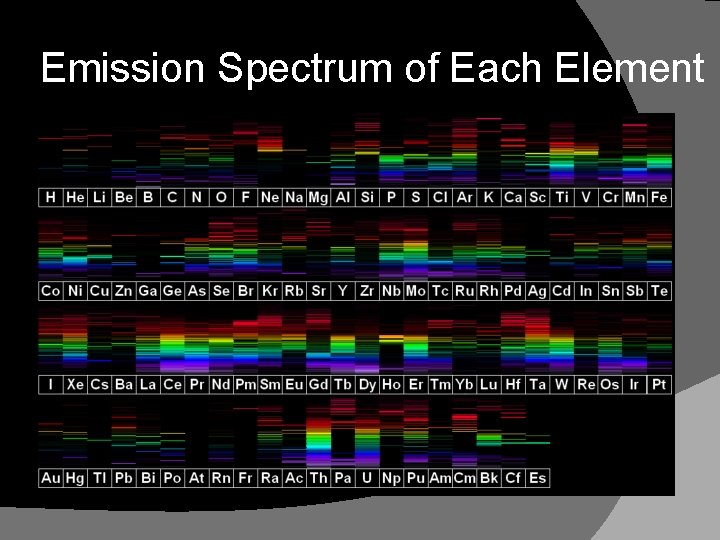
Emission Spectrum of Each Element
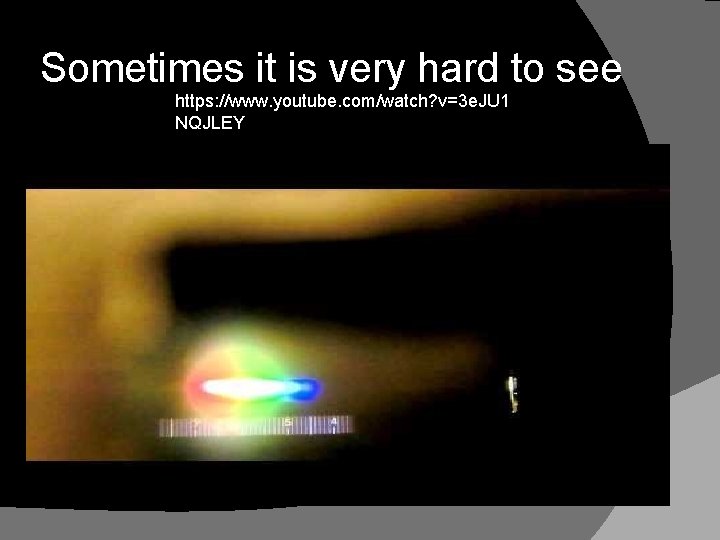
Sometimes it is very hard to see https: //www. youtube. com/watch? v=3 e. JU 1 NQJLEY
At the end of class, your table should look like this!