
Undergraduate Teaching past and present Dr Patrick Barrie
Undergraduate Teaching: past and present Dr Patrick Barrie Chemical Engineering’s 60 th Anniversary 16 July 2008

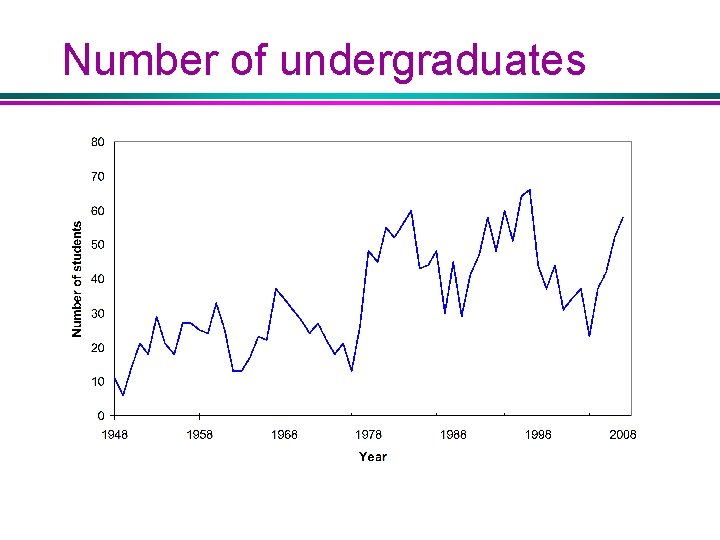
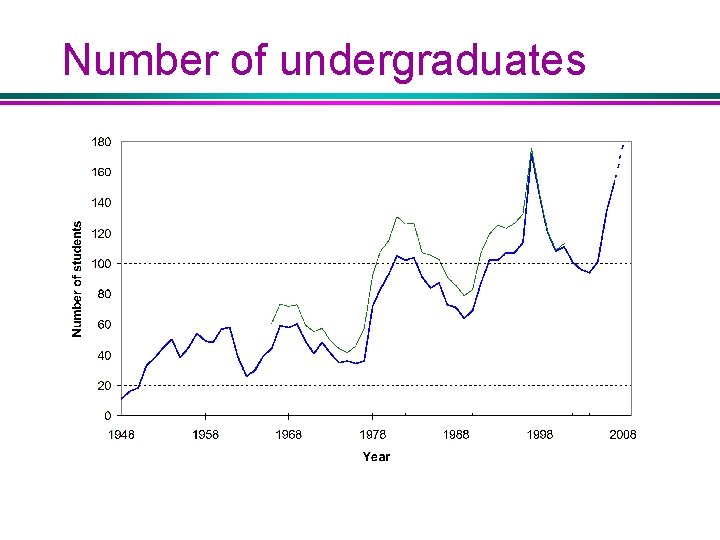
Number of undergraduates
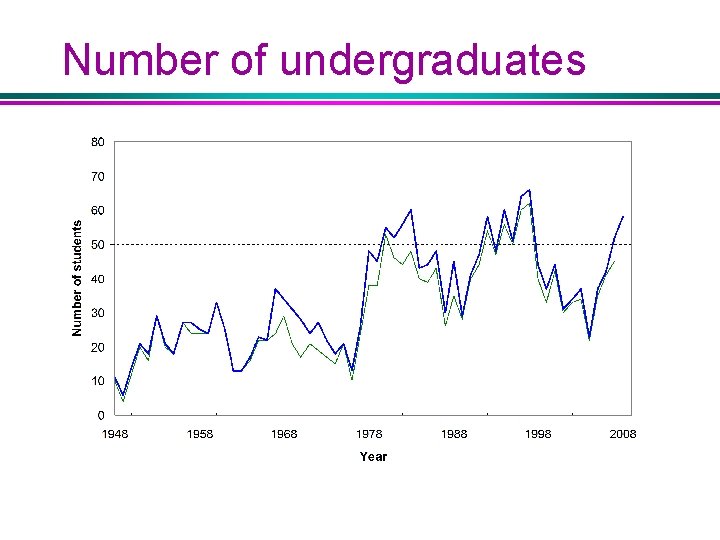
Number of undergraduates
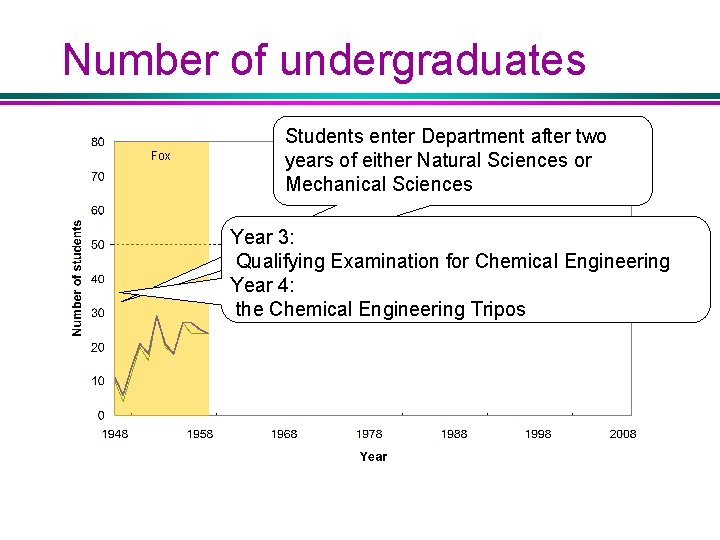
Number of undergraduates Fox Students enter Department after two years of either Natural Sciences or Mechanical Sciences Year 3: Qualifying Examination for Chemical Engineering Year 4: the Chemical Engineering Tripos
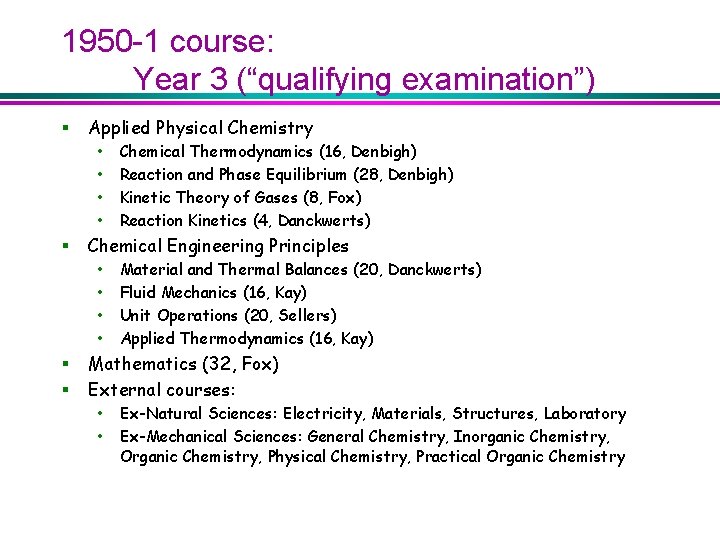
1950 -1 course: Year 3 (“qualifying examination”) § Applied Physical Chemistry • • § Chemical Engineering Principles • • § § Chemical Thermodynamics (16, Denbigh) Reaction and Phase Equilibrium (28, Denbigh) Kinetic Theory of Gases (8, Fox) Reaction Kinetics (4, Danckwerts) Material and Thermal Balances (20, Danckwerts) Fluid Mechanics (16, Kay) Unit Operations (20, Sellers) Applied Thermodynamics (16, Kay) Mathematics (32, Fox) External courses: • Ex-Natural Sciences: Electricity, Materials, Structures, Laboratory • Ex-Mechanical Sciences: General Chemistry, Inorganic Chemistry, Organic Chemistry, Physical Chemistry, Practical Organic Chemistry
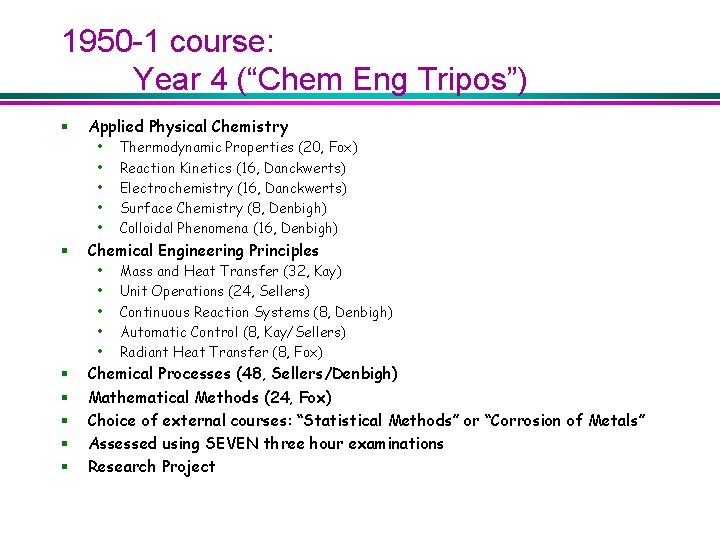
1950 -1 course: Year 4 (“Chem Eng Tripos”) § Applied Physical Chemistry • • • § Chemical Engineering Principles • • • § § § Thermodynamic Properties (20, Fox) Reaction Kinetics (16, Danckwerts) Electrochemistry (16, Danckwerts) Surface Chemistry (8, Denbigh) Colloidal Phenomena (16, Denbigh) Mass and Heat Transfer (32, Kay) Unit Operations (24, Sellers) Continuous Reaction Systems (8, Denbigh) Automatic Control (8, Kay/Sellers) Radiant Heat Transfer (8, Fox) Chemical Processes (48, Sellers/Denbigh) Mathematical Methods (24, Fox) Choice of external courses: “Statistical Methods” or “Corrosion of Metals” Assessed using SEVEN three hour examinations Research Project
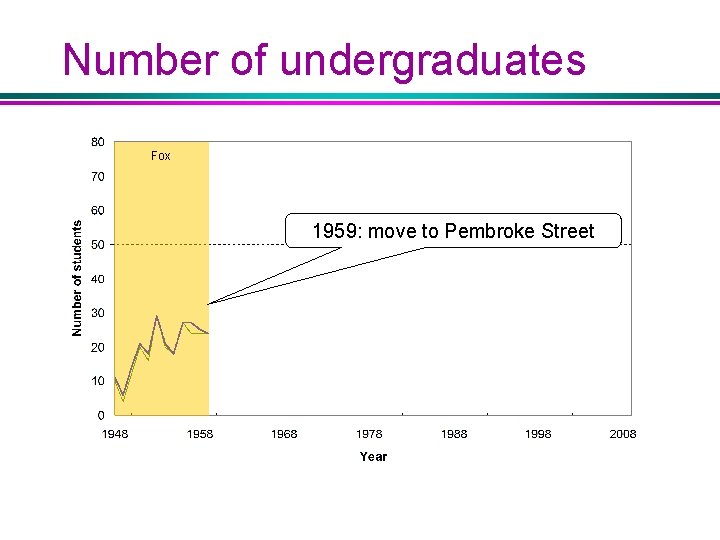
Number of undergraduates Fox 1959: move to Pembroke Street
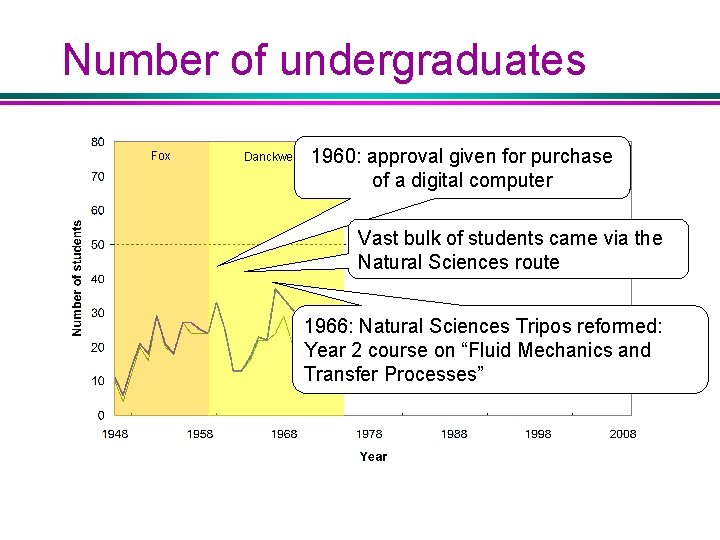
Number of undergraduates Fox Danckwerts 1960: approval given for purchase of a digital computer Vast bulk of students came via the Natural Sciences route 1966: Natural Sciences Tripos reformed: Year 2 course on “Fluid Mechanics and Transfer Processes”
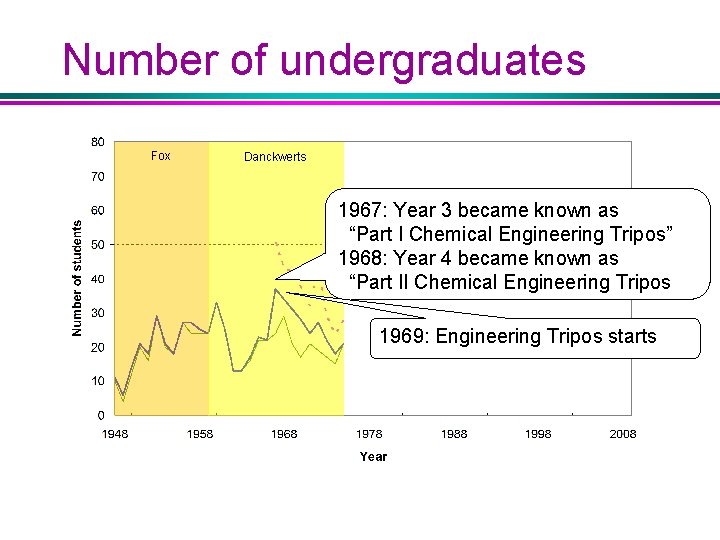
Number of undergraduates Fox Danckwerts 1967: Year 3 became known as “Part I Chemical Engineering Tripos” 1968: Year 4 became known as “Part II Chemical Engineering Tripos 1969: Engineering Tripos starts
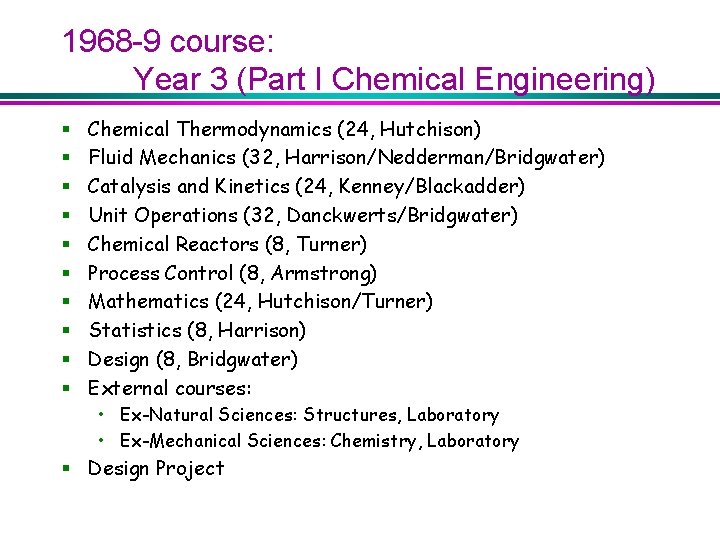
1968 -9 course: Year 3 (Part I Chemical Engineering) § § § § § Chemical Thermodynamics (24, Hutchison) Fluid Mechanics (32, Harrison/Nedderman/Bridgwater) Catalysis and Kinetics (24, Kenney/Blackadder) Unit Operations (32, Danckwerts/Bridgwater) Chemical Reactors (8, Turner) Process Control (8, Armstrong) Mathematics (24, Hutchison/Turner) Statistics (8, Harrison) Design (8, Bridgwater) External courses: • Ex-Natural Sciences: Structures, Laboratory • Ex-Mechanical Sciences: Chemistry, Laboratory § Design Project
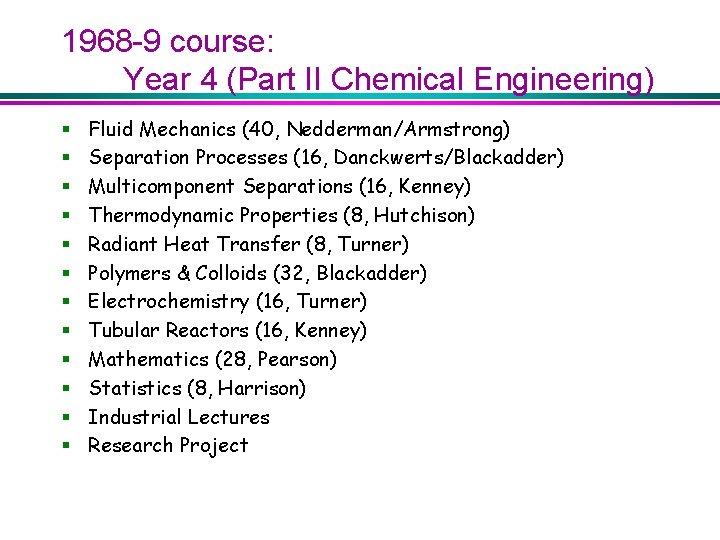
1968 -9 course: Year 4 (Part II Chemical Engineering) § § § Fluid Mechanics (40, Nedderman/Armstrong) Separation Processes (16, Danckwerts/Blackadder) Multicomponent Separations (16, Kenney) Thermodynamic Properties (8, Hutchison) Radiant Heat Transfer (8, Turner) Polymers & Colloids (32, Blackadder) Electrochemistry (16, Turner) Tubular Reactors (16, Kenney) Mathematics (28, Pearson) Statistics (8, Harrison) Industrial Lectures Research Project
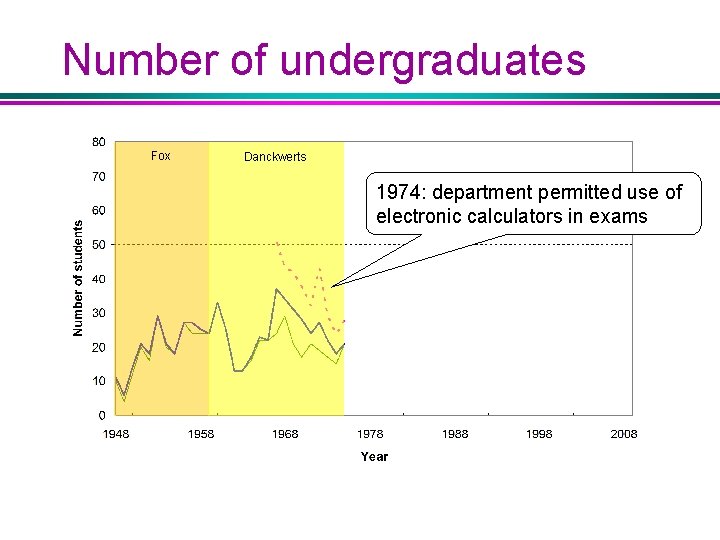
Number of undergraduates Fox Danckwerts 1974: department permitted use of electronic calculators in exams
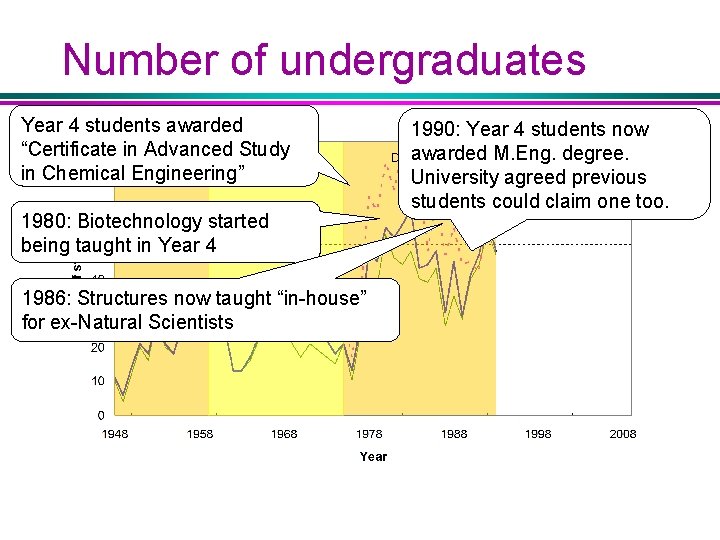
Number of undergraduates Year 4 students awarded “Certificate in Advanced Study Fox Danckwerts in Chemical Engineering” 1980: Biotechnology started being taught in Year 4 1986: Structures now taught “in-house” for ex-Natural Scientists 1990: Year 4 students now awarded M. Eng. degree. Davidson University agreed previous students could claim one too.
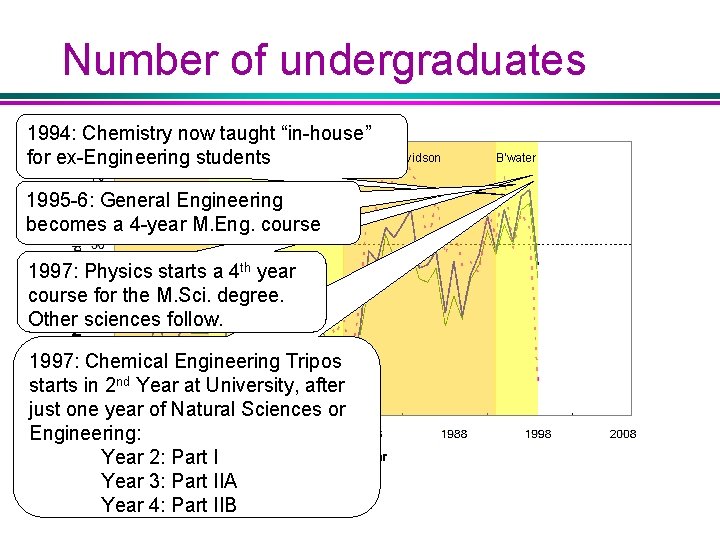
Number of undergraduates 1994: Chemistry now taught “in-house” Fox Danckwerts for ex-Engineering students 1995 -6: General Engineering becomes a 4 -year M. Eng. course 1997: Physics starts a 4 th year course for the M. Sci. degree. Other sciences follow. 1997: Chemical Engineering Tripos starts in 2 nd Year at University, after just one year of Natural Sciences or Engineering: Year 2: Part I Year 3: Part IIA Year 4: Part IIB Davidson B’water
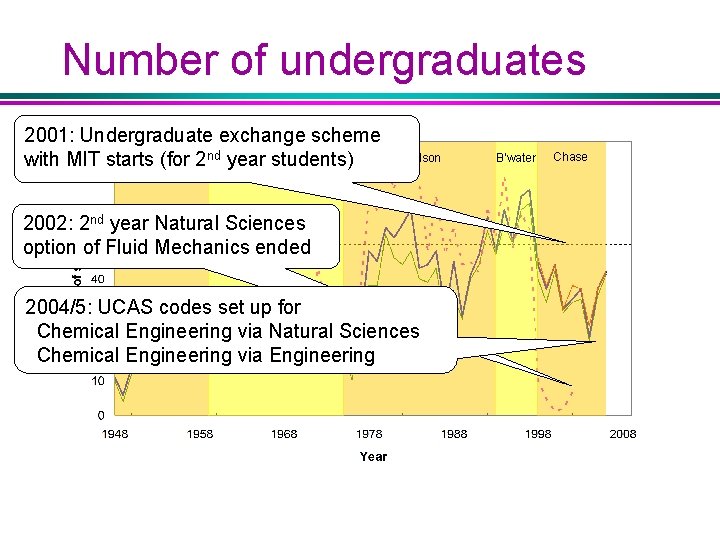
Number of undergraduates 2001: Undergraduate exchange scheme Danckwerts with MIT starts. Fox (for 2 nd year students) Davidson 2002: 2 nd year Natural Sciences option of Fluid Mechanics ended 2004/5: UCAS codes set up for Chemical Engineering via Natural Sciences Chemical Engineering via Engineering B’water Chase
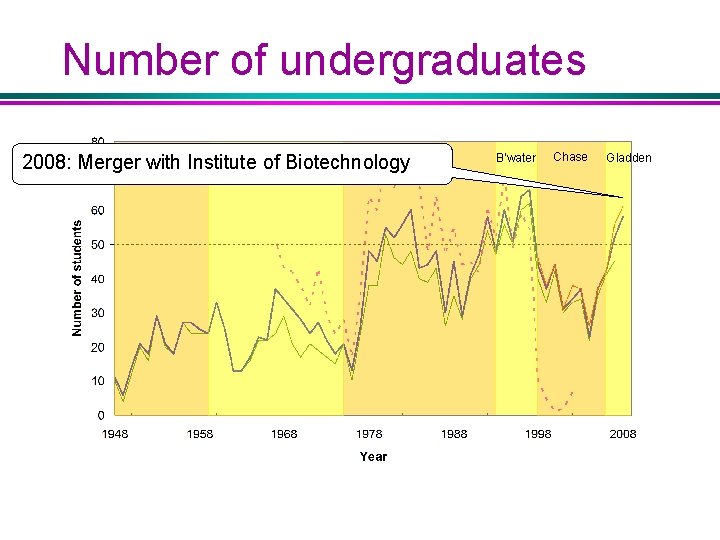
Number of undergraduates Fox Danckwerts Davidson 2008: Merger with Institute of Biotechnology B’water Chase Gladden
Number of undergraduates
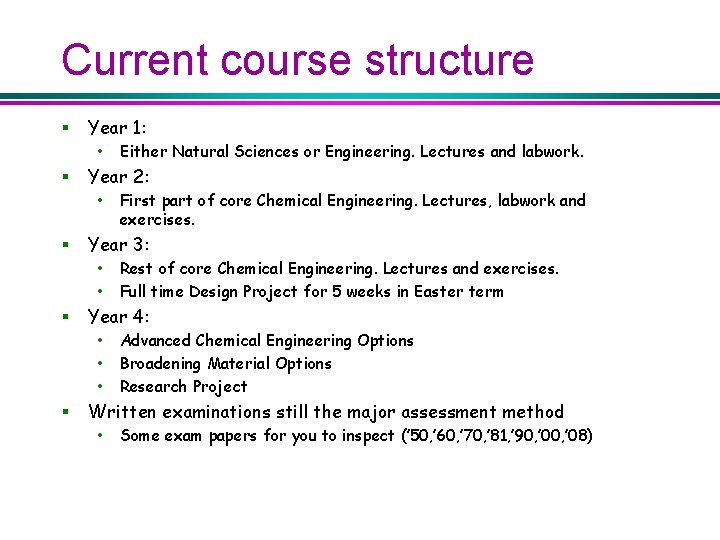
Current course structure § Year 1: • Either Natural Sciences or Engineering. Lectures and labwork. § Year 2: • First part of core Chemical Engineering. Lectures, labwork and exercises. § Year 3: • Rest of core Chemical Engineering. Lectures and exercises. • Full time Design Project for 5 weeks in Easter term § Year 4: • Advanced Chemical Engineering Options • Broadening Material Options • Research Project § Written examinations still the major assessment method • Some exam papers for you to inspect (’ 50, ’ 60, ’ 70, ’ 81, ’ 90, ’ 08)
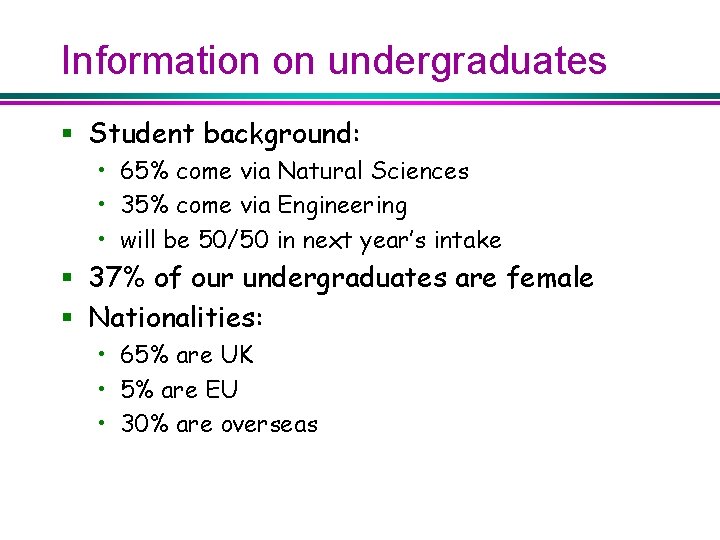
Information on undergraduates § Student background: • 65% come via Natural Sciences • 35% come via Engineering • will be 50/50 in next year’s intake § 37% of our undergraduates are female § Nationalities: • 65% are UK • 5% are EU • 30% are overseas
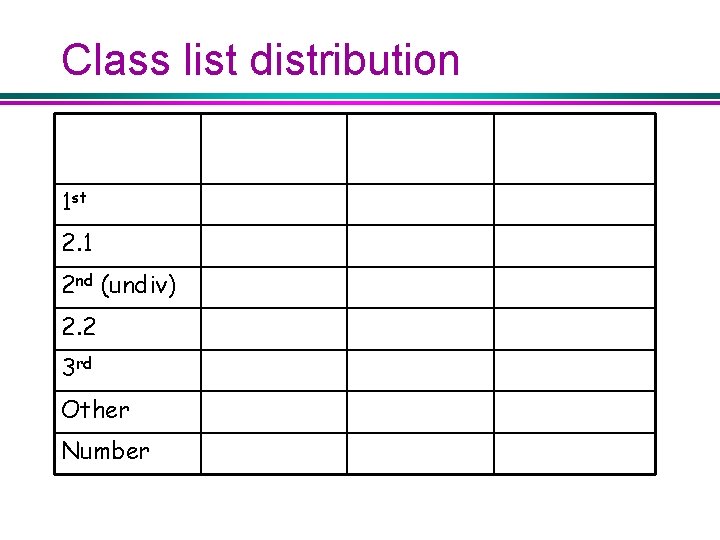
Class list distribution 1 st 2. 1 2 nd (undiv) 2. 2 3 rd Other Number
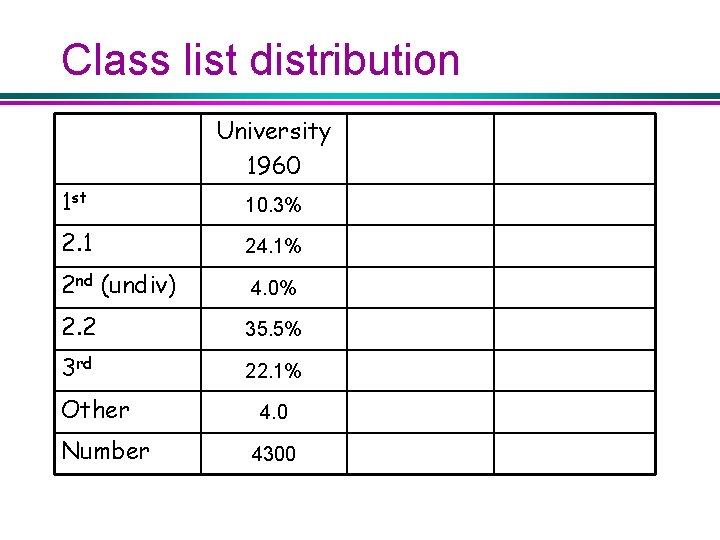
Class list distribution University 1960 1 st 10. 3% 2. 1 24. 1% 2 nd (undiv) 4. 0% 2. 2 35. 5% 3 rd 22. 1% Other Number 4. 0 4300
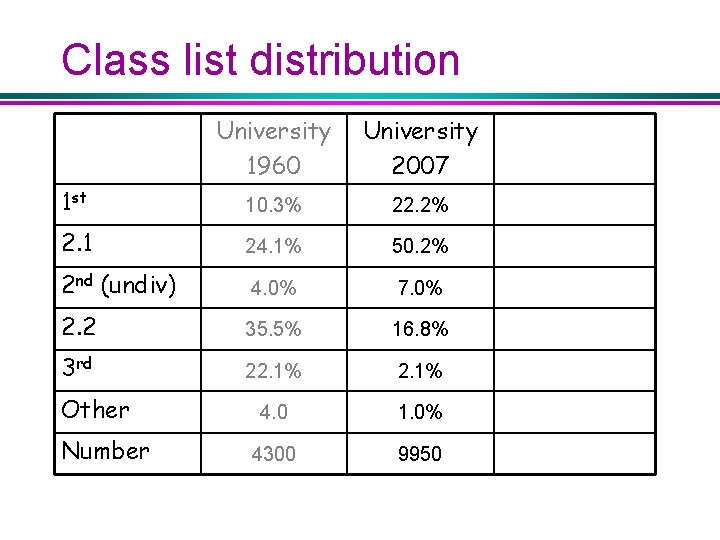
Class list distribution University 1960 University 2007 1 st 10. 3% 22. 2% 2. 1 24. 1% 50. 2% 2 nd (undiv) 4. 0% 7. 0% 2. 2 35. 5% 16. 8% 3 rd 22. 1% 4. 0 1. 0% 4300 9950 Other Number
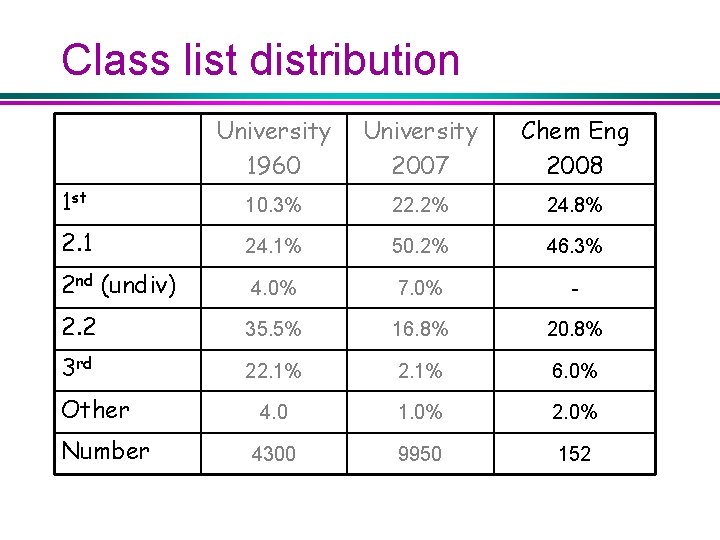
Class list distribution University 1960 University 2007 Chem Eng 2008 1 st 10. 3% 22. 2% 24. 8% 2. 1 24. 1% 50. 2% 46. 3% 2 nd (undiv) 4. 0% 7. 0% - 2. 2 35. 5% 16. 8% 20. 8% 3 rd 22. 1% 6. 0% 4. 0 1. 0% 2. 0% 4300 9950 152 Other Number
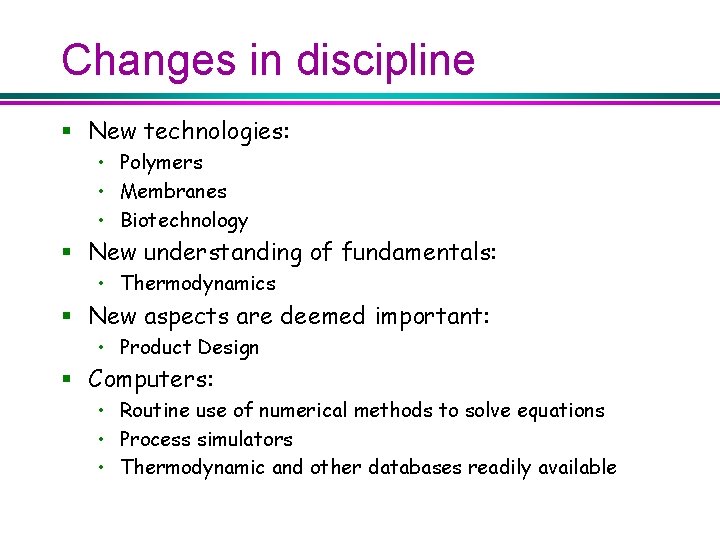
Changes in discipline § New technologies: • Polymers • Membranes • Biotechnology § New understanding of fundamentals: • Thermodynamics § New aspects are deemed important: • Product Design § Computers: • Routine use of numerical methods to solve equations • Process simulators • Thermodynamic and other databases readily available
Changes in teaching § Lectures continue, now often accompanied by detailed handouts § Less laboratory work § More project work § Examples classes discontinued § Plenty of College supervisions • A large proportion of which are given by postdocs and Ph. D students § Teaching almost entirely in-house (other than a few 4 th year options) § Internet • Web resources for learning • Weblabs
Industrial involvement in teaching § Industrial lectures § Industrial backing of research projects § Teaching Consortium • Scheme been running for 10 years • About 20 companies have been involved • Current supporters:
Independence § Set up as independent of • Faculty of Engineering • Faculty of Physics & Chemistry § Still true for “new” department • Can modify course rapidly as and when we want § We train our students: • to do Engineering calculations • to think like Scientists § The emphasis on the fundamental scientific principles behind processes continues: • We don’t teach our students how to follow recipes – • We teach our students how to write them

- Slides: 29