
Under the Microscope Thats Hairy CSI Wildcard Twisted






- Slides: 26
Under the Microscope That’s Hairy CSI Wildcard Twisted Fibers 100 100 100 200 200 200 300 300 300 400 400 400 500 500 500
The magnification of the scanning objective on our microscopes is this. Column 1, 100
If you are using an ocular with a magnification of 7 x and your total magnification is 70 x, what objective is currently in use? Column 1, 200
How many full-length hairs from the scalp are needed to ensure a representative sample? Column 1, 300
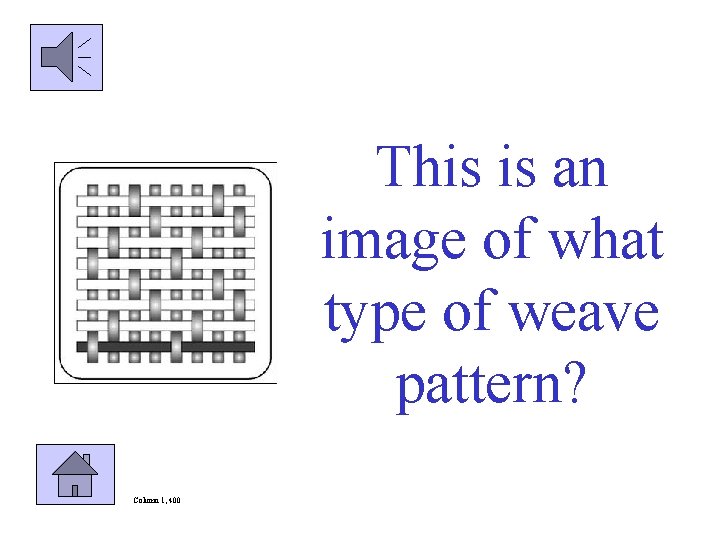
This is an image of what type of weave pattern? Column 1, 400
This structure controls the amount of light seen through your sample on the microscope. Column 1, 500
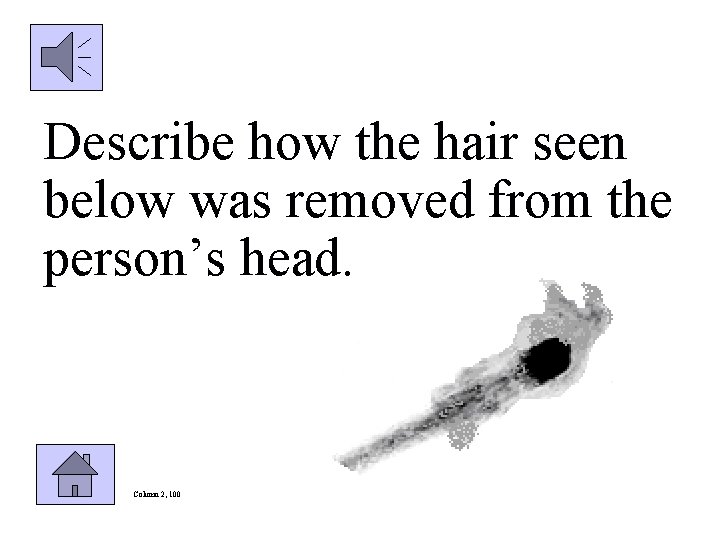
Describe how the hair seen below was removed from the person’s head. Column 2, 100
Pigment granules are primarily found in this part of the hair. Column 2, 200
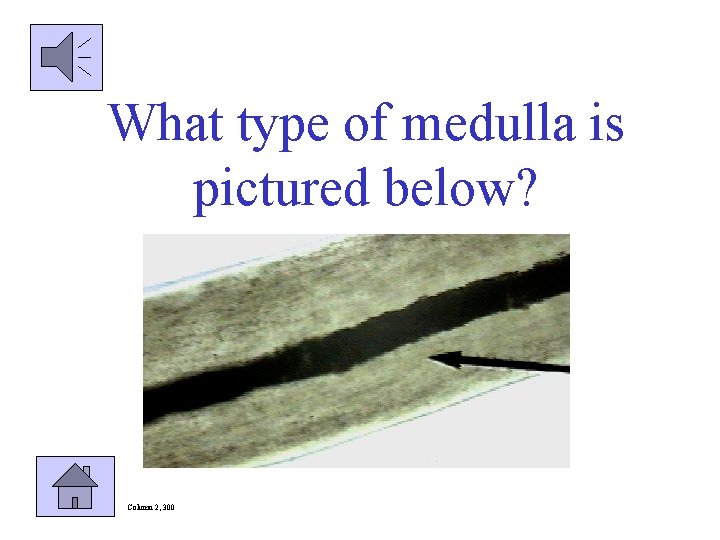
What type of medulla is pictured below? Column 2, 300
This phase of hair growth lasts up to 5 years. Column 2, 400
List the 3 types of cuticle patterns. Column 2, 500
The exchange principle was first noted by this person. Column 3, 100
Transfer, loss, or contamination of evidence can occur if this step in CSI is not completed. Column 3, 200
Witnesses are separated at a crime scene, why? Column 3, 300
A folded paper to hold trace evidence is called this. Column 3, 400
List the 5 S’s of Crime Scene Investigation in order. Column 3, 500
These 2 types of yarns make up all weave patterns. Column 4, 100
Crossover indentations are a characteristic of what type of fiber? Column 4, 200
What term describes any breach of right, duty or law? Column 4, 300
Hair grows approximately this much each month. Column 4, 400
The medullary index for humans is typically less than this. Column 4, 500
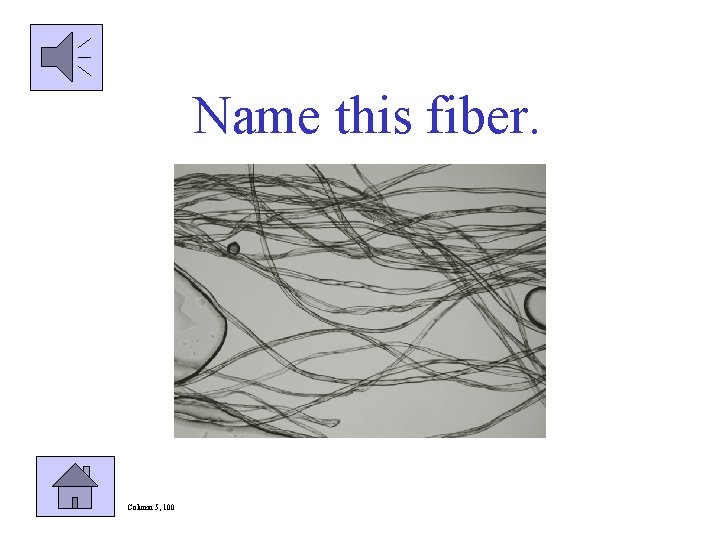
Name this fiber. Column 5, 100
Natural fibers can be harvested from these 3 sources. Column 5, 200
Nylon was manufactured to imitate this natural fiber. Column 5, 300
Denim is typically in this weave pattern. Column 5, 400
Give 3 examples of stem fibers. Column 5, 500