
Under Reporting Practices of ADR An Observational Study
Under Reporting Practices of ADR: An Observational Study Kondalkar Avinash, Sharma Rahul, Patle Shiker, and Srivastava Rajnish
• Objective: The present study was to estimate extend or percentage of Adverse Drug Reaction (ADR) reporting in Bhopal region at pilot level. Our main objective is not only to find out the reporting status but is to find out the possible causable reason behind the under-reporting of the suspected ADRs by the private practioners. • Methods: A questionnaire based short intensive survey was conducted on the private practioners of the Bhopal region. The questionnaire consists of ten questions from which most of it was totally based and design so that we can get the much close and exact reason for the under-reporting practices. The survey was conducted by a random sample of approximate 150 private practioners of the Bhopal region.
• Results: The overall reporting percentage was only approximately 7% or the under-reporting percentage was approximately 93% that clearly indicates somewhat a considerable obstacle for the roadmap forecast by the CDSCO in collaboration with IPC. • Conclusion: The under-reporting percentage was quite considerable (93%) so as to look after the issue to resolve or for improvement. As majority of population have their reliability and first exposure of treatment via private practices. So ADRs at this level if reported earlier in the phase of drug exposure could be better controlled as per quality concern and also its global exposure may be prevented.
KEYWORDS • Adverse drug reaction (ADR), • Central drug standard control organization (CDSCO), • Indian Pharmacopoeial Commission (IPC), • Under-reporting, • Questionnaire • Private Practioners.

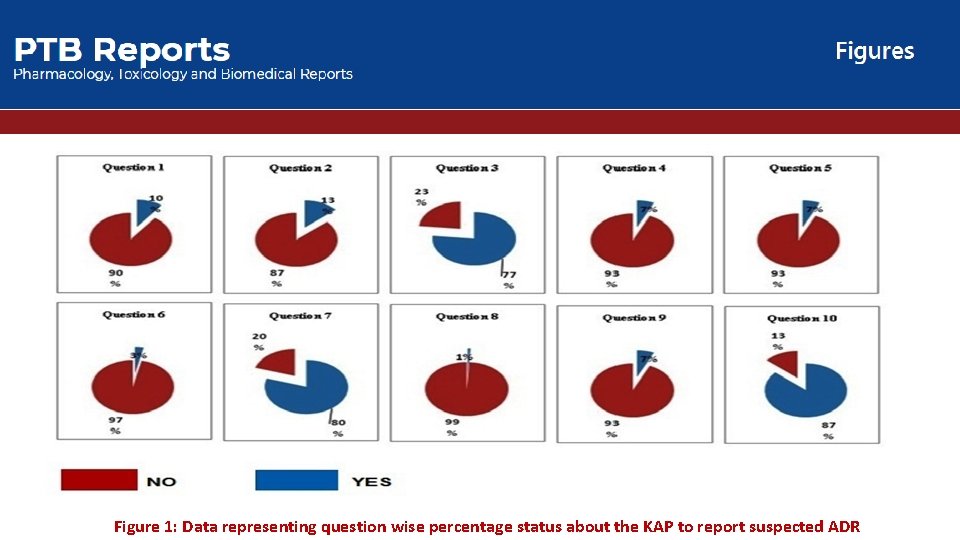
Figure 1: Data representing question wise percentage status about the KAP to report suspected ADR
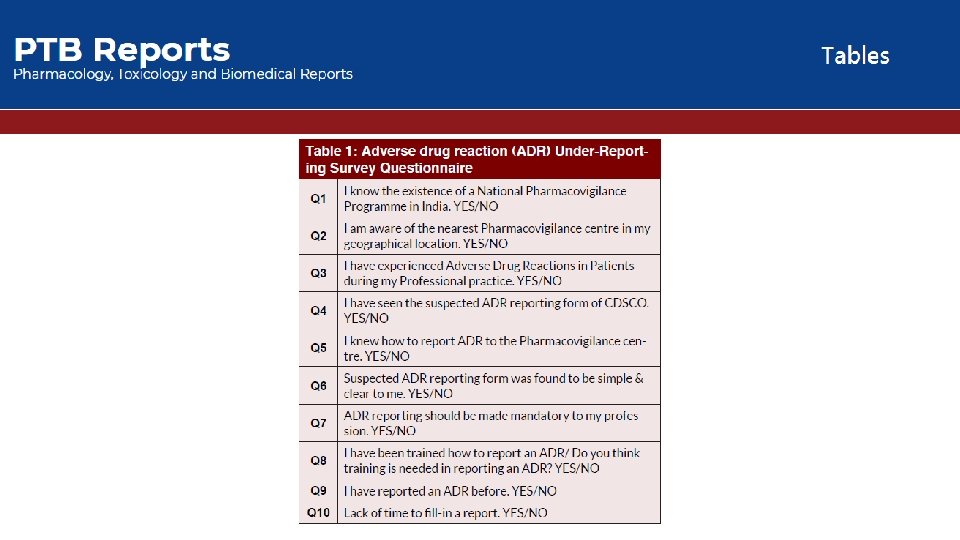
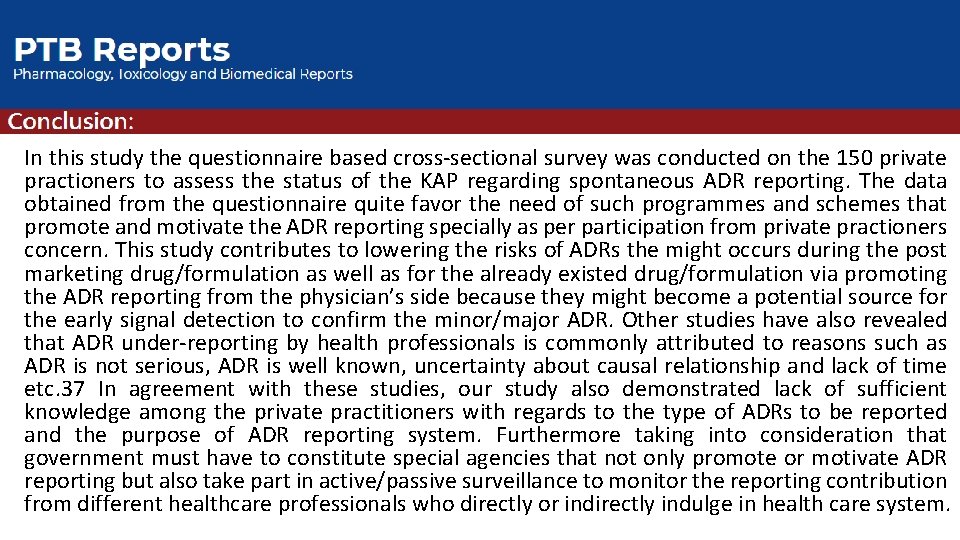
In this study the questionnaire based cross-sectional survey was conducted on the 150 private practioners to assess the status of the KAP regarding spontaneous ADR reporting. The data obtained from the questionnaire quite favor the need of such programmes and schemes that promote and motivate the ADR reporting specially as per participation from private practioners concern. This study contributes to lowering the risks of ADRs the might occurs during the post marketing drug/formulation as well as for the already existed drug/formulation via promoting the ADR reporting from the physician’s side because they might become a potential source for the early signal detection to confirm the minor/major ADR. Other studies have also revealed that ADR under-reporting by health professionals is commonly attributed to reasons such as ADR is not serious, ADR is well known, uncertainty about causal relationship and lack of time etc. 37 In agreement with these studies, our study also demonstrated lack of sufficient knowledge among the private practitioners with regards to the type of ADRs to be reported and the purpose of ADR reporting system. Furthermore taking into consideration that government must have to constitute special agencies that not only promote or motivate ADR reporting but also take part in active/passive surveillance to monitor the reporting contribution from different healthcare professionals who directly or indirectly indulge in health care system.
- Slides: 8