
Under My Skin Understanding and Controlling the Risks

- Slides: 25
Under My Skin Understanding and Controlling the Risks of Dermal Exposure to Pesticides Pest. Sure Continuing Education Program Fall 2004 J. Dylan Romo, CIH, CSP, ARM Sr. Loss Control Consultant Lockton Companies of Dallas
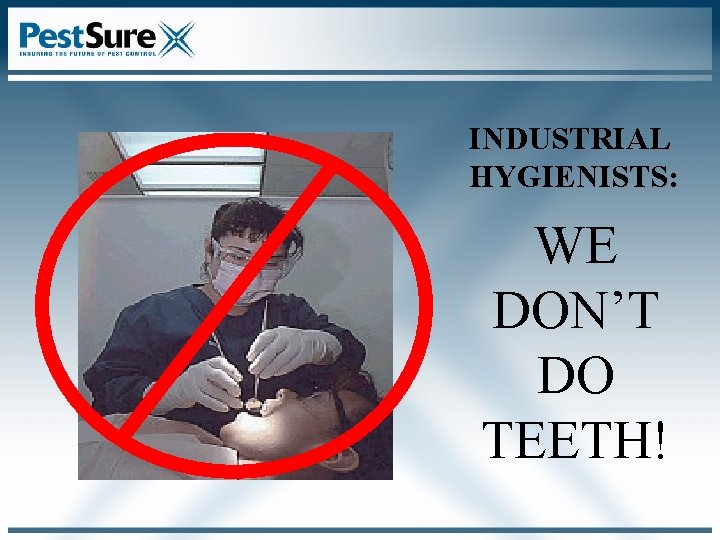
INDUSTRIAL HYGIENISTS: WE DON’T DO TEETH!
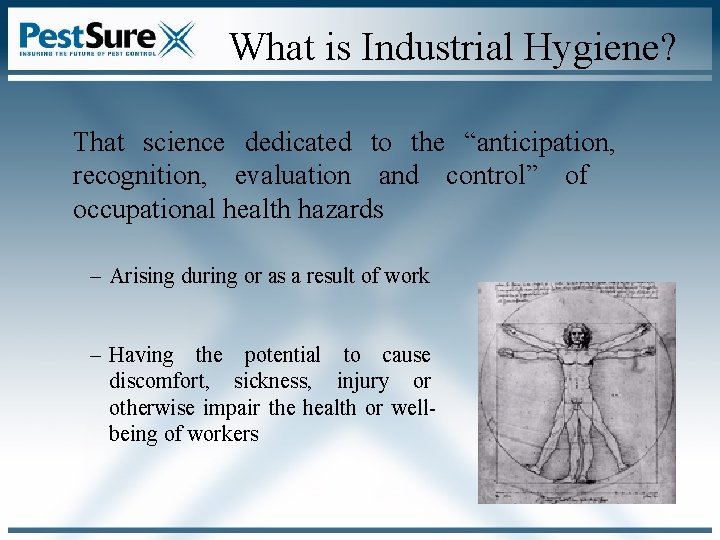
What is Industrial Hygiene? That science dedicated to the “anticipation, recognition, evaluation and control” of occupational health hazards – Arising during or as a result of work – Having the potential to cause discomfort, sickness, injury or otherwise impair the health or wellbeing of workers
IH Focus Chronic health hazards ü Small exposure doses ü Occurring over long period of time ü Can result in serious illness (e. g. respiratory disease, cancer) Exposure assessment Qualitative Quantitative
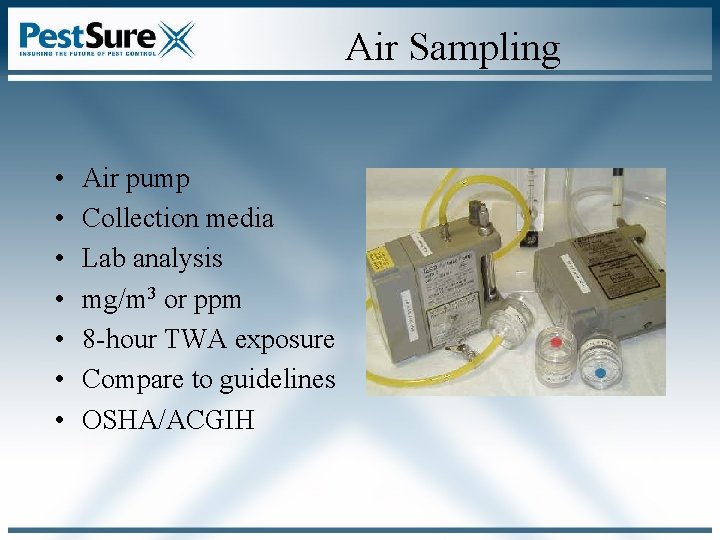
Air Sampling • • Air pump Collection media Lab analysis mg/m 3 or ppm 8 -hour TWA exposure Compare to guidelines OSHA/ACGIH
Routes of Exposure • • Inhalation Ingestion Injection Absorption
Skin! • Largest organ of human body • Extremely sensitive • Renewable • Protective • Regulates body temperature Source: National Geographic
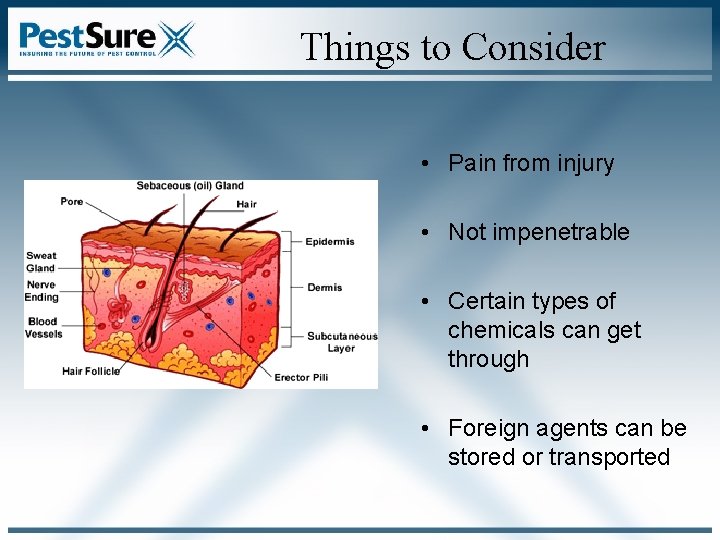
Things to Consider • Pain from injury • Not impenetrable • Certain types of chemicals can get through • Foreign agents can be stored or transported
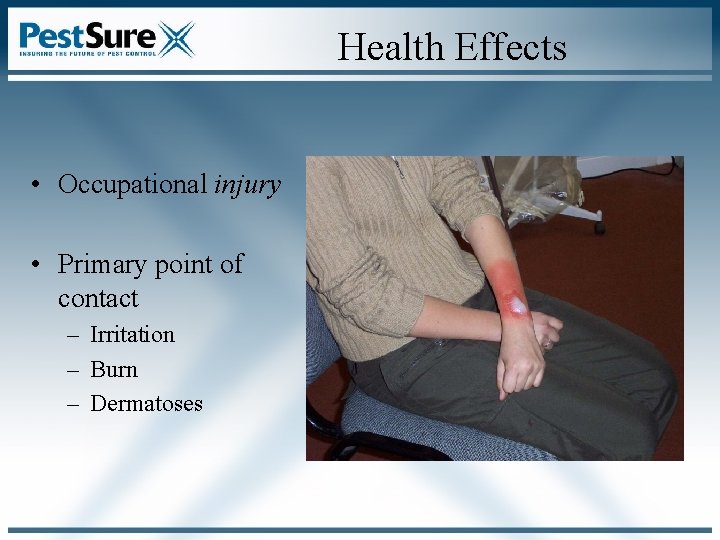
Health Effects • Occupational injury • Primary point of contact – Irritation – Burn – Dermatoses
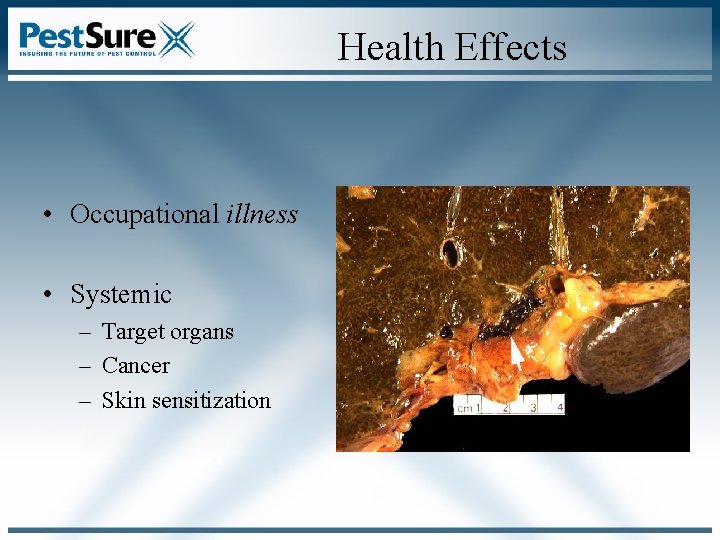
Health Effects • Occupational illness • Systemic – Target organs – Cancer – Skin sensitization
Contribution of Skin Exposure • In a whole body vapor exposure, only around 10% of the body burden is from the skin route • But key attributes of pesticides include: – Persistent – Penetrating – Poisonous
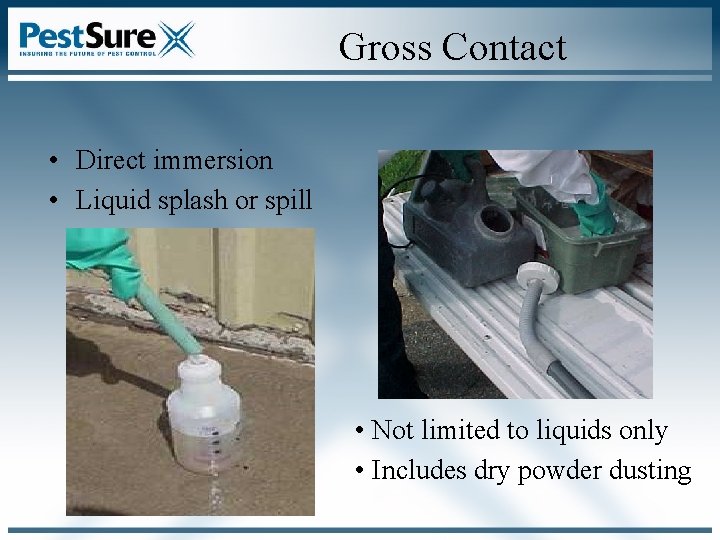
Gross Contact • Direct immersion • Liquid splash or spill • Not limited to liquids only • Includes dry powder dusting
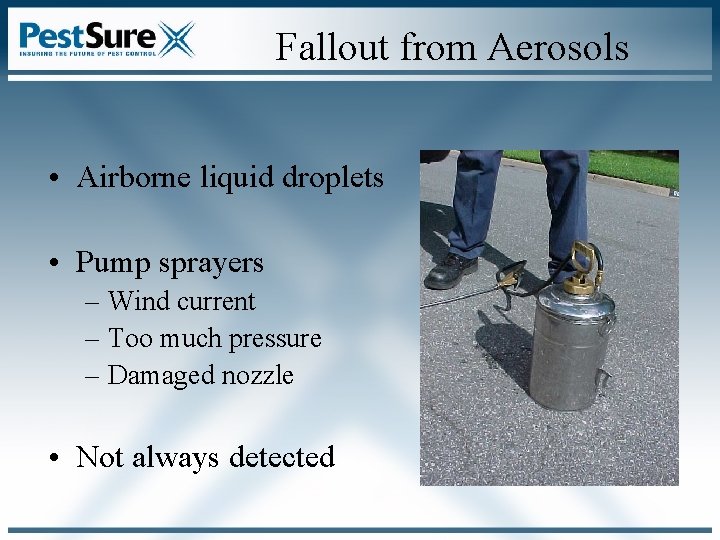
Fallout from Aerosols • Airborne liquid droplets • Pump sprayers – Wind current – Too much pressure – Damaged nozzle • Not always detected
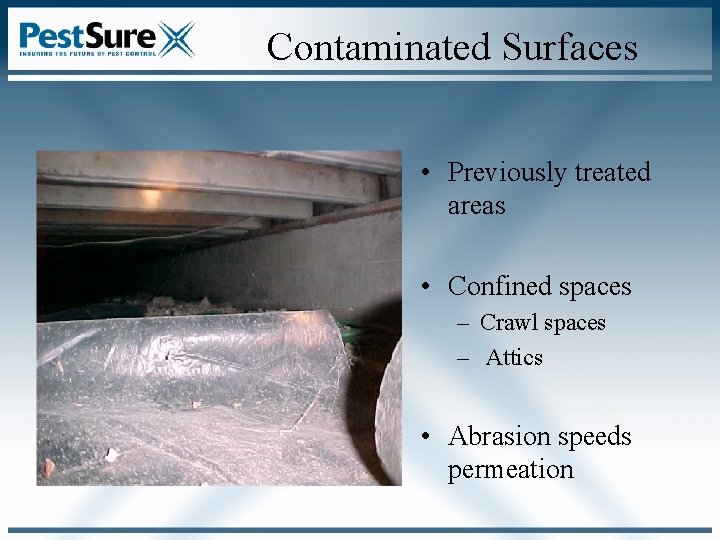
Contaminated Surfaces • Previously treated areas • Confined spaces – Crawl spaces – Attics • Abrasion speeds permeation
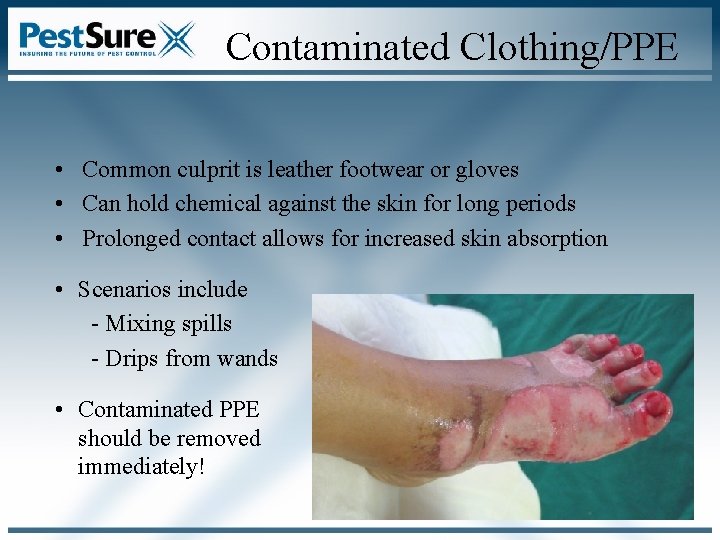
Contaminated Clothing/PPE • Common culprit is leather footwear or gloves • Can hold chemical against the skin for long periods • Prolonged contact allows for increased skin absorption • Scenarios include - Mixing spills - Drips from wands • Contaminated PPE should be removed immediately!
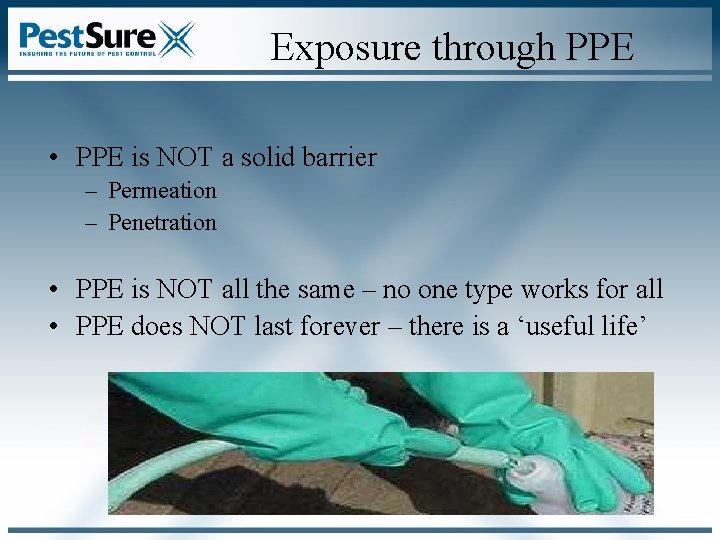
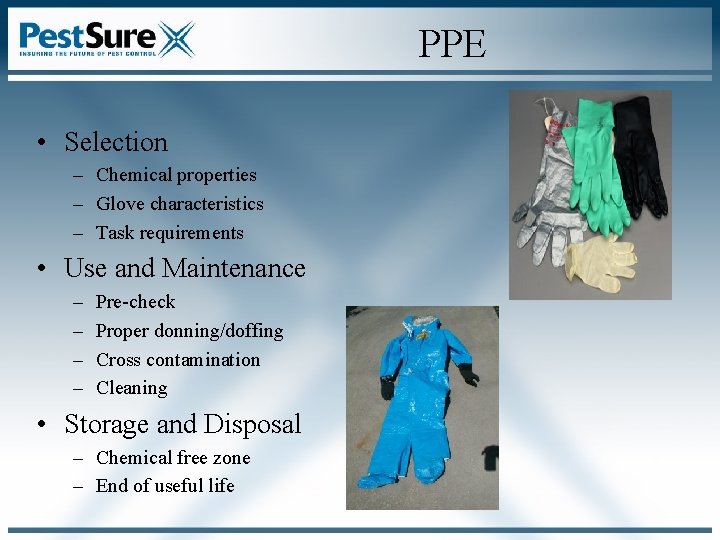
Exposure through PPE • PPE is NOT a solid barrier – Permeation – Penetration • PPE is NOT all the same – no one type works for all • PPE does NOT last forever – there is a ‘useful life’
Common Controls • Awareness • Chemical handling • PPE
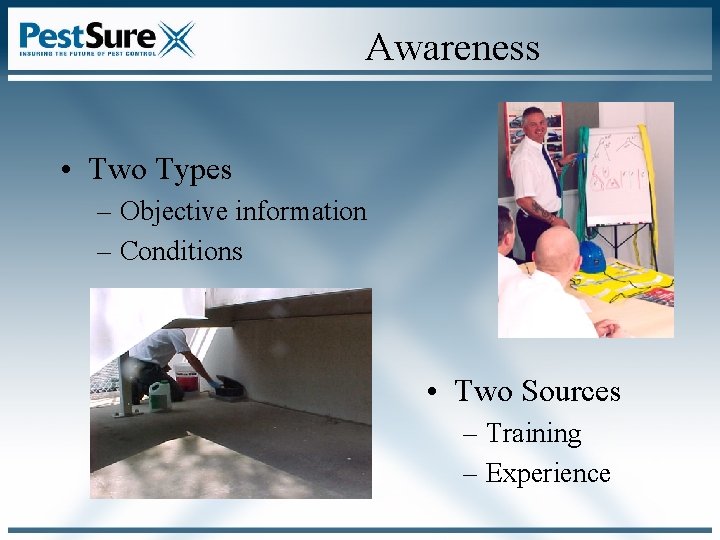
Awareness • Two Types – Objective information – Conditions • Two Sources – Training – Experience
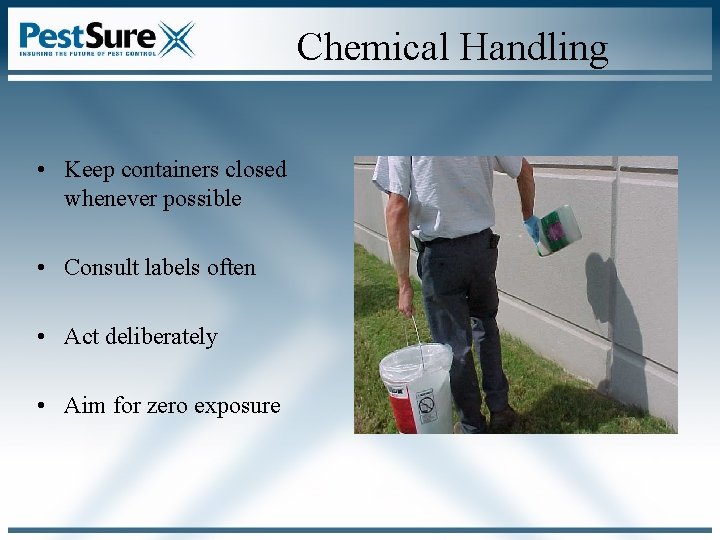
Chemical Handling • Keep containers closed whenever possible • Consult labels often • Act deliberately • Aim for zero exposure
PPE • Selection – Chemical properties – Glove characteristics – Task requirements • Use and Maintenance – – Pre-check Proper donning/doffing Cross contamination Cleaning • Storage and Disposal – Chemical free zone – End of useful life
Other Risk Factors • Skin Condition • Area of the Body • Personal Hygiene
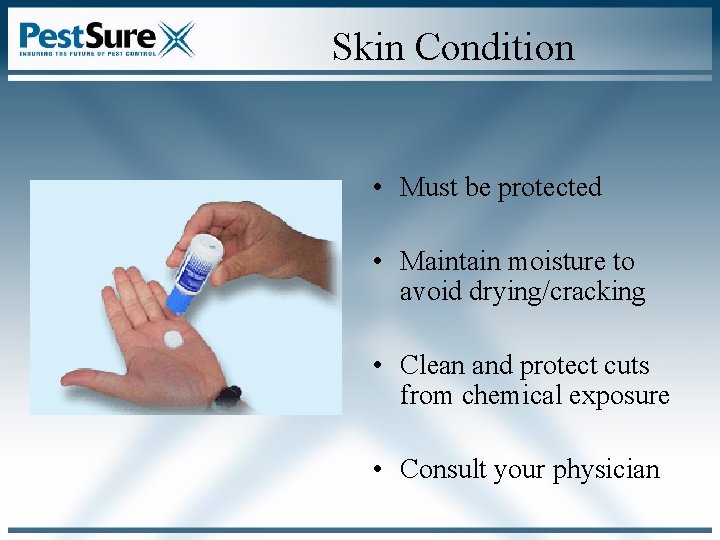
Skin Condition • Must be protected • Maintain moisture to avoid drying/cracking • Clean and protect cuts from chemical exposure • Consult your physician
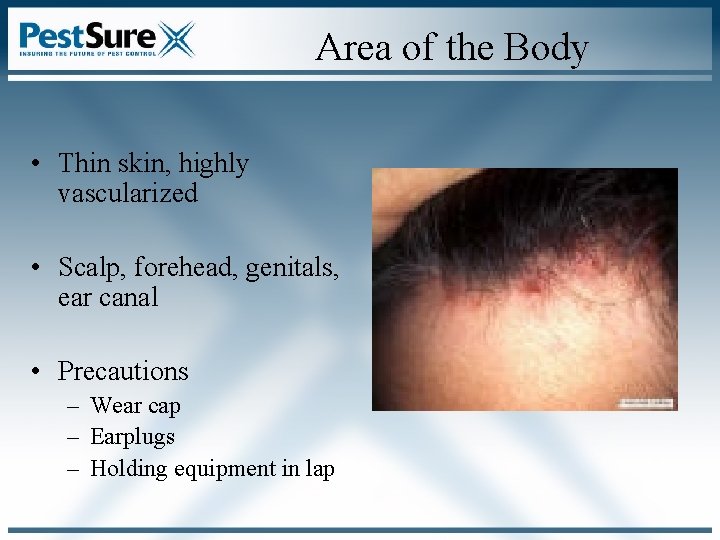
Area of the Body • Thin skin, highly vascularized • Scalp, forehead, genitals, ear canal • Precautions – Wear cap – Earplugs – Holding equipment in lap
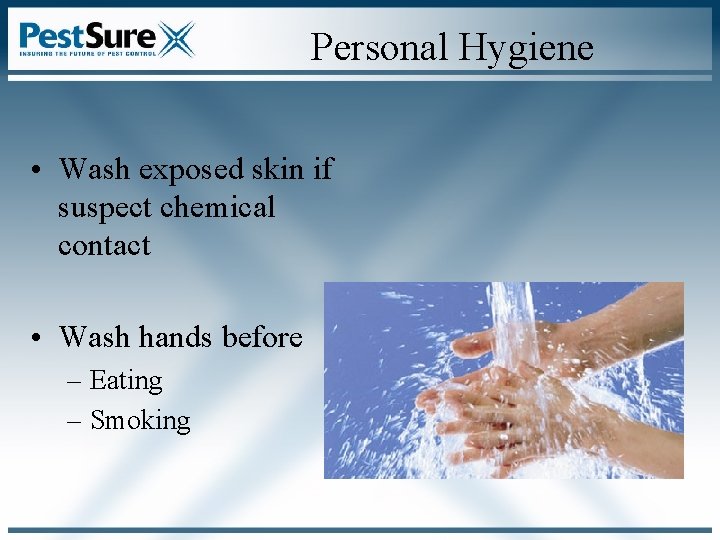
Personal Hygiene • Wash exposed skin if suspect chemical contact • Wash hands before – Eating – Smoking
Closing • Skin is the largest organ in the body • Dermal exposure and absorption can provide a significant contribution to dose • Work practices, personal hygiene, and PPE must be used wisely to prevent injury and illness