
Uncontrolled copy not subject to amendment Airmanship Knowledge
Uncontrolled copy not subject to amendment Airmanship Knowledge for Air Cadets Learning Outcome 3 Know How to Identify Military Aircraft Part 6: Historic Aircraft Revision 3. 00
Contents 1. Lancaster 2. Spitfire 3. Hurricane 4. Dakota 5. Lightning 6. Vulcan 7. Buccaneer 8. Phantom
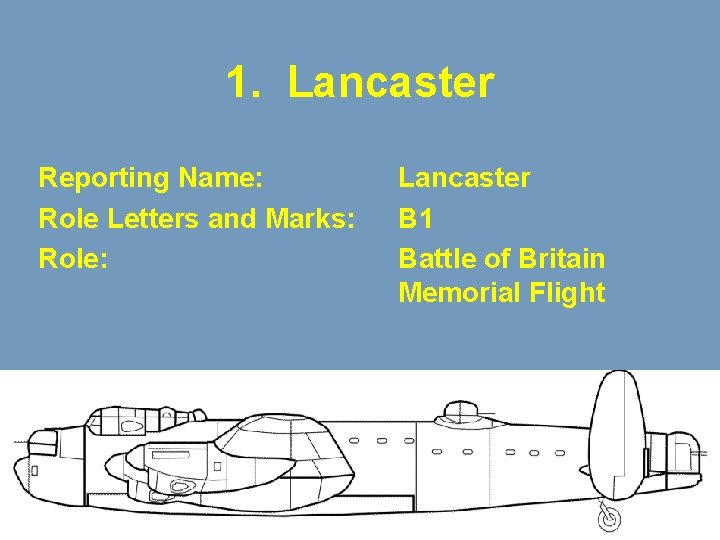
1. Lancaster Reporting Name: Role Letters and Marks: Role: Lancaster B 1 Battle of Britain Memorial Flight
Lancaster • The Avro Lancaster first flew in January 1941 • 7, 377 Lancasters were built in the UK and Canada, with a peak of 293 made in one month during August 1944 • Famous operational changes to the Lancaster included structural alterations to accommodate the massive 9, 979 kg Grand Slam bomb and the Barnes Wallis “bouncing bomb” as used by No 617 Dambusters Squadron
Technical Data Wing Span: 31 M Length: 21 M Crew: 7 Maximum Speed: 238 kts (442 km/h) at sea level Engines: Four Rolls-Royce Merlin Piston Engines
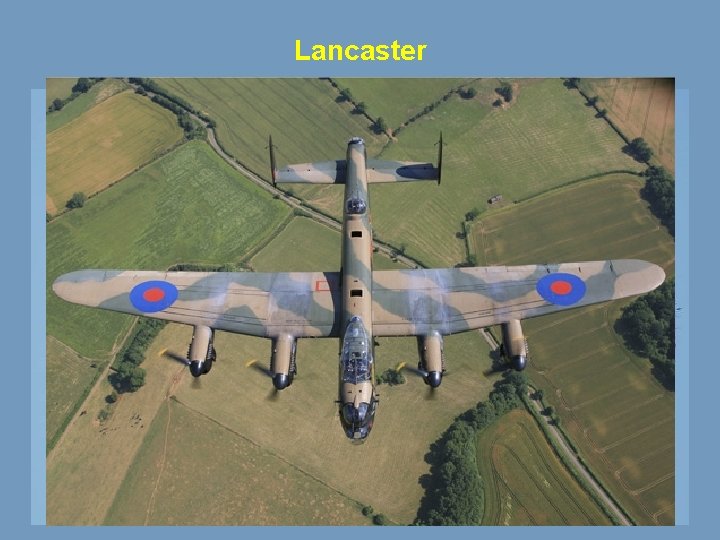
Lancaster
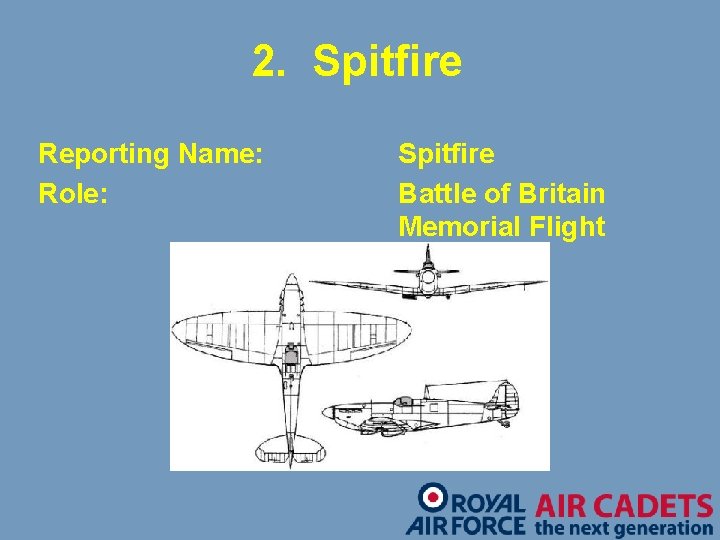
2. Spitfire Reporting Name: Role: Spitfire Battle of Britain Memorial Flight
Spitfire • The Supermarine Spitfire was a development of a famous Schneider trophy racing aircraft designed by R. J. Mitchell • It was vital to the defence of the United Kingdom, and ultimately victory, in the Second World War • It is a tribute to R. J. Mitchell’s design, that over 22, 000 Spitfires were produced in 36 separate marks • Distinctive because of the elliptical shaped wing and the roar from the powerful piston engine
Technical Data Wing Span: 11. 2 M Length: 9. 1 M Crew: 1 Maximum Speed: 378 kts (700 km/h) at sea level Engine: 1 Rolls-Royce Merlin
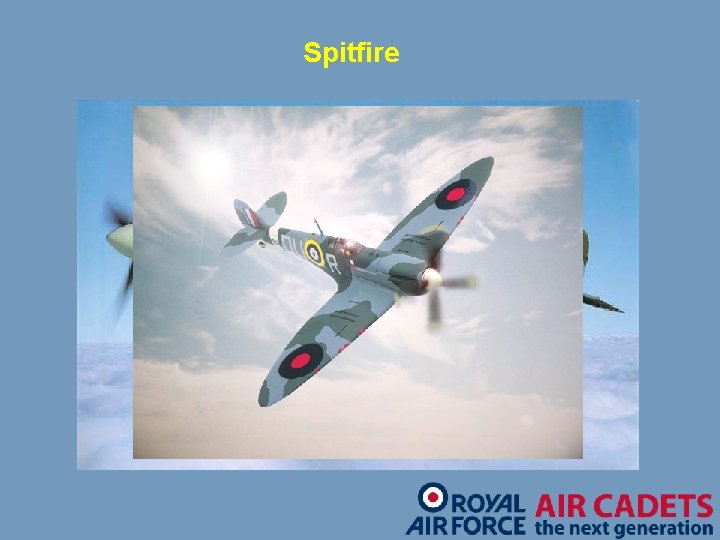
Spitfire
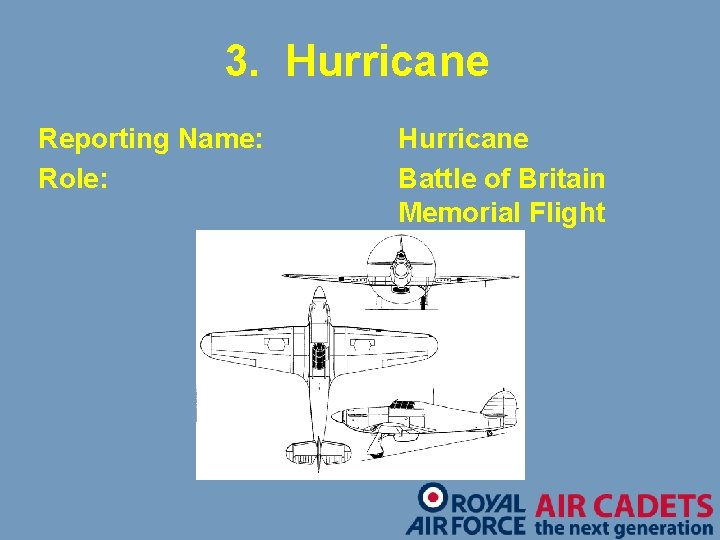
3. Hurricane Reporting Name: Role: Hurricane Battle of Britain Memorial Flight
Hurricane • The Hawker Hurricane stands alongside the Spitfire in the halls of fame • In fact, the Hurricane predates the Spitfire by some two years, being designed in 1934, by Sydney Camm who later designed the Hunter and Harrier aircraft • The Hurricane was the first monoplane fighter in RAF service and also the first to exceed 260 kts (482 km/h) in level flight • Although perhaps not quite as well known as the Spitfire, it contributed more to the Battle of Britain, by destroying a greater number of enemy aircraft • This was due partly to its better turning performance, and partly to its the more rugged and more damage-tolerant construction
Technical Data Wing Span: 12. 2 M Length: 9. 75 M Crew: 1 Maximum Speed: 328 kts (609 km/h) at sea level Engine: 1 Rolls-Royce Merlin piston engine
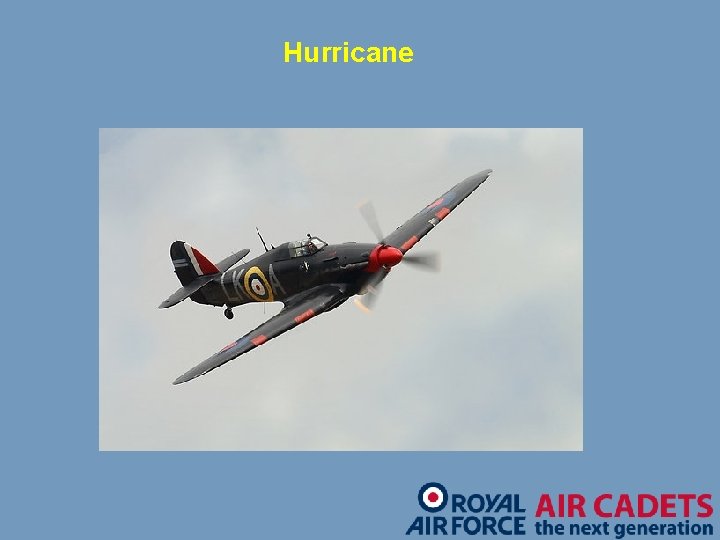
Hurricane
4. Dakota DC 3 Reporting Name: Role Letters and Marks: Role: Dakota DC 3 Battle of Britain Memorial Flight
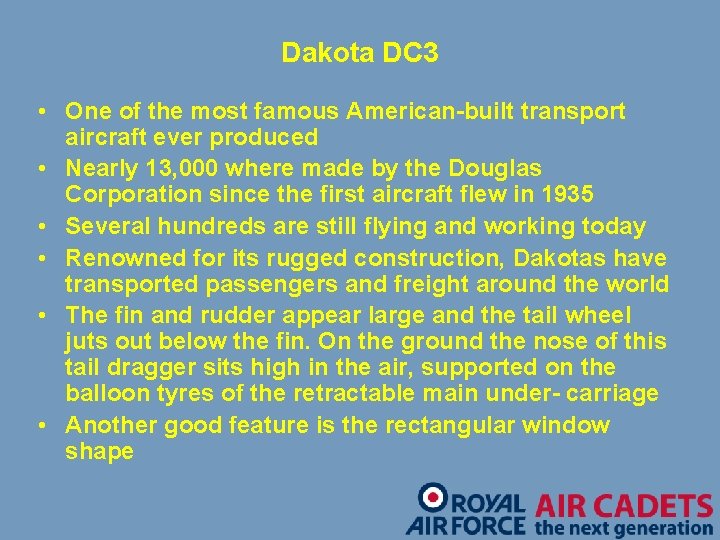
Dakota DC 3 • One of the most famous American-built transport aircraft ever produced • Nearly 13, 000 where made by the Douglas Corporation since the first aircraft flew in 1935 • Several hundreds are still flying and working today • Renowned for its rugged construction, Dakotas have transported passengers and freight around the world • The fin and rudder appear large and the tail wheel juts out below the fin. On the ground the nose of this tail dragger sits high in the air, supported on the balloon tyres of the retractable main under- carriage • Another good feature is the rectangular window shape
Technical Data Wing Span: 28. 9 M Length: 19. 5 M Crew: 2 Maximum Speed: 240 kts (448 km/h) at sea level Engines: Two Pratt & Whitney R 1830 -90 D piston engines
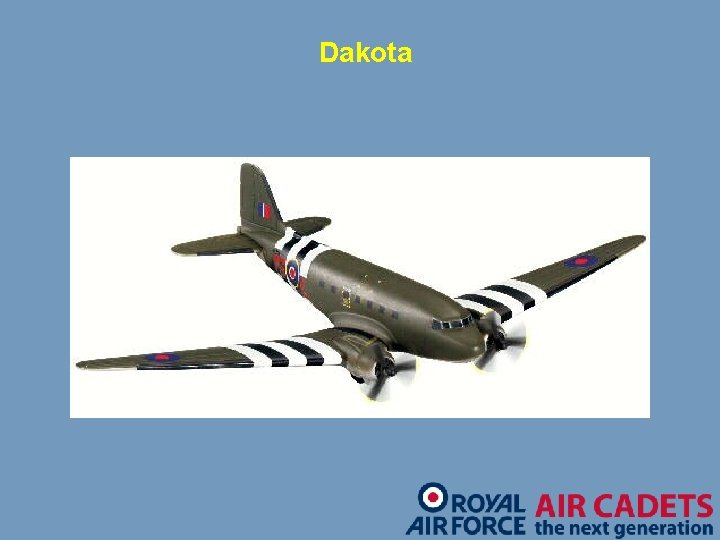
Dakota
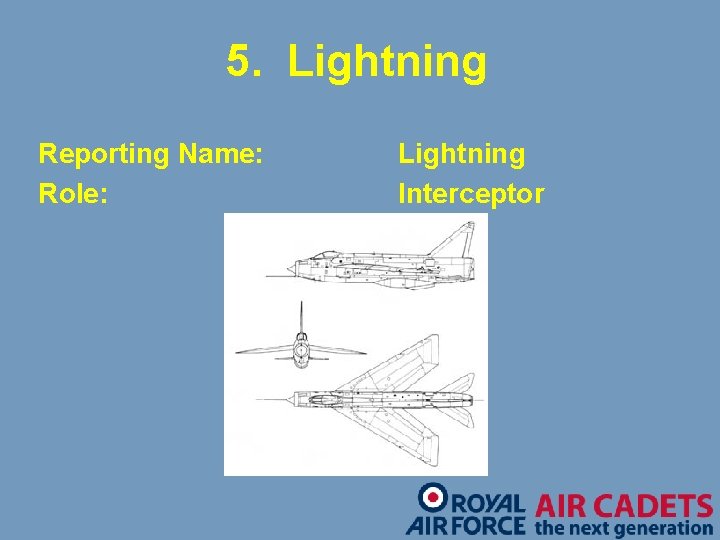
5. Lightning Reporting Name: Role: Lightning Interceptor
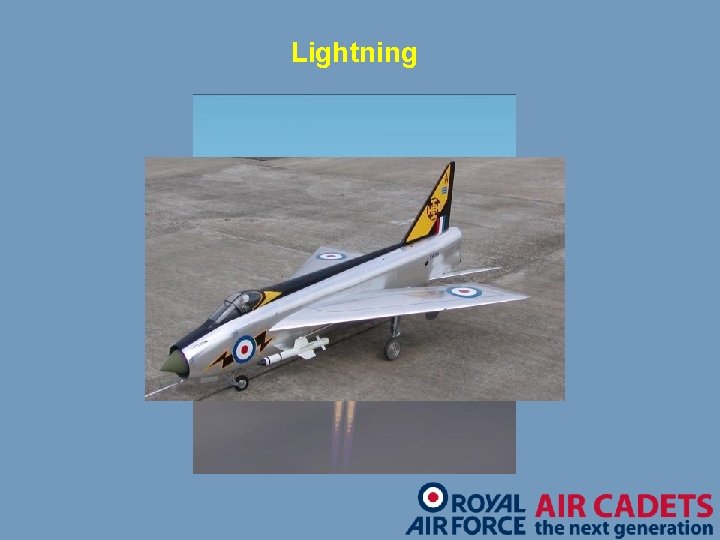
Lightning • The English Electric Lightning was the first and last all-British supersonic fighter • Over 300 were built and the Lightning served with RAF Air Defence squadrons from 1959 until 1988 • The Lightning could climb at 50, 000 feet per minute and fly at speeds of up to Mach 2
Technical Data Wing Span: 10. 6 M Length: 16. 8 M Crew: 1 Maximum Speed: Mach 2 (2, 450 km/h) at 36, 000 ft Engines: Two Rolls-Royce Avon Reheated Turbojets
Lightning
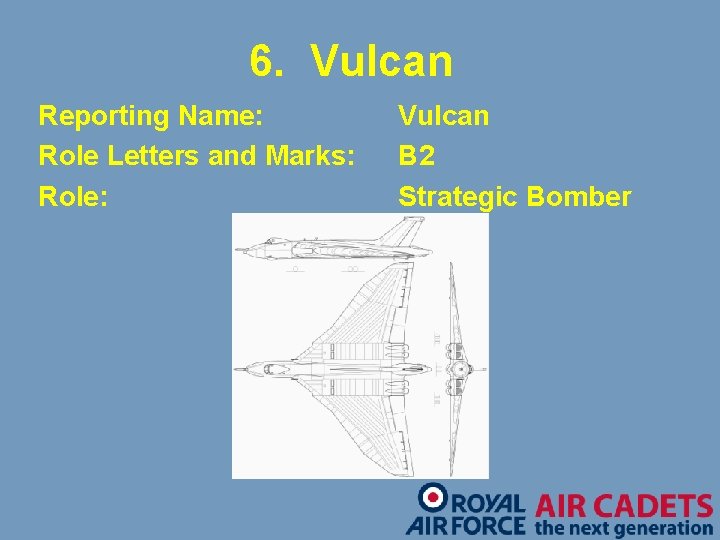
6. Vulcan Reporting Name: Role Letters and Marks: Role: Vulcan B 2 Strategic Bomber
Vulcan • Built by Avro, the Vulcan formed part of the RAF’s V-Force of nuclear bombers along with the Valiant and the Victor • 136 were built between 1956 and 1965, and the Vulcan remained in RAF service until 1984 • The Vulcan was the RAF’s final purpose-built strategic bomber and saw action in the 1982 Falklands War • The Vulcan remains the largest delta-winged aircraft ever to fly
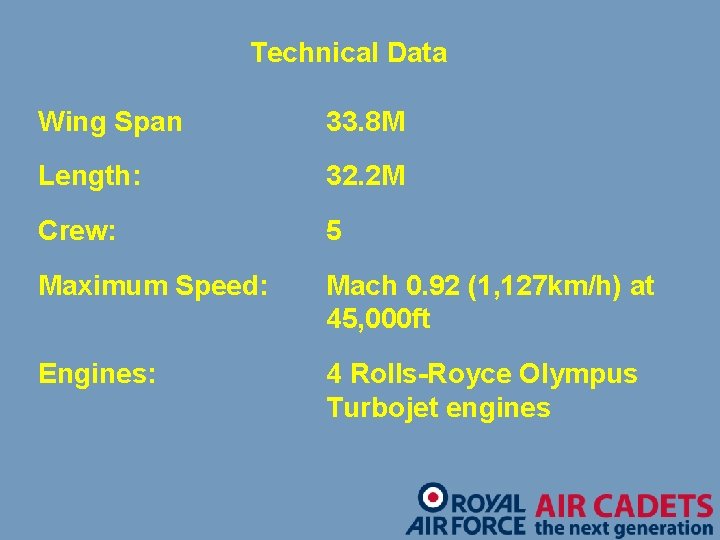
Technical Data Wing Span 33. 8 M Length: 32. 2 M Crew: 5 Maximum Speed: Mach 0. 92 (1, 127 km/h) at 45, 000 ft Engines: 4 Rolls-Royce Olympus Turbojet engines
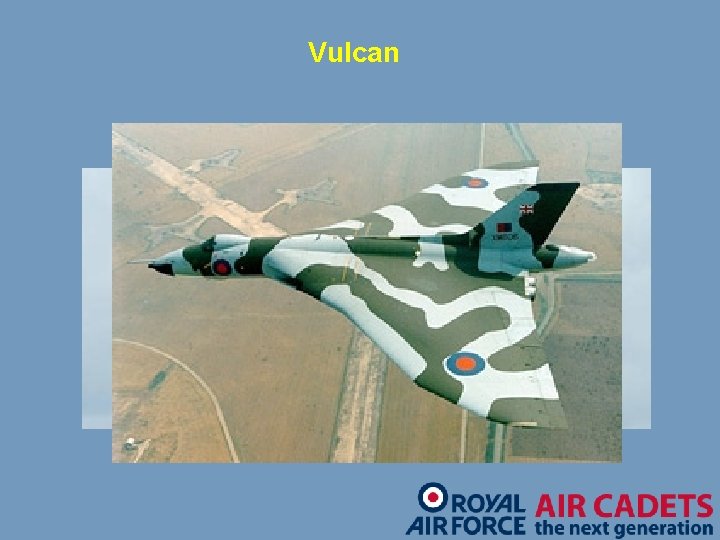
Vulcan
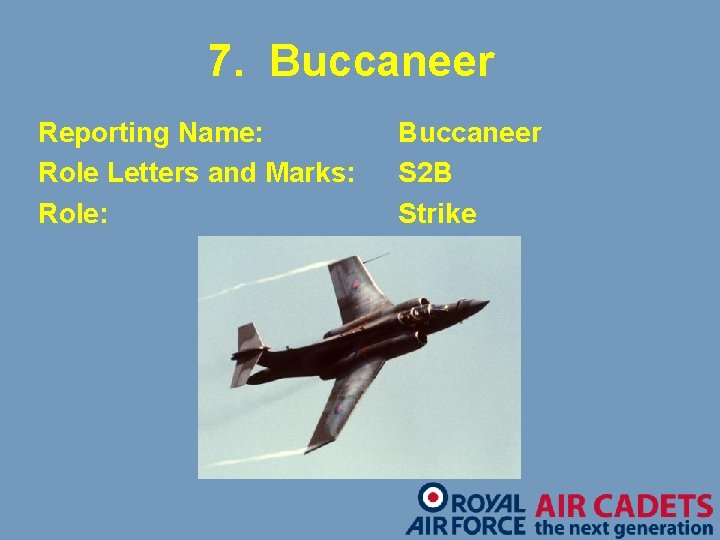
7. Buccaneer Reporting Name: Role Letters and Marks: Role: Buccaneer S 2 B Strike
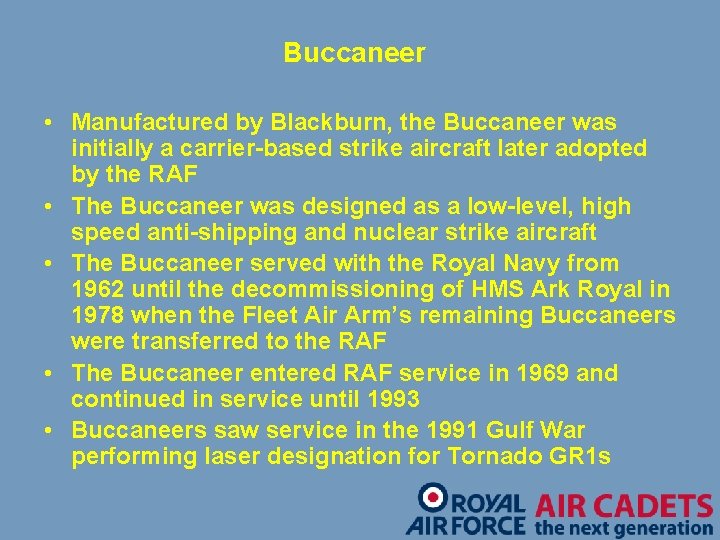
Buccaneer • Manufactured by Blackburn, the Buccaneer was initially a carrier-based strike aircraft later adopted by the RAF • The Buccaneer was designed as a low-level, high speed anti-shipping and nuclear strike aircraft • The Buccaneer served with the Royal Navy from 1962 until the decommissioning of HMS Ark Royal in 1978 when the Fleet Air Arm’s remaining Buccaneers were transferred to the RAF • The Buccaneer entered RAF service in 1969 and continued in service until 1993 • Buccaneers saw service in the 1991 Gulf War performing laser designation for Tornado GR 1 s
Technical Data Wing Span: 13. 4 M Length: 19. 3 M Crew: 2 Maximum Speed: 580 kts (1, 074 km/h) at 200 ft Engines: Two Rolls-Royce Spey turbofans
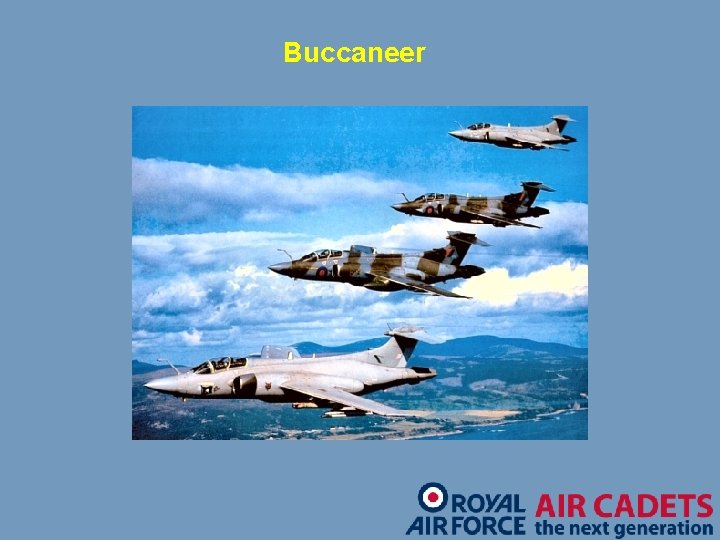
Buccaneer
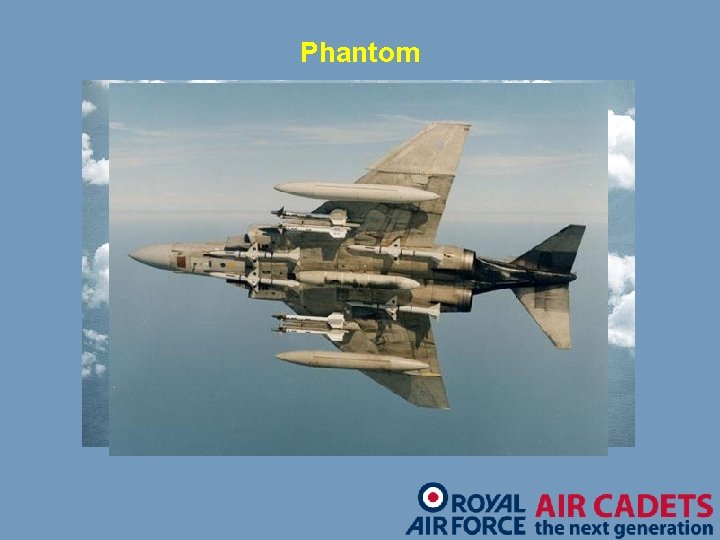
8. Phantom Reporting Name: Role Letters and Marks: Role: Phantom FG 1 / FGR 2 Air Defence / Ground Attack
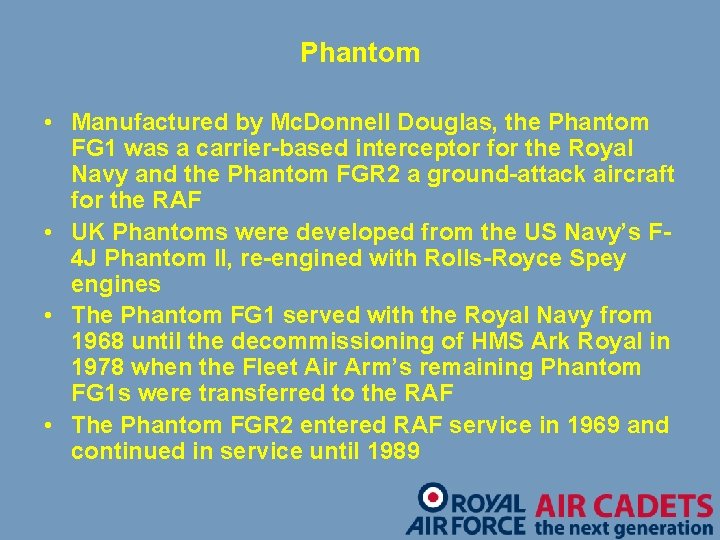
Phantom • Manufactured by Mc. Donnell Douglas, the Phantom FG 1 was a carrier-based interceptor for the Royal Navy and the Phantom FGR 2 a ground-attack aircraft for the RAF • UK Phantoms were developed from the US Navy’s F 4 J Phantom II, re-engined with Rolls-Royce Spey engines • The Phantom FG 1 served with the Royal Navy from 1968 until the decommissioning of HMS Ark Royal in 1978 when the Fleet Air Arm’s remaining Phantom FG 1 s were transferred to the RAF • The Phantom FGR 2 entered RAF service in 1969 and continued in service until 1989
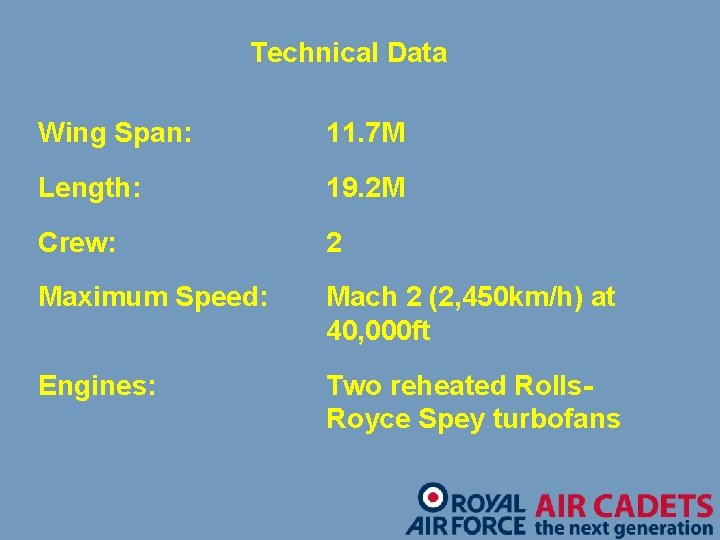
Technical Data Wing Span: 11. 7 M Length: 19. 2 M Crew: 2 Maximum Speed: Mach 2 (2, 450 km/h) at 40, 000 ft Engines: Two reheated Rolls. Royce Spey turbofans
Phantom
Any questions?
- Slides: 35