
Uncloaking globular clusters of the inner Galaxy Javier
Uncloaking globular clusters of the inner Galaxy Javier Alonso-García Department of Astronomy University of Michigan In collaboration with: Mario Mateo (Department of Astronomy, UMich) Bodhissatva Sen (Department of Statistics, UMich) Moulinath Banerjee (Department of Statistics, UMich) Michael Woodroofe (Department of Statistics, UMich)
• Galactic spheroids contain a large fraction of the stellar mass in the local universe. (Zoccali et al. 2003, Fukugita et al. 1998) • Understanding of their formation and evolution is crucial to comprehend galaxy formation and to reconstruct the whole cosmic star formation history.
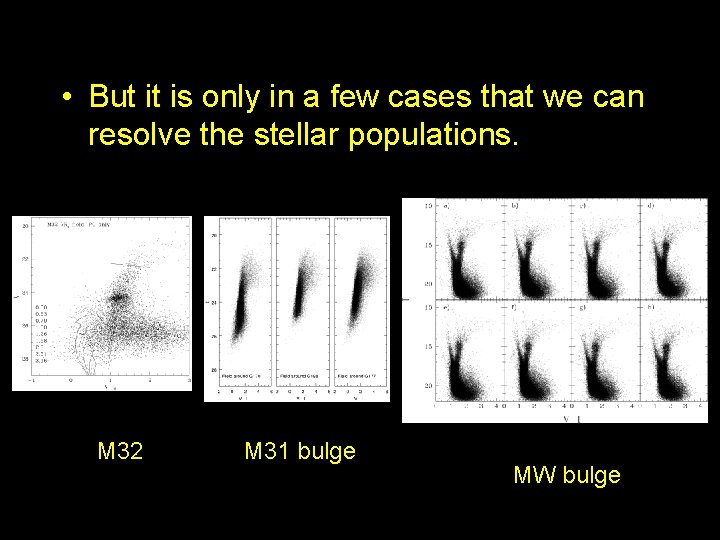
• But it is only in a few cases that we can resolve the stellar populations. M 32 M 31 bulge MW bulge
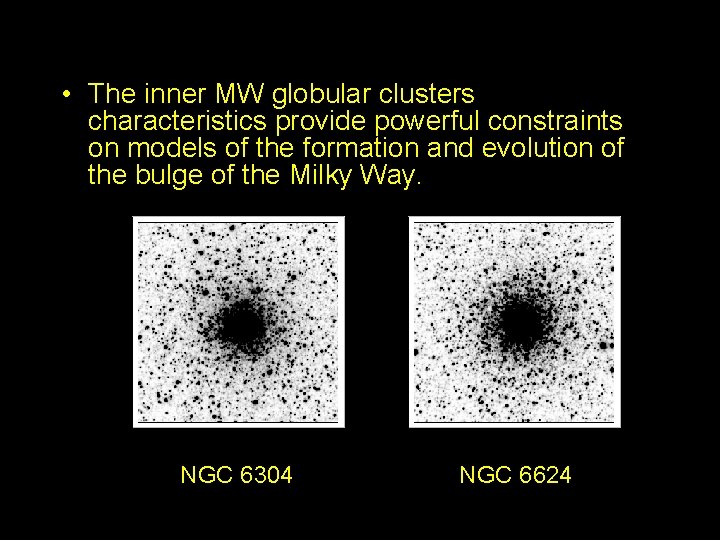
• The inner MW globular clusters characteristics provide powerful constraints on models of the formation and evolution of the bulge of the Milky Way. NGC 6304 NGC 6624
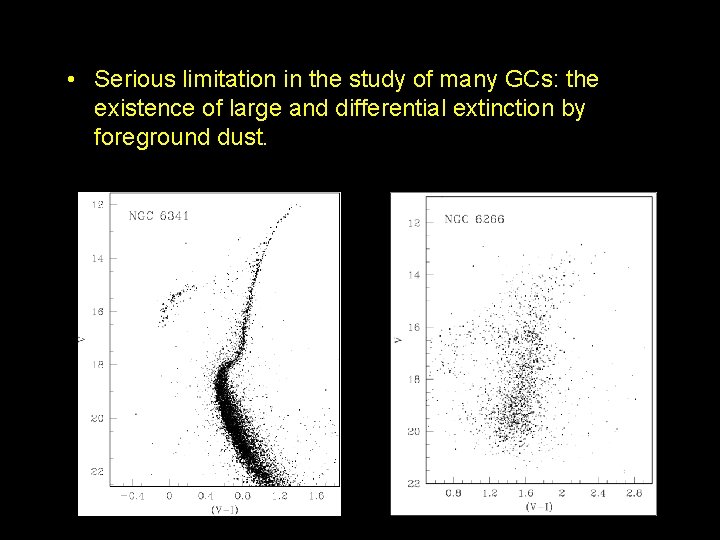
• Serious limitation in the study of many GCs: the existence of large and differential extinction by foreground dust.
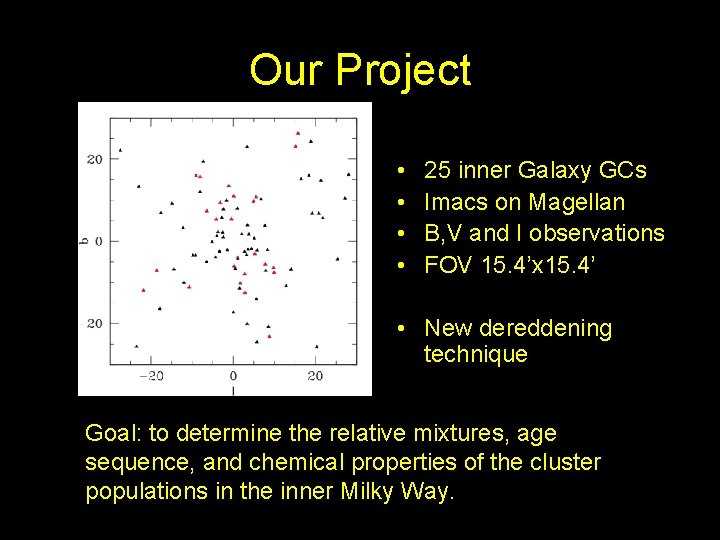
Our Project • • 25 inner Galaxy GCs Imacs on Magellan B, V and I observations FOV 15. 4’x 15. 4’ • New dereddening technique Goal: to determine the relative mixtures, age sequence, and chemical properties of the cluster populations in the inner Milky Way.
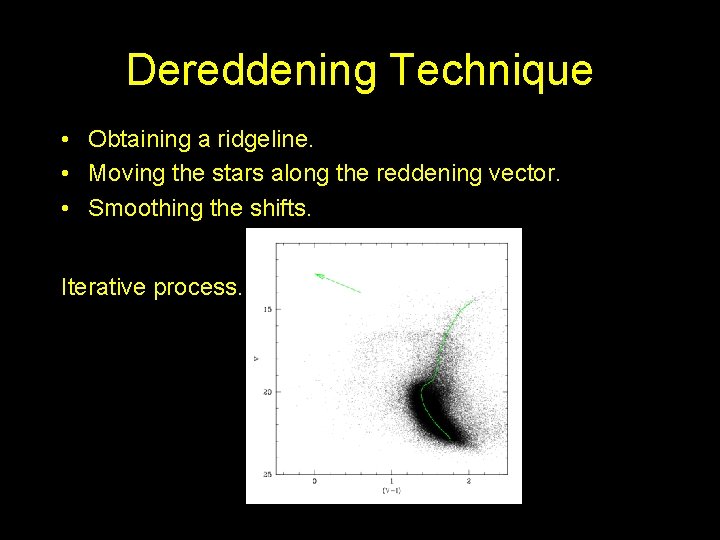
Dereddening Technique • Obtaining a ridgeline. • Moving the stars along the reddening vector. • Smoothing the shifts. Iterative process.
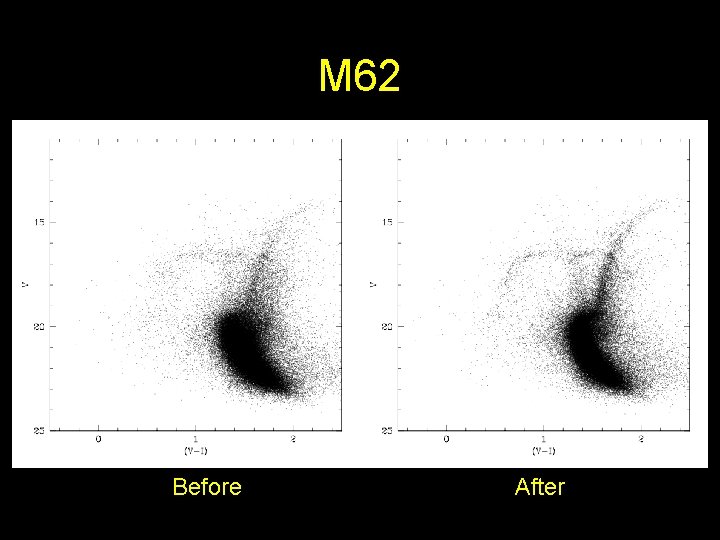
M 62 Before After
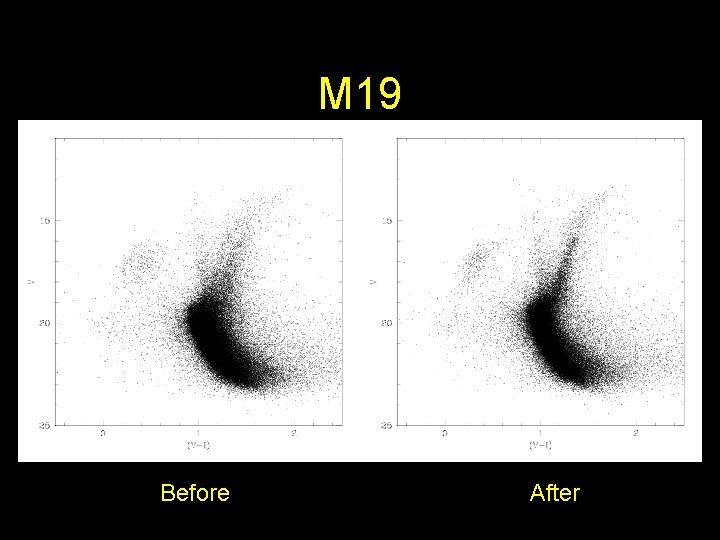
M 19 Before After
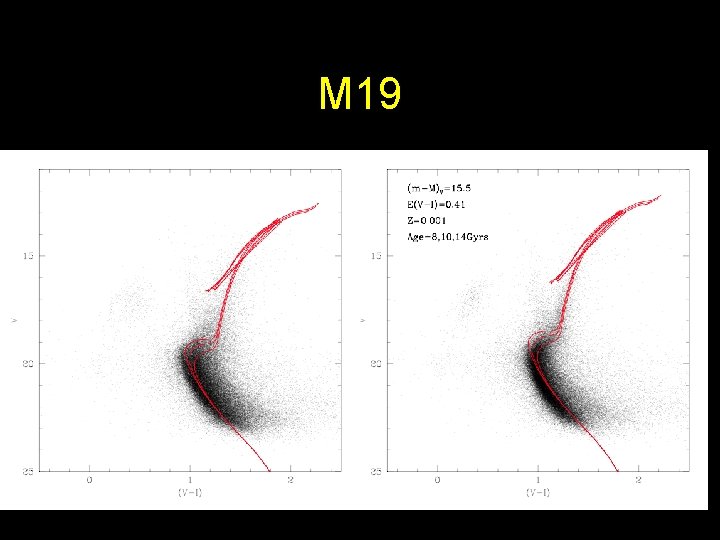
M 19
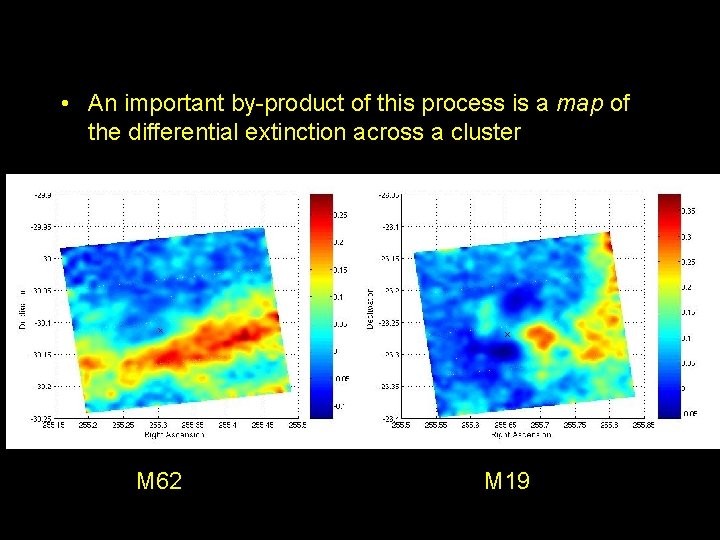
• An important by-product of this process is a map of the differential extinction across a cluster x M 62 M 19
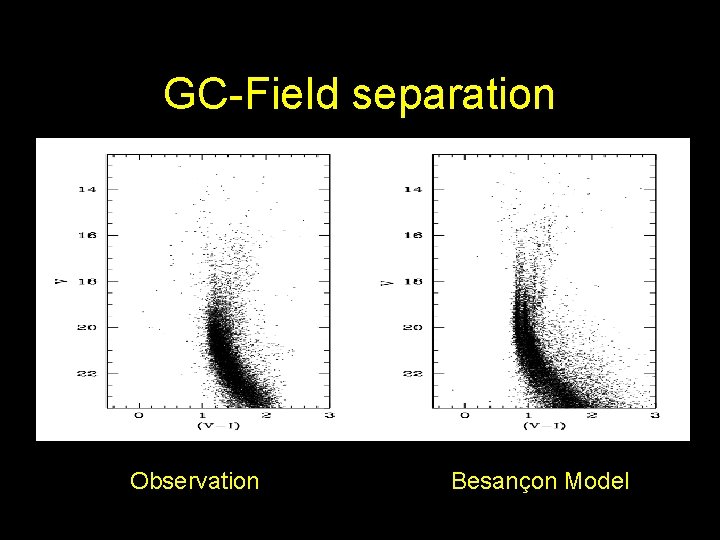
GC-Field separation Observation Besançon Model
- Slides: 12