
UNCLASSIFIED Synoptic Data TSgt Donald A La Framboise
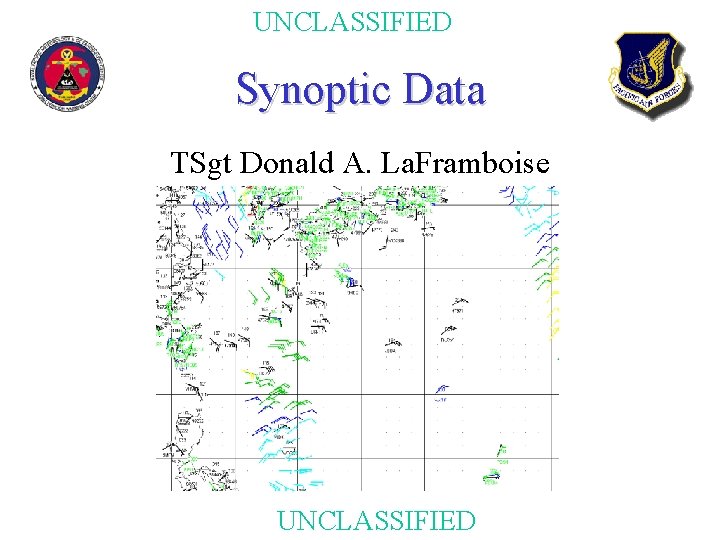
UNCLASSIFIED Synoptic Data TSgt Donald A. La. Framboise UNCLASSIFIED
UNCLASSIFIED Synoptic Data It’s application in Satellite Analysis • Why should I use Synoptic data? • How can it be useful in Satellite Analysis? • What are some of the problems encountered with synoptic data? • Where can this data be found? UNCLASSIFIED
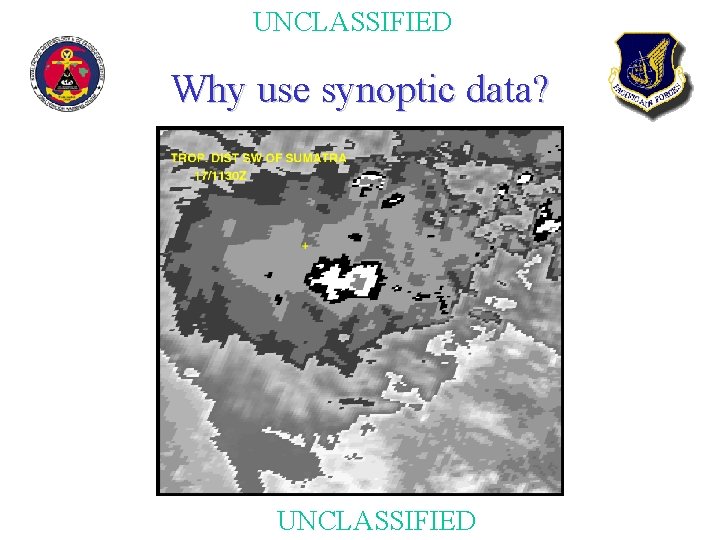
UNCLASSIFIED Why use synoptic data? UNCLASSIFIED
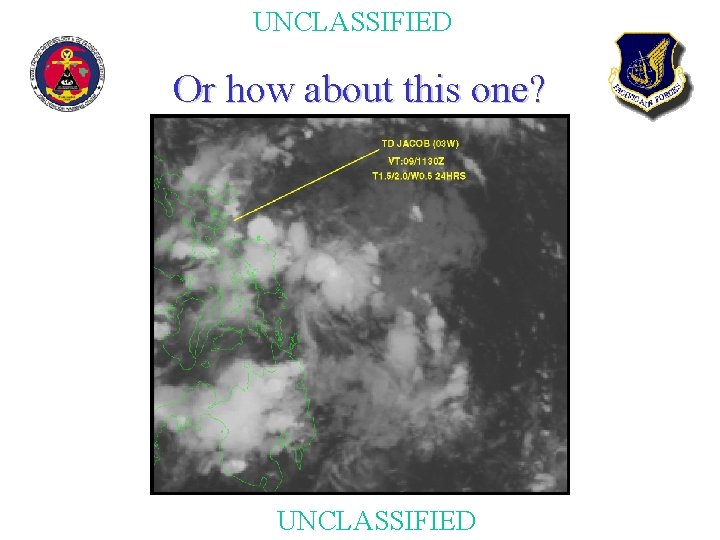
UNCLASSIFIED Or how about this one? UNCLASSIFIED
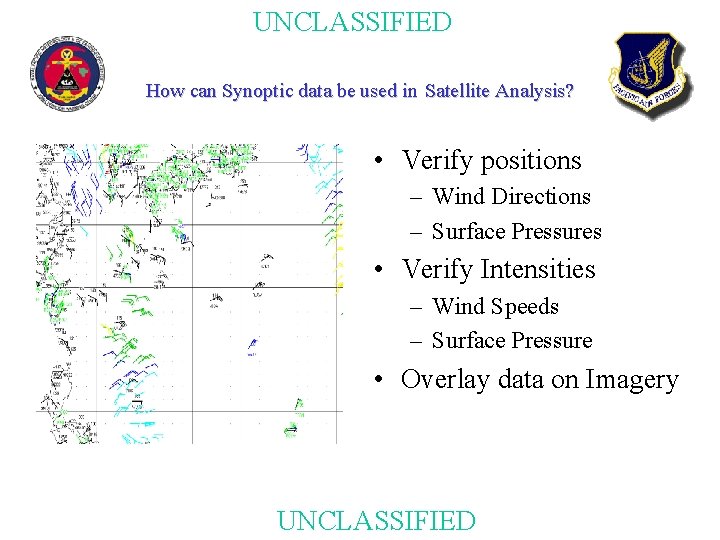
UNCLASSIFIED How can Synoptic data be used in Satellite Analysis? • Verify positions – Wind Directions – Surface Pressures • Verify Intensities – Wind Speeds – Surface Pressure • Overlay data on Imagery UNCLASSIFIED
UNCLASSIFIED Data Sources • • • Land Synoptic Reports Ship Synoptic Reports Buoy Data Gradient level Rawinsonde Reports Gradient Level Satellite Derived Winds • Scatterometer Data UNCLASSIFIED

UNCLASSIFIED Synoptic Data UNCLASSIFIED
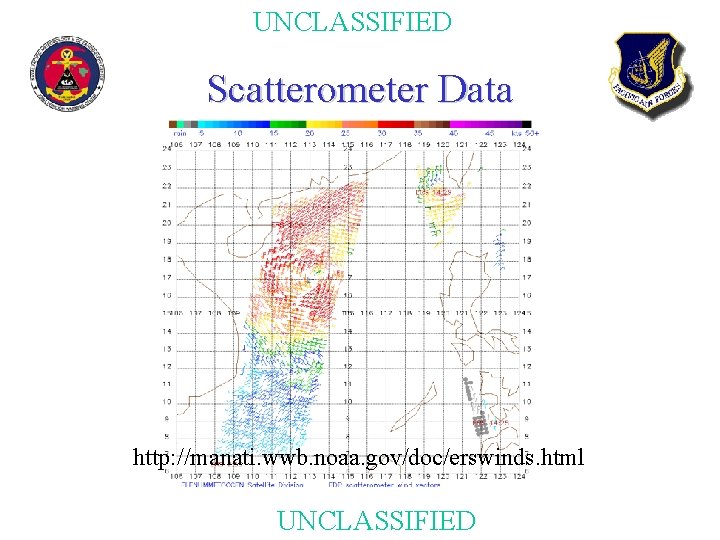
UNCLASSIFIED Scatterometer Data http: //manati. wwb. noaa. gov/doc/erswinds. html UNCLASSIFIED
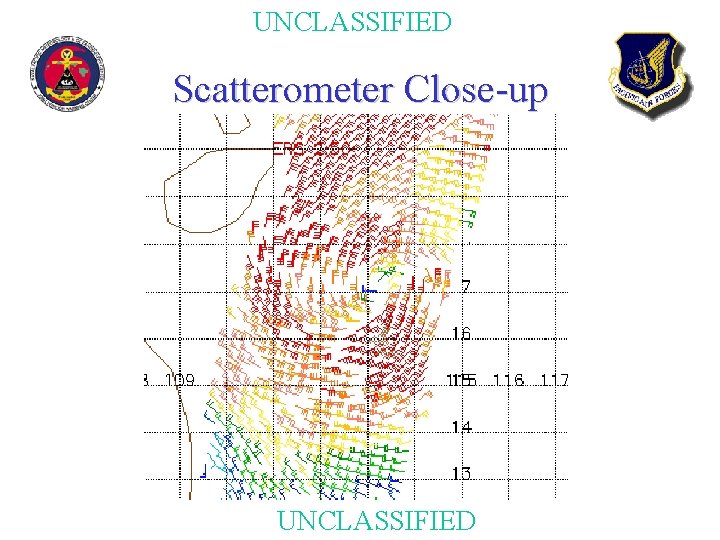
UNCLASSIFIED Scatterometer Close-up UNCLASSIFIED
UNCLASSIFIED Problem area encountered • Availability and Timeliness of Data – Data is usually 3 -5 hours old by the time it is available – Not always available when and where it is needed • Data Coverage – Coverage is subject to availability of ships, buoys, and land stations • Data Errors – Observer errors (encryption and transcription errors) – Code conversion errors (Computer errors) UNCLASSIFIED
UNCLASSIFIED Data Inconsistencies Sea Level Pressure • Variation due to uneven terrain features • Variable pressures due to Convection • Instrument errors in underdeveloped countries where calibration is infrequent • Inaccuracies in sea level conversions for stations above 1700 feet MSL UNCLASSIFIED
UNCLASSIFIED Data Inconsistencies Ship Reports • Average wind speed error rate from ship reports are 0. 6 knots per Beaufort Scale division • Coverage over vast ocean areas is limited • Wind directions have an average error of + 10 degrees UNCLASSIFIED
UNCLASSIFIED The Benefits • Ships and Buoys provide coverage where there would otherwise be none • Reports near systems or areas provide a minimum speed or intensity for that system UNCLASSIFIED
UNCLASSIFIED Where can this data be found? • If you are using AWDS or a similar system it should be available automatically • You can find data through the internet via: – AFWIN at: http: //afwin. afwa. af. mil: 443/ – University of North Carolina at: http: //ws 321. uncc. edu/data/surface/syn/ UNCLASSIFIED
UNCLASSIFIED Arguments! • The data is already three hours old by the time I get it. • The data is too sparse to be of any use. • It takes too long to get the data and process it. • The satellite imagery is accurate enough. • Reasons or excuses? UNCLASSIFIED
UNCLASSIFIED Conclusion • Data can help in locating centers • Wind Speeds and Pressures provide feedback on intensity • Can help tremendously when the center is obscured by upper-level debris for long periods • Especially helpful in the early stages of a Tropical System UNCLASSIFIED
- Slides: 16