
Uncertainty in Medical Testing What is a false
- Slides: 5
Uncertainty in Medical Testing
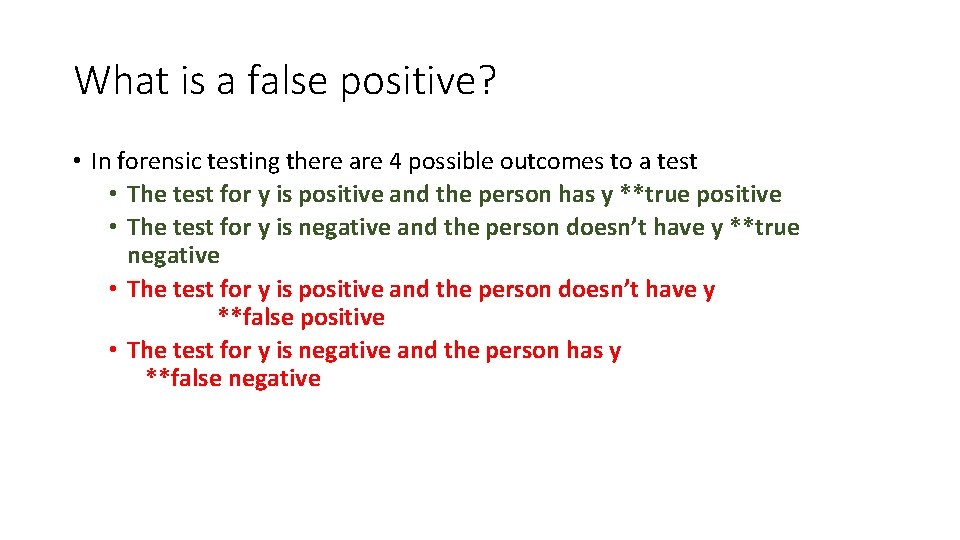
What is a false positive? • In forensic testing there are 4 possible outcomes to a test • The test for y is positive and the person has y **true positive • The test for y is negative and the person doesn’t have y **true negative • The test for y is positive and the person doesn’t have y **false positive • The test for y is negative and the person has y **false negative
Why does this matter • What if a doctor were to give a patient a prescription for an antibiotic due to a false positive strep test? • What might this contribute to (long term)? • Or worse…what if the doctor were to instruct the patient to self-manage mononucleosis due to a false negative test? • What are the risks here?
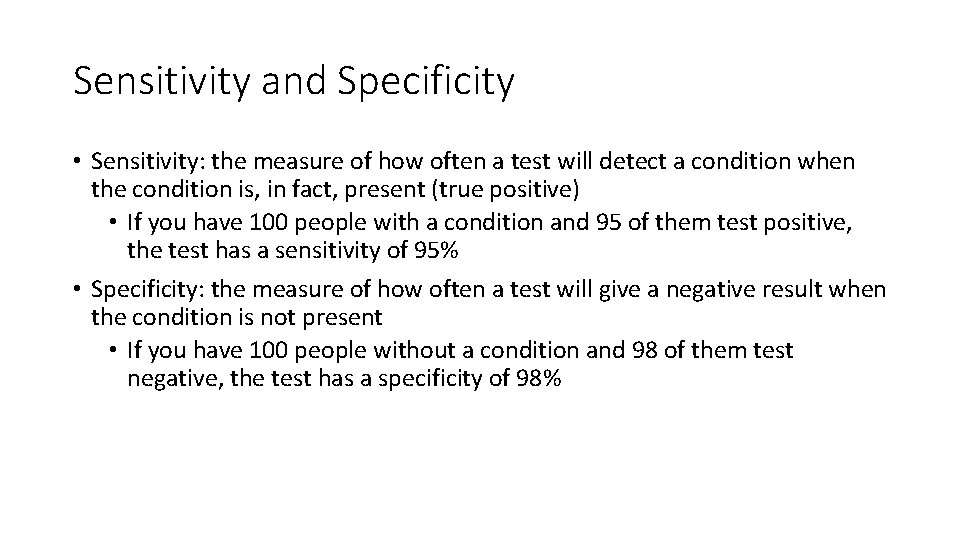
Sensitivity and Specificity • Sensitivity: the measure of how often a test will detect a condition when the condition is, in fact, present (true positive) • If you have 100 people with a condition and 95 of them test positive, the test has a sensitivity of 95% • Specificity: the measure of how often a test will give a negative result when the condition is not present • If you have 100 people without a condition and 98 of them test negative, the test has a specificity of 98%
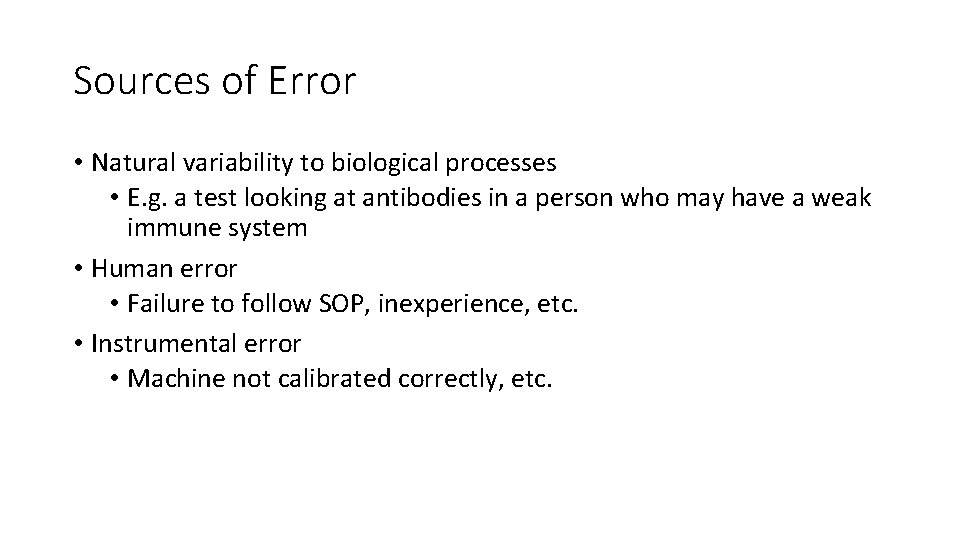
Sources of Error • Natural variability to biological processes • E. g. a test looking at antibodies in a person who may have a weak immune system • Human error • Failure to follow SOP, inexperience, etc. • Instrumental error • Machine not calibrated correctly, etc.