
Unaccompanied minors in Denmark policies and practices Mette
- Slides: 16
Unaccompanied minors in Denmark – policies and practices Mette Lausten VIVE – the Danish Center for Social Science Research Lille, 27 th of June, 2019
From the 1951 UN Refugee Convention to the Danish Aliens Act in 2019 Berlin, 20151939 2017 Anders Ladekarl, General Secretary Copenhagen, 2016 at Danish Red Cross 2
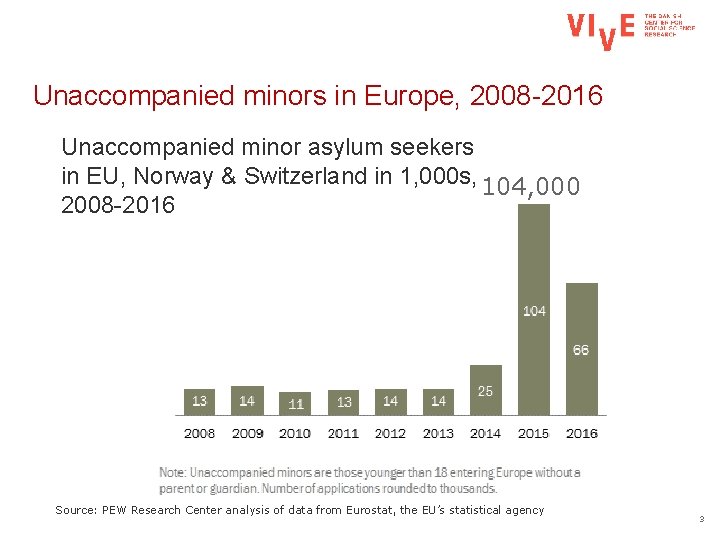
Unaccompanied minors in Europe, 2008 -2016 Unaccompanied minor asylum seekers in EU, Norway & Switzerland in 1, 000 s, 104, 000 2008 -2016 Source: PEW Research Center analysis of data from Eurostat, the EU’s statistical agency 3
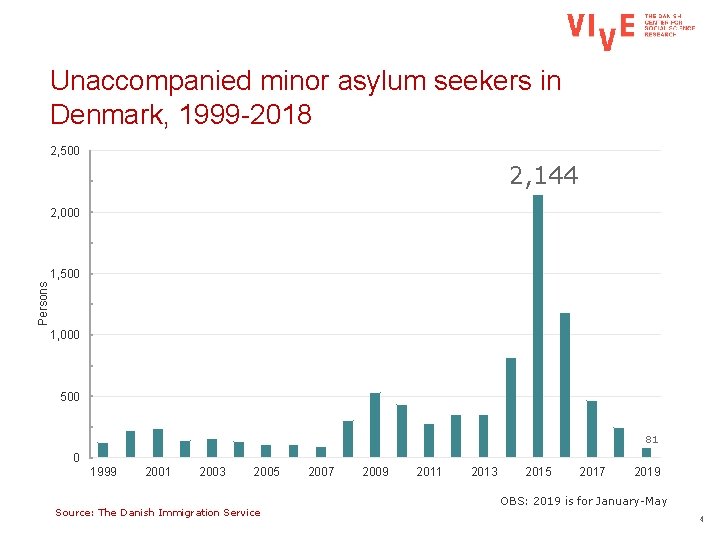
Unaccompanied minor asylum seekers in Denmark, 1999 -2018 2, 500 2, 144 2, 000 Persons 1, 500 1, 000 500 81 0 1999 2001 2003 2005 Source: The Danish Immigration Service 2007 2009 2011 2013 2015 2017 2019 OBS: 2019 is for January-May 4
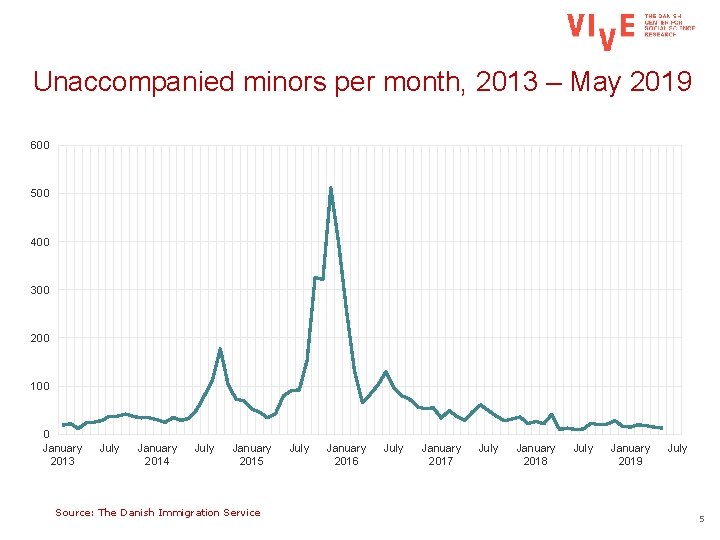
Unaccompanied minors per month, 2013 – May 2019 600 500 400 300 200 100 0 January 2013 July January 2014 July January 2015 Source: The Danish Immigration Service July January 2016 July January 2017 July January 2018 July January 2019 July 5
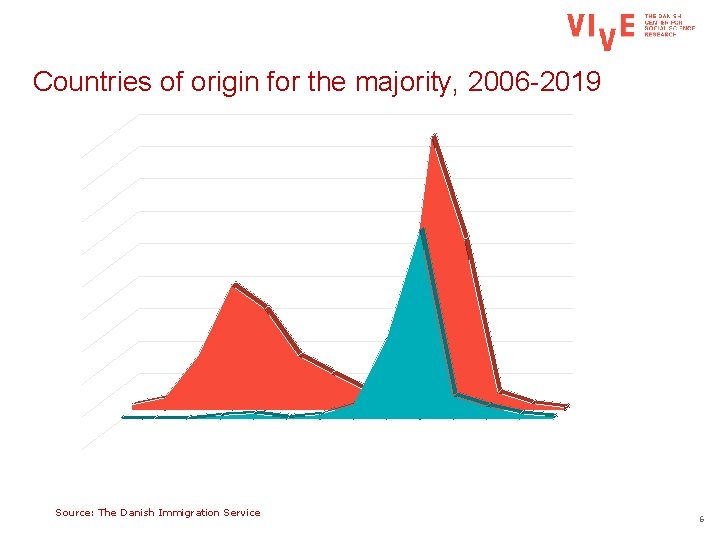
Countries of origin for the majority, 2006 -2019 Source: The Danish Immigration Service 6
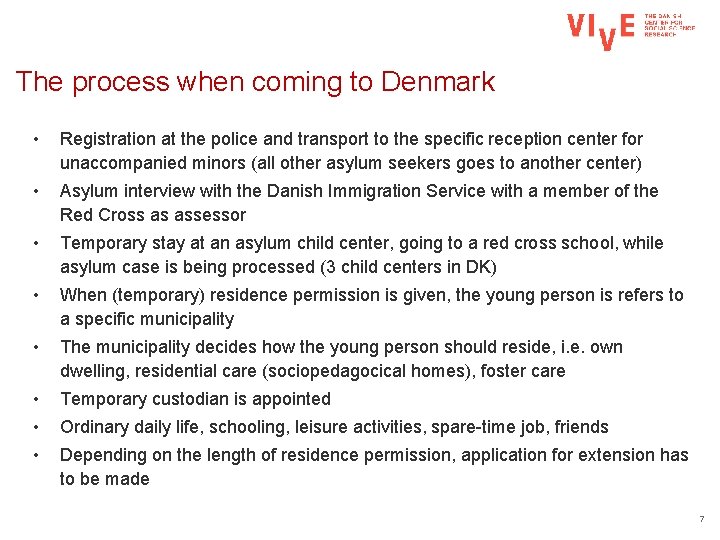
The process when coming to Denmark • Registration at the police and transport to the specific reception center for unaccompanied minors (all other asylum seekers goes to another center) • Asylum interview with the Danish Immigration Service with a member of the Red Cross as assessor • Temporary stay at an asylum child center, going to a red cross school, while asylum case is being processed (3 child centers in DK) • When (temporary) residence permission is given, the young person is refers to a specific municipality • The municipality decides how the young person should reside, i. e. own dwelling, residential care (sociopedagocical homes), foster care • Temporary custodian is appointed • Ordinary daily life, schooling, leisure activities, spare-time job, friends • Depending on the length of residence permission, application for extension has to be made 7
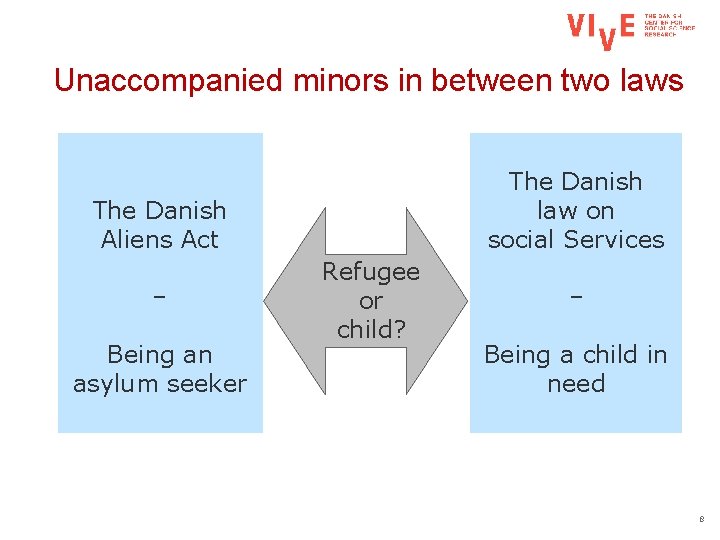
Unaccompanied minors in between two laws The Danish law on social Services The Danish Aliens Act – Being an asylum seeker Refugee or child? – Being a child in need 8
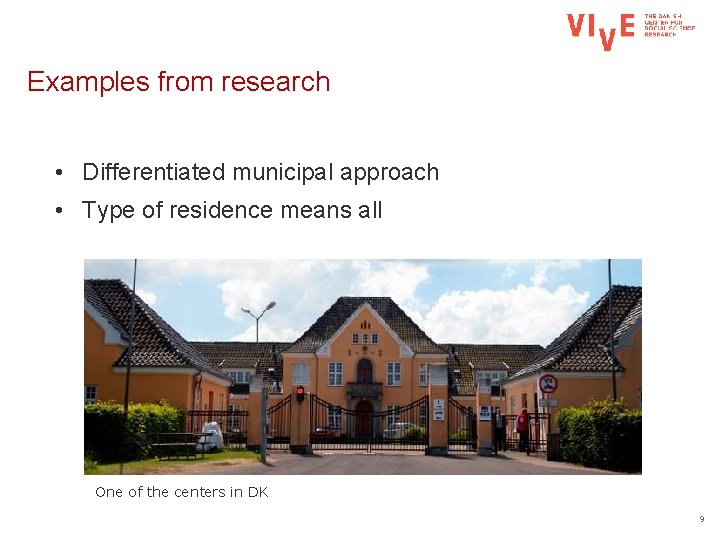
Examples from research • Differentiated municipal approach • Type of residence means all One of the centers in DK 9
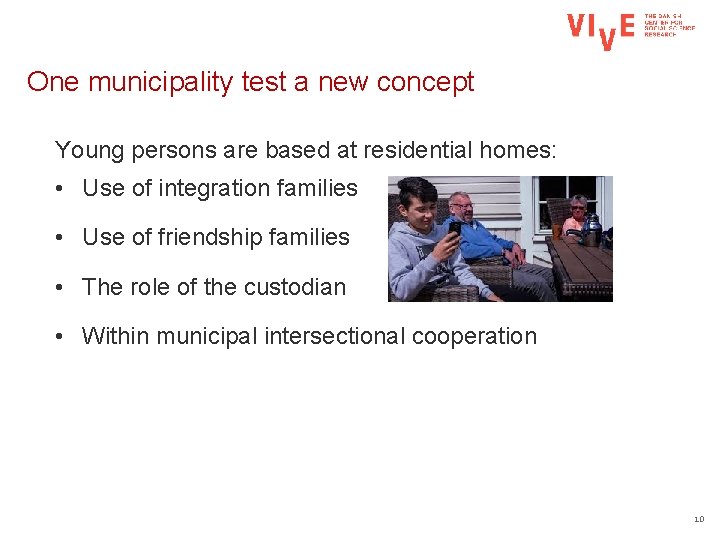
One municipality test a new concept Young persons are based at residential homes: • Use of integration families • Use of friendship families • The role of the custodian • Within municipal intersectional cooperation 10
Evaluation of the results: • Welfare state thinking, that “Everybody needs a family” does not always work − Need reconciliation of expectations at both municipal and youth level • Friendship families with no formal obligations work the best • The division of roles between municipality and custodian has to be clear to make progress • Established and agreed upon partnership supports the intersectional cooperation, incl. local volunteers 11
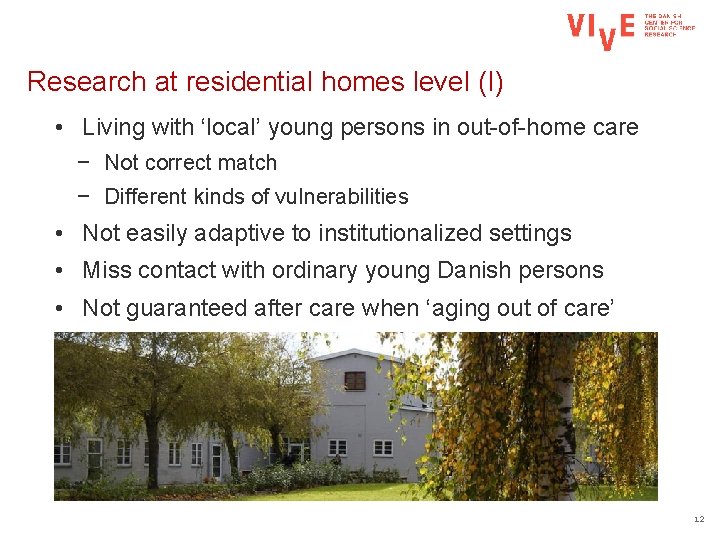
Research at residential homes level (I) • Living with ‘local’ young persons in out-of-home care − Not correct match − Different kinds of vulnerabilities • Not easily adaptive to institutionalized settings • Miss contact with ordinary young Danish persons • Not guaranteed after care when ‘aging out of care’ 12
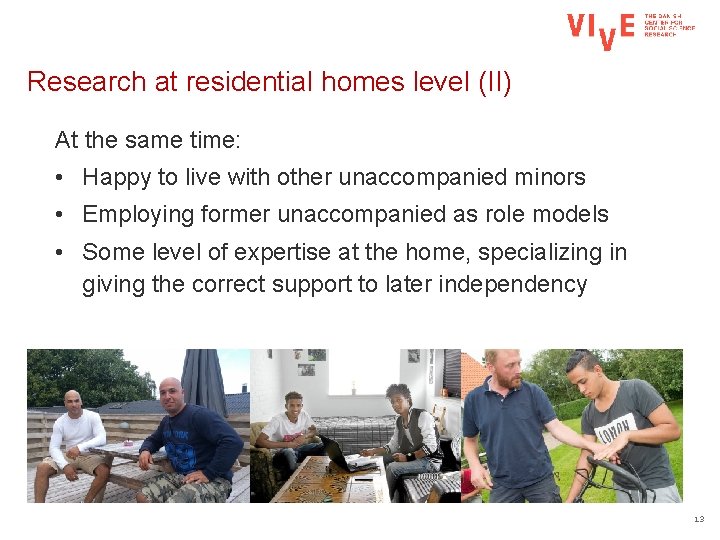
Research at residential homes level (II) At the same time: • Happy to live with other unaccompanied minors • Employing former unaccompanied as role models • Some level of expertise at the home, specializing in giving the correct support to later independency 13
Some are placed in their own dwelling (living alone) • Often treated as adults and not as children in need • High degree of loneliness − No custodian − Only visiting person is a contact person twice a week • Not support to build new social relations • When unaccompanied minors are spread out all over DK, there is no municipal expertise, no specialized interventions 14
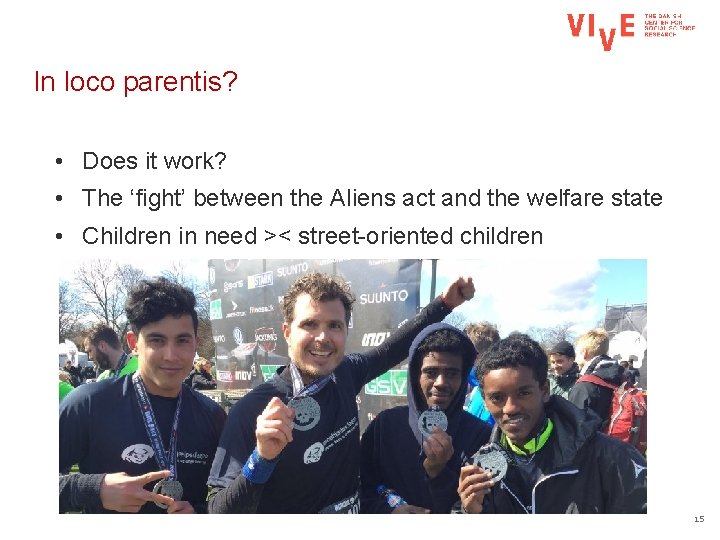
In loco parentis? • Does it work? • The ‘fight’ between the Aliens act and the welfare state • Children in need >< street-oriented children 15
Specific need for relations: ◦ bonding (getting by…) ◦ bridging (getting on…) Need for education – to manage adult life Thank you for listening 16