
UML Examples PRESETED BY MEHRAN NAJAFI SHIMA AGHTAR

UML Examples PRESETED BY: MEHRAN NAJAFI SHIMA AGHTAR
What is UML? �A standardized, graphical “modeling language” for communication in software design. �We need a modeling language to: ◦ help develop efficient, effective and correct designs, particularly Object Oriented designs. ◦ communicate clearly with project stakeholders (concerned parties: developers, customer, etc). ◦ give us the “big picture” view of the project.
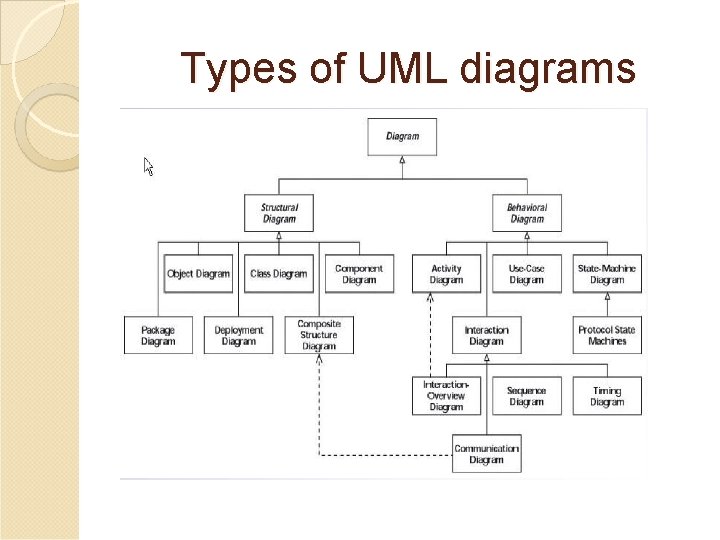
Types of UML diagrams
Types of UML diagrams �Structural diagrams: Used to describe the building blocks of the system – features that do not change with time. �Behavioral diagrams: Used to show the system evolves over time (responds to requests, events, etc. )
Types of UML diagrams There are different types of UML diagram: ◦ ◦ ◦ use cases diagram class diagram sequence diagram package diagram activity diagram
Use Case Diagram � Describes what a system does from the standpoint of an external observer. � Emphasizes on what a system does rather than how. � Action: an example of what happens when someone interacts with the system. � Actor: A user or another system that interacts with the modeled system. �A use case diagram describes the relationships between actors and actions. � Provides system requirements from the user’s point of view.

Use Case Diagram Example #1 Restaurant model Source: Wikipedia
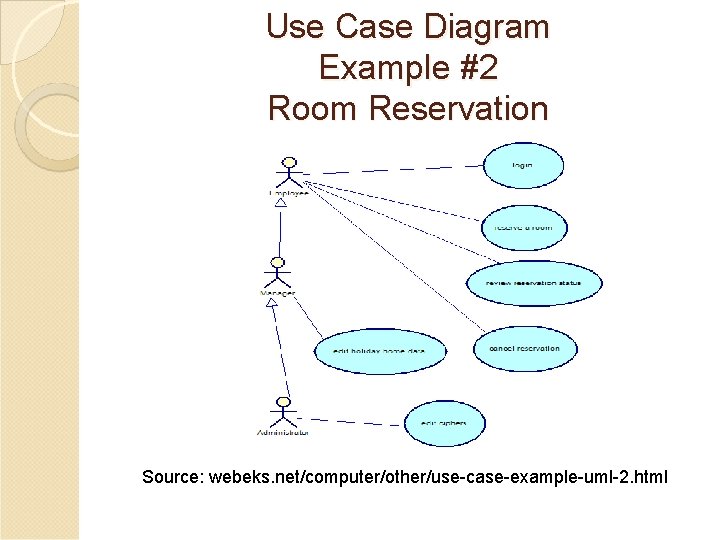
Use Case Diagram Example #2 Room Reservation Source: webeks. net/computer/other/use-case-example-uml-2. html
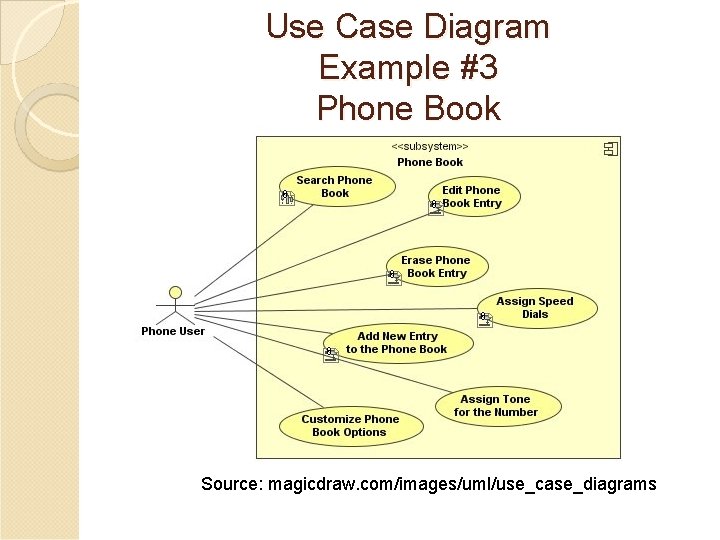
Use Case Diagram Example #3 Phone Book Source: magicdraw. com/images/uml/use_case_diagrams
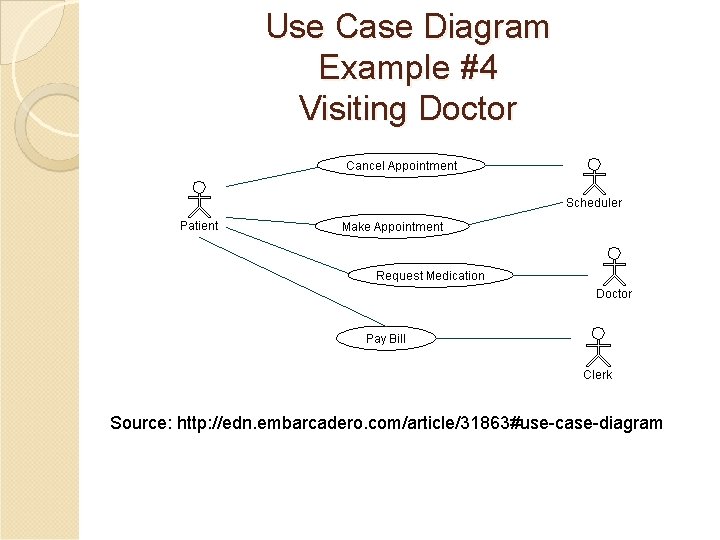
Use Case Diagram Example #4 Visiting Doctor Source: http: //edn. embarcadero. com/article/31863#use-case-diagram
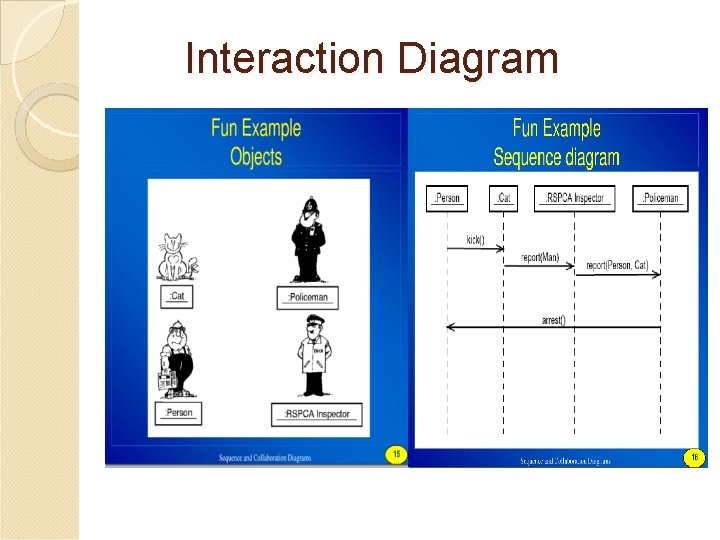
Interaction Diagram �Used to model the behavior of several objects in a use case. Demonstrates collaboration between the different objects. ◦ Sequence Diagram displays the time sequence of the objects participating in the interaction. ◦ Collaboration Diagram displays a interaction organized around the objects and their links to one another.
Interaction Diagram
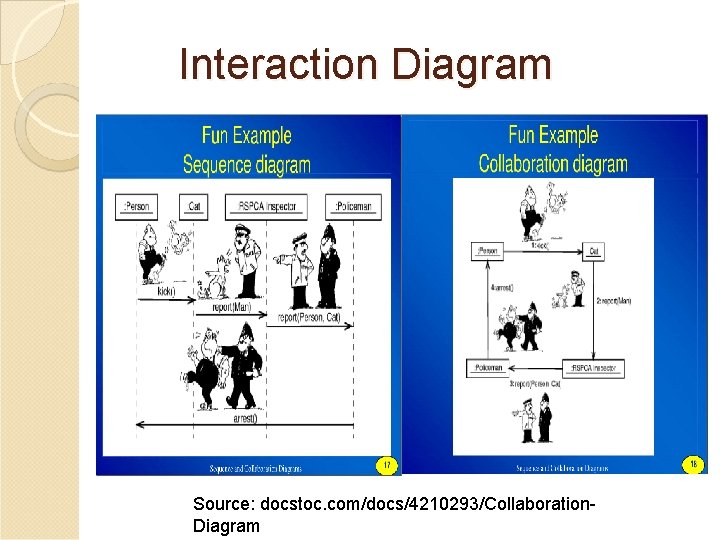
Interaction Diagram Source: docstoc. com/docs/4210293/Collaboration. Diagram
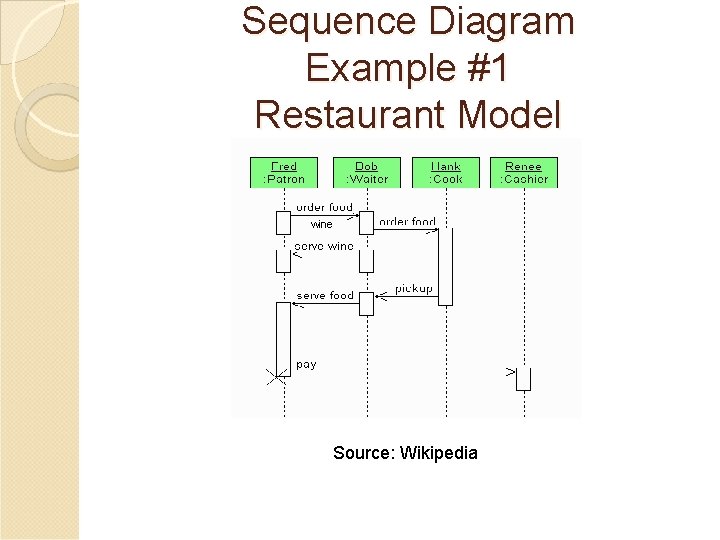
Sequence Diagram Example #1 Restaurant Model wine Source: Wikipedia
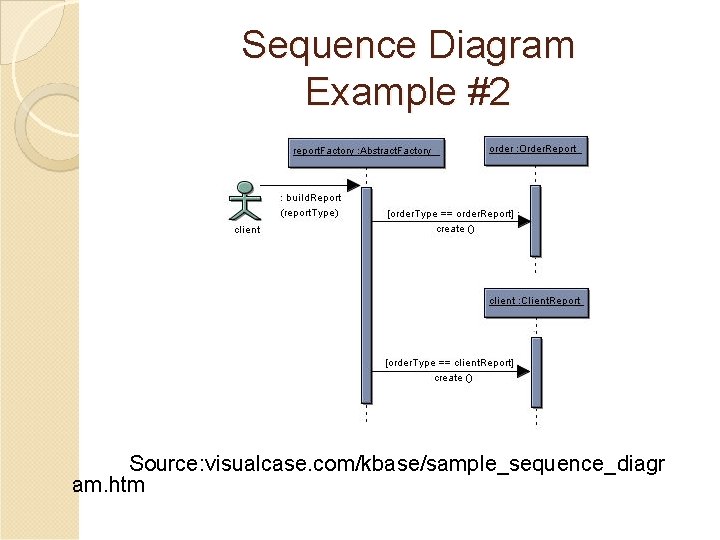
Sequence Diagram Example #2 Source: visualcase. com/kbase/sample_sequence_diagr am. htm
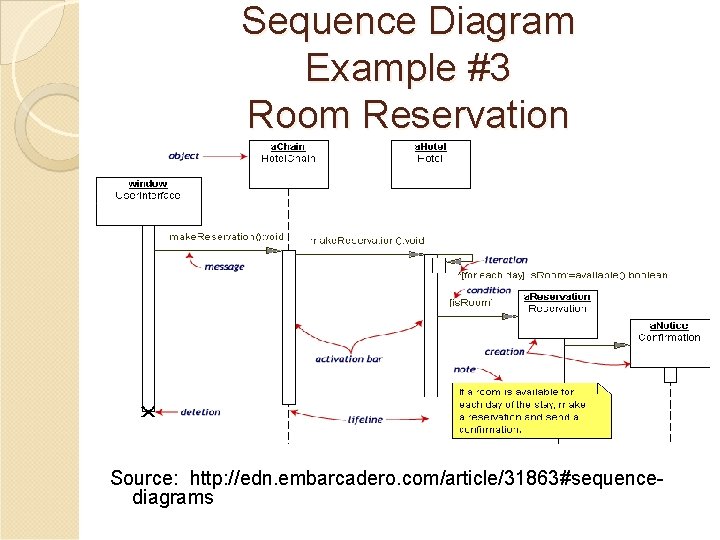
Sequence Diagram Example #3 Room Reservation Source: http: //edn. embarcadero. com/article/31863#sequencediagrams
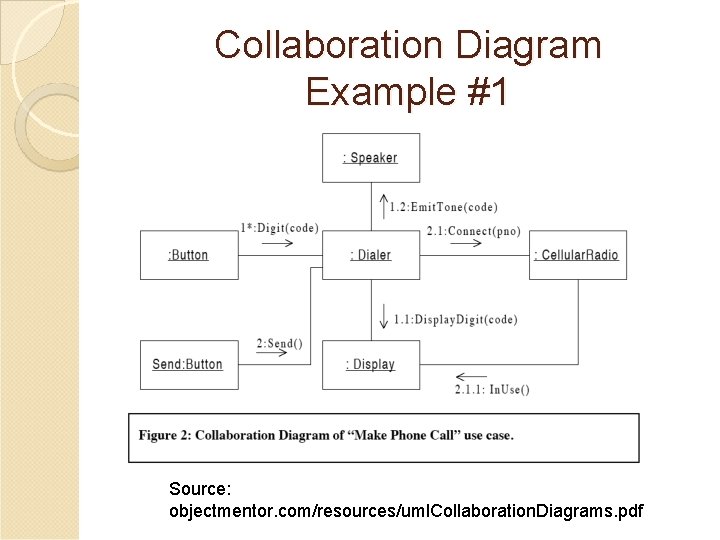
Collaboration Diagram Example #1 Source: objectmentor. com/resources/uml. Collaboration. Diagrams. pdf
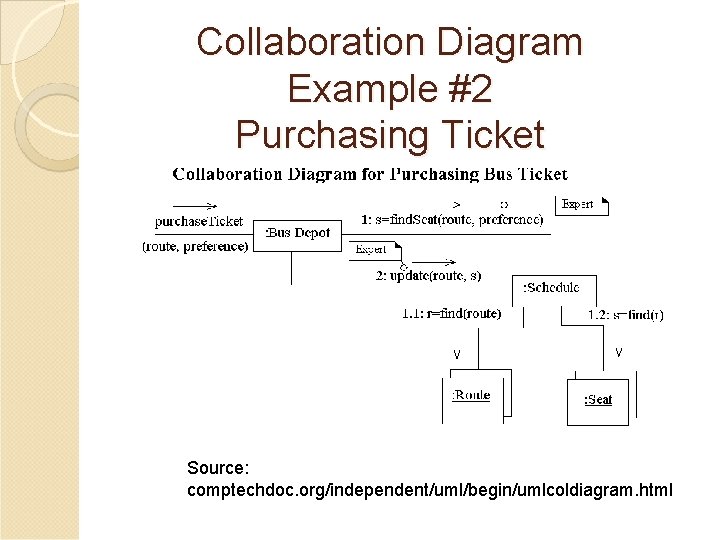
Collaboration Diagram Example #2 Purchasing Ticket Source: comptechdoc. org/independent/uml/begin/umlcoldiagram. html
Data Flow Diagram �Process: how inputs are transformed or changed into outputs. �Data Flow: used to describe the movement of data or physical materials from one part of the system to another part. It represents data or physical materials in motion. �Data Store: it is used to model a collection of data packets at rest. (files, tapes, punched cards, etc. ) �External Entity (Terminator): Entities external to the system, with which the system communicates.
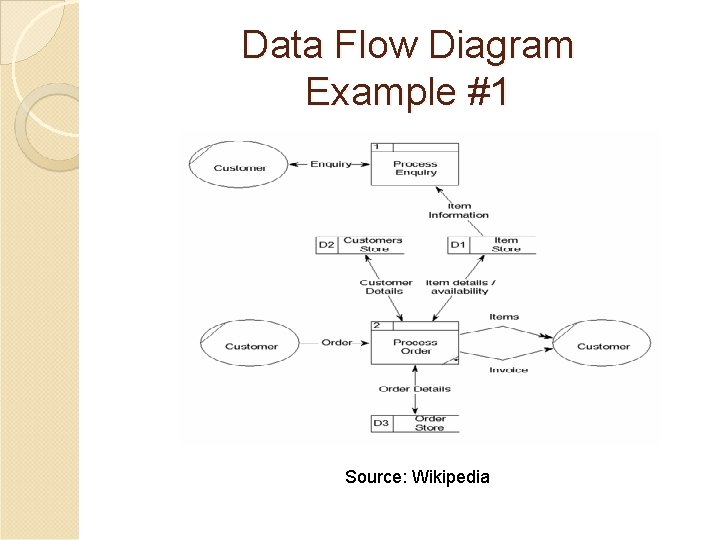
Data Flow Diagram Example #1 Source: Wikipedia
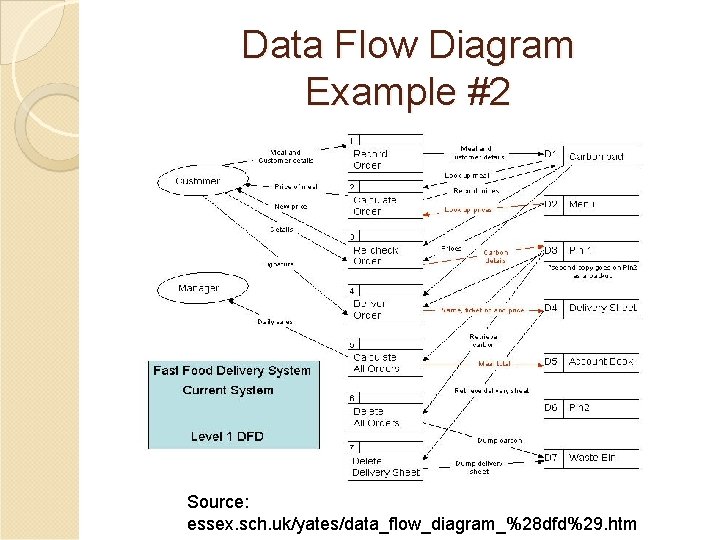
Data Flow Diagram Example #2 Source: essex. sch. uk/yates/data_flow_diagram_%28 dfd%29. htm
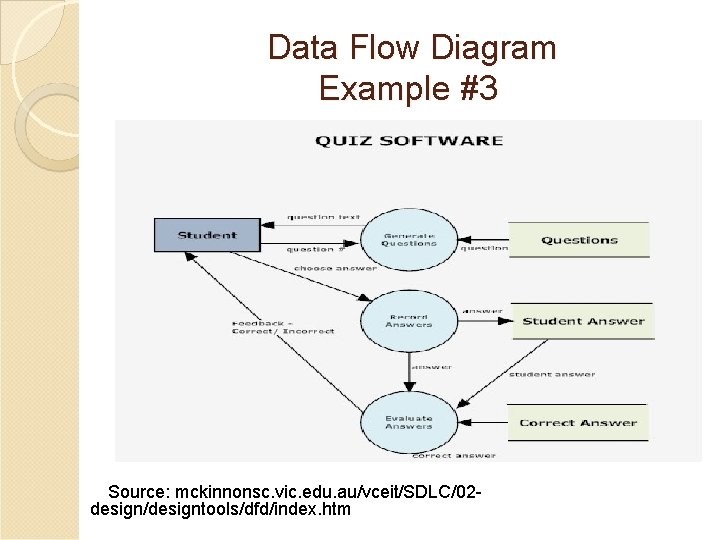
Data Flow Diagram Example #3 Source: mckinnonsc. vic. edu. au/vceit/SDLC/02 design/designtools/dfd/index. htm
Entity-Relation Diagram �An entity is a business object that represents a group, or category of data �An attribute is a sub-group of information within an entity �Entity ◦ ◦ ◦ Relationship Models Mandatory Relationships Optional Relationships Many-to-Many Relationships One-to-One Relationships Recursive Relationships

Entity-Relation Diagram Example #1 Source: Wikipedia
- Slides: 24