
Ulysses Departing from Lacedaemon for Ithaca with his

- Slides: 41
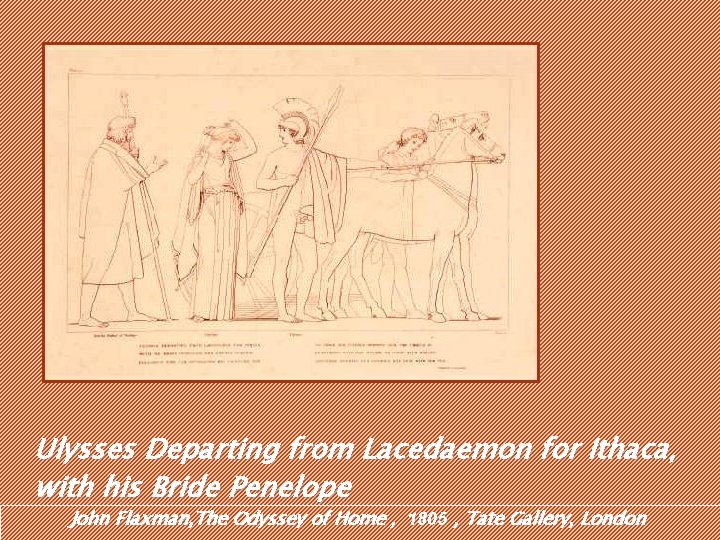
Ulysses Departing from Lacedaemon for Ithaca, with his Bride Penelope John Flaxman, The Odyssey of Home , 1805 , Tate Gallery, London
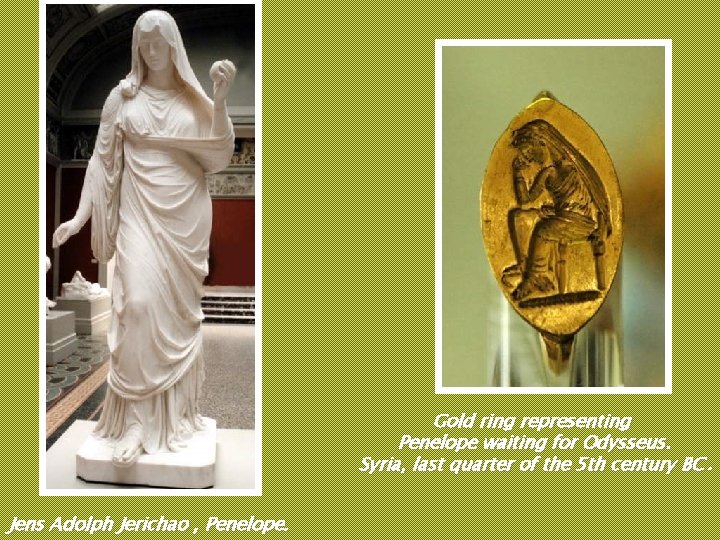
Gold ring representing Penelope waiting for Odysseus. Syria, last quarter of the 5 th century BC. Jens Adolph Jerichao , Penelope.
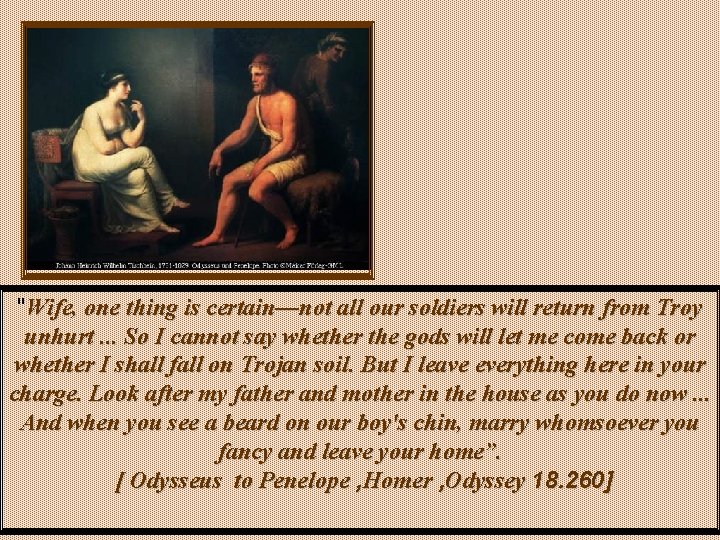
"Wife, one thing is certain—not all our soldiers will return from Troy unhurt. . . So I cannot say whether the gods will let me come back or whether I shall fall on Trojan soil. But I leave everything here in your charge. Look after my father and mother in the house as you do now. . . And when you see a beard on our boy's chin, marry whomsoever you fancy and leave your home”. [ Odysseus to Penelope , Homer , Odyssey 18. 260]
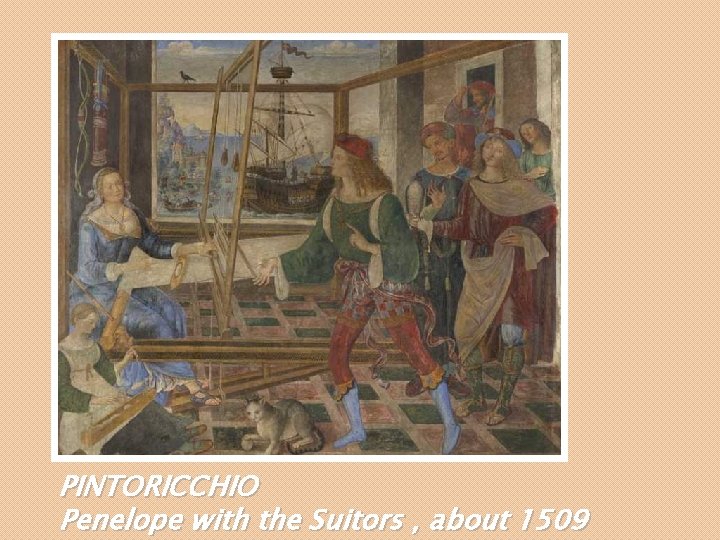
PINTORICCHIO Penelope with the Suitors , about 1509
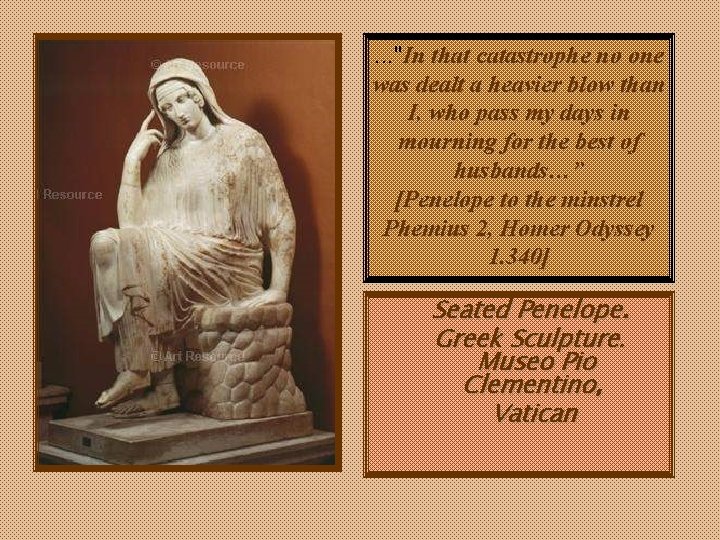
. . . "In that catastrophe no one was dealt a heavier blow than I, who pass my days in mourning for the best of husbands…” [Penelope to the minstrel Phemius 2, Homer Odyssey 1. 340] Seated Penelope. Greek Sculpture. Museo Pio Clementino, Vatican
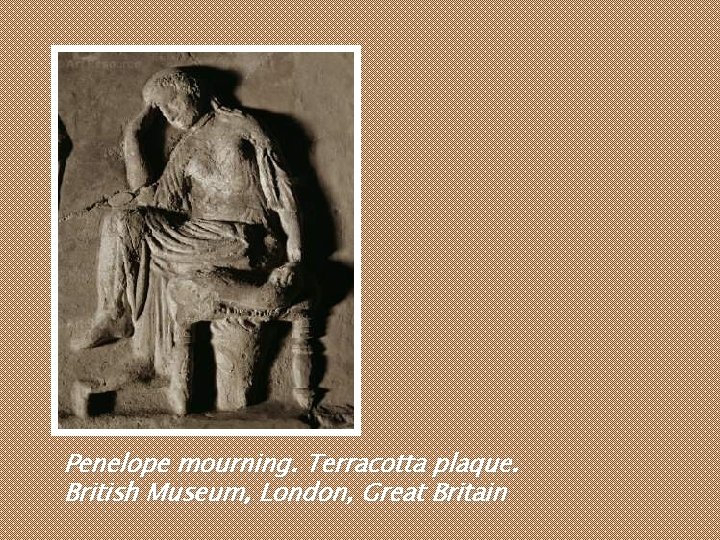
Penelope mourning. Terracotta plaque. British Museum, London, Great Britain
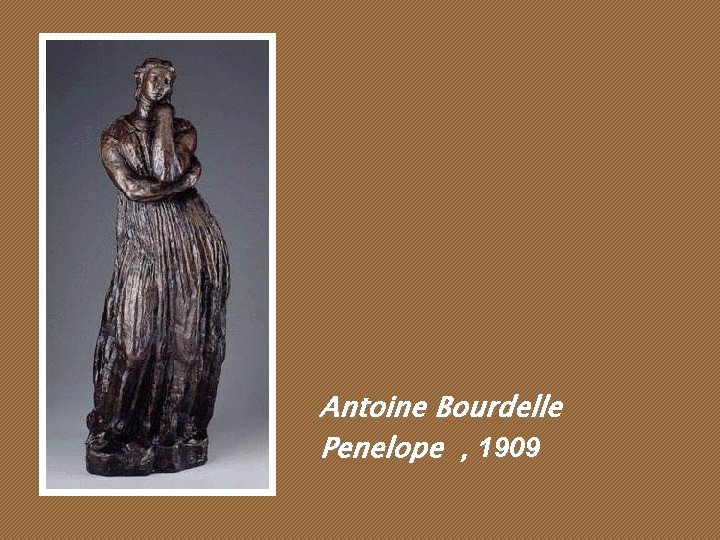
Antoine Bourdelle Penelope , 1909
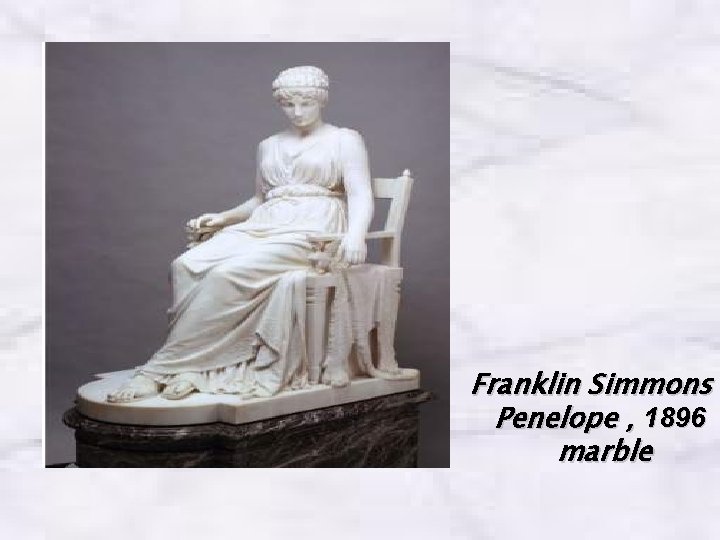
Franklin Simmons Penelope , 1896 marble
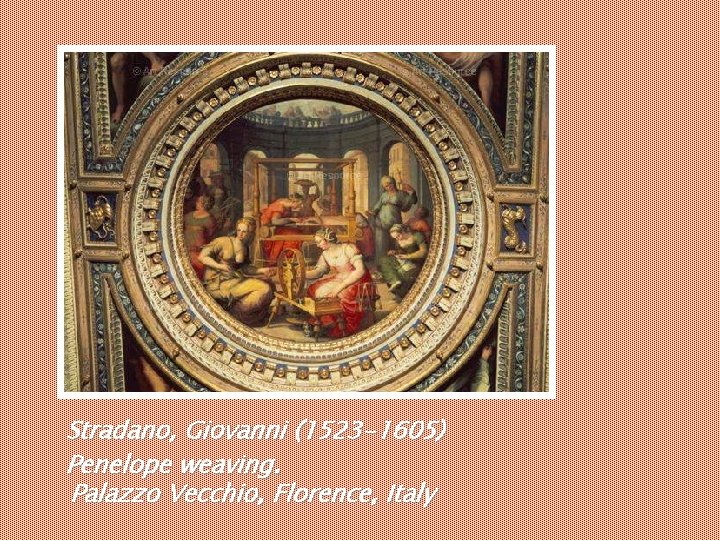
Stradano, Giovanni (1523 -1605) Penelope weaving. Palazzo Vecchio, Florence, Italy
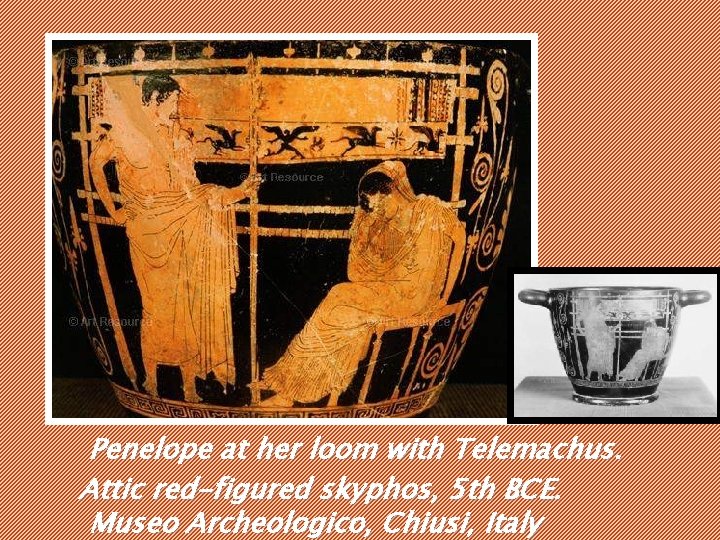
Penelope at her loom with Telemachus. Attic red-figured skyphos, 5 th BCE. Museo Archeologico, Chiusi, Italy
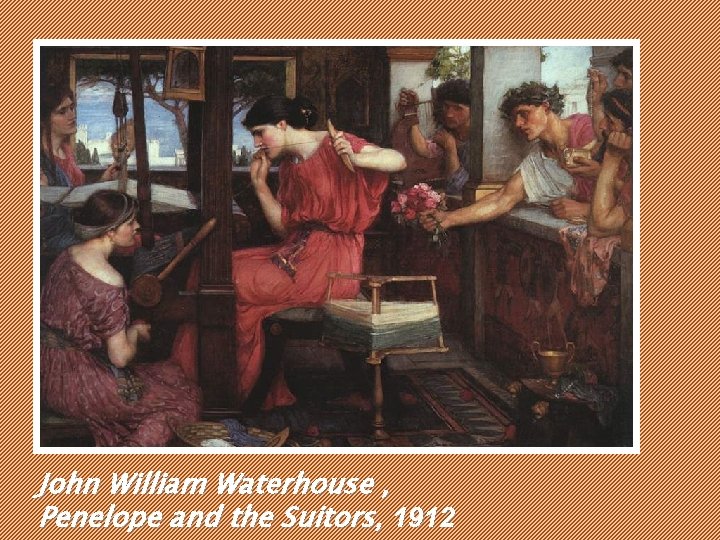
John William Waterhouse , Penelope and the Suitors, 1912
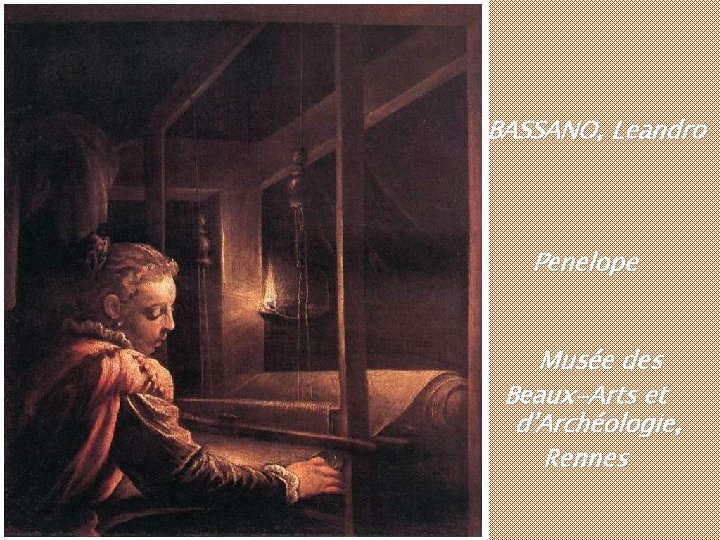
BASSANO, Leandro Penelope Musée des Beaux-Arts et d'Archéologie, Rennes
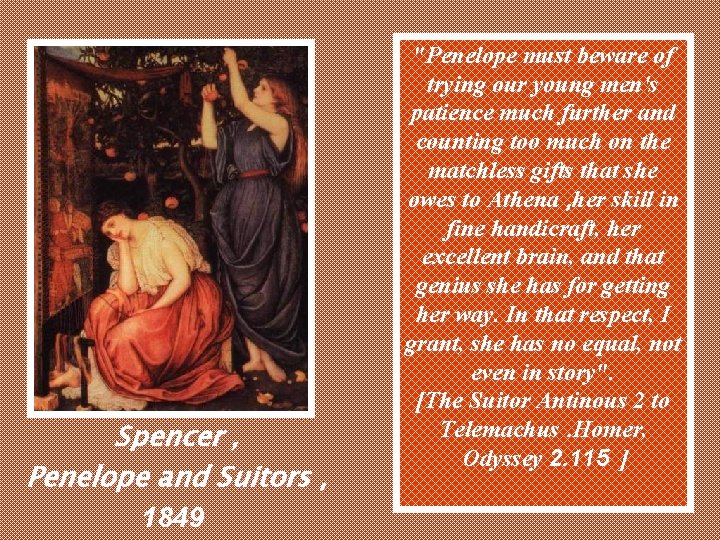
Spencer , Penelope and Suitors , 1849 "Penelope must beware of trying our young men's patience much further and counting too much on the matchless gifts that she owes to Athena , her skill in fine handicraft, her excellent brain, and that genius she has for getting her way. In that respect, I grant, she has no equal, not even in story". [The Suitor Antinous 2 to Telemachus. Homer, Odyssey 2. 115 ]
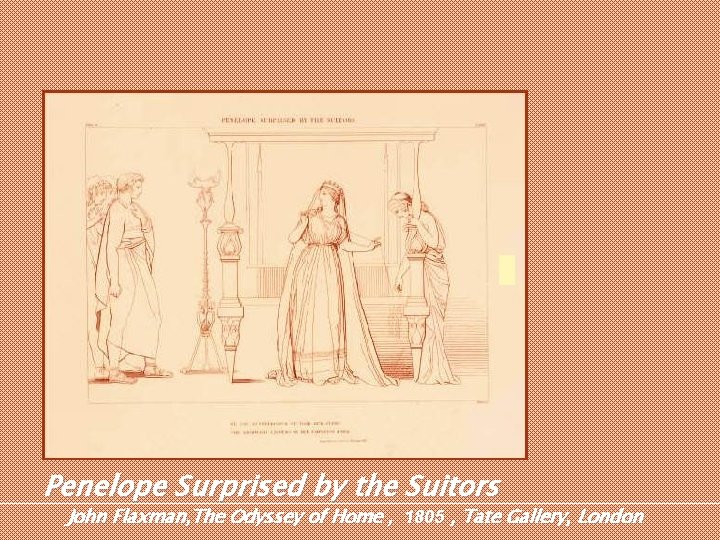
Penelope Surprised by the Suitors John Flaxman, The Odyssey of Home , 1805 , Tate Gallery, London
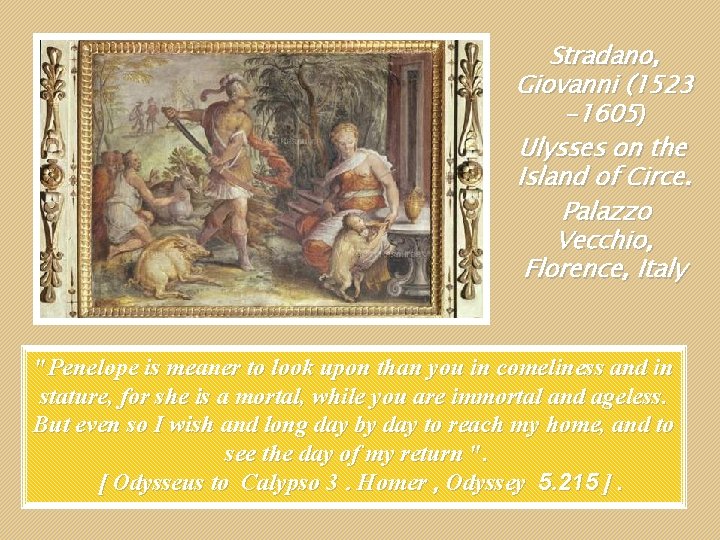
Stradano, Giovanni (1523 -1605) Ulysses on the Island of Circe. Palazzo Vecchio, Florence, Italy "Penelope is meaner to look upon than you in comeliness and in stature, for she is a mortal, while you are immortal and ageless. But even so I wish and long day by day to reach my home, and to see the day of my return ". [ Odysseus to Calypso 3. Homer , Odyssey 5. 215 ].
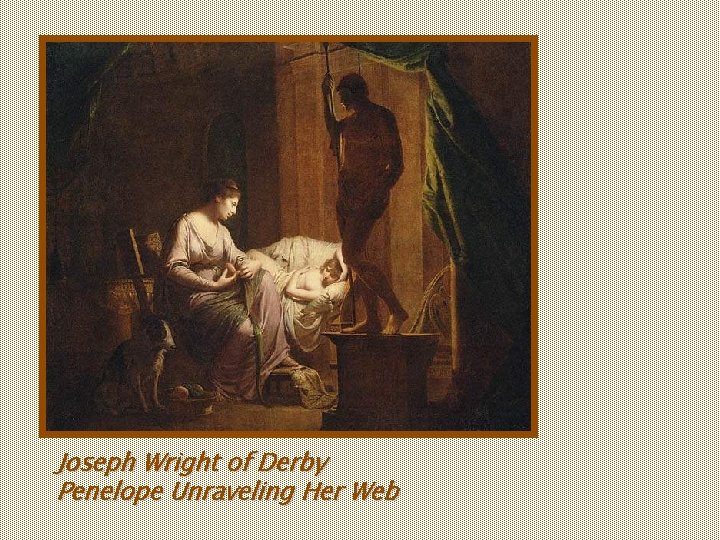
Joseph Wright of Derby Penelope Unraveling Her Web
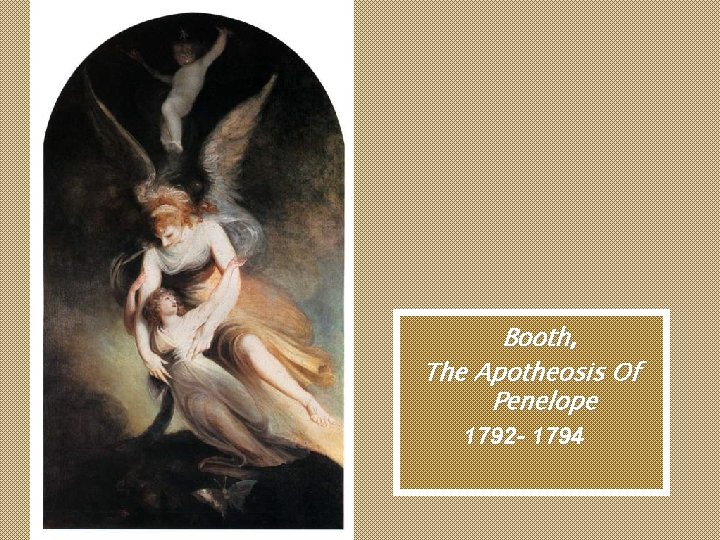
Booth, The Apotheosis Of Penelope 1792 - 1794
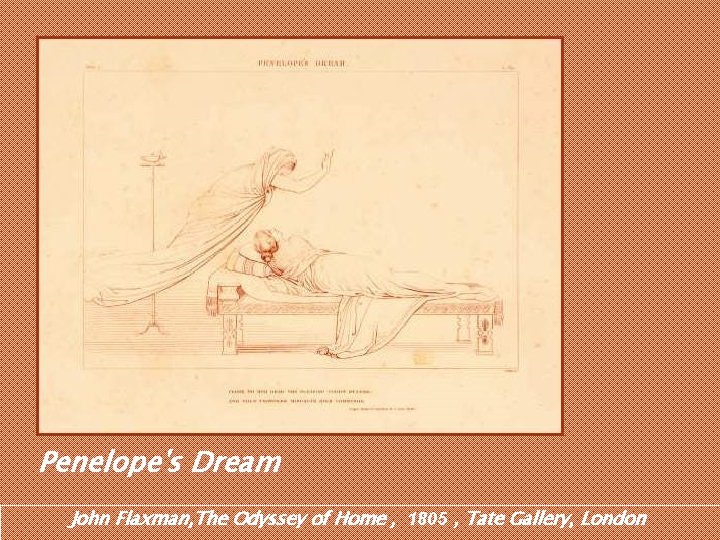
Penelope's Dream John Flaxman, The Odyssey of Home , 1805 , Tate Gallery, London
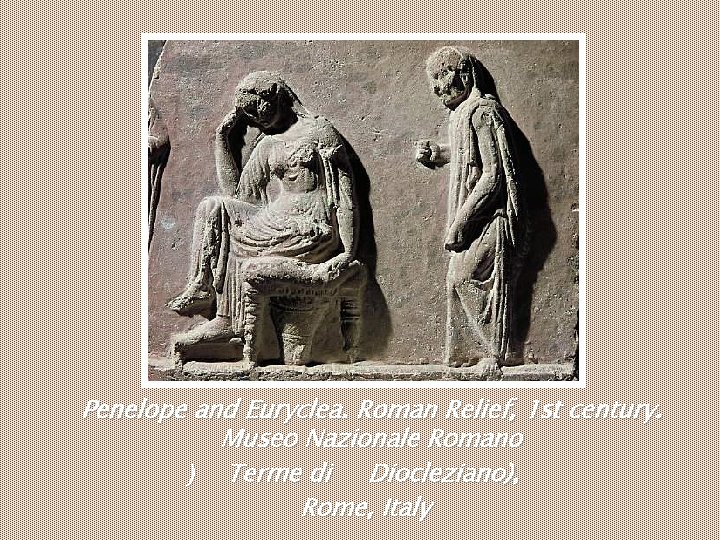
Penelope and Euryclea. Roman Relief, 1 st century. Museo Nazionale Romano ) Terme di Diocleziano), Rome, Italy
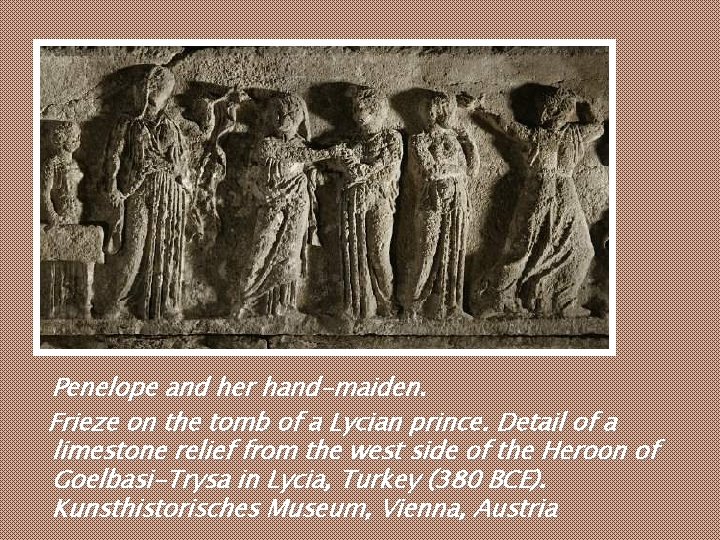
Penelope and her hand-maiden. Frieze on the tomb of a Lycian prince. Detail of a limestone relief from the west side of the Heroon of Goelbasi-Trysa in Lycia, Turkey (380 BCE). Kunsthistorisches Museum, Vienna, Austria
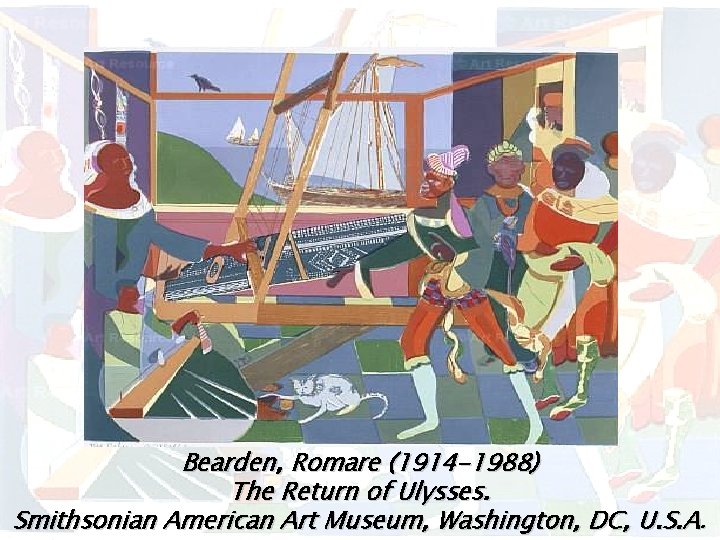
Bearden, Romare (1914 -1988) The Return of Ulysses. Smithsonian American Art Museum, Washington, DC, U. S. A.
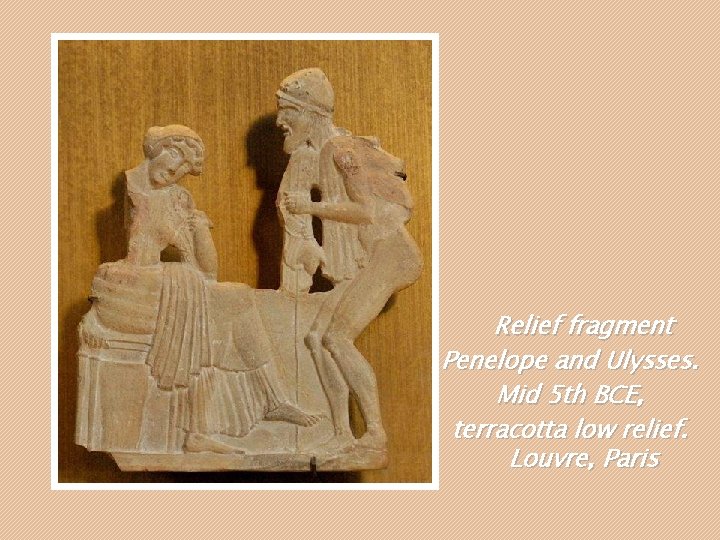
Relief fragment Penelope and Ulysses. Mid 5 th BCE, terracotta low relief. Louvre, Paris
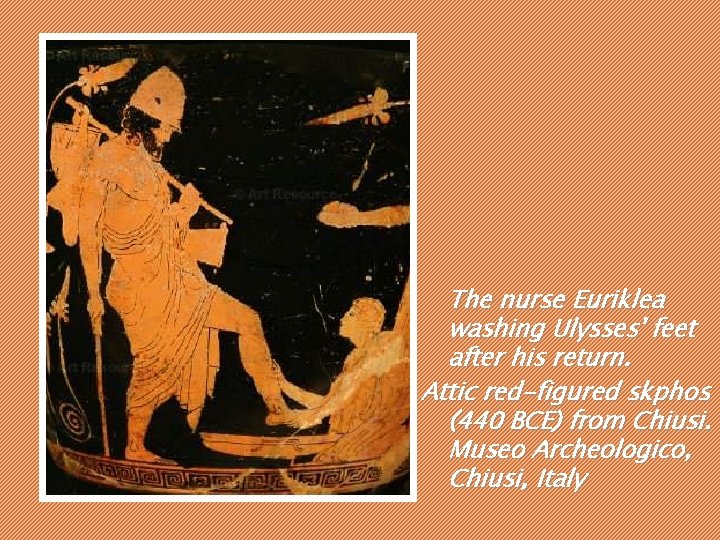
The nurse Euriklea washing Ulysses' feet after his return. Attic red-figured skphos (440 BCE) from Chiusi. Museo Archeologico, Chiusi, Italy
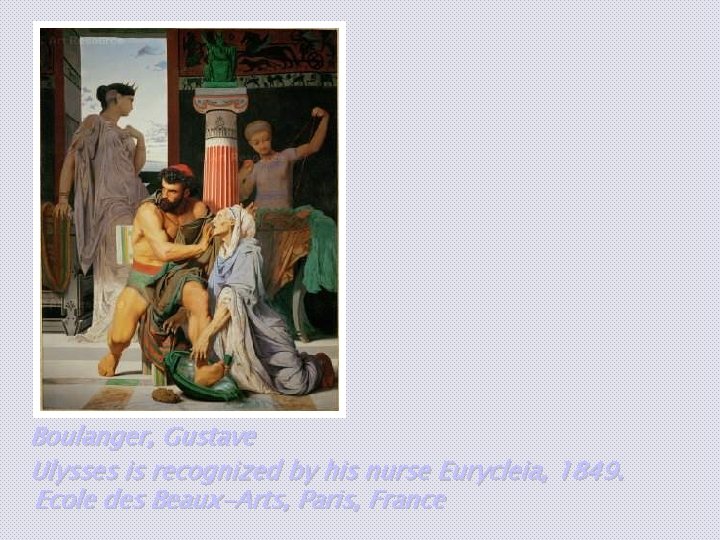
Boulanger, Gustave Ulysses is recognized by his nurse Eurycleia, 1849. Ecole des Beaux-Arts, Paris, France
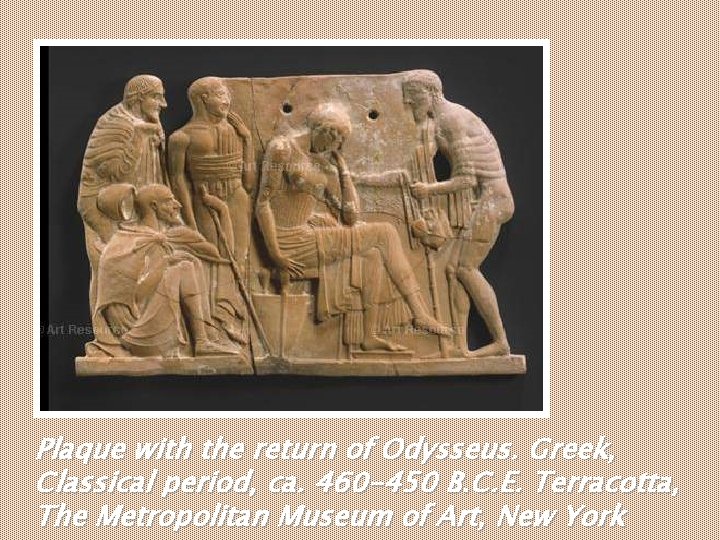
Plaque with the return of Odysseus. Greek, Classical period, ca. 460 -450 B. C. E. Terracotta, The Metropolitan Museum of Art, New York
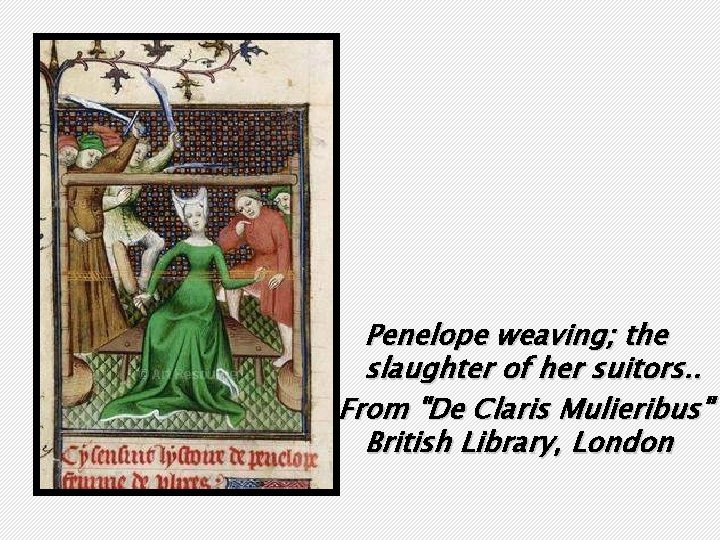
Penelope weaving; the slaughter of her suitors. . From "De Claris Mulieribus" British Library, London
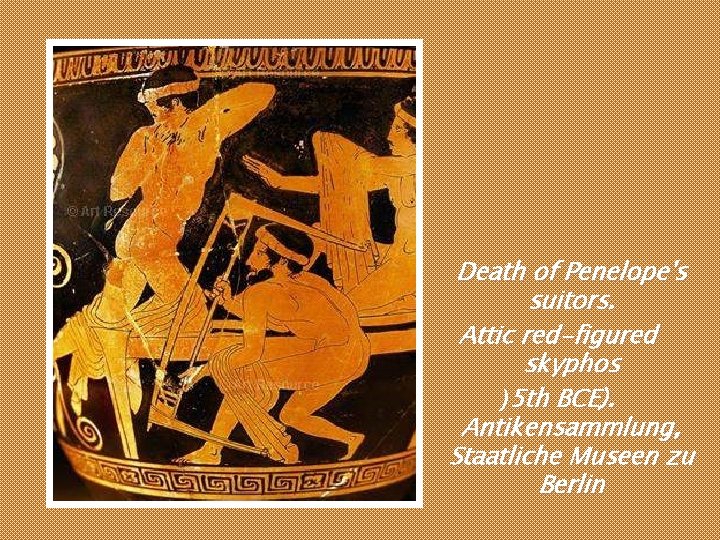
Death of Penelope's suitors. Attic red-figured skyphos )5 th BCE). Antikensammlung, Staatliche Museen zu Berlin
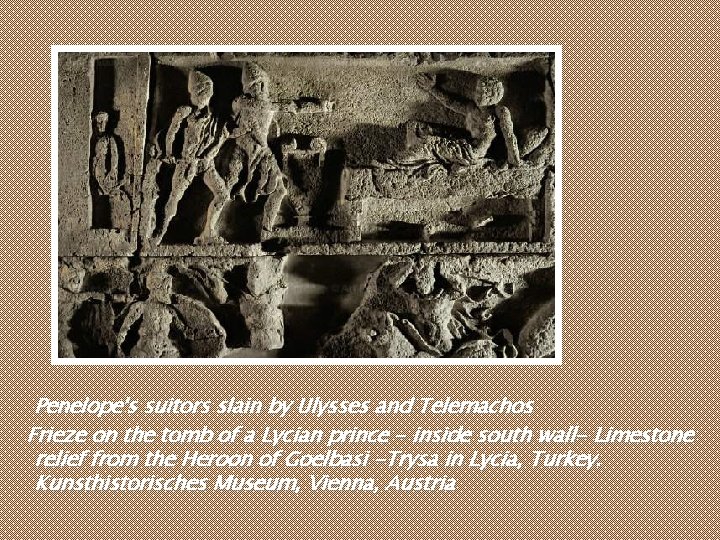
Penelope's suitors slain by Ulysses and Telemachos Frieze on the tomb of a Lycian prince - inside south wall- Limestone relief from the Heroon of Goelbasi -Trysa in Lycia, Turkey. Kunsthistorisches Museum, Vienna, Austria
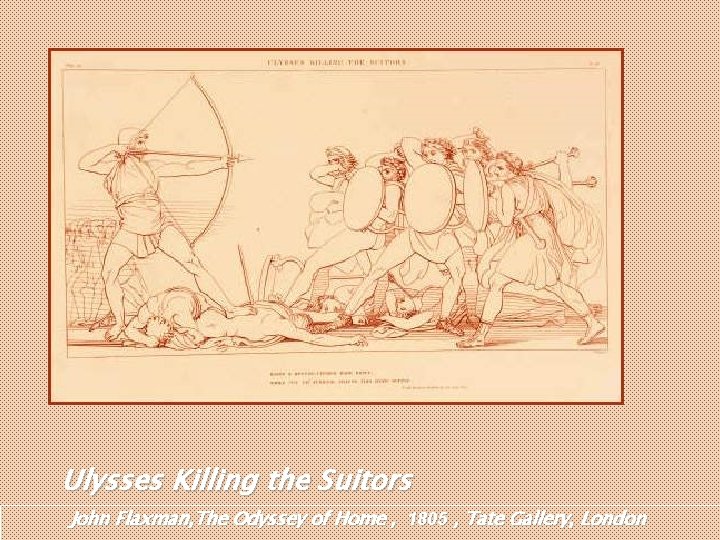
Ulysses Killing the Suitors John Flaxman, The Odyssey of Home , 1805 , Tate Gallery, London
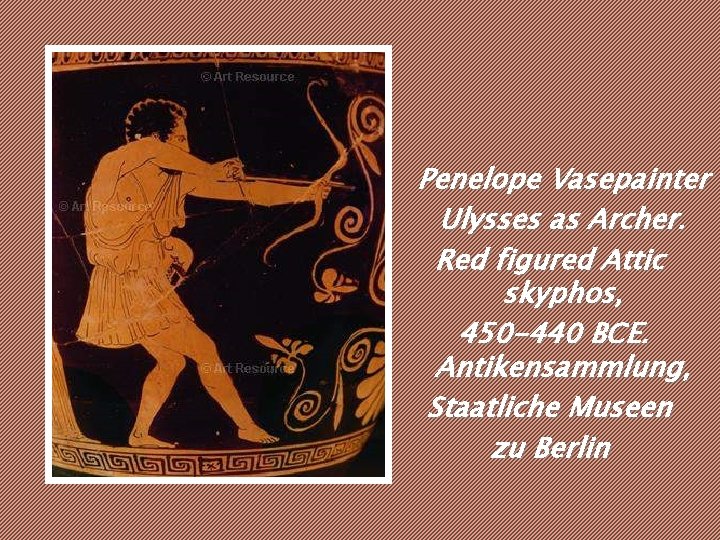
Penelope Vasepainter Ulysses as Archer. Red figured Attic skyphos, 450 -440 BCE. Antikensammlung, Staatliche Museen zu Berlin
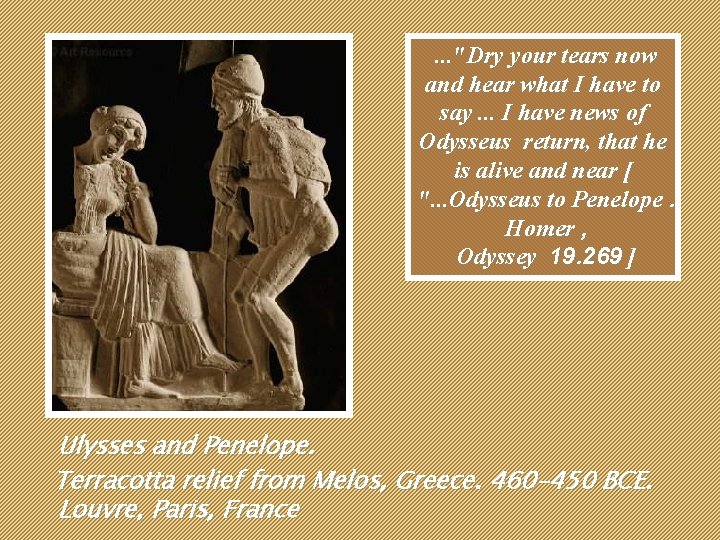
. . . "Dry your tears now and hear what I have to say. . . I have news of Odysseus return, that he is alive and near [ ". . . Odysseus to Penelope. Homer , Odyssey 19. 269 ] Ulysses and Penelope. Terracotta relief from Melos, Greece. 460 -450 BCE. Louvre, Paris, France
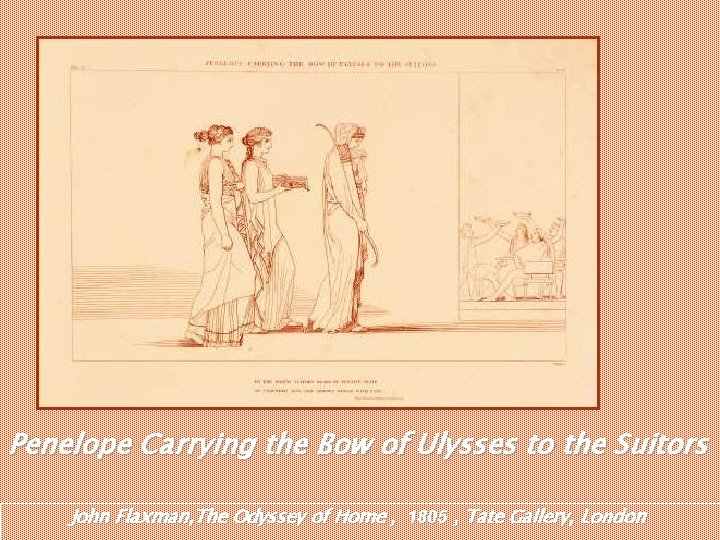
Penelope Carrying the Bow of Ulysses to the Suitors John Flaxman, The Odyssey of Home , 1805 , Tate Gallery, London
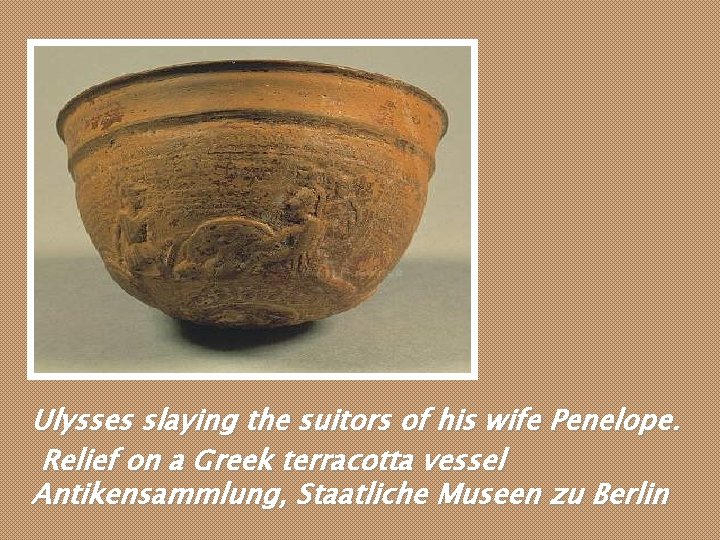
Ulysses slaying the suitors of his wife Penelope. Relief on a Greek terracotta vessel Antikensammlung, Staatliche Museen zu Berlin
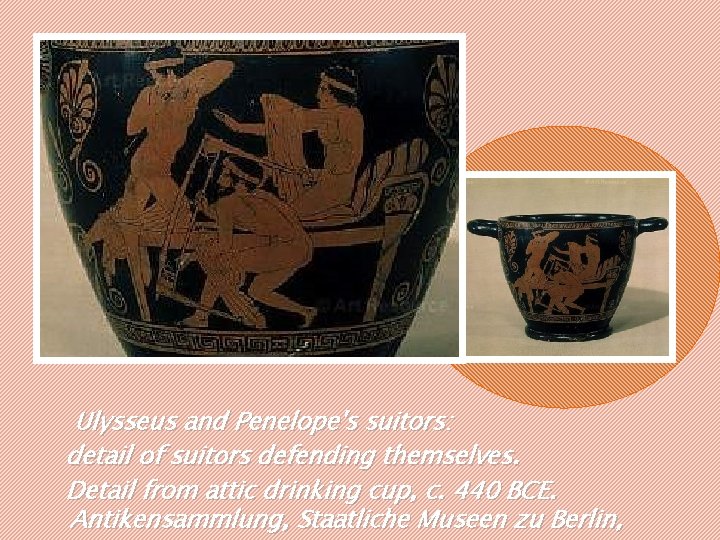
Ulysseus and Penelope's suitors: detail of suitors defending themselves. Detail from attic drinking cup, c. 440 BCE. Antikensammlung, Staatliche Museen zu Berlin,
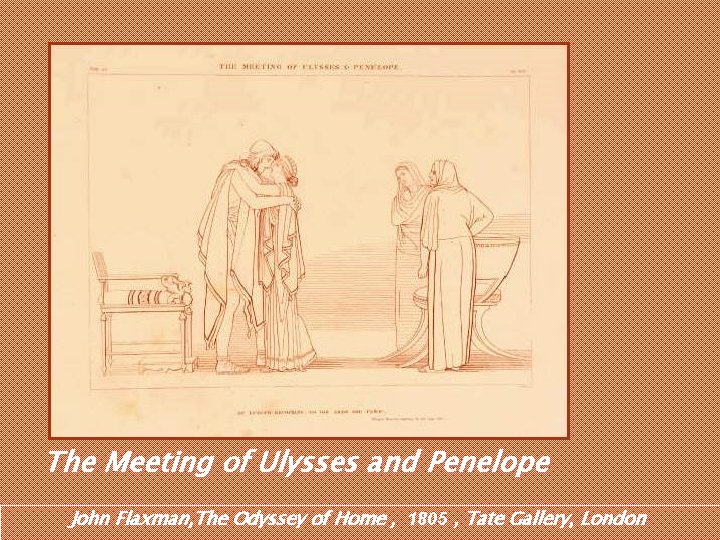
The Meeting of Ulysses and Penelope John Flaxman, The Odyssey of Home , 1805 , Tate Gallery, London
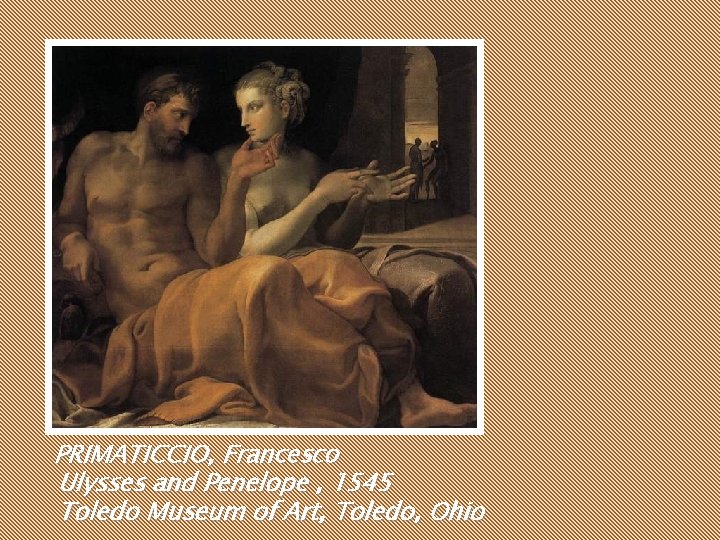
PRIMATICCIO, Francesco Ulysses and Penelope , 1545 Toledo Museum of Art, Toledo, Ohio
Penelope, from the series of six panels based on Geoffrey Chaucer's 14 th century poem 'Goode Wimmin', by Sir Edward Burne-Jones )1833 -98). Stained glass. England, c. 1864. Victoria and Albert Museum, London