
Ultrstructure and functions of Plasma membrane Dr Subhadra
Ultrstructure and functions of Plasma membrane Dr. Subhadra Roy
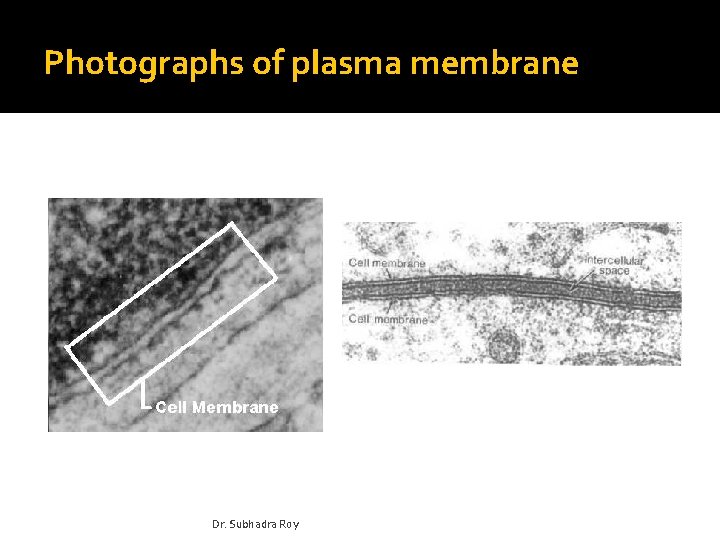
Photographs of plasma membrane Dr. Subhadra Roy
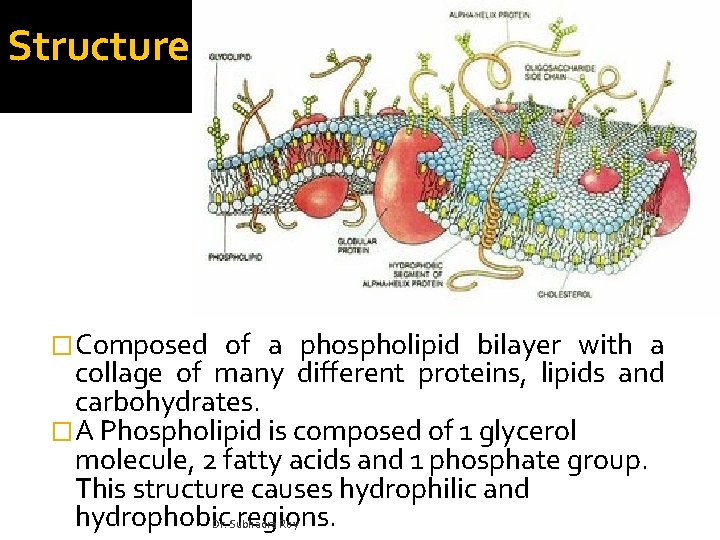
Structure �Composed of a phospholipid bilayer with a collage of many different proteins, lipids and carbohydrates. �A Phospholipid is composed of 1 glycerol molecule, 2 fatty acids and 1 phosphate group. This structure causes hydrophilic and hydrophobic regions. Dr. Subhadra Roy
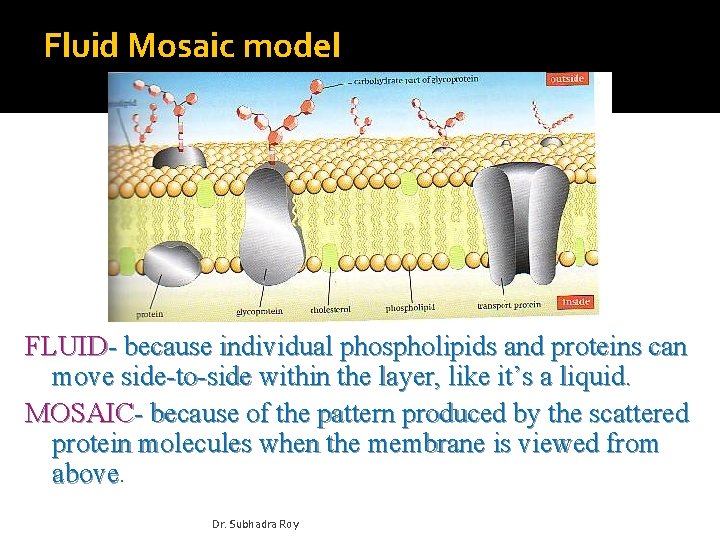
Fluid Mosaic model FLUID- because individual phospholipids and proteins can move side-to-side within the layer, like it’s a liquid. MOSAIC- because of the pattern produced by the scattered protein molecules when the membrane is viewed from above. Dr. Subhadra Roy
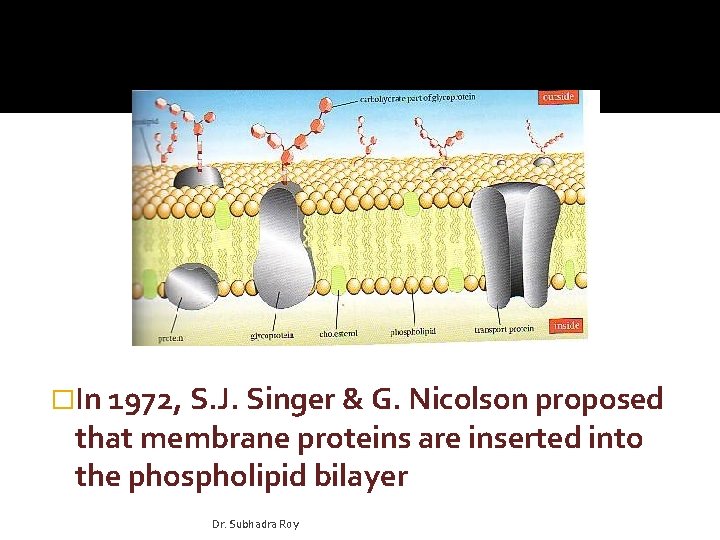
�In 1972, S. J. Singer & G. Nicolson proposed that membrane proteins are inserted into the phospholipid bilayer Dr. Subhadra Roy
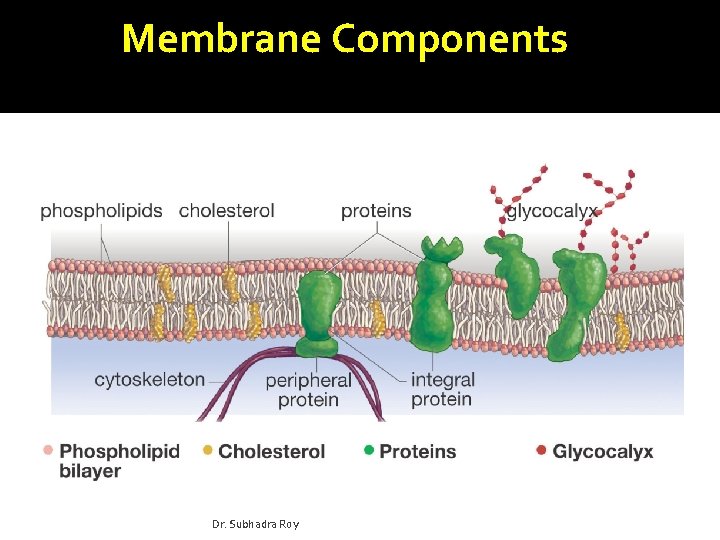
Membrane Components Dr. Subhadra Roy
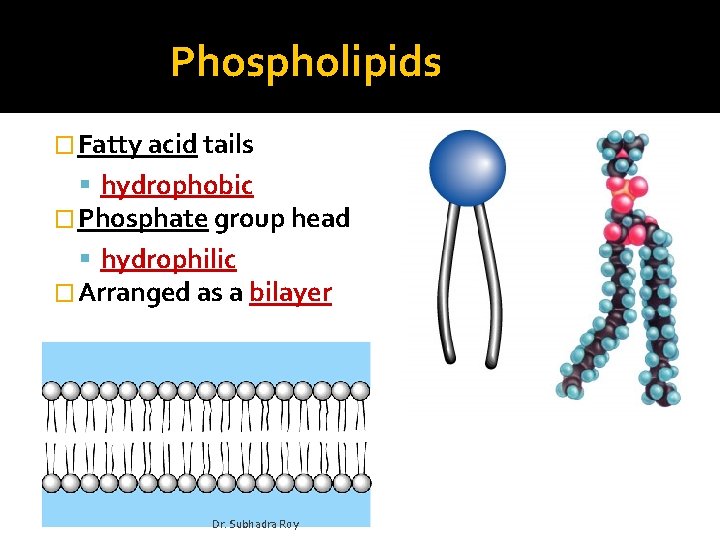
Phospholipids � Fatty acid tails hydrophobic � Phosphate group head hydrophilic � Arranged as a bilayer Dr. Subhadra Roy
Membrane Proteins determine membrane’s specific functions u cell membrane & organelle membranes each have unique collections of proteins Membrane proteins: u peripheral proteins loosely bound to surface of membrane cell surface identity marker (antigens) u integral proteins penetrate lipid bilayer, usually across whole membrane transmembrane protein transport proteins w channels, permeases (pumps) Dr. Subhadra Roy
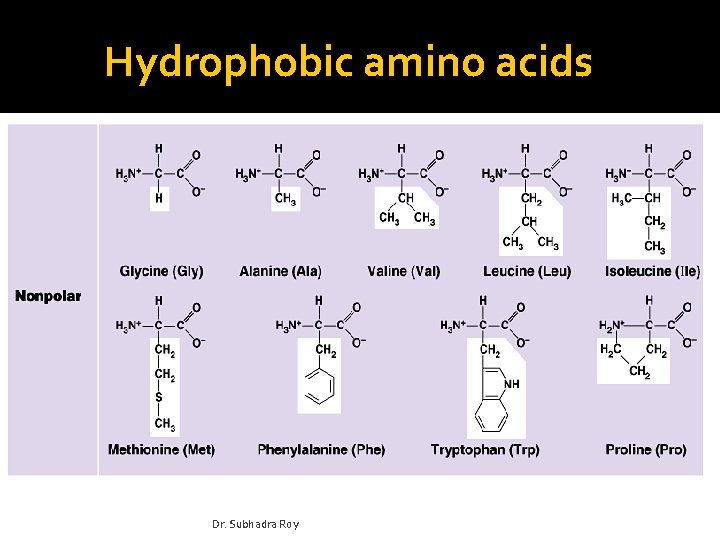
Hydrophobic amino acids Dr. Subhadra Roy
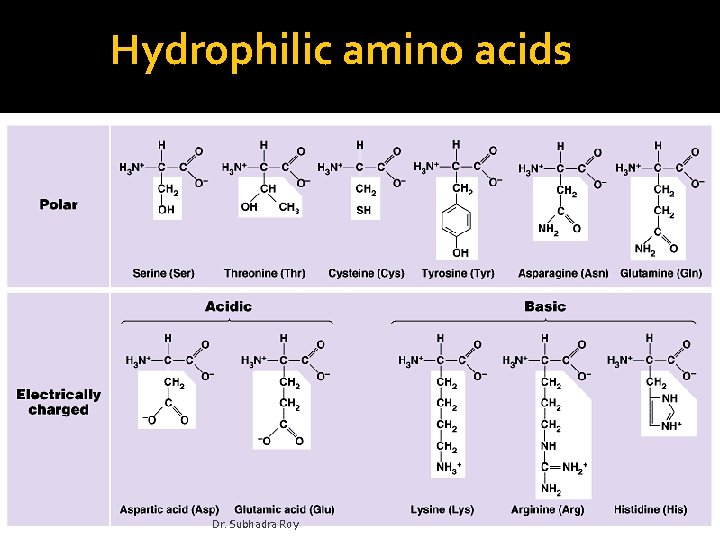
Hydrophilic amino acids Dr. Subhadra Roy
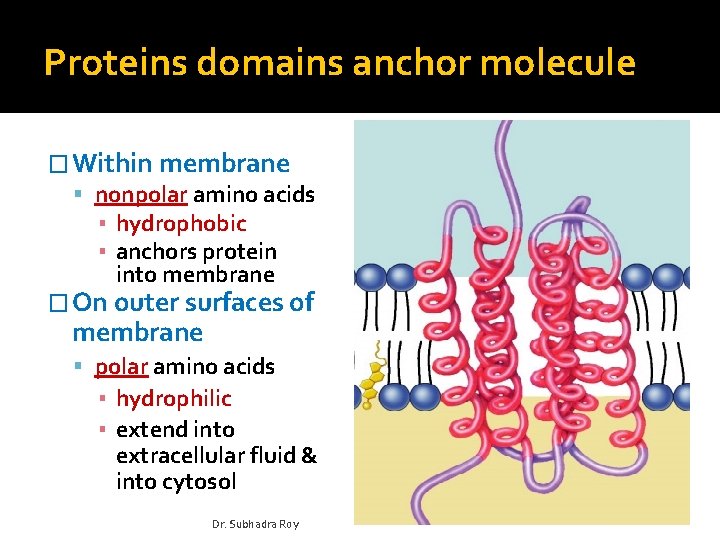
Proteins domains anchor molecule � Within membrane nonpolar amino acids ▪ hydrophobic ▪ anchors protein into membrane � On outer surfaces of membrane polar amino acids ▪ hydrophilic ▪ extend into extracellular fluid & into cytosol Dr. Subhadra Roy
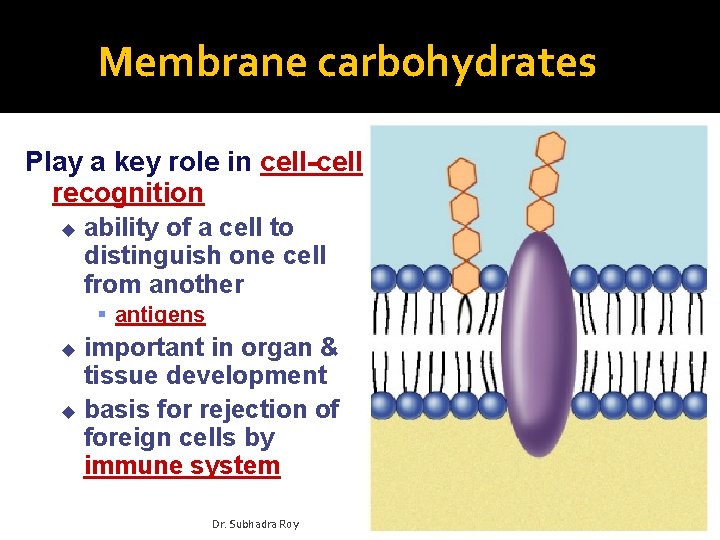
Membrane carbohydrates Play a key role in cell-cell recognition u ability of a cell to distinguish one cell from another antigens important in organ & tissue development u basis for rejection of foreign cells by immune system u Dr. Subhadra Roy
Selectively permeable membrane �Polar heads are hydrophilic “water loving” Nonpolar tails are hydrophobic “water fearing” Makes membrane “Selective” in what crosses Dr. Subhadra Roy
Functions of Plasma Membrane ü Protective barrier ü Regulate transport in & out of cell (selectively permeable) ü Allow cell recognition ü Provide anchoring sites for filaments of cytoskeleton Dr. Subhadra Roy
Getting through cell membrane Passive Transport u Simple diffusion of nonpolar, hydrophobic molecules w lipids w high low concentration gradient u Facilitated transport diffusion of polar, hydrophilic molecules through a protein channel w high low concentration gradient Active transport u diffusion against concentration gradient low high u u uses a protein pump requires ATP Dr. Subhadra Roy
Passive transport Dr. Subhadra Roy
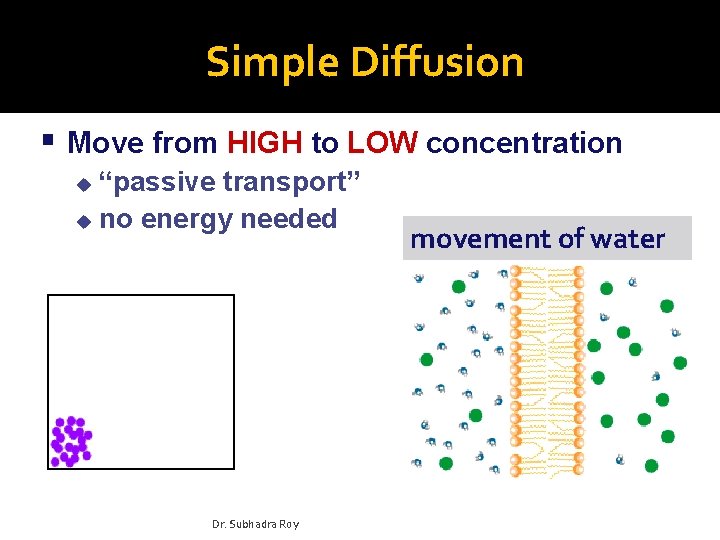
Simple Diffusion Move from HIGH to LOW concentration “passive transport” u no energy needed u Dr. Subhadra Roy movement of water
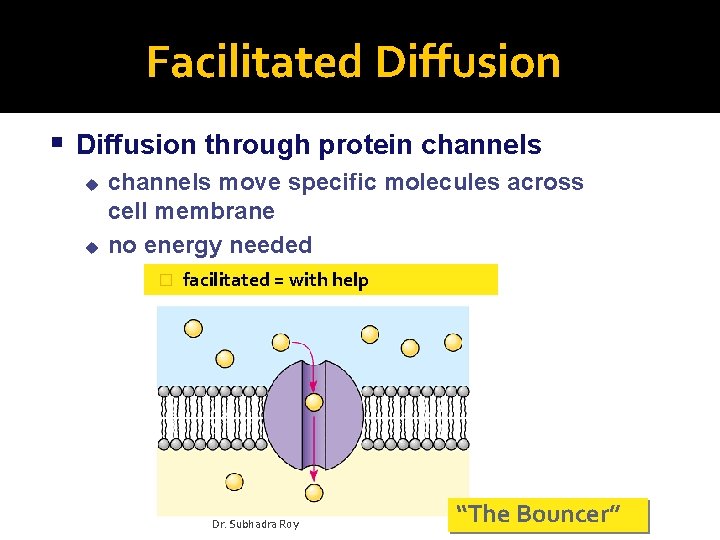
Facilitated Diffusion through protein channels u u channels move specific molecules across cell membrane no energy needed � facilitated = with help Dr. Subhadra Roy “The Bouncer”
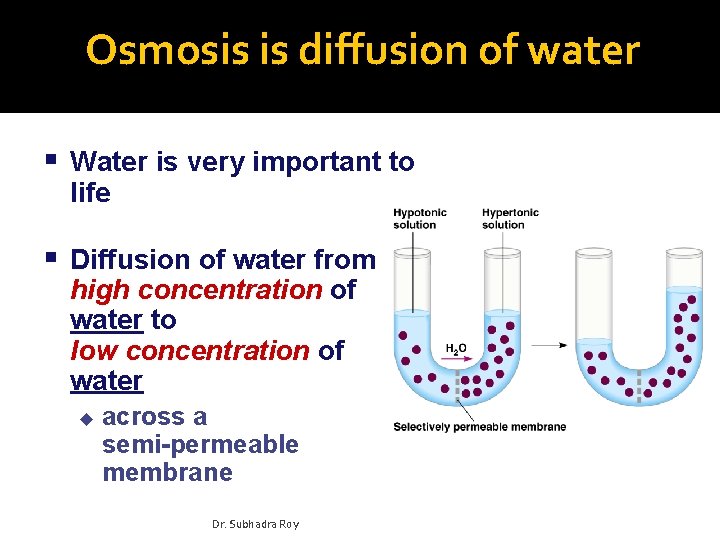
Osmosis is diffusion of water Water is very important to life Diffusion of water from high concentration of water to low concentration of water u across a semi-permeable membrane Dr. Subhadra Roy
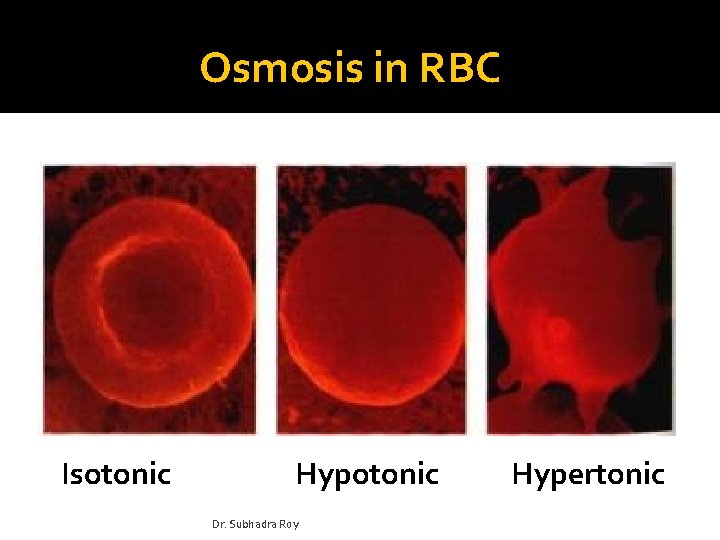
Osmosis in RBC Isotonic Hypotonic Dr. Subhadra Roy Hypertonic
Active transport Dr. Subhadra Roy
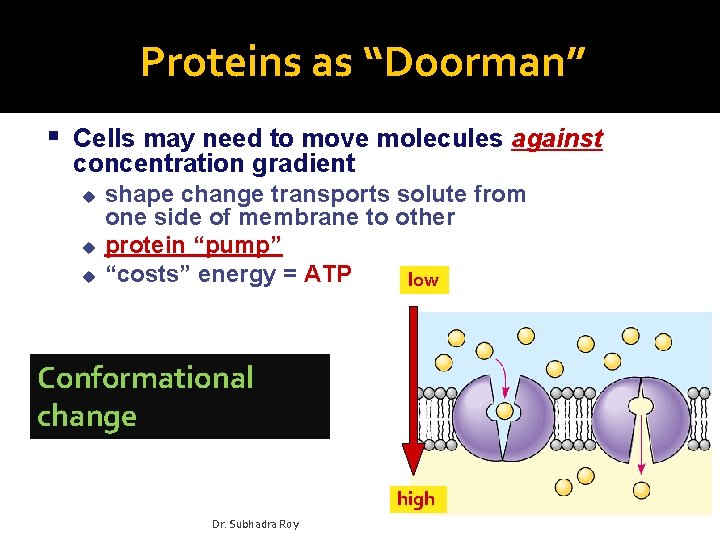
Proteins as “Doorman” Cells may need to move molecules against concentration gradient u u u shape change transports solute from one side of membrane to other protein “pump” “costs” energy = ATP low Conformational change high Dr. Subhadra Roy
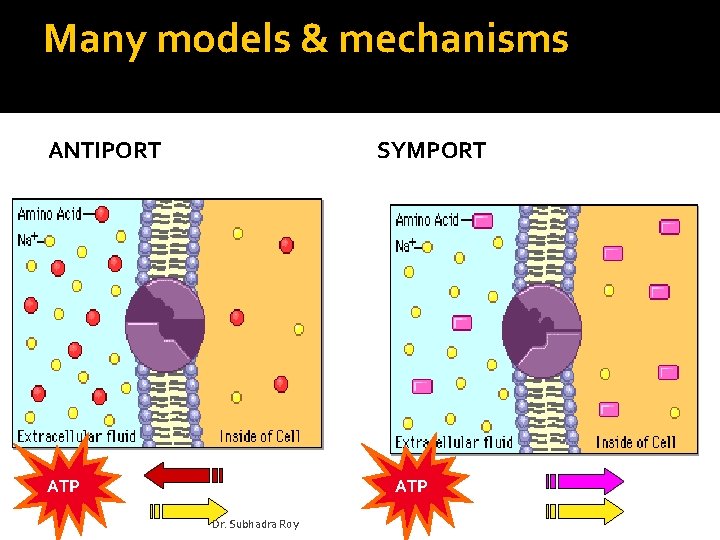
Many models & mechanisms ANTIPORT SYMPORT ATP Dr. Subhadra Roy
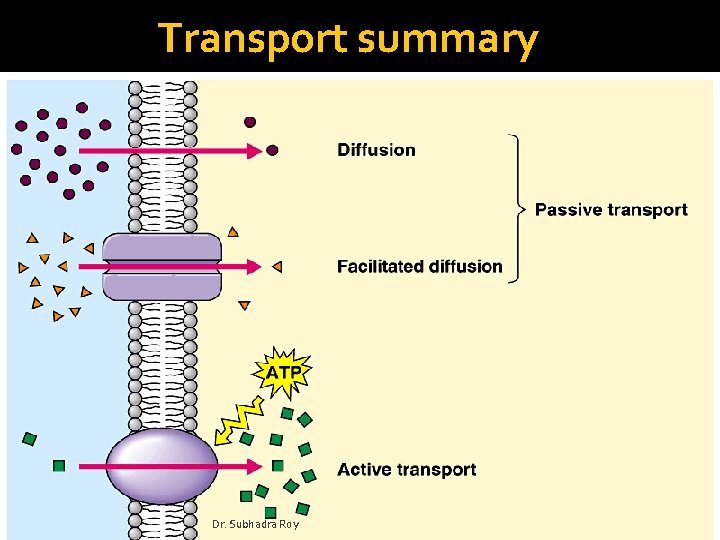
Transport summary Dr. Subhadra Roy
Movement of large molecules Moving large molecules into & out of cell through vesicles & vacuoles u endocytosis phagocytosis = “cellular eating” pinocytosis = “cellular drinking” u exocytosis Dr. Subhadra Roy
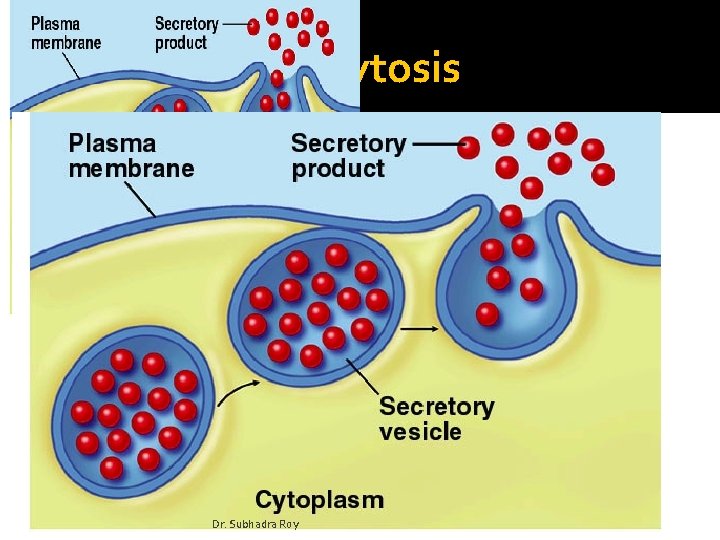
Exocytosis Dr. Subhadra Roy
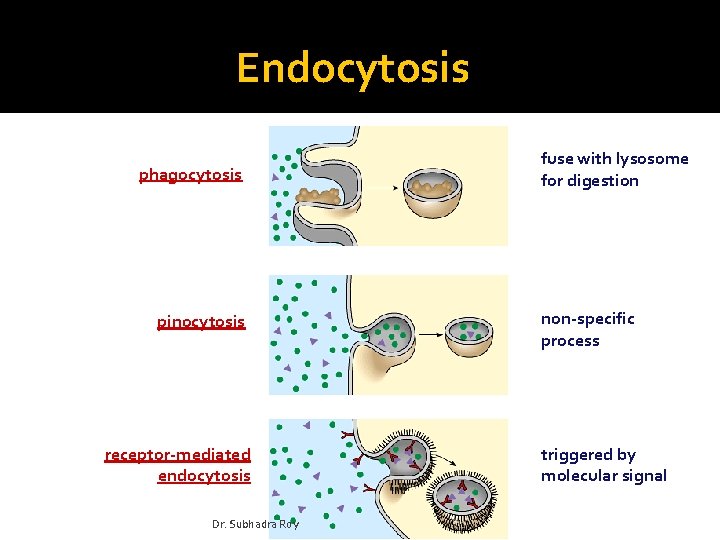
Endocytosis phagocytosis pinocytosis receptor-mediated endocytosis Dr. Subhadra Roy fuse with lysosome for digestion non-specific process triggered by molecular signal
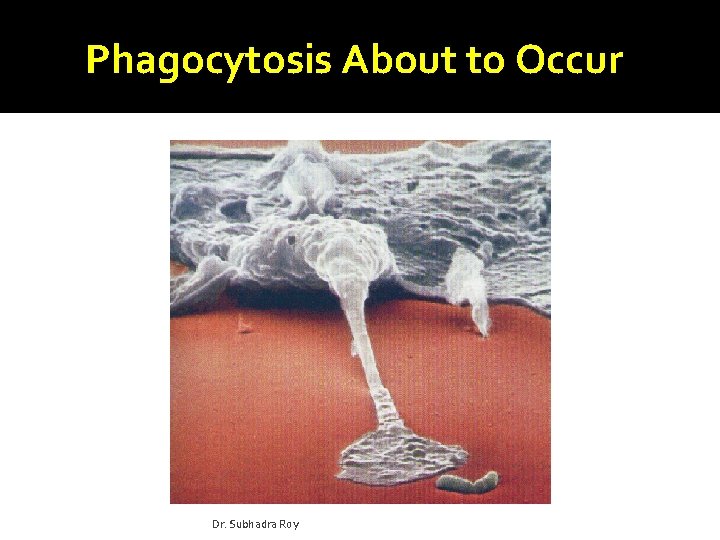
Phagocytosis About to Occur Dr. Subhadra Roy

Dr. Subhadra Roy
- Slides: 29