
Ultrasound Physics Image Formation 97 Realtime Scanning Each






- Slides: 38
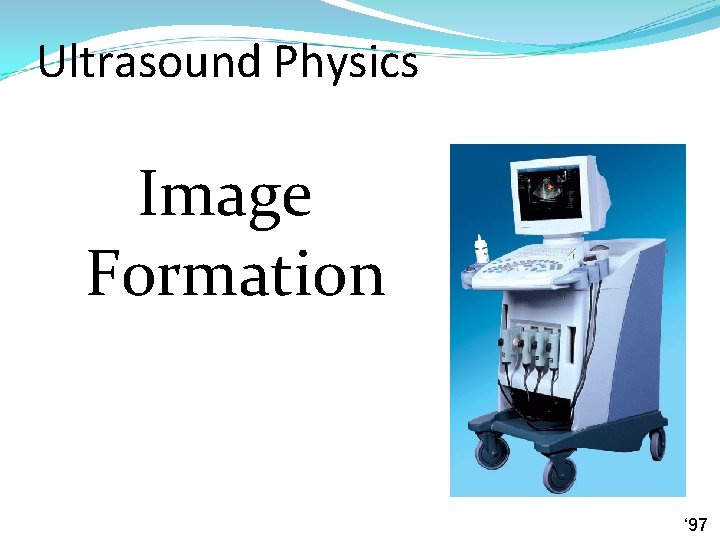
Ultrasound Physics Image Formation ‘ 97
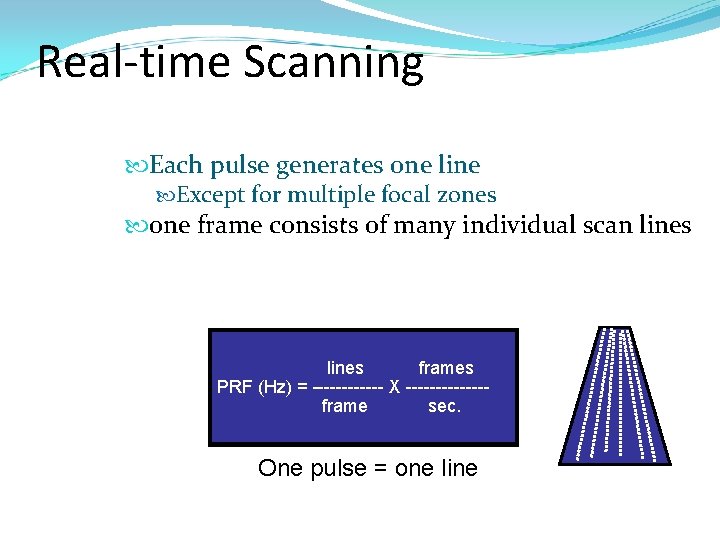
Real-time Scanning Each pulse generates one line Except for multiple focal zones one frame consists of many individual scan lines frames PRF (Hz) = ------ X -------frame sec. One pulse = one line
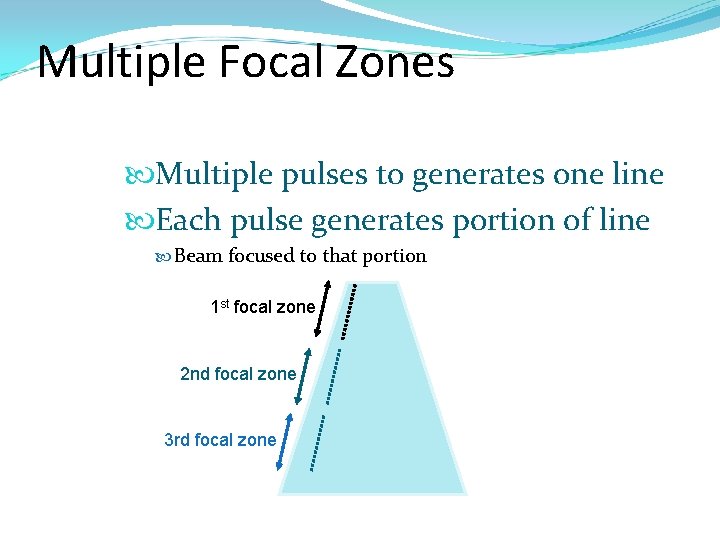
Multiple Focal Zones Multiple pulses to generates one line Each pulse generates portion of line Beam focused to that portion 1 st focal zone 2 nd focal zone 3 rd focal zone
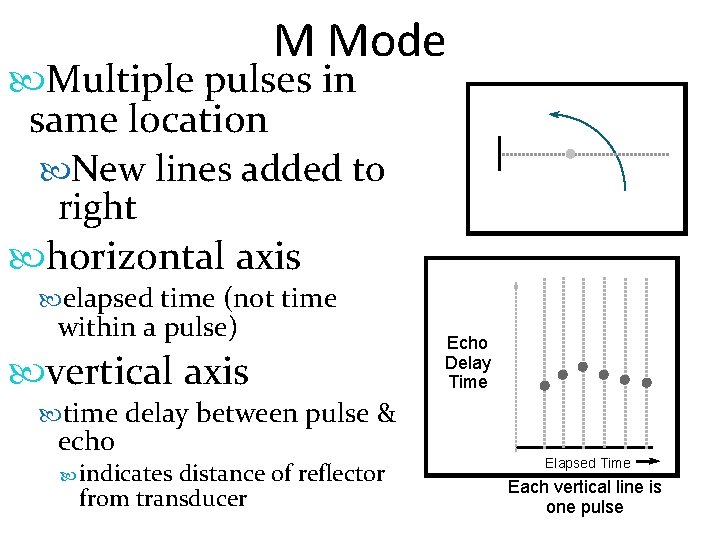
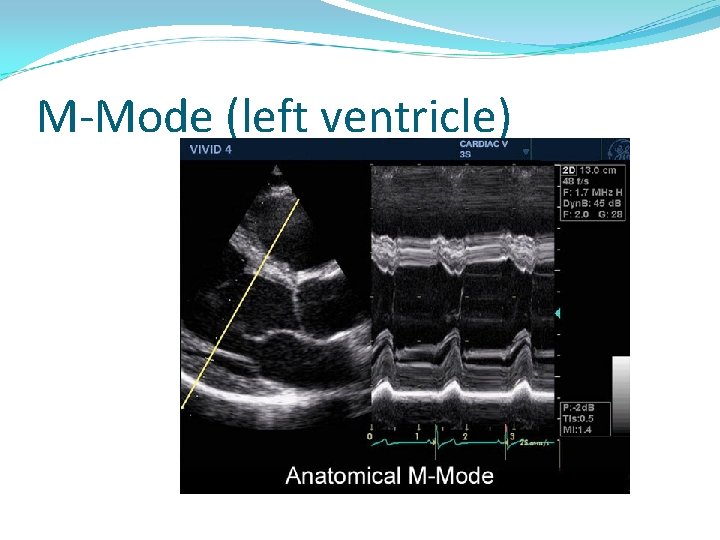
M Mode Multiple pulses in same location New lines added to right horizontal axis elapsed time (not time within a pulse) vertical axis Echo Delay Time time delay between pulse & echo indicates distance of reflector from transducer Elapsed Time Each vertical line is one pulse
M-Mode (left ventricle)
Scanner Processing of Echoes Amplification Compensation Compression Demodulation Rejection
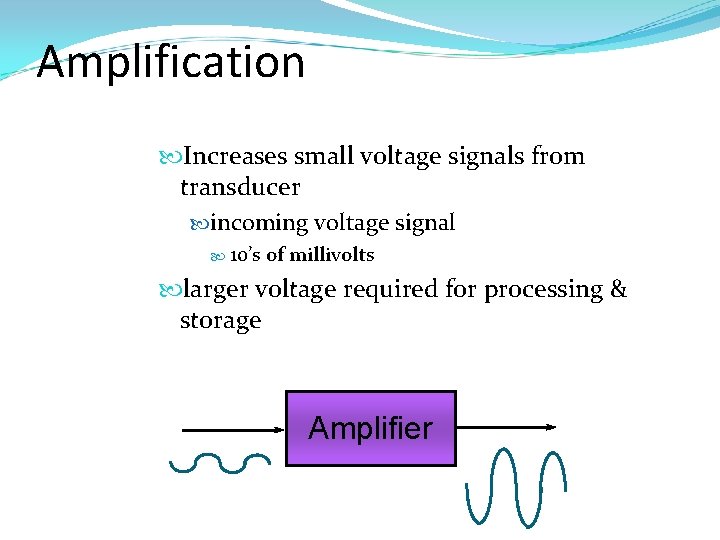
Amplification Increases small voltage signals from transducer incoming voltage signal 10’s of millivolts larger voltage required for processing & storage Amplifier
Compensation • Amplification • Compensation • Compression • Demodulation • Rejection
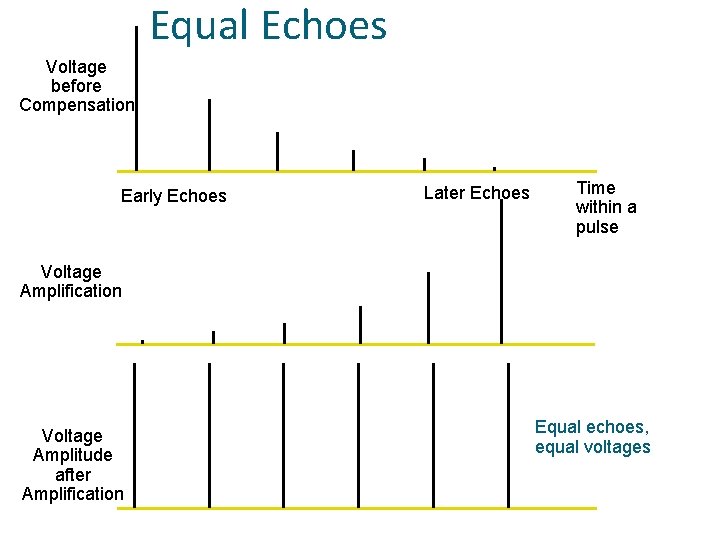
Need for Compensation equal intensity reflections from different depths return with different intensities different travel distances attenuation is function of path length Display without compensation echo intensity time since pulse
Equal Echoes Voltage before Compensation Early Echoes Later Echoes Time within a pulse Voltage Amplification Voltage Amplitude after Amplification Equal echoes, equal voltages
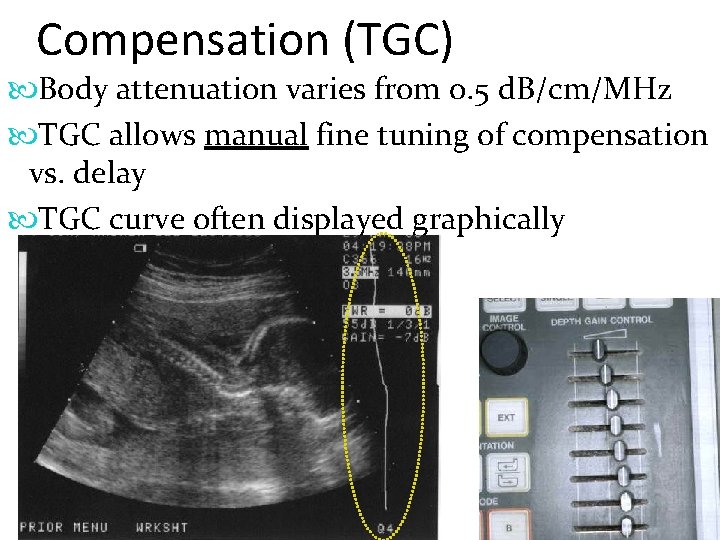
Compensation (TGC) Body attenuation varies from 0. 5 d. B/cm/MHz TGC allows manual fine tuning of compensation vs. delay TGC curve often displayed graphically
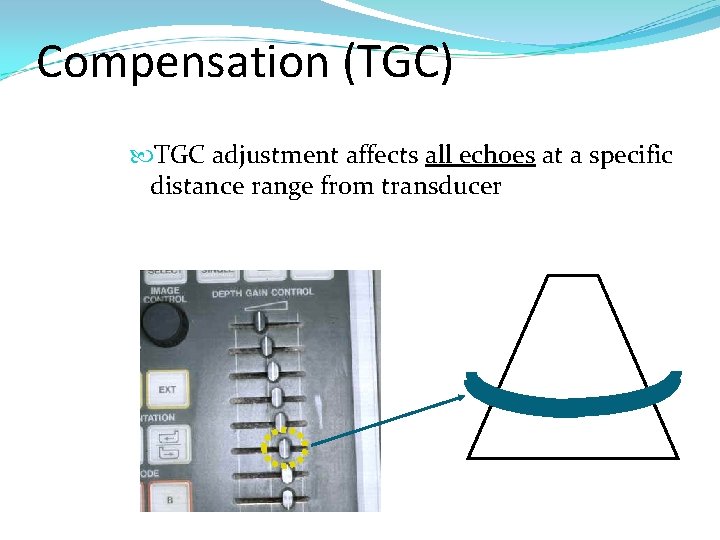
Compensation (TGC) TGC adjustment affects all echoes at a specific distance range from transducer
Compression • Amplification • Compensation • Compression • Demodulation • Rejection
Challenge Design scale that can weigh both feather & elephant
Challenge Re-Stated Find a scale that can tell which feather weighs more & which elephant weighs more
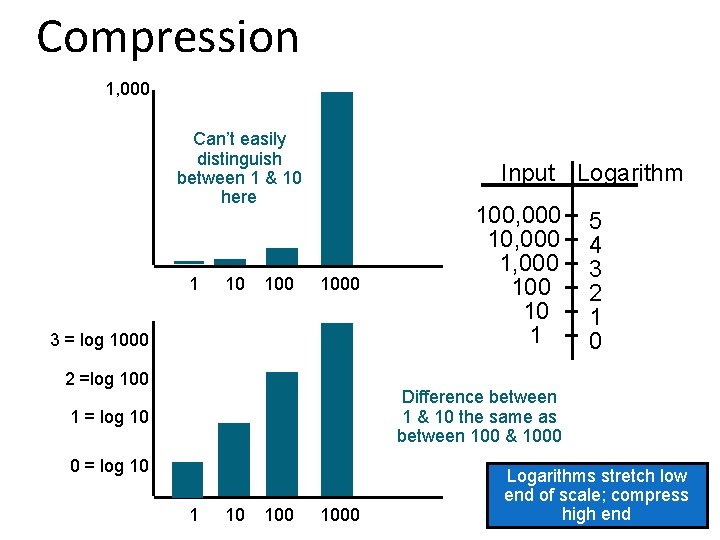
Compression 1, 000 Can’t easily distinguish between 1 & 10 here 1 10 100 Input Logarithm 1000 3 = log 1000 2 =log 100, 000 10, 000 100 10 1 5 4 3 2 1 0 Difference between 1 & 10 the same as between 100 & 1000 1 = log 10 0 = log 10 100 1000 Logarithms stretch low end of scale; compress high end
Demodulation • Amplification • Compensation • Compression • Demodulation • Rejection
Demodulation & Radio Any station (frequency) can carry any format
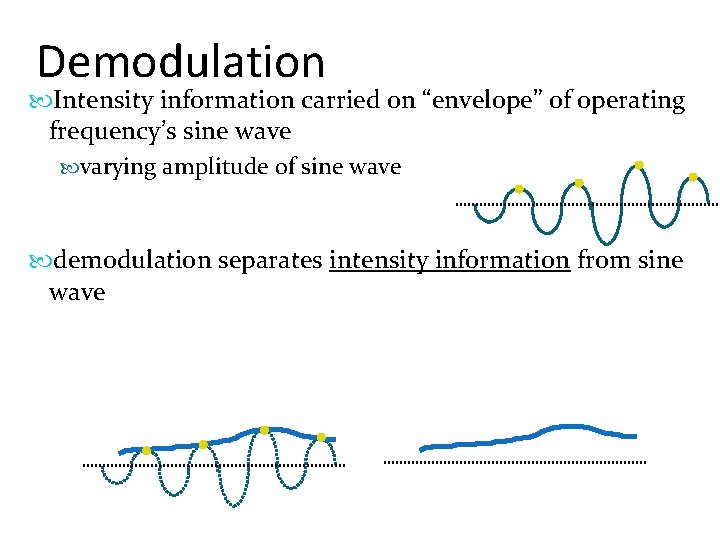
Demodulation Intensity information carried on “envelope” of operating frequency’s sine wave varying amplitude of sine wave demodulation separates intensity information from sine wave
Demodulation Substeps rectify turn negative signals positive smooth follow peaks
Rejection • Amplification • Compensation • Compression • Demodulation • Rejection
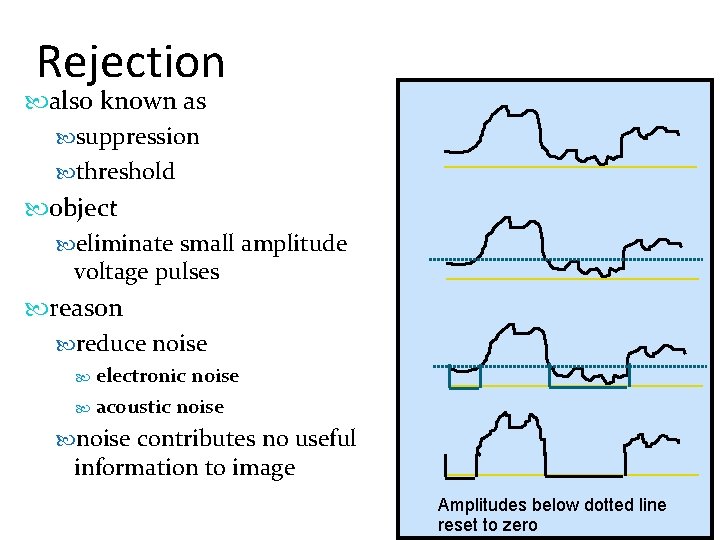
Rejection also known as suppression threshold object eliminate small amplitude voltage pulses reason reduce noise electronic noise acoustic noise contributes no useful information to image Amplitudes below dotted line reset to zero
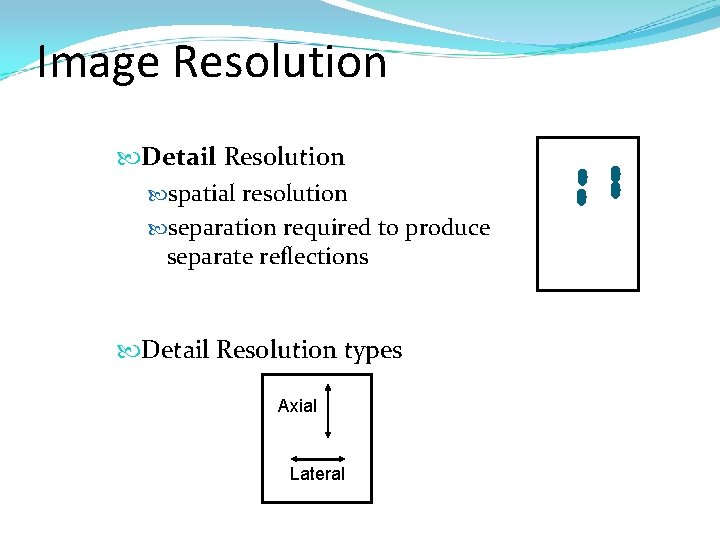
Image Resolution Detail Resolution spatial resolution separation required to produce separate reflections Detail Resolution types Axial Lateral
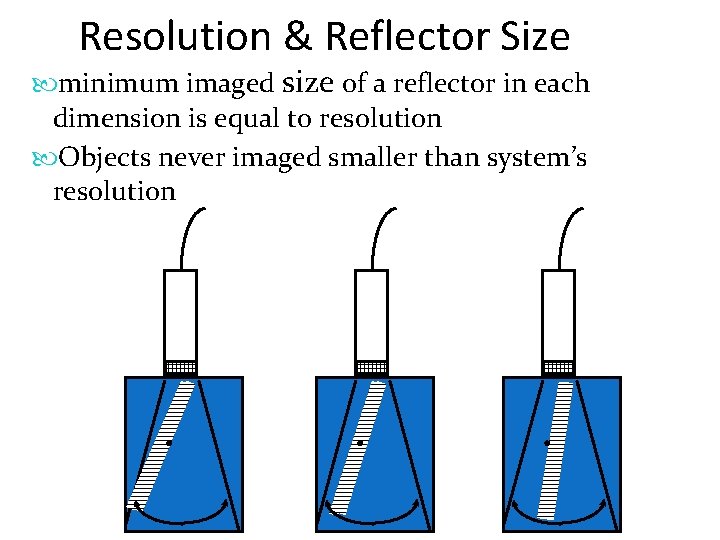
Resolution & Reflector Size minimum imaged size of a reflector in each dimension is equal to resolution Objects never imaged smaller than system’s resolution
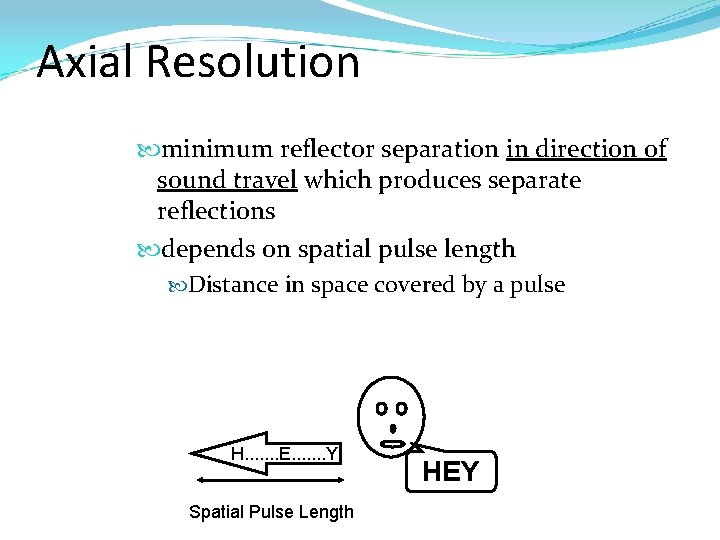
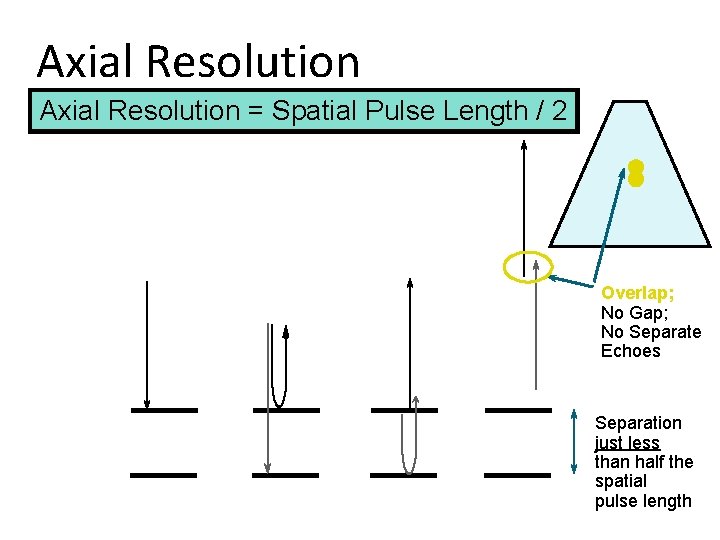
Axial Resolution minimum reflector separation in direction of sound travel which produces separate reflections depends on spatial pulse length Distance in space covered by a pulse H. . . . E. . . . Y Spatial Pulse Length HEY
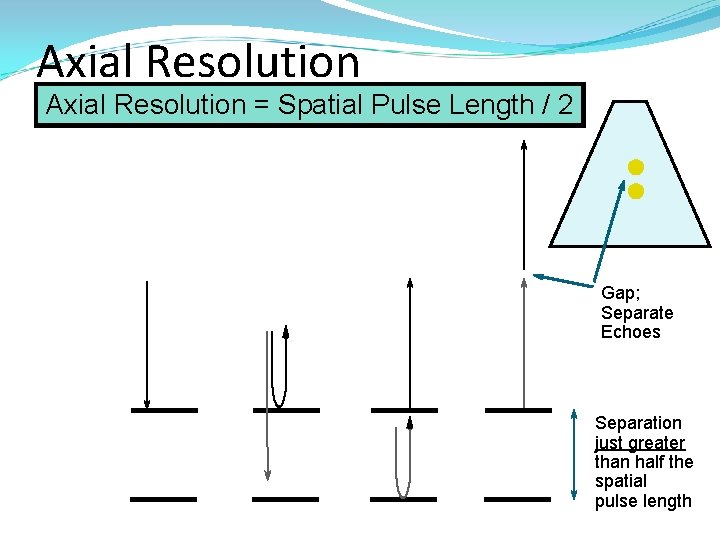
Axial Resolution = Spatial Pulse Length / 2 Gap; Separate Echoes Separation just greater than half the spatial pulse length
Axial Resolution = Spatial Pulse Length / 2 Overlap; No Gap; No Separate Echoes Separation just less than half the spatial pulse length
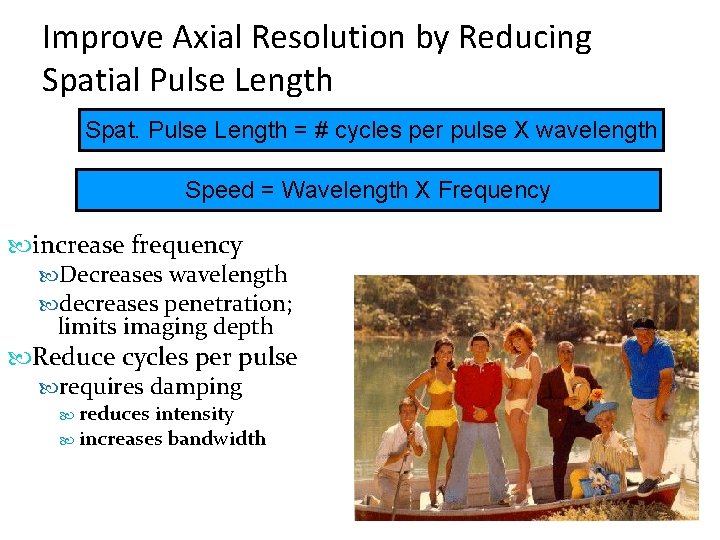
Improve Axial Resolution by Reducing Spatial Pulse Length Spat. Pulse Length = # cycles per pulse X wavelength Speed = Wavelength X Frequency increase frequency Decreases wavelength decreases penetration; limits imaging depth Reduce cycles per pulse requires damping reduces intensity increases bandwidth
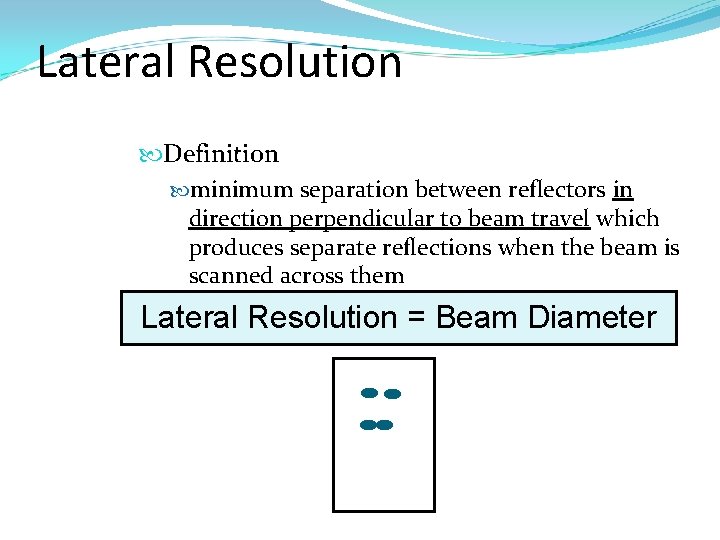
Lateral Resolution Definition minimum separation between reflectors in direction perpendicular to beam travel which produces separate reflections when the beam is scanned across them Lateral Resolution = Beam Diameter
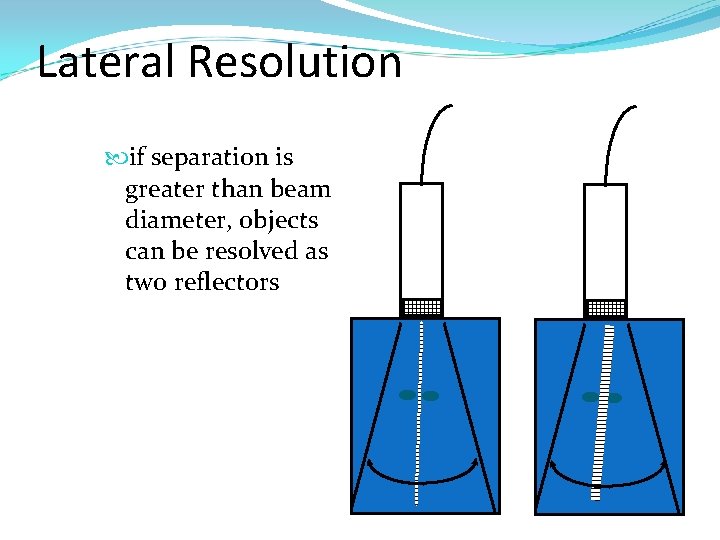
Lateral Resolution if separation is greater than beam diameter, objects can be resolved as two reflectors
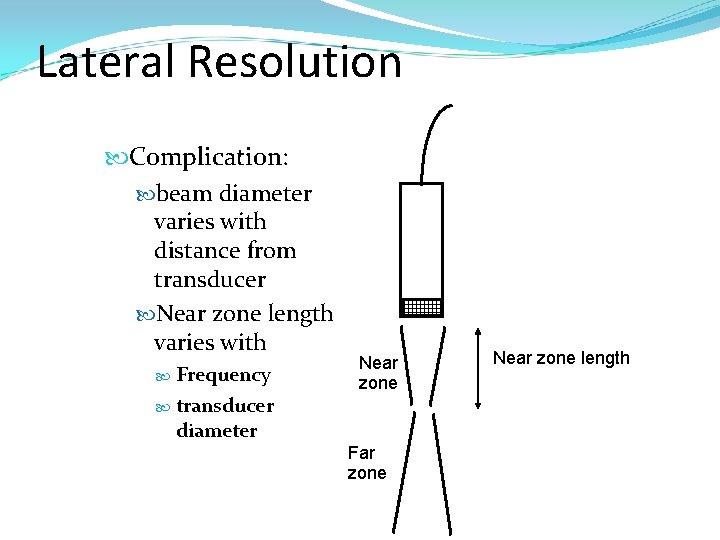
Lateral Resolution Complication: beam diameter varies with distance from transducer Near zone length varies with Frequency transducer Near zone diameter Far zone Near zone length
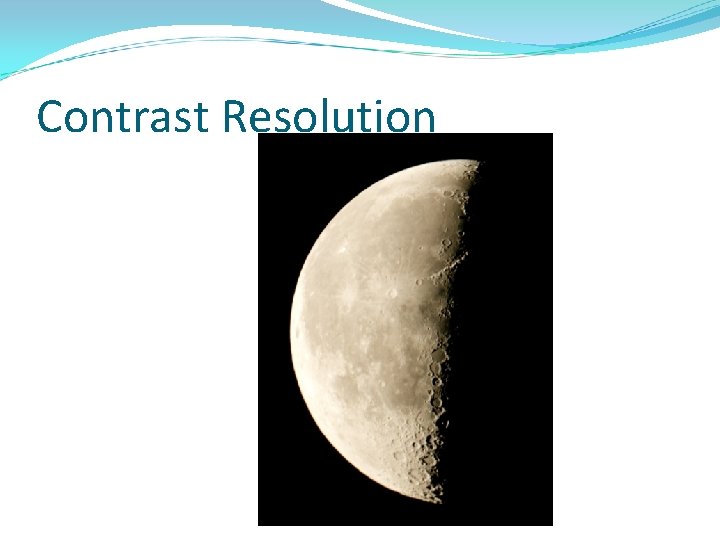
Contrast Resolution
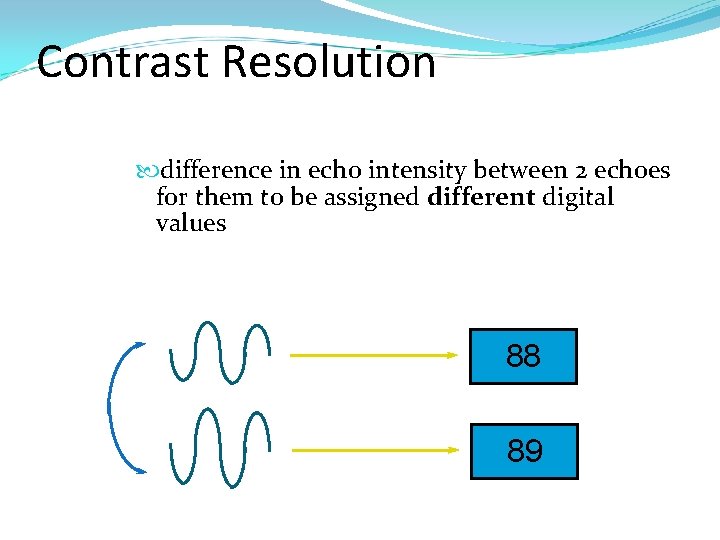
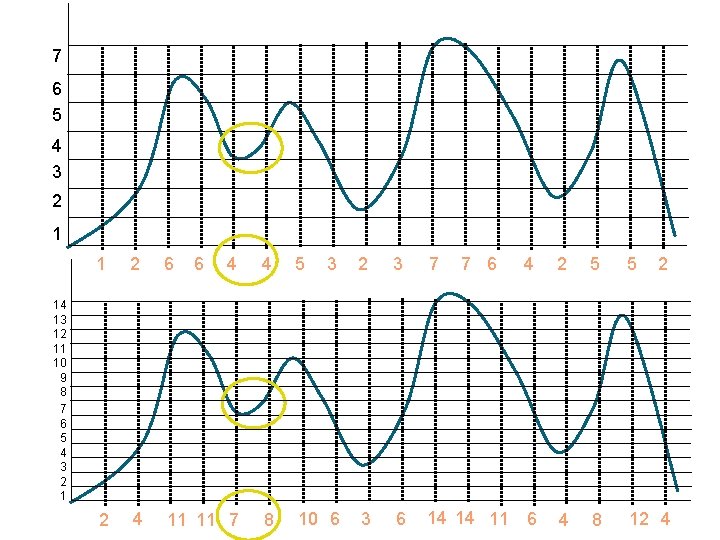
Contrast Resolution difference in echo intensity between 2 echoes for them to be assigned different digital values 88 89
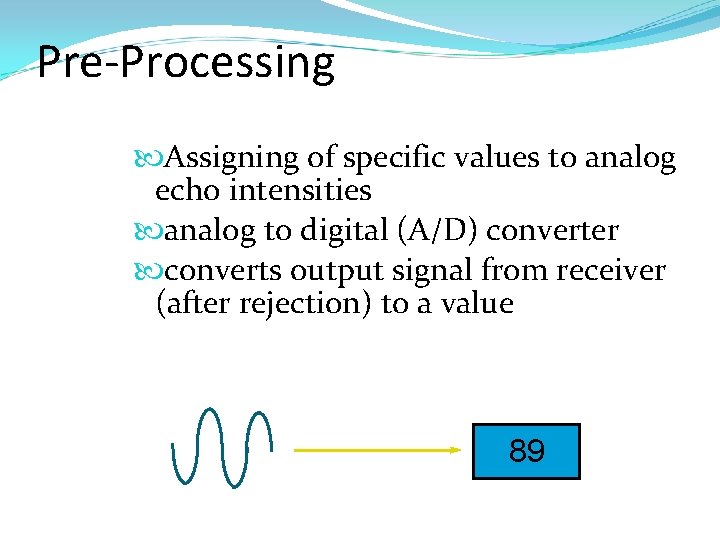
Pre-Processing Assigning of specific values to analog echo intensities analog to digital (A/D) converter converts output signal from receiver (after rejection) to a value 89
Gray Scale the more candidate values for a pixel the more shades of gray image can be stored in digital image The less difference between echo intensity required to guarantee different pixel values See next slide
7 6 5 4 3 2 1 1 2 6 4 4 5 3 2 3 7 4 2 5 5 2 4 11 11 7 8 10 6 3 6 14 14 11 6 4 8 12 4 6 7 6 2 14 13 12 11 10 9 8 7 6 5 4 3 2 1
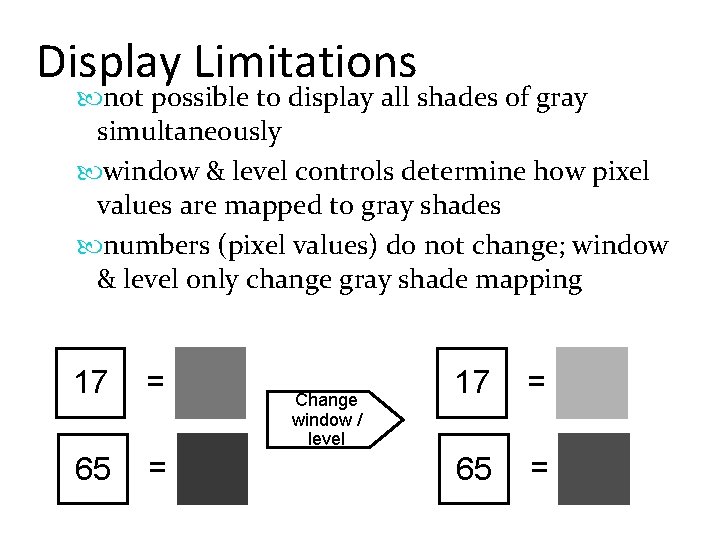
Display Limitations not possible to display all shades of gray simultaneously window & level controls determine how pixel values are mapped to gray shades numbers (pixel values) do not change; window & level only change gray shade mapping 17 = 65 = Change window / level 17 = 65 =
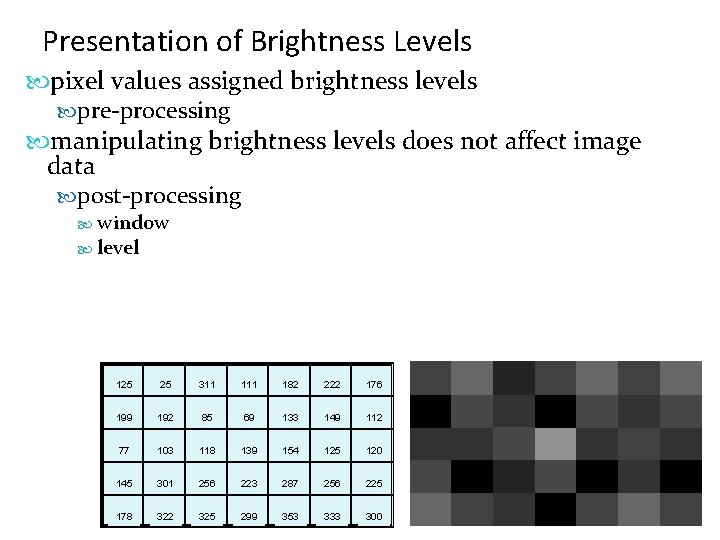
Presentation of Brightness Levels pixel values assigned brightness levels pre-processing manipulating brightness levels does not affect image data post-processing window level 125 25 311 182 222 176 199 192 85 69 133 149 112 77 103 118 139 154 125 120 145 301 256 223 287 256 225 178 322 325 299 353 333 300